

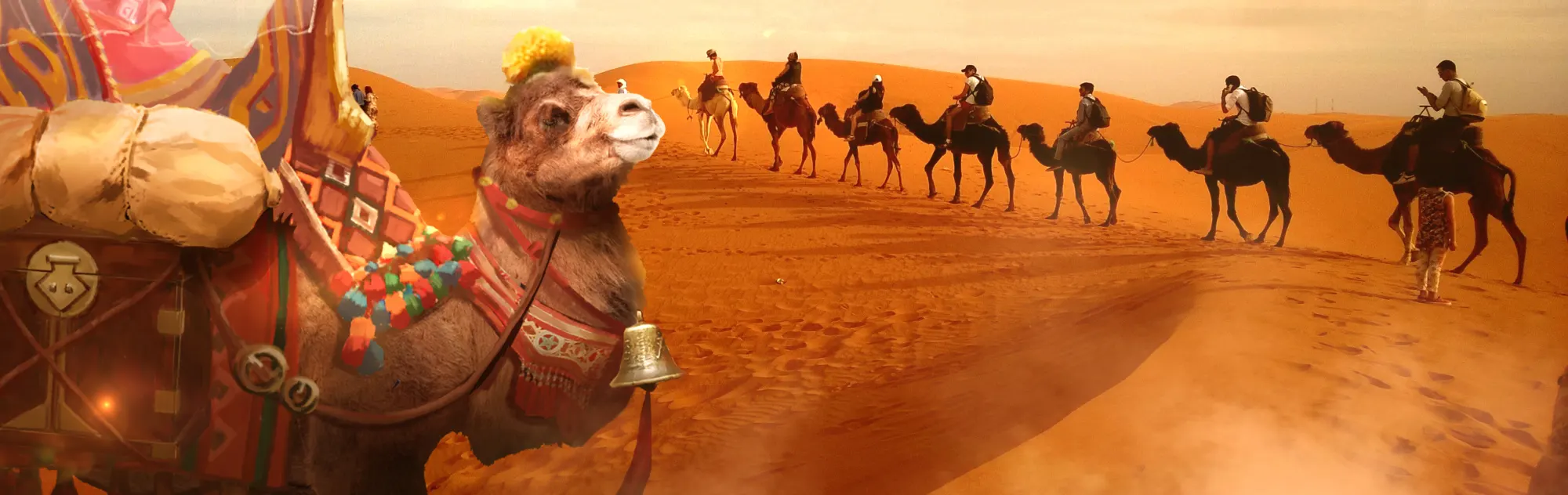
The Silk Road offers a unique travel experience through diversified landscapes, ideas, cultures, and, most intriguingly, the goods that were traded. When you start a Silk Road tour, you’ll find quite a lot of treasures that once flowed between continents, each with its own story and significance. Here are ten notable items that were traded on the Silk Road.
Content Preview
- 1. Silk: the Fabric of Nobles
- 2. Spices: Savory Treasures
- 3. Precious Stones and Gems: Jewels of the Earth
- 4. Tea: the Cultural Essence
- 5. Porcelain: the Art of Elegance
- 6. Paper: the Medium of Knowledge
- 7. Cotton and Textiles: Weaving Connections
- 8. Metals: the Backbone of Civilization
- 9. Glassware: Fragile Charm
- 10. Horses: the Steeds of Empires
1. Silk: the Fabric of Nobles
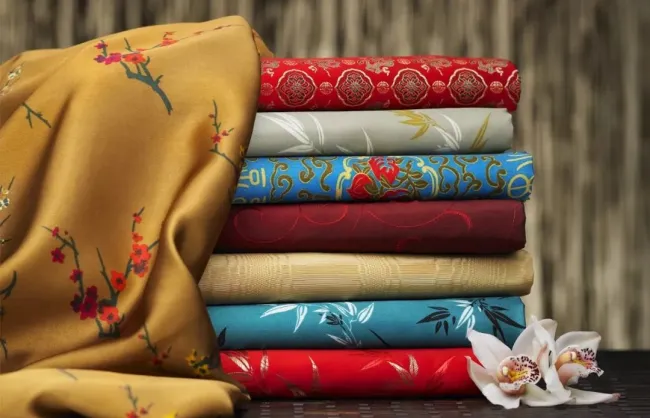
Silk was one of the most luxury and culturally significant products that gave the Silk Road its name. The technique of silk weaving was first developed in China around 3,000 years ago, and it had soon became a closely guarded secret of the Han Dynasty (206 BCE–220 CE). By the 1st century CE, this shimmering fabric had finally walked out of China and reached Central Asia and Rome. And soon this exquisitely produced treasure got adored by emperors and aristocrats in these regions. Its spread reshaped people’s understanding of fashion across continents while also inspired diplomatic exchanges, so that people have always called it the symbol of the deep connections between East and West.
Recommended China Silk Road Tours from Xi’an
- 5 Days Highlights Silk Road Tour: Xi’an & Dunhuang
- 15 Days In-depth Silk Road Tour from Xi’an to Xinjiang
- 7 Days Silk Road Small Group Tour of Xi’an-Zhangye-Jiayuguan-Dunhuang
2. Spices: Savory Treasures
Except for silk, another important good that once dominate the trading along the Silk Road is spices, such as pepper, cinnamon, cloves, and nutmeg. They traveled westward from India and Southeast Asia through Silk Road networks, bring an irresistible exotic flavors to so many different regions. They influenced various local food cultures, including a number of China’s Silk Road cities. Beyond food, spices also carried medicinal value and religious symbolism, it is, indeed, the best example showing how small commodities could have a vast cultural impact.
3. Precious Stones and Gems: Jewels of the Earth
The Silk Road also sparkled with the trade of gems, and most famous pieces include Lapis lazuli from Afghanistan, jade from China, turquoise from Persia, and rubies from Burma. During the time, these little shinning stones were prized as symbols of wealth and spiritual power. The trades of gems also encouraged artistic innovation, as local craftsmen in Samarkand and Kashgar gradually developed their unique jewelry traditions that merged imported stones with regional designs, leaving a lasting artistic legacy.
Recommend Central Asia Silk Road tour
4. Tea: the Cultural Essence
Tea, cultivated in China as early as the Tang Dynasty (618–907 CE), was also one of the most influential Silk Road exports. It spread into Tibet, Mongolia, and Central Asia, and later the nomadic communities had embraced it as a daily staple. And to some extent, it explains why even though Xinjiang does not produce tea, the region still developed a strong tea culture, with tea houses becoming centers of social life. And this illustrates how a single product could shape traditions, hospitality, and cultural identity far from its place of origin.
Read more about Tea along the Silk Road
5. Porcelain: the Art of Elegance
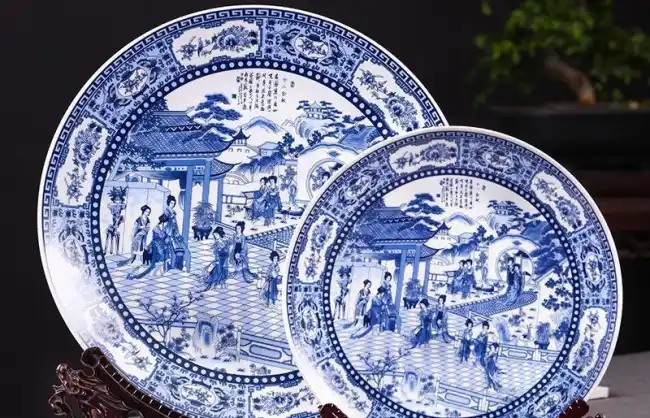
China is also famous for its technique of making porcelain products, and it was perfected during the Tang and Song Dynasties. The elegant products were widely admired for its strength and artistic beauty. Known as “white gold,” it was later shipped westward along the Silk Road and quickly captured more and more people’s love. It even became a symbol of refinement in Middle Eastern and European households. The demand for porcelain then inspired new pottery techniques in Persia and later attempts at replication in Europe. The spread of porcelain demonstrates that Silk Road has also witnessed the exchange of technology and artistry across civilizations.
Related reading: Chinese White and Blue Porcelain
Popular China Silk Road Tours
- 10 Days Ancient China Silk Road Tour from Xian to Kashgar
- 12 Days China Silk Road Tour from Xian to Urumqi by High-Speed Train
6. Paper: the Medium of Knowledge
When it comes to what was traded on the Silk Road, paper should be on the list. Paper was first invented in China during the Han Dynasty. And these light pieces were, indeed, one of the most transformative items that had once traveled along the Silk Road. By the 8th century, the craft had reached Samarkand. Here, some Chinese artisans had introduced papermaking technique to the Islamic world. Then it had been spread into Europe, making a major revolutions in literacy, record-keeping, and education.
Recommended China Silk Road Tours including Dunhuang
- 8 Days Classic Silk Road Tour from Xian to Dunhuang
- 8 Days Silk Road Adventure Tour from Xining to Dunhuang
- 10 Days Silk Road Tour: Dunhuang-Jiayuguan-Zhangye-Xining-Lanzhou
7. Cotton and Textiles: Weaving Connections
Cotton cultivation was originally began in India, however, after the development of Silk Road, it had soon been brought to many regions along the Silk Road. And it was by the medieval period, cotton fabrics and vibrant textiles reached Central Asia, the Middle East, and Europe. Colorful patterns and intricate weaves then became some of the most liked goods in bazaars in Bukhara and Samarkand became. These textiles had left lasting influence on local clothing styles and also interior decoration. Exchanges along silk road had made it possible for everyday materials to play a powerful role in cultural blending.
8. Metals: the Backbone of Civilization
Gold, silver, copper, and iron also circulated widely along the Silk Road. These metals were used for making coinage, jewelry, weapons, and tools, thus they were regarded as essential for both economies and daily life. While Central Asian mines were the main supplier of much of the raw material, it was the skilled artisans across regions transformed them into artistic and functional objects. The exchange of metals had greatly stimulated technological advances in smelting and metallurgy.
9. Glassware: Fragile Charm
Glassware, perfected by Roman artisans as early as the 1st century CE, was once a treasured good that had been continuously sent to regions and countries along the Silk Road. The imported glass items were widely valued by Chinese and Central Asian elites for their beauty and novelty, and later Islamic craftsmen had developed exquisite glass-making traditions of their own.
10. Horses: the Steeds of Empires
Horses were definitely a major contributor to the flourishment of the Silk Road. They not only helped people travel through the long and treacherous, but also stimulated the trades as some vital trade goods. These powerful animals had shown their significance in making the far destinations achievable, moreover, they enhanced military strength in different regions along the road. The trade of horses, indeed, reshaped people’s understanding of warfare, diplomacy, and mobility.
The above-mentioned were the best items traded on the Silk Road. Besides, Silk Road travelers also brought in and exported many other things along the trade routes of the Silk Road, such as cultures, religions, and ideas. Moreover, the China Silk Road tour takes you to explore the Silk Road’s history and culture as well as the trade of China’s silk, tea, and porcelain to other countries, never miss it.
Explore the Epic Silk Road with China Xian Tour
For thousands of years, the Silk Road had served far more than a trade route, it was a cultural highway that transformed civilizations. Today, a Silk Road tour can allow travelers to retrace these ancient paths through and explore sites that still echo the spirit of exchange. To make most of your journey, we strongly recommend you to travel with China Xian Tour.
With the help of our local travel experts, you’ll get a perfect journey which is made completely based on your own preference, and we’ll also provide you with private transfers and professional guides. From start to finish, we’ll take care of all the preparation for you so that you can fully enjoy the incredibly beautiful pictures revealing in front of your eyes.