


The Five Dynasties and Ten Kingdoms Period (907-960AD) was a transformative bridge between the Tang and Song dynasties.
The fifty-three years witnessed the rise and fall of five dynasties ruled by fourteen emperors from nine different imperial families. Arson, murder, pillage, and plunder became common scenes – the entire realm was engulfed in chaos and terror.
If we see through those dark clouds, we still find some of their legacies quite fascinating. This guide will include facts about the history, culture, achievements, and relevant tourist attractions of the Five Dynasties and Ten Kingdoms Period, so that you can unravel the tangled threads and find a clear path through this part of ancient Chinese history.
Content Preview
- Basic Facts
- Causes & Historical Background
- Difference Between the Five Dynasties and the Ten Kingdoms
- How Did the Song Dynasty End This Period?
- Five Dynasties and Ten Kingdoms vs. Three Kingdoms Period
- Interesting Facts
- Experience the Five Dynasties and Ten Kingdoms Period’s History and Heritage
- Travel with China Xian Tour for an In-depth Chinese History Discovery
Basic Facts
- Chinese name: 五代十国 (wǔdài shí guó)
- Time period: 907-960 AD (another theory is 902-979 AD if measuring by the time of the existence of the Ten Kingdoms)
- What are the Five Dynasties: the Later Liang, the Later Tang, the Later Jin, the Later Han, and the Later Zhou
- What are the Ten Kingdoms:
Geographical Area |
Name |
The Southern Yangtze River |
The Southern Wu |
The Southern Yangtze River |
The Southern Tang |
The Southern Yangtze River |
The Wu Yue Kingdom |
The Southern Yangtze River |
The Min Kingdom |
The Hu Guang Region (The Present-day Hubei and Hunan Provinces) |
The Southern Ping |
The Hu Guang Region (The Present-day Hubei and Hunan Provinces) |
The Chu Kingdom |
The Hu Guang Region (The Present-day Hubei and Hunan Provinces) |
The Southern Han |
The Liang Chuan Region (The Present-day central Sichuan) |
The Former Shu |
The Liang Chuan Region (The Present-day central Sichuan) |
The Later Shu |
In the North |
The Northern Han |
- The two following dynasties: the Northern Song and the Southern Song
Causes & Historical Background
In 881 AD, a man named “Huang Chao” proclaimed himself the Emperor of Da Qi and led his army to Chang’an, the capital city of the Tang dynasty, to rebel against the Tang regime. Huang committed brutal mass killings in Chang’an, and the remaining Tang populace managed to hide in the remote mountains.
Zhu Wen (later known as Zhu Quan Zhong), a subordinate of Huang, foresaw Huang’s doomed fate and chose to side with the Tang imperial family. As a result, Zhu was conferred the prestigious military title of Grand General of the Left Jinwu Guard and sent on a mission to suppress the rebellion.
Meanwhile, the Tang dynasty commanded Li Keyong and his Raven Army (soldiers wearing black and riding black horses) from Shatuo (an ethnic group that safeguarded the northern border of the Tang dynasty) to the same mission. Caught between two forces, Huang was eventually killed by his nephew in 884, and the Rebellion ended in failure.
Then in 907, Zhu Wen accepted the voluntary abdication of Emperor Ai of Tang, established the Later Liang, and took control over almost the northern Tang territory. That marked the beginning of the Five Dynasties.

Difference Between the Five Dynasties and the Ten Kingdoms
On the timeline, the Five Dynasties and Ten Kingdoms were concurrent. “Five Dynasties” refers to five consecutive dynasties on the Central Plains after the Tang dynasty, each lasting about 10 years (c.907-960 AD).
And “Ten Kingdoms” was a regional concept. The so-called “Kingdoms” originated from highly independent regional warlord forces, nine of which were in the south and one in the north.
Five Dynasties
The Later Liang
Zhu Wen was conferred the title of Military Commissioner of Xuanwu for his contribution to terminating the rebellion. Soon, Zhu was enfeoffed as the King of Liang and expanded his influence beyond the center of Henan. As mentioned above, Zhu rose to power at the time of Emperor Ai and established the Later Liang in Kaifeng in 907 AD.
In 923, the Later Liang was annihilated by Li Cunxu, the founder of the Later Tang.
The Later Tang
When Li Cunxu, the son of Li Keyong from Shatuo, who fought against Huang Chao under the Tang emperor’s command, ended the Later Liang’s rule, he took the throne in Luoyang and restored the state title as “Tang”.
The Later Tang exceled in military prowess, featuring several victories over the Khitan army. However, the political conflicts in the imperial court intensified as imperial actors and eunuchs were elevated to an unfairly high status, and rewards and punishments were applied to the wrong targets.
Consequently, the Later Tang ended in 936 due to a scheme planned by Shi Jingtang and the Later Tang’s rival, the Khitan people.
The Later Jin
The Later Jin was established by Shi Jingtang, the Emperor Ming of the Later Tang’s son-in-law. He overthrew the Later Tang at the expense of the Sixteen States of the Youyun (the current Beijing, Tianjin, northern Hebei, and northern Shanxi) and routine tributes.
During Shi Jingtang’s reign, he relied so much on the Khitan force that the Central Plains were trapped in constant turbulence of warfare. A dramatic fact was that the Later Jin was annihilated by its old ally– the Khitan army.
The Later Han
Liu Zhiyuan used to be a humble soldier in Shi Jingtang’s army. In 947, he seized the opportunity of the Khitans’ war against the Later Jin and proclaimed himself the Emperor of the Later Han in Taiyuan, Shanxi. After capturing Kaifeng, he became a pivotal ruler of the northern regime.
However, due to the strict legal punishments and inhuman oppression of the masses, the Later Han was the shortest-lived dynasty among the Five Dynasties. In only four years, it ended in the coup organized by Guo Wei.
The Later Zhou
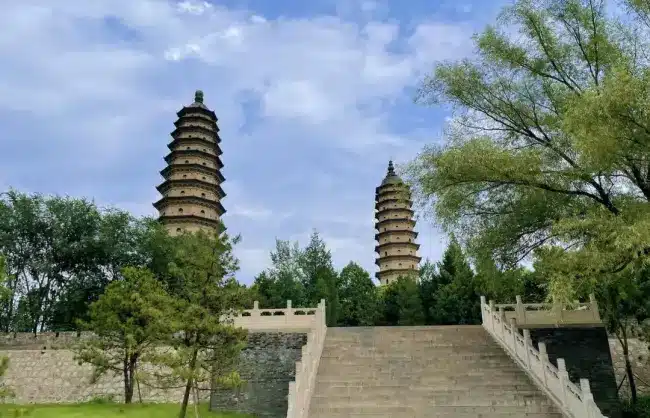
In 951, Guo Wei established the last regime of the Five Dynasties in Kaifeng. The regime was named “the Later Zhou” mainly because he claimed that the Duke of Guo from the Zhou dynasty was his ancestor.
Guo implemented a series of policies that reduced forced labor, reorganized the military and political affairs, and punished corruption. These measures laid a foundation for the Later Zhou’s development.
Although the three successive emperors of the Later Zhou obtained great achievements like capturing the Southern Tang’s Fourteen States of Huainan and launching a northward expedition against the Khitan army, the Later Zhou was eventually terminated by Zhang Kuang Ying, the founder of the Northern Song dynasty in 960.
The collapse of the Later Zhou also marked the end of the Five Dynasties period.
Ten Kingdoms
The Southern Wu
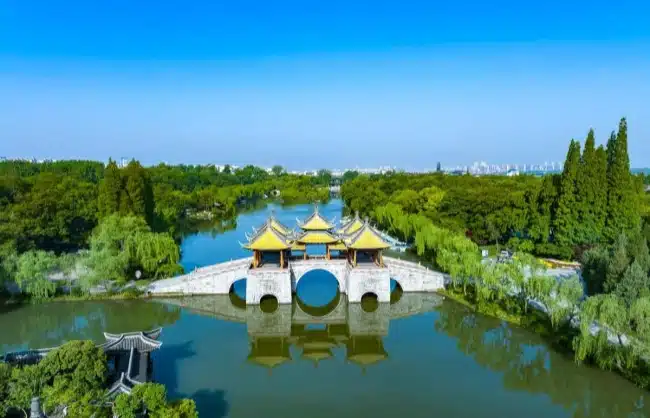
The Southern Wu was a regional force established by Yang Xingmi in 902 AD and ended in 937 after four rulers. Its capital city was located in Yangzhou. As the mightiest regime in the south, it controlled the present-day Jiangxi, eastern Hubei, Anhui, and the Huainan region in Jiangsu.
Yang built up his influence in Hefei and gradually unified the southeastern area to rival the Wu Yue Kingdom. During the time of the Southern Wu, the southern area remained relatively peaceful with a reviving economy. It paved the way for the prosperity of the Northern Song to some extent.
The Southern Tang
The Southern Tang was a regime in the southern Yangtze region. In 937, Li Bian, an adopted son of Xu Wen, the prestigious prime minister of the Southern Wu, established the regime, and it was annihilated by the Northern Song in 975. Jiangning (the current Nanjing) was chosen as its capital city.
The Southern Tang was the biggest among the ten kingdoms–more than 30 states and five million population were under its rule during its prime. However, the successive rulers, Li Jing and Li Yu, failed to maintain the territorial advantage, though defeated the Min and Chu Kingdoms. In the middle and late period, the Southern Tang had to stay subordinate to the Later Zhou and the Northern Song to survive.
If you are enthusiastic about literature, especially poetry, then you might be familiar with the excellent works composed by Li Jing and Li Yu, which are still widely read and praised nowadays.
The Wu Yue Kingdom
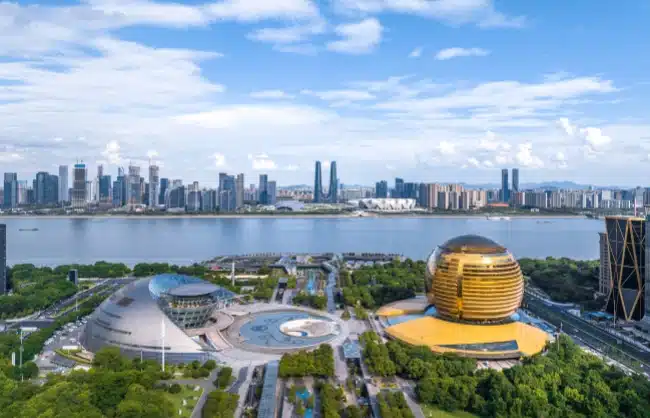
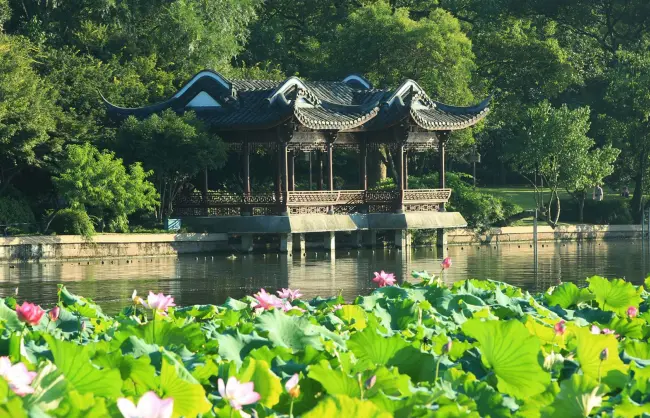
The Wu Yue Kingdom was established in 907 by Qian Liu, and the capital city rested in Hangzhou. Its territory was roughly the current Zhejiang, southeastern Jiangsu, Shanghai, and northeastern Fujian. After the collapse of the Tang dynasty, Qian chose to submit to the Later Liang and the Later Tang by accepting enfeoffment, while secretly resuming his rule over the Wu Yue Kingdom.
The Kingdom safeguarded its borders and protected its people. Also, it prioritized water conservancy projects like sea dikes and embanked fields, which promoted its domestic stability and prosperity. Externally, it acknowledged the authoritative status of the Central Plains dynasties and was seldom involved in conflicts with its neighboring kingdoms.
The Min Kingdom
The Min Kingdom was established by Wang Shenzhi, who was conferred the title “King of Min” by the Later Liang in 909 AD. The kingdom experienced six rulers in a span of thirty-seven years.
The Min Kingdom’s territory covered the current Fujian province. Its capital city changed from Fuzhou to Jianzhou. Wang endeavored to boost the economy, especially through maritime commerce. It was an important basis for the development of ports like Fuzhou and Quanzhou.
However, after Wang’s death, the Ming dynasty was caught in the turmoil of internal conflicts between imperial family members. Resultly, it was annihilated by the Southern Tang in 945.
The Southern Ping
The Southern Ping (924-963), was also known as the Jingnan Kingdom. It was founded by Gao Jixing in Jingzhou (the present-day Jiangling, Hubei). This impoverished and weak kingdom was located on a strategic south-north crossroad and occupied a rather narrow territory, which consisted of the Xing, Gui, and Xia states.
To sustain the kingdom, the Southern Ping resorted to robbing tributes and begging for rewards from other kingdoms as a subordinate. That is why it was given a derogatory epithet, which means “a shameless sponger”.
In 963, the Song dynasty passed through the territory of the Southern Ping on the way to capturing the Hunan area, and forced the abdication of its last ruler.
The Chu Kingdom
The Chu Kingdom (907-951) was a Hunan-centered force, historically known as Ma Chu. It was established by Ma Yin, with its capital city in Tanzhou (the present-day Changsha). Ma Yin was the governor of the Wu’an army during the late Tang period and was conferred the title “King of Chu” by the Later Liang.
During Ma Yin’s reign, he was diligent in state affairs and made full use of the local resources to improve the economy and education, which promoted the stable development of the Hunan area. However, similar to the Min Kingdom, the conflicts within the imperial court undermined its national strength and directly propelled its fall.
The Southern Han
The Southern Han was a Lingnan-based regional force. It was founded by Liu Yan in 917, and the capital city rested in the Xing Wang Prefecture (the current Guangzhou).
Liu chose to learn from the Tang dynasty in several aspects to cultivate the national power: the official selection system and the Imperial Examination, the measures that weakened the regional warlords, and the supportive policies in commerce.
After another wave of expansion during the time of King Zhongzong, the Southern Han captured a vast territory covering the current Guangdong, Guangxi, Hainan, and northern Vietnam.
Unfortunately, due to the heavy taxation and harsh legal punishments inflicted on the people, it quickly lost popular support in the late period. In 971, the last ruler, Liu Chang, surrendered in a southward expedition of the Northern Song.
The Former Shu
The Former Shu (907-925) was established by Wang Jian, who denied the validity of the Later Liang, in Chengdu, Sichuan. It lasted only 18 years under two kings. The Kingdom covered most of the current Sichuan, Gansu, Shaanxi, and Hubei.
Wang Jian was proven to be a virtuous ruler, but his son, Wang Yan, who succeeded him after his death, led an extravagant life and showed little concern for state affairs. Therefore, it did not take a lot of effort for the Later Tang to witness Wang Yan’s submission and the annihilation of the Former Shu.
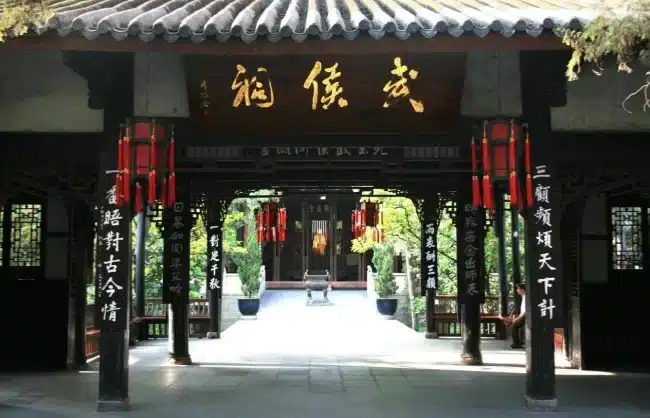

The Later Shu
The Later Shu (934-965) was another force based in Chengdu, Sichuan. It was established by Meng Zhixiang, the governor of the Later Tang’s Xichuan army.
After his son, Meng Chang, succeeded to the throne, his reorganization of the official system enhanced the social stability and economic growth. The Later Shu also became a cultural fountain of the Five Dynasties period. For example, the Meng Shu Stone Scriptures and the Spring Festival Scroll culture both derived from the Later Shu.
In 965, the Northern Song army launched an attack on the Later Shu and forced Meng Chang to surrender. The Later Shu was thus annihilated.
The Northern Han
The Northern Han was the last regime of the Ten Kingdoms, established in 951. Its capital city was Jinyang (the present-day Taiyuan, Shanxi), which was the center of twelve states in central and northern Shanxi.
The Northern Han depended much on the Liao dynasty, founded by the Khitan people, but was terminated by the Northern Song in 979.
How Did the Song Dynasty End This Period?
As previously stated, the Five Dynasties and the Ten Kingdoms constantly conflicted and fought each other, and some of them were completely wiped out. It was the Northern Song’s Unification War that cleansed the remaining forces.
For the task of unification, the Northern Song implemented the strategy of “south first, north follows”– the targeted kingdoms were sequenced as: the Chu Kingdom in 963, at the same time, the Southern Ping surrendered voluntarily; then the Later Shu in 965; in 968, the Taizu of Song launched the first attack on the Northern Han.
Two years later, the Southern Han was annihilated. And the same fate fell on the Southern Tang in 975. To avoid meaningless bleeding, the Wu Yue Kingdom chose voluntary submission in 978. Eventually, in 979, Taizong of Song annihilated the Northern Han in a second attack.
The Northern Song did not unify the whole of ancient China, due to the loss of the Sixteen States of Youyun, Liaodong, and Liaoxi. But the majority of the territory had been stably under its control.
Five Dynasties and Ten Kingdoms vs. Three Kingdoms Period
Speaking of “Kingdom” in ancient Chinese history, whether you are an expert on it, the first concept that pops up in your mind might be the Three Kingdoms period (220-280), which featured the regimes of Cao Wei, Shu Han, and Eastern Wu established respectively by Cao Pi, Liu Bei, and Sun Quan.
As you can see, there was a trio of rival regimes, much less than the Ten Kingdoms introduced above, and of course, easier to clarify their relationships and history.
One of the most significant factors contributing to the popularity of the Three Kingdoms was the novel “Romance of the Three Kingdoms” from the Ming dynasty.
The depiction of conflicts and struggles, as well as the creation of various iconic characters in the Three Kingdoms, reflects the dark social conditions marked by a corrupt court, warlord chaos, and widespread suffering, while extolling the talents of virtuous rulers, wise ministers, capable generals, and loyal heroes.
Interesting Facts
- The North-South Division of Buddhism: Thedevelopment of Buddhism was severely hindered in the Later Zhou due to a “Buddhism extermination” campaign, which demolished over thirty thousand temples in 955. In contrast, Buddhism thrived in the south because the rulers themselves were pious Buddhists.
- The Heated Popularity of Taoism: During that period, the notions of “heavenly sovereignty” and “eternal life” were utilized by the rulers to strengthen the imperial authority. And the populace drew consolation from the idea of divine worship and talisman.
- A Peak of Ceramic Art: The Ge Kiln, which was later known as one of the Five Kilns of Zhongnan, emerged during that time.
- Prosperous Manufacture and Commerce: The production of handicrafts like silk, tea, and porcelain flourished rapidly in the south (e.g., the Min Kingdom and the Wu Yue Kingdom). They became vital goods for maritime trade and propelled the regional economy.
- The Development of Agriculture: The Former Shu and Later Shu valued agriculture and water conservancy projects. Their achievements in hydraulic engineering and farmland management provided material foundations for cultural booming.
Experience the Five Dynasties and Ten Kingdoms Period’s History and Heritage
Luoyang
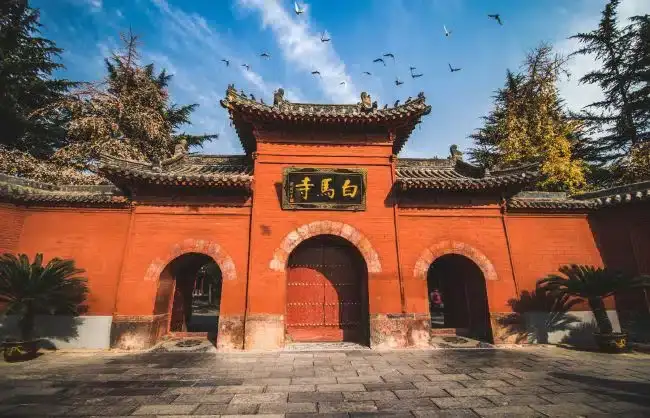
Luoyang was the capital city (or second capital) of the Later Liang, Later Tang, Later Jin, Later Han, and Later Zhou, a crucial political and cultural center of the Five Dynasties period. And it is where loads of cultural heritages from that period were preserved.
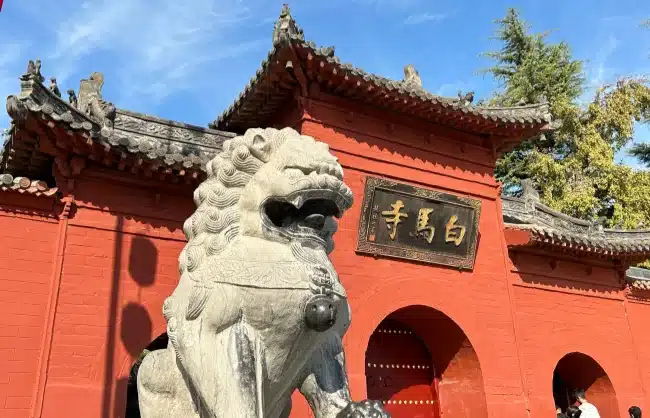
Here you can visit three landmark sites that preserve the evolution of Chinese Buddhism and art through the Five Dynasties period. The Longmen Grottoes showcase over 400 years of masterful stone carvings, while the White Horse Temple stands as China’s first Buddhist temple, surviving centuries of warfare through royal restoration. Complementing these sites, the Luoyang Museum houses an extensive collection of Tang tri-color pottery and ceramics that vividly capture the social landscape of ancient China’s golden eras.
Recommended Luoyang tour
Witness an authentic Shaolin Kung Fu performance at the legendary temple, then explore Longmen Grottoes' tens of thousands of exquisite Buddha stone carvings.
Nanjing
During the Five Dynasties and Ten Kingdoms period, Nanjing was the capital city of the Southern Tang, with the mausoleum of two Southern Tang rulers, Li Bian and Li Jing, as a groundbreaking archaeological discovery.
- Qin Huai River: The rulers of the Southern Tang commanded vigorous construction of gardens (for example, the precursor to Zhan Garden) along the Qin Huai River. The banks of the River teemed with merchants and were adorned with splendid pavilions and towers. It is not just a moat but also a significant cultural and art landmark.
- The Nanjing Museum: The Museum preserves precious legacies discovered in the mausoleum of two Southern Tang rulers. For example, the terracotta figurines, like the round-faced, slightly plump male figurine in a playful pose, gold and silver wares, and the Southern Tang ceremonial fish, were all proof of the unique history and aesthetics of that period.
Recommended Nanjing tour

Explore Nanjing's 3000-year legacy at Zhongshan Ling, the Ming-era Xiaoling mausoleum, and the lantern-lit Qinhuai River in China's ancient southern capital.
Chengdu
Chengdu was the capital city of the Former Shu and Later Shu. And relics like the imperial palace and tombs trace the history of this city.
- Yongling Museum (The Mausoleum of Wangjian): Belongs to the King of the Former Shu, Wangjian. It is the only known imperial tomb that has its entire structure on the ground.
- The relic of Donghua Gate: It preserves the millennial trajectory of the Qin, Han, Three Kingdoms, Sui, Tang, Five Dynasties, to the Ming and Qing periods. It shows how the city of Chengdu was built up bit by bit. Moreover, it includes the remains of the imperial palace of the Former and Later Shu.
Taiyuan
During the Five Dynasties and Ten Kingdoms period, Taiyuan was a renowned “warlord headquarters” that once served as the strategic fortress of the Later Tang, Later Jin, Later Han, Later Zhou, and Northern Han.
- JinMemorial Temple: Although its architecture presents a salient Song style, it was once the sacrificial center of the Northern Han and preserved the characteristics of the Five Dynasties period’s ritual elements.
- Wanfo Hall of Zhenguo Temple, Pingyao Ancient Town: It is a key architecture of the Five Dynasties style. Constructed by the Northern Han, it is one of only three extant Five Dynasties-era structures in Chinese Buddhist Temples.
Recommended tour

Take a 4-hour high-speed train from Beijing to explore Pingyao Ancient Town, the grand Wang Family Courtyard, and the stunning Shuanglin Temple with its ancient murals.
Guangzhou
Guangzhou, or Xingwang Prefecture, used to be the capital city of the Southern Han. It was also an important hub of the maritime Silk Road. Top sites to witness the history of Five Dynasties and Tem Kingdoms are:
- The Nanyue King Museum:preserves the refined architectural remains of the Southern Han palace, now brought to life through MR technology that recreates its storied, gem-adorned interiors.
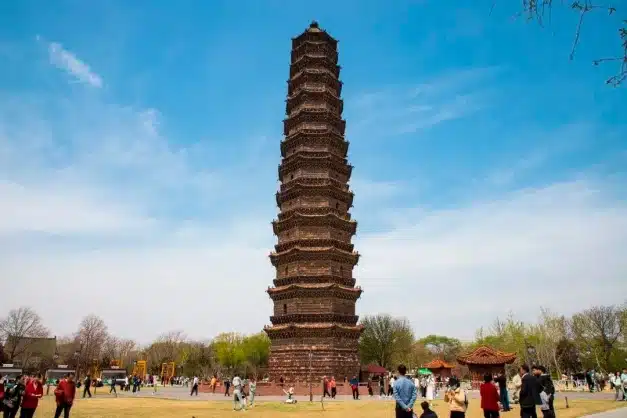
- Guangxiao Temple:serves as a vital center of Lingnan Buddhism, housing the historic East and West Iron Pagodas which stand as masterpieces of Southern Han metal craftsmanship.
Recommended tour

Discover 2,200 years of Guangzhou history through ancestral halls, ancient temples, modern skylines and authentic Cantonese cuisine.
Travel with China Xian Tour for an In-depth Chinese History Discovery
When you truly discover the unique charm of the culture and art from the Five Dynasties and Ten Kingdoms, “Chaos” might not be your only impression of this transformative period.
Although warfare and the change of time could destroy many treasures, the enthusiasm for and pursuit of art and beauty still enable the culture of this era to glisten on the star chart of ancient Chinese history.
If you are interested in the stories of various Chinese dynasties, China Xian Tour will make sure to greet you with intriguing history, culture, and gourmets, as well as warm and patient service, because your journey and your satisfaction matter!