

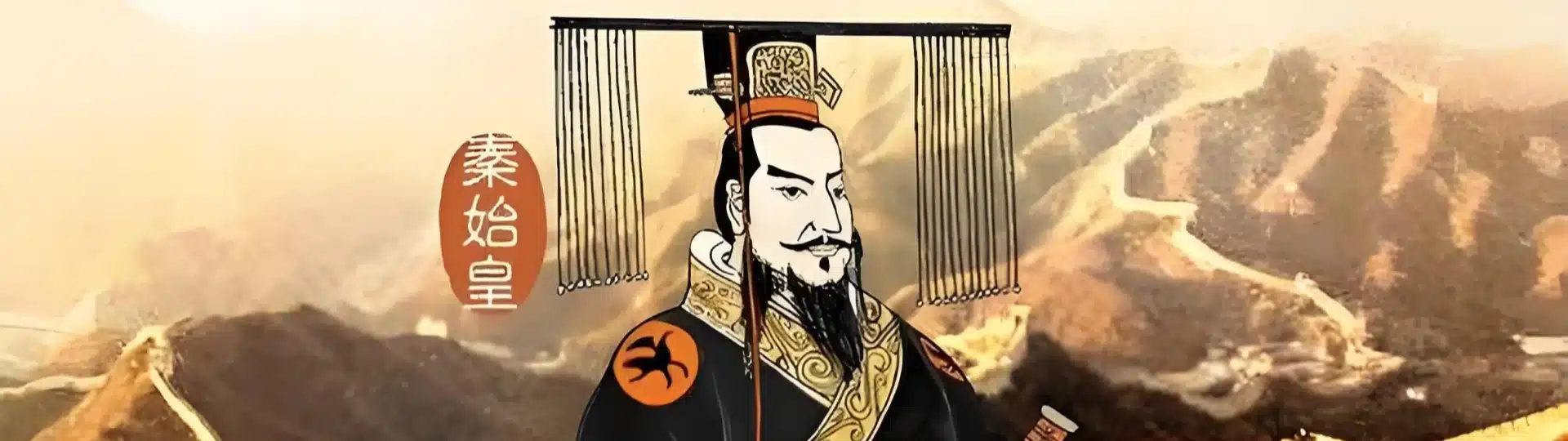
The Qin dynasty is a short-lived, yet extremely pivotal dynasty that ended centuries of Warring States and unified ancient China into a great empire for the first time in 221 BCE. Its advanced bureaucratic system, cultural heritage, and territorial foundation significantly influenced China for the next 2000 years.
The groundbreaking achievements of the Qin dynasty make it a monumental period in Chinese history. However, its brutal authoritarian rule receives fierce criticism and remains controversial.
This guide aims to help you understand what the Qin dynasty is like – Qin’s rise and fall, a summary of its events, its legendary emperor, the major achievements during the period, its precious legacy, and tips for Qin-related travel destinations.
Content Preview
- Qin Dynasty Quick Facts
- An Overview of the Qin Dynasty History
- Shadow of Tyranny and Repression
- Burdens on the People
- The Death of the First Emperor & Immediate Collapse
- Qin Dynasty Achievements: The Blueprint for Empire
- The Qin Dynasty’s Enduring Legacy
- Qin Dynasty Fun Facts
- Where to Experience Qin Dynasty History & Heritage
- Immersive China Journey of the Qin Dynasty with China Xian Tour
Qin Dynasty Quick Facts
- Chinese name: 秦朝
- Capital: Xianyang, Shaanxi
- Time period: 221- 207 BCE (15 years)
- Founder: Qin Shi Huang(Ying Zheng)
- Territory: most of the current Shaanxi, southeastern Gansu, most of the current Sichuan, Chongqing, most of the current Henan, western Hubei, southwestern Hunan, and some parts of the current Shanxi and Hebei

An Overview of the Qin Dynasty History
The Rise of Qin: From Frontier State to Great Power
The Qin dynasty was not born as a powerful empire. Qin was enfeoffed as a small frontier vassal state under the rule of the Zhou dynasty due to Lord Xiang of Qin’s protection of the Emperor Ping of Zhou (c.770 BCE). With the efforts of several kings of Qin, through Shang Yang’s Reforms and lasting battles with the other six vassal states, it became a mighty entity that was later capable of unifying China.
The Ambitious State of Qin Before Unification
After the reign of King Wen, the Qin state achieved victory in its campaigns against the western ethnic groups. By 677 BCE, Qin had occupied most areas of the Guanzhong Plain and boosted itself into a powerful State in the West.
King Mu of Qin, one of the Five Hegemons of the Spring and Autumn Period, accepted the Jin state’s ceding territory and hostage. It laid the foundation for the Rise of Qin.
From 356 to 350 BCE, King Xiao of Qin adopted Shang Yang’s reforms. The reforms encouraged population growth, prioritized agriculture over commerce, abolished hereditary noble titles and privileges, rewarded military merits, established household registration systems, and implemented the principle of collective liability.
These policies effectively reinforced the centralization of imperial authority and stimulated the economy. The morale of the Qin soldiers was largely raised because improving their social status served as a major motivation for fighting against their enemies. Qin’s state power was significantly strengthened by the reforms.
Meanwhile, the Qin state formed alliances with other vassal states to conquer their mutual rivals. For example, Qin’s alliance with Chu, Qi, and Zhao struck a heavy blow to the Wei state and led to Wei’s collapse.
Qin Shi Huang: The First Emperor of Qin and China
In 221 BCE, Ying Zheng succeeded in unifying the six states and forming a great empire–Qin. He believed that his achievements in unification equalled the governance of the legendary “Three Sovereigns (Huang) and Five Emperors (Di) ”. Therefore, Ying Zheng was inspired by their titles and bestowed the title “Shi Huang Di” (the First Emperor) upon himself. Thus, Ying Zheng was known as “Qin Shi Huang”.
Since then, emperors have been the core of the Chinese imperial system for over two millennia. Qin Shi Huang was not only the first emperor of the Qin Empire, but also the First Emperor of ancient China. And the Qin empire was China’s first centralized imperial feudal dynasty.
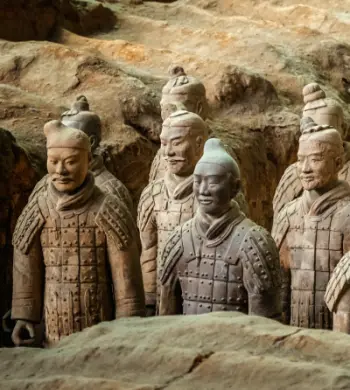
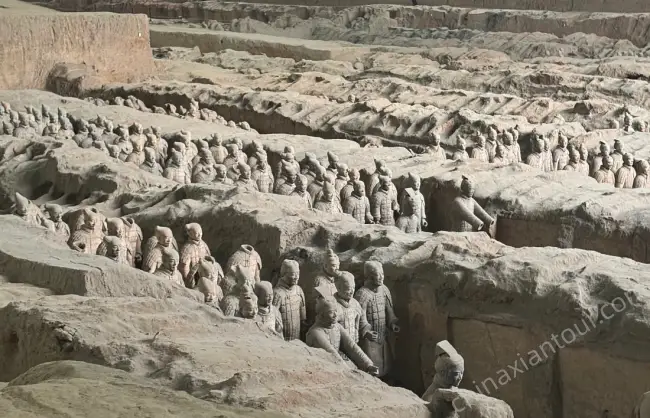
Qin Shi Huang’s achievements left profound legacies for the future dynasties, and an immense mausoleum was built to commemorate this legendary emperor. It took 39 years for the Qin people to build an immense mausoleum for the late Qin Shi Huang. In this underground palace lies one of the World’s Eight Wonders– the Terracotta Army, a famous attraction of Xi’an.
The Wars of Unification (230-221 BCE)
From 230 to 221 BCE, the Qin state deployed systematic strategies to conquer the six states of Han, Zhao, Wei, Chu, Yan, and Qi. With effective strategies, it avoided exhaustion in wars while boosting its state power.
The first annihilated state was Han, the smallest among the seven states, but rested on a tactically important location. Then, Qin smashed the alliance between Qi and Zhao, hindering Zhao from any external assistance. Due to the King of Zhao’s wrongful execution of General Li Mu, Zhao lost the subsequent battles and was the second to be annihilated.
Relying on protracted and exhausting wars and the strategy of siege, Qin conquered Wei, Chu, and Yan. Finally, although Qi expressed its loyalty by avoiding the alliances against Qin, it obviously chose the wrong ally. Qin had neither geographical barriers to impede Qin’s invasion nor military forces to resist it. Qin was conquered without a fight.
A Timeline: Major Events During the Qin Dynasty
Time |
Event |
Description |
221 BCE |
Ying Zheng’s rise to power |
Ying Zheng completed the unification and proclaimed himself the First Emperor. The imperial system was established. |
220 BCE |
the construction of Imperial Highways |
Qin Shi Huang commanded the construction of Imperial Highways centring the capital city, Xianyang. It facilitated land transportation and cultural exchanges. |
219 BCE |
the construction of the Ling Canal |
Qin Shi Huang ordered a canal between the Xiang River and the Li River for transporting soldiers’ provisions. |
219-210 BCE |
Battles against Bai-Yue |
Qin Shi Huang assembled a massive army of 500,000 soldiers to conquer the Bai-Yue tribes in the south. After three major battles, Qin Shi Huang occupied the region and established three counties. |
215-213 BCE |
Battles against Xiongnu |
Qin Shi Huang sent 300,000 soldiers to fight against Xiongnu in the northern border. This battles and the construction of the Great Wall effectively protected safety of the people and property. |
213-212 BCE |
Burning Confucian classics and burying Confucian scholars alive |
Qin Shi Huang was irritated by Confucian scholars’ suggestions of enfeoffment. Consequently, he decided to burn Confucian classics and bury Confucian scholars alive to centralise his power. |
210 BCE |
the death of Qin Shi Huang |
Qin Shi Huang died in his temporary palace during his inspection tour. Zhao Gao conspired with Li Si to enthrone Qin Shi Huang’s eighteenth child, Hu Hai. |
209 BCE |
Dazexiang Uprising |
Two garrison soldiers, Chen Sheng and Wu Guang, led over 900 soldiers to launch a rebellion in Dazexiang. It was the first large-scale peasant rebellion in ancient Chinese history and it undermined the Qin regime. |
209 BCE |
White Serpent Rebellion |
Liu Bang slew a white serpent in the Mangdang Mountain and proclaimed himself the son of the Red Emperor to resist against Qin’s tyrannical rule. |
208 BCE |
Battle of Julu |
Xiangyu led the Chu army to battle against 400,000 Qin soldiers. Qin lost its major military force. |
August, 207 BCE |
Zhao Gao’s conspiracy |
Hu Hai was unsatisfied about General Zhang Han’s submission to Xiangyu, and blamed Zhao Gao for the failure. Zhao Gao then forced Hu Hai to commit suicide. Zi Ying became the King of Qin. |
the execution of Zhao Gao |
Zi Ying saw through Zhao Gao’s conspiracy and executed Zhao and his family. |
|
October, 207 BCE |
the end of Qin |
Liu Bang captured the capital city, Xianyang. Zi Ying was forced to surrender. It marked the end of the Qin dynasty. |
Shadow of Tyranny and Repression
Most historians criticised Qin Shi Huang for his brutal tyranny. Qin Shi Huang’s support for Legalism ensured the superior status of laws in regulating the people’s behaviours. However, the punishments were intimidatingly bloody and violent, and caused widespread panic in society.
The strict collective liability policy aggravated the panic by executing innocent families and friends of the criminals. Laws were transformed into synonyms of terror and death.
Nevertheless, to strengthen the central authority, Qin Shi Huang abused his power to repress any “dissent”: he commanded to burn Confucian texts and bury over 400 Confucian scholars alive, because they suggested implementing the enfeoffment system.
Burdens on the People
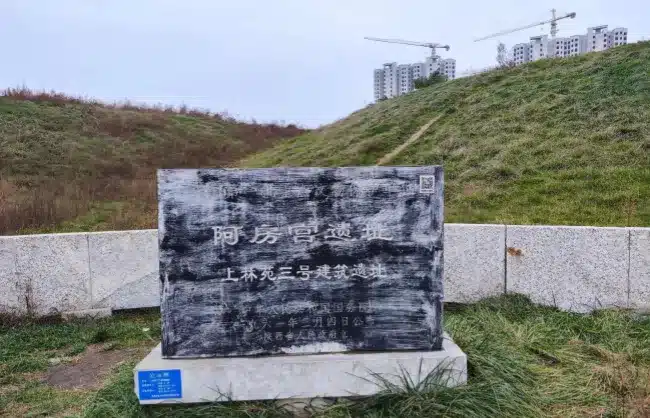
Qin’s tyranny was also embodied in the harsh forced labour and taxes. The achievements of Qin’s Architectural relics, such as the Xianyang Palace, E’pang Palace, plank roads, and the Great Wall, were at the expense of millions of people’s lives.
A large portion of the labour force was conscripted for the projects, leaving the fields fallow. Nearly two-thirds of each household’s annual income was taxed to fund warfare, construction, and the extravagance of the ruling class.
Famine and poverty afflicted the Qin civilians. The masses lost trust in their emperor, and resentment and revolts were stirred up.
The Death of the First Emperor & Immediate Collapse
In 210 BCE, Qin Shi Huang went on his fifth imperial inspection and fell gravely ill on the way. Eventually, he died in this temporary palace in Shaqiu.
The death of this First Emperor accelerated the fall of the Qin dynasty: Zhao Gao, a treacherous minister, conspired with the prime minister, Li Si, to enthrone Qin Shi Huang’s 18th child, Hu Hai, while intervening in the state affairs.
When, How & Why did Qin End?
The civilians’ resentment of Qin’s tyranny was not appeased after Qin Shi Huang’s death. In 209 BCE, the first large-scale peasant rebellion rose in Dazexiang. Two garrison soldiers, called Chen Sheng and Wu Guang, led a revolt against the Qin dynasty. It won enthusiastic public responses and support.
In the same year, Liu Bang slew a white serpent in Mount Mangdang and proclaimed himself the son of the Red Emperor. It further shook the authority of the Qin imperial court.
In the following two years, Qin suffered dual pressure: externally, the Qin army kept losing ground in the battle against the Chu army; internally, Zhao Gao managed to seize power by forcing the emperor, Hu Hai, to commit suicide and depriving the successor, Zi Ying, of the title “Emperor”.
Finally, in October 207 BCE, although Zi Ying had executed the vile official, Zhao Gao, the collapse of Qin had been set in stone when Liu Bang captured Xianyang.
Zi Ying’s submission marked the end of Qin–the first unified empire in Chinese history. The Qin regime lasted only 15 years under two emperors. Most historians agree that the fall of Qin should be attributed to Qin Shi Huang’s brutal tyranny and the political corruption brought about by the traitor, Zhao Gao.
Qin Dynasty Achievements: The Blueprint for Empire
Political & Administrative
The enfeoffment system, which distributed administrative power to vassal states, was completely abolished in the Qin dynasty. Qin Shi Huang established prefectures and counties to govern different regions.
In the imperial court, the system of “Three Councillors and Nine Ministers” was created. High-ranking officials, such as Prime Ministers, Grand Commandants, and Imperial Censor-in-Chiefs, restrained each other and assisted the emperors together.
The two administrative systems, one for local affairs and one for the imperial court, embodied centralized imperial authority.
Economy Development
The Qin dynasty prioritised agriculture over commerce. Agriculture became the pillar of the national economy and was pushed forward by effective agrarian policies. Specifically, individual peasants owned the rights to cultivate the lands. From 359 BCE, area-based taxation compensated for the inequity between the nobles and peasants. This greatly boosted peasants’ enthusiasm for production and increased agricultural revenues.
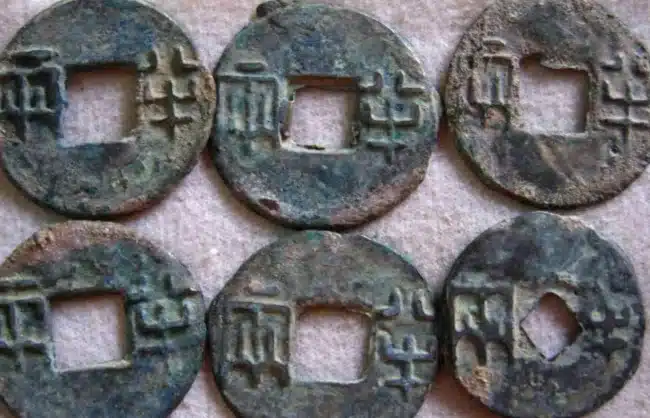
Meanwhile, the uniform currency helped to remove regional barriers in commerce and attracted merchants and craftsmen to the markets. Additionally, the well-developed transportation network not only facilitated regional commercial exchanges but also enabled trade between China and its neighbouring countries. The prosperity of agriculture, commerce, and manufacturing contributed to the blooming economy of the Qin dynasty.
Culture & Art
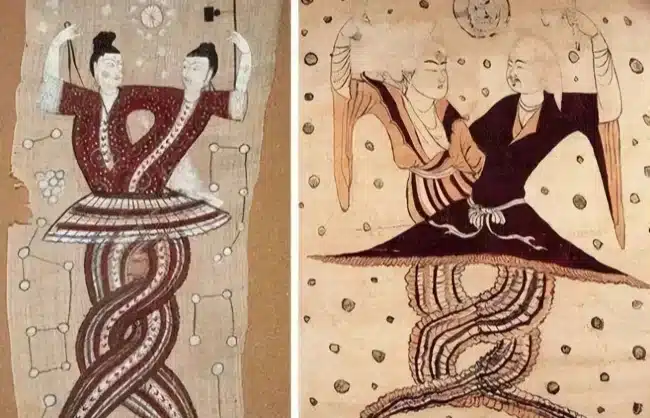
Qin’s achievements in culture and arts were not limited to literature and poetry, after the unification of the writing system, but also represented by the magnificent mural paintings and jade carving.
The mural paintings included themes of rituals and imperial life, serving as important icons and ornaments. The painting techniques featured detailed presentations of the figures’ complexion and expressions. Therefore, Qin’s mural paintings perfectly combined storytelling and aesthetic value, which profoundly impacted future generations.
The jade carving techniques during that period were also a miracle: evidence has proved that, due to the lack of suitable tools, the carving was completed manually. The techniques can be classified into round carving and relief carving. And auspicious animal motifs like dragons, phoenixes, and tigers were the major choice of the carving patterns. The exquisite patterns and designs showed the Qin artisans’ appreciation of jade’s value and masterful carving skills.
The Qin Dynasty’s Enduring Legacy
The Template for All Future Dynasties
During his 12-year reign (221-210 BCE) as an emperor, Qin Shi Huang made significant contributions to the development of politics, economics, culture, and society.
He implemented uniform writing and measuring systems, which ended the division and isolation between different regions. Additionally, the improvement of infrastructure, such as plank roads and canals, strengthened regional exchanges. These achievements were imitated and adopted by the subsequent dynasties.
Archaeological Wonder: The Terracotta Army
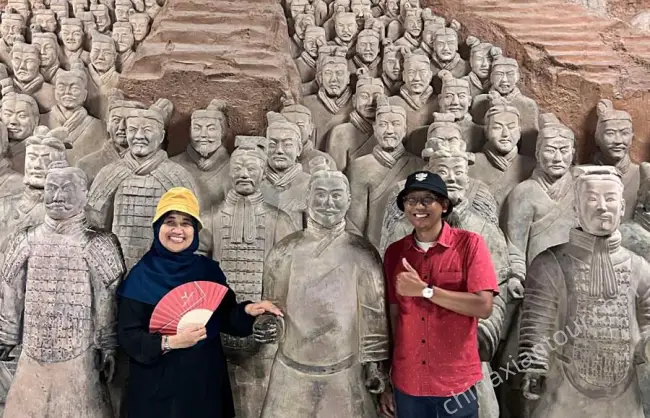
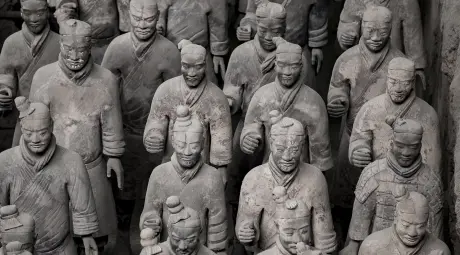
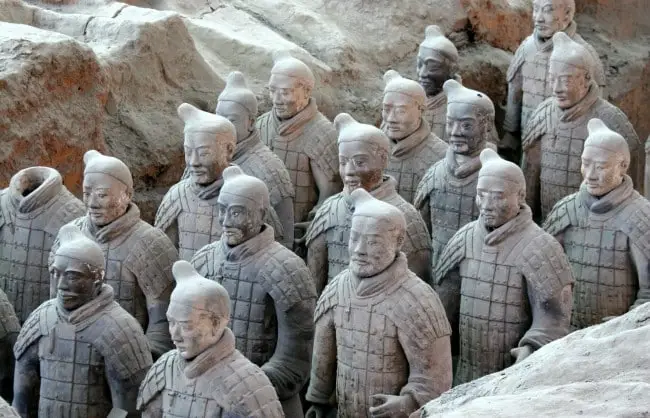
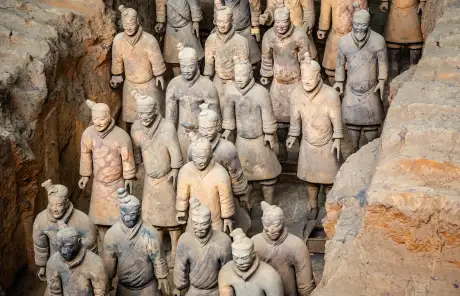
The Terracotta Army was a sculptural masterpiece in Qin Shi Huang’s Mausoleum, which vividly recreated the scene of the Qin army’s expedition. Each warrior in the troops varies in facial expressions, hairstyles, attire, and movements. Even the horses and carriages have distinct details. More interestingly, some tourists even discovered warriors who look exactly like themselves.
It is not just proof of the Qin dynasty’s unprecedentedly thriving national power and economy, but also symbolises ancient Chinese people’s wisdom and creativity. Its historical significance and cultural connotations have made it a UNESCO World Cultural Heritage site in 1987.
Recommended Terracotta Army Tour
Capture the essence of Xi'an in two days — stand before the vast Terracotta Army, cycle the ancient City Wall, explore the unique Great Mosque, and taste the Muslim Quarter's famous street food.
Great Wall
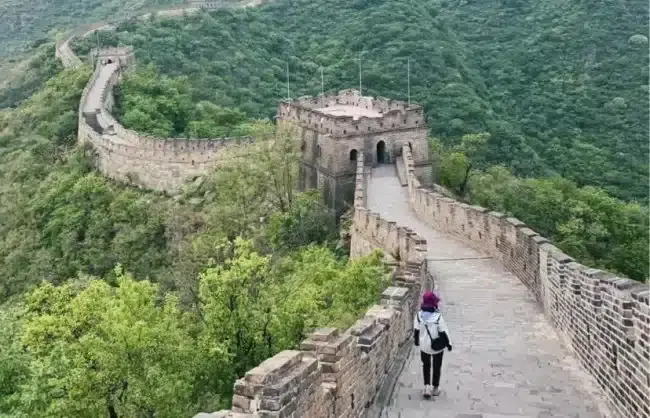
At that time, the nomadic ethnic groups along the northern border of Qin threatened civilians’ lives and property. Qin Shi Huang sent General Meng Tian to organise the connection of the Qin Great Wall with those built by Zhao and Yan as a defensive barrier.
The Great Wall reached Lintao (current Min county in Gansu province) in the west, and Liaodong in the east (current eastern Liaoning province and southeastern Jilin province), spanning over ten thousand li. It was the prototype of the current Ten Thousand li Great Wall.
Recommended Tour with Great Wall
Your driver and tour guide will pick you up at the entrance of your hotel around 7 to 8 o'clock. The specific time will be confirmed with you by the guide the night before departure.
Qin Dynasty Fun Facts
- In the Warring States, there was a contention between a hundred schools of thought. It significantly promoted the development of Chinese However, to ensure his control over the people, Qin Shi Huang revered “Legalism” as the leading school.
- The Qin people believed in the principle of “serving the dead the same way as serving the living”, so the Terracotta Army assumed the task of protecting Qin Shi Huang in his afterlife.
- The total area of the Qin territory reached 3,400,000 square kilometres. Its borders and major parts remained almost unchanged in the Ming dynasty.
- Qin Shi Huang, as the First Emperor, had never formally appointed any Empress in his whole life.
- Before Shang Yang’s reform, the Qin state had adopted “body certificates”, which were similar to our current ID cards. One could not stay at an inn without a body certificate.
- Bronze served as a symbol of social status back then. Nobles used bronze containers to cook, while the lower class used ceramicor simply roasted the ingredients over fire.
Where to Experience Qin Dynasty History & Heritage
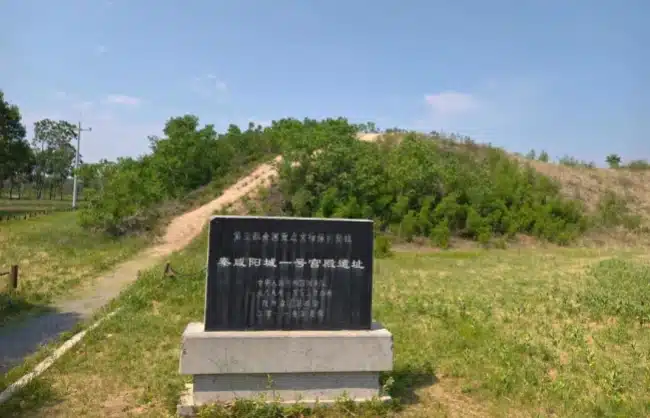
Qin Xianyang City Site
Xianyang City in Shaanxi Province was the capital of the Qin dynasty and has become an enduring imprint of its legacy. This city witnessed Qin’s transformation from a state into a grand empire.
From 1973 to 1982, three Qin dynasty Palace complexes and several handicraft workshops were discovered. It is perfect for the primary sources of the Qin dynasty research. However, only one twentieth of the preserved area has been fully excavated. More mysteries are waiting to be unraveled.
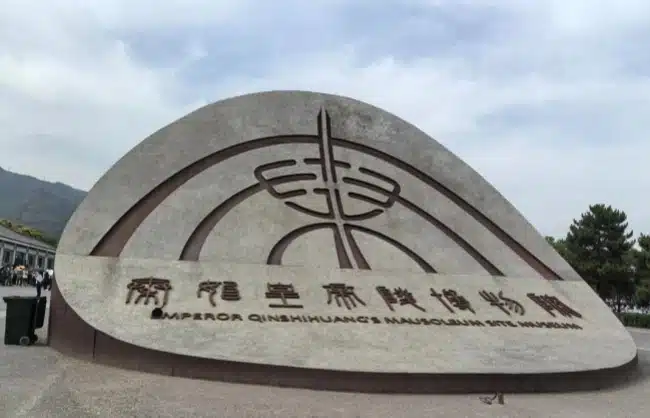
Xi’an- Emperor Qinshihuang’s Mausoleum Site Museum
In Xi’an lies the splendid Terracotta Army. It is part of Qin Shi Huang’s Mausoleum. Now the Terracotta Army, the main building complex of the Mausoleum, and a relic park (Lishan Park) together form Emperor Qinshihuang’s Mausoleum Site Museum. Apart from the delicate terracotta warriors scattered in three pits, tourists can also witness exquisite bronze weapons and tools.
For those history enthusiasts, it is a good place to learn about the burial rites that influenced the construction and design of the Chinese emperors’ mausoleums.
Recommended tour
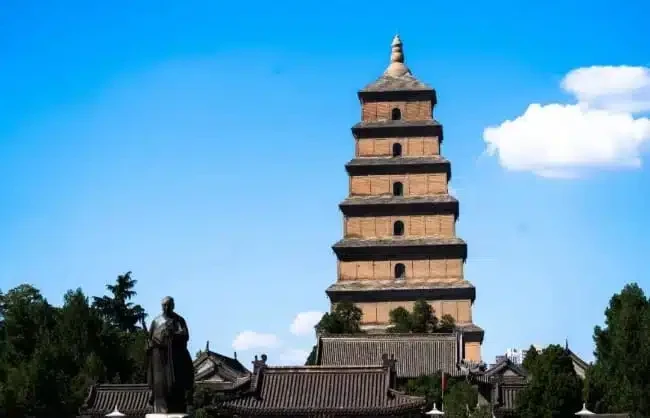
Capture the essence of Xi'an in two days — stand before the vast Terracotta Army, cycle the ancient City Wall, explore the unique Great Mosque, and taste the Muslim Quarter's famous street food.
The Qin Great Wall Ruins
The Qin Dynasty Great Wall ruins are located in Yijinhuoluo Banner, Inner Mongolia Autonomous Region, and Pengyang County, Xiji County, and Guyuan County, Ningxia Hui Autonomous Region.
The initial construction of the Great Wall began in 272 BCE, during the reign of King Zhao Xiang of Qin. The walls, fortifications, and beacon towers utilized only the simplest materials–loess and gravel. And Qin Shi Huang ordered to strengthen the structure and expand it northwards. The Qin Dynasty Great Wall ruins were designated as a National Key Cultural Heritage Site in 2001.
Recommended tour with Qin Great Wall ruins

A 6-day Ningxia tour combining Western Xia Dynasty history, Helan Mountain ancient rock paintings, wine tasting at local chateaus, and desert camping adventures.
The Oldest Canal–Lingqu
The Ling Canal is located within Xing’an County, Guilin City, Guangxi, and was excavated for navigation in 214 BC. Lingqu stretches 36.4 kilometres in length. It connects the Xiang River in the east of Xing’an County with the Li River in the west. In the Han dynasty, it became a hub connecting the Maritime Silk Road with the interior waters.
It is the world’s oldest “in-service” canal and has the reputation as a “jewel of ancient hydraulic engineering in the world”.
Immersive China Journey of the Qin Dynasty with China Xian Tour
The Qin Dynasty’s brief 15-year reign was like a dazzling yet fleeting star. Luckily, the light of its legacies still shines on future generations. Join China Xian Tour today for an immersive China journey of the first Chinese empire. The Terracotta Army, the Great Wall, or more…Our professional consultant and guide team will tailor a personalized tour for you!
What’s more, we offer special China Tour Packages to combine multiple cities/destinations in one trip. It is a good opportunity to view the whole picture of ancient Chinese history by fitting together the pieces of the puzzle represented by different dynasties.
You can make the most of your China journey in the most time- and cost-efficient way. First-come, first-served! Get in touch with us now!