

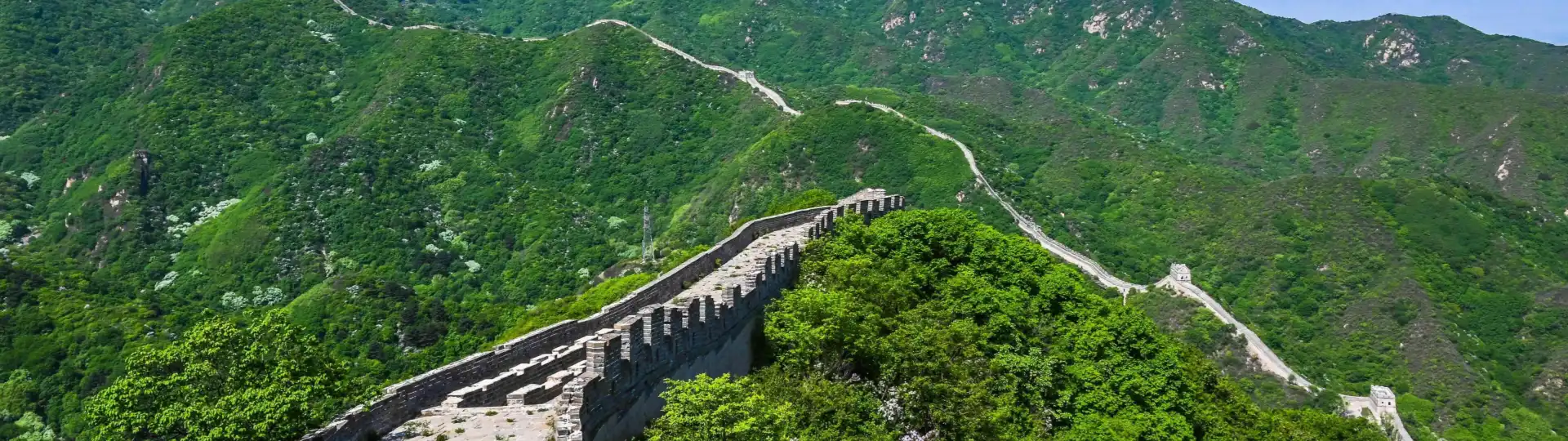
The Great Wall of China is probably the country’s most famous site. It is known across the world as a one of the Seven Wonders and a UNESCO World Heritage Site. It is without a question the longest and most massive defensive structure in the world with a history of more than 2,000 years. It stretches for over 13,000 miles across a large part of northern China.
You’ve definitely seen its images online, learned about its historical significance in textbooks, and wished to see it in person. A Great Wall of China tour will make your dream come true. Here is the ultimate travel guide to the Great Wall from quick facts, its history and dimensions, to useful travel tips.
Content Preview
- Best Sections of the Great Wall to Visit
- Where is the Great Wall of China?
- How Long is the Great Wall?
- How Tall is the Great Wall of China?
- How Big is the Great Wall of China?
- Structure of the Great Wall
- History of the Great Wall of China
- When and Why Was it Built?
- Who Built it?
- What is the Great Wall of China Made of?
- Other Interesting Great Wall of China Facts
- The Great Wall Today – Current Condition & Protection
- Top Things to Do on the Great Wall
- Chinese Culture around the Great Wall
- Practical Travel Guide – How to Visit the Great Wall
- Explore the Great Wall with China Xian Tour
Best Sections of the Great Wall to Visit
Section |
Length |
Distance (from Beijing) |
Highlights |
Condition |
Tourist Traffic |
Activities |
Mutianyu Great Wall |
2.5 km |
70 km |
Scenic views, watchtowers |
Well-preserved |
Moderate to High |
Hiking, cable car, toboggan ride |
Badaling Great Wall |
3.7 km |
80 km |
Most visited and accessible, great facilities |
Fully restored |
High |
cable car, museum visits |
Jinshanling Great Wall |
10 km |
120 km |
Beautiful sceneries, great for hiking |
Well-preserved |
Low to moderate |
Hiking, photography |
Simatai Great Wall |
5.4 km |
120 km |
Steep climbs, original architecture, night tours |
Partially restored |
Moderate |
Hiking, night tours |
Gubeikou Great Wall |
20 km |
120 km |
Unrestored structures |
Unrestored/wild |
Low |
Sightseeing, photography |
Jiankou Great Wall |
2 km |
70 km |
Desolate views, unrestored structures |
Unrestored/wild |
Moderate |
Sightseeing, photography |
Huanghuacheng Great Wall |
10 km |
70 km |
Lake views, partially destroyed structures |
Partially restored |
Low to moderate |
Photography, boating |
Juyongguan Great Wall |
4 km |
50 km |
Ancient pass and fortress |
Well-preserved |
Moderate |
Historic exploration |
Mutianyu Great Wall
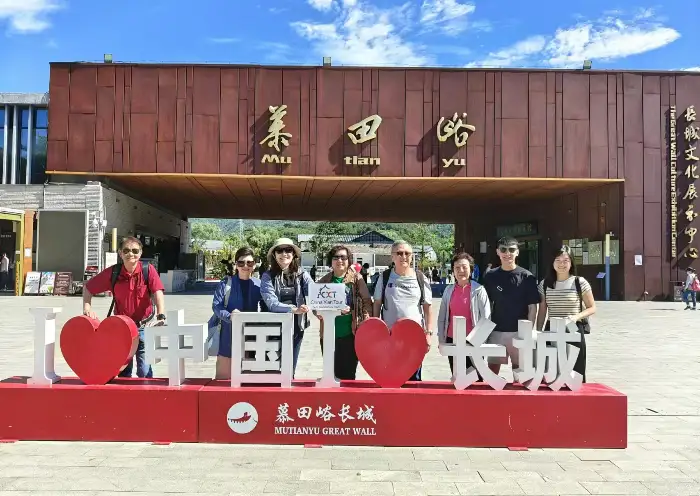
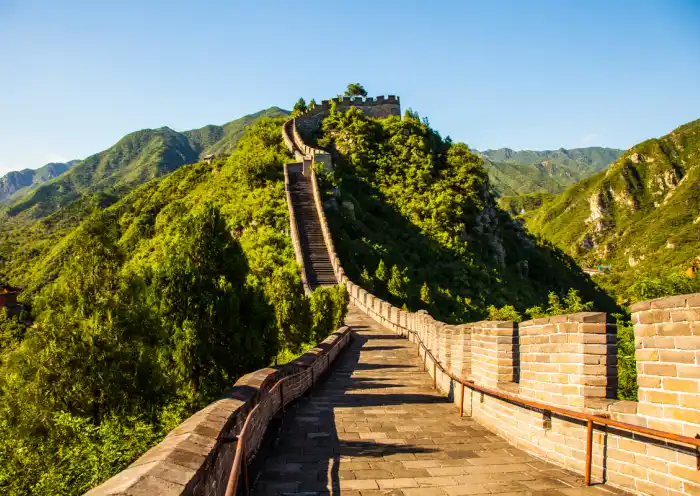
Mutianyu Great Wall is known for its gorgeous views and well-preserved structures. There’re lots of watch towers with unique designs. Over 2 km of the section is currently open to the public. It is easy to hike for families traveling with kids and elderly. You can also take a cable car ride. In spring and autumn, enjoy the beautiful views from the height of a watchtower.
Badaling Great Wall
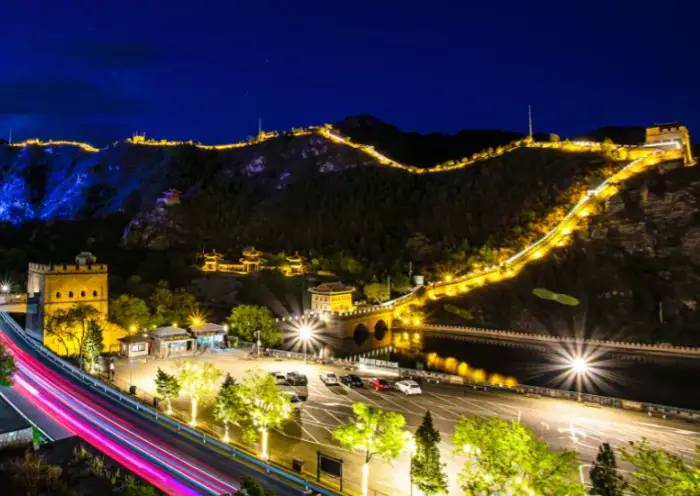
Badaling Great Wall is the most representative section. It was the earliest section open for tourism and the best-restored part. There are many tourist facilities including cable cars, toboggans, and the Great Wall Museum. The 8 North Tower is its highest point where you can have a great view of the surrounding landscapes. There are also light showers at night, so it’s a perfect destination for China family tours.
Related reading: Badaling vs Mutianyu Great Wall
Jinshanling Great Wall
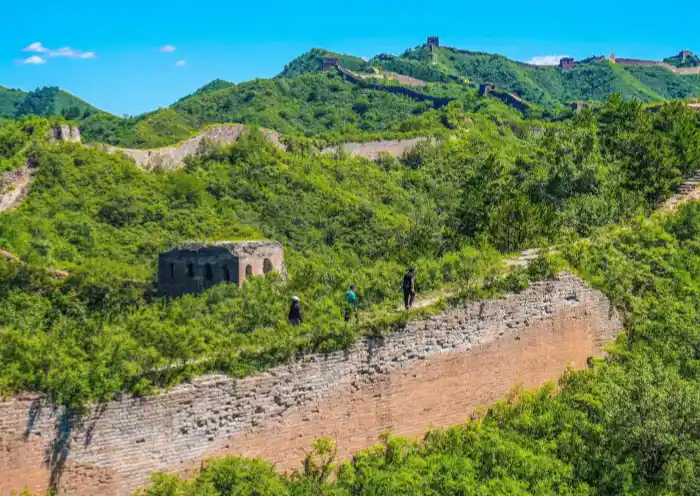
Jinshanling Great Wall is often called a paradise for photographers. This section is best known for its rugged terrain and its many watchtowers. Some slopes are almost 70 degrees, and the paths are sometimes so narrow that only one person can go through. It is relatively less crowded. The towers remain in their original conditions.
It is connected with Simatai Great Wall to the west which means you can hike across the two sections. The best time for capturing stunning photos is in the early morning when the mountains are covered in the mist. As the sun comes up, the sceneries start to appear behind the shroud.
Simatai Great Wall
Simatai Great Wall has been named the “most beautiful wild section of the Great Wall” by China National Geographic. It is known for being particularly steep and having very narrow pathways. It is also the only section open for visits at night. If you’re into hiking, it’s a great choice for a unique Great Wall experience when you travel to Beijing. Be sure to make reservations ahead of time for a night tour.
See also: 6 Days Beijing Landmarks with Simatai Great Wall Night Tour
Gubeikou Great Wall
Gubeikou Great Wall preserves the most complete Ming Dynasty military defense system, including fortifications and beacon towers. It used to be a battlefield during ancient times and is still unrestored till this day. There is less infrastructure compared to other sections.
Jiankou Great Wall
Jiankou Great Wall got the name from its shape, unwinding across the steep mountain in the shape of a “W.” Many parts have fallen apart. Some are almost vertical making it particularly difficult and dangerous for hiking. You will need a professional tour guide if you wish to hike in this section.
Huanghuacheng Great Wall
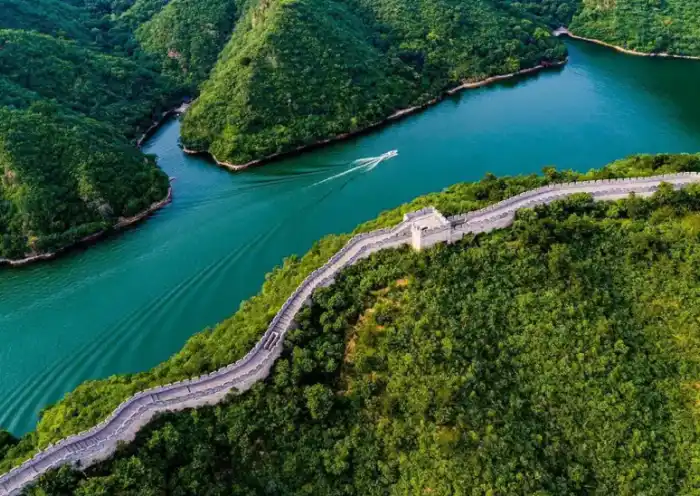
The most special part about Huanghuacheng Great Wall is that it partly goes through a lake. The ancient wall used to be submerged in water making it a unique sight to see. However, the underwater part is no longer visible. There are plenty of peach blossoms by the lake. The area is absolutely gorgeous in spring when the flowers are in bloom.
Juyongguan Great Wall
Juyongguan Great Wall is the best section to learn about the site’s history and culture. You can tour the ancient fortification and see Buddhist frescos.
Where is the Great Wall of China?
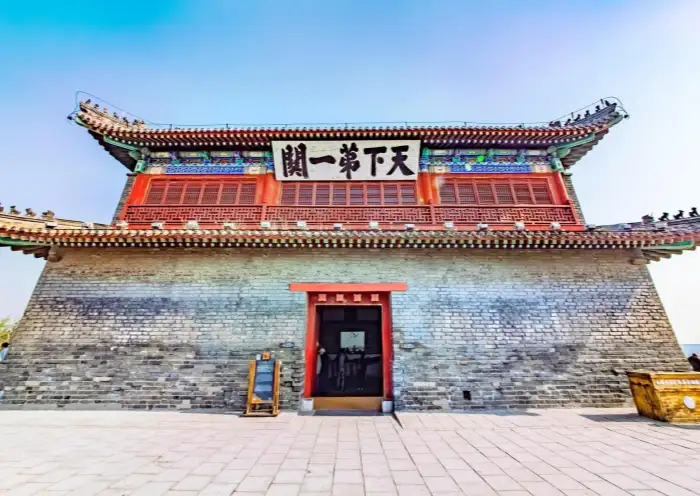
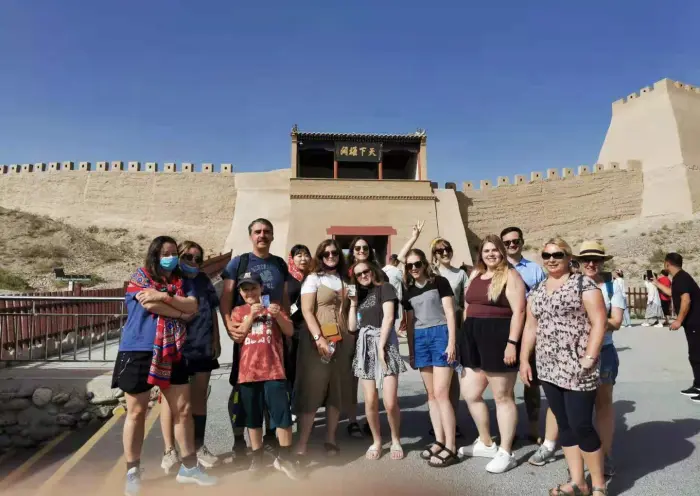
The Great Wall of China stretches across northern China from east to west. It starts at Shanhai Pass in Hebei Province, and the end of it is Jiayu Pass in Gansu Province. It passes through 15 provinces and municipalities on the map of China. From east to west, they are Heilongjiang, Jilin, Liaoning, Shandong, Hebei, Tianjin, Beijing, Henan Shanxi, Inner Mongolia, Shaanxi, Ningxia, Gansu, Qinghai, Xinjiang. >> See more details about Where is the Great Wall of China?
How Long is the Great Wall?
The Great Wall of China has a total length of 21,196.18 km (13,170.7 miles), which is about half as long as the equator. Though it’s important to note that the Great Wall is not one completely connected structure. It has parts spread out in different regions and is overall considered a system of defensive construction.
How Tall is the Great Wall of China?
The Great Wall of China is generally 5-8 meters in height (16-26 feet) depending on specific defensive purposes and local terrain. Some parts on more rugged terrains are particularly tall, like parts of Badaling Great Wall are as tall as 10 meters (33 feet), while earlier parts tend to be shorter due to a lack of technologies.
How Big is the Great Wall of China?
It’s difficult to measure the size of the Great Wall because of its complex architecture and terrain. The largest watchtower is the 8 North Tower of Badaling Great Wall. It has two levels at a height of 12 meters (39 feet), can contain more than 10 soldiers at a time. Jiayu Pass is the largest fortress with an area over 360,000 square feet.
Structure of the Great Wall
The Great Wall was a comprehensive military system that served not only defensive purposes, but also for surveillance, communications, and supply. It incorporated the ramparts to keep out the enemies, watchtowers for scouting and storing supplies, beacon towers for signaling, and fortresses (or passes) that are major fortified structures.
History of the Great Wall of China
The Great Wall of China was first built during the Spring and Autumn Period and the Warring States Period (7th century BC) of ancient China, which means it has a history of more than 2,300 years. Its construction continued throughout different dynasties, lasted for more than 2,000 years. At first, separate sections of the wall were built by different states. They were later connected after the unification of China.
When and Why Was it Built?
During the Spring and Autumn Period and the Warring States Period, China was not yet unified into one state. Different states built their own walls to defend against their neighbors.
Then Emperor Qin Shi Huang unified China and established Qin Dynasty. During his reign, he connected and reinforced existing walls to defend the country against invasions from the north, mostly the nomadic tribe of Xiongnu. This laid the foundation for the Great Wall of China that we know today. You can still see ruins of Qin Great Wall when you travel to China today.

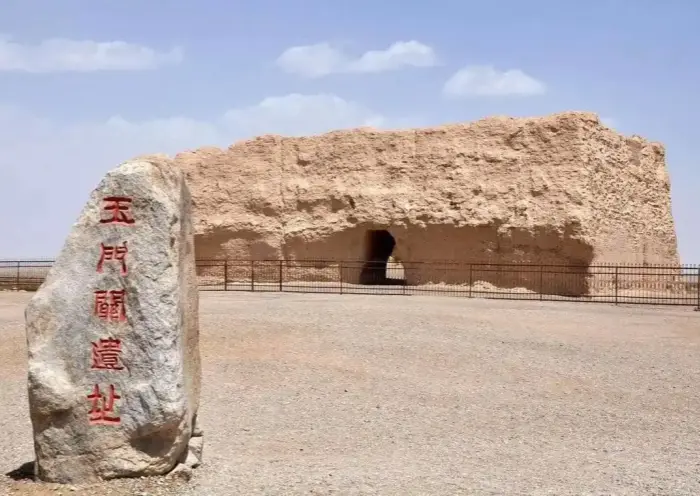
The Han Dynasty further extended the defensive walls all the way to Yumen Pass in today’s Gansu Province. Its major purpose then was to safeguard the important trades along the Silk Road. The Great Wall protected travelers and merchants from bandits and also helped them with transportation and communication.
During the Ming Dynasty, the Great Wall saw its most notable upgrades and renovations. In order to defend against the Tartars and the Oirats tribes, the Ming government invested a lot of money and resources into the reinforcement of the wall. Over the course of 200 years, 20 major renovations were made, and the Ming Dynasty wall connected previously separated parts in the east and west.
Who Built it?
Emperor Qin Shi Huang is generally considered a major figure behind the Great Wall of China. The Qin Great Wall laid the foundation for the incredible wonder that we know today. In Ming Dynasty, several rulers carried on the mission of renovating the Great Wall. Most sections of the wall that you will see on your Beijing tour are from that period of time.
Undoubtedly, countless workers were involved in this massive project throughout Chinese history. According to historical records, in Qin Dynasty alone, Emperor Qin Shi Huang sent about 20% of the country’s population, nearly 1 million people to work on the Great Wall. The workers involved were mainly three groups of people, soldiers in the army, civilian workers, and criminals.
What is the Great Wall of China Made of?
During the construction of earlier walls, the main building material was rammed earth, a mixture of soil, clay, sand, and gravel. It was accessible, cheap, and sturdy. The structures like gates and watchtowers were made of wood. Earlier walls weren’t always strong enough against the wind and rain.
Stone and brick became more widely used in later periods, especially Ming Dynasty. By then, brickmaking technologies were cheaper and much more prevalent. So the Ming Dynasty wall was a lot sturdier and still remains well-preserved in many areas.
Other Interesting Great Wall of China Facts
1. Sticky rice flour was used in the construction of the Great Wall
During Ming Dynasty, workers mixed sticky rive flour with slaked lime to hold the bricks in place. It worked as an excellent glue that held them together seamlessly. Even weeds couldn’t grow out of the crevices.
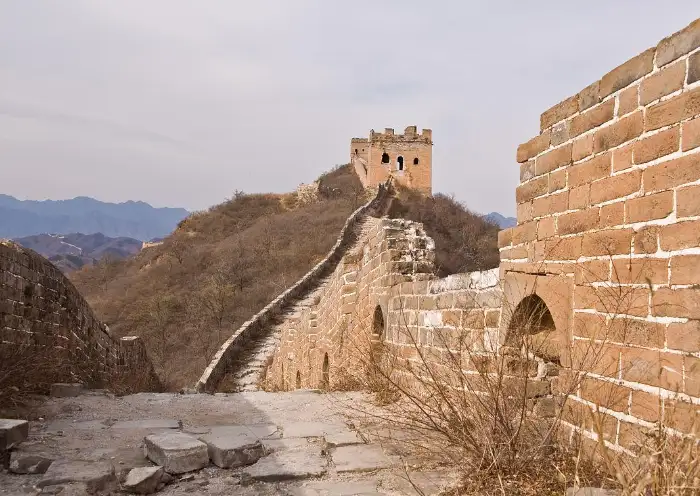
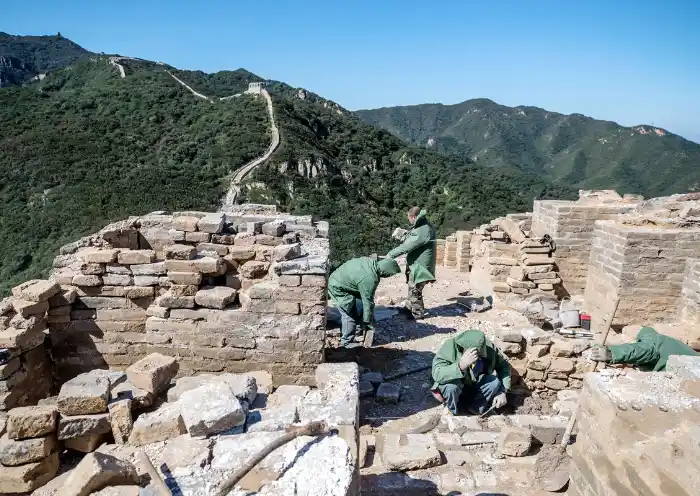
2. Much of the wall is gone or in disrepair
Most of the Great Wall sections that you see today are from Ming Dynasty. 30% of the Ming Great Wall have disappeared due to natural or human damage, and a lot more from previous periods no longer remain.
3. Can you see the Great Wall from space?
You might’ve seen the fun fact that you can see the Great Wall from space, but it is actually not true, not with the naked eye.
4. The Great Wall Marathon
The good news for marathon runners is that there’s an annual Great Wall Marathon event that takes place in May. It’s been a tradition since 1999. International visitors can join the race as well on your China tour. You will need to get in touch with a designated agency for registration.
The Great Wall Today – Current Condition & Protection
The Great Wall continues to be a cultural icon of China being featured in films, TV shows, and other forms of pop culture. Being aware of its current condition and significance, the Chinese government has taken many measures to preserve it, including creating laws and issuing funds for restorations.
Top Things to Do on the Great Wall
Hiking
Hiking the Great Wall is one of the top things to do. There’s a saying in Chinese that goes “He who has not climbed the Great Wall is not a true man.” Hiking will allow you to fully take in the surrounding views and feel the thousands of years of history beneath you. It’s best if you are accompanied by a professional tour guide especially if you wish to hike on the unrestored sections.


Camping on the Wild Great Wall
Although camping is not allowed on most popular sections of the Great Wall, some wild sections like Jiankou Great Wall, Gubeikou Great Wall, and Huanghuacheng are viable options. However, it is best to book a Great Wall camping and hiking tour with a local operator because some areas may require special permits. Navigation may also be difficult in remote areas.
Take a Toboggan Down the Wall
If you’d like some thrilling experiences, you can take a toboggan ride down the Great Wall. You should visit the Mutianyu section. Feel the breeze as you glide through the amazing landscapes.
Photograph the Excellent Views
When you visit the Great Wall, make sure you photograph the maybe once in a lifetime experience. The panoramic view from the mountain is amazing especially at sunrise and sunset.
Tour the Great Wall by Helicopter
For an even more unique experience, you can book a helicopter tour to see the Great Wall from above. You can see how the giant man-made structure slither across the green mountains like a stone dragon. It’ll surely make your trip even more memorable.
Chinese Culture around the Great Wall
The Great Wall has been a national symbol of the Chinese people. It appears in many sayings, Chairman Mao’s poem, and the national anthem. Historically, it symbolizes the unification of China for the first time in Qin Dynasty. It stands also as a testament to the hard work and ingenuity of the people. There are also many stories associated with the Great Wall. The most famous one is the myth of Lady Meng Jiang.
The story took place in Qin Dynasty. Her husband was coerced into the labor force that built the Great Wall. He never returned so when winter came, she brought warm clothes for him to the construction site. There she found out that he had died and was built into the Great Wall. She wept by the wall day after day, and finally, moved by her grief, the wall collapsed. She was able to find her husband’s body.
Practical Travel Guide – How to Visit the Great Wall
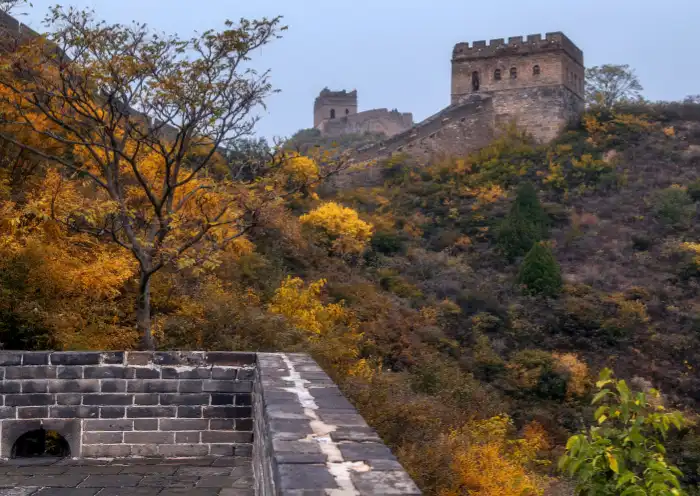
Below are our step-by-step guide on how to visiti Great Wall of China:
Transportation
· How to Get to Popular Sections from Beijing
Mutianyu Great Wall – The drive from Beijing is about an hour. You can also take a tourist bus from Dongzhimen Wai Bus Station or Qianmen Tourism Distribution Center.
Badaling Great Wall – The drive is about 1.5 hours. You can take bus No. 877 from Deshengmen Bus Station or a tourist bus from Qianmen. Or you can take a bullet train to Badaling Great Wall Railway Station.
Jinshanling Great Wall – Jinshanling Great Wall is slightly further from Beijing. The drive may take up to 5 hours. There’s a tourist bus from Dongzhimen that will take you directly there. You can also take a train to Gubeikou Railway Station, then take a taxi to Jinshanling.
Simatai Great Wall – Similarly, the drive to the Simatai Great Wall is about 2 hours. There are also tourist buses from Dongzhimen.
· How to Get around Popular Sections
Sections that are open to the public are not big, so you can easily get around by walking. Some sections like Badaling and Mutianyu have cable car services.
Best Time to Visit the Great Wall
The best time to visit the Great Wall sections around Beijing are spring and autumn, March to May, September to November. In the spring, the trees and flowers in the mountains are in full bloom. The temperatures are also comfortable for hiking. The fall has clear blue skies. The trees start to change in color. It’s a great season for photography.
The Great Wall tends to be very crowded during public holidays and in the summer. If you’re traveling during those times, it’s best to avoid the popular sections. Winter can be a bit too cold for going outdoors, but you might have the chance to witness the Great Wall covered in snow.
Ticket Prices & Opening Hours
Section |
Tickets (Peak/Low Season) |
Hours (Peak/Low Season) |
Mutianyu Great Wall |
CNY 45 |
7:30AM-6PM/8AM-5PM |
Badaling Great Wall |
CNY 40/35 |
6:30AM-4:30PM/7:30AM-4PM |
Jinshanling Great Wall |
CNY 65/55 |
5AM-6PM/6AM-5:30PM |
Simatai Great Wall |
CNY 40 |
9AM-5PM |
Related reading: Cost to Visit the Great Wall of China
What to Bring
- Dress in layers or bring a jacket with you for the early mornings and evenings; if you’re visiting the Great Wall in the winter, it can get very cold in Beijing. You will need a heavy jacket.
- Wear comfortable walking shoes for hiking
- Bring some snacks and water with you in case you need them during the hike; bring enough for the night if you’re camping
- There will hardly be any shading on the Great Wall, so bring a hat or sunscreen for UV protection
Nearby Attractions
Beijing is the best place to learn about and experience the ancient history of China. On your Great Wall tour, you can also visit the Ming Tombs. Took more than 200 years to complete, the Thirteen Ming Tombs take up a large area of land in Tianshou Mountain. It is the final resting place of 13 emperors, 23 empresses, imperial concubines, and princes.
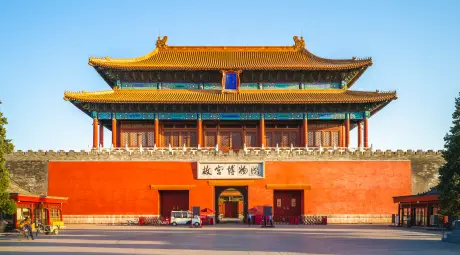
Of course, you should definitely include the Forbidden City on your Beijing trip. It was the actual imperial palace of Ming and Qing Dynasties. Its magnificent architecture and incredible collection of treasures will help you understand China’s imperial history better.
Explore the Great Wall with China Xian Tour
Explore the Great Wall of China with us. We can help you plan the best Beijing tour, arrange private transportation, and make sure your visit is safe and worthwhile with professional tour guides.
Private Guided Great Wall of China Tours
With private guided tours, you can customize your own itinerary. We will tailor your trip according to your preferences and take care of the logistics, so you have nothing to worry about.
Recommended Great Wall Private Tours:
- 2 Days Wild Great Wall Trekking & Camping Tour
- 4 Days Beijing Essence Tour to Mutianyu Great Wall
- 5 Days Beijing Family Tour (Kid-friendly)
Small Group China Great Wall Tours
Small group tours are more budget-friendly with equally great experiences.
Recommended Great Wall Small Group Tours:


