

The Warring States (c.475-221 BCE) was a crucial era of revolution and turmoil in Chinese history. It serves as a transitional period between the turbulent Spring and Autumn Period and the unity of the Qin dynasty. It is a golden age for the development of ancient China in philosophy, natural science, military science, and politics. This guide will lead you through some of the key features, crucial events, and major achievements of the Warring States Period. We also recommended some top places to glimpse into the relics and heritages in this period.
Key Characteristics of the Warring States Period
Just as the name “the Warring States” suggests, this period is characterized by frequent conflicts and battles between vassal states, as well as contention among hundreds of schools. Whether various reforms that paved the way for a great united empire, or thriving culture and medicine, the Warring States left countless treasures for the future dynasties and even contemporary China.
The Seven Warring Vassal States in China
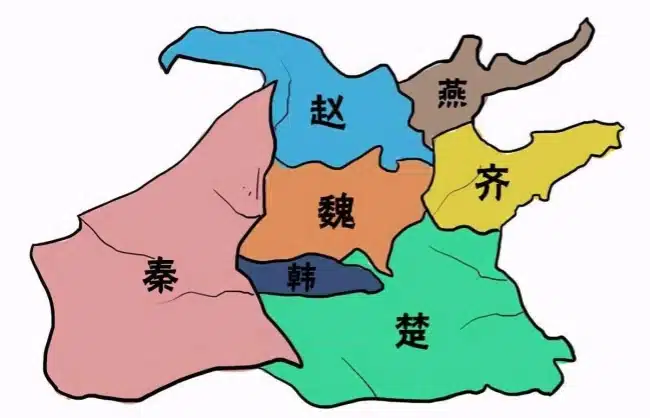
After the lasting conquest wars in the Spring and Autumn Period (770-476 BCE), the number of vassal states had sharply dropped. By the Warring States, seven of them stood out – Qi, Chu, Yan, Han, Zhao, Wei, and Qin. Historians grant them the title “Seven Warring Vassal States”.
- The territory of Qientailed the Shandong Peninsula and the surrounding area. Its superior geographical location along the ocean provides rich fishing and salt resources. Qi was also a great economic power, with prosperous trade and urban life. The policy of “honoring virtues and rewarding deeds” attracted talents nationwide, for example, Guan Zhong and Sun Bin.
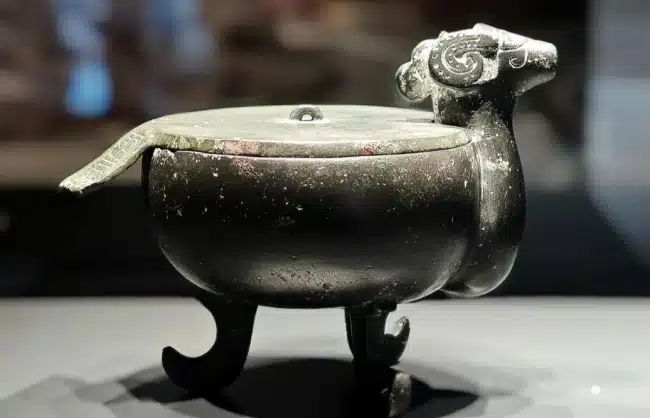
- Chu was located in the south, including the current Hubei, Hunan, Anhui, Jiangsu, and Zhejiang. Chu was characterized by its winding history and distinct culture. Agriculture and manufacture were the two main economic sources of Chu, among which the most prominent were silk weaving and bronze casting industries.
- Yan is a northern state. Its territory covered the current northern Hebei and western Liaoning. Despite its remote location and withered economy, Yan had an outstanding military advantage. The Yan army mastered horseback archery and collected rich military experience of fighting against the northern nomadic ethnic groups.
- Han was a small country on the central plain. Its territory included the current central Henan and southeastern Shanxi. Han had advanced iron smelting industries for forging exquisite weapons.
- Zhao also resided on the plain. It included the current Hebei, Shanxi, and Henan. To cope with military threats from the neighboring states, the King Wuling of Zhao promoted the reform of “horseback archery in Hu dress” to learn military techniques from the nomadic ethnic groups.
- Wei was in the heartland of the central plain. It covered the current Henan, Shanxi, and Shaanxi. Wei was one of the first states to adopt reforms that enhanced its economic development. Wei also had a powerful infantry called “Wei Wu Zu”.
- Qin’s territory roughly included the current Shaanxi, Gansu, and Sichuan. Situated on the Guanzhong Plain, Qin’s perilous terrain made it difficult to conquer. Apart from the solid foundation for agriculture, Shang Yang’s reform further contributed to the rise of Qin. Benefiting from all the advantages, Qin gradually expanded its territory and built its unstoppable national power.
Warfare and Military Innovations
The military sphere in the Warring States underwent a revolutionary change. The nature of war had changed from regional conflicts governed by ritual norms to total wars that aimed at annihilating enemies and annexing their lands.
A representative incident was the Battle of Changping (260 BCE), an extremely brutal war in which the Qin general Bai Qi buried alive 400,000 Zhao soldiers.
Each state established its own “standing army”, and implemented a system of granting noble titles based on military merits. It broke down the hereditary privileges. More specifically, in military techniques, cavalry rose as an independent corps.
The cooperation between chariots, infantry, and cavalry became a common state. Meanwhile, the fortification and defence were complicated; for example, there were numerous sieges and defence equipment recorded in the Works of Mo-tse.
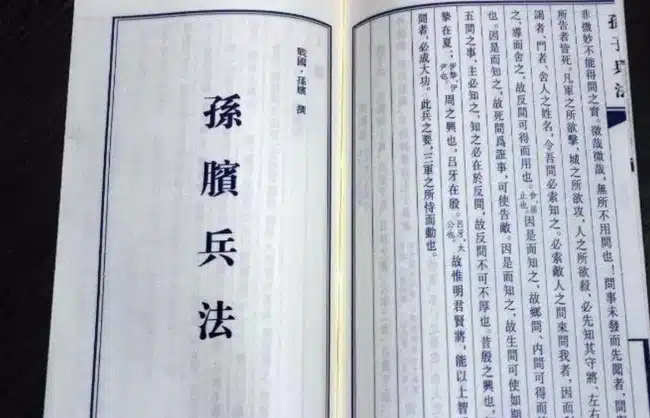
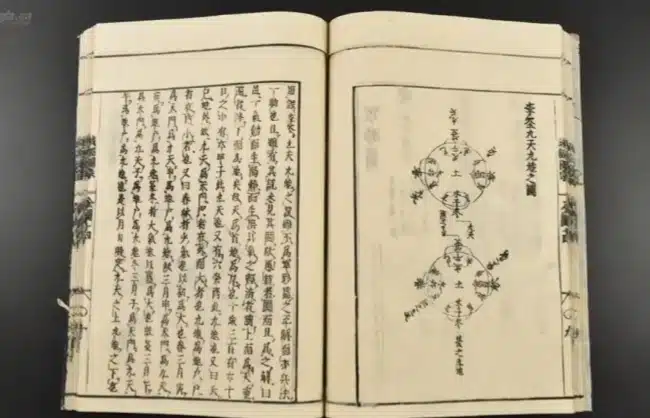
The vigorous military theories led to classics like Sun Bin’s Art of War and The Art of War by Wu Zi. These theories emphasized flexible and mobile tactics, such as the strategy of “besieging Wei to rescue Zhao” and the deployment of troop patterns. The states also utilized military geography to construct great walls and canals for broader intelligence networks.
Overall, it was the advancement of technology that supported the evolution– refined metal weapons, improved crossbows, and so on. All these innovations pushed forward the transformation from noble wars to total wars and became the base of the future Chinese military system.
Political Reforms: The Rise of Legalism
In the Warring States Period, Qin achieved ground-breaking political reforms thanks to Shang Yang. The core of Shang Yang’s reforms was to reinforce centralization and improve administrative efficiency under the guidance of Legalism.
Above all, Shang Yang’s reforms abolished hereditary noble privileges after implementing a military merit-oriented officer selection policy. That enabled civilians to fight for higher status and ended the bloodline monopoly. To centralize administrative power and weaken the feudal nobility, a “county system” was established, so that the emperors could assign officials for local affairs directly.
The policy of “encouraging agriculture and restraining commerce” seamlessly associated agricultural production with military power. It accumulated material and manpower for the rise of Qin.
The reforms stressed harsh laws, severe punishments, as well as the impartiality of the laws. An example was the strict chain punishment system. There was a famous story, “a wooden post as a sign of commitment”, which expresses how the legislation won public trust.
Shang Yang’s reforms were not just a successful practice of Legalism, but also served as a stepping stone for China’s Centralized Imperial System for over two thousand years.
Cultural and Philosophical Flourishing
The Warring States was a golden age of Chinese thought and culture. The disintegration of the old order shaped the situation of the “Hundred Schools of Thought” and the spiritual core of Chinese civilization.
The main Schools came up with disparate philosophical worldviews: Confucianism, represented by Confucius and Mencius, focused on morality and social order, and advocated governance with benevolence and rites.
Taoism, represented by Lao Zi and Zhuang Zi proposed to adapt to nature, remain quiet and inactive, and pursue a state of detachment; the Mohist School believed in “universal love”, “non-aggression”, “Heaven’s Will”, and “Enlightened Spirit”. Last but not least, Legalism concentrated on social reality. It managed to solidify centralized authority through strict laws and political maneuvers.
At the same time, practical techniques and arts flourished. The wide use of metal tools and the cow plow technique, along with extensive water conservancy projects like Dujiangyan and Zhengguo Canal, brought about a surge in yields.
It was also during this period that Chinese medicine got rid of the constraint of sorcery and moved on to science. For instance, the renowned physician Bian Que practiced the “Four Diagnostic Methods”; the early form of the Yellow Emperor’s Inner Canon integrated the theory of Yin-Yang and the Five Elements.
Additionally, a huge leap was also taken in the arts field. Silk paintings, bronze ware, lacquerware, and early calligraphy and seal engraving all demonstrate exquisite craftsmanship and vibrant creativity.

Timeline and Major Events during the Warring States Period
- 473 BCE- The Yue state annihilated the Wu state. Goujian became the dominant ruler.
- 453 BCE- Division of Jin into Three Kingdoms: Han, Zhao, and Wei divided the territory of the Jin state. The early stage of the “Seven Warring Vassal States” formed.
- 445 BCE- KingWen of Wei Rose to the throne and adopted Li Kui’s reforms.
- 403 BCE- The Zhou Imperial Court conferred titles of vassal on Han, Zhao, and Wei.
- 386 BCE- The Tian clan replaced the Jiang clan in power, and Tian He became the founder of Qi.
- 381 BCE- Wu Qi’s reforms were supported by KingDao of Chu. Wu Qi was then murdered in the same year King Dao died.
- 356 BCE- Shang Yang’s reforms began in Qin.
- 353 BCE- In the “Battle of Guiling”, Sun Bin defeated the Wei army through the strategy of “besieging Wei to rescue Zhao”.
- 341 BCE- Qi defeated Wei in the “Battle of Maling”. The Wei general Pang Juan died. The supremacy of Wei began to collapse.
- 318 BCE- The alliance of Han, Zhao, Wei, Yan, and Chu attacked Qin but were defeated at the Hangu Pass.
- 316 BCE- The Qin general Sima Cuo annihilated the Shu state.
- 307 BCE- The King Wuling of Zhao promoted the reform of “archery in Hu dress”.
- 293 BCE- The Qin general Bai Qi defeated the ally of the Han and Wei armies in the “Battle of Yique”.
- 284 BCE- The Yan general Yue Yi led the alliance of five states to conquer Qi and occupied its capital Linzi.
- 279 BCE- The Qi general Tian Dan retrieved Qi by the strategy of “Fire Bulls”.
- 278 BCE- The Qin general Bai Qi conquered Ying, the capital of Chu.
- 260 BCE- The Qin general Bai Qi defeated the Zhao army in the “Battle of Changping”.
- 257 BCE- The Lord Xinling, Wei Wuji, stole the token to save Zhao.
- 256 BCE- Qin annihilated the western Zhou. The reign of Zhou was terminated nominally.
- 251 BCE- the Yan army attacked Zhao but was defeated by the Zhao general Lian Po.
- 249 BCE- Qin annihilated the eastern Zhou. The Zhou dynasty ended.
- 247 BCE- King YingZheng of Qin (later known as the First Emperor of Qin) took the throne.
- 241 BCE- The Zhao general Pang Nuan led the allies of five states to conquer Qin, but failed.
- 238 BCE- King YingZheng of Qin suppressed the Lao Ai Rebellion and assumed direct rule of the state.
- 230 BCE- Qin annihilated Han.
- 228 BCE- Qin annihilated Zhao.
- 227 BCE- Prince Dan of Yan sent Jing Ke to assassinate King Ying Zheng of Qin, but the assassination failed.
- 225 BCE- Qin annihilated Wei.
- 223 BCE- Qin annihilated Chu.
- 222 BCE- Qin annihilated Yan.
- 221 BCE- Qin annihilated Qi and achieved unity. It marked the end of the Warring States.
What Caused the Warring States Period?
The direct cause of the Warring States Period was the complete collapse of the old order – the enfeoffment system of the Western Zhou Dynasty and the patriarchal ritual and music system.
After the breakdown of the core of power, the Zhou royal family. The authority of Zhou emperors continued to decline, and they were unable to control the vassals.
It led people to believe that rituals, music, and conquest were not from the Son of Heaven but from the vassals. The “absence” of the arbiter of politics and military made the world fall into disorderly competition.
The battles for annexation between different vassal states intensified. The division of Jin into three kingdoms marked the end of the old system of hereditary noble privileges. To survive and expand their territories in the turmoil, vassal states began to engage in ceaseless conquest wars.
Major Achievements of the Warring States Period
Advanced Weapons and An Innovative Merit Rewarding System
The development of social production and metal smelting techniques enabled a diverse range of steel and iron weapons – sword, halberd, knife, spear, dagger, and crossbow. Infantry and archery, therefore, could collaborate with chariots on the battlefield.
Then, as previously stated, soldiers’ merits were not just achievements in the military sphere, but also elevated their social status and rendered them superior privileges. The rewarding system contributed to boosting morale and smashing the order of feudal nobility.
Influential and Comprehensive Reforms
To gain the upper hand, the vassal states launched various reforms in military, economic, and political affairs, as mentioned above, Shang Yang’s reforms and Li Kui’s reforms.
These reforms not only strived to weaken the local nobles, shatter the old feudal enfeoffment system, but also built new forms of state characterized by imperial autocracy and the system of agricultural production for warfare. It served as a model for the political system of the Chinese Empire.
The Hundred Schools of Thought
The Hundred Schools of Thought was the first ideological liberation movement in Chinese history. Leading Schools such as Confucianism, Taoism, and Legalism published books, delivered lectures, and engaged in academic debates that broke free from the traditional feudal culture.
Their liberal exchanges of thoughts and ideas promoted social development, cultivated elites and talents, and drove significant improvements in philosophy and science. This era of prosperous thoughts left precious legacies to modern Chinese civilization.
The First Great Walls
To protect themselves from the northern nomadic ethnic groups and other vassal states, Yan, Zhao, Qin, and some other states all constructed border walls that stretched hundreds of miles.
They employed earth-ramming techniques and incorporated facilities such as beacon towers and fortified buildings based on the terrain. After Qin unified the six states, King Ying Zheng connected and solidified these projects, which formed the first Great Wall.
Related reading: When Was the Great Wall of China Built?
The development of classical Chinese literature and poetry
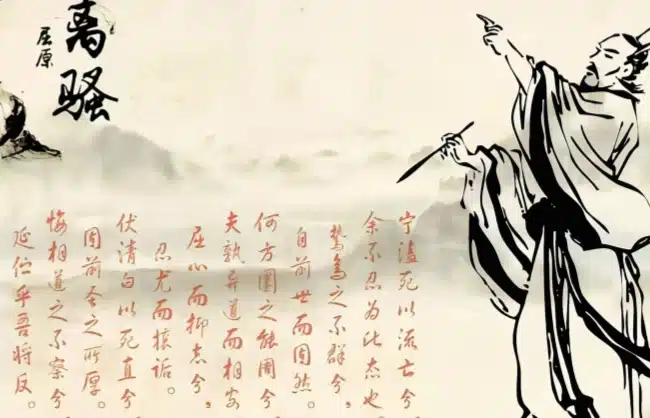
A major achievement in literature and poetry during the Warring States was the birth and maturity of the songs of Chu. The renowned Chu poet, Qu Yuan, composed groundbreaking works, like Li Sao and Nine Songs.
The boundless imagination, fancy rhetoric, and sincere political commitment in his works served as the pioneer of Chinese romantic literature and had a profound influence on the Han prose and Tang poetry.

The Formation of the Chinese Medicine Theory System
As aforementioned, a renowned physician, Bian Que, invented the “Four Diagnostic Methods”. Specifically, they were “watch, listen, inquire, and feel the pulse”. They marked the foundation of Traditional Chinese Medicine clinical diagnosis. Until today, the four methods are still the basic diagnostic principles for practitioners.
What Led to The Rise of Qin and the Fall of the Warring States Period
Qin’s annexation of six states and establishment of a united empire was a pivotal turning point in Chinese history. They marked the end of the Warring States Period. But what exactly drove the transformation of Qin, from a weak small state to an intimidating power after generations of reforms and development?
First of all, it has been mentioned earlier that Qin experienced thorough and successful reforms led by Shang Yang. These reforms boosted Qin’s economic power and enabled faster social development and lasting battles.
Second, Qin’s effective deployment of diplomatic and military tactics secured its crown as a winner on the battlefields. For example, it seized the internal conflicts in Chu and disintegrated this state from the inside; also, the siege of Yan let Qin conquer Yan’s capital city successfully.
Finally, for the other six states, although they tried to ally and attack Qin several times, frequent warfare consumed their national strengths and made them economically and mentally exhausted. More importantly, their fragile alliances underwent constant conflicts over benefit distribution and were full of loopholes at the beginning.
More Interesting Facts about the Warring States Period in China
- “Warring States” in Chinese has the literal meaning of “states/countries at war” while also serving as the name for this turbulent period.
- Qin, the state that annihilated the other states and became a united empire, was not initially the most powerful and advantageous.
- The alliances of the other six states (the exact allies varied each time) launched four attacks on Qin, but none of them completely defeated it.
- Due to the spread of Legalism, the “rule of law” received massive support.
- Cavalry rose as a new and independent corps during that period.
Where to See Warring States History Today
Xi’an (Shaanxi): The Terracotta Army and Qin history
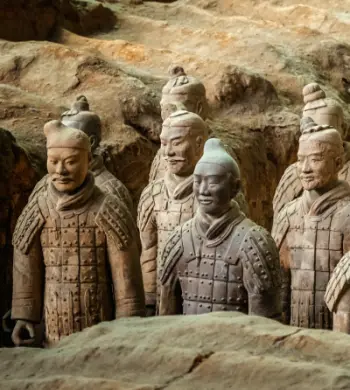
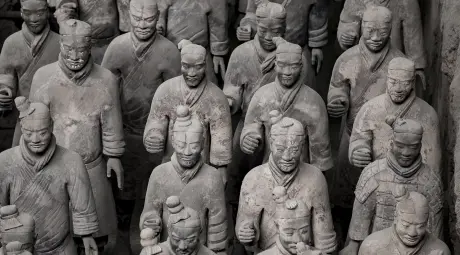
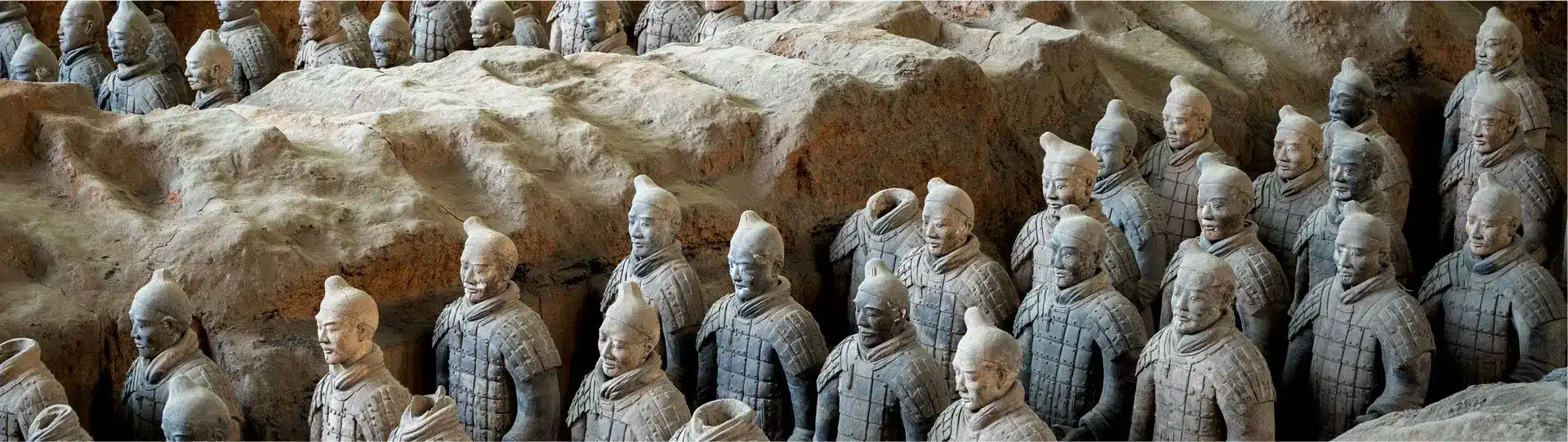
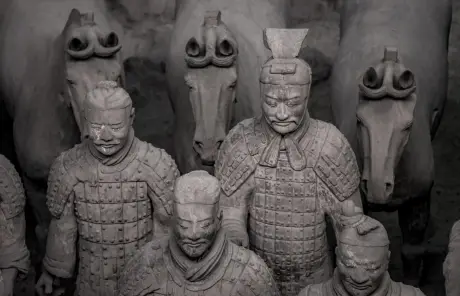
The Terracotta Army is a set of burial objects of the Mausoleum of the First Qin Emperor in Lintong District, Xi’an City, Shaanxi Province. It was listed among the UNESCO World Cultural Heritage sites in 1987 and was called one of the World’s Eight Wonders. It features thousands of terracotta warriors and horses that recreate the situation of the Qin army.
The warriors’ attire, hairstyles, movements, and facial expressions all vary in detail. The Terracotta Army represents the pinnacle of ancient Chinese sculptural art. It was not just a symbol of ancient China’s glorious civilization, but also one of the great archaeological discoveries in human history.
Recommended tour
Your English-speaking private tour guide will meet you at the lobby of your downtown hotel. Then drive for 1 hour to the renowned Terracotta Army.
Jingzhou (Hubei): Ancient Chu Capital sites and museums
Jingzhou, or the original Ying, was the capital city of Chu. This ancient city preserves tons of the Chu legacies in the local museums. For example, the Exhibition of Fine Artifacts from Chu Culture in Jingzhou Museum includes exquisite silk embroidery, refined bronze ware, and masterfully crafted lacquerware.
It displays Jingzhou’s important military status, prosperous commerce, and profound cultural heritage as a historically significant strategic city and transportation hub.
Chengdu (Sichuan): The Dujiangyan Irrigation System
Dujiangyan in Sichuan Province is a living masterpiece from the Warring States Period. The Dujiangyan Irrigation System was constructed from 256 BCE by Li Bing, the Prefect of Shu Commandery at that time, and the local people.
It is the world’s oldest extant dam-less water diversion project that is still in use. It is celebrated as the ancestor of the global water conservancy culture. The Dujiangyan Irrigation System and Mount Qingcheng were inscribed as UNESCO World Heritage sites in 2000 and added to the World Heritage List of Irrigation Systems in 2018.
Recommended tour

Visit the ancient Taoping Qiang watchtowers, marvel at Huanglong's colorful pools and Jiuzhaigou's pristine turquoise lakes, then discover the 2,250-year-old Dujiangyan Irrigation System.
Handan (Hebei): The ancient capital of the Zhao State
Handan City was the capital city of Zhao, an old city like Jingzhou. Interestingly, the name Handan was created in the Shang dynasty, and it is one of the three cities that have kept the ancient names for three thousand years. Handan witnessed rich historical events, such as “besieging Wei to rescue Zhao” and Lord Xinling’s stealing the token to save Zhao.
Start Your Chinese History Discovery Trip with China Xian Tour
The clash of weapons in the Warring States period forged not only the chaos of war but also the sparks of liberal exchange and contention between thoughts and cultures. The sparks not just illuminated the road to a unified country of Qin but also served as one of the glittering stars in the galaxy of Chinese history.
Join China Xian Tour today for a tour of the Warring States relics to witness the charm of this legendary era in person! Our professional consultant and guide teams are ready to offer you an immersive, ‘customized’ Chinese History Discovery Trip!