
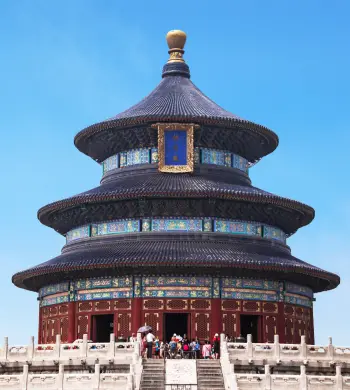
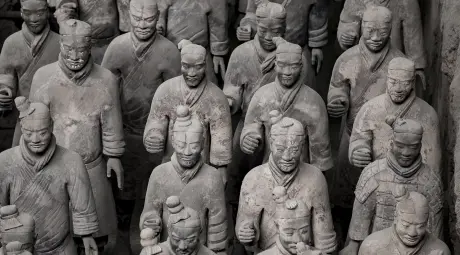

The Ming dynasty was one of the most prosperous dynasties in Chinese history, with a vast territory, booming economy, powerful maritime diplomacy, and colorful culture. The “Great Ming” thus serves as an exemplar of classical imperial governance.
This guide will introduce this legendary era and the mighty empire during this period. It includes an overview of the Ming dynasty, key events, crucial emperors, episodes of its economic, social, and cultural life, ideal places to see Ming relics and heritages, and more.
To give you a general context of the Ming dynasty, let us start with some quick facts:
- Time Period: 1368-1664
- First Emperor: Hongwu Emperor(aka.Taizu of Ming; Zhu Yuanzhang)
- Last Emperor: Chongzhen Emperor (Zhu Youjian)
- Capital: Nanjing and Beijing
- Main Landmarks: Ming Great Wall; Forbidden City
Overview of the Ming Dynasty
In 1368, the emperor of peasant origin, Zhu Yuanzhang, who rose up in rebellion and overthrew the Yuan dynasty, proclaimed himself emperor in Yingtian Prefecture, Nanjing (later the capital was relocated to Beijing). It marked the beginning of the Ming dynasty.
The flourished national power of the early Ming dynasty ushered in golden ages such as the Hongwu Reign, the Yongle Prosperity, the Ren and Xuan Reign, and the Hongzhi Revival. The zenith of the empire secured immense power and extensive territory. The prosperity won it the name of the “Great Ming”.
In its later period, however, the political corruption and natural disasters led to severe damage to the national strength and triggered large-scale civilian uprisings. As a result, the Ming dynasty ended after 276 years of reign: the last Ming emperor hanged himself at Coal Hill when Li Zicheng captured Beijing.
Significance of the Ming Dynasty in Chinese and World History
The Ming dynasty is the last Han Chinese-founded central plains dynasty in ancient Chinese history. For the Han ethnicity, which values bloodline and cultural inheritance, the establishment of the Ming also rebuilt the cultural confidence, ethnic coherence, and a sense of belonging for the Han ethnicity.
Nevertheless, the Ming dynasty is also a milestone in world history. The maritime exploration during the Ming time period added to ancient people’s understanding of the ocean, extended communication between different countries and regions, and an advanced worldview of “ocean-land connection”. Most historians believe that the Ming dynasty was the very beginning of “globalization”.
Timeline of the Ming Dynasty & Key Events
Phase |
Time Period |
Core of Reign Power |
Key Events |
Establishment under the Hongwu Emperor |
1368-1398 |
Yingtian Prefecture, Nanjing |
(1368) Hongwu Emperor overthrew the Yuan reign and established the Ming dynasty. (1380) Hongwu Emperor replaced the position of Chengxiang (prime minister) with six ministries. (1397) Hongwu Emperor composed the Law of Great Ming. |
Yongle Prosperity |
1402-1424 |
Shuntian Prefecture, Beijing |
(1402) Yongle Emperor seized the throne through the Jingnan Campaign. (1421) The capital was relocated to Shuntian Prefecture, Beijing. (1405-1433) Zheng He had seven maritime explorations. |
Ren and Xuan Reign |
1424-1435 |
Nanjing and Beijing |
The cabinet system takes shape and the economy in the southern Yangtze River area thrived. |
Decline in the Middle and Late Ming |
1435-1620 |
Forbidden City, Beijing |
(1449) The Ming army was defeated by the nomadic Oirats.
(1572-82) Politician Zhang Juzheng led a revolution. (1592-1600) Three large-scale military campaigns in the southeastern and southwestern borders, and Chosun. |
The Glimmer of Chongzhen |
1627-1644 |
Beijing to Xi’an |
(1644) Li Zicheng captured the capital Beijing.
Chongzhen Emperor hanged himself at Coal Hill. |
How Was the Ming Dynasty Founded?
People in the late Yuan dynasty suffered from the dark political corruption and tyranny. Eventually, the Red Turban Rebellions took place in 1351. The next year, Zhu Yuanzhang joined the rebellion and later became the leader of one of the troops.
Then, in 1356, Zhu Yuanzhang led his troops to capture Jiqing and renamed it “Yingtian Prefecture”. In 1368, Zhu Yuanzhang proclaimed himself the emperor and established the Ming dynasty.

Ming Dynasty Emperors: From Hongwu to Chongzhen
The Founding Father: Hongwu Emperor
HongWu Emperor, or Taizu of Ming, was not from a noble family, but a poor peasant. As introduced in the previous section, he experienced a complete reversal in status– from a rebel to the founder of the Ming dynasty.
The Apex of Power: The Yongle Emperor
The Yongle Emperor (Zhu Di) was the third Ming emperor. It was the Yongle Emperor who created the first golden age of the Great Ming. He commanded the relocation of the capital city to Beijing and the construction of a splendid Palace. This palace laid the foundation for the current Forbidden City. Beijing, thereby, became the national political, economic, and cultural center.
It was also the Yongle Emperor who sent the eunuch, Zheng He, to the West, on seven voyages from 1405-1433, by which the Ming Empire solidified connections with the broader world.
Other Notable Rulers
- Title: Xuan Emperor (Zhu Zhanji)
Reign period: 1425-1435
Key accomplishments: Xuan Emperor supported Ren Emperor’s “rest and recuperate” policy and prioritized agricultural production. This policy sustained the socio-economy and is celebrated as the Ren and Xuan Reign.
- Title: Dai Emperor (Zhu Qiyu)
Reign period: 1449-1457
Key accomplishments: Dai Emperor organized the Beijing Defence War to repel the Oirat army and secure the Ming territory.
- Title: Hongzhi Emperor (Zhu Youcheng)
Reign period: 1470-1505
Key accomplishments: Hongzhi Emperor contributed to a revival by reorganizing the official system and promoting talents. To benefit the popular, Hongzhi Emperor also reduced taxes, developed water conservancy projects, and promoted agricultural production.
The Last Emperor: Chongzhen and the tragic end
Chongzhen Emperor was a capable yet the last emperor of the Ming dynasty. After taking power, he fought against the eunuch faction and attended to state affairs diligently.
Tragically, peasant uprisings erupted during his reign, while the later Jin regime also kept an eye on the sovereign. Chongzhen Emperor found himself beset by internal turmoil and external threats.
In 1644, Li Zicheng and his army captured Beijing. To maintain the last dignity, Chongzhen Emperor chose to hang himself at Coal Hill.
Where was the Ming Dynasty located?
The Ming Empire had the widest territory during the reign of Hongwu Emperor and Yongle Emperor. Then, it gradually shrank due to the decline of national power in the middle Ming, and finally stabilized in the late period:
The eastern border was as far as the western part of the Korean Peninsula, then shrank to the eastern coast of Liaoning Province; the western border rested in Tubo (current Tibetan area), then shrank to the Jiayu Pass.
The southern border reached Annam (current northern Vietnam), then shrank to Hainan Island and the South China islands; and the northern border was once the desert in northern Mongolia, then shrank to the north of the current Datong and Shuozhou in Shanxi Province.
Unlike most dynasties and empires that revere one city as their capital, the Ming Empire had adopted a dual-capital rule. After Yongle Emperor relocated the capital to Beijing, there were still Six Ministries, the Court of Censors, and other central institutions. The layout of “two JINGs coexisted” was thus formed.
What is the Ming Dynasty Known For? (Top Achievements)
The Construction of the Forbidden City: How the Yongle Emperor (Zhu Di) transformed Beijing
To battle against the northern nomadic threats more conveniently and reinforce the central authority, Yongle Emperor decided to relocate the capital to Beijing, a geographically crucial place. Beijing witnessed a thorough transformation.
Although the north-south central axis of Beijing remained the same, the southern, western, and eastern city walls were pushed outwards to accommodate every government department and office.
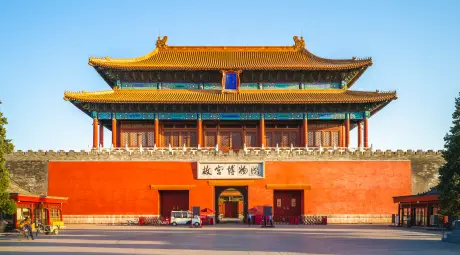
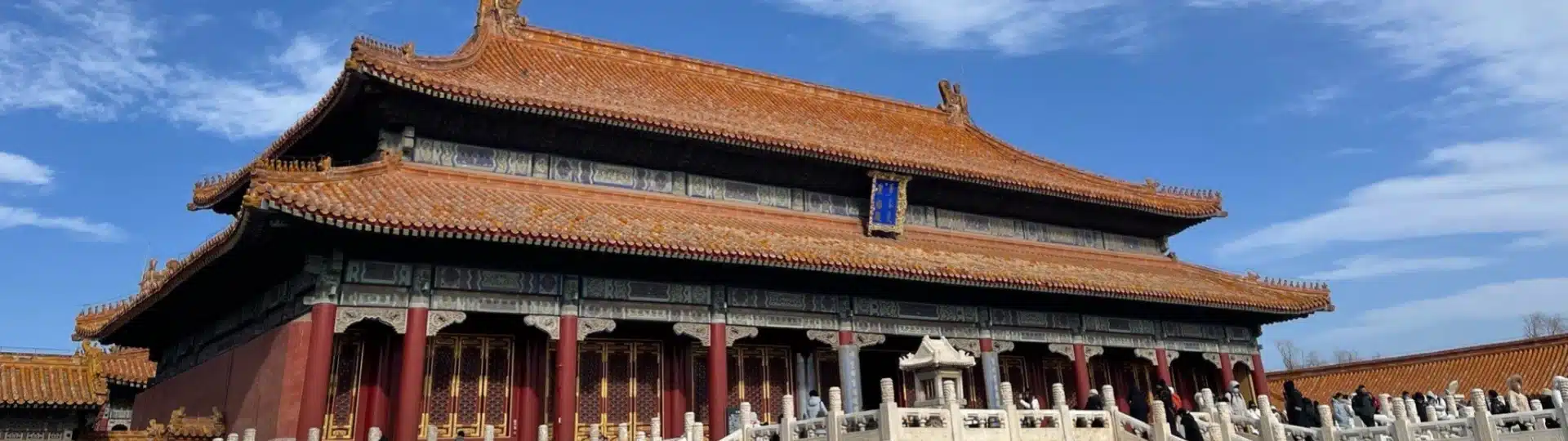
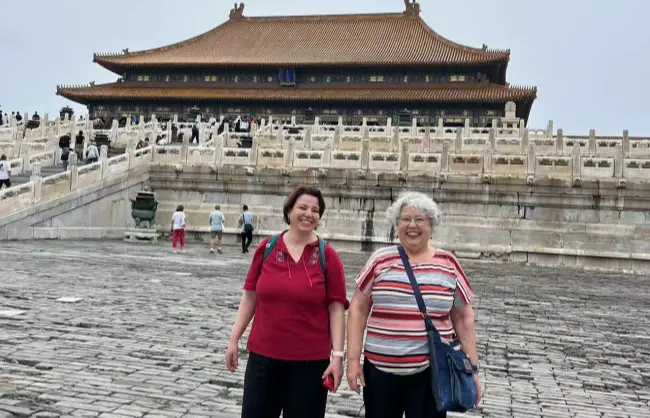
Also, after a 14-year construction and the effort of millions of laborers, the Ming imperial palace, the Forbidden City, was completed. It occupies 720,000 square meters, with 8707 rooms. This imperial building complex is one of the biggest and most well-preserved extant ancient wooden structures.

The Ming Great Wall
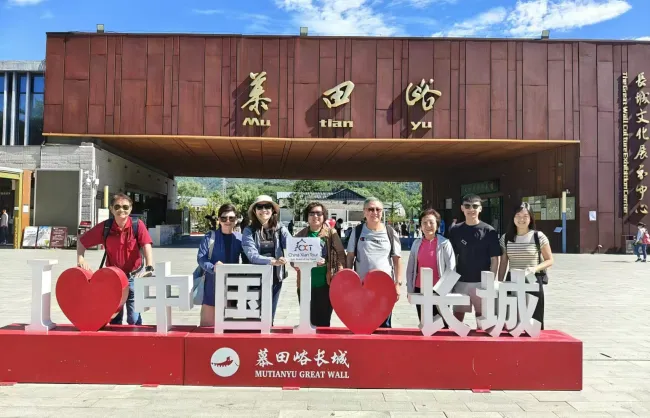
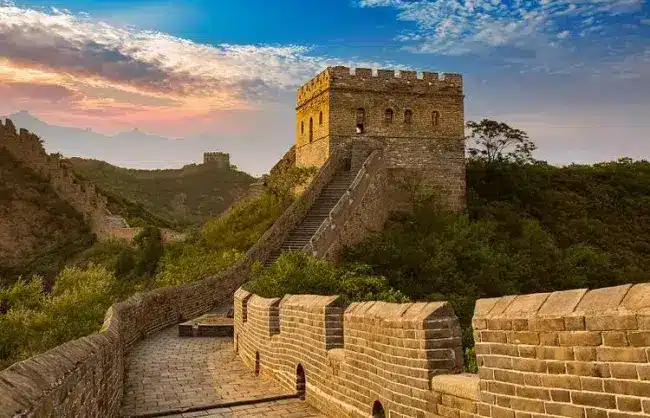
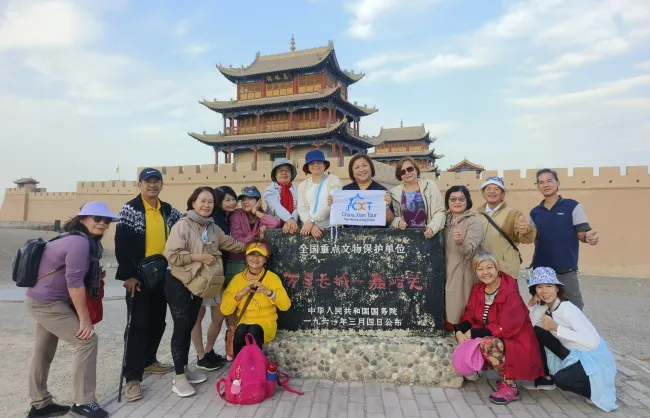
Due to the harassment of the northern nomadic ethnicities, the Ming emperors demanded the Great Wall for boundary security. The construction of the Ming Great Wall spanned almost 260 years (1368-1627), which is a generational accomplishment.
The Great Wall is a complete military defence network that consists of multiple layers and functions. The key structures include the body of the wall, passes, watchtowers, beacon towers, and castles. For example, Juyong, Shanhai, and Jiayu are all famous passes.
Most of the extant Great Walls that tourists see nowadays are legacies of the Ming project. The Ming Great Wall stands as one of the most monumental and complicated military defence projects in Chinese history.
Ming Blue and White Porcelain to the Golden Age
The prosperity of “urbanization” and overseas trade led to increased demand for handicraft products. Porcelain, as a symbol of status and wealth, was in great demand. Blue and White Porcelain was the bestselling one in the famous Jingdezhen Kiln.
The variations in cobalt pigments, subject matters, and brushwork techniques resulted in distinctive characteristics and diverse forms of Blue and White Porcelain in different periods of the Ming dynasty. Although the firing process required specific environmental conditions, the glaze would never fade after a single firing.
Recommended tour
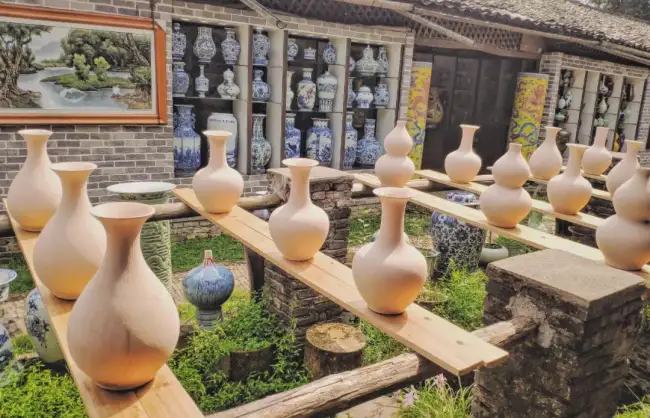
Explore Jingdezhen, China's porcelain capital, visiting ancient kiln sites and trying your hand at pottery making before wandering a thousand-year-old village in Anyi.
The Great Voyages: Zheng He
Zheng He used to work for Zhu Di (Prince of Yan at the time). His strategic wisdom and military expertise contributed to his great deeds in the Jingnan Campaign. Zheng was then promoted to Chief Eunuch of the Palace Bureau.
From 1405 to 1433, Zheng had seven voyages to 36 countries and regions in Asia and Africa, reaching as far as the Red Sea coast and the eastern coast of Africa. During the journeys, Zheng explored new maritime channels, developed “peace diplomacy”, and battled against pirates.
His journeys benefited trade and cultural exchanges between the Ming Empire and the nearby countries, laid a foundation for the maritime “Silk Road”, and cultivated friendly and peaceful interactions between different Asian and African countries.
Recommended tour

Discover Quanzhou maritime heritage at Kaiyuan Temple and Overseas Transportation Museum, experience Anxi Tieguanyin tea-making, and visit Xunpu Fishing Village flower-haired women.
Advancements in Shipbuilding
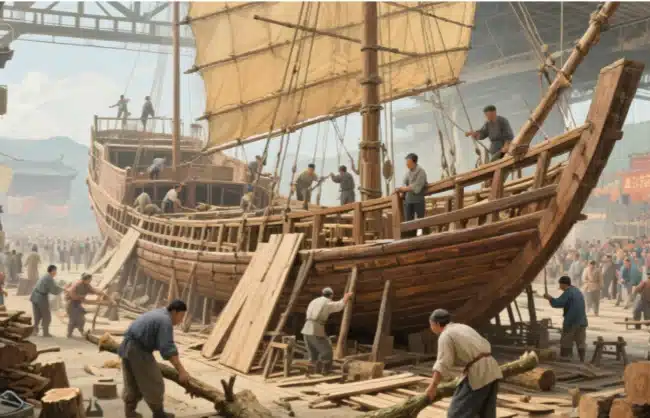
The shipbuilding industry and techniques reached their peak during the Ming dynasty. A diverse variety of ships were available– Fu Ship, a type designed for deep-sea navigation, with a pointed keel, high freeboard, and multiple masts to resist wind and waves; Guang Ship, with a rigid sail and a unique keel structure; and Sha Ship for shallow-water sailing.
Advanced watertight compartment technology and the traditional mortise and tenon joint technique make a ship a whole piece and less vulnerable to the risk of sinking. The rigid sail enables the adjustment of directions and improves the efficiency. Furthermore, navigation devices such as compasses and star charts, which achieved astronomical positioning and route planning.
Popularity of Vernacular Novels
Vernacular novels thrived in the Ming dynasty. Novels developed from the arts of storytelling in the Song and Yuan dynasties, displayed their social functions and literary value in the Ming dynasty, and ended the monopolistic status of poetry.
Advancements in printing
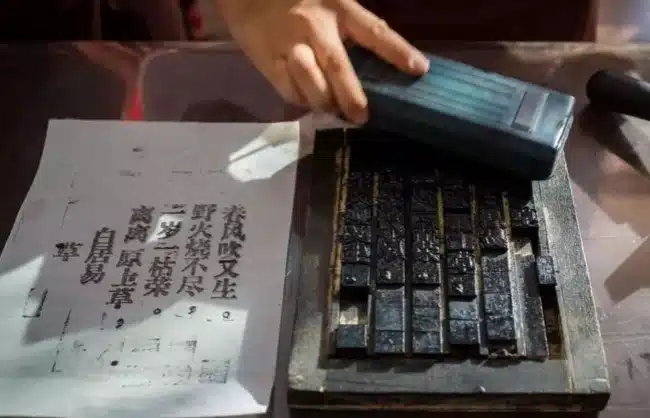
Another top achievement in this period was printing. Movable Type Printing was further improved and became mainstream. The Memorials of Song Dynasty Ministers in Huasui Press in Jiangsu Province is the earliest extant copper movable type printed work. Subsequently, lead type and wooden type also emerged.
Various official publishing institutions and privately owned bookshops also gained strong momentum of development: scientific works, medical texts, and vernacular novels were widely spread. Privately owned bookshops, Nanjing Bookshop, for example, relied on embossing and relief printing technology to publish delicately illustrated books.
Ming Dynasty Government Structure
The most striking feature of the Ming government structure is the absolute authority of the emperors and the separation of power between bureaucratic institutions. The position of Chengxiang was abolished, and the administrative power fell on the Cabinet. Meanwhile, Six Ministries were established to report political affairs directly to the emperors.
The Ministry of Personnel was in charge of the selection and regulation of officials; the Ministry of Revenue was responsible for household registration, taxes, and finance; the Ministry of Rites controlled rituals, imperial examinations, and diplomacy; the Ministry of War regulated military officers; the Ministry of penalty dealt with national juridicial affairs; and the Ministry of Works handled engineering construction, water conservancy and manufacturing.
Social Life, Economy, and Culture in the Ming Dynasty
The civilians in the Ming dynasty could enjoy rich social entertainment activities: from appreciating tea, watching operas, to interacting with acrobatic troupes. Academies and other cultural institutions also played a vital role in spreading artistic, scientific, and philosophical ideas. Moreover, with the spread of religions from the southern countries, Taoism, Buddhism, and Christianity sought to expand their influence and drove institutional reforms.
The highly developed agricultural production provided abundant food. Manufacturing and commodity production became the pillar industries during this time, especially after the opening of the maritime Silk Road. It allowed goods from the West to flood into the Chinese market while large quantities of Chinese goods were shipped to Southeast Asia, India, Africa, and other regions.
Cultural and educational standards also saw significant improvement. The organization of the Complete Library in Four Sections and the imperial examinations reflected profound transformations in scholarship and culture. Noticeably, cultural and artistic forms such as novels, poetry, and opera greatly promoted the spread and preservation of traditional Han culture.
The Fall of the Ming Dynasty
Unfortunately, the late Ming stepped on the same tragic path as its predecessor: eunuchs’ control over the regime resulted in political factions. The civilians lived in the abyss of suffering. Again, popular uprisings occurred.
1644, a peasant named Li Zicheng led his troops into the capital city of the Ming and formed his own country. The last emperor of Ming, Chongzhen Emperor, was forced to hang himself at Coal Hill. It led to the tragic end of the Ming dynasty.
Fun Facts About the Ming Dynasty
- The character “Ming” (明)in the Ming dynasty means “clear” or “bright”. It meant that the previous reign of the Yuan had ended, so everything started with a clean slate for the Han people.
- Three of the Four Great Classical Novels–Romance of the Three Kingdoms, Water Margin, and Journey to the Westwere Ming achievements.
- Although the early (and middle) Ming dynasty witnessed an early stage of the “globalization” between China and the neighboring countries, the late Ming moved to the opposite direction. It implemented strict isolationist policies by stopping overseas trade and diplomatic interactions. These policies directly led to the weakening of national power.
Where to See Ming Relics & Heritage
The Ming Great Wall Relic
There is a section of the Ming Great Wall Relic in Fugu County, Shaanxi Province. More accurately, it stretches 880 kilometers from the northeast of Fugu County, Shaanxi Province, to the northeast of Yanchi County, Ningxia Province.
It was constructed over 3 months by Yu Zijun (the Imperial Censor and Governor of the Yansui Garrison during the Chenghua reign) and his army of 40,000 soldiers.
More than that, most Great Wall Sections around Beijing were constructed from the Ming Dynasty. Though many of them have been restored, they still offer valuable glimpses into the military strategy, defensive architecture, and frontier life of that era. Don’t miss them during your Beijing tour.
Forbidden City
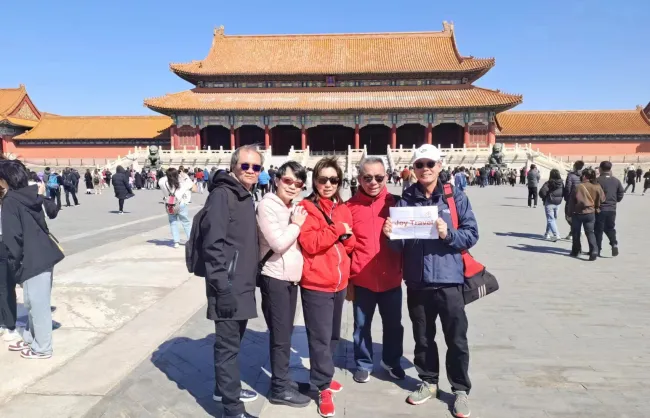
As mentioned above, the current Forbidden City and even Beijing are legacies of the Ming dynasty. The Forbidden City was constructed from 1406-1420. The city walls were 52 meters in height, with a 52-meter-wide moat surrounding them. The splendid city gate and intricately carved corner towers present the unparalleled craftsmanship. It is the biggest extant wooden palace complex in the world and was listed as a UNESCO World Cultural Heritage site in 1987.
Explore China’s Rich History with China Xian Tour
The Great Ming is such a charming and marvellous dynasty. It experienced a golden age of “all nations come to pay homage”, but eventually, like other legendary great powers, it inevitably walked into decline and collapse.
However, its cultural and spiritual legacies will always inspire the future generation. For the Han Chinese, it was a glorious revival; for the whole world, it flipped to a new chapter of civilization.
Have a tour of the Ming history with China Xian Tour today! Our consultant and guide teams are here to provide quality service and amazing personalized experiences! We are here to help you take a look at the grand Ming relics and legacies, and learn more anecdotes about this monumental era in Chinese history!