

The Song dynasty (960-1279 AD) was a golden age of commerce, culture, science, technology, and creativity in Chinese history. A renowned Chinese historian, Chen Yinke, comments that the Song Empire represents the peak of millennia of ancient Chinese culture. Some Western scholars even believed that the Song dynasty was a renaissance and economic revolution in China.
To help you understand the pivotal role of the Song dynasty in Chinese history, this guide will not only show you the overview of the Song Dynasty, for example, its capital cities, territory shifts, and important emperors, but also delve into its achievements and prosperity in science, technology, architecture, arts, and culture.
Content Preview
- Basic Facts about the Song Dynasty
- Song Dynasty Time Period and Timeline
- The Founding of Northern Song
- Major Wars during the Northern Song Dynasty
- Founding and Fall of the Southern Song Dynasty
- Territories of the Song Dynasty
- Famous Emperors of the Song Dynasty and Their Impact
- Song Achievements in Science and Technology
- The Economic Revolution and Song Dynasty Trade
- Social Classes and Government During the Song Dynasty
- Advancement of Song Architecture
- Song Dynasty Culture, Art, Life, and Religion
- Where to Experience Song Dynasty Relics and Heritage
- Travel with China Xian Tour to Explore Song Dynasty History
Basic Facts about the Song Dynasty
- The Song Empire lasted 319 years, from 960-1279 AD.
- It was divided into two phases: the Northern Song and the Southern Song.
- The economy experienced unprecedented prosperity during the Northern Song dynasty. Statistics show that in 1000 AD, China’s gross GDP equaled 26.5 billion US dollars. It accounted for 22.7% of the world’s total.
- Benefiting from the high-yielding Champa rice, the Song dynasty had a rapid population growth: from 37.1 million in 980 AD to 126 million in 1124 AD.
- The Song dynasty also featured advanced science technologies thanks to the liberation of thought and favorable financial support — from the improvement in the Four Great Inventions to the miraculously accurate Tongtian Calendar, these technologies were gifts to the world.
- The revival of Confucianism facilitated the fusion and development of Confucianism, Taoism, and Buddhism. Song poetry flourished while vernacular folk stories opened a new chapter in literature.
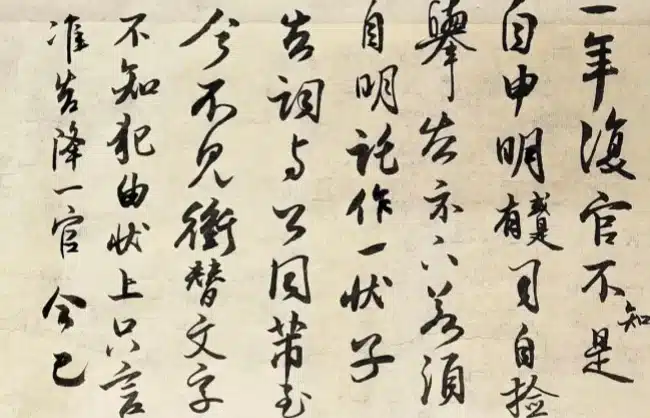
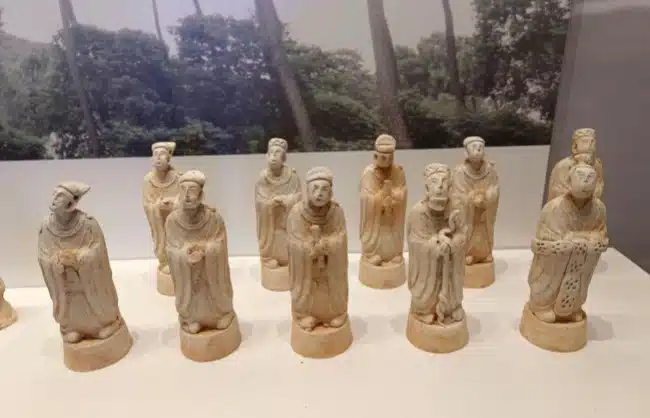
- Historical records had developed numerous genres that stood out in ancient history research. Moreover, the development of calligraphy, sculpture, stone carving, and painting all obtained incredible accomplishments.
- The Song emperors emphasized civil administration at the expense of national defense. The Imperial Examination system was further improved and became the main approach to official selection.
- Jiaozi, invented in the Northern Song dynasty, was the earliest paper money in the world.
Song Dynasty Time Period and Timeline
The Northern Song dynasty (960-1127)
Time |
Event |
Description |
960 |
Chenqiao Mutiny |
Zhao Kuangying launched a coup at Chenqiao and proclaimed himself the emperor. It marked the establishment of the Northern Song dynasty. |
979 |
North Han Annihilated |
Zhao Guangyi, Taizong of Song, annihilated the North Han and completed the unification of the Central Plains. |
1004 |
The Treaty of Chanyuan |
The Song Empire signed a treaty with Liao, promising yearly tribute money. This treaty secured peace and harmony between Song and Liao for centuries. |
1043 |
The Qingli Reforms |
It refers to the reforms led by Song politician, Fan Zhongyan. They promoted “rewarding merits and suppressing opportunism”. Although they failed due to opposition from the conservative parties, they served as a stepping stone for Wang Anshi’s reforms. |
1069 |
Wang Anshi’s Reforms |
Wang Anshi implemented the Green Sprout Loan System and the Exemption from Labor Service System. However, they threatened interest groups and stirred up factions. |
1127 |
The Jingkang Incident |
The Jin army conquered Kaifeng, the capital city of Song. It marked the end of the Northern Song dynasty and exposed the military weakness of the Song army. |
The Southern Song dynasty (1127-1279)
Time |
Event |
Description |
1127 |
The Establishment of the Southern Song Dynasty |
Zhao Gou Proclaimed himself the Emperor in Yingtian Prefecture, Nanjing. The Southern Song dynasty began. |
1141 |
The Treaty of Shaoxing |
The Southern Song Empire negotiated peace with Jin by agreeing on regular tribute and relinquishing its northern territories. The unjust execution of Song general Yue Fei triggered conflicts between the pro-war and anti-war factions. The Southern Song was trapping in a long-term policy of defending internal conflicts but neglecting the external affairs. |
1161 |
The Battle of Caishi |
Song general Yu Yunwen defeated the Jin army, obstructing Jin’s invasion southward. |
1206 |
The Northern Expedition of Kaixi |
The Song Prime Minister, Han Tuozhou, led the northward conquest of Jin, but failed. The Southern Song was forced to accept the humiliating “Treaty of Jiading”, which exacerbated its financial crisis. |
1234 |
The Alliance of Song and Mongolia |
The Southern Song allied with Mongolia to fight against Jin. However, after Jin was annihilated, Song had to face the powerful Mongolia alone. |
1279 |
The Battle of Yashan |
The Mongol forces breached the final defensive line of the Southern Song. The Song minister, Lu Xiufu, carried the young Song Emperor into the sea. The Song dynasty was terminated. It was the first time China was ruled by a foreign dynasty. |
The Founding of Northern Song
In 960, Zhao Kuangying (the later Taizu Emperor) led the army to fight against the invasion of the Qidan and Northern Han alliance and then ‘schemed’ a coup at Chenqiao (current southeastern Fengqiu, Henan). His supporters draped him with the symbolic imperial yellow robe and upheld his status as the Emperor. Zhao Kuangying then took the throne and set the capital city in Kaifeng, Henan. The Song dynasty was founded.
Major Wars during the Northern Song Dynasty
- The Unification War
From 962-79, the northern Song dynasty launched a war against the remaining divisional forces of the Five Dynasties and Ten Kingdoms Period. In 17 years, the Song army almost unified ancient China, except for the sixteen states of Yan Yun.
- The Northern Expedition of Yongxi
To retrieve the sixteen states of Yan Yun, Taizong of Song sent 200,000 soldiers to conquer Liao in 986. However, only the middle column achieved trivial success. This war directly impacted the signing of the Treaty of Chanyuan.
- The Song-Xia War
During 1040 to 44, then between 1064 and 1119, there were five major wars (consisting of several battles) between the Song Empire and the Xia Empire. In the first two years, the Northern Song lost three of the five battles in the first war. As a result, Song signed the Treaty of Qingli with Xia for an appeasement.
Finally, the Song army defeated the main force of Xia in 1092 at Hongde City, and the strategic victory at Pingxia City in 1098 left a heavy blow to the morale of the Xia army. Eventually, in 1127, right before the end of the Northern Song dynasty, Xia agreed on a truce with Song.
- The Battle of Xihe
During the reign of Shenzong, the Song dynasty managed to get rid of poverty and weakness in military affairs through reforms and expansions. The Battle of Xihe (1068-75) was an attempt to retrieve the Hehuang area. On the one hand, it pacified the Tubo ethnic groups; on the other hand, it consumed Northern Song’s military strength and accelerated its collapse.
Founding and Fall of the Southern Song Dynasty
The Southern Song was founded in 1127 at Yingtian Prefecture (Nanjing) by Zhao Gou, the son of Huizong Emperor of the Northern Song. Later, the capital city was relocated at Lin’an (current Hangzhou).
Unfortunately, the Southern Song gradually fell due to political corruption and the accumulated economic loss at lasting warfare. After 152 years’ reign, it ended with the Yuan army invading the capital, and the young emperor drowned in the sea.
Territories of the Song Dynasty
The territories of the Song dynasty underwent significant geographical and political shifts between the Northern Song and the Southern Song.
The Northern Song established its capital city in Kaifeng, Henan. Its northern border remained stable along Yanmen Mountain – Daomao Mountain – Baigou. In the northwest, the expansion secured Sui, Xi, He, Tao, Min, Lan, and other states.
By the time of the Zhezong Emperor, Song had control over the Huangshui River basin, the upper reaches of the Tao River, and the Gui’de region. In 1104, Song established the Protectorate of Longyou to reclaim the Hehuang region.
Although the Xi’an state and Huaidejun were seized by Xia, the Northern Song redeemed the seven states of Youyun from Jin, and established other states in the southwestern frontier adjoining Dali.
The southern and southwestern borders remained mostly unchanged in the Southern Song, but Jin’s invasions pushed the northern border southward. The Jin army had once reached the current Hunan, Jiangxi, and central Zhejiang. After several negotiations, the northern border stabilized at the Huai River while the western border remained near Dashaguan Pass and south of the Qinling Mountains.
Famous Emperors of the Song Dynasty and Their Impact
- Taizu Emperor (r. 960-976) established a centralized Northern Song Empire and promoted the policy of prioritizing civil administration.
- Taizong Emperor (r.976-997) continued the goal of unification and succeeded in repelling the Liao army and unified the Central Plains.
- Renzong Emperor (r.1022-1063) implemented benevolent governance to alleviate the burdens on the masses; and he appointed virtuous ministers, such as Fan Zhongyan. His reign was praised as the peak time of the Song dynasty.
- Shenzong Emperor (r.1067-1085) supported Wang Anshi’s reforms to increase fiscal revenues and the enhancement of military power to reverse the long-term impoverishment and debility.
Song Achievements in Science and Technology
Shen Kuo & Dream Pool Essays
Dream Pool Essays written by Shen Kuo included astronomy, mathematics, physics, chemistry, geography, medicine, and other disciplines. It was a milestone in ancient Chinese science history.
For example, Shen was the first scientist who proved in his experiment that a magnetic needle points south, yet it invariably deviates eastward. Thus, Dream Pool Essays has the earliest discussion of magnetic declination, 400 years earlier than Columbus’s discovery.
Movable Type Printing
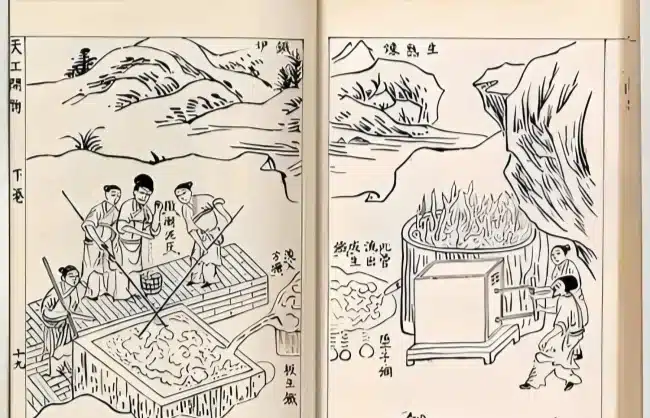
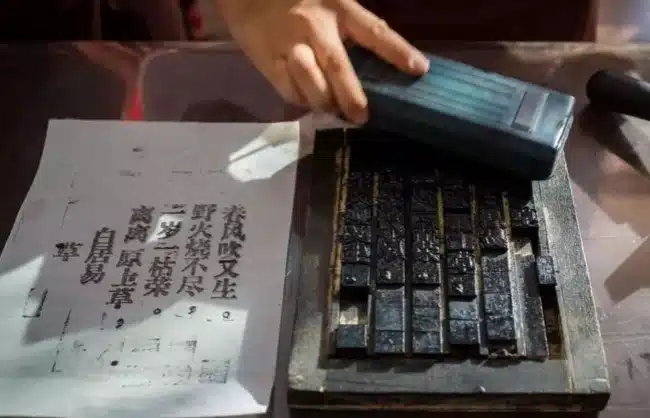
Movable Type Printing was invented by Bi Sheng in the Northern Song. It included processes of carving characters on wooden, metal, or lead boards, painting ink on the boards, and pressing them on paper. The popularity of Movable Type Printing turned publishing into an independent industry. It enabled the spread of knowledge, and culture booming and inheritance.
Gunpowder
The use of gunpowder was greatly developed during the Song dynasty. According to the General Chinese Military Compendium (1044), the ratio of saltpetre, sulphur, and charcoal (with saltpetre accounting for approximately 60–70 per cent) in the military firearms, like smoke balls and cannonballs, was close to the modern standard.
In the Southern Song, the proportion of saltpetre had reached 75 per cent and achieved a dreadful explosive effect. The incendiary weapons gradually transitioned to explosive types, for instance, the “thunder cannon” utilized higher saltpetre content.
Compass
Compasses experienced a systematic improvement in the Northern Song dynasty. The technique of grinding magnetite into magnetic needles and suspending them on copper plates had matured.
Following the maturation of shipbuilding techniques and the prosperity of maritime trade in the Song dynasty, compasses gradually assumed their practical navigation function. The compass technology was then transported to the Arab world via the Silk Road. It made a great contribution to the innovation of marine navigation technology.
The Economic Revolution and Song Dynasty Trade
Trade via the Maritime Silk Road
The Song Dynasty established a global trade network through the Maritime Silk Road:
Exporting porcelain, silk, and books to Japan and Goryeo, while importing sulfur, copper, and silver via the eastern route and the southern route, reached India and Arabia via Southeast Asia and extended to East Africa.
With the role of Arab merchants in trade transit, Chinese goods (such as porcelain) reached as far as Persia, Egypt, and even the Mediterranean coast. In the Southern Song dynasty, annual customs revenue from ports such as Quanzhou and Guangzhou reached 2 million guan. It made up 5 per cent of the fiscal revenue.
Recommended tour with Quanzhou
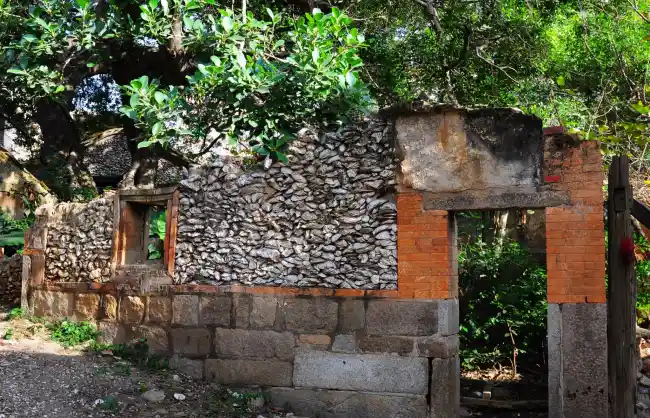
Discover Quanzhou maritime heritage at Kaiyuan Temple and Overseas Transportation Museum, experience Anxi Tieguanyin tea-making, and visit Xunpu Fishing Village flower-haired women.
The world’s first paper money
Jiaozi was the world’s earliest paper money. It originated from Sichuan in the Northern Song dynasty. Due to its geographical remoteness in the mountains, Sichuan was short of copper material, so initially, the government adopted iron coins. However, iron coins were hard to preserve and transport.
The invention of Jiaozi was believed to facilitate convenient trade. In 1024 AD, the Yizhou Jiaozi Office was established in the current Chengdu, Sichuan. It marked paper money becoming the official currency.
Social Classes and Government During the Song Dynasty
The Civil Service Exam and the Rise of the Scholar-Official
To suppress the aristocratic families’ intentions of empowering their own clans while excluding the virtuous talents and causing severe political corruption, the nobility recommendation system in the early Song was replaced by the Imperial Examinations.
The imperial examinations featured multiple disciplines, including Confucian classics, history, literature, and politics, and set different tiers according to the administrative divisions. The transparent selection allowed talents with comprehensive knowledge and skills to enter the civil service system without exacerbating class divisions and social injustice.
Advancement of Song Architecture
The Song architecture theories prioritized “material” to achieve the standardization of design, which was centuries earlier than the Europe. Innovative techniques like “side-angles” and “rising columns” were employed to enhance stability. For example, the “four-section composite column” technology in the main hall of Baoguo Temple in Ningbo.
The decorative arts were largely refined as the Polychrome Painting System developed more tiers, like “Five-Color All-Over” and “Jade Grinding”. The technique of layered green-and-blue shading reached its peak. The type of architecture became diversified: religious temples, Chinese gardens, bridges… The Song dynasty established the fundamental paradigm for future Chinese architecture.
Song Dynasty Culture, Art, Life, and Religion
Religion in the Song Dynasty
The religious policy of the Song dynasty centered on the “parallel existence of the three religions”. Confucianism, Taoism, and Buddhism were officially recognized as the mainstream ideological framework. In the Northern Song dynasty, Taoism was even elevated to the height of “state religion,” while Confucianism was spread throughout the society through the Imperial Examination.
After the introduction of Islam and Christianity, the Song’s religious policies turned more open and inclusive. Meanwhile, the diverse religions were fused into local culture and life during the Song dynasty.
For example, Buddhist murals and sculptures, along with Taoist magic figures and patterns, were also significant subjects in artistic creation. And the Islamic architecture in Xuanzhou, Fujian, left crucial legacies to the local culture.
The Growth of Population and Extensive Urbanization
The increase in grain yields after the introduction of Champa rice brought about a rapid growth of population, from 37.1 million in 980 AD to 126 million in 1124 AD. A large portion of the population was free from agricultural production and moved to commercial towns. It marked the earliest and most large-scale urbanization in Chinese history.
During the reign of the Gaozong Emperor, the frequent warfare between the Southern Song and the Jin resulted in a sharp drop in the population. By 1135, the population had decreased to 56.5 million, until the Treaty of Shaoxing brought a period of recovery.
In 1223, 5 million Northern Song civilians who lived in the Jin migrated back to the Southern Song territory, and the total population reached the peak of 80.6 million.
Extraordinary Arts and Theatre
The arts in the Song dynasty featured unique Schools and styles. It involved multiple spheres – painting, sculpture, calligraphy, and porcelain. The artists’ superb technical skills and their emphasis on the expression of artistic conception conveyed the charm of Chinese culture.
For example, the texturing techniques for mountain rocks in landscape paintings, the realistic rendering techniques in flower-and-bird paintings, and the control of glaze colors in ceramic arts.
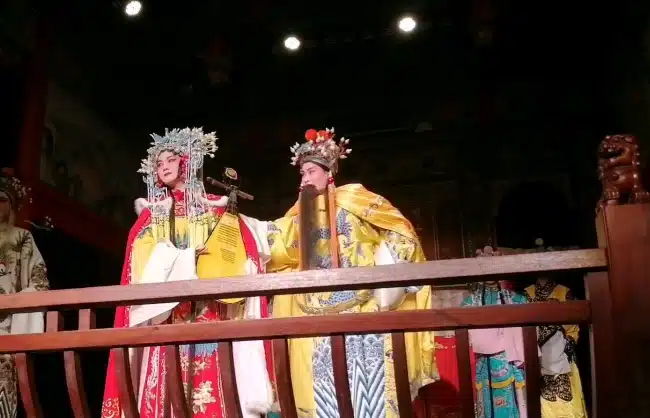
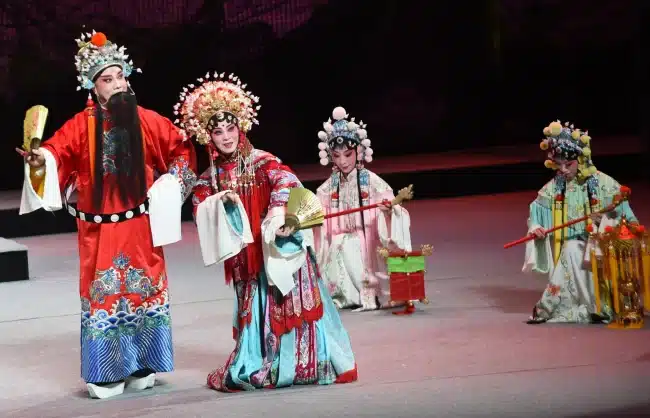
The development of the theatrical culture also entered a flourishing phase in the Song dynasty. The Southern Song dynasty witnessed the emergence of numerous outstanding playwrights and performing artists, such as Tang Xianzu and Guan Hanqing. Operas like Han Gong Qiu and Wutong Rain, as the widely acclaimed works, still play an important role in Chinese theatre.
Noticeably, a new form of performance arts, which incorporated theatre, opera, and music, emerged in the Song dynasty. For example, the classic Han theatre, Southern Opera, the combination of folk music and the Guan Zhong dialect, Qin Qiang, and one of the chief types of the Peking Opera, Xi Pi, all thrived in the Song dynasty.
Agriculture Innovation in the Song Dynasty
The Song dynasty experienced a breakthrough in tillage techniques. Besides the introduction of Champa rice, innovations including intensive cultivation, terrace fields (as practiced in the mountains of Fujian), and reclaimed lake fields (as seen in the Taihu Lake basin) further expanded the arable area.
The adoption of the curved plough alleviated the burden on draught animals while iron implements such as iron rakes and sickles enhanced efficiency. What’s more, the promotion of water wheels (including the paddle wheel and cylinder wheel) resolved irrigation challenges.
Meanwhile, cash crops became more commodified. For instance, the tea industry in the southern Yangtze River and Huai River areas, and the silk industry in the Taihu Lake basin.
In Fujian and Guangdong, wide sugarcane planting pushed forward the sugar-processing industry. After the cotton planting technique was spread to the southern Yangtze River area, the cotton textile technology, such as Huang Daopo’s innovation of textile machines, also experienced significant upgrades.
Where to Experience Song Dynasty Relics and Heritage
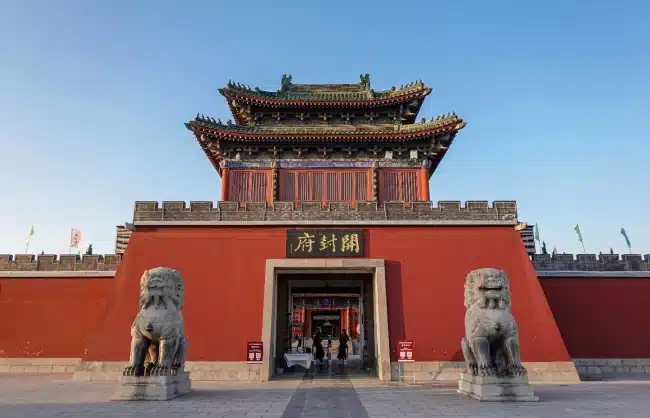
Kaifeng: Kaifeng Museum & Kaifeng Fu
As the capital city, Kaifeng kept the footprint of the Northern Song dynasty. For example, in the Kaifeng Museum (9:00-17:00, Tuesday-Sunday), the Stele of Inscriptions at Kaifeng Prefecture, the Great Sheng Bell, the Bronze Official Seal, the Chongning Tongbao coin, ceramics from various kilns, and other cultural texts and precious artefacts present a vivid picture of Song Dynasty society.
Another recommendation is the Kaifeng Fu (7:00-17:00 in summer; 7:30-18:30 in winter). It was the major administrative organ that oversaw the capital city and its surrounding regions. Now it has been reconstructed and become a Song culture-themed tourist attraction that offers nine cultural exhibition zones and live performances of stories of the Song dynasty.
Recommended tour
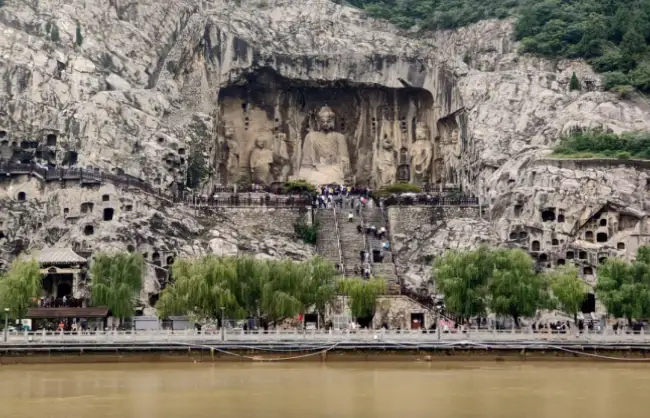
Journey through China's ancient heartland visiting UNESCO sites including Yin Ruins, Shaolin Temple, and Longmen Grottoes across Zhengzhou, Kaifeng, Dengfeng and Luoyang.
Ganzhou: Ancient Raft Bridge
Ganzhou has a reputation as a Southern Song Dynasty Town. Its most well-known Song relic was the Ancient Raft Bridge. This 400-meter bridge was formed by over a hundred wooden boats arranged side by side and fixed with ropes and anchors. This immense project was meant to facilitate travel between the two sides of the strait.
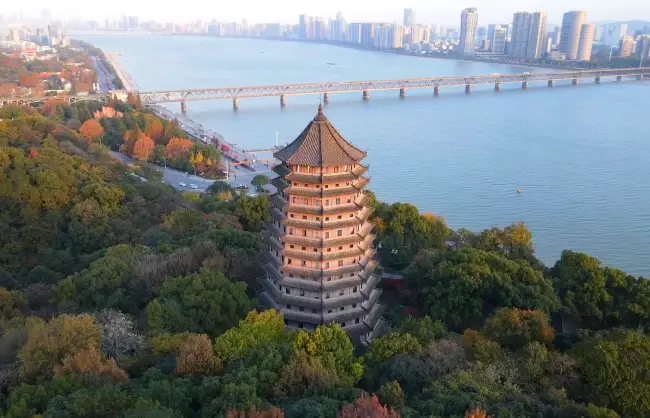
Hangzhou: Southern Song Imperial Palace & Six Harmonies Pagoda
The relic of the Southern Song Imperial Palace still sits along Songcheng Road at the eastern foothills of Phoenix Mountain in southern Hangzhou. It consists of 130 temples, pavilions, and towers, with elegant imperial gardens. It has been honored as one of the protected cultural relics in Zhejiang Province.
Another valuable historical site in Hangzhou is the Six Harmonies Pagoda. It was built in 970 AD. The name draws upon the Buddhist concept of the Six Harmonies, signifying the four cardinal points and the heavens and earth. This octagonal pagoda stands 59.89 meters in height and features 104 iron bells hung on the eaves from each floor. Also, its interior was adorned by intricate carvings of flora, birds, beasts, and divine figures.
Recommended tour
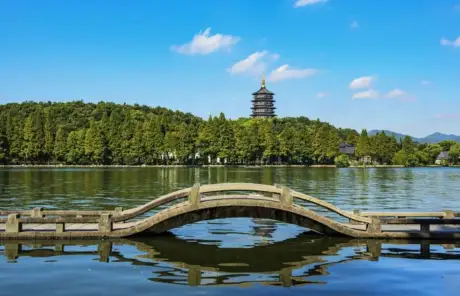
A 2-day Hangzhou essence tour covering the poetic West Lake, Lingyin Temple, the China National Tea Museum at Meijiawu, Leifeng Pagoda, and the scenic Bamboo-lined Path at Yunqi.
Shanxi: Shengmu Hall
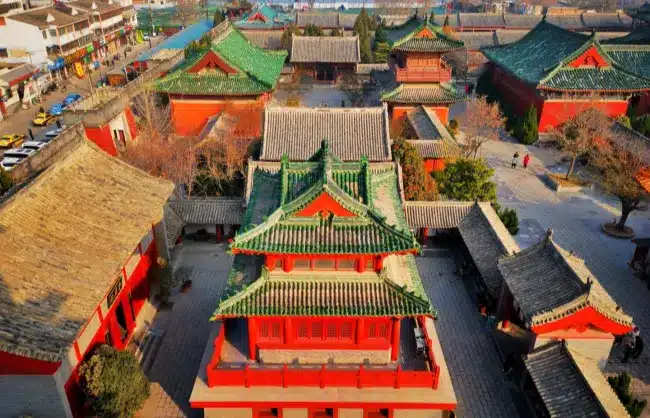
The Shengmu Hall in Taiyuan, Shanxi, was considered the “living fossil” for the study of Song architecture. Its construction dates back to 979-984 AD. It applied the “rising columns” and “side-angles” techniques recorded in the Song Construction Standards for aesthetic value and structural stability.
Its surrounding corridors represent the earliest extant perimeter secondary staircase in China’s ancient architecture. The eight carved wooden dragons in the front corridor are also China’s earliest sample.
Recommended tour
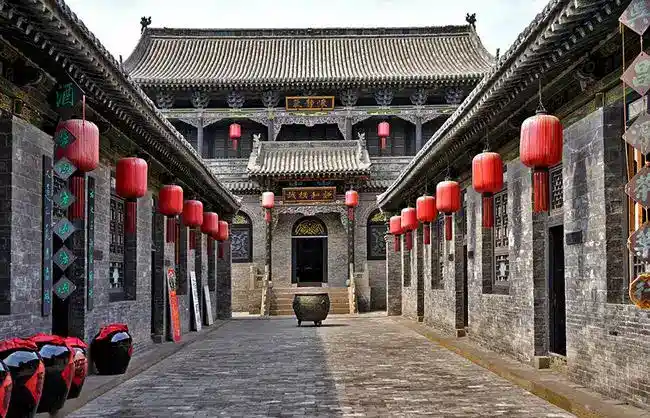
Journey through Shanxi's historic cities of Pingyao, Taiyuan, and Datong to witness the Qiao Family Courtyard, Jinci Temple, Hanging Temple, and the colossal Yungang Grottoes with 51,000 carvings.
Suzhou: Xuanmiao Taoist Temple Sanqing Hall
Sanqing Hall is the main hall of the Xuanmiao Taoist Temple. It was constructed in 1179. Sanqing Hall retains much of the Song-style structure and design after renovations. Its upper eaves feature a unique double-layered, upward-tilting bracket set with four rows and six tiers. It was an exclusive example in China.
Sanqing Hall is the largest Song dynasty wooden structure in the southern Yangtze River area. It serves as a crucial case study for examining architectural differences between northern and southern China during the Song period. Also, it exemplifies both official Song architecture standards and regional design characteristics. Don’t miss this gem while your Suzhou tour.
Travel with China Xian Tour to Explore Song Dynasty History
The splendid achievements left by the Song dynasty in science, arts, agriculture, and culture shine as dazzling pearls for contemporary China. The Song dynasty’s glories and miseries remain a subject that fascinates historians worldwide.
Would you like to take a tour of the intriguing Song dynasty history in the previously mentioned Song relics and heritage sites? Would you like to know more about this legendary Empire? Have a Chinese culture tour with China Xian Tour today for a taste of history and anecdotes! In your personalized trip designed by our professional consultant and guide teams, you will be reading the laughter and tears in the Song dynasty epic.