

The Qing Dynasty witnessed the last imperial family in Chinese history, who ruled China from 1644 to 1912, lasting for nearly three centuries.
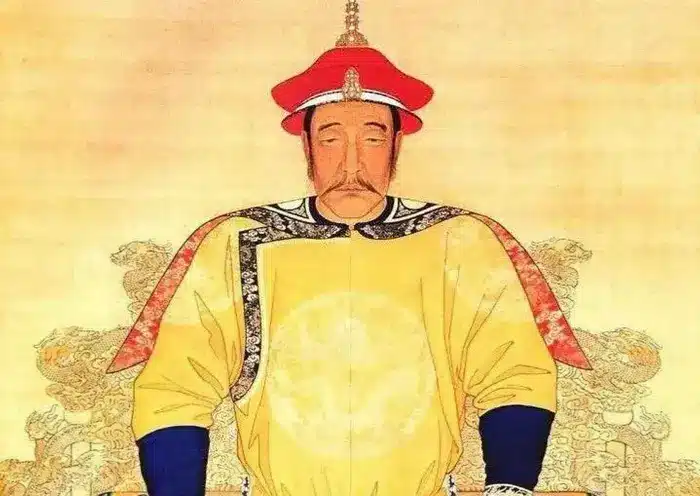
At the beginning, it was merely a nomadic tribe in the northeast called Jurchen. In 1616, the Manchu leader Nurhaci unified the neighboring ethnic clans and founded the Later Jin Dynasty.
In 1626, his son Hong Taiji ascended the throne and later in 1636, he changed the dynastic title to Qing and renamed his people as Manchu.
The year 1644 marked the reign over whole China by the Qing Dynasty imperial family when they finally took control of Beijing.
In 1912, when Puyi, the last emperor, gave up the throne under the threat of the then prime minister Yuan Shikai, Qing Chinese Dynasty finally collapsed.
In this article, we will provide an ultimate introduction to this last imperial dynasty in Chinese history, including its origin, rise, fall, achievements, key events, and facts.
Content Preview
- Overview of the Qing Dynasty? – China’s last Imperial Dynasty
- Key Facts of the Qing Dynasty
- Qing Dynasty Timeline & Key Events
- Origins and Rise of the Qing Dynasty
- Qing Dynasty Territory
- Fall of the Qing Dynasty
- Qing Dynasty Government, Society, and Economy
- Qing Dynasty Achievements
- Qing Dynasty in Modern Culture
- FAQs about Qing Dynasty
- Explore China’s Rich History with Us
Overview of the Qing Dynasty? – China’s last Imperial Dynasty
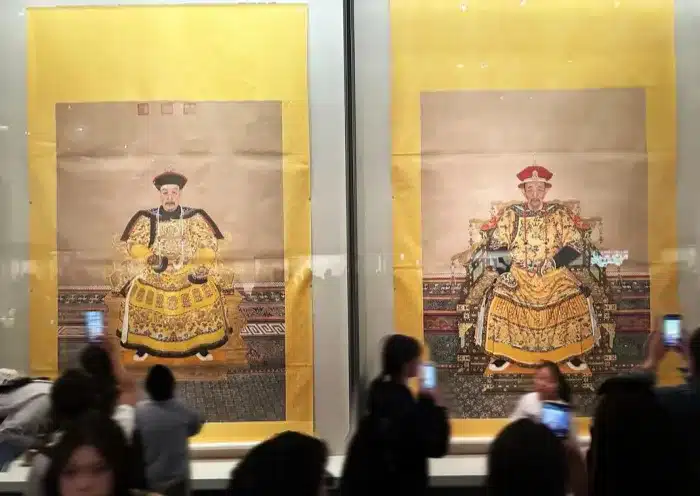
In mandarin, Qing Dynasty is called Qing Dai or Qing Chao, while it is pronounced like “Ching” in English. With an age of 268 years, the long-lived Qing Dynasty was the final imperial dynasty in China, marking the end of feudal period that had been lasting for over two thousand years. It succeeded the Ming Dynasty which fell in 1644 and finally came to an end in 1912 during Xinhai Revolution. There are altogether 12 emperors during the Qing Chinese Dynasty. Among them, Kangxi and Qianlong are particularly known for their contribution to expanding the country’s territory.
Significance in Chinese and world history
Qing Dynasty is an influential era in Chinese and world history noted for both its glorious former years and notorious latter years.
China’s territory had been expanded considerably in this period, amounting to as large as 14 million square kilometers and ranking the 1st in the world. What’s worth mentioning is that the recapture of Taiwan was realized by Zheng Chenggong in 1661. Besides, the population amazingly soared from 60 million at the initial stage to 400 million before the Opium Wars.
As Qing Empire was led by Manchu people, rather than Han people, the majority in the country, dominant traditional Confucian culture was challenged but later enriched to a large extent. The self-seclusion policy adopted by the later Qing emperors greatly restricted the country’s development, foreshadowing the subsequent crises.
Key Facts of the Qing Dynasty
- When it was built/ended: It was founded in 1644 and overthrew in
- Capital: Shenyang and Beijing
- First/last emperors: The first emperor is Nurhaci and the last one is Puyi, also known as Emperor Xuantong.
- How long did the Qing Dynasty last: 268 yearsin total if we calculate from 1644, the year that Qing troops entered Shanhai Pass and took control over the whole country (recognized by most scholars); 276 years if counting from 1636 when the title Qing was adopted formally by Hong Taiji; and 296 years starting from 1616 when Nurhaci founded the Later Jin Dynasty, the predecessor of Qing Dynasty.
- Cultural achievements: A golden age for classic novels, porcelain, and jade carving; the emerge of Peking Opera; and publishment of some important comprehensive literature.
- The Manchus pressed on for 57 years to establish the Qing Empire.
- It is one of the dynasties with the largest territories in Chinese history.
Qing Dynasty Timeline & Key Events
Emperor’s Name |
Posthumous Title |
Reign |
Era Name |
Imperial Mausoleum |
Remarkable Events |
Nurhaci |
Qing Taizu |
1616 – 1626 (10 years) |
Tianming |
Fuling |
Established Qing Dynasty |
Hong Taiji |
Qing Taizong |
1626 – 1643 (17 years) |
Tiancong |
Zhaoling |
Invented the national title Qing |
Fulin |
Qing Shizu |
1643 – 1661 (18 years) |
Shunzhi |
Xiaoling |
The first Qing emperor entering Beijing |
Xuanye |
Qing Shengzu |
1661 – 1722 (61 years) |
Kangxi |
Jingling |
On the throne for 61 years, with the longest reign in his dynasty |
Yinzhen |
Qing Shizong |
1722 – 1735 (13 years) |
Yongzheng |
Tailing |
The fourth song of Kangxi who defeated other brothers in the chase for throne |
Hongli |
Qing Gaozong |
1735 – 1796 (60 years) |
Qianlong |
Yuling |
Visited south China for six times |
Yongyan |
Qing Renzong |
1796 – 1820 (25 years) |
Jiaqing |
Changling |
Executed He Shen, an infamous corrupted official |
Minning |
Qing Xuanzong |
1820 – 1850 (30 years) |
Daoguang |
Muling |
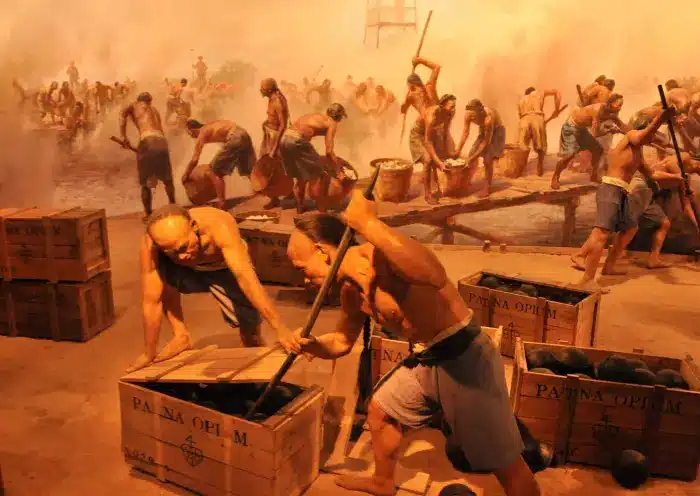
Ordered Lin Zexu to destroy opium in Guangdong, resulting in the First Opium War |
Yizhu |
Qing Wenzong |
1850 – 1861 (11 years) |
Xianfeng |
Dingling |
Put down the Taiping Rebellion |
Zaichun |
Qing Muzong |
1861 – 1875 (14 years) |
Tongzhi |
Huiling |
The real power was held by his mother – Empress Dowager Cixi |
Zaitian |
Qing Dezong |
1875 – 1908 (34 years) |
Guangxu |
Chongling |
Initiated the Hundred Days’ Reform |
Puyi |
None |
1908 – 1912 (4 years) |
Xuantong |
None |
The last king of Qing Dynasty |
The Hairstyle Massacre (1645)
When the Qing troop invaded Beijing and took over China, Emperor Shunzhi was just a 6-year-old boy, so actually the whole country was under the control of his uncle Dorgon. On June 15, 1645, Dorgon commanded that all men should shave away their hair on the forehead and leave only a small bundle of hair at the back to be braided like a pigtail, just as the Manchu men did. It was indeed humiliating because Han people thought that cutting hair was disrespectful to one’s parents according to the Confucian doctrines. As a result, tens of thousands of reluctant men were massacred during this movement.
The Kang-Qian Flourishing Age
The Kang-Qian Flourishing Age, also famous as the High Qing Era, showcased the final glory of the feudal dynasties. Approximately from 1662 to 1796, it was a prosperous time spanning the reigns of the three emperors including Kangxi, Yongzheng, and Qianlong. During this period, the Qing Empire consolidated neighboring multi-ethnic tribes through military expansion and diplomatic means, becoming the world’s largest country. With the implementation of favorable farming policies and the introduction of potatoes and corn, there was an unprecedented rise in population, reaching over 300 million.
Restricted Foreign Trade
This self-seclusion policy started from the later era of Emperor Qianlong’s reign and continued until the late Qing Chinese Dynasty. Though Qing government did not ban all foreign trades, it had a strict control over it. Foreigners were allowed to trade with only some licensed Chinese businesses in Guangdong known as Cohong or Thirteen Hongs. What’s more, they could not enter the city of Guangzhou but were restricted to stay at a designated area. The government also prohibited private individuals from going abroad or getting contact with foreign ideas. Eventually, China fell into a backward and vulnerable situation gradually, powerless to resist the following Opium Wars.
The Opium Wars – the catastrophic beginning of China’s modern history
In 1840, the British claimed that China had destroyed tons of opium from their merchants in Guangzhou, and therefore launched the First Opium War during Emperor Daoguang’s reign.
Then in 1860, the Anglo-French Allied Force intruded into the Old Summer Palace and burned it down, which was chronicled as the Second Opium War in Chinese History. In these two wars, the Qing army was so weak to resist and had to give up a series of trading ports. From then on, China became a semi-colonial and semi-feudal country.
The Taiping Rebellion (1851 – 1864) – an anti-Qing uprising led by farmers
After the Opium Wars, the Qing government doubled or even tripled its taxes in order to make up the financial deficits caused by the huge payouts to the foreign invaders. To fight against the government, a large number of farmers began to gather and organize movements. The Taiping Rebellion, also called the Taiping Heavenly Kingdom Movement, had the largest scale among them. Led by Hong Xiuquan, who claimed himself as the second son of the God, this organization were mainly composed by farmers. Their goal was to overturn the rule of the Qing Dynasty and establish a Taiping Heavenly Kingdom where people could grow crops and eat food together. The rebel army reached its heyday in Nanjing, the capital, but finally collapsed due to internal strife among the leaders, strategic mistakes, later corruption and the suppression by the Qing government.
The Boxer Rebellion (1899 – 1900)
In 1899, some farmers practicing martial arts in Shandong secretly started up this violent uprising targeted at foreign missionaries and Chinese converts. At first, the Qing government wanted to put down the Boxers as enemies. However, some officials gradually changed their attitudes and began to show sympathy for these farmer rebels. Later, the army gained the secret support of Empress Dowager Cixi in the hope of expelling the foreigners and expanded rapidly. Soon Cixi declared wars on 11 countries and defeated by the Eight-Nation Alliance, ending up with the signing of the unequal Boxer Protocol.
Origins and Rise of the Qing Dynasty
From Ming to Qing Dynasty
Before the Manchu people entered the heartland of China, they were a nomadic tribe from the northeaster frontier. In 1644, as a rebel army led by Li Zicheng captured Beijing, Emperor Chongzhen of the Ming Dynasty committed suicide. To defeat Li Zicheng’s army, the General Wu Sangui made a mistaken decision, that was, to invite the Manchus to go through Shanhai Pass and fight together with Ming troops. However, after the enemy was resolved, the Manchus marched to Beijing directly and occupied the city, proclaiming the foundation of Qing Dynasty and Shunzhi as the emperor.
Manchu Heritage and Establishment of Rule (Qing Manchu Dynasty)
After Nurhaci unified all clans of Jurchen, to strengthen the group identity, he created the Eight Banners System, the pillar of Manchu power and organization. As its name implied, the system was structured by households belonging to Eight Banners, namely Yellow, White, Red, and Blue, each having an original plus a bordered variant.
Later, Mongol Banners and Han Chinese Banners were also incorporated. Men were born to be soldiers under their banners. As a result, the Qing Dynasty owned a formidable military force in its subsequent conquest.
Early Emperors and Expansion
The early Qing emperors were mostly exceptional capable rulers who accomplished the dramatic territory expansion. The founding father Nurhaci declared the Later Jin Dynasty to challenge the Ming emperor. Afterwards, his son Hong Taiji consolidated Manchu power and proclaimed the Qing Dynasty for the first time. In Emperor Shunzhi’ reign, the regent Dorgon successfully transformed the Qing regime from a regional power to the dominant force in China.

Qing Dynasty Territory
Peak Expansion
In the Qing Dynasty, China’s territory map had been significantly expanded and reached the zenith under Emperor Qianlong, around the year 1759. At its heyday, the Qing Empire conquered an area of 14.7 million square kilometers, containing the Outer Mongolia, Tibet and Xinjiang.
Was Bhutan Part of the Qing Dynasty?
Though the answer is no, Bhutan used to be an affiliated country of the Qing Empire since the 17th century. Each year, the king in Bhutan was obliged to present gifts and pay taxes to the Qing Dynasty. Up to now, the country’s national flag still resembles the Qing Dynasty flag very much.
Capital Cities (Shenyang → Beijing)
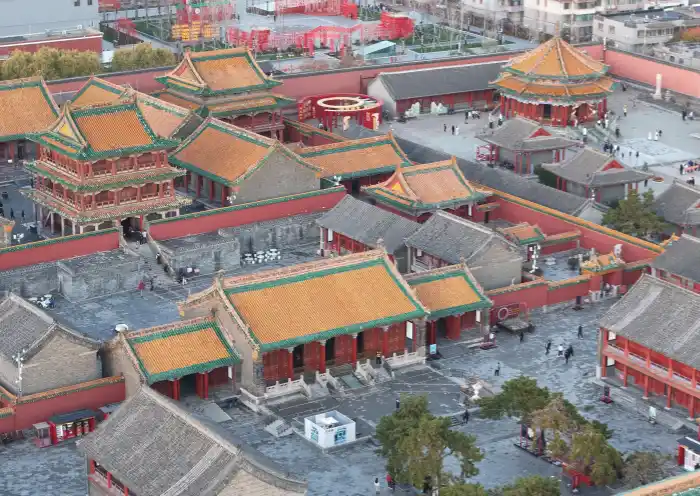
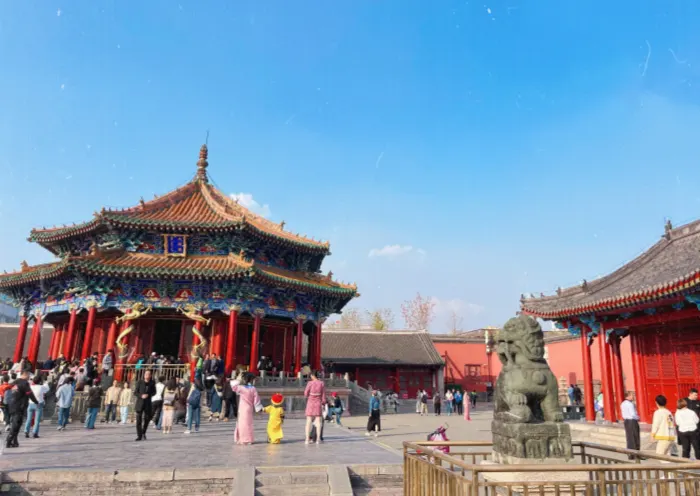
There was not just one capital. Hetu Ala, commonly known as Xing Jing in Liaoning Province, was the birthplace of Qing Dynasty. In 1625, Nurhaci decided to move the capital to Mukden, i.e., today’s Shenyang City. After the Qing army took over Beijing in 1644, it became the primary capital while Shenyang was descended to the supplementary capital.
Fall of the Qing Dynasty
Causes of Decline
The collapse of the Qing Dynasty was rooted in a complex combination of internal and external factors. In its later period, the government was rotting from the inside by corruption, causing fierce revolts throughout the country. Besides, the imperial family was too arrogant to communicate with foreign ideas and left behind by the rest world after the Industrial Revolution. Therefore, it was forceless when beaten by internal and foreign powers and fell at a slow pace.
The Last Emperor
The last emperor of Qing Dynasty is Puyi, who experienced multiple identity transitions from emperor to war criminal and commoner. At the age of three, he was thrust into the throne with the reign title Xuantong. The Qing Dynasty Empress Cixi actually wielded the power. In 1912, Puyi was forced to abdicate during the wave of Xinhai Revolution, ending the rule of the Qing Empire.
Transition to the Republic of China
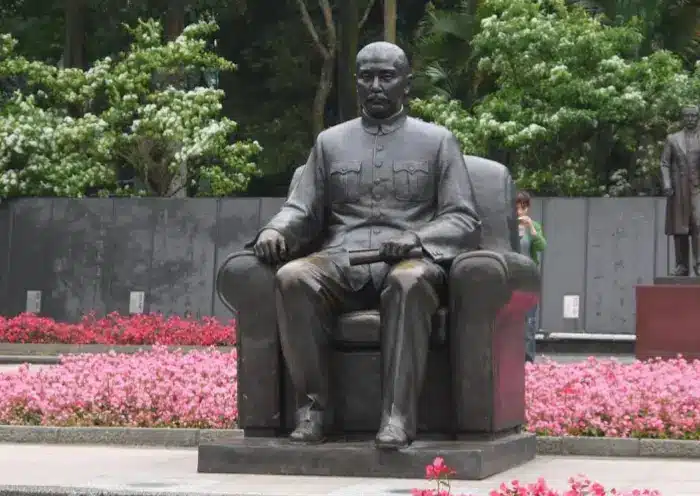
After the Boxer Rebellion, the Qing court began to turn to reforms to survive. However, either the Westernization Movement or the Hundred Days’ Reform were proved to be a failure. Then in 1911, the Wuchang Uprising against the Qing government burst out, followed by the nationwide Xinhai Revolution. On January 1, 1912, Sun Yat-sen was inaugurated as the president of the Republic of China. As Sun Yat-sen did not have a military base, he cooperated with Yuan Shikai to rule the country together.
Qing Dynasty Government, Society, and Economy
Qing Dynasty Government Structure
The structure of the Qing government was a feudal autocratic system with the emperor being the absolute core. The central government located in the capital Beijing set up a cabinet (later known as the Privy Council) as the highest decision-making body directly led by the emperor. There were also six ministries responsible for specific affairs including personnel, revenue, rites, military, justice, and construction. Besides, the Lifan Court was established to manage ethnic minority affairs.
Social Structure & Daily Life
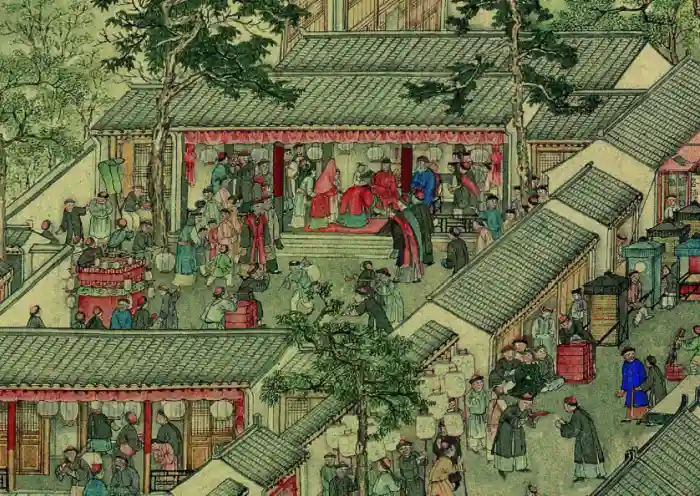
The social structure of the Qing Dynasty was often described as hierarchical, falling into four classes, including the royal families and the noble, the gentry, farmers and craftsmen, and those poor people like actors, beggars, prostitutes, and slaves. The royal families and the noble, as the ruling class, were privileged. With the growth in economy, the country presented a peaceful atmosphere. The men began to study Confucian classics at a young age to pass the imperial exam, while the women were taught to manage housework, raise children and do needlework.
Qing Dynasty Religion and Philosophy
Despite the ruling of Manchus, the majority of Han Chinese scholars worshiped the Confucianism which was acknowledged by the government. Three teachings including Buddhism, Daoism, and Chinese folk religions were popular among the massive commoners. Some people also believe in Islam and Christianity. It’s worth mentioning that the White Lotus Sect and the Taiping Christianity inspired by the farmer uprisings also prevailed during the later Qing Dynasty.
Qing Dynasty Achievements
Culture and Literature
- The government sponsored a series of projects to collect and publish the masterpieces including the Kangxi Dictionary and the Complete Library in the Four Branches of Literature.
- Classic novels thrived with the emerge of A Dream in Red Mansionswritten by Cao Xueqin.
- The Peking Opera evolved from several types of regional dramas.
Clothing and Fashion
- Men were compelled to wear a queue hairstyle in accordance with the Hair Shaving Order. As for clothes, they were required to wear a long robe accompanied by a short sleeveless jacket like the Manchus.
- Manchu women’s dress was similar to that of men, but they distinguished themselves by the elaborate headdress and platform shoes. Fortunately, Han women were permitted to retain their previous style of dress.
- Foot-biding was regarded as a symbol of female beauty.
Architecture & Palaces
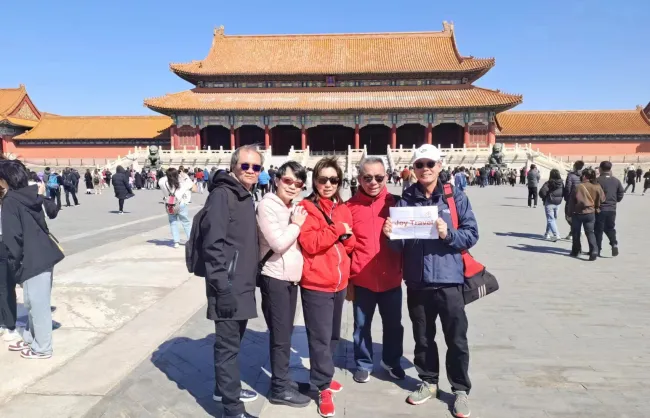
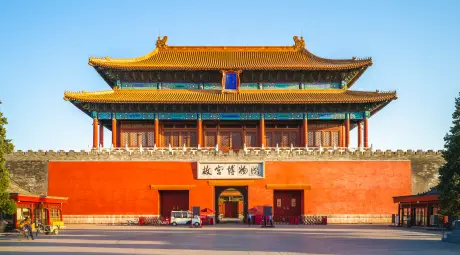
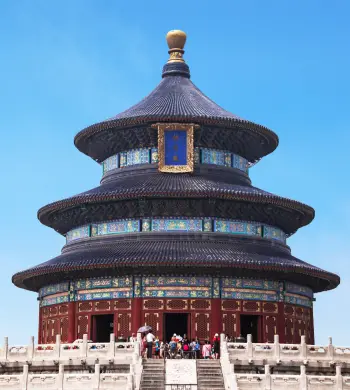
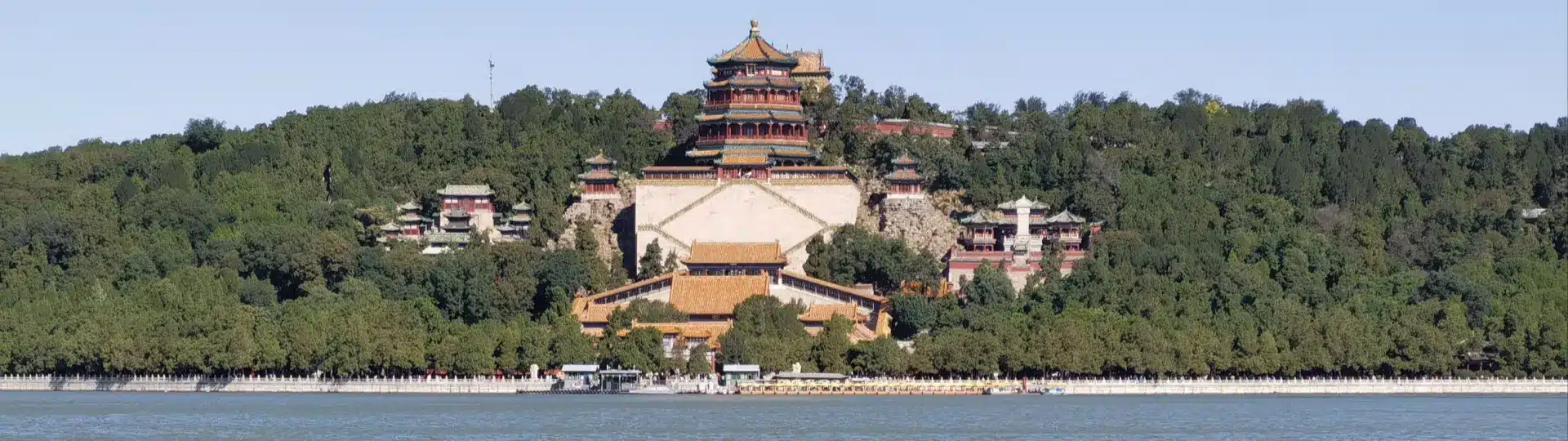
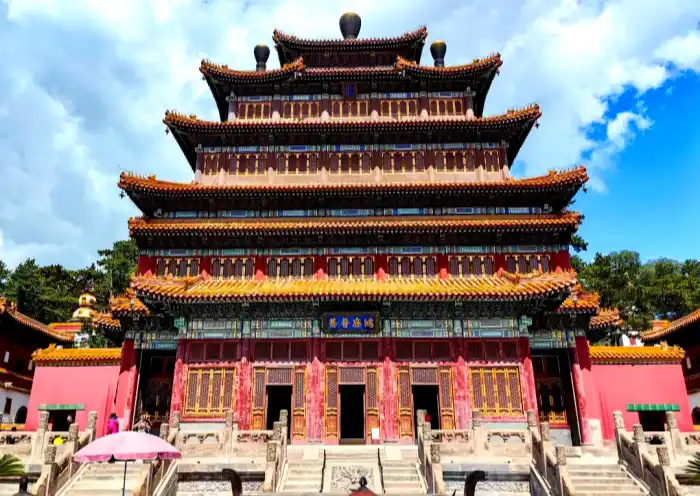
The architecture technology hit a new peak at the former years of Qing Dynasty. The emperors commanded several expansions and repairs to the Forbidden City, making it more splendid. Besides, imperial gardens including the Summer Palace and the Old Summer Palace were completed. Religious buildings such as the Yonghe Lamasery and the Outer Eight Temples within the Chengde Mountain Resort were also typical Qing Dynasty architecture. Join our China tour packages to admire the Qing Architecture.
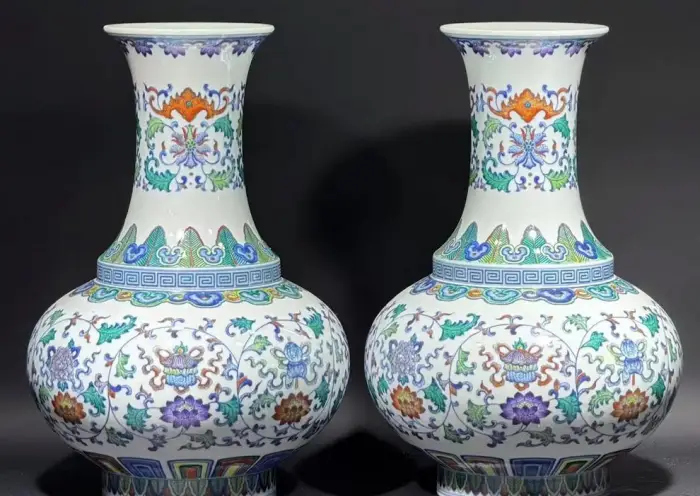
Porcelain, Paintings, and Decorative Arts
- Porcelain from Jingdezhen were welcome and sold abroad, especially during the reign of Yongzheng and Qianlong.
- TheEight Eccentric Artists in Yangzhou represented by Zheng Banqiao created a unique painting style by using exaggerated skills to showcase the secular life.
- Jade carving techniques were fabulous during Qianlong’s reign.
Military Campaigns
Since the establishment of Later Jin Dynasty by Nurhaci in 1616, the Qing Dynasty army had ambitions to conquer the world. Afterwards, they launched several military campaigns successively to overturn the Ming Dynasty, crush the Revolt of Three Feudatories, recapture Taiwan, defeat the Dzungar Khanate and Hui tribes, and ultimately unified the whole country. The process lasted for more than 140 years, with dozens of arduous and painful battles of various sizes.
Economic Growth & Trade (Silk, Tea)
In the Qing Dynasty, China’s economy used to flourish. Farming was critical for the government’s economic growth and stability, whereas it didn’t diminish commercial activities. The fact is that Qing empire was one of the most commercialized countries undoubtedly. Though domestic trade boomed, foreign trade was mostly one-sided as China exported silk and tea, but only imported silver, a universal currency at the time. For small businesses, coins with a square hole in the middle were also accepted.
Qing Dynasty in Modern Culture
Movies and TV Dramas
- The Last Emperor
- Queens of the Qing Dynasty
- China’s Last Empire: The Great Qing by BBC
Where to See Qing Relics (Museums, Palaces)
- Beijing: The Forbidden City (Palace Museum), the Summer Palace, the Old Summer Palace, the Eastern and Western Qing Tombs
- Shenyang, Liaoning Province: The Mukden Imperial Palace
- Taipei: The National Palace Museum
- New York: The Metropolitan Museum of Art
- London: The Victoria and Albert Museum
Recommended Travel Itineraries:
5 Days Classic China Dongbei Tour to Shenyang and Harbin
4 Days Classic Beijing Tour with Forbidden City & Great Wall
Famous palaces, temples, and gardens from the Qing period
The Forbidden City that had been dwelled by as many as 24 emperors in Chinese history is usually the first stop for many foreign visitors. The Summer Palace nearby should not be missed either. As the Old Summer Palace was burned down during wars, it is nowadays only a place for commemoration. Well, you are also advised to extend your trip to Shenyang to know about the origins of the Manchu people. Follow our tours to dream back to the Qing Dynasty.
FAQs about Qing Dynasty
What was the role of the Manchu people in the Qing Dynasty?
The Manchu people are the founders and main rulers of the Qing Dynasty. They established the Qing Dynasty in 1644 and started to govern the country under their rule. A series of systems and rules were launched by them, including the Eight Banners system, the use of Manchu language, preserving their unique hairstyle.
Who were the three most famous emperors of the Qing Dynasty?
Kangxi, Yongzheng, and Qianlong are the three most renowned emperors of the Qing Dynasty.
The most renowned emperors of the Qing Dynasty are Kangxi, Yongzheng, and Qianlong, who created the “Prosperous Era of Kangxi and Qianlong” (康乾盛世). This is believed the longest era of peace and prosperity in Chinese history, lasting 134 years from 1661–1796.
What was the “Eight Banners” system of the Qing Dynasty?
The Eight Banners system is a unique military, social, and adminstrative system created by the Manchu people. According to the system, a banner is composed of five jalan, a jalan includes five niulu, and a niulu includes 300 men. Originally, there are eight banners which were distingushed by eight colors: Bordered Yellow, Yellow, Bordered White, White, Bordered Red, Red, Bordered Blue, and Blue. Under Hong Taiji’s reign, it was expanded to Manchu, Mongol, and Han Chinese banners, each of these three banners had 8 banners.
All Manchu families were organized into these banners, serving military, political, and productive roles.
Explore China’s Rich History with Us
Interested in Chinese history and wishing to find out more details? Do not hesitate to book a tour from us so that you can have a tailor-made trip soon. Our knowledgeable tour guide, professional travel consultants and experienced drivers can make your China trip more pleasant and enjoyable.