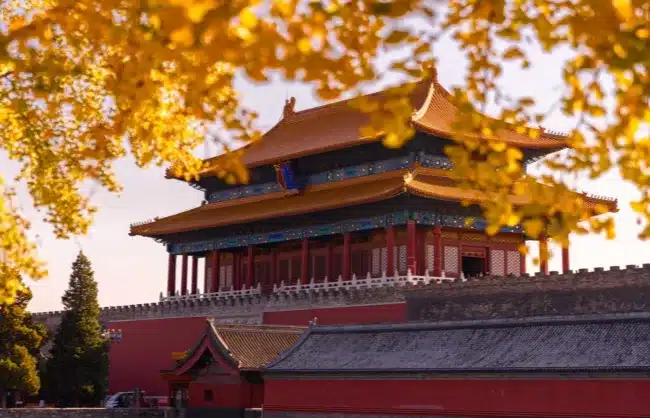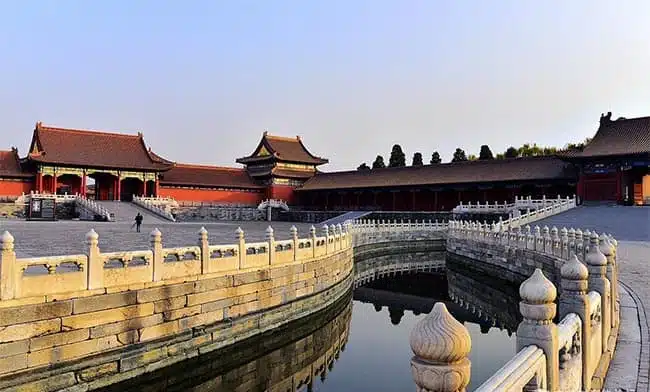
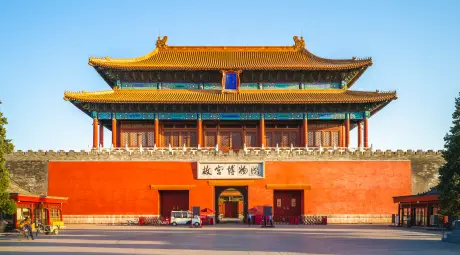


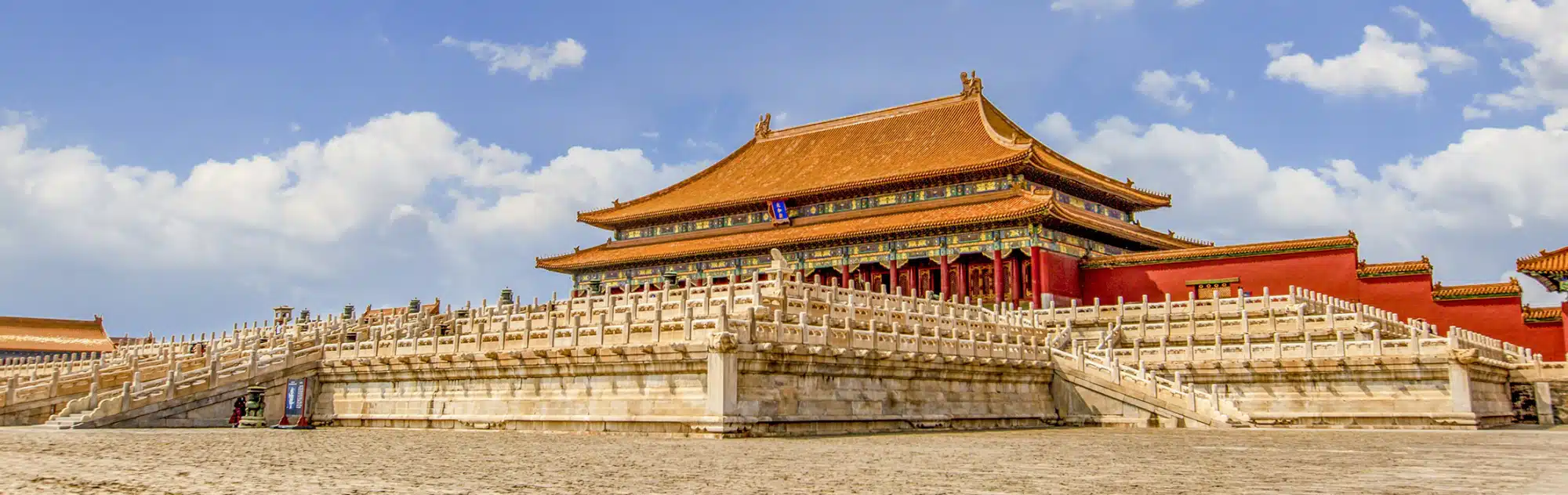
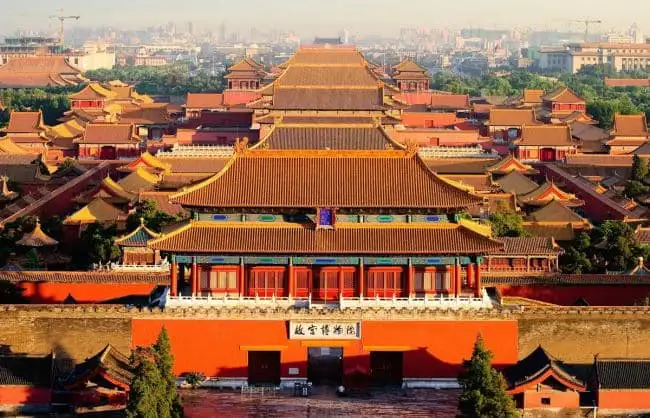
The Forbidden City (Palace Museum), located at the center of Beijing central axis, was a royal palace and political center of the Ming and Qing Dynasties in China, with a history of over 600 years. Among the five major palaces in the world, the Forbidden City ranks first, indicating that it is an unparalleled ancient architectural masterpiece.
Red walls and golden tiles, magnificent and splendid, the Forbidden City is not only a landmark of Beijing, but also an invaluable treasure of Chinese civilization. Here are some cool and interesting facts about the Forbidden City that you probably didn’t know.
Content Preview
- 1. The Largest Imperial Palace in the World
- 2. The Most-Visited Palace in the World
- 3. Over 1.8 Million Treasures – a Real Museum
- 4. How Many Rooms?
- 5. No Birds Landing on Top of Palace Walls
- 6. No Trees Around the Three Main Halls
- 7. The Place with the Most Dragons
- 8. Not all in Chinese Architectural Style
- 9. New Popularity: Royal Cats
- 10. More Than One Forbidden City in China?
1. The Largest Imperial Palace in the World
As the world’s largest palace, the Forbidden City in Beijing covers an area of 720,000 square meters (equivalent to 163 football fields), with a construction area of 150,000 square meters. With more than 70 palaces of various sizes, the Forbidden City was once home to 24 emperors of the Ming and Qing Dynasties, and is the largest and most well-preserved wooden structure ancient architectural complex in the world.
Forbidden City Facts for Kids: The Forbidden City was first built in the 4th year of the Yongle reign of the Ming Dynasty (1406) and was completed after 14 years. About 230,000 craftsmen and millions of laborers were involved in its construction. In 1925, the Palace Museum in Beijing was officially established and opened to the public. At present, only less than a third of the Forbidden City is open.
2. The Most-Visited Palace in the World
The Forbidden City, as the foremost royal palace in the World Cultural Heritages, is also one of the most popular scenic spots in China, often appearing internationally as a representative of China’s national image.
As early as in 2018, the annual number of visitors to the Forbidden City exceeded 17 million (more than the Louvre in France) for the first time, making it the most-visited museum or historical culture attraction in the world. In 2019, the Palace Museum received a total of 19,336,275 visitors, setting a new record.
Whereafter, the Forbidden City receives nearly 20 million tourists every year and is a must-visit spot for all tourists from home and abroad during their Beijing tours.
Related reading: Characteristics of Chinese Palaces and Top Palaces to Visit
3. Over 1.8 Million Treasures – a Real Museum
Important Forbidden City facts you need to know: The Palace Museum has collected a large number of cultural relics and treasures, including calligraphy and painting, porcelain, jade, gold and silverware, etc. The total number of collections now exceeds 1.8 million pieces (accounting for 1/6 of cultural relics in China). There are 231 categories of precious cultural relics, and the quantity of each category is enormous. For example, there are 53,000 famous paintings and 75,000 pieces of calligraphy.
Only over 10,000 pieces are exhibited each year, accounting for only about 2% of the total. Each relic exhibited in the Forbidden City has been carefully repaired and equipped with 24-hour professional security and monitoring equipment to ensure safety. Plus: The Treasure House and the Clock House are must-visit places.
4. How Many Rooms?
It is said that the number of rooms in the Heavenly Palace where Emperor of Heaven resides is 10,000. So when Emperor Yongle of the Ming Dynasty built the Beijing Forbidden City, to show respect for the god, he deliberately reduced half room, and this half room is located in the Wenyuan Pavilion.
Does the Forbidden City really have 9999.5 rooms? Former Director of the Palace Museum, Shan Jixiang, spent five months measuring and calculating that the Forbidden City actually has a total of 9,371 rooms, including 8,728 inside and 643 outside the Forbidden City.
Note: The “room” here is not a modern concept of a room, but a space formed between four pillars.
Related reading: How to Visit the Forbidden City in Beijing
5. No Birds Landing on Top of Palace Walls
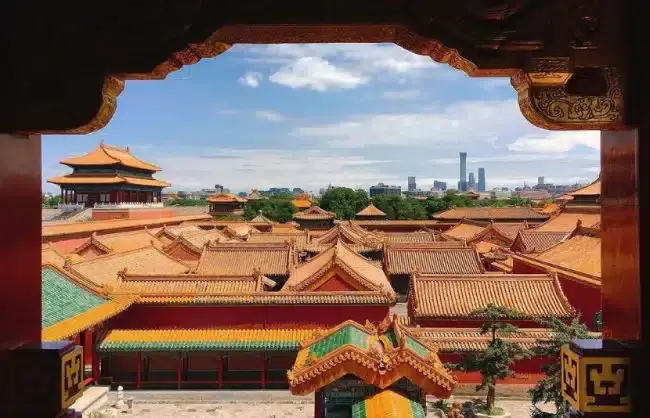
The Forbidden City is surrounded by a red wall that is 9.9 meters high, 8.6 meters thick at the bottom, and 6.66 meters thick at the top. In order to prevent birds from falling on the top of the wall and leaving bird droppings, skilled craftsmen have two secrets:
One is that the slope of the wall top is not suitable for birds to stand on, and the second is that the topmost ridge of the wall must be built to be larger than the distance between the toes of birds, so that the feet of birds cannot grasp the ridge of the wall, and they will not fall on the red wall of the Forbidden City.
Best Beijing Tours including the Forbidden City:
- One Day Old Beijing City Tour
- 2 Days Beijing Essence Tour
- 3 Days Beijing Package Tour: City Highlights & Great Wall
6. No Trees Around the Three Main Halls
One of the interesting facts about the Forbidden City is that around the Three Main Halls are not planted with trees, and only the side halls and imperial gardens on both sides are planted with trees.
Reason 1, the central office area of the emperors needs to have a wide view to ensure that there are no hiding places for assassins.
Reason 2, not planting trees is to highlight the majesty of the Three Main Halls.
Reason 3 is based on feng shui. In ancient China, emperors belonged to the “Earth” element in the Five Elements, and “Wood” was meant to restrict the Earth, so trees could not exist.
Reason 4 is for fire prevention. The architecture of the Forbidden City is mainly made of wooden structures. If trees are planted, once a fire breaks out, it will quickly spread.
7. The Place with the Most Dragons
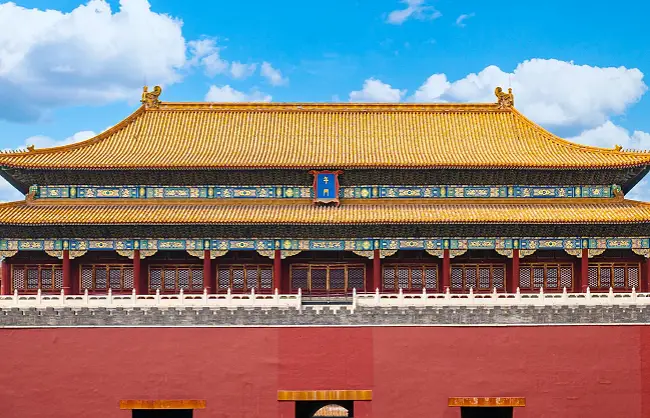
The place with the most dragons in China is undoubtedly the Forbidden City in Beijing. In ancient times, the dragon was a symbol of emperors, so their clothing, food, housing, transportation, and other related objects naturally had dragon elements.
The Forbidden City is said to have over 50,000 dragons. These dragons are distributed in various areas, with dragons present in every palace, and their numbers increase with the level of architecture.
The Hall of Supreme Harmony has the most numerous, finely crafted, and richly meaningful dragons. Including cloud dragon relief, glazed dragon chiwen (roof decoration), dragons pattern on beams, 6 curled-up dragon gold pillars, curled-up dragon caisson ceiling, golden lacquer carved dragon throne, and more.
√Related reading: Shopping Guide for Forbidden City Souvenirs
8. Not all in Chinese Architectural Style
One of facts about the Forbidden City is that there are also two Western style buildings in the Forbidden Cit. And the “Crystal Palace” located in Yanxi Palace is one of them. Its initial design was a three-story Western style building, with two layers of glass outside the walls and the glass interlayer filled with water for fish-farming. However, the Crystal Palace has never been completed.
In the northwest of the Wuying Hall, there is an Arabic style building called “Yude Hall”. It is a Turkish bathroom left over from the Yuan Dynasty. In the Ming Dynasty, it was used as a place for the emperors to study. In the Qing Dynasty, it was changed into a place of steaming paper for printing books. Tourists are now prohibited from entering this area.
9. New Popularity: Royal Cats
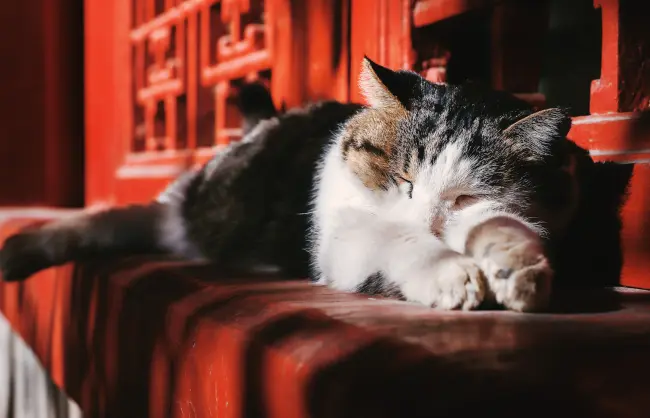
In recent years, the Forbidden City has become a popular “cataholic holy land”. According to statistics, there are over 200 “Royal Cats” living in the Forbidden City, and a small portion of them may be descendants of pet cats raised by Ming and Qing emperors or concubines. They are living relics, unique “patrol guards” responsible for catching mice, so these cats are loved by all and have never been driven away.
Welcome to embark on your China tours to encounter these cute Royal Cats in Beijing Forbidden City.
10. More Than One Forbidden City in China?
There are actually four Forbidden Cities in China, namely the Beijing Forbidden City, the Nanjing Forbidden City, the Shenyang Forbidden City, and the Taipei Forbidden City. However, because the Beijing Forbidden City is the palace where the Ming and Qing imperial families lived, when it comes to the Forbidden City, people generally think of it.
The magnificent palace complex, rich collection of cultural relics, royal garden design, mysterious court life, etiquette and culture of the court… There are many more wonders, secrets, and facts about the Forbidden City in Beijing, China waiting for you to discover, such as:
- The emperors usually held court hearings and handled state affairs at the Taihe Gate, Qianqing Gate, or in the emperors’ bedroom – Hall of Mental Cultivation, rather than in the Hall of Supreme Harmonywhich was mainly used for various major ceremonies.
- The Forbidden City’s Hallof Mental Cultivation – the emperors’ bedroom is not much larger than that of ordinary people, only about 10 square meters. And experts say that its real reason was for keeping warm in winter.
- The Forbidden City showcasesthe stunning color aesthetics, with a total of 384 traditional Chinese colors. The buildings on the central axis, where the emperors resided, have yellow roofs symbolizing imperial power.
- The Forbidden City has undergoneover 200 earthquakes since its completion, and can withstand earthquakes of magnitude 10 due to its clever architectural design.
Related reading: