
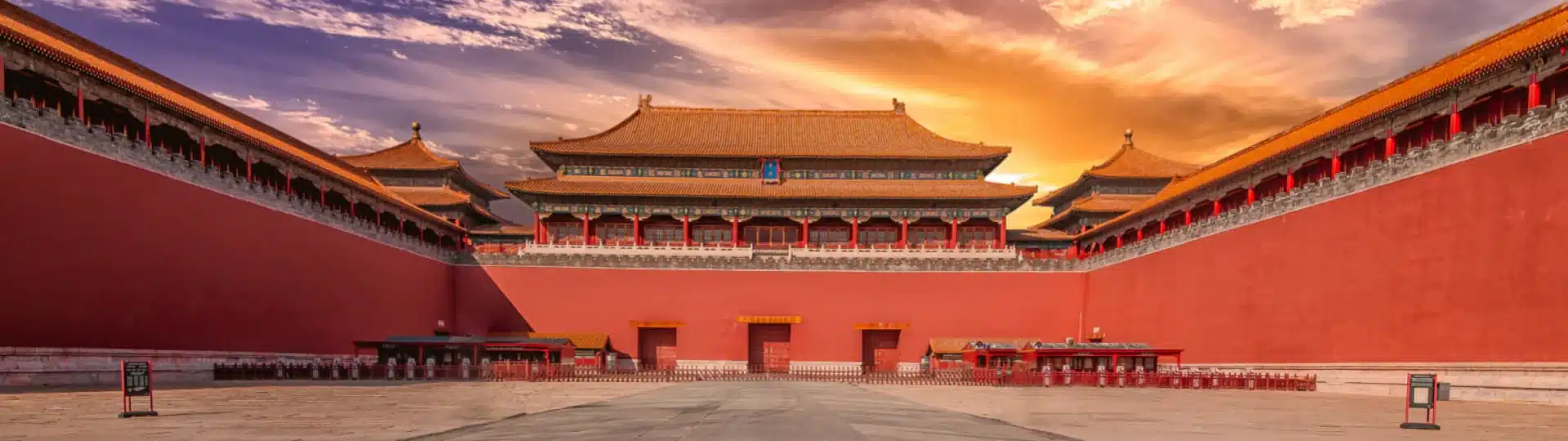
One of the highlights you can expect on your China tour is exploring its rich history in the form of ancient buildings. Among the large amount of Chinese architectural marvels, the many magnificent palaces are, definitely, a can’t-miss treasure. For thousands of years, this kind of vast and walled complex has always been the ultimate symbol of imperial power and architectural mastery. Combining exquisite planning, profound philosophy, wonderful art, sheer size and lavish interiors, they are built to showcase power, wealth, and royal ambition.
From the world-renowned Forbidden City in Beijing to extravagant palaces in the Summer Palace, and Chengde Mountain Resort, this article will introduce you to some of the most famous palaces in China. You can also gain a deep insight into the mysterious Chinese palace with its characteristics, design elements, and historical evolution.
Content Preview
- What Is a Chinese Palace?
- Key Architectural Characteristics of Chinese Palaces
- Essential Design Elements
- Historical Evolution of Chinese Palaces – Key Dynastic Palace Eras
- The Most Famous Palaces in China to Visit
- Chinese Palace Design Elements in Modern Architecture
- FAQs About Chinese Palaces
- Plan a China Building Tour with China Xian Tour
What Is a Chinese Palace?
Definition and Historical Role of Palaces in Imperial China
The origin of the Chinese Palace could date back to the early Bronze Age with its roots traceable to the Erlitou culture (c. 1900 – 1500 BCE). The excavation of Erlitou sites confirms this belief. The model of Chinese palace was solidified during the Shang (c. 1600–1046 BCE) and Zhou (1046–256 BCE) Dynasties.
The Chinese term for palace is 宫殿 (gōngdiàn). 宫, used to be the residence of the elite, later became specifically related to the royal house. 殿 means hall, which is used for national events and important ceremonies. Therefore, Chinese Palace is not a single building. It is a vast complex with many royal houses (宫) and many halls (殿).
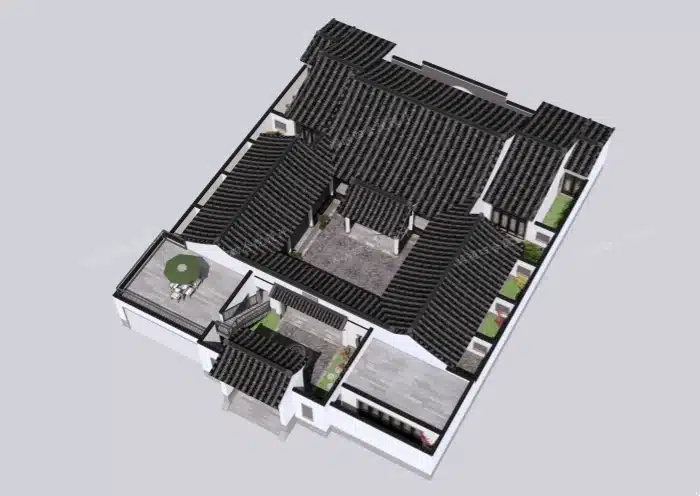
The palace, temple, and courtyard residences are different in many ways. Here we list a table for a clear contrast.
Feature |
Palace |
Temple |
Courtyard Residence |
Purpose |
Seat of imperial power and residence of the emperor.
Symbol of the state. |
Place of worship and spiritual practice.
庙 often for ancestral/state cults; 寺 for Buddhist monasteries. |
Private home for a family, reflecting their social status (from commoners to nobles). |
Layout |
Vast complex of multiple siheyuan along a dominant central axis.
Numerous gates and walls. |
Large complex, but layout varies by religion. |
A single, enclosed courtyard or a series of connected courtyards for a single extended family. |
Key Visual Elements |
Yellow glazed roof tiles (exclusive to the emperor).
Imperial Yellow and Red colors. Dragon and phoenix motifs. |
Religious iconography (Buddhas, deities).
Incense burners. Prayer halls. |
Grey roof tiles.
Main house for elders. |
Symbolism |
The emperor as the center of the cosmos.
Absolute power and celestial mandate. |
Connection to the divine, ancestors, and the Buddhist cosmos.
Spiritual transcendence. |
Confucian family values. |
Key Architectural Characteristics of Chinese Palaces
- Axial Symmetry Layout: Chinese palace conforms to the strict layout of north-south central axis. All the buildings inside are symmetrical along this axis. The axis symbolizes order, balance, and the central role of the emperor. The emperor wasthen considered the Axis of the World.
- Hierarchical Arrangement: The buildings inside are arranged by hierarchy. The most important halls are put on the central axis. The less important buildings like the living rooms, libraries, and gardens are placed on the eastern and western sides. This layout represents the Confucian social hierarchy.
- Courtyard System (Siheyuan): The buildings in the palace are constructed according to the layout of walled courtyards (Siheyuan). Each courtyard can lead to the next one. One needs to move from the outer (southern) areas to the inner (northern) areas to get into the courtyard. This adds privacy to the courtyard.
- The Complicated Wooden Form: Chinese palace often makes use of the complicated wooden skeleton of columns and beams to bear the weight of the roof, which may be different from most western architectures supported by stones.
- The Upturned Roof: There are upward eaves projecting outside on the roof. This protects the buildings from rain and sun as well as shows the symbolic meaning of ascending towards heaven. The roof is often yellow glazed, which symbolizes the emperor and the center of the universe. This color is exclusively used for the royal family.
- Decorative roof figures: There are several small glazed ceramic figures on the roof. The number and type of the figures are strictly regulated. The more the figures are, the higher the status of the building is. The Hall of Supreme Harmony has 10 figures, the most number in China. You can always see an immortal riding a phoenix or a dragon at the front of the figures.
- Color Symbolism: As mentioned before, yellow is a symbol of the imperial power. Red, painted on the walls, columns, and doors, symbolizes joy, luck, and vibrancy. The colors of blue and green are often used for the ceilings and represent the heaven and the natural world.
- Imperial Motifs: There are animals sculpted in Chinese palace. Dragon represents the emperor and phoenix represents the empress. The number 9 is considered the supreme number. Therefore, 9 is often the number of the door nails, architectures, and stairways.
- Feng Shui Principles: The palace is designed by the principles of Feng Shui. According to it, a palace should have mountains to the north, which can be protected by the Black Tortoise, and water to the south, which can be protected by the Vermilion Bird.
Essential Design Elements
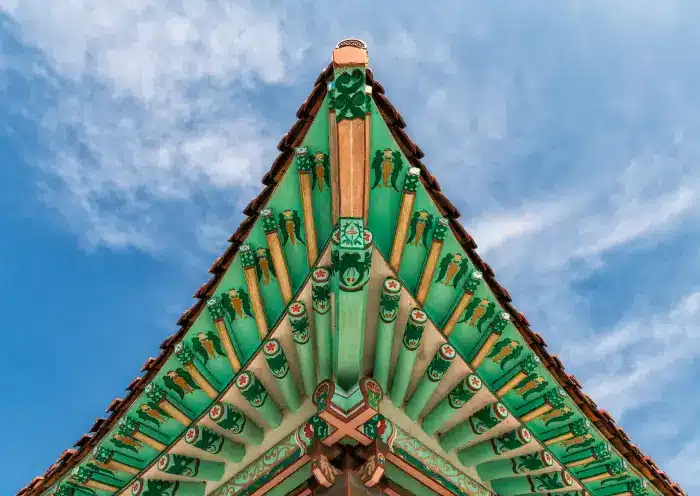
Dougong Bracket
Dou means block and Gong means arms. Just like the name suggests, Dougong is used to distribute the massive weight of the roof to the columns. It is a transfer layer.
Moreover, its interlocked nature and the withdrawal of nails enhance the seismic capability of the buildings. The rhythmic pattern of Dougong adds aesthetic elements to the palace.
Caisson Ceiling: Zaojing
Caisson Ceiling is a magnificent sunken panel hung over the center of the ceiling of the most important hall. It is directly above the emperor’s throne. It is made of a series of ascending concentric tiers, engraved with dragon, phoenixes, and lotus motifs. Bright colors and gold leaf are seen on it.
Caisson Ceiling symbolizes the heaven. It is a connection point between the earthly realm and the celestial world.
Chinese Roof Architecture: Baoding
Baoding is a special ornament on the top of the main roof ridge. It is often in the shape of a gourd. Baoding can protect the buildings from the thunder. It also helps solidify the building structure in the circular architecture, preventing the tiles from falling off.
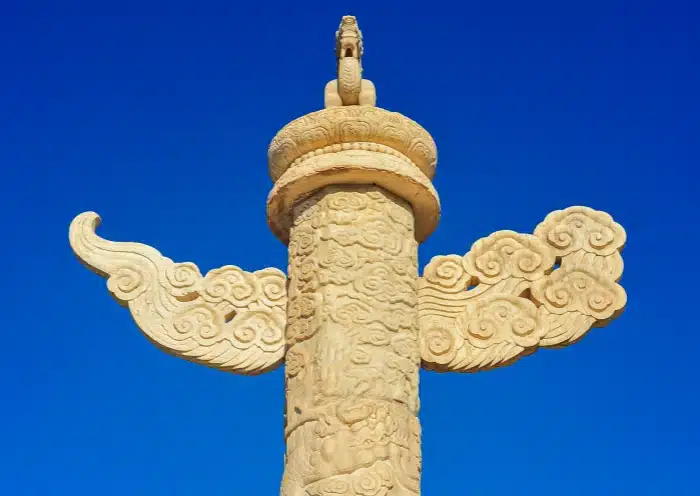
The Ornamental Pillars: Huabiao
Huabiao is a gorgeous ceremonial column. It is made of white marble and stands in some important palaces, tombs, and bridges. A stone beast, named hou (犼), sits on the top of it and crosses with a cloud-shaped board.
It acts as the role of keeping watch and means that the people are looking forward to the early return of the emperor.
Screen Wall: Yingbi
The screen wall is decorated with glazed tiles, intricate dragons, and delicate flowers. According to Feng Shui, it can block the negative energy and evil spirits. The most famous is the Jiulongbi, located in the Forbidden City.
Historical Evolution of Chinese Palaces – Key Dynastic Palace Eras
Qin and Han Dynasties – Early Foundations
This period set a foundation of Chinese palace, such as the axial layout, grand scale, and the symbol of cosmos.
Two major palaces in this period are:
Palace Name |
Dynasty |
Construction Time |
Approx. Area |
Current Status |
Epang Palace |
Qin |
212 BCE (unfinished) |
12 square kilometers (still in debate)
|
No longer exists. Its full scale is debated.
Burned down in 206 BCE. |
Weiyang Palace |
Han |
200 BCE |
5 square kilometers |
Ruins in Xi’an. |
Recommended Xian tour
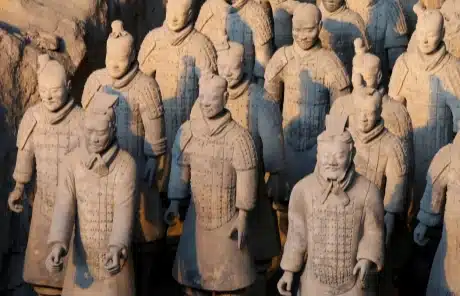
Discover Xi'an's imperial past at the Terracotta Warriors Museum, dress in Tang dynasty costumes for photography, and explore the city's ancient streets and landmarks.
Sui and Tang Dynasties – Golden Age
The Sui and Tang Dynasties are the prime time of Chinese imperial power. The palaces in this era are grand and magnificent.
Palace Name |
Dynasty |
Construction Time |
Approx. Area |
Current Status |
Tang |
634 CE |
3.2 square kilometers |
Ruins (UNESCO Site)
Preserved in Xi’an. |
|
Taiji Palace |
Sui and Tang |
582 CE (Sui) |
4.2 square kilometers |
Ruins in Xi’an. |
Recommended tour
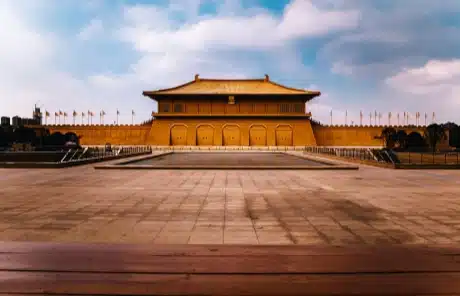
Upon your request, our Xian tour guide and driver will pick you up from your downtown hotel at 9:00 am or 13:00 pm and take you to Daming Palace to have the experience of a lifetime.
Ming and Qing Dynasties – The Lasting Legacy
This period represents the peak of Chinese palace architecture.
Palace Name |
Dynasty |
Construction Time |
Approx. Area |
Current Status |
Forbidden City |
Ming and Qing |
1406-1420 CE |
0.72 square kilometers |
Extant (UNESCO Site) |
Imperial Palace of Shenyang |
Qing (Early) |
1625-1636 CE |
0.06 square kilometers |
Extant (UNESCO Site) |
Ming Palace of Nanjing |
Ming |
1366-1386 CE |
1.16 square kilometers |
Ruins |
Qing |
1750-1764 CE |
2.9 square kilometers |
Extant (UNESCO Site) |
|
Chengde Mountain Resort |
Qing |
1703-1792 CE |
5.6 square kilometers |
Extant (UNESCO Site) |
Recommended tours:
4 Days Chengde Bashang Grassland Tour from Beijing
5 Days Classic China Dongbei Tour: Shenyang and Harbin by High-speed Train
The Most Famous Palaces in China to Visit
The Forbidden City (Beijing)
Location: Center of Beijing, in the Dongcheng District.
Entrance Fee: 60 CNY (April–October), 40 CNY (November–March)
Opening Hours: 8:30 a.m. – 5:00 p.m. (April–October); 8:30 a.m. – 4:30 p.m. (November–March)
Time Needed: Around 2–4 hours.
Tips for Visiting:
- Book tickets online seven days in advance.
- Arrive early in the morning to avoid large crowds.
- Wear comfortable shoes.
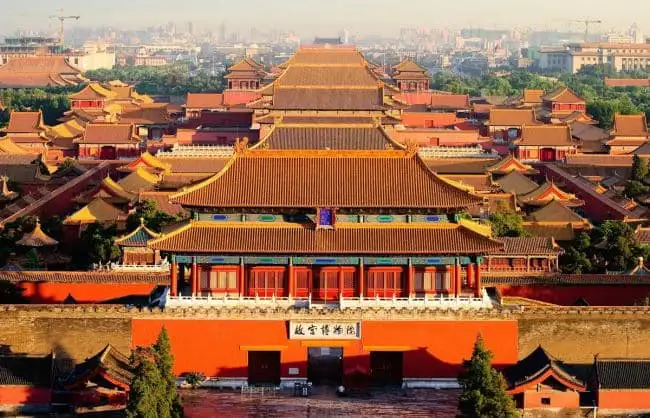
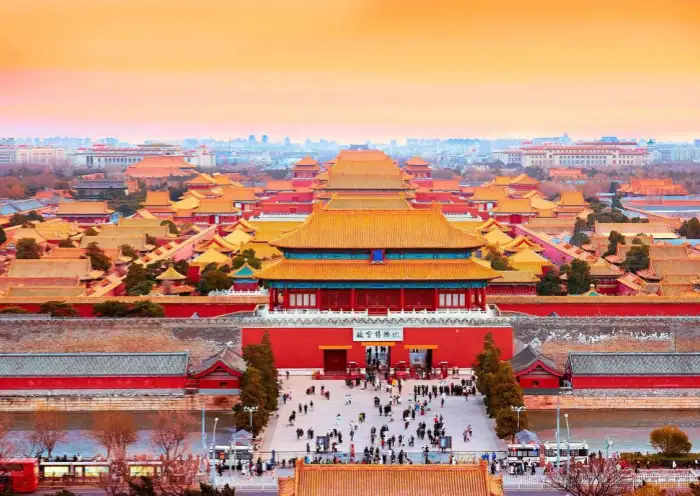
The Forbidden City is the world largest and most complete ancient wooden palace complex. It covers an area of 0.72 square kilometers and has over 980 buildings and about 8700 rooms. 24 emperors lived here during the Ming and Qing dynasties from 1420 to 1911.
It was listed as the UNESCO World Heritage Site in 1987 and praised as the pinnacle of Chinese palace architecture. As a masterpiece of human cultural achievement, the Forbidden City represents the imperial history and art of more than five centuries.
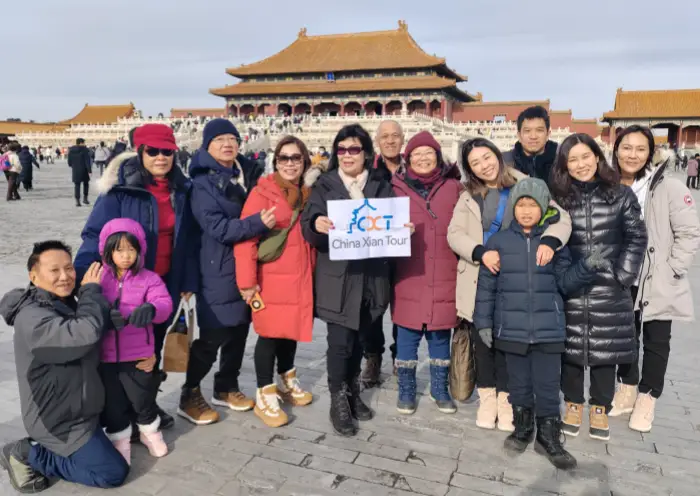
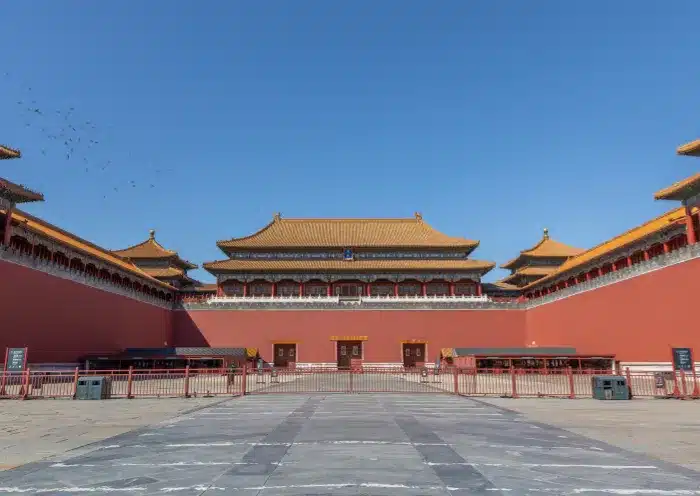
Must-See Places in the Forbidden City
Name |
Key Architectural Features |
Purpose and Significance |
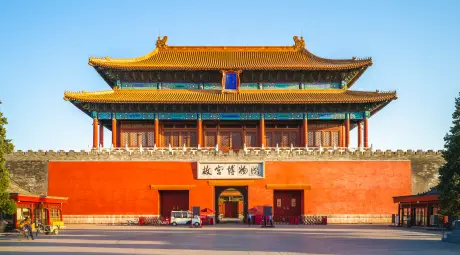
Meridian Gate |
The largest and most imposing gate of the complex.
A massive, fortified U-shaped structure with five openings. Five pavilions on top, known as the Five Phoenix Turrets. |
The main entrance to the palace.
For ceremonial occasions like announcing the new year calendar or victory parades. |
Gate of Supreme Harmony |
A large, multi-eaved gatehouse sitting on a marble platform.
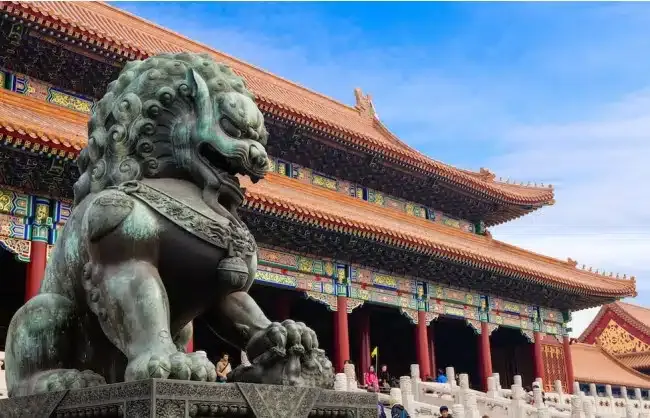
Flanked by two bronze lions, symbols of power and guardianship. Originally the primary “throne room” for Ming emperors to hold court. |
The formal entrance to the Outer Court’s main plaza.
For receiving officials and handling daily state affairs. |
Hall of Supreme Harmony |
The largest and most important hall in the entire complex.
A magnificent double-eaved roof with 10 mythical creatures on each ridge (the maximum number, indicating highest rank). Built on a massive three-tiered marble terrace. |
For the most grand state ceremonies: coronations, imperial weddings, and Winter Solstice celebrations.
A symbol of the supreme power and heavenly mandate of the emperor. |
Palace of Heavenly Purity |
The main building of the Inner Court, mirroring the Hall of Supreme Harmony but on a smaller, residential scale. |
The living quarters and daily office for the Ming and early Qing emperors.
The emperor handled daily state affairs and received officials. |
Hall of Union |
A smaller, square hall located between the Palace of Heavenly Purity and Earthly Tranquility.
A unique and beautiful caisson ceiling. |
The union of Heaven (Emperor) and Earth (Empress).
Storing the imperial seals and where the empress held ceremonies. |
Palace of Earthly Tranquility |
The building in the Inner Court mirroring the Palace of Heavenly Purity. |
Originally the residence of the empress.
It was converted into a Shamanist worship place and the emperor’s wedding chamber during the Qing dynasty. |
Imperial Garden |
A classical Chinese garden covering 12,000 sq. meters.
Featuring ancient cypress trees, rockeries, pavilions, and the Hall of Imperial Peace at its center. |
A private garden for the imperial family to relax and enjoy nature.
The Hall of Imperial Peace was used for Taoist ceremonies. |
Related reading: Fun Facts About the Forbidden City in Beijing
The Summer Palace (Beijing)
Location: Northwest of central Beijing, in the Haidian District.
Entrance Fee: 20 CNY
Opening Hours: 6:00 a.m. – 8:00 p.m. (April – October); 6:30 a.m. – 7:00 p.m. (November – March)
Time Needed: Around 3-4 hours.
Tips for Visiting:
- You can buy tickets at the ticket office.
- Arrive early to experience the tranquil atmosphere.
- Wear comfortable shoes.
- The boat cruise is recommended.
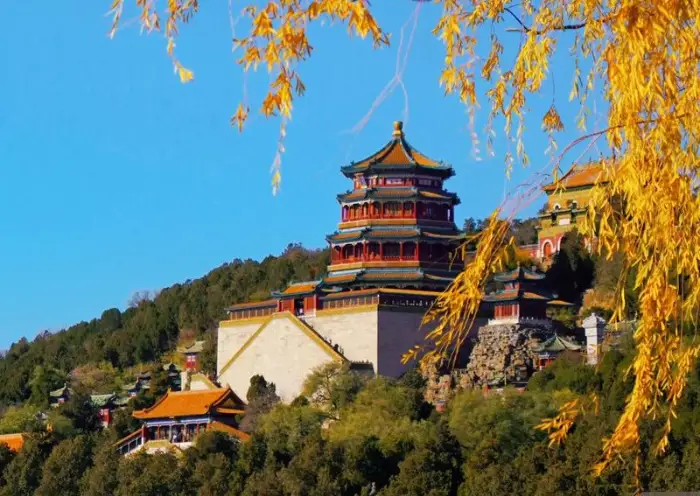

The Summer Palace is a masterpiece of Chinese garden design and it is not a single palace, but a vast complex with lakes, gardens, and palaces. It is about 12 kilometers away from the center of Beijing and was used to avoid summer heat by emperors of the Qing dynasty.
The main landscapes are the Kunming Lake and Longevity Hill. The most iconic architecture is the Tower of Buddhist Incense. It is a good place for you to enjoy your time alone.
Recommended tour

AM: Our guide and the driver will pick you up from your hotel at 8:00 (early at 7:00 in summer time or public holidays).
Chengde Mountain Resort (Hebei)
Location: Chengde City, Hebei Province.
Entrance Fee: 90 CNY
Opening Hours: 8:00 a.m. – 5:30 p.m. (October 10 – March 32); 7:30 a.m. – 4:30 p.m. (April); 7:00 a.m. – 6:00 p.m. (May – October 9)
Time Needed: A full day.
Tips for Visiting:
- Book tickets online in
- Wear comfortable shoes.
- Plan your route.
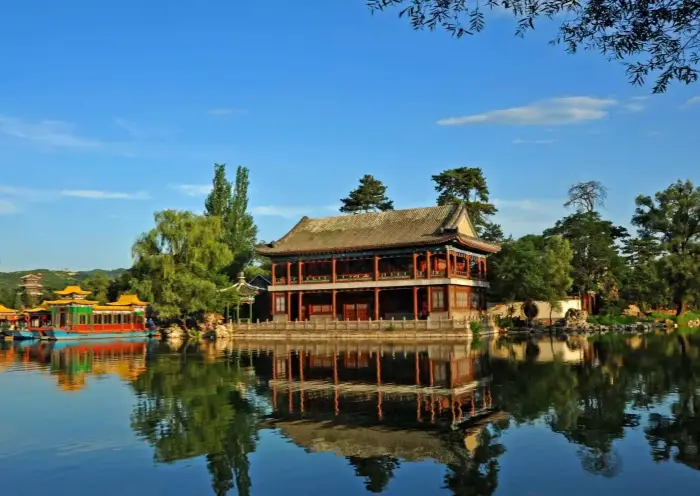
It is China’s largest existing imperial garden. The resort has palaces, lakeside pavilions, grasslands, and hills. The landscapes of northern and southern China are integrated harmoniously. It was built for the purpose of unifying Chinese border ethnic minorities.

Potala Palace
Location: Lhasa, Tibet Autonomous Region.
Entrance Fee: 100 CNY ( November – April); 200 CNY (May – October)
Opening Hours: 9:30 a.m. – 3:30 p.m. (January – April); 9:00 a.m. – 3:40 p.m. (May – July 23); 9:00 a.m. – 3:30 p.m. (July 24 – September 9); 9:00 a.m. – 5:00 p.m. (September 10 – October); 9:30 a.m. – 3:20 p.m. (November – March 15)
Time Needed: About 3-4 hours.
Tips for Visiting:
- Book 10 days in advance.
- Adapt to the high altitude.
- Hire a guide.
It consists of over 1000 rooms, including sacred prayer halls, intricate chapels, and stupa-tombs. This white and red palace seems to grow from the top of Red Mountain. It creates a mysterious atmosphere.
Suggested tour

Explore Lhasa's sacred Potala Palace and Sera Monastery, then journey to the stunning Namtso Lake, one of Tibet's three holy lakes.
Daming Palace (Xi’an)
Location: Xi’an, Shaanxi Province.
Entrance Fee: 60 CNY
Opening Hours: 8:30 a.m. – 7:00 p.m. (April 15 – October 15); 8:30 a.m. – 6:00 p.m. (October 16 – April 14)
Time Needed: About 3-4 hours.
Tips for Visiting:
- Wear comfortable shoes.
- Use the tourist cart.
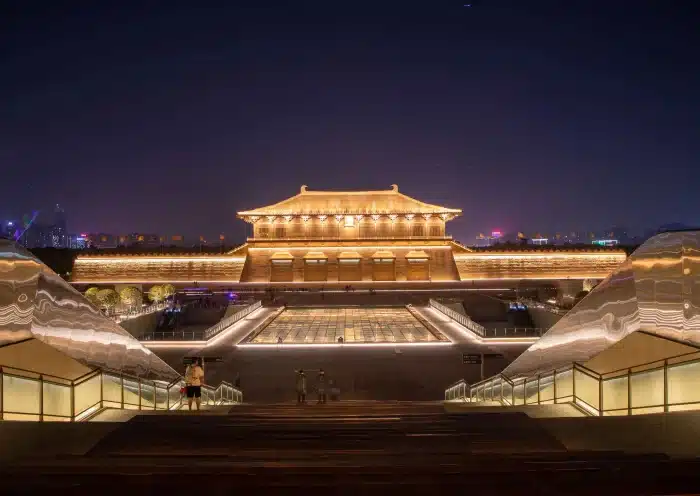
It is a place where the emperors of the Tang Dynasty lived for over 270 years. The tourists can wander around the garden and feel the grandeur of this palace.
Huaqing Palace
Location: Center of Xi’an, Shaanxi Province.
Entrance Fee: 114 CNY
Opening Hours: 7:00 a.m. – 5:30 p.m. (October 17 – December)
Time Needed: About 2-3 hours.
Tips for Visiting:
- Visit in the afternoon.
- Wear comfortable shoes.
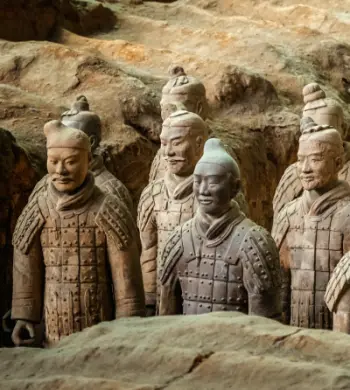
It is a natural hot spring which had been used by the royal family for thousands of years. Tourists can explore the exquisite Tang-style pavilions, the pools beloved by the emperors, and the stunning Mount Li. The Terracotta Army is just about 6 kilometers awya from the palace.
Recommended tour

Visit the legendary Terracotta Warriors before witnessing the spectacular Song of Everlasting Sorrow, a live outdoor performance set against the natural backdrop of Lishan Mountain.
Shenyang Imperial Palace
Location: Shenhe District, Liaoning Province.
Entrance Fee: 60 CNY
Opening Hours: 8:30 a.m. – 5:30 p.m. It closed on Monday.
Time Needed: About 2-3 hours.
Tips for Visiting:
- Hire a tour guide.
- Dress warmly.
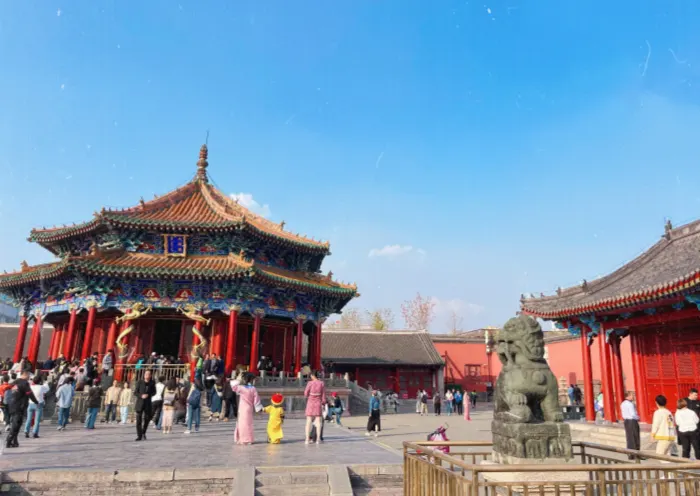
The palace combines the culture of the Han, Manchu, and Mongolian. Tourists can appreciate the unique design of the Dazheng Hall and the Phoenix Tower.
Chinese Palace Design Elements in Modern Architecture
Now the modern architectures are influenced by the design of Chinese palace. Buildings like Shanghai Jinmao Tower use Dougong as a decorative crown. The roof of the well-known China Pavilion at Expo 2010 is a sophisticated Dougong with imperial red.
You can also see the curved roof in Chinese buildings. The Suzhou Museum features an upward, angular glass and steel roof. Many hotels and airports also use vast and projecting roofs to create a welcoming entrance.
FAQs About Chinese Palaces
Which Chinese palaces are UNESCO World Heritage Sites?
The Forbidden City, the Imperial Palace of Shenyang, Chengde Mountain Resort and so on.
What are the main features of a Chinese palace?
They feature axial symmetry, a wooden frame, a curved roof, and Feng Shui design.
Can visitors enter all halls in the Forbidden City?
No.
Which dynasties built the most famous palaces in China?
The Ming and Qing Dynasties.
How were colors and symbols used in Chinese palace interiors?
Colors include yellow, red, blue, and green.
Symbols are dragon, phoenix, and the number 9.
What are the best times of year to visit China’s imperial palaces?
During April to May and September to October.
Plan a China Building Tour with China Xian Tour
Chinese palaces witness the changes of Chinese dynasties. They are not just architectures, but living museums to appreciate Chinese history. Each roof, beam, and motif is telling the mysterious story of China.
So if you want to truly understand China, to see the palaces. China Xian Tour is here to customize the tour route according to your requirements. Based on your preferences and schedule, our experienced travel consultants will help you tailor-make a trip seamlessly combining the iconic Chinese palaces and in-depth cultural and history exploration. Also, you can choose to join one of our expertly crafted group tours to discover the culture and treasures with like-minded people.