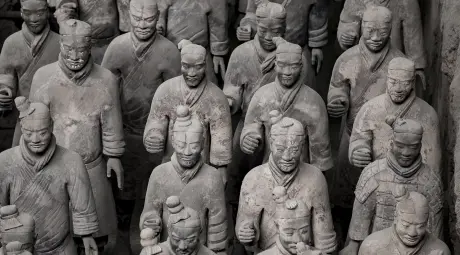

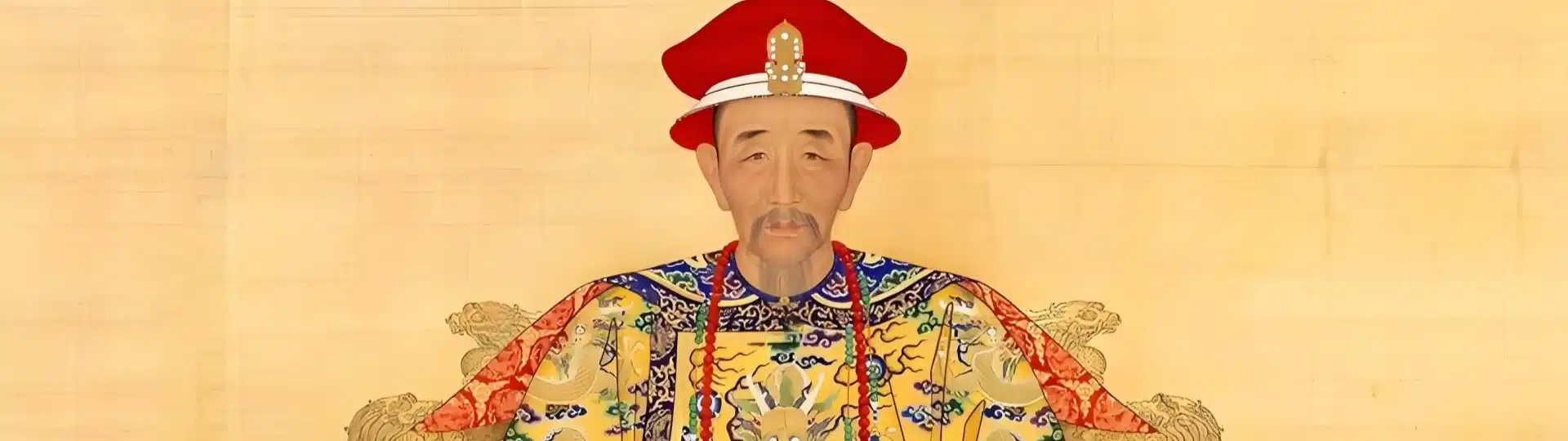
In the two thousand years of the Chinese imperial system, the “Emperor” was always the supreme ruler of the country. Emperors often grasped the legislative, administrative, and judicial authorities and steered the fortune of the whole state and their people. Some of them were wise and capable of promoting social developments, while others were blinded by their privileges and powers and brought about disastrous outcomes to the countries.
This guide includes a brief introduction to Chinese Emperors – the leading emperors in different dynasties, some key facts and myths about the Chinese imperial system, and where to experience the legacies of imperial history.
Content Preview
- The Role of Chinese Emperors
- A Brief History of Chinese Emperors: From Unification to the Last Empire
- Major Dynasties and Famous Chinese Emperors – Timeline
- Interesting Facts About Chinese Emperors
- Why did an emperor of ancient China have several “names”?
- Common Myths vs. History: Separating the Legends from the Records
- Where to Experience Imperial History in China?
- Discover The Legacy of Imperial China with China Xian Tour

The Role of Chinese Emperors
Throughout ancient Chinese history, the feudal rulers tended to exploit the common people’s belief in natural forces and disguised their will as divine rights.
The concept of “Mandate of Heaven” began in the Zhou dynasty (1046-256 BCE) and thrived in Confucianism’s idea of “Harmony between Humanity and Heaven”.
It secured the superior and absolute authority of Chinese emperors. Therefore, Chinese emperors were also acknowledged as “Sons of Heaven” (Tianzi).
A Brief History of Chinese Emperors: From Unification to the Last Empire
The historical texts record legendary kings, like the “Yellow Emperor,” who existed before any established dynasties. However, the imperial system of “Emperor” in China started when Qin Shi Huang unified the Six States and took the throne, and ended with the voluntary abdication of Puyi, the last emperor of the Qing dynasty.
The history of Chinese emperors spanned 83 dynasties, over 2132 years. The exact total number of Chinese emperors remains a controversy; the largest number is 559. Among all, some of the emperors stood out with great achievements and precious legacies.
Major Dynasties and Famous Chinese Emperors – Timeline
Qin Dynasty (221–206 BC) – The First Emperor Qin Shi Huang
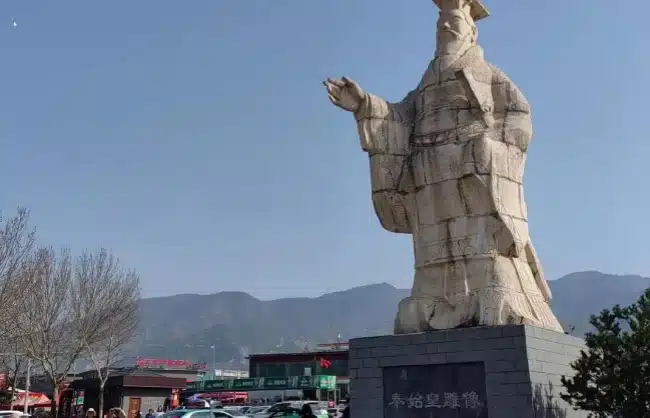
In 221 BCE, Qin Shi Huang completed the mission of unification and proclaimed himself the First Emperor. Indeed, it was from Qin Shi Huang that the imperial system of “Emperor” was established.
The First Emperor in Chinese history terminated the chaotic division in the Warring States Period (475-221 BCE), established uniform measuring and writing systems, and improved infrastructure facilities.
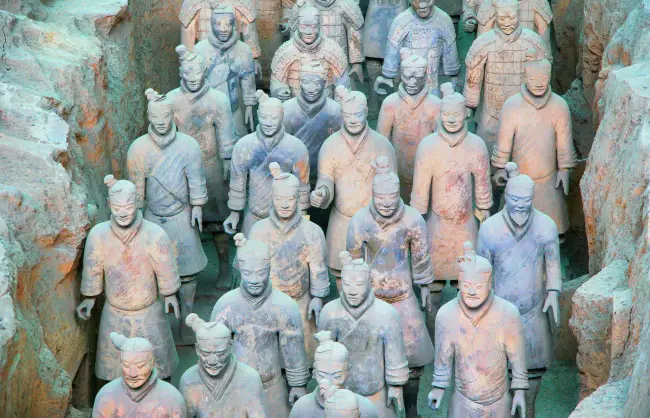
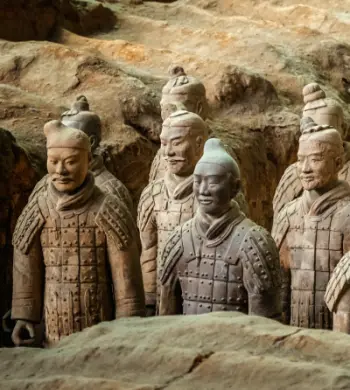
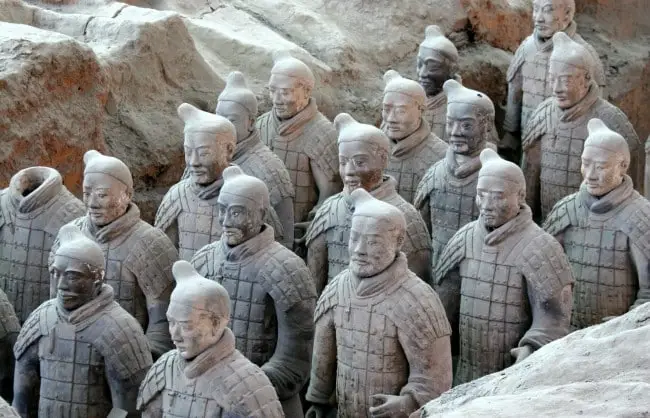
Moreover, he commanded the construction of one of the World’s Eight Wonders – the Terracotta Army. It has become a glittering diamond of tourism in Xi’an and a symbol of ancient Chinese architectural artistry.
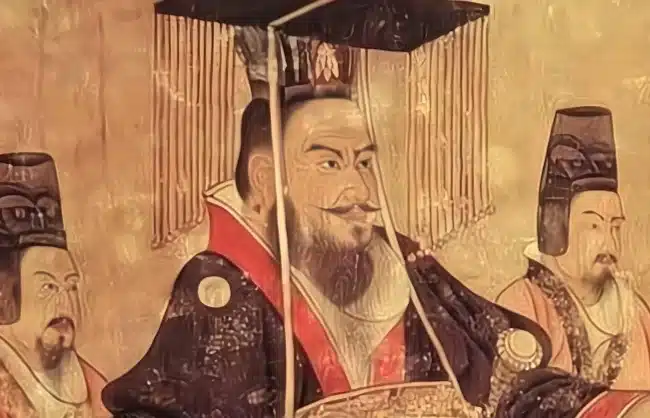
Han Dynasty (206 BC–220 AD) – Legendary Han Wu Di
Han was one of the golden ages in ancient Chinese history. The name “Han” originated from the Han River, and in the glory of the Han dynasty, it gradually evolved into an imprint of Han Chinese civilization, which distinguished the other ethnic minority groups.
In his 54-year reign (141-87 BCE), the legendary Han Wu Di centralized imperial power, expanded the territory, repelled the northern nomadic ethnic groups, and contributed to social stability and economic prosperity.
Meanwhile, Han Wu Di played an irreplaceable role in the development and dissemination of Confucianism. During his reign, Confucianism was revered as the state religion and the major criterion for official selection. An Imperial academy was established to teach the Confucian Five Classics and cultivate elite scholars.
Three Kingdoms Period (220–280) – The “Trio” of Cao Cao, Liu Bei, Sun Quan
As the name “Three Kingdoms” indicates, it was an era of three divided powers. The legendary stories were vividly depicted in the fiction, “Romance of the Three Kingdoms”, which is widely acclaimed and makes the history of this period a research interest.
The three kingdoms were ruled by three impressive emperors– Cao Cao, Liu Bei, and Sun Quan.
Cao Cao held the previous Tianzi (Xian Emperor of Han) as a hostage to command the feudal lords and occupied the Central Plains with the most formidable strength.
Liu Bei devoted himself to restoring the Han dynasty. Enduring hardships, Liu Bei established the Shu Han regime in the current Sichuan region.
Sun Quan relied on the natural defenses and wealth of the Jiangdong region (the east of the lower Yangtze River) to establish his firm rule over the Eastern Wu.
Sui Dynasty (581–618) – Emperor Yang of Sui’s Infrastructure and Burden
The division and conflicts ended with the unification in the Sui dynasty. As the second emperor of Sui, Emperor Yang was praised and criticized for the same reason– ordering the construction of the Great Canal. The Canal stretched across 8 provinces in China, including the rich Huabei Plain and the eastern coastal area. It facilitated the south-north communication and trade.
However, the construction of the Canal resulted in lasting heavy labour and taxation on civilians. Consequently, a large-scale peasant rebellion was stirred up, and the short-lived Sui dynasty was ended.
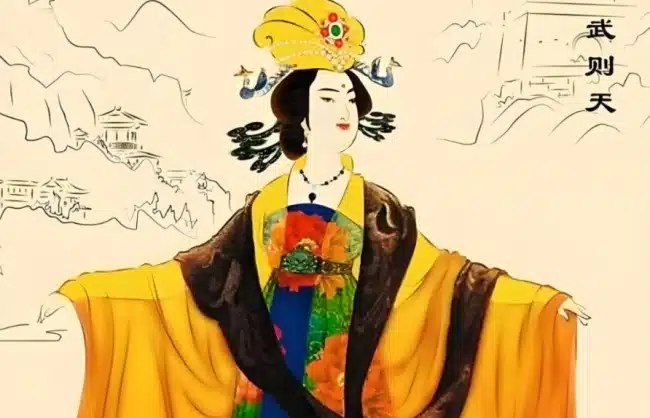
Tang Dynasty (618–907) – Wu Zetian
The Tang dynasty was another golden era in ancient Chinese history. The effort of Wu Zetian, the only female Chinese emperor, should count.
Wu Zetian’s support in the development of agriculture, manufacturing, and commerce greatly improved the state economy. Also, she established Taixue and promoted the Imperial Examination, which laid the base of the profound Tang culture. To some extent, Wu Zetian led to the prosperity of the Tang.
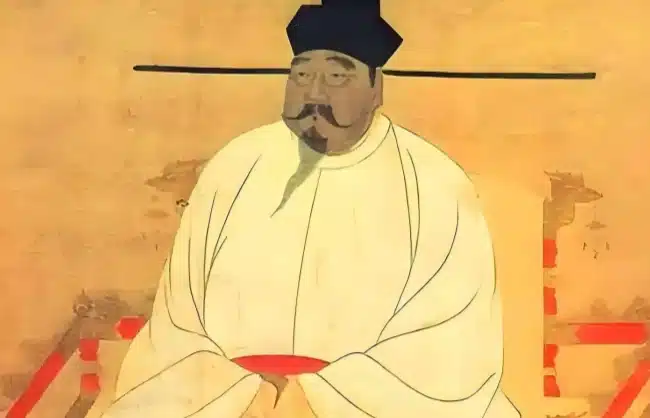
Song Dynasty (960–1279) – Emperor Taizu
Taizu of the Song, as the founder of the Northern Song, contributed to a thriving economy and culture. Taizu attached great importance to agriculture. He commanded expansive water conservancy projects to improve the irrigation efficiency and prevent floods. These projects significantly benefited agricultural yields.
Taizu also supported the Imperial Examination to select officials. The popularity of the Imperial Examination not only led to cultural prosperity but also paved the way for the development of science and the arts. During Taizu’s reign, scientific technologies like Movable Type Printing and compasses, and outstanding literati, including Su Shi and Huang Tingjian, emerged like mushrooms after rain.
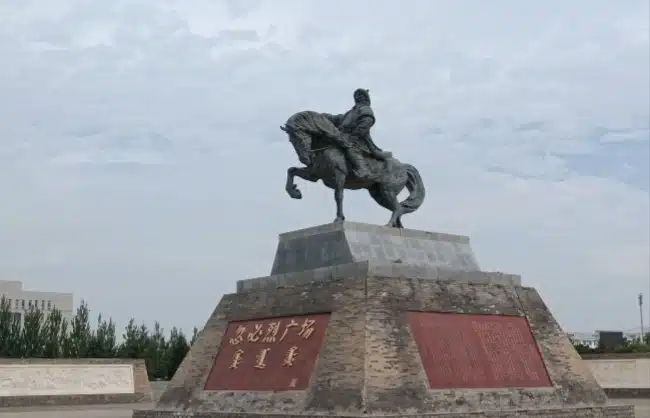
Yuan Dynasty (1271–1368) – Genghis Khan, Kublai Khan
In 1206, Genghis Khan unified Mongol tribes, rising to power as the founder and the first Great Khan of the immense Mongol Empire. Then Kublai Khan, the grandson of Genghis Khan, passed down the glory of the Empire by unifying China and establishing the Yuan dynasty. Kublai Khan was the first non-Han Chinese emperor in history.
Kublai Khan was one of the few Mongol rulers who valued Han culture and promoted Confucianism. He established the Provincial System to strengthen control over the frontiers. Additionally, he emphasized agriculture and sericulture, and encouraged the establishment of schools, thereby enabling the recovery and blooming of the economy and culture.
Ming Dynasty (1368–1644) – Yongle Emperor
The establishment of the Ming dynasty marked the return of the Han Chinese to sovereignty. The great achievements of the Yongle Emperor ushered in a flourishing age of the Ming.
Yongle Emperor ordered the compilation of an unprecedented monumental work–the Yongle Encyclopedia, after he took the throne. With over 8000 categories of texts, it was the most comprehensive encyclopedic work in ancient China. This work represented a national-level cultural revival and consolidation.
What’s more, the famous Voyages of Zheng He were commanded by the Yongle Emperor. The seven voyages enhanced commercial and cultural exchanges between the Ming Empire and nearby countries through the maritime “Silk Road”.
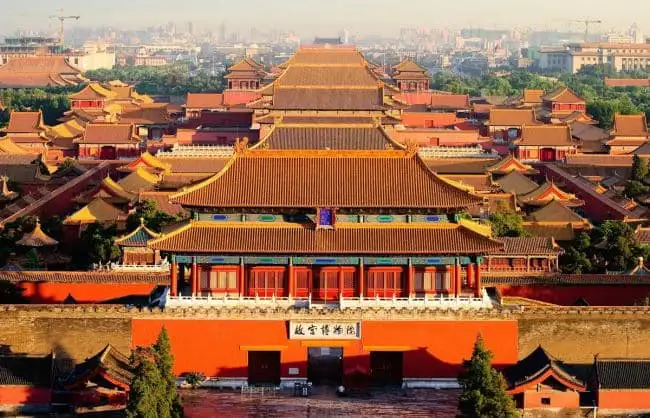
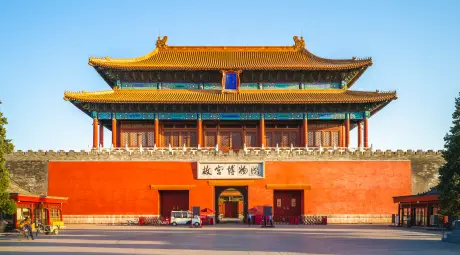
Starting from the fourth year of his reign, the Yongle Emperor ordered a palace based on the Yuan capital city in Beijing. This palace was then preserved and reconstructed as the current Forbidden City. Its ingeniously designed layout and the magnificent architecture symbolized the Ming Dynasty’s strict hierarchical and Rites system, as well as the mature architectural technology and arts.
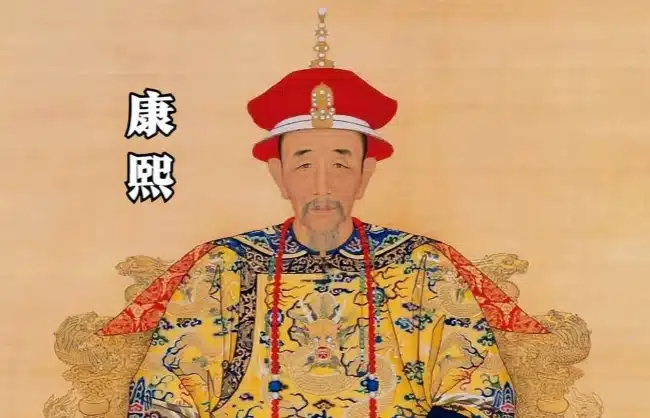
Qing Dynasty (1644–1912) – Kangxi, Yongzheng, Qianlong, Puyi
The Qing dynasty was ruled by the Manchu people, another dynasty ruled by non-Han Chinese. However, it was the last imperial empire in Chinese history. There are four famous emperors during this period: Kangxi, Yongzheng, Qianlong, and Puyi.
Kangxi was the fourth emperor of the Qing. Interestingly, Kangxi was in power for 61 years, the longest ruling period among all the Chinese emperors.
He pacified the Three Feudatories Rebellion, led campaigns against Galdan, expelled the invading Russian forces, secured Qing territorial control over the Heilong River Basin through the Treaty of Nerchinsk, established the “Duolun Alliance” to replace warfare, and forged ties among the Mongol tribes.
Yongzheng’s achievements rested more on reforms. He established the Military Affairs Department to ensure the mutual supervision of officials and to implement a policy of replacing hereditary chieftains with appointed officials, thereby gaining control over the ethnic minorities. To release the burden on civilians, he incorporated the poll tax into the land tax system and abolished the system of hereditary serfdom.
Their successor, Qianlong, continued the glorious deeds: he crushed the rebellion of the Junggar tribe and Hoja. Xinjiang was incorporated into the empire’s territory for the first time. The Qing territory was expanded to 13.16 million square kilometers after several expeditions.
Qianlong also made an effort in cultural preservation– the compilation of the Complete Library in Four Branches contained 3461 works from the Qin dynasty to the early Qing. He ordered the expansion of the old Summer Palace to 5200 mu, making it a fusion of eastern and western culture.
The reign of Kangxi, Yongzheng, and Qianlong was respected as “High Qing” in the West. It showcased the great national power in 134 years, the glow of the Chinese imperial feudal dynasties.
On February 12th, 1912, Puyi, the last emperor of the Qing dynasty, announced his abdication under the pressure of the Revolution of 1911. It marked the end of the Chinese imperial system and the title of “Chinese Emperor”, which lasted over two millennia.
Interesting Facts About Chinese Emperors
- Although the total number of emperors in Chinese history is in dispute, most theories believe that there were more than 500 emperors in Chinese history.
- The emperor was known as the “Son of Heaven” to divinify and consolidate their authority.
- Wu Zetian was the only female emperor in ancient Chinese history.
- Some emperors took the throne as children. Tenof them became emperors before nine years old.
- Thepalaces were symbols of absolute authority and Rites, as well as safe fortresses, so emperors rarely left their palaces.
- Genghis Khan was never emperor of China; the rule started from his grandson, Kublai Khan.
- Some Emperors Were Brilliant Artists. For example, Huizong of Song (Zhao Jie) founded a new School of calligraphy– Shoujin Style, in pursuit of natural perfection. Shouji style had a profound influence on the history of calligraphy.
- The last emperor of the Jin dynasty, Wanyan Chenglin, only ruled the state for less than two hours. He was pushed to the throne when the Mongol-Song alliance attacked the capital city. His fate as the Emperor ended when the army captured the city.
- WangMang, the Emperor of the Xin dynasty, was the most devoted to science. He ordered the earliest human dissections, the earliest flight experiments, and research in artificial foods like artificial milk.
- TheGong Emperor of Song had the quirkiest experience as a ruler: he became an emperor as a child, served as a minister in his youth, then he chose to be a monk in middle age and died in prison.
- The only Chinese emperor who practiced monogamy was Xiaozong of the Ming dynasty.
Why did an emperor of ancient China have several “names”?
An emperor would have several names: for example, to distinguish their authority, an emperor might have their own reign title and state title. From the Tang dynasty, granting an honorific title to celebrate an emperor’s achievements became a trend. Even after their death, an emperor might be remembered by a posthumous title.
Although these names usually conformed to the cultural and social trends of their time, the major reason would always be the same: to accentuate the special status of the emperor and thus centralize the imperial power.
Common Myths vs. History: Separating the Legends from the Records
Many travelers are told that Chinese history spans a continuous 5,000 years. While China’s cultural roots can indeed be traced back to ancient times, the distinction between Mythical Rulers and Historical Emperors is a key part of understanding the country’s true timeline. The “Three Sovereigns and Five Emperors” is the core of the puzzle.
The legendary Three Sovereigns were Fuxi, who created Bagua; Shennong, the ancestor of agriculture; and Nüwa, the Chinese goddess who created human beings and mended the sky. And the Five Emperors were the Yellow Emperor (Huang Di), Zhuan Xu, Di Ku, Yao, and Shun.
A hypothesis is that the concept of the “Three Sovereigns and Five Emperors” serves as an anthropomorphic summary of key technologies in early civilizations.
Most people are convinced of the existence of the Five Emperors because of their stories in the Records of the Grand Historian by Sima Qian. They were depicted as good emperors who assigned officials, empathized with the people, and strengthened the national power, like other human emperors.
Although the silk textiles discovered in the Yellow River Basin (at the Qingtai site in Xingyang, Henan) coincided with the legend of Leizu, the wife of the Yellow Emperor, who invented sericulture, some historians still tend to believe that the Records simply toned down the mythical elements, let alone the deeds of the Three Sovereigns that are beyond humans’ reach.
Where to Experience Imperial History in China?
Terracotta Army
The different attire, hairstyles, movements, and facial expressions of each warrior in the Terracotta Army represent the glory of ancient Chinese sculptural arts and make it one of the World’s Eight Wonders since its discovery. It is a symbolic attraction in Xi’an City, Shaanxi Province, and has absorbed countless tourists worldwide. In 1987, it was listed among the UNESCO World Cultural Heritage sites.
We have crafted many expertly organized Xian Terracotta Army tours for our visitors’ reference. Also, you can contact us to customize your personal trip.
Forbidden City
The Ming imperial palace is the predecessor of the current Forbidden City. Following the Yongle Emperor’s order, it took 14 years to construct the palace. The palace occupies 720,000 square meters, with 8707 rooms.
This imperial building complex is one of the biggest and most well-preserved extant ancient wooden structures. The Taihe (Jin Luan) Hall is the center of the palace. It was where the emperors held court and banquets and has become the main attraction.
Recommended tour
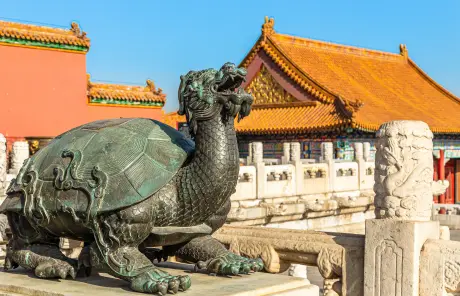
A half-day private tour of Beijing's iconic landmarks including Tiananmen Square, the 600-year-old Forbidden City, and panoramic views from Jingshan Park summit.
Ancient capital sites
Xi’an
Xi’an had been the capital city of thirteen Chinese dynasties. As the “foremost ancient capital of China”, Xi’an preserved plenty of precious legacies: for example, the Terracotta Army and the Mausoleum of Qin Shi Huang; the Huaqing Palace, where the Tang emperors entertained; and Dayan Tower, where the monk Xuanzang kept the Buddhist classics brought back from India.
Recommended tour

Combine Xi'an's ancient wonders with Mount Huashan's breathtaking trails — stand before the Terracotta Army, cycle the City Wall, and hike the world's most precipitous sacred mountain.
Luoyang
Luoyang was also the capital city of the thirteen dynasties. There are over 40 protected cultural heritage and archaeological discovery sites that span millennia.
For instance, the Erlitou site dates back to 3500-3800 years ago. It serves as important evidence of the existence of the Xia dynasty; the Longmen Cave is one of China’s four major stone carving art treasures. It contains 2345 caves and niches, 100,000 statues, and more than 2800 inscriptions; and Baima Temple, the first state-sponsored Buddhist temple. The extant relics date back to the Yuan, Ming, and Qing dynasties.
Recommended tour
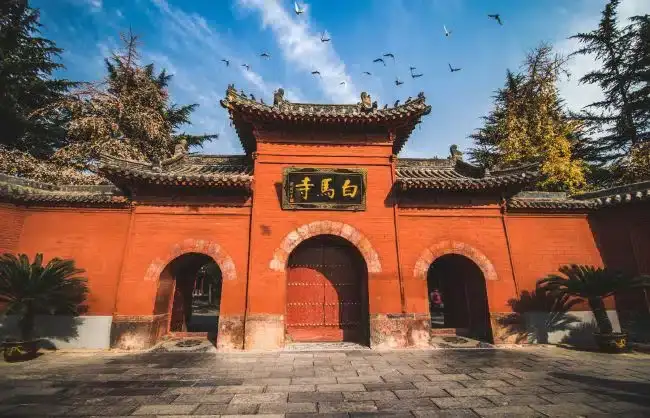
Witness an authentic Shaolin Kung Fu performance at the legendary temple, then explore Longmen Grottoes' tens of thousands of exquisite Buddha stone carvings.
Nanjing
Nanjing served as the capital city of six ancient dynasties. A crucial cultural heritage site is the Confucius Temple. It is China’s first national institution of higher education and one of the country’s four major Confucian temples.
During the Southern Song dynasty (1127-1279), when Nanjing was the capital city, the Confucius Temple was damaged in the war, but was reconstructed as the Jiankang Prefectural Academy. Later in the Ming and Qing dynasties, it became the Cultural and Educational Center of Nanjing.
Discover The Legacy of Imperial China with China Xian Tour
To this day, the Chinese emperors’ merits and mistakes, honor and disgrace over the 2132 years have been specks of dust in the river of history. However, it is the achievements and legacies of those great figures that laid the foundation for the prosperous China of today.
If you are enthusiastic about Chinese history and stories of the legendary Chinese emperors, we encourage you to take a tour of the attractions that record the imperial history with China Xian Tour!
Just name your interested dynasty, emperor, or Chinese city, and our professional consultant team will design a customized tour for you and lead you to an immersive trip of myths, anecdotes, and memories of Chinese emperors!