


The Grand Canal–A Great Project Next to the Great Wall
Written by Clementine |
China has amazed the world time to time with its incredible man-made wonders. And among all the miracle-like creations, the Grand Canal of China, also known as the Jinghang Waterway, is another shinning star that significantly changed people’s life and even the history. It stretches for nearly 1,800 kilometers (1,115 miles) is still the longest and oldest man-made canal in the world. This engineering marvel has crossed multiple cities and provinces, linking the northern capital Beijing with the heart of southern region, Hangzhou. And beyond that, it even connects five of China’s great river systems — the Haihe, Yellow, Huaihe, Yangtze, and Qiantang Rivers.
Built to serve as a crucial artery for the communication and transportation between the north and south, the canal was a lifeline of imperial China. And over two millennia later, it has now been even greater valued as a symbol of ancient Chinese ingenuity and resilience.
Content Preview
- What is the Grand Canal in China? (Overview and Key Facts)
- Interesting Facts About the Grand Canal
- Grand Canal History: Construction, Dynasties, and Purpose
- Evolution Through Dynasties
- Experiencing the Grand Canal Today: A Travel Guide
- FAQs about the Grand Canal
- Plan Your Grand Canal Tour with China Xian Tour
What is the Grand Canal in China? (Overview and Key Facts)
For many people, the name “Jinghang Grand Canal (京杭大运河)” may sounds more familiar to them. And it is a massive inland waterway that connects the north and south from Beijing to Hangzhou. For centuries, it had always been the economic and cultural lifeline for Chinese people.
Where is the Grand Canal in China Located?
The canal begins in Hangzhou, and extends northward all the way through Jiangsu, Shandong, and Hebei provinces, and finally, it ends in Beijing and Tianjin. Along its route, it actually links five major rivers and numerous historic cities, which greatly helps the formation of a continuous water network. And this significant network has, indeed, once functioned as the backbone of transportation in imperial China.
How Long is the Grand Canal (The World’s Longest Waterway)
The Grand Canal measures about 1,776 kilometers (1,104 miles) in length, making it the longest canal in the world — far surpassing other famous waterways like the Panama Canal (82 km) or the Suez Canal (193 km).
Naming Convention: The Grand Canal vs. The Jinghang Waterway
While “Grand Canal” is the common English name, the canal’s formal title in Chinese is Jinghang Dà Yùnhé, literally meaning “Beijing–Hangzhou Grand Transport River.” Both names refer to its role of a man-made canal linking the nation’s political and economic centers for centuries.
Interesting Facts About the Grand Canal
- It is the oldest and longest artificial canal still in use today.
- The canal connects five major river systems across eastern China.
- Construction began more than 2,500 years ago.
- It was once the primary route for transporting grain to the imperial court.
- It served as a military, economic, and cultural highway.
- The canal was listed as a UNESCO World Heritage Site in 2014.
- At its peak during the Ming and Qing Dynasties, over 200,000 workers maintained and operated it annually.
Grand Canal History: Construction, Dynasties, and Purpose
Who Built the Grand Canal and When Was the Grand Canal in China Built?
Actually, ancient Chinese people started digging canals as early as the Spring and Autumn Period (from 770 to 476 B.C.), during which the canals were comparatively small and only used for military purposes. For instance, King Fu Chai of Wu State ordered people to build the Hangou Canal so as to send his army to attack Qi State. Another example is the Honggou Canal dug by King Hui of Wei State which also served the needs of war. However, as time went on, the function of the canals also changed. The canals whose original mission was to transporting troops were used for delivering strategic materials, and the scope was further expanded to various other materials.
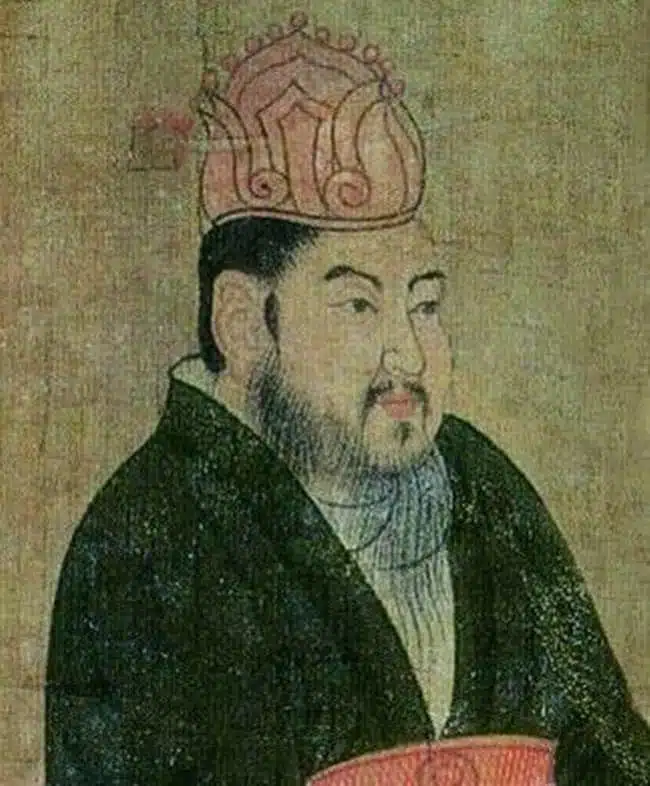
The early canal systems were fragmented and local. It wasn’t until the Sui Dynasty (581–618) that Emperor Yangdi (Emperor Yang of Sui) unified and expanded these waterways into one continuous system — what we now call the Grand Canal.
Speaking of the Grand Canal, Emperor Yang of the Sui Dynasty must be mentioned, who was the second emperor of the Sui Dynasty which lasted for only 38 years (from 581 to 619). He was famous for being a tyrant, but one of the things he did still benefits Chinese people now. Yes, it’s the Grand Canal. Although the canal was considered a sheer waste of money and manpower at the time (the opening of the canal greatly increased the burden on the people, and to a certain extent, it hastened the collapse of the dynasty), it played an important role for the later generations. For example, it improved north-south transportation and facilitated economic and cultural exchanges between the north and the south.
What Was the Purpose of the Grand Canal?
The Grand Canal was primarily designed to transport grain (tribute rice) from the fertile southern provinces to the political capitals in the north. It also served strategic military purposes by moving troops and supplies efficiently.
Over time, it became vital for commerce and cultural exchange, helping unify the vast Chinese empire economically and socially. The canal also spurred urban growth along its banks, turning cities like Suzhou, Yangzhou, and Hangzhou into thriving trade hubs.

Evolution Through Dynasties
Period |
Key Developments |
Spring and Autumn Period (770–476 BC) |
First local canals (e.g., Hangou and Honggou Canals) for military use. |
Sui Dynasty (581–618 AD) |
Emperor Yangdi unified and expanded existing canals, forming the Grand Canal. |
Tang & Song Dynasties (618–1279 AD) |
Canal system maintained and improved; boosted trade and cultural exchange. |
Yuan Dynasty (1271–1368 AD) |
Northern section extended to Beijing to supply the capital; canal length peaked. |
Ming & Qing Dynasties (1368–1911 AD) |
Became the empire’s major transport artery; used to deliver tribute grain annually. |
Modern Era (20th–21st Century) |
Portions restored for tourism and navigation; inscribed as a UNESCO World Heritage Site in 2014. |
After Emperor Yang ascended the throne, he moved the capital to Luoyang. In order to control the vast areas in the south of the Yangtze River and get the abundant materials in the region transported to Luoyang, he sent more than one million people to dig the Grand Canal. With Luoyang as the center, the Grand Canal was based on the canals excavated by his predecessors. Stretching 1,794 kilometers, it is the longest ancient canal in the world and praised as one of the three great projects of ancient China (the other two are the Great Wall and karez, an irrigation system of wells connected by underground channel used in Xinjiang). The Grand Canal starts from Hangzhou in the south and ends in Beijing in the north, flowing through four provinces of Zhejiang, Jiangsu, Shandong, Hebei and two cites of Beijing and Tianjin, and linking the five major river systems of Haihe River, Yellow River, Huaihe River, Yangtze River, and Qiantang River. Its water mainly comes from Weishan Lake in Weishan County, Shandong Province.
Experiencing the Grand Canal Today: A Travel Guide
Now the Grand Canal is over 2,500 years old. On June 22, 2014, the Grand Canal was announced to be included in the World Cultural Heritage List and became China’s 46th world heritage project on the 38th World Heritage Conference. It’s truly a living history book. It has crossed time and space and witnessed the rise and fall of the cities on the banks. If you want to know the countless stories that have happened along the canal, you really should come and see it for yourself someday. If you ask what’s the best way to explore the Grand Canal, the answer will always be taking a boat. For travelers to Beijing, Hangzhou, Yangzhou, Suzhou, etc., you can go to appreciate the beauty of this quiet ancient canal on a cruise. Please do not hesitate to contact us if you need detailed information.
The Most Scenic Sections: Jiangsu and Zhejiang
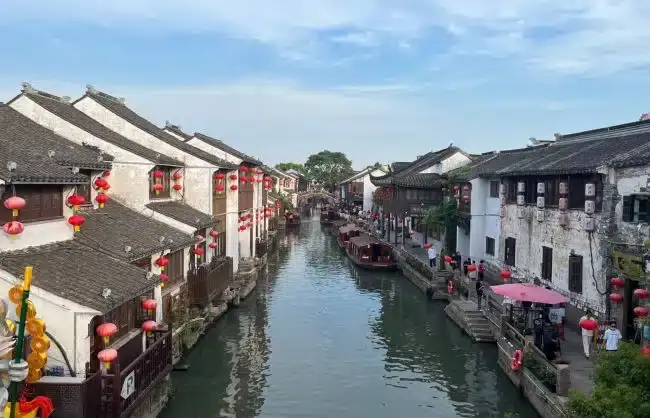
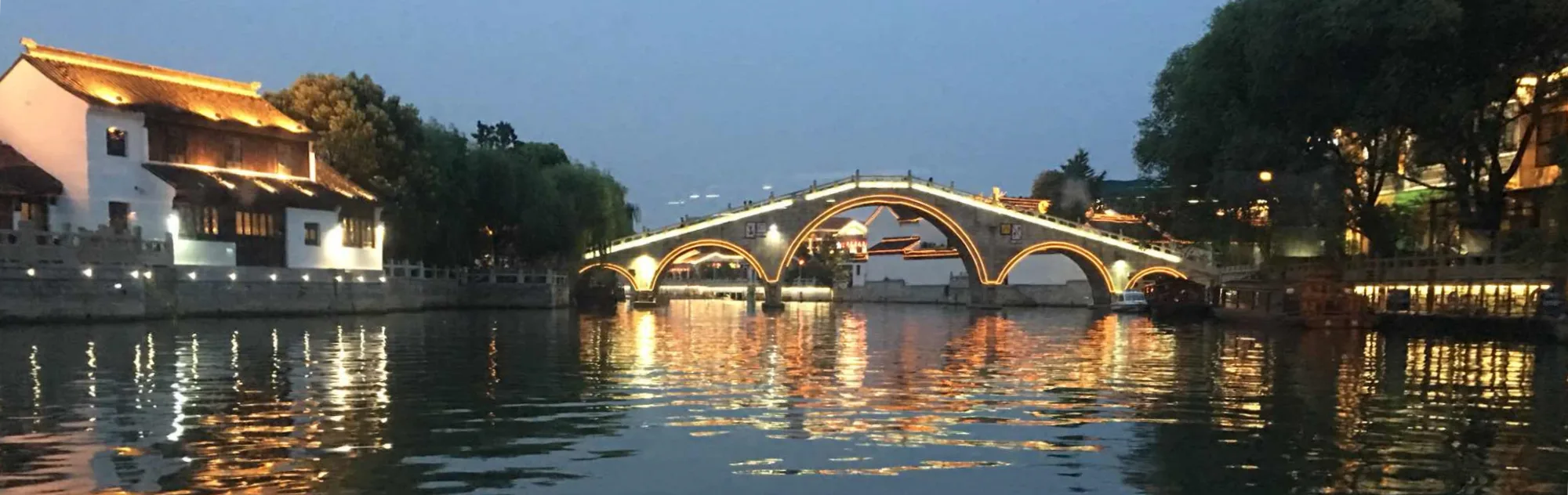
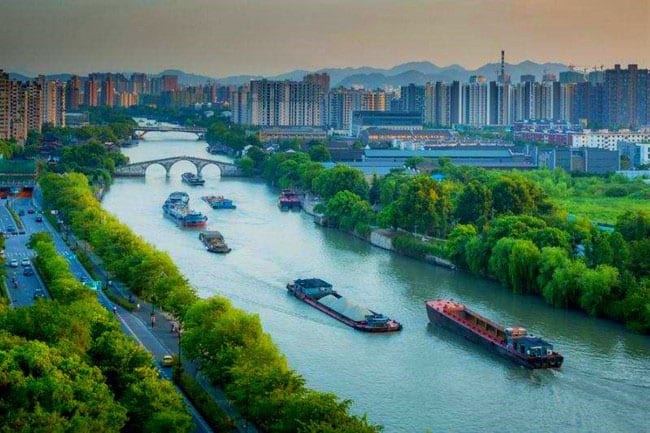
It is widely recognized that the passage stretching Jiangsu and Zhejiang is the most picturesque, particularly the section around Suzhou, Yangzhou, and Hangzhou. And now visitors can take a boat tour to appreciate the unparalleled beauty of these regions. While you gliding past the traditional houses or the bustling waterfront markets, you’ll also feel like traveling back to the old time.
Major Tourist Attractions Along the Route
- Hangzhou: West Lake, Lingyin Temple, Grand Canal Museum
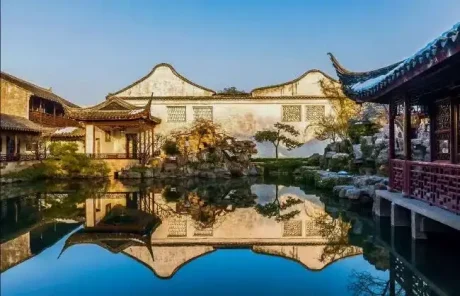
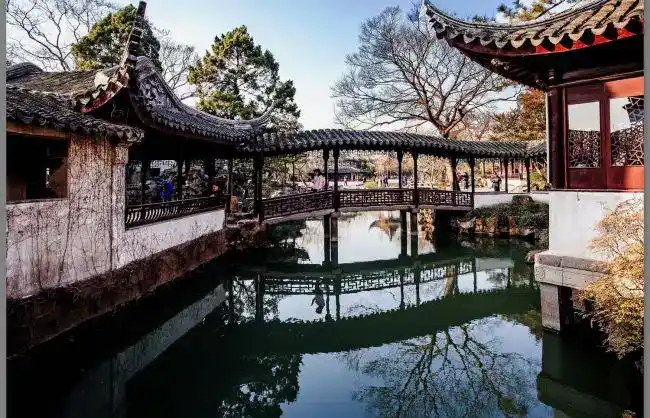
- Suzhou: Classical Gardens (e.g., Humble Administrator’s Garden), Tongli Water Town
- Yangzhou: Slender West Lake, Geyuan Garden
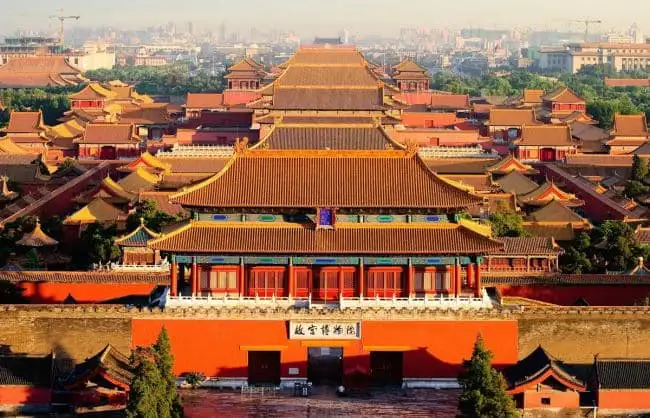
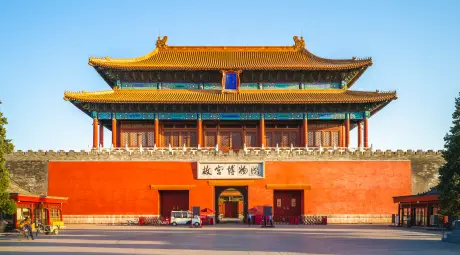
- Beijing: Nanluoguxiang Hutong, the Forbidden City, and the Great Wall.
The Grand Canal Museum in Hangzhou
If you want to see more of the canal, the China Grand Canal Museum in Hangzhou would be a good place to go during a China tour. It is opened in 2021, which offers people a modern and interactive look at the canal. And the various forms of exhibits will directly show you how this ancient waterway shaped Chinese civilization.
Best Ways to Experience the Canal
- Take a Night Cruise: Do thiswhen traveling to Hangzhou and Suzhou, it’ll be quite beautiful when the canal banks light up.
- Cycle Along the Towpaths: Cycling along thescenic routes allows you to see the canal in a different perspective.
- Visit Canal Towns: There are some ancient water towns like Wuzhen and Tongli nearby.
- Best Time to Visit: April to October, a period with best weather condition.
FAQs about the Grand Canal
Did the Grand Canal use locks?
Yes. Ingenious lock systems were developed in the Ming Dynasty to manage water levels across different elevations.
How many major river systems does the Grand Canal connect?
It links five major river systems: the Haihe, Yellow, Huaihe, Yangtze, and Qiantang Rivers.
Is the Grand Canal still in use today?
Yes, many sections remain navigable and active, primarily for regional freight and tourism.
When was the Grand Canal recognized by UNESCO?
It was officially listed as a UNESCO World Heritage Site in 2014.
Can you travel the entire Grand Canal from Beijing to Hangzhou?
Not continuously. But you can visit and cruise select scenic portions, especially in Jiangsu and Zhejiang.
How does the Grand Canal compare to other famous canals?
At nearly 1,800 km, it is over nine times longer than the Suez Canal and more than twenty times longer than the Panama Canal.
Plan Your Grand Canal Tour with China Xian Tour
Traveling along the Grand Canal can offer you an experience beyond simply immersing in the charm of nature beauty. As you gradually sailing up-stream or down-stream, you’ll also see the history of over two thousand years unfolding in front of your eyes. And joining China Xi’an Tour can allow you to explore most of this incredible waterway. Our professional guides will customize an itinerary that suits all your preference and also take care of every detail of this journey. So that every moment of this trip is believed to be precious and unforgettable.
Recommended Related Tours You May Like