

The Han dynasty (202 BCE-220 AD) was one of the longest-lasting regimes in ancient Chinese history. It ushered in political, cultural, and technological transformations in 405 years.
As a cohesive and prosperous empire, the Han dynasty witnessed a centralized bureaucratic system, widespread Confucian ideology, and groundbreaking technological inventions that benefited future generations. The name “Han” was then proudly imprinted on the identity of the dominant ethnic group of China – the Han people, to commemorate this great power and its invaluable legacies.
This guide can serve as an informative “briefing” before you explore the Han dynasty history– it includes the overview of Han’s history timeline, its key emperors and events, laudable achievements and relics, clothing styles, along with important cultural heritage sites to suit your travel plan.
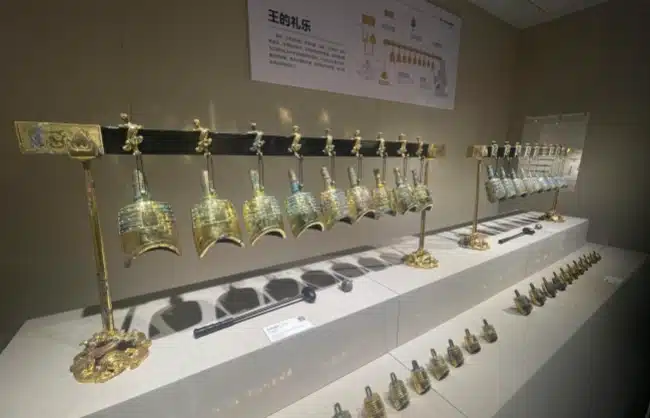
Content Preview
- Han Dynasty Quick Facts
- History at a Glance: Rise, Golden Age, and Decline
- Key Events & Emperors: A Timeline
- Han Dynasty Achievements: The Pillars of a Golden Age
- Experience Han Dynasty Heritage in China Today
- Han Dynasty Fun Facts
- Roam the History of the Han Dynasty with China Xian Tour
Han Dynasty Quick Facts
In Chinese: 汉朝(Hàn Cháo)
Time period: 202 BCE- 8 AD (Western Han) and 25-220 AD (Eastern Han)
Founder: Liu Bang (Emperor Gaozu of the Western Han) and Liu Xiu (Emperor Guangwu of the Eastern Han)
Capital: Chang’an (the current Xi’an) in the Western Han and Luoyang in the Eastern Han
History at a Glance: Rise, Golden Age, and Decline
The Founding of the Western Han by a Peasant
Preceding the Han dynasty was another great Chinese empire – Qin. However, its brutal tyranny and corrupted political system resulted in an outbreak of pervasive peasant uprisings.
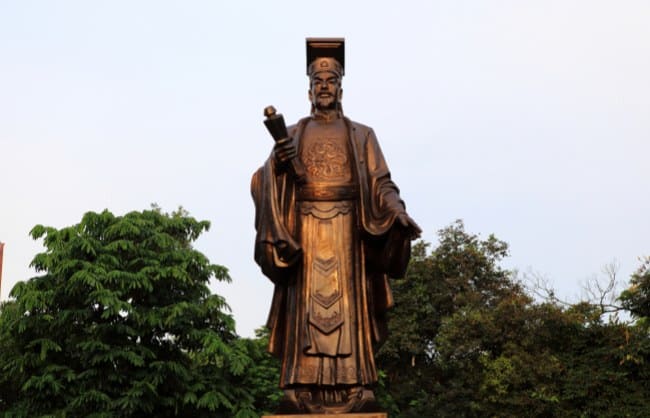
One of the peasants, Liu Bang, cultivated his military forces and influence with his political prowess. In 207 BCE, Liu Bang captured Xianyang, the capital city of Qin, and the King of Qin chose to surrender. The Qin dynasty thus ended.
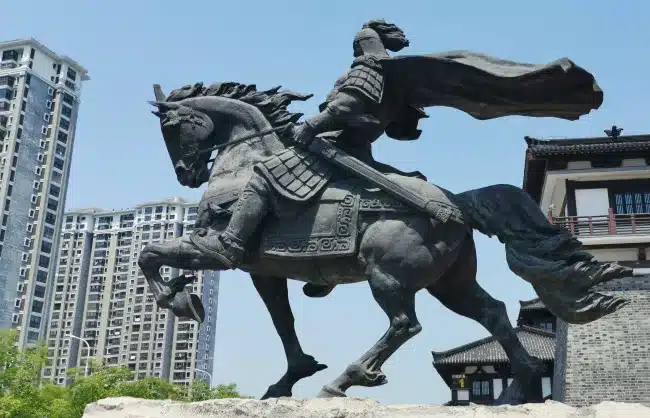
Then, after the Chu-Han Contention (“Han” in this term refers to: 1. a region along the Han River; 2. Liu Bang’s previous title as the Lord of Han), Liu Bang defeated the other heroic ruler, Xiangyu.
In 202 BCE, Liu Bang established the Western Han at the Fan River in Dingtou, Heze, Shandong, and the capital city was located in Chang’an. Liu Bang was then known as the Emperor Gaozu. Therefore, we can see that the name “Han” was a persistent heritage itself.
The Fleeting Xin Dynasty and the Restoration of the Eastern Han
In 8 AD, Wang Mang, a distant relative of the Western Han imperial family, deposed the two-year-old puppet emperor and rose to power as the Emperor of the Xin dynasty. It marked the end of the Western Han.
Unfortunately, the Lulin Army overthrew the Xin regime in 23 AD before Wang Mang’s frequent reforms took effect.
Two Years later, Liu Xiu, the ninth-generation descendant of Gaozu, broke with the ruler of the Lulin Army and restored the Han regime as the Eastern Han. The capital city rested in Luoyang.
The Collapse of the Han Dynasty: Falling Apart Bit by Bit
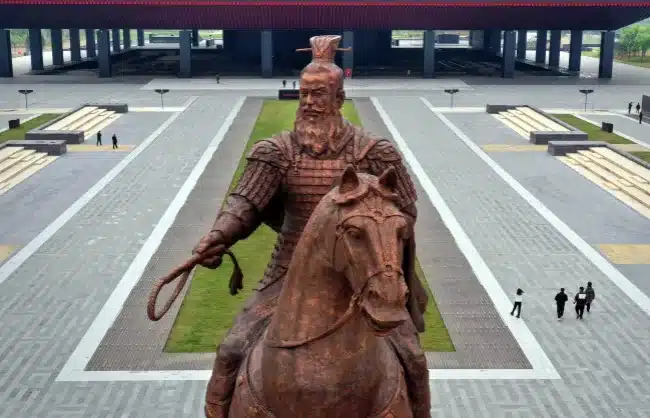
Wang Mang’s usurpation was a lesson for the Eastern Han emperors. They strengthened the centralization of imperial authority by handling various state affairs all by themselves. But it was impossible without reliable assistance. Therefore, eunuchs began to seize actual administrative power in the imperial court.
The dominance of eunuchs led to bleak political vision, escalating power struggles, and the miserable lives of the common people. Finally, the Yellow Turban Rebellion in 184 AD accentuated the populace’s rage and accelerated the Eastern Han’s collapse.
Meanwhile, political conflicts brought about the rise of regional forces. By the end of the Eastern Han, Cao Cao, Sun Quan, and Liu Bei established their respective separatist powers. In 220 AD, Cao Pi forced the abdication of the Emperor Xian of Han and the Three Kingdom period began.
Key Events & Emperors: A Timeline
Western Han (202 – 8 BCE)
- 202 BCE- Gaozu
Liu Bang established the Western Han and located the capital city at Chang’an.
- 141-87 BCE Emperor Wu/Wu Di
138 BCE: Wu Di sent Zhang Qian to explore the West. It served as the basis of the Silk Road.
From 134 BCE, Wu Di established the Imperial College to teach Confucian classics for official selection. Confucianism was revered as the state religion and the spiritual core of the Han ethnicity.
127 BCE: Wei Qing repelled the Xiongnu from the southern Yellow River region.
121 BCE: Huo Qubing annihilated the major Xiongnu force and established four counties to maintain the security of the northern border.
104 BCE: Sima Qian completed The Records of Grand Historian, the first biographic-historiographic work of general Chinese history.
Wu Di expanded the Han territory from 2.4 million square kilometers to 6 million square kilometers, which laid the foundation for the ancient Chinese territorial blueprint.
Wu Di invented the “recommendation and provincial inspectorate” system, which influenced the bureaucratic system for millennia.
Xin Dynasty (8-23 AD)
The reforms of Wang Mang failed to solve the land annexation issue. Instead, they aggravated social upheaval.
Eastern Han (25–220 AD)
- 25-57 AD Liu Xiu/ Emperor Guangwu
25 AD Liu Xiu established the Eastern Han and moved the capital city to Luoyang.
During his reign, Emperor Guangwu centralized the imperial authority through dual measures: first, he established the “Palace and Cabinet” system, which became the predecessor of the “Three Provinces and Six Ministries”; second, he replaced provincial governors with inspectors to reinforce the supervision of the imperial officials.
In terms of foreign affairs, Emperor Guangwu received Japanese envoys and introduced Chinese characters to Japan.
Han Dynasty Achievements: The Pillars of a Golden Age
Centralized Authority and Talent-Based Recruitment
The centralization of the imperial authority was an ongoing effort since the Western Han. The institution of prefectures and counties enabled the emperors’ direct control over local affairs.
The ancestral worship system, the hereditary throne system, and the Imperial Grace Decree acknowledged the nobility and their heirs’ legitimate rights to enjoy and inherit privileges as long as they obeyed the governance of the emperors. These policies upheld the patriarchal system while securing the nobles’ loyalty.
The noble privileges did not obstruct the opportunities for the ordinary people. In fact, the Han government prioritized the officials’ talents, merits, and capabilities over their backgrounds, though they were required to pass the routine assessments. Xun Yu and Guo Jia were examples of civilians promoted to the position of Imperial Advisor.
Emerging Scientific Research & Advancing Technology
The Han dynasty proved that “ancient” never equaled “primitive”. Han people’s wisdom propelled the thriving of scientific research and technology.
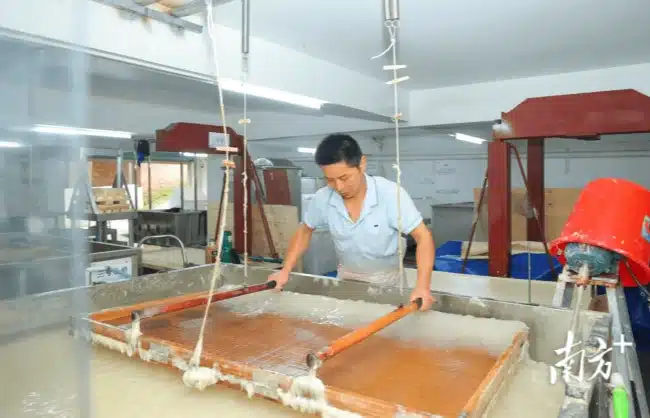
One of the Chinese Four Great Inventions, paper, emerged as early as the Western Han! Initially, only hemp fibers were used in the production. Then, the Eastern Han court official, Cai Lun, adopted a wider range of accessible materials like barks and rags. His invention of a reusable mold for paper-making in 105 AD enabled the popularity of high-quality paper.
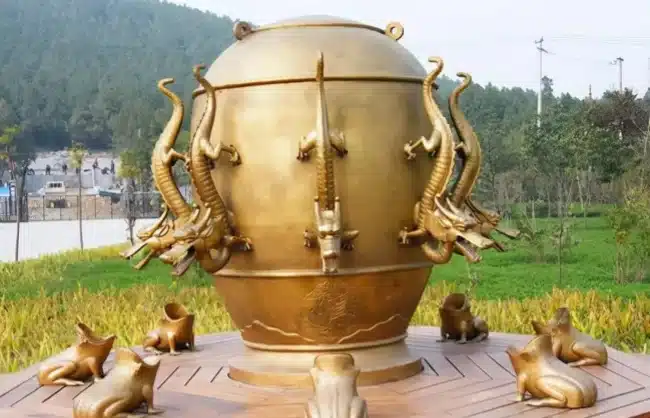
Besides, Zhang Heng, an Eastern Han scholar-official, invented the world’s first “earthquake detector” – seismoscope in 132 AD. When an earthquake approached, (a) metal ball(s) would drop out of one or some of the eight directional openings on this round, bronze vessel to indicate the source of the tremor. In 138 AD, it succeeded in predicting an earthquake in Gansu.
State-Controlled Economy and International Trade
For the Han government, especially that ruled by Emperor Wu, the state monopoly of iron and salt largely increased the fiscal revenue. Meanwhile, the land equalization system bolstered peasants’ initiative in agricultural production.
The Silk Road was another indispensable advantage in the economic growth of the Han dynasty. According to the Records of the Grand Historian, silk was the core commodity between the Han dynasty and the Western Regions. Han’s silk was traded to Central and Southern Asia, and the Mediterranean area.
In return, merchants brought rare Western resources like jade, gold, spices, horses, alfalfa, and grapes to Chang’an. The extensive commercial network made Chang’an an important trading hub and boosted Han’s economy.
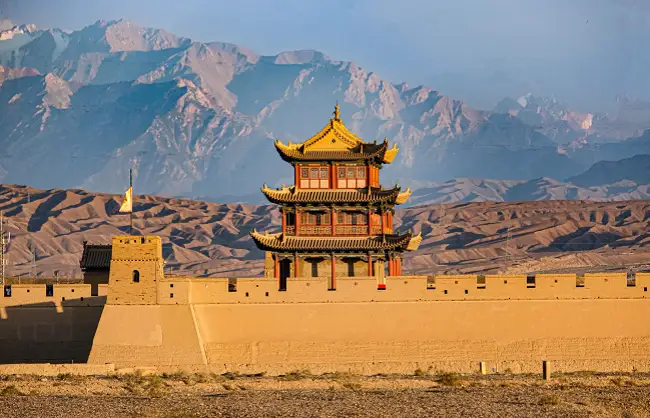
Travel the entire ancient Silk Road from Xi'an's Terracotta Warriors through the Hexi Corridor to Kashgar's vibrant old city and Central Asian bazaars in ten days.
A kaleidoscope of Arts and Culture
Apart from science and technology, culture and arts also welcomed a golden age in the Han dynasty.
On the basis of the Book of Songs, poetry and essays took a big leap in forming their unique styles. Masterpieces like Records of the Grand Historian by Sima Qian and the Book of Han by Ban Gu still attract loads of history enthusiasts today.
During the reign of Emperor Wu, Yuefu emerged – this imperial institution collected folk poems and essays and adapted them into songs for imperial ceremonies.
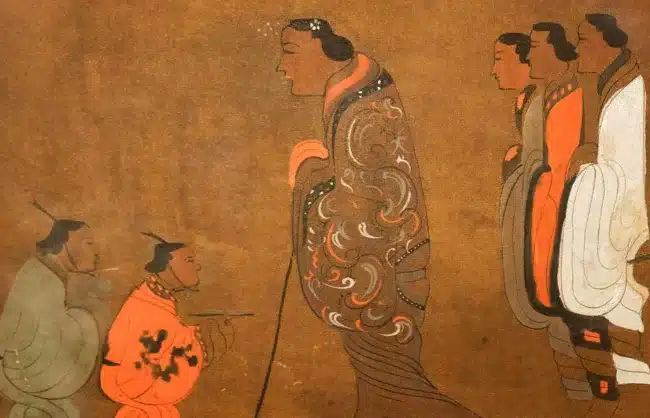
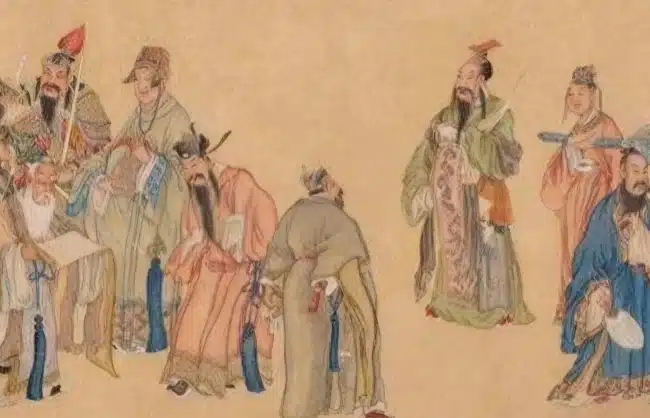
The Han paintings and sculptures were also popular topics in archaeology. The mural painting depicting 11 meritorious ministers in the Kylin Tower represents the crucial role of palace mural paintings in Han’s moral education; the T-shaped banner silk painting in the Mawangdui recreated a dream-like heavenly scene in smooth and bold strokes as well as bright and elegant colors.
And the extant earliest sculpture complex – the one at Huo Qubing’s tomb for commemorating his merits in the Battle of Hexi – relied on techniques of round carving, relief, and line carving in the imagery of galloping horses, crouching tigers, and so on to demonstrate Huo’s heroic spirit. These works illustrate the extraordinary artistic mastery of the Han dynasty artisans.
Exquisite Techniques of the Han Dynasty Architecture & Symbols of Rites
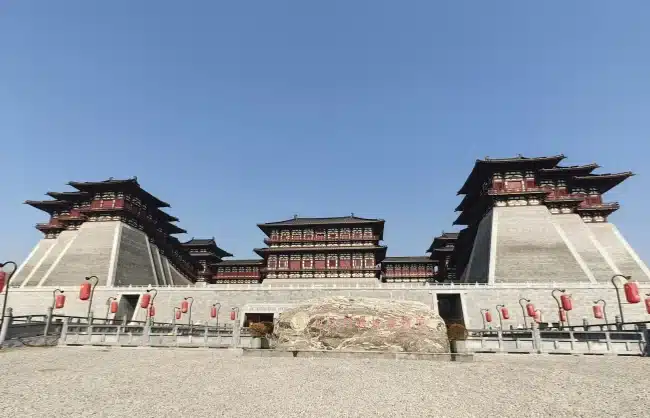
Han dynasty architecture gained systematic development to embody the ritual order and political authority. Palace complexes like the Weiyang Palace and Changle Palace adopted the principle of “court in front, quarters in rear” and a symmetrical layout. The complexes were located on elevated platforms, which made them more sacred and privileged.
Ritual architecture, such as Mingtang and Piyong, strictly adhered to the cosmological belief of “round sky and square ground”. Sacrificial rules outlined in the Book of Rites, for example, “ancestral shrines on the left and altars to the earth on the right,” also exerted significant influence.
Plenty of breakthroughs in structural technology and decorative arts were also achieved in the Han dynasty. The beam-and-post structure became predominant while the application of hollow bricks and barrel vaults explored new possibilities of architectural designs. Also, the state-run workshop had formed a mature system of ceramic production to facilitate the standardization of roof tiles.
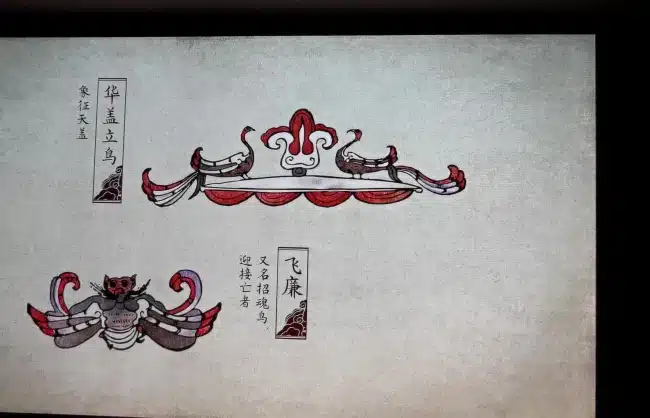
The Han architecture featured vermilion and white as its primary colors. The bright colors were complemented by stone reliefs and delicate patterns to create a vivid visual expression. Decorative motifs like the Four Gods pattern and cloud patterns carried the cultural significance of blessing and auspiciousness while showing the exquisite carving skills.
These achievements contributed to the comprehensive improvement of architectural technology and aesthetics and left an indelible imprint on the history of Chinese architecture.
The Superior Confucianism and Other Religions from the West
Confucianism, as one of the traditional Chinese philosophies, was respected as the state ideology and religion, especially in Emperor Wu’s time, when the Imperial College was established to raise elite Confucian scholars, and candidates’ mastery of Confucian classics determined their eligibility for official selection and social status.
The Western Han scholar, Dong Zhongshu, even combined the Yin-Yang Theory with Confucianism and proposed the concept of “interaction between heaven and mankind”. The Confucian principles, like kindness, righteousness, propriety, wisdom, and trust became heavenly orders that directed civilians’ daily life and the governance of the emperors.
In the aspect of religion, Buddhism travelled from India to the Han empire via the Silk Road, and a number of Buddhist temples were built in Chang’an in the Western Han.
However, it was not until the Eastern Han that Buddhism became widespread – during the reign of Emperor Ming, several knowledgeable monks arrived at Chang’an and were dedicated to the translation of Buddhist classics. Their efforts pushed forward the fusion between Buddhism and the traditional Han culture and paved the way for the thriving of Buddhism.
Han Dynasty Costume “Han Fu” Leading the Fashion
Nowadays, Han people’s traditional clothing, or Han Fu, still leads a nostalgic trend on social media. This fashion can be traced back to the Han dynasty, when Shen Yi became an everyday attire.
A Shen Yi is made of a cloth cut into one piece, which means that the upper and lower garments are joined together. It consists of two wide sleeves and a cross-collar fastened to the right.
Carrying the idea of “harmony between humanity and nature”, a Shen Yi is free from any artificial stitches and buttons. For example, the well-recognized style quju needs only a belt to fasten the two front pieces after they are overlapped properly.
Though Shen Yi blended into Chinese people’s daily life, it could be a ceremonial attire that represented the principles of Rites. Certain styles of Shen Yi were made exclusively for events like rituals, gatherings, imperial banquets, weddings, and funerals. The ornaments, colors, and materials varied to conform to the wearers’ status.
On the one hand, the intricate rules of Shen Yi underpinned the social hierarchy. On the other hand, the unified costume and fashion served as a belt that tied the Han people with their sense of belonging to the ethnic identity and their pride in traditional culture.
Experience Han Dynasty Heritage in China Today
Xi’an, Shaanxi Province
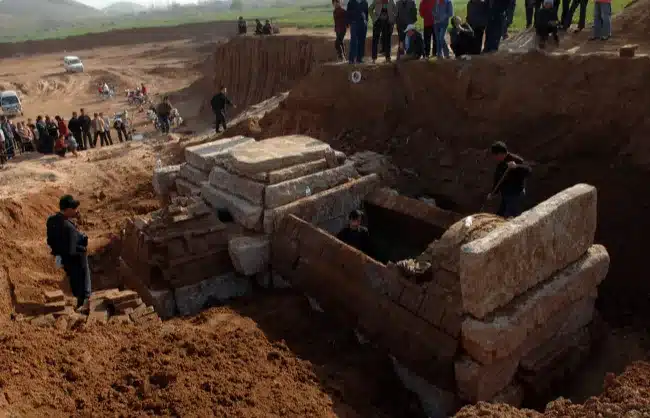
Tomb of Emperor Jingdi (Han Yang Ling)
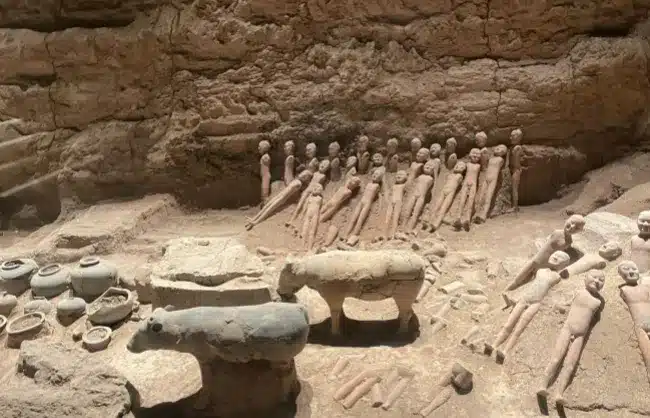
Emperor Jingdi (Liu Qi) was the sixth emperor of the Western Han. He repressed the revolts of the seven vassal states, reinforced centralized imperial authority, and implemented a new land taxation system that influenced future generations. His reign, together with that of his father Emperor Wen, is now praised as the Wen-Jing Era of Good Governance.
Han Yang Ling Mausoleum is the most well-preserved imperial mausoleum among all the discovered Han emperor tomb complexes. It has become an essential primary source for the research of the Han imperial mausoleum system.
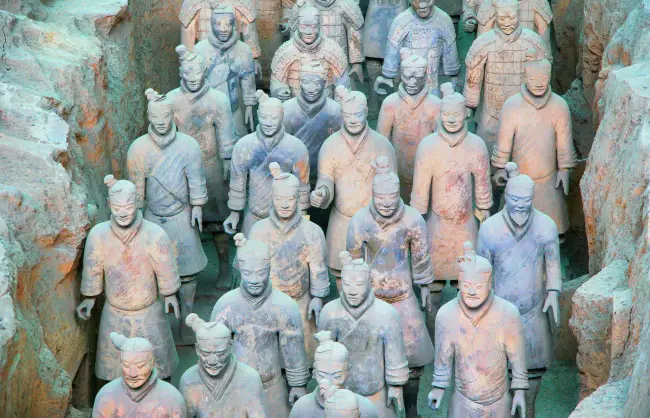
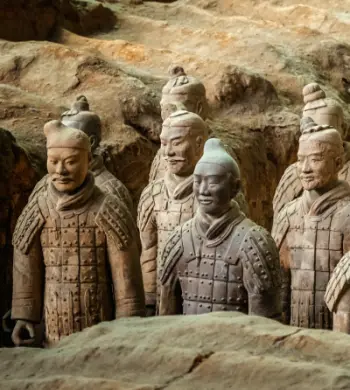
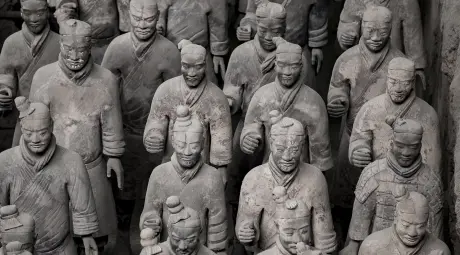
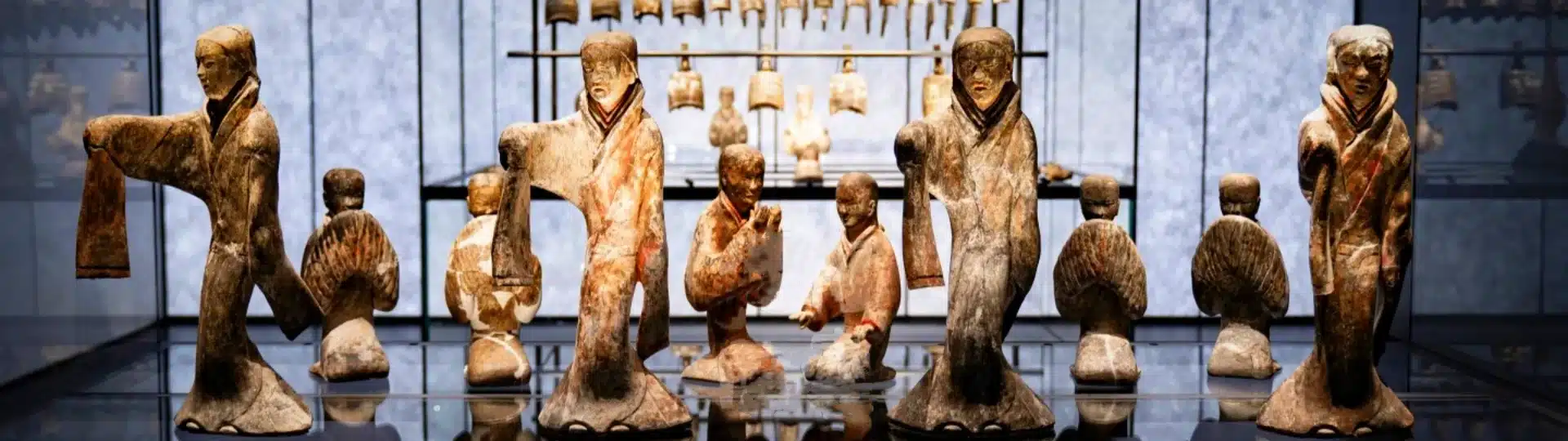
What’s more, invaluable antiques were found in archaeological excavations: some delicately crafted terracotta statues similar to the famous Terracotta Army, the expressions of which showcased their cozy life under Jingdi’s rule; a square boulder called “Luojing Stone”, which is proven to be the earliest marker stone in the world.
On the five stone steles inscribed with prayers composed by emperors from the late Ming and early Qing dynasties in an effort to express their admiration and reverence for Emperor Jingdi.
Han Chang’an City Relic
As previously stated, the current Xi’an used to be Chang’an, the political, economic, and cultural center of the Western Han. To this day, you can still pay your homage to this metropolis that rivaled ancient Rome by visiting the Chang’an City Relic in the Weiyang district of Xi’an city.
It was built based on the Qin Xingle Palace and rebuilt by several Western Han emperors until its completion in Emperor Wu’s time. Its total preserved area spans 65 square kilometers, featuring Changle, Weiyang, and Jianzhang Palaces.
The City was divided into 9 districts, and the streets allowed 12 carriages side by side. It was large enough to accommodate 300,000 population during its peak.
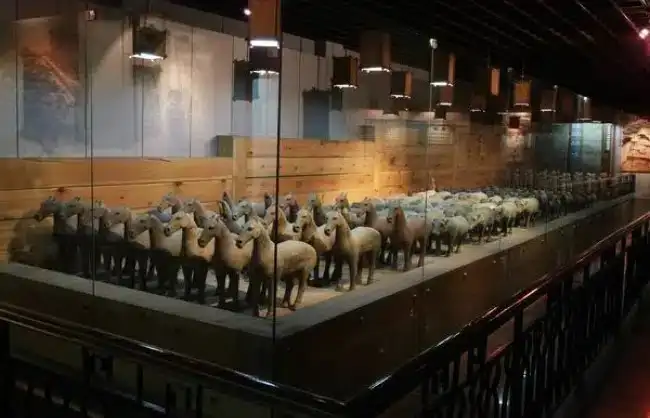
Pack Xi'an's richest history into two immersive days — from the Terracotta Warriors and Hanyangling Museum to the Muslim Quarter's food lanes and the enduring City Wall.
Luoyang, Henan Province
Luoyang Museum
Luoyang was the capital city of the Eastern Han. As one of the national first-class museums, the Luoyang Museum displays various bronze, ceramic, jade, clay vessels, and Buddhist statues from the Han dynasty. The “He-Luo Civilization” is a representative exhibition that demonstrates how the Han dynasty developed as the root culture of the Chinese nation and a source of traditional Chinese culture.
White Horse/Baima Temple
When the first morning bell rang at Mount Mang in Luoyang in the Eastern Han (68 AD), the White Horse Temple, as China’s Great Buddhist Temple, was considered the fountain of Chinese Buddhism.
In over 1900 years of vicissitude, it preserved the earliest Sanskrit palm-leaf manuscripts and the most complete Yuan Dynasty lacquered hemp-clad statues, while collecting the fused spectacle of Buddhist halls from China, India, Myanmar, and Thailand.

A whirlwind high-speed train trip from Beijing to Luoyang's Longmen Grottoes, White Horse Temple, and Shaolin Temple.
Changsha, Hunan Province
Mawangdui Han Dynasty Tomb
The Mawangdui Tomb was discovered from 1972 to 1974. This tomb belonged to Li Cang, Chancellor of the Changsha State during the Western Han Dynasty, his wife, and child. Over 3,000 precious artifacts, including more than 700 exquisitely crafted lacquerware, over 500 intricately embroidered silk garments, and more than 50 encyclopedic bamboo and silk manuscripts, were unearthed.
These discoveries achieved a miracle in human preservation technology, embodied Han people’s aspirations for eternal life, and made Mawangdui one of the most valuable archaeological projects.
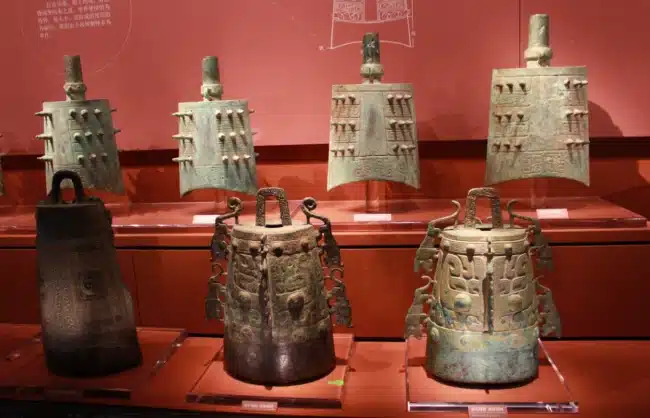
Explore Changsha's Hunan Museum with its 2,000-year-old Mawangdui tomb relics, then ride a high-speed train to Zhangjiajie for mist-cloaked Avatar-inspired sandstone pillars.
Han Dynasty Fun Facts
- Some of the traditional Chinese medical books from the Han dynasty are still used as references in today’s practice. For example, the six-meridian diagnostic framework and herbal prescriptions introduced in the Treatise on Cold Damage and Miscellaneous Diseasesby Zhang Zhong Jing still guide clinic treatment.
- The Han people’s belief in the “afterlife” explains why they established complicated rules of funerals and tombs. For imperial mausoleums in particular, they were usually designed as a duplicate of the imperial palaces, so that the emperors could continue their privileged life after their death.
- A sport similar to the current football/soccer had existed in the Han dynasty and was called “cuju”. It was initially designed to train soldiers in strength, endurance, and coordination.
- Emperor Wu was also a talented poet. His poem “The Lament of Falling Leaves and Cicadas” (luò yè āi chán qǔ) composed for his late wife, was adapted into an English verse by a contemporary American poet.
Roam the History of the Han Dynasty with China Xian Tour
Until today, the charm of the glorious Han dynasty can easily amaze those who see, hear, and feel it in person – you may see it when appreciating the delicate Han bronze vessels in the display windows, you may hear it when reading a melodious Yuefu poem, and you may feel it when writing on a piece of white paper. The dust of the collapsed Han Empire might have gone with the wind, but the radiance of the Han culture would never dim.
Join China Xian Tour today to roam the legacies of the Han dynasty! Our professional consultant and guide team will assist with a customized travel route tailored to your preferences. We are currently offering special China Tour Packages to make the most of your time and cost by combining multiple authentic experiences and worthwhile attractions.