
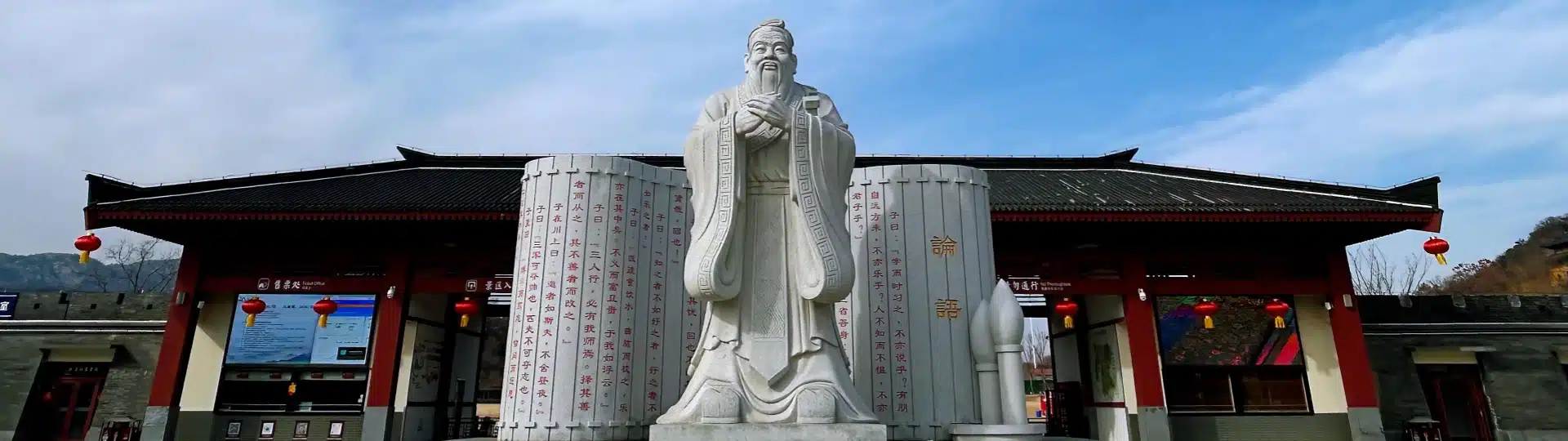
The Zhou Dynasty (pronunciation: “Joe”) (1046-256 BCE), was the longest dynasty in ancient Chinese history. As the significant foundation of Chinese culture, it was what the phrase “Hua Xia”, the Central Plains Han people’s sense of belonging, refers to.
In these 800 years, the idea of “Mandate of Heaven” guided the development of enfeoffment and a strict patriarchal clan system; and in the atmosphere of mature rites and music, classics like the Book of Songs and various philosophical Schools like Confucianism and Taoism flourished.
And this guide will include everything you might be interested in the Zhou dynasty- its timeline, political system, major accomplishments, and relevant tourist attractions where you can experience the rich legacies of its history.
Content Preview
- Zhou Dynasty Quick Facts Checklist
- Zhou Dynasty Timeline and Major Periods
- Zhou Dynasty Government and Political Structure
- Top Achievements of the Zhou Dynasty
- Where to Experience Zhou Dynasty History Today?
- Start Your China History Discovery with China Xian Tour
- FAQs about the Zhou Dynasty
Zhou Dynasty Quick Facts Checklist
Time Period: 1046-256 BCE
Phases: Western Zhou (1046-771 BCE) and Eastern Zhou (770-256 BCE)
- Beginning of the Western Zhou: King Zhou of Shang’s defeat in the Battle of Muye by King Wu of Zhou (1046 BCE)
- Western Zhou Capital City: Haojing (the present-day Xi’an, Shaanxi)
- End of the Western Zhou: Vassals’ execution of King You in Mount Li (771 BCE)
- Beginning of the Eastern Zhou: King Ping of Zhou’s eastward relocation of the capital city to Luoyi (the present-day Luoyang) (770BCE)
- End of the Eastern Zhou: King Nan of Zhou’s death (256 BCE)
The Historical Phases of the Eastern Zhou: The Spring and Autumn Period (770-476 BCE) and the Warring States Period (475-256 BCE)
- Key Characteristics of these Periods: the decentralization of the Zhou imperial family, the collapse of the enfeoffment system, the armed conflicts between the vassals & the gradual power strengthening of the vassal states
- Key Event during These Periods: A Hundred Schools of Thought Contend
Major Schools: Confucianism, Taoism, Legalism, and the Mohist School
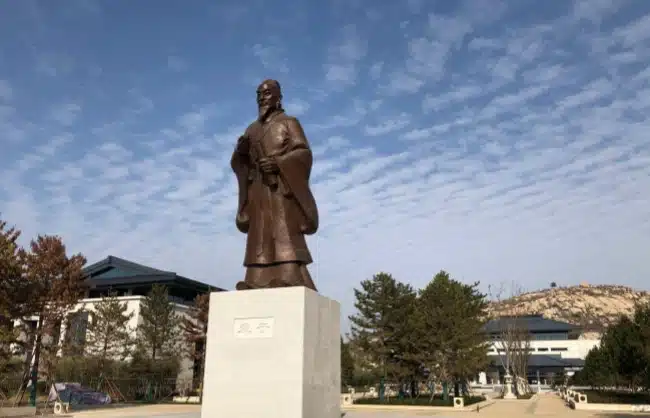
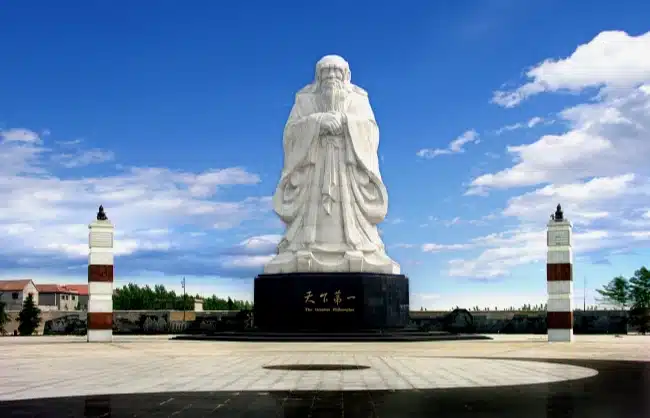
Key figures: Confucius, Mencius, Lao Zi, Han Fei Zi, Mo Di
Influential Idea: The Mandate of Heaven
Zhou Dynasty Timeline and Major Periods
Western Zhou Dynasty (1046–771 BCE) and Its Early Political Structure
In the late period of the Shang dynasty (1600-1046 BCE), King Wu of Zhou defeated the army of King Zhou of Shang in the Battle of Muye, and the Shang dynasty was annihilated. In 1046 BCE, King Wu established the Western Zhou in Haojing (the present-day Xi’an, Shaanxi).
To consolidate control over the state borders, King Wu implemented the enfeoffment system and patriarchal clan system. These two systems supported the hierarchy pyramid during the early stage of the Western Zhou, with the King of Zhou being the supreme authority.
In 771 BCE, King You of Zhou’s disinheritance of his legitimate heir violated the rule of the patriarchal system, provoked the dissatisfaction of the vassals, and brought about the vassals’ attack on the capital city, Haojing. King You was executed in Mount Li. The Western Zhou ended.
Eastern Zhou Dynasty (770–256 BCE)
King Ping of Zhou relocated the capital city to Luoyi (the present-day Luoyang) in 770 BCE with the support of several vassal states. The eastward move of the capital city marked the establishment of the Eastern Zhou.
In the first half of the Eastern Zhou, the conflicts across various vassal states aggravated and lasted for over 200 years, which was called the Spring and Autumn Period.
In the second half of the Eastern Zhou, the authority of King of Zhou gradually withered, and a new political situation dominated by mighty regional warlords was taking shape during the Warring States period.
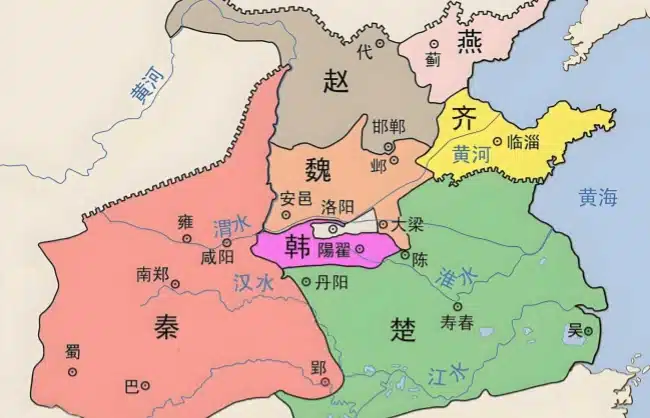
During the Warring States Period (475-256 BCE), the Zhou dynasty had split into two principalities. In 256 BCE, King Zhaoxiang of Qin launched an attack on the Han state and threatened King Nan of Zhou to surrender. King Nan’s death that year marked the end of the imperial clan of Zhou, and the Eastern Zhou ended.
Spring and Autumn Period
Two major characteristics of the Spring and Autumn Period were: the collapse of social order and rites, and the escalating conflicts between the vassals.
The vassal states waged frequent wars against one another over land, population, and control. The States of Qi, Jin, Qin, Chu, and Song, as the “Five Hegemons of the Spring and Autumn Period”, commanded the other vassal states with their capability of “upholding the King and repelling the foreign ethnic groups”.
Consequently, even the King of Zhou became dependent on the powerful vassals. Meanwhile, in the vassal states, the ministers gradually gained influence, and some of them even seized the main administrative power. By this point, the once solid hierarchical system had been perilously eroded.
Warring States Period
The Warring States Period was an era of dramatic upheaval, widespread fragmentation, and frequent warfare in ancient Chinese history.
The hundreds of small states were annexed into seven major powers – Qi, Chu, Yan, Han, Zhao, Wei, and Qin. A feudal bureaucracy gradually replaced the political system of a slave-owning aristocracy. The state power was progressively concentrated in the hands of the kings of the major states, which strengthened the centralization of imperial authority.
To survive the wars and conflicts, the states undertook thorough reforms, among which the most famous one was Shang Yang’s Reform in the Qin State. It abolished the feudal system, established a county system, and prioritized agriculture over commerce.
Zhou Dynasty Government and Political Structure
Role of the King and Nobility
“The Mandate of Heaven” remained the core idea that guided the relationship between the King of Zhou and the nobility.
Specifically, the King was revered as the Son of Heaven, whose authority and superiority in governing the affairs of the “world” were inherent, as the sole representative of God on earth.
For the nobility, their status and fate were seized by the King, who decided their actual sphere of influence.
Feudal System and Regional Lords – The Enfeoffment System
The enfeoffment system refers to a political system by which the vassals were rewarded authority over a particular part of the territory and the people living on the land by the King of Zhou. In return, the vassals were required to pay regular tributes and comply with their obligations as allies during wars.
The patriarchal clan system usually went hand in hand with the enfeoffment system.
Its core focused on the succession to the throne. As the name indicates, the throne would usually (ideally and solely) be passed down to the eldest son by the father, or to the younger brother/cousin by the elder one.
The primary purpose was to preserve the hereditary privileges of the Son of Heaven and maintain the internal order of the imperial family.
Administration and Law – Rites and Virtues
Apart from the two systems, the Zhou dynasty valued “rule by rites” and “rule by virtues”, which comprehensively covered political, social, and religious aspects of daily life. The central ideas were the harmony in the family and the supreme status of the King.
The prime minister of Zhou, Ji Dan, for example, advocated for promoting virtues and keeping caution in punishment. He believed that the rulers should always conduct strict self-discipline as a role model to raise the awareness of rites and virtues among the people.
Rites and virtues were also the two main criteria for assessing the officials’ deeds. For example, the Six Lian (Lian means honesty, one of the most important virtues) assessment was used to implement proper rewards or punishments.
Top Achievements of the Zhou Dynasty
Philosophical Flourishing
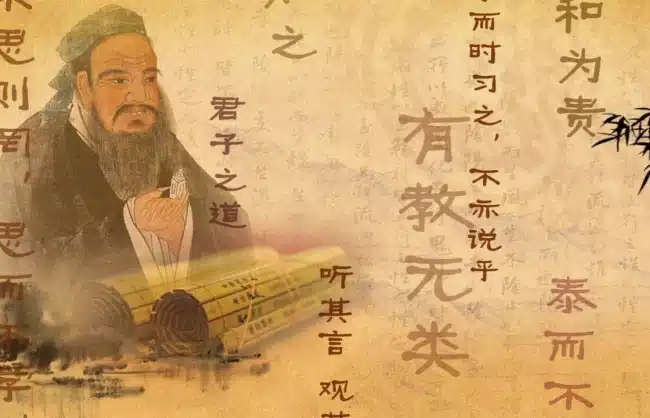
From around the 5th century BCE to the early years of the first century CE, the vigorous intellectual debate between emerging philosophical schools led to an unprecedented flourishing of thought. Some of them were quite renowned, and their thoughts remain influential even after millennia.
For example, Confucianism and Taoism were respectively represented by two major figures – Confucius and Laozi. The former advocated “benevolence,” “righteousness,” and “propriety”, while the latter suggested “going with the flow of nature”.
Other thoughts like “universal love” and “opposition to warfare” from the Mohist school, and “rule by law” from Legalism, also gained lots of support back then.
This intellectual movement shaped the Chinese national spirit and the core of Chinese civilization.
Technological Advancement: Iron Tools and Advanced Irrigation
The agricultural production during the Zhou dynasty took a leap forward, benefiting from the advanced iron tools and irrigation systems.
The Warring States had matured the iron-smelting technique and iron tools like plows, hoes, and spades were available in agricultural production. Those sharp and durable iron tools increased the efficiency of land clearing and cultivation.
Regarding the irrigation system, ditches in various sizes were built to channel rainwater collected in ponds or water from nearby rivers into the fields. With the widespread construction of storage facilities and reservoirs, large-scale water diversion and irrigation systems became available across the country.
A well 9 meters deep discovered in a Western Zhou relic site in Xi’an proves that even if there were no natural waterways nearby, the Zhou people might use well water for irrigation.
These developments transformed the fallow agricultural system at the early stage of the Zhou dynasty into an intensive cultivation mode.
The Fountain of Chinese Literature
The Zhou dynasty marked the first peak of literature in ancient Chinese history — an evolution from ritual texts and oracle bone inscriptions to written proses and poetry featuring rich forms and intense emotions.
First of all, The Book of Songs, with divided sections of “Feng”, “Ya”, and “Song”, became a model of realistic literature as China’s earliest anthology of poetry.
Then, there was a boom of historical prose like Zuo Zhuan, Guoyu, and Zhan Guo Ce, which held vivid storytelling, along with philosophical prose like Analects, Mencius, and Zhuangzi, which not only showed theoretical depth but were also famous for high artistic values.
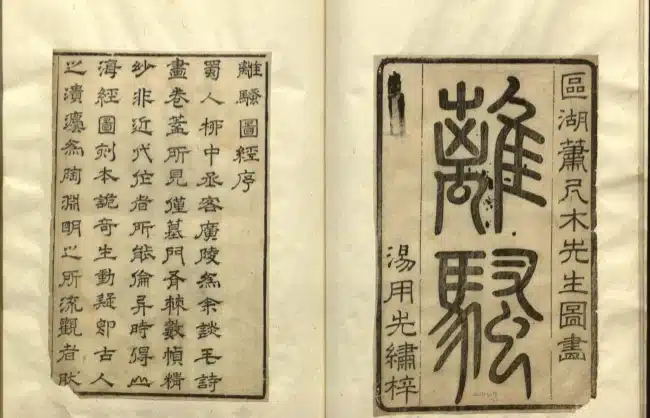
What’s more, Chu Ci, which emerged in the southern states during the Warring States period, was epitomized by the legendary work of Li Sao by Qu Yuan. And it ushered in the trend of traditional romantic literature.
Art and Bronze Work
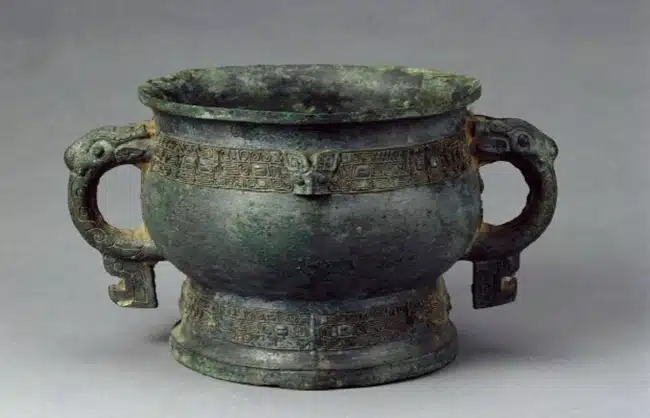
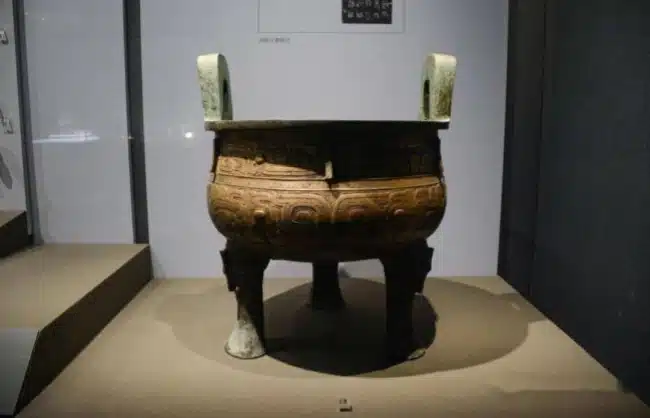
The most notable artistic accomplishments are reflected in its bronze, jade, and lacquerware crafts, expressing a transformation from god worship to human-centered belief.
While retaining the style of the Shang dynasty bronze, the Western Zhou emphasized inscriptions, sturdy vessel forms, like tripods and bells, and standardized decorative patterns. During the Spring and Autumn period, the decorative motifs shifted from complex animal-face patterns to intricate, abstract designs featuring coiled dragons and serpents carved in fluid lines.
Additionally, motifs depicting scenes from daily life – such as hunting and feasting– became common themes in a more realistic and graceful style.
Jade artifacts of the Zhou dynasty reached their pinnacle in ceremonial function – they served as symbols of rank and status both for the living (a nobleman’s virtue was compared to jade) and the dead (jade was used to shroud the deceased). In the Eastern Zhou dynasty, the forms evolved from simple shapes of the early period to exquisite, refined patterns.
Moreover, lacquerware craftsmanship flourished, with black and red being the predominant colors and the decorative patterns characterized by their lively and varied styles.
Inventions from the Zhou Dynasty
The Zhou dynasty (especially during the Spring and Autumn period) was a rudimentary stage of scientific development in ancient China. A variety of inventions largely enriched the Zhou people’s daily life.
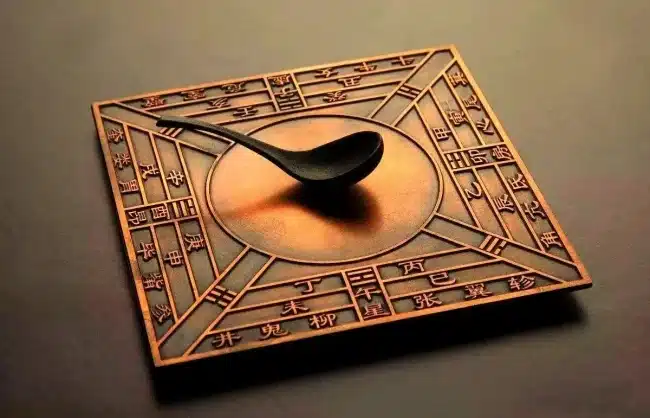
For example, in the Warring States period, the Zhou people would polish a natural magnet into the shape of a spoon and place it on a bronze tray, with the handle pointing south. This was named “Si Nan”, which was the most primitive prototype of the contemporary compass.
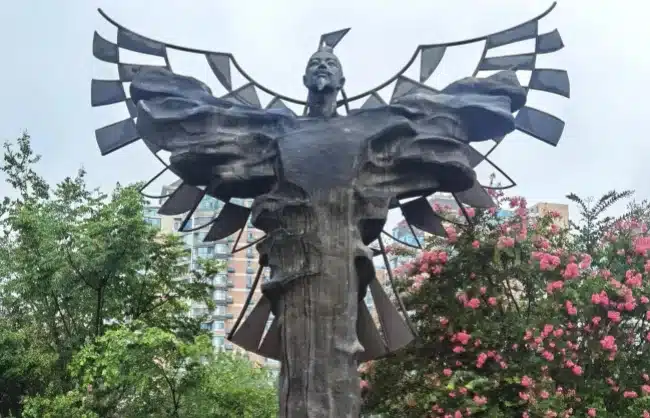
Another example is the invention of the kite. It was believed that the famous craftsman Lu Ban built a “wooden kite” in the Spring and Autumn period. It was a bird-shaped flying device made of wood. Legend also has it that the Mohist scholar even used the device to gather intelligence on the enemy.
Zhou Dynasty Trade and Currency
In the Western Zhou period, artisans and merchants were centrally managed and assigned by the government to serve the aristocracy. Specifically, an official position called “Guanshi” was responsible for administering commerce. Therefore, commerce was characterized by a strong state monopoly.
Following the expansion of trade, copper coins (known as the Ant-nose Money) were created to replace material currencies like shells, jewels, and silk. Benefiting from the collapse of the enfeoffment system, freelance merchants emerged, and urban commerce turned unprecedentedly prosperous. Cities like Linzi and Luoyang stood out as the trade centers.
Where to Experience Zhou Dynasty History Today?
Major Museums
- Shaanxi History Museum: The Shaanxi History Museum displays legacies that record almost a 1000-year history after the Western Zhou originated from Mount Qi and settled in Xi’an, its capital city. Key Zhou Dynasty-related exhibits include the Yu Ding (features inscriptions detailing the Zhou King’s sacrificial rites and investitures), and Duo You Ding.
- Shanghai Museum: One of the major sectors of the Shanghai Museum is the ancient Chinese bronze gallery, which preserves exquisite bronze crafts from the Zhou dynasty. The core treasure is known as Da Ke Ding – the inscription on it records the King’s rewards to Ke and his patriarchal family.
Recommended tour

Explore Shanghai's Bund, Yuyuan Garden, and Jade Buddha Temple before flying to Xian for the Terracotta Warriors, City Wall, and Shaanxi History Museum.
Archaeological Sites & Ancient Capitals
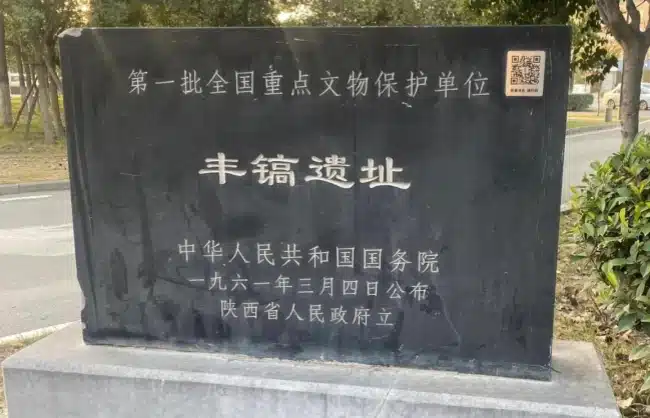
Feng Hao-Western Zhou Relics
Feng Hao is a collective name for Haojing and Fengjing. It rests in Xi’an, Shaanxi, and occupies 9.2 square kilometers in area. It was where the capital city of the Western Zhou was located. Interestingly, Feng Hao was believed to be one of the earliest cities in ancient China.
As the political and cultural center of the Western Zhou, the site has yielded a wealth of rammed-earth structures, roads, drainage systems, and high-status tombs.
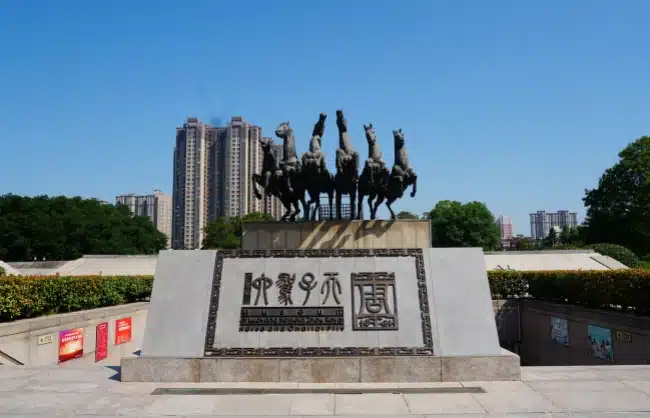
Luoyang–Eastern Zhou Heritage
Luoyang, Henan province, used to be the starting point and the capital city of the Eastern Zhou. A key area to explore Zhou culture would be the Zhou Wangcheng Square.
In one of the chariot and horse pits in the Square, a highest-ranking “Emperor’s Six-Horse Chariot” was excavated. It directly confirms the description of ceremonial regulations for the Emperor’s processions in The Rites of Zhou and was praised as a treasure of the Eastern Zhou Dynasty.
Recommended tour
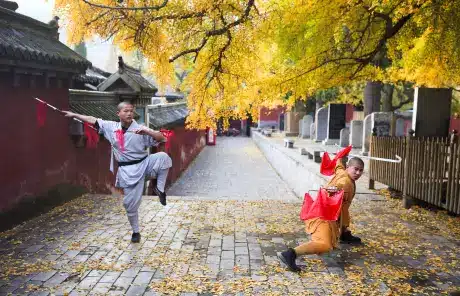
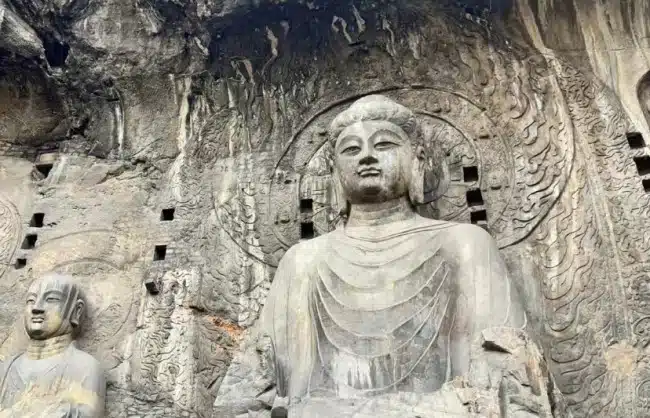
Journey through China's ancient heartland visiting UNESCO sites including Yin Ruins, Shaolin Temple, and Longmen Grottoes across Zhengzhou, Kaifeng, Dengfeng and Luoyang.
Start Your China History Discovery with China Xian Tour
Though the Zhou dynasty was always combined with the Shang dynasty when discussing ancient China’s timeline, we now know that Zhou is never a simple substitution of Shang. It was an era full of conflicts and wars, as well as wisdom, creation, and art. It is the complicated mixture that makes this long history charming and absorbing.
If you are interested in the Zhou dynasty or generally Chinese history, traveling with China Xian Tour would be a wonderful choice. Located in Xi’an, the capital city of the Western Zhou and the other twelve dynasties, we have a team of professional consultants and guides, who are always ready to introduce you to rich history and culture.
FAQs about the Zhou Dynasty
What religion did the Zhou Dynasty practice?
The religious beliefs of the Zhou dynasty centered on the concept of the unity of heaven and humanity, along with a cosmological worldview. The exploration of the dialectical relationship between heaven and earth and the concept of “the Mandate of Heaven” served as the main instruments to regulate social order and establish ethical and moral standards.
Why did the Zhou dynasty fall?
Relying on the continuously strengthened national power through Shang Yang’s Reform, the Qin State expanded its territory and influence through military expansion. In 256 BCE, the Qin army besieged Luoyi, the capital city of the Eastern Zhou.
Later in 249 BCE, King Zhuangxiang of Qin annihilated the remaining force of the Eastern Zhou Principality, and the last bit of the Zhou imperial bloodline was eliminated.
What are the key differences between the Zhou and Shang Dynasties?
The transition from the Shang dynasty to the Zhou dynasty was far beyond a mere dynasty shift – it carries a deep and thorough “revolution” of Chinese civilization.
Compared to the Shang’s city-state pattern of rule and agriculture-oriented economy mode, the Zhou dynasty saw the value in land. Its territorial expansion paved the way for effective ethnic cohesion and the unification of a great empire.
As mentioned earlier, the Shang dynasty was instilled with the convention of god worship in both religious practices and everyday life. In comparison, the Zhou dynasty had placed more attention on humanity and morality. It was a huge step from superstition to reason.
Meanwhile, moving beyond the slavery system, the Zhou dynasty established strict ritual and moral standards, as well as the political system centering ancestry and bloodline.