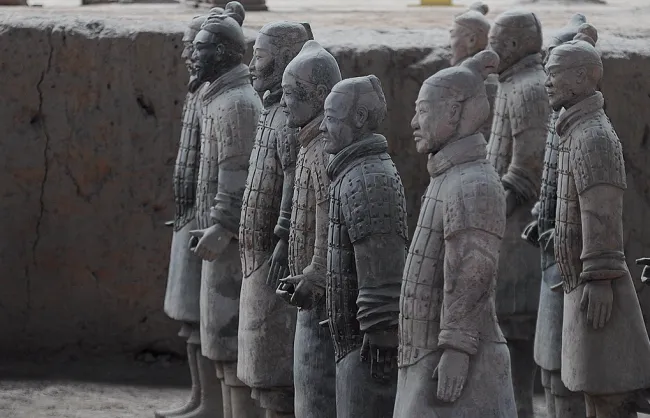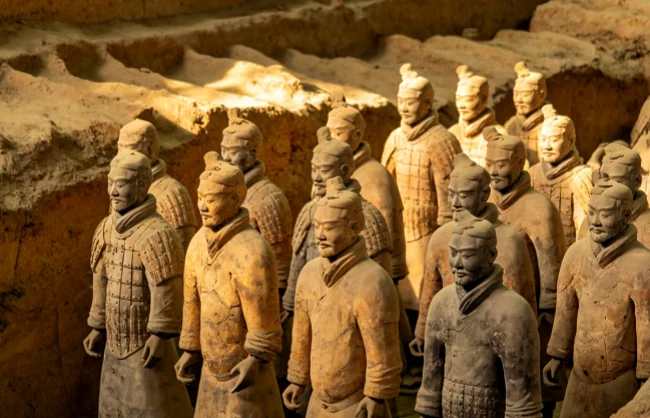
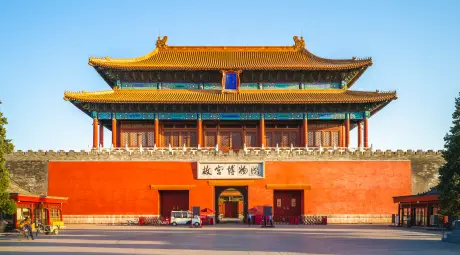

Xi’an is an ancient capital of China with a history of over 3,000 years. Most famously, it is the discovery site of the Terracotta Army, often called the “eighth wonder of the world” for its historical significance and astonishing scale. Later in Western Han Dynasty, the city became the starting point of the Silk Road that prompted economic and cultural exchange across the Eurasian continent for centuries afterwards.
Today, Xi’an is one of the best cities to visit in China for its rich history and regional culture. It is an iconic destination especially for visiting China for the first time. Together with Beijing and Shanghai, it is part of the China Golden Triangle for travelers who wish to get to know the essence of the country.
This article is your complete guide to Xi’an attractions including the top 10 must-see attractions for first-time visitors, historical, cultural, and natural attractions.
Content Preview
- Why Visit Xi’an –Charm of the Ancient Capital
- Top 10 Must-See Attractions in Xi’an for First-Time Visitors
- Historical Attractions in Xi’an
- Cultural Attractions in Xi’an
- Natural Attractions in and nearby Xi’an
- Xi’an Nightlife
- Bonus Experiences and Hidden Gems in Xi’an
- Practical Tips for Visiting Xi’an Attractions
- FAQs about Visiting Xi’an
- Plan your Xi’an Vacation with China Xian Tour
Why Visit Xi’an –Charm of the Ancient Capital
Xi’an has been an important city in Chinese history. It had been the capital city of 13 dynasties for over 1,000 years. During the Tang Dynasty, it was the largest city in the world. Today, it remains a cultural hub of China with lots of significant historical sites. There are many famous tourist attractions in Xian, a mix of ancient wonders like the Terracotta Army, cultural destinations like the Muslim Quarter, and natural sights including Huashan Mountain.

Top 10 Must-See Attractions in Xi’an for First-Time Visitors
1. Terracotta Army (Terracotta Warriors and Horses Museum)
- Address: Qinling North Road, Lintong District
- Tickets: CNY 120 during off season (Dec. 1 – Feb. 28), CNY 150 during peak season (Mar. 1 – Nov. 30)
- Opening hours: 8:30-17:00 during peak season; 8:30-16:30 during off season
- Best for: history lovers, culture lovers, first-time visitors, families with kids
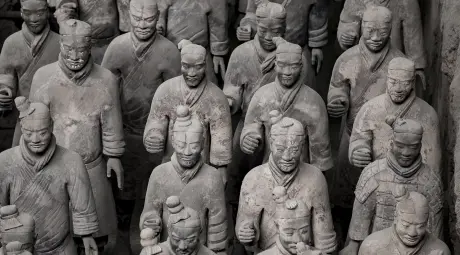
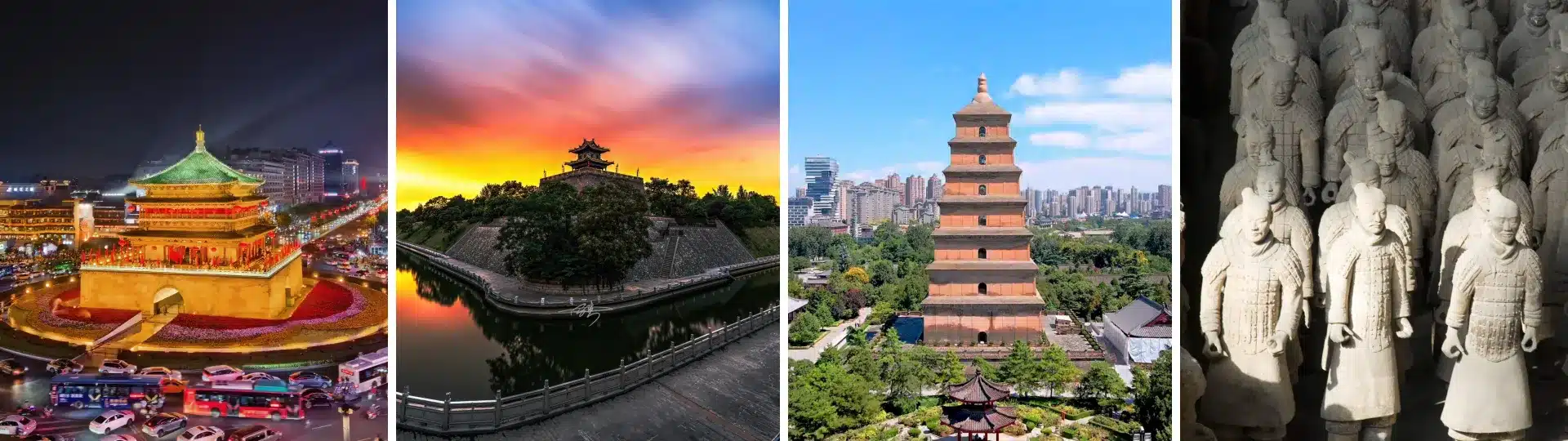
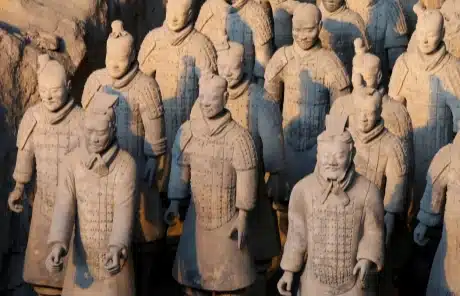
The Terracotta Warriors and Horses Museum is hands down the best place to visit in Xi’an. It is one of the great archaeological discoveries in the 20th century and often referred to as the “eighth wonder of the world.” It is an important part of the Mausoleum of Emperor Qin Shi Huang, an army made of clay to guard his resting place. UNESCO recognizes it as a World Cultural Heritage Site for its historical significance and magnificent craftmanship.
The museum was constructed upon the actual discovery site of the Terracotta Warriors. With an area of over 20, 000 square meters (5 acres), there are currently four main exhibition areas, excavation Pit No. 1, 2, 3, and the Exhibition Hall of the Bronze Chariots. On a Terracotta Army tour, you will witness thousands of life-sized clay soldiers, horses, and chariots placed in battle positions along with all kinds of Qin Dynasty weapons.
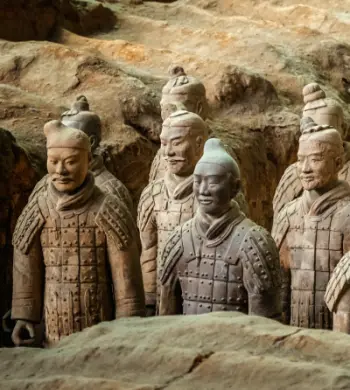
The sheer size of the site and the army are enough to leave you in awe. You will be even more impressed once you observe the details in the sculpting. Each soldier is positioned differently with different equipment and facial expressions. Apart from learning about the history behind the Terracotta Army and the Qin Dynasty, you can even join a terracotta crafts class to make a figurine of your own.
Recommended Xi’an Tour with the Terracotta Army
At the appointed time in the morning, our English-speaking guide and Chinese driver will pick you up from the hotel in the center of Xi'an and drive for one hour to the Terracotta Warriors and Horses.
2. Ancient City Wall of Xi’an
- Address: across Xi’an city center
- Tickets: CNY 54
- Opening hours: Yongning Gate (Xian City Wall South Gate): 08:00-22:00, Zhongshan Gate: 08:00-21:00, Changle Gate (East Gate), Anding Gate (West Gate), Anyuan Gate (North Gate), Wenchang Gate: 8:00-18:00
- Best for: history and cultural lovers
Visiting the Xi’an City Wall is another one of the top things to do in Xi’an. The walls were built in the ancient times as a military defense system. It is now the largest, oldest, best-preserved, and most complete city wall structure in China. There are still ancient installations like the moat, drawbridges, gate towers, arrow towers, and turrets that you can see.
Apart from the main structures, there are four major gates that you can visit, Changle Gate (East Gate), Yongning Gate (South Gate), Anding Gate (West Gate), and Anyuan Gate (North Gate). A popular sightseeing activity to do on the wall is cycling. You can find rental stations at any of the four gates and go on exploring at your own pace.
Recommended Xi’an Tour with the Ancient City Wall

Discover the awe-inspiring Terracotta Warriors and cycle along China's best-preserved ancient City Wall, then explore the hidden Great Mosque tucked within the bustling Muslim Quarter.
3. Big Wild Goose Pagoda
- Address: Yanta Road, Da Ci’en Temple, Yanta District
- Tickets: CNY 50 for Da Ci’en Temple; extra CNY 30 for entering the pagoda
- Opening hours: 08:00-17:30 during peak season, 08:00-17:00 during off season
- Best for: culture lovers, visitors interested in Buddhism or the local region
The Big Wild Goose Pagoda is a landmark of Xi’an. It is representative of the city’s Buddhist history and influences. Situated within Da Ci’en Temple, the pagoda is a symbol of Tang Dynasty Buddhist architecture and its time of prosperity.
With a history of over 1,350 years, it was constructed under the proposal of Master Xuanzang, a famous monk of the Tang Dynasty. He had returned from his pilgrimage to ancient India, the origin place of Buddhism, with a large volume of scriptures. His journey and work on translating these scriptures made significant contribution to the religious and cultural exchange between China and India. The pagoda was built to store the scriptures and statues.
The Big Wild Goose Pagoda is now a famous Xi’an attraction where you can learn about this particular part of Chinese history. You can climb the tower for a gorgeous view of the city. On the north square, there are amazing evening fountain shows each day with the pagoda in the background. The Great Tang All Day Mall is also nearby. Our Xi’an travel guide has more information on planning a Xi’an itinerary.
Recommended Xi’an Tour with the Big Wild Goose Pagoda

Capture the essence of Xi'an in two days — stand before the vast Terracotta Army, cycle the ancient City Wall, explore the unique Great Mosque, and taste the Muslim Quarter's famous street food.
4. Small Wild Goose Pagoda & Xi’an Museum
- Address:72 Youyi West Road, Beilin District
- Tickets: free entrance, CNY 30 for entering the pagoda
- Opening hours: 9:00-18:00 (Mar. 15 to Oct. 30), 9:00-17:30 (November to Mar. 14)
- Best for: history and culture lovers, museum fans
The Small Wild Goose Pagoda is part of the Xi’an Museum garden complex. Compared to Big Wild Goose Pagoda, it is smaller in size and built slightly later in history also in Tang Dynasty. It was built for similar purposes to store Buddhist scriptures brought back by another monk. The pagoda is considered the most iconic cultural relic of Xi’an Museum.
Xi’an Museum may not be as popular as Shaanxi History Museum but is also a Xi’an attraction worth visiting. In comparison, it focuses more on telling the story of Xi’an as an ancient capital of China as opposed to the history of the region. It has a large number of cultural and historical relics that are well displayed. You will find it less crowded than the larger provincial museum.
Recommended Xi’an Tour with the Small Wild Goose Pagoda and Xi’an Museum

Marvel at the Terracotta Army, bike atop the ancient City Wall, visit the Great Mosque, and photograph the Small Wild Goose Pagoda landmark.
5. Bell Tower and Drum Tower
- Address: intersection of East Street and West Street, Beilin District
- Tickets: CNY 30 for either and CNY 50 for entrance to both
- Opening hours: 8:30-21:30 in peak season (Jan. 1 to Oct. 10), 8:30-18:00 in off season (Oct. 11 to Dec. 31)
- Best for: history lovers, first-time visitors, photographers
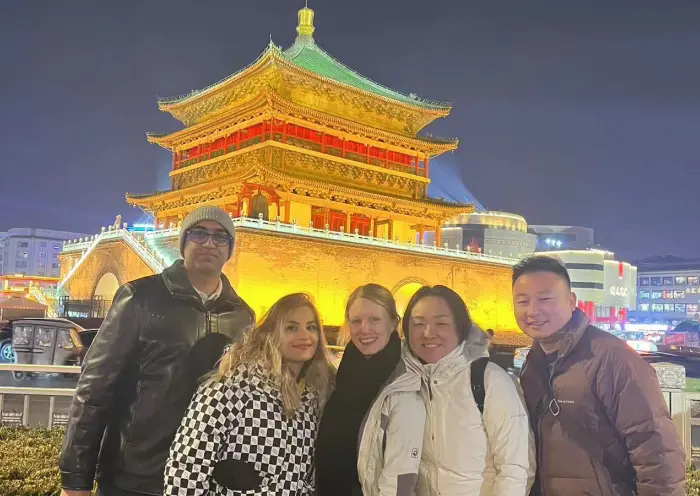
The Bell Tower and Drum Tower are two of the most iconic tourist attractions in Xi’an. Located in the city center, these ancient structures have been incorporated perfectly into the modern-day Xi’an. The area is now one of the busiest commercial districts at night close to the Muslim Quarter. It’s an incredible sight to see as the colorful lights come up and the ancient structures light up the city.
Both the Bell Tower and Drum Tower were built during Ming Dynasty close to each other. They originally served to announce the hours. At that time, the sound of the bell and drum could reach entire city of Xi’an. Since then, a local saying goes “bell at dawn and drum at dusk.” A fun fact is that the drum of the Drum Tower is listed in the Guinness World Records as the heaviest drum in the world.
Recommended Xi’an Tour with the Bell Tower and Drum Tower

Hit Xi'an's holy trinity in one perfect day — the awe-inspiring Terracotta Warriors, a bicycle ride atop the ancient City Wall, and a food crawl through the Muslim Quarter.
6. Muslim Quarter & Great Mosque of Xi’an
- Address: Beilin District
- Tickets: CNY 25 during peak season (March to November) and CNY 15 during off season (December to February) for the Great Mosque
- Opening hours: 8:00-21:00 for the Great Mosque
- Best for: culture lovers, visitors interested in the local religious life, food lovers
The Muslim Quarter is the best place to experience the multi-cultural life and vibrant everyday scene of Xi’an. The Muslim community is located just behind the Bell Tower and Drum Tower in the center of Xi’an city. The area is most famous for its vibrant market scene selling all kinds of traditional foods like Roujiamo, Biangbiang noodles, and Liangpi. You should definitely visit this Xi’an attraction if you’re into Chinese food.
Other than its culinary experience, the Muslim Quarter also showcases the fusion of Chinese and Islamic architecture style. The Great Mosque is an excellent example. It is one of the four largest mosques in China as well as the largest in Xi’an, and its architectural style integrates both traditional Chinese and Islamic elements. You can stop by it when you’re at the Muslim Quarter and observe the local religious life.
Recommended Xi’an Tour with the Muslim Quarter

Explore Xi'an's illuminated heart on this evening walking tour through the Bell Tower area and the bustling Muslim Quarter, where street food sizzles and ancient architecture glows.
7. Shaanxi History Museum
- Address: No. 91, Xiaozhai East Road, Yanta District
- Tickets: free for the main exhibition
- Opening hours: 8:30-18:00 for Mar. 15 to Nov. 14, 9:00-17:30 for Nov. 15 to Mar. 14
- Best for: history and museum lovers, families with kids
Shaanxi History Museum is the first large-scaled modern national museum in China. Its significance is consistent with what it has to offer. In its collection, over 1.7 million artifacts spanning over a million years tell the history of the region, how the early civilization of Shaanxi built this beautiful city that we know today. Shaanxi History Museum is a must-visit destination on your Xi’an tour.
There are three main exhibition halls that you can visit for free. They take you from the early human civilization in Shaanxi about 1.63 million years ago to Qin Dynasty, time of the Terracotta Warriors, Han Dynasty when the Silk Road emerged to Tang Dynasty when the city of Xi’an saw its peak prosperity.
Besides, there are two special exhibition halls that are definitely worth your money and time, the Grand Tang Treasure Exhibition Hall (for CNY 30) and the Tang Dynasty Mural Masterpieces Exhibition Hall (for CNY 270).
Recommended Xi’an Tour with Shaanxi History Museum

Discover Xian's authentic local life alongside iconic sites like Terracotta Warriors and thrilling Mount Huashan hikes.
8. Huaqing Palace (Huaqing Hot Springs)
- Address: 38 North Huqing Road, Lintong District
- Tickets: CNY 120
- Opening hours: 7:30-18:00
- Best for: culture and history lovers
The ruins of Huaqing Palace and surrounding hot spring pools were another significant historical discovery in Xi’an. The palace was an important landmark in Tang Dynasty although its construction began in as early as Western Zhou Dynasty, over 3,000 years ago. The Huaqing Hot Springs are famously associated with a woeful love story in Chinese history.
The Tang emperor Xuanzong frequented the palace with his beloved consort Yang Guifei, one of the renowned Four Beauties of ancient China. They spent a lot of time together at this resort until the two were forced apart by Yang’s death. The emperor had to order her death himself as a result of An Lushan Rebellion, its political complications that involved the Yang family. The tale was immortalized by Bai Juyi’s poem “The Song of Everlasting Sorrow.”
If you visit the palace in the evening, you can watch the cultural performance “The Song of Everlasting Sorrow” that reenacts the famous story.
Recommended Xi’an Tour with Huaqing Palace

Our tour guide and driver will pick you up from your downtown hotel at 8:00 am – 9:00 am. The tour will start with a short visit to Terracotta Figures Factory, where the ancient art of crafting t...
9. Mount Huashan
- Address: Huashan Town, Huayin City, Weinan City
- Tickets: CNY 160 from March to November, CNY 100 from December to February
- Opening hours: 8:00-15:00
- Best for: nature lovers, outdoor adventurers, hikers, photographers
Mount Huashan is one of the most famous mountains in China and one of the Five Sacred Mountains. It’s a holy land of Taoism with lots of temples. Historically, more than 100 emperors visited Mt. Huashan to worship the deities, adding to its cultural significance. It is also renowned for being the most dangerous mountain in the world. Its thrilling cliff walks attract many outdoor adventurers who come here for a challenge.
The most dangerous part of the hike, the cliff-side plank walk is literally a 30-cm-wide (12 inches) wooden plank on the side of a cliff over the bottomless abyss. You will have to wear a safety harness which hooks you to the iron chains on the cliff wall. There are several other sections that are equally challenging.
However, the views are absolutely stunning. Of course, you can choose to go on other hiking routes that don’t include these sections, or you can simply get around by cable car.
Recommended Xi’an Tour with Mount Huashan

Tackle Mount Huashan, China's most thrilling mountain, where sheer granite cliffs and near-vertical plank paths challenge even the most adventurous hikers.
10. Forest of Stone Steles Museum
- Address: No.15 Sanxue Street, Beilin District
- Tickets: CNY 65 in peak season (March–November), CNY 50 in off season (December–February)
- Opening hours: 8:00-18:30 in peak season, 8:00-18:00 in off season
- Best for: Chinese culture lovers, visitors who are interested in Chinese calligraphy
Xian Forest of Stone Steles was founded in Northern Song Dynasty (960-1127 AD) making it the oldest museum in China. It was later relocated to where it is today in Xi’an, constructed upon the architectural complex of Confucius Temple. It has a massive collection of more than 11,000 calligraphy steles and stone carvings, many by famous artists in Chinese history.
Historical Attractions in Xi’an
Banpo Museum
Banpo Museum was built on the discovery site of the largest and best-preserved Neolithic village ruins in China. The village was a matriarchal society of Yangshao Culture dating back to 6,000 to 7,000 years ago. Its discovery gave us valuable insights to the agricultural life, pottery, social life, and burial customs of the Neolithic Age in northern China. It’s an excellent destination for your Xi’an history tour if you’re interested in early human civilization.
Recommended Xi’an Tour with Banpo Museum

Your day begins with a prompt 9:00 AM pick-up from your downtown hotel by our local guide and experienced driver.
Mausoleum of the First Qin Emperor
Mausoleum of the First Qin Emperor is the tomb of Qin Shi Huang. It is one of the largest imperial tombs in the world, and its central mausoleum still remains unexcavated. It’s recommended that you visit it as part of your Terracotta Army tour to get a better sense of the emperor and the historical period.
You can visit the Bronze Chariots and Horses Museum at the mausoleum which preserves relics uncovered at the archaeological site. Burial Pit No. 9901, unlike the Terracotta Army that serves to guard the emperor’s resting place, is known as the Pit of the Hundred Entertainers. The clay figurines make up the entertainment troupe for the emperor in afterlife, including musicians and dancers.
Yangling Mausoleum of Han Dynasty
Yangling Mausoleum of Han Dynasty is another impressive Xi’an attraction you should visit. It belongs to Emperor Jing (188 BC-141 BC), the fourth emperor of the Western Han Dynasty, and his wife, Empress Wang. The mausoleum is of immense scale. 81 burial pits have been found with 10,000 accompanying tombs of high officials at the time.
This archaeological discovery is known for shedding light on burial customs of the Han Dynasty. You can visit its four permanent exhibitions to see over 10,000 artifacts excavated from the burial pits. The pottery figures are the most intriguing, bearing a resemblance to the Terracotta Warriors of Qin Dynasty.
Maoling Mausoleum
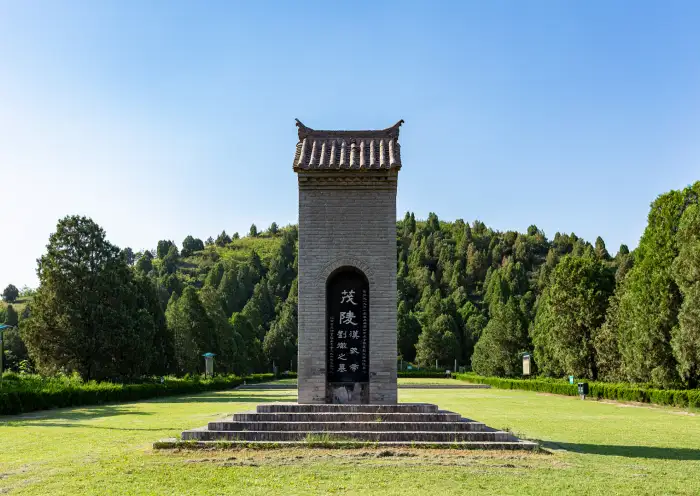
Maoling Mausoleum belongs to Emperor Wu of Han Dynasty, whose reign was monumental to the development of China. It is the largest of all imperial Han mausoleums with the most valuable burial artifacts. You can learn about that period of Chinese history and witness the treasures excavated at the site.
Qianling Mausoleum
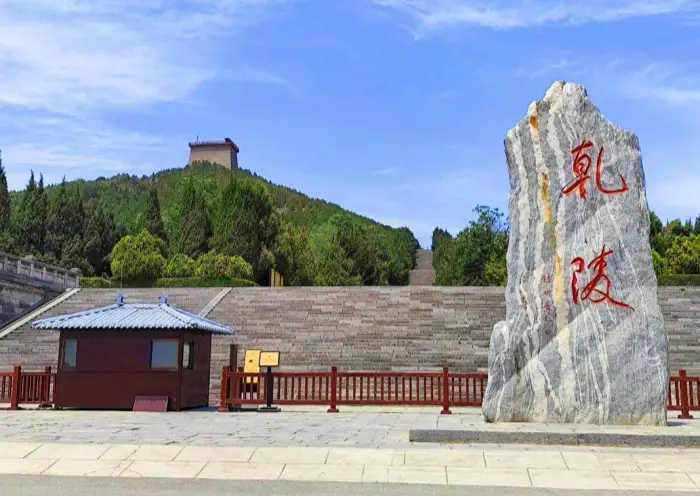
Qianling Mausoleum is another significant imperial burial site in Xi’an. It is the co-burial site of the Tang Emperor Gaozong and his queen Empress Wuzetian, who after the death of the emperor, became the only female emperor in Chinese history. Qianling Mausoleum is the only imperial tomb in China housing both a husband and wife.
It’s a great tourist attraction in Xi’an to visit if you’re interested in this part of the imperial history. The giant stone steles of the Emperor and Empress is an interesting highlight. The emperor’s stele contains a carving of an epitaph while Wuzetian’s stele is famously left blank by herself. She supposedly left a will saying that “Merits and achievements or not, let the latecomers make their comments.”
Mausoleum of Princess Yong Tai
Mausoleum of Princess Yong Tai is one of the 17 accompanying tombs of Qianling Mausoleum. It is the resting place of the seventh daughter of Emperor Zhongzong. The ticket for this site is included in the one for Qianling Mausoleum, so you should definitely stop by it to see the murals and the stone sarcophagus during your visit.
Tomb of Prince Yide
Tomb of Prince Yide belongs to the Qianling Mausoleum burial complex. The owner of the tomb is Prince Yide, the first son of Emperor Zhongzong and brother of Princess Yong Tai. Similarly, you don’t have to pay separate for its entrance. And you’ll find beautiful murals depicting court life in Tang Dynasty.
Zhaoling Mausoleum of Tang Dynasty
Zhaoling Mausoleum of Tang Dynasty is the burial site of Emperor Taizong and his empress Wende. It is known for being one of the most extensive imperial mausoleums in Chinese history covering about 20 square kilometers with over 180 accompanying tombs. However, only several of them are open to the public, and you will have to pay separate to visit each attraction within the mausoleum.
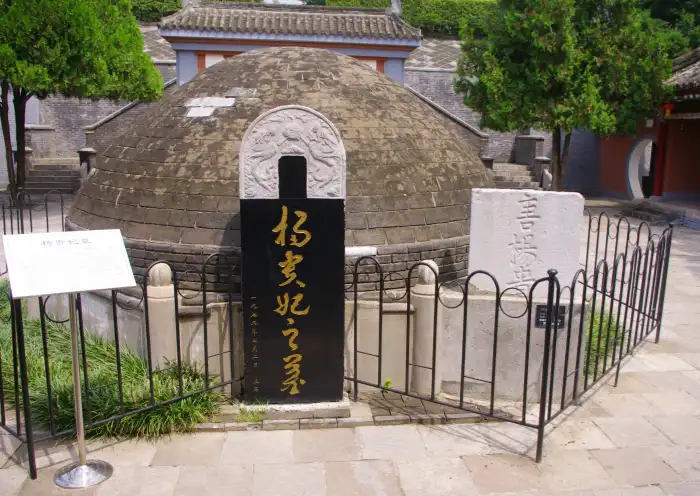
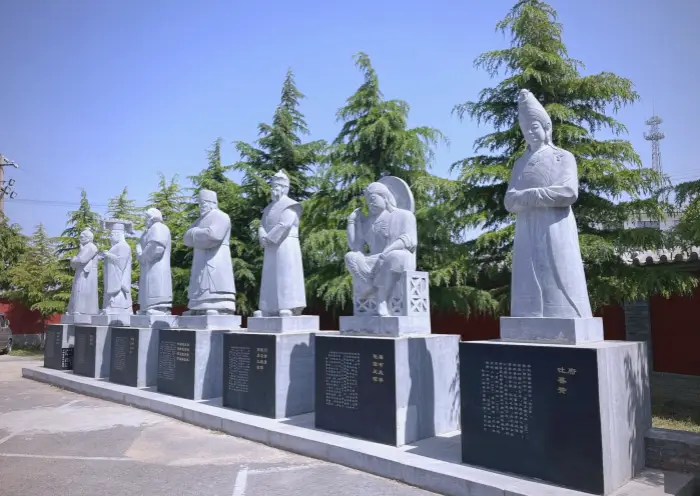
Tomb of Yang Guifei
Yang Guifei, as mentioned before in the story behind Huaqing Palace, was the beloved consort of The Tang emperor Xuanzong. If you want to learn more about her, you should visit Yang Guifei Tomb. You should note that this tomb complex will not be as extensive in scale compared to some of the other mausoleums mentioned before.
Qiaoling Mausoleum
Qiaoling Mausoleum is the tomb of Tang Emperor Ruizong. He was the 8th son of Emperor Gaozong and Wuzetian. It is much larger and magnificent than Qianling mausoleum because it was constructed during a more prosperous period.
Mausoleum of the Yellow Emperor
Mausoleum of the Yellow Emperor, or Huangdi Mausoleum, is the alleged burial site of the Yellow Emperor Xuanyuan, the earliest ancestor of the Chinese people. He is a legendary, mythical figure, so the mausoleum is a memorial and worshipping site instead of an actual burial place. It is a significant cultural site to learn about one of the most ancient and fundamental beliefs of the Chinese civilization.
Recommended Xi’an History Tours:
- 2 Days Xian Exploration Tour
- 3 Days Xian Private Trip: History Exploration & Tang Costume Experience
Cultural Attractions in Xi’an
Daming Palace
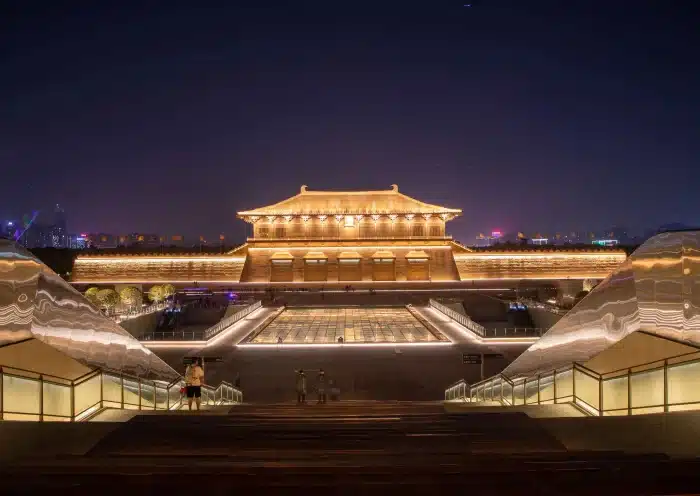
Daming Palace was the imperial palace of Tang Dynasty. Its unparalleled size and architectural style astonished historians and archaeologists. It used to serve as a venue for foreign visits and exchanges. However, only ruins remain today, and partial reconstruction has been done according to its original style. You can visit Daming Palace Museum which now houses many relics uncovered at the site.
Qinglong Temple
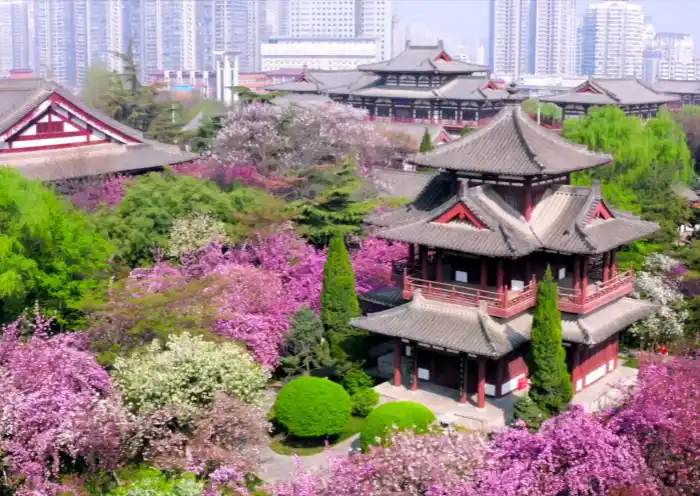
Qinglong Temple is significant for being a place where cultural and religious exchanges took place in history, founded over 1,400 years ago. It is a large architectural complex with a range of ancient structures that you can tour. The temple is the most beautiful in spring when hundreds of cherry blossoms are in full bloom.
Xi’an Huxian County
Huxian County near Xian is famous across the country for being the origin place of Huxian Peasant Paintings. It’s a traditional form of folk art created by farmers of Huxian County that usually depict countryside villages and the daily agricultural life. The art was promoted by national cultural construction program and became known nation wide as the embodiment of traditional Chinese values.
If you’re interested in Chinese folk culture or traditional art, you should definitely make a day trip from Xi’an to see peasant painting exhibitions. You can also learn about paper cutting, watch local performances, and even visit a local family.
Daxingshan Buddhist Temple
Daxingshan Buddhist Temple is a busy but serene place of worship situated in the middle of Xi’an city center, close to the City Wall. It is one of Xian’s oldest temples originally constructed from 265 AD to 289 AD. Since then, it has held a high status in the city throughout history as Buddhism flourished in China. You should definitely visit this Xi’an attraction if you’re interested in Chinese Buddhism or if you simply want to witness the city’s religious scene.
Temple of the Eight Immortals
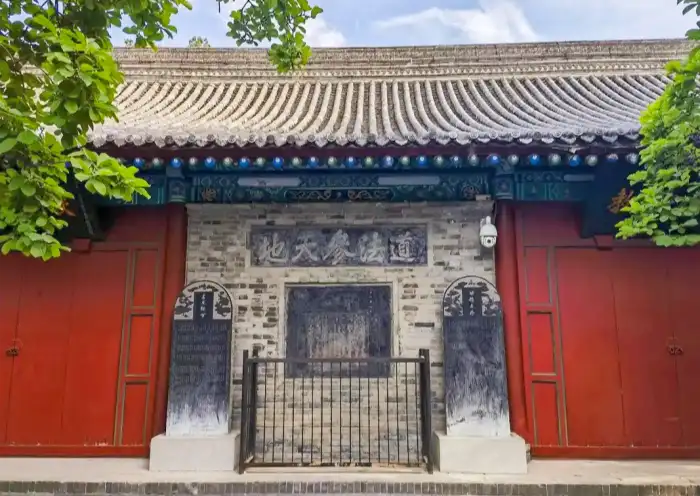
Temple of the Eight Immortals, or Baxianan Taoist Temple, is the most well-preserved Taoist temple in Xi’an. It was first established in Song Dynasty and has been a popular place of worship for locals. Every first and fifteenth day of each lunar month, a temple fair is held for visitors and worshippers. You can also visit the street markets at the temple that sell small craft items or souvenirs.
Gu Guanyin Buddhist Temple
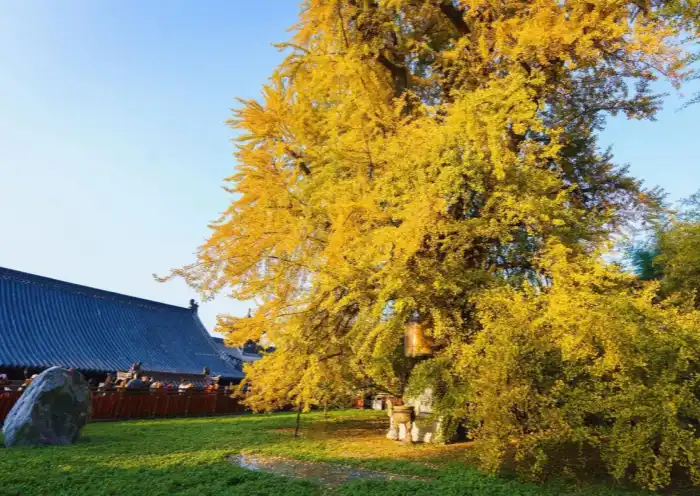
Gu Guanyin Buddhist Temple is a beautiful temple that sits in the Zhongnan Mountains. Compared to the religious sites in the city, it is a lot quieter with a beautiful mountain scenery. In the middle of its spacious courtyard is a huge ginkgo tree over 1,400 years old. It is believed to be planted by the Tang Emperor Taizong himself. The temple is the most beautiful in late autumn when the tree creates a golden shower with its leaves blanketing the stone-paved grounds.
Yuanjiacun Village
Yuanjia Village is about an hour drive from Xi’an. It is known as one of the ten most beautiful villages in China for its idyllic sceneries and traditional folk culture. It’s a popular Xi’an food tour destination because you can taste many different local snacks made by locals with the most authentic craft. You will discover the art of flour milling, weaving, vinegar making, and soybean grinding for tofu.
Recommended Xi’an Culture Tours:
Natural Attractions in and nearby Xi’an
Lishan Mountain
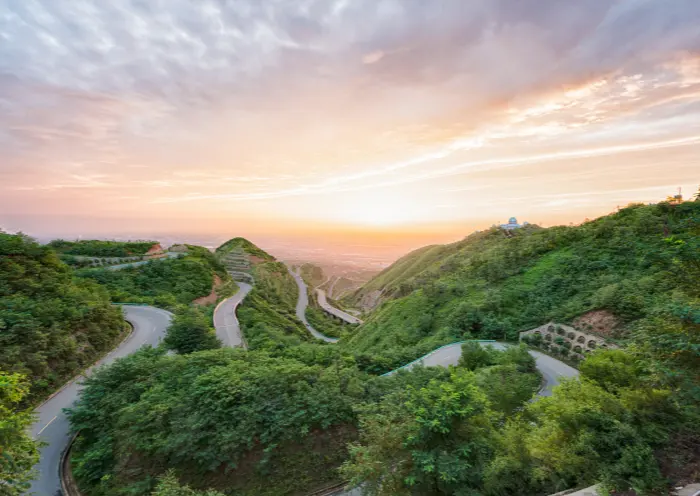
Lishan Mountain is a beautiful destination with lots of historical heritage. It used to be the royal garden of several past dynasties. The First Emperor of Qin Dynasty chose it as his final resting place. You will find the mausoleum of Qin Shihuang at the foot of the mountain and not far away, the renowned Terracotta Army. Huaqing Hot Springs, where Emperor Xuanzong and Yang Guifei’s love story took place, are also in the vicinity.
Cuihua Mountain
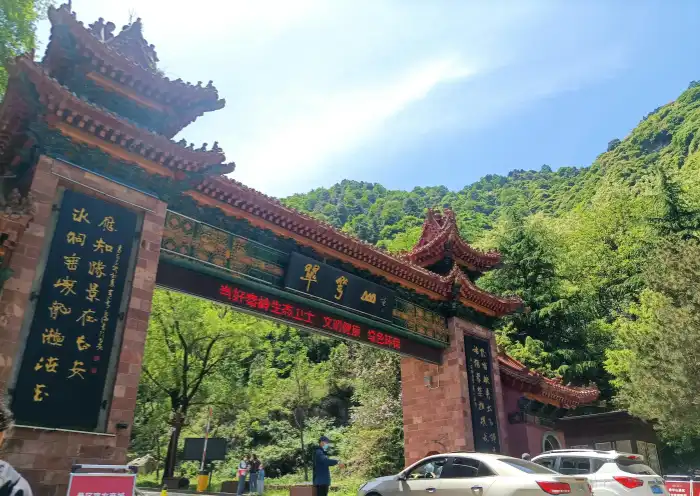
Cuihua Mountain is a beautiful area with lots of history. It has served as an imperial hunting ground, a sacred site for worshipping ceremonies, and a place for imperial summer retreat. Today it is part of Zhongnanshan National Forest Park. You can go on leisurely hikes, appreciate the mountain scenery. You will also find the largest ski resort in Xian, Cuihua Mountain Ski Resort.
Hukou Waterfall of the Yellow River
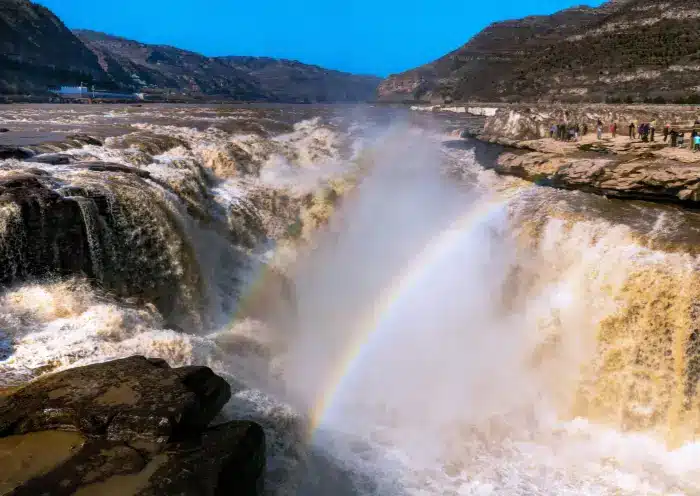
Hukou Waterfall is the second largest waterfall in China. It lies on the border between Shanxi and Shaanxi Province. It is most famous for its size, volume of water, and its yellow, sandy color. The most spectacular sight is called “smoking from the bottom.” As the rushing water of the Yellow River plunges down from a height, the mist rises like smoke to create the iconic phenomenon.
Jialing River Source Scenic Area in Baoji
Jialing River Source Scenic Area is located at the top of Qinling Mountain. It is one of the four scenic areas of Tiantai National Forest Reserve. It’s a great destination for a scenic hike with flowing streams and waterfalls, green tea terraces, and mountains all around.
Fengxiang East Lake in Baoji
Fengxiang East Lake in Baoji may not be as well-known as the West Lake in Hangzhou, but its construction was also overseen by the famous historical figure Su Dongpo. In the lake, there are lotus leaves and flowers that bloom in the summer. And along the shore, there are willows that hang over the water. Rockeries, bamboos, and pavilions connected by winding paths epitomize the elegance of Chinese landscaping art.
Guanshan Pastureland
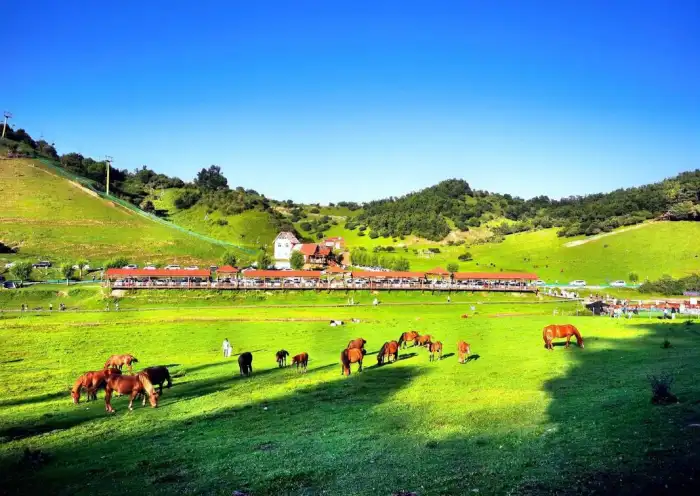
Guanshan Pastureland is the only mountain meadow attraction around Xi’an. It’s an uncommon landscape in this part of the country. The vast grasslands, dense forests, winding rivers, mountains, and canyons, form a serene, rustic picture. You can go horseback riding to immerse yourself in the landscape. If you’re traveling with a group or family, you can rent equipment to have a grassland barbeque.

Mount Taibai
Mount Taibai is the main peak of Qinling Mountain Range with a height of 3,767 meters (12,360 feet). It is known for being home to various rare wildlife species. In spring and summer, you will see colorful wildflowers in bloom all across the mountain.
Hanzhong Crested Ibis Nature Reserve
Hanzhong Crested Ibis Nature Reserve is roughly 350-400 km away from Xi’an. It is dedicated to the conservation of Crested Ibis and its habitat. The Crested Ibis is one of the world’s most endangered bird species. In May 1981, seven wild Crested Ibises were discovered in Yang County, the last ones known in the world. After years of conservation effort, its total population has increased to 500.
The nature reserve in Hanzhong is one of the few places in the world where you might encounter Crested Ibis in its natural habitat.
Foping Panda Valley
Foping Panda Valley is the only place near Xi’an where you can see giant pandas, the national animal of China, in their natural habitat. About 170 km from Xi’an City, the valley is the home of Qinlin pandas which are slightly different in appearance from Sichuan pandas. It’s one of the best places to witness giant pandas near Xi’an.
Niubeiliang National Forest Park
Niubeiliang National Forest Park is at the foot of Qinling Mountain and showcases the most gorgeous natural sceneries of the region. There are several scenic areas within the park with different views, such as the Takin Valley, Liuchiling Scenic Area, and Niubeiliang Alpine Scenery Area. You can hike to different parts of the park to see waterfalls, creeks, Qinling firs, and Alpine azalea. It is about a 1.5-hour drive from downtown Xi’an.
Jingbian Wave Valley
Jingbian Wave Valley is an excellent spot to see the rare Danxia landform in person. The rocks and stones of the valley have red undulating wave-like patterns, hence the name of the location. The amazing phenomenon is the result of natural erosion and weathering that started approximately 96 million years ago during the Cretaceous period. There are several scenic spots with iconic views great for photography.
Recommended Xi’an Nature Tours:

Xi’an Nightlife
The Tang Dynasty Show and Dumpling Banquet
The Tang Dynasty Show and Dumpling Banquet is one of the best night activities in Xi’an. The show is a series of music and dance performances that reenact folk tales or historical events of the Tang Dynasty. A total of 104 artists in well-designed costumes put on the show for you, including 30 musicians playing traditional Chinese and Western instruments.
The dumpling banquet can be booked at the same time as the show which will add another layer of experience to your night. You will be amazed at how many different kinds of dumplings of different shapes and sizes there are. It’s an excellent way to get to know the culture and craft behind this traditional dish.
Xi’an Tang Paradise
Tang Paradise or Datang Furong Garden is a large theme park that aims to portray what the city was like back in Tang Dynasty. Its architecture resembles royal gardens in design with twelve cultural themed areas distributed around Fu Rong Lake. Each area focuses on an aspect of Tang culture, including the court culture, music and dance, tea culture, food culture, and folk culture.
Tang Paradise is particularly attractive at night when the lights come on around the towers and pavilions, reflected in the water. Make sure you catch the water and light show “Chasing Dreams in the Great Tang” that will allow you to view the show from a boat.
Song of Everlasting Sorrow Show
“Song of Ever Lasting Sorrow” is an immersive music and dance show based on the poem by Bai Juyi, one of the greatest poets of Tang Dynasty. It tells the love story between Emperor Xunzong and Yang Guifei as mentioned before. The show is staged in Huaqing Hot Spring Scenic Area amongst Tang architecture with mountains and waters all around. It is put on daily from April to October as long as the weather condition allows.

Guest-Welcoming Ceremony at the Ancient City Wall
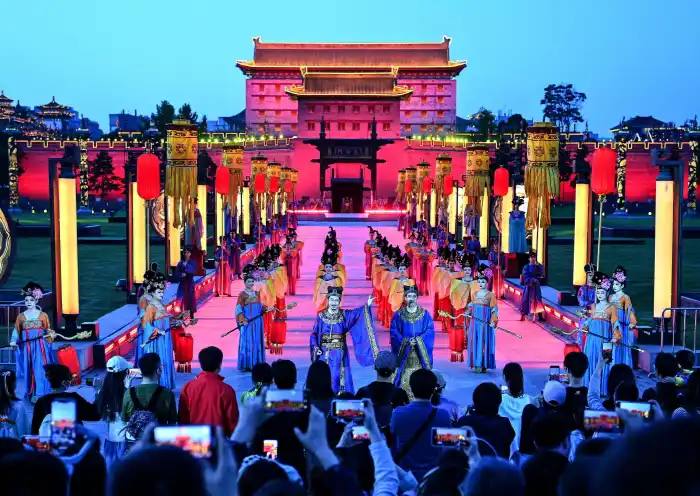
If it’s your first time traveling to Xi’an, it’s highly recommended that you experience the city’s hospitality through an ancient-styled guest-welcoming ceremony. Historically, the northern city gate of the City Wall used to be the main welcoming gate of the city. When guests approached, soldiers who guarded the gate would hail “open the city gate.”
Today, the ceremony is held at the southern gate of the wall, Yongning Gate, to welcome visitors from all over the world with performances. It will take you through the ancient pathway, over the drawbridge, and enter the city gate. It’s definitely the best way to start your Xi’an tour.
Recommended Xi’an Night Tours:
Bonus Experiences and Hidden Gems in Xi’an
Yongxingfang Food Street
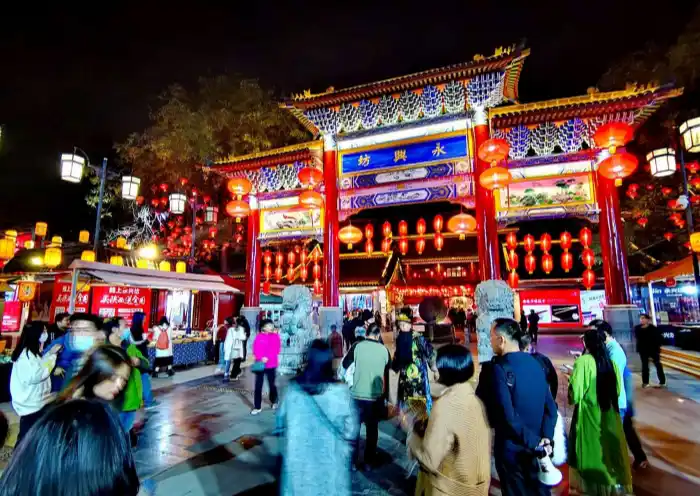
The Muslim Quarter is undoubtedly the most famous food street in Xi’an, but if you want a taste of authentic local Xi’an foods, you should head to Yongxingfang Food Street. Located inside Zhongshan Gate near the east gate of the Ancient City Wall, it has a better variety of local dishes and snacks with overall better sanitary conditions.
Guanzhong Folk Art Museum
Guanzhong Folk Art Museum is dedicated to the rescue, restoration, collection, research, and study of folk cultural heritage. The museum is built in Ming and Qing Garden style with a collection of more than 33,600 folk cultural relics. You will see displays of different kinds of art with lots of local and traditional elements.
Baoji Bronzeware Museum
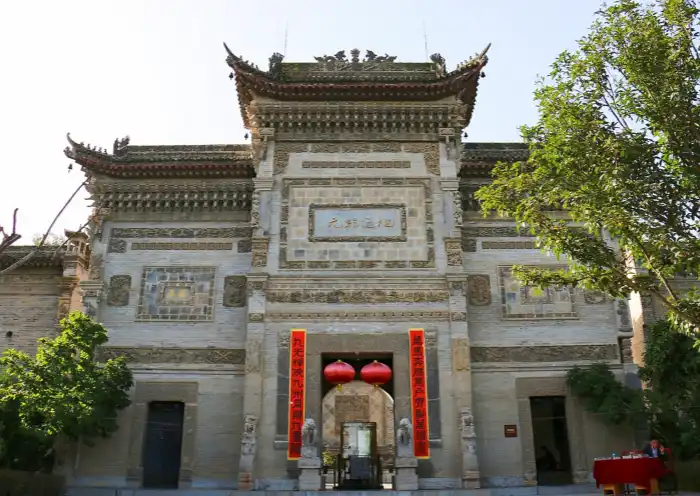
Baoji Bronzeware Museum is another great spot for history lovers. It has a massive collection with over 10,000 bronze artifacts from as early as Xia Dynasty to the Qin and Han Dynasties. The museum is built in the unique shape of five tripods to represent the special ritualistic use of bronzeware.
The Grand San Pass
The Grand San Pass or Dasan Pass was historically a strategic pass that controls passage between Sichuan and Shaanxi Province. Many famous historical figures have passed through here and left behind well-known stories.
The Memorial Temple of Duke Zhou in Baoji
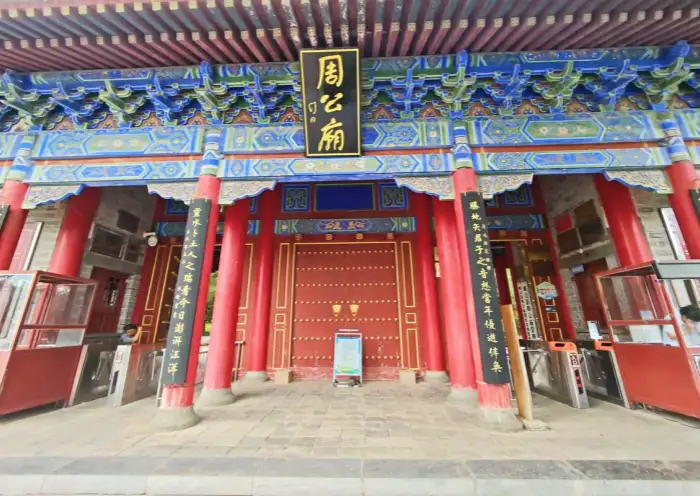
The Memorial Temple of Duke Zhou in Baoji was built in 618. Duke of Zhou was the brother of King Wu of Zhou Dynasty. He assisted his brother in overthrowing the Shang Dynasty and played an important role in politics, military affairs, and education. He was also a poet and scholar who greatly influenced Confucius. The temple is now home to over thirty ancient buildings with many large cypress and locust trees.
Shaanxi Wild Animal Rescue and Breeding Center in Louguantai
Shaanxi Wild Animal Rescue and Breeding Center is the earliest wild animal rescue center and one of the four major panda breeding centers in China. It is a great place to see giant pandas near Xi’an, and you will be able to see brown pandas which are extremely rare as a result of their unique genetic mutation. Besides and giant pandas, the center is also renowned for three other four rare and endangered animals in Qinling Mountains, crested ibis, golden snub-nosed monkey, and takin.
Bailuyuan Ski Resort
Bailuyuan Ski Resort is the nearest large-scale ski resort in Xi’an, only 6 km from the city center. The slopes here cater to both beginners and intermediate skiers. If you’re traveling with children, there’s also a children’s snow park in the resort.

Practical Tips for Visiting Xi’an Attractions
Best Time to Visit
The best time to visit Xi’an is from March to May and late September to early November. During spring and autumn, the weather in Xi’an is best usually being within a comfortable range of 20-25 ºC (68-77 °F). There’s little rainfall, so you can easily venture outside. As long as you avoid the public holidays, you won’t encounter too many visitors.
Getting Around Xi’an
The Xi’an transportation system is convenient and easy to navigate. To get around the attractions within the downtown area, you can take the metro, taxi, or sightseeing buses. If you’d like to take your time and travel at your own pace, you can use the public bikes. For attractions that are further away, you might want to look into high-speed trains, arrange private transfers, or book coaches.
Booking Advice
Some tourist attractions in Xi’an are particularly popular, such as the Terracotta Army and Shaanxi History Museum. As you plan your Xi’an tour, you should reserve your tickets online as early as possible to skip lines. The same goes for accommodation and flight booking, especially if you’re traveling during the summer, which is the peak travel season.
FAQs about Visiting Xi’an
What is Xi’an best known for?
Xi’an is best known as an ancient capital in Chinese history and for the discovery of the Terracotta Army.
What attractions should I visit in Xi’an with 1 to 3 days?
On a day trip to Xi’an or on a short trip, you should definitely hit the highlights including the Terracotta Army, Ancient City Wall, Muslim Quarter, Big Wild Goose Pagoda, the Bell Tower and Drum Tower, and Shaanxi History Museum. If you have more time, choose a couple more attractions that interest you.
How many days in Xi’an is enough?
Depending on the travel experience you’re looking for or how many attractions you would like to visit, your trip can vary in length. Usually visitors arrange 3-5 days for a Xi’an tour.
Is Xi’an a walkable city?
Downtown Xi’an is very walkable where many famous attractions are concentrated in.
What food is famous in Xi’an?
Famous Xi’an foods include Roujiamo, Pita Bread Soaked in Beef/Lamb Soup, Liangpi. Biangbiang Noodles, Minced Noodles, etc.
What are the best panoramic viewpoints in Xi’an?
You can find great panoramic views of the city on the Bell Tower, Big Wild Goose Pagoda, and the Ancient City Wall.
Plan your Xi’an Vacation with China Xian Tour
Start planning your trip to Xi’an with China Xian Tour. We specialize in crafting the best China tour for our customers. You can customize your itinerary with the help of our expert consultants and maximize your travel experience with our local guides and private transfer service. Here are some of our most popular Xi’an tour itineraries.