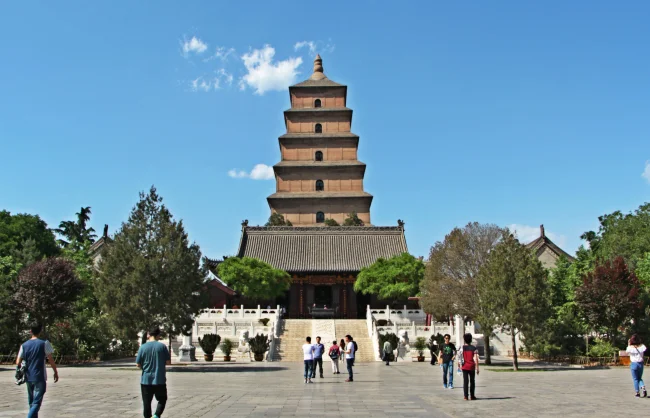


Qinglong Temple (means Green Dragon Temple) also known as Shifosi (Stone Buddha Temple) is located in the southern suburbs of Xi’an, Shaanxi Province, northeast of the Big Wild Goose Pagoda and north of the Qujiang Pool Site. Once the cradle of Esoteric Buddhism and Japanese Buddhism’s Shingon sect, Qinglong Temple now serves as a key national cultural heritage site holding significant historical and religious importance.
The temple was founded in the second year of the Sui Dynasty’s Kaihuang era (582 AD) and was initially called Linggan Temple. During the second year of the Tang Dynasty’s Jingyun era, the temple was renamed Qinglong Temple.
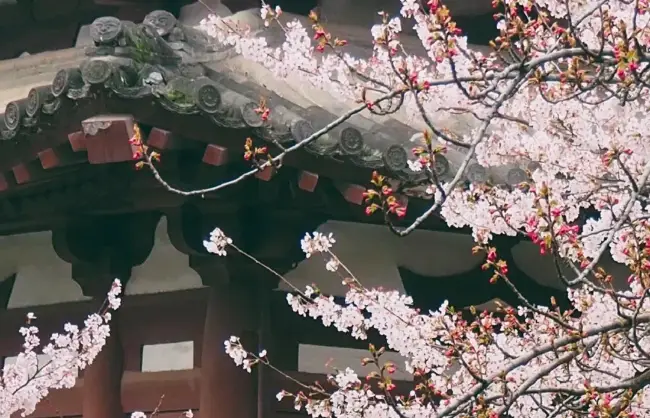
In 1986, over a thousand cherry blossom trees were introduced to the temple from Japan, which transforms the temple into a picturesque scene from March to May every year.
Content Preview
- Travel Information
- History about Qinglong Temple
- Highlights of the Temple
- Essential Travel Tips
- How to Get to the Temple?
- Attractions Nearby
- FAQs about Qinglong Temple
- Ready to Explore Xi’an? Start with Chian Xian Tour
Travel Information
- Location: at the intersection of Xiyin Road and Yanxiang Road in the southeastern part of Xi’an city.
- Opening hours: 8:30-18:00 from Tuesday to Sunday.
- Entrance fee: free, but visitors need to reserve the ticket online in advance.
- Recommended visiting time: 2-3 hours
History about Qinglong Temple
According to historical records, the temple was originally established in 582 during the Sui Dynasty and was initially named as Linggan Temple. In the following centuries, it underwent several renovations and name changes.
In 662 during the Tang Dynasty, the temple was reopened as a temple dedicated to the Goddess of Mercy. In 711, it was renamed Qinglong Temple. During the anti-Buddhist movement of 845, the temple was once again abandoned and repurposed as part of an imperial garden. However, it was quickly restored in May of the following year. The temple remained intact in the Northern Song Dynasty until it fell into disrepair after 1806, during the Yuan Dynasty.
Buddhism flourished in China during the Tang Dynasty and the Green Dragon Temple played an important role in the spread of Esoteric Buddhism. With the famous senior monk Huiguo as its abbot, the temple served as an important center for Buddhism preaching and teaching, attracting monks from both domestic and abroad to study the doctrines. Those who acquired great attainments and stood out prominent among others were Kukai, Yuanxing, Yuanren. Huiyuan, Yuanzhen and Zongrui.
Following the arrival of Japanese envoys, Kukai traveled to Xi’an (called Chang’an at that time) in 804 and studied Esoteric Buddhism under Monk Huiguo at Qinglong Temple after initially staying at Ximing Temple. After returning to Japan in 806, he founded the True Word Sect of Buddhism (known as Shingon in Japanese) and became a prominent figure in establishing Eastern Esotericism. Besides spreading Buddhist teachings in Japan, Kukai also many Chinese cultures into Japan, including literature, calligraphy, astronomy, and medicine, fostering significant cultural exchanges between the two countries.
Since the founding of the People’s Republic of China, significant efforts have been made to preserve cultural relics. In 1956, the Qinglong Temple was designated as an important cultural site under provincial protection. In 1982, the Chinese Academy of Archaeology conducted excavations in the temple, revealing seven areas of ruins including gates, pagodas, and halls. These excavations unearthed many valuable artifacts, including gilded Buddha figurines and Tang Dynasty Buddhist scripture columns.
Highlights of the Temple
Enjoy the Stunning Cherry Blossoms
The temple boasts a variety of cherry blossom species, including early, late, and mountain cherries. From March to Late May, Qinglong Temple will be into the most enchanting season when the cherry blossoms are in full bloom, immersing the entire temple area in a picturesque floral paradise. The scenery is exceptionally beautiful, attracting crowds of visitors. At times, there can be nearly twenty thousand people in a single day, adding to the lively atmosphere.
Admire the Various Ancient Architecture
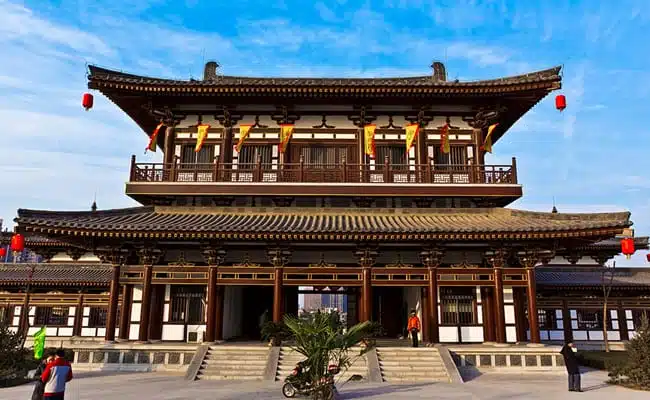
Covering an area of about 200,000 square meters, the temple is home to various magnificent ancient structures. The Great Hall of the Buddha, the main and the tallest building in the temple houses three colossal lifelike Buddha statues. The Kukai Monument and Memorial constructed in 1981 has been recognized as the fourth batch of “20th Century Architectural Heritage Sites.”
Besides these, visitors can expect more notable Tang-style buildings in the temple, such as the Mountain Gate, Heavenly Kings Hall, Yunfeng Pavilion, Stele Corridor, etc.
Visit the Qinglong Temple Culture Relics Museum
The Qinglong Temple Culture Relics Museum is a three-floor Tang-style building on the Gu Yuan Lou Square, prominently displaying artifacts unearthed from the temple ruins and precious items related to cultural exchanges between China and Japan in the past centuries. On the first floor, visitors can encounter a sand table of the temple ruins and many architectural components. On the second floor, visitors will be introduced to the history of Kukai. While on the third floor, the many cultural relics from the Sui and Tang Dynasties will catch your eye.
Related reading: Top Places to See Cherry Blossoms in China
Essential Travel Tips
How to Reserve?
Admission is free, but you’ll still need tickets to enter. They must be booked in advance on the official WeChat account “Qinglong Temple Ruins Park” or other approved travel apps. During cherry blossom season, tickets will only be released 1–3 days ahead, so always check the website for updates. Each ID can usually reserve one ticket per day.
How to Avoid Peak-Season Crowds?
Weekends and mid-day are often crowded, so it would be better to go on weekday mornings right after opening, this should be the most quiet period.
Available Facilities in the Temple
The Cultural Relics Museum shows Tang and Sui artifacts and highlights cultural ties with Japan. The grounds have walking paths, courtyards, the Kūkai Monument, Yunfeng Pavilion, and Stele Corridor. Rest areas and snack stalls are nearby, with more food options on surrounding streets. The site is easy to reach by Metro Lines 3 or 5 (Qinglong Temple Station) and several bus routes.
How to Get to the Temple?
- Take bus No. 606 or No. 33 and get off at the Qinglongsi Station.
- Or, take Metro Lines 3 or 5, and get off at the Qinglongsi Station, then walk for about 6 minutes to get to the temple.
Attractions Nearby
- Big Wild Goose Pagoda: about 4.3 km away
- Shaanxi History Museum: about 4.5 km away
- Xian City Wall: about 6.6 km away
FAQs about Qinglong Temple
When is the Best Time to See the Cherry Blossoms at Qinglong Temple?
Mid-March to early April would be the best season. And the temple will even host a blossom festival during this period.
What Varieties of Cherry Blossoms Can Be Seen at the Temple?
Qinglong Temple has more than a thousand cherry trees of different types. Popular varieties include the elegant Somei Yoshino, the graceful weeping cherry, and the Yang Guifei cherry.
Are There Any Restrictions on Photography Inside the Temple or Museum?
Photography is generally permitted, but there are still certain rules. Drones are banned, and flash photography is discouraged inside the halls and museum. Guests are also asked not to touch the blossoms or leave the marked paths.
What Are the Main Highlights or Must-See Spots within the Temple Complex?
Key spots include the Kūkai Monument, Yunfeng Pavilion, Stele Corridor, and the Cultural Relics Museum. The cherry blossom avenues and courtyards are especially beautiful in spring mornings.
Ready to Explore Xi’an? Start with Chian Xian Tour
Qinglong temple has attracted so many visitors with its beautiful scenery and rich historical heritage. And it would be more rewarding to have a thorough Xi’an tour with the temple being one of the major highlights. To better enjoy Xi’an’s incredible charm, traveling with China Xian Tour would be your best choice. With over a decade of experience in customizing China tours for visitors from all over the world, we can give you some the most rewarding experiences in this city. While our travel experts can take care of everything for you, the only thing you need to do along the way is immerse yourself in the unforgettable Xi’an moments.