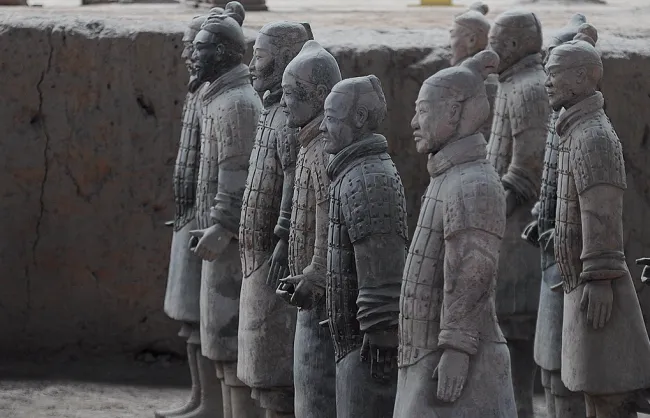
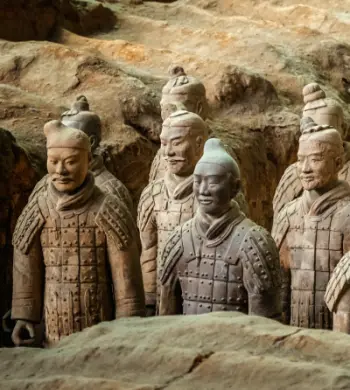


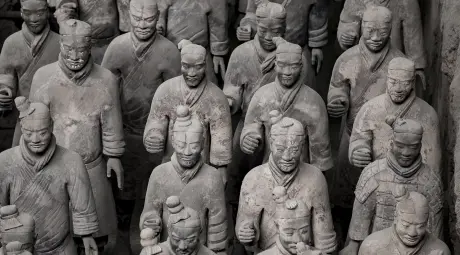

After visiting the Terracotta Warriors, many tourists wonder where exactly Qin Shi Huang was buried.
The answer is in the Qin Shi Huang Mausoleum nearby.
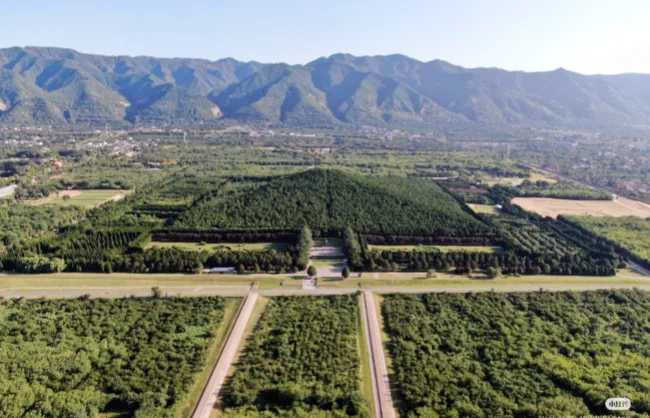
The location of the Terracotta Warriors is not the actual tomb of Qin Shi Huang, but only one part of a much larger mausoleum complex. The actual central burial chamber is located beneath the mausoleum’s burial mound and has not been opened to this day.
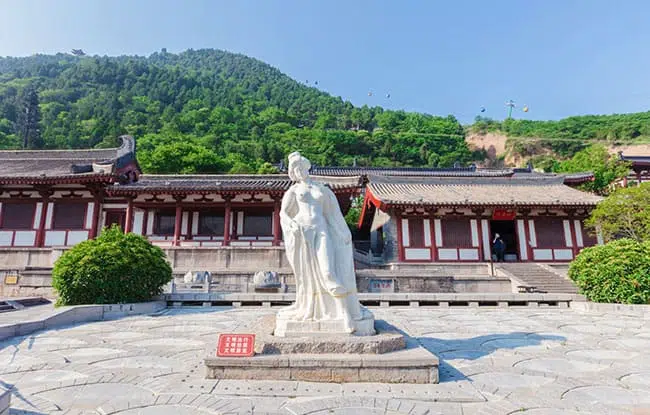
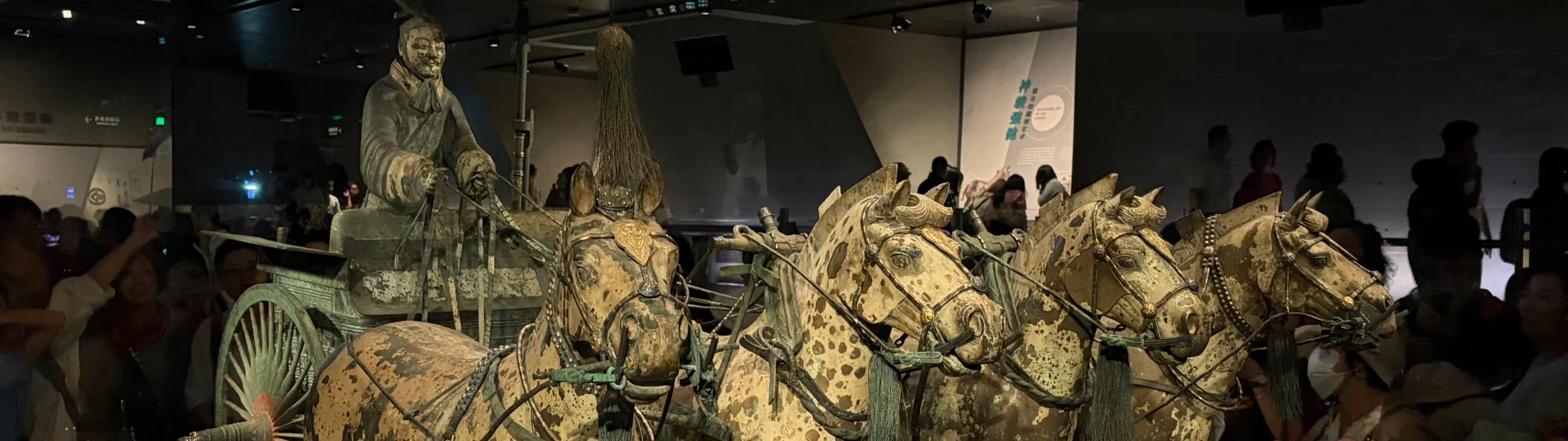
Today, tourists can visit the Qin Shi Huang Mausoleum Archaeological Site Park, also known as Lishan Garden, where they can see the tomb mound, the bronze chariots and horses, and Baixi (acrobat) and civil official figurines.
For tourists visiting Xi’an for the first time, the Terracotta Warriors should be your top priority; if your schedule allows, visit Lishan Garden for a more complete tour of the Qin Shi Huang Mausoleum.
Content Preview
- Qin Shi Huang Mausoleum Overview
- Difference with the Terracotta Warriors
- What Is Worth Visiting in Lishan Garden?
- Things to Know about Qin Shi Huang’s Tomb
- Is Lishan Garden Worth Visiting?
- How to Plan an Itinerary
- Visiting Tips & Information
- Qin Shi Huang Mausoleum FAQs
- Visit with Us
Qin Shi Huang Mausoleum Overview
- Chinese Name: 秦始皇帝陵 / 秦始皇陵
- English Name: Mausoleum of Qin Shi Huang / Mausoleum of the First Qin Emperor
- Visit Area: Qin Shi Huang Mausoleum Archaeological Site Park (Lishan Garden)
- Location: Lintong District, Xi’an City
- Entry Ticket: A one-ticket system (CNY 120/pp) applies to the Terracotta WarriorsMuseum and Lishan Garden
- Recommended Time Spent: 2-2.5 hours for Terracotta Warriors; 1-1.5 hours for Lishan Garden
- Regular Opening Hours:
16th March to 15th November: 8:30–17:00 (closed at 18:30)
16th November to 15th March next year: 8:30–16:30 (closed at 18:00)
Opening hours may be adjusted during summer vacation and public holidays. Please check the latest official announcements before departure.
The Terracotta Warriors and Lishan Garden are about 2.2 kilometers apart, with a free shuttle bus route available. Usually, touring Lishan Garden by electric sightseeing bus (CNY 15/pp) would be more convenient.
What Is the Difference Between the Terracotta Warriors and the Qin Shi Huang Mausoleum?
International tourists visiting Xi’an for the first time may be confused by the two sites.
The short answer is:
Terracotta Warriors = Qin Shi Huang’s underground army
Lishan Garden = the main visit area for the Qin Shi Huang Mausoleum and several burial pits
Underground Palace = the area where Qin Shi Huang’s actual tomb is located, but currently inaccessible
Therefore, visiting the Terracotta Warriors means you only see a famous part of the Mausoleum of Qin Shi Huang, not the whole.
If this is your first visit, to learn about the three main pits, tickets, the tour order, and how long the tour takes, please get to our Terracotta Warriors guide
What Is Worth Visiting in Lishan Garden?
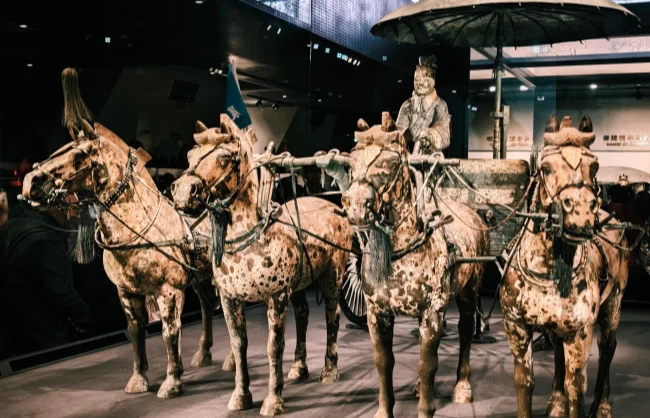
When you come to Lishan Garden after a tour around the Terracotta Warriors, you will see bronze chariots and horses, civil official figurines, and Baixi (acrobat) figurines. What Qin Shi Huang had prepared for the afterlife was clearly more than just an army.
Bronze Chariots and Horses: Qin Shi Huang’s Imperial Carriages
The two sets of bronze chariots and horses were made at approximately half the scale of the actual imperial chariots, with exquisite details in the chariots, harnesses, and charioteers.
While the Terracotta Warriors represent military power, the bronze chariots and horses served the emperor’s daily outings.
If you don’t want to miss the famous bronze chariots and horses, don’t return to Xi’an city directly after your visit to the Terracotta Warriors. Instead, head to the Bronze Chariots and Horses Museum of the Qin Shi Huang Mausoleum.
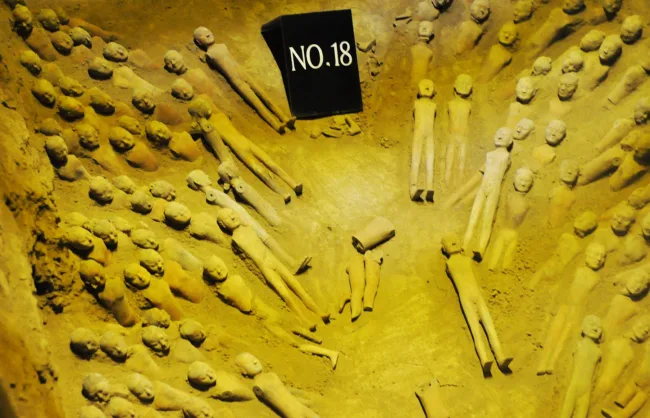
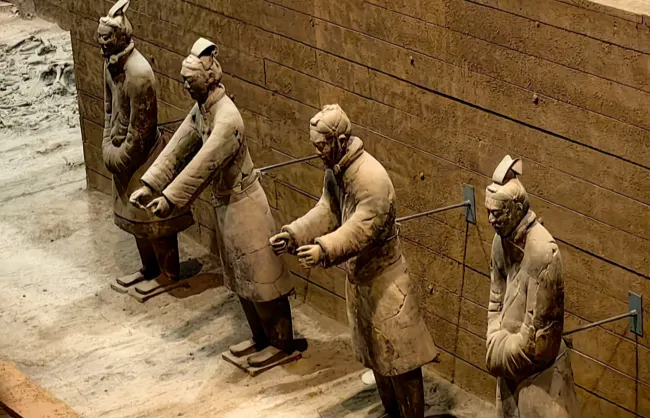
Baixi (Acrobat) Figurines: Underground Entertainment
These terracotta figurines are completely different from the Terracotta Warriors that stand in neat rows. Some are shown bare-chested, frozen forever in exaggerated poses and expressions. That’s why they are believed to be related to the entertainment and performance activities of the time.
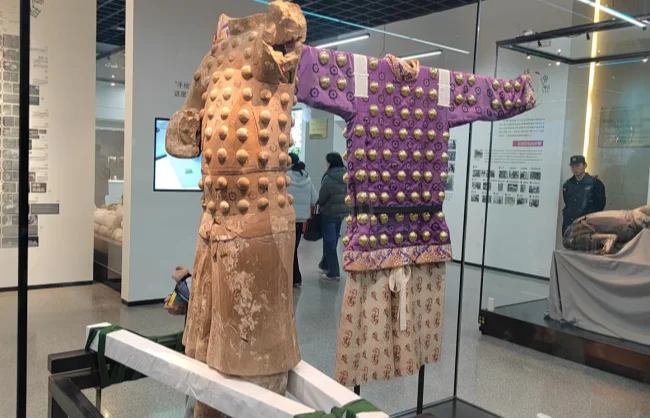
Civil Official Figurines: The Qin Empire Had More Than Soldiers
Scholars believe that some terracotta figurines discovered in the K0006 burial pit depict civil officials of the Qin Dynasty.
If you piece together the information from the relics, you will find that Lishan Garden displays not only military power, but also different contents such as the emperor’s daily outings, officials, and entertainment in the Qin Dynasty.
Qin Shi Huang Mausoleum Mound
The actual central burial chamber is located beneath a massive mound.
There is no such thing as an entrance that allows you to walk into Qin Shi Huang’s tomb. More than two thousand years have passed, and the burial chamber has still not been opened, which makes it the most mysterious part of the entire Qin Shi Huang Mausoleum.
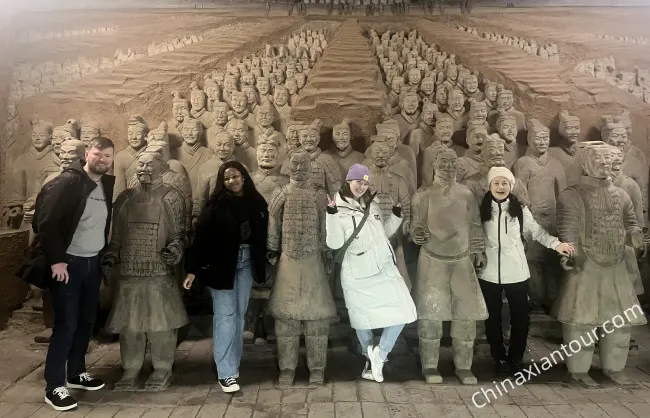
Warmly welcome you to join our half-day Terracotta Warriors group tour. Around 8 am to 9 am, your driver and tour guide will pick you up at your hotel.
Things to Know about Qin Shi Huang’s Tomb
What Is Inside Qin Shi Huang’s Tomb?
In his Records of the Grand Historian, Sima Qian wrote that there were palaces and treasures in the underground palace, where mercury was used to simulate rivers, lakes, and seas, and astronomical celestial phenomena were displayed above. There was also a mechanism to stop tomb robbers.
However, these mainly come from ancient documents. Since the central burial chamber has not been opened to date, what exactly is preserved inside remains unknown.
Modern scientific exploration has revealed obvious abnormalities in mercury levels in the soil around the tomb, echoing the ancient records, but this does not mean that an underground mercury river has actually been discovered.
Why Hasn’t Qin Shi Huang’s Tomb Been Opened?
Many tourists might wonder why the tomb has not been opened with today’s technology.
The real difficulty is not how to open it, but how to protect the cultural relics inside after bringing them to light.
Those artifacts have been preserved in a relatively stable underground environment for over two thousand years. Once exposed, changes in air, humidity, temperature, and light can cause irreversible damage.
The Terracotta Warriors themselves are a good example. Many of the terracotta figurines originally had bright paintings, but some of the remaining pigments soon changed after they were unearthed and exposed to air.
Therefore, the purpose of archaeological work is not to open the tomb chamber to satisfy curiosity. Mercury is one of the issues that needs to be considered, but the protection of cultural relics is always the main concern.
Is Lishan Garden Worth Visiting?
It depends on your schedule.
If your visit lasts only 2–3 hours, prioritize the Terracotta Warriors.
For your first Xi’an tour, pits 1, 2, and 3 are still the main draw.
If you can spend half a day at the Qin Shi Huang Mausoleum, Terracotta Warriors + Lishan Garden works well.
After the Terracotta Warriors, you can take a shuttle bus to Lishan Garden and focus on the bronze chariots and horses, the Baixi figurines and the civil official figurines, and the Qin Shi Huang Mausoleum Mound.
If you have a passion for history and archaeology, Lishan Garden is a must-visit.
If you only visit the Terracotta Warriors, you will see the most famous part of the Mausoleum of Qin Shi Huang. Touring Lishan Garden, however, makes it much easier to understand how the Terracotta Warriors fit into the whole mausoleum.
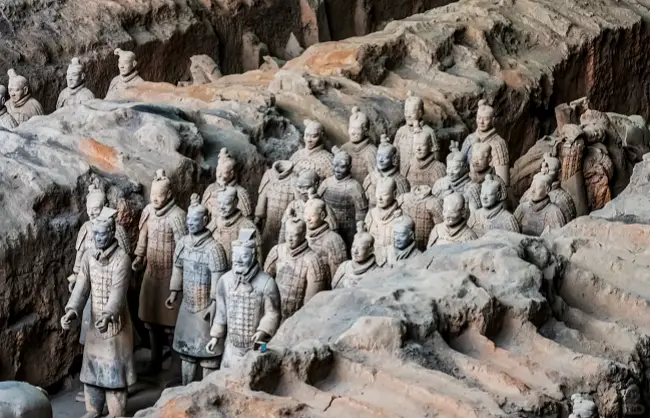
How to Plan a Terracotta Warriors + Qin Shi Huang Mausoleum Itinerary
For first-time visitors, we recommend:
Terracotta Warriors + Qin Shi Huang Mausoleum.
- Depart from Xi’an city early in the morning;
- Visit the Terracotta Warriors first;
- Take the shuttle bus to Lishan Garden.
It is recommended to allow 4–5 hours for the entire Terracotta Warriors + Lishan Garden itinerary. During the peak tourist season, allow extra time for queues and traffic.
If you are not sure whether to go in the morning or the afternoon, check out our Best Time to Visit the Terracotta Warriors in Xi’an
To visit the Terracotta Warriors and Xi’an city attractions on the same day, see our Xi’an Terracotta Warriors Day Tour.
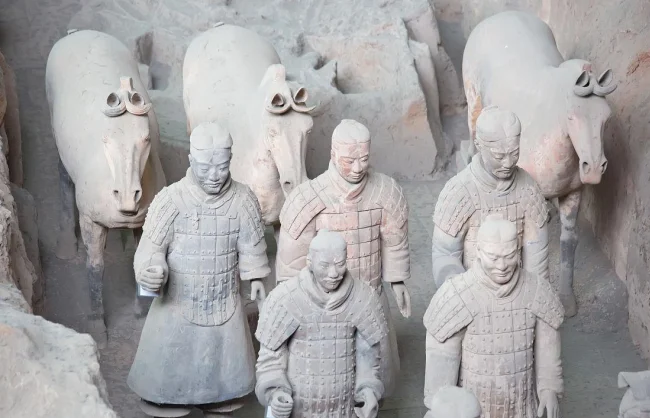
At the appointed time in the morning, our English-speaking guide and Chinese driver will pick you up from the hotel in the center of Xi'an and drive for one hour to the Terracotta Warriors and Horses.
Essential Tips & Information for visiting Qin Shi Huang Mausoleum
When Is the Best Time to Visit the Qin Shi Huang Mausoleum?
You can visit the Mausoleum of Qin Shi Huang year-round, but it feels more comfortable for outdoor activities in spring and autumn.
In summer, it is recommended to set off early to avoid the high temperatures at noon. July and August are the busiest months, with especially heavy crowds. If you can arrange your trip flexibly, try to visit on a weekday and book your tickets in advance.
Crowds are smaller in winter, but dress warmly — you will be outdoors for most of your visit to Lishan Garden.
If you want to pick a good travel time based on peak and off seasons, weather, and Chinese public holidays, check out our guide on Best Time to Visit Xi’an
How to Get to Terracotta Warriors + Qin Shi Huang Mausoleum from Xi’an
The Qin Shi Huang Mausoleum and the Terracotta Warriors are both located in Lintong District, Xi’an.
The simplest tour order is:
Xi’an City → Terracotta Warriors → Lishan Garden → Return to Xi’an City
You can choose public transportation or taxi/rideshare services to get there by yourself. For foreign tourists visiting Xi’an for the first time, transportation is not the only hassle; ticket booking, transfers between sights, and figuring out the best order of visits can be equally tiring.
If you prefer a more relaxed experience, you can also book vehicles and English-speaking guides in advance to reduce the inconvenience of transportation, transfers, and queues.
Qin Shi Huang Mausoleum FAQs
1. Can I visit the real burial chamber of Qin Shi Huang’s tomb?
No. The central burial chamber has not been opened.
2. Are the Terracotta Warriors inside the Qin Shi Huang Mausoleum?
No. The Terracotta Warriors are located in the burial pits, which belong to the Qin Shi Huang Mausoleum system but are separate from the central burial area.
3. Can I enter the Terracotta Warriors + Qin Shi Huang Mausoleum with only one entry ticket?
The Qin Shi Huang Mausoleum Museum operates on a one-ticket system, which means a ticket includes entry to the Terracotta Warriors and Horses Museum and the Qin Shi Huang Mausoleum Archaeological Site Park (Lishan Garden), with a free shuttle bus ride. You can usually take an electric sightseeing bus to tour Lishan Garden for CNY 15 per person.
4. Should I visit Lishan Garden after the Terracotta Warriors?
If you are on a tight schedule, visiting the Terracotta Warriors only would be fine. If you have half a day available, or you are fond of history and archaeology, it’s recommended to continue your journey to Lishan Garden.
5. Do International Tourists Need a Reservation for the Qin Shi Huang Mausoleum?
All visitors are required to make real-name reservations. International tourists can make reservations through official channels using their passports. Bring the same passport you used for the reservation on the day of your visit. It is recommended to make a reservation as early as possible during peak tourist seasons and public holidays.
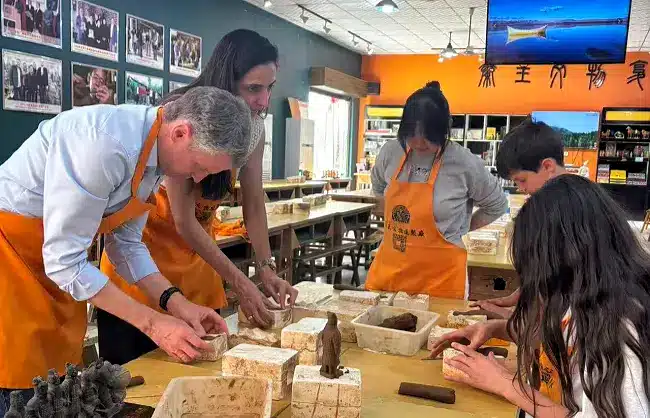
Go beyond the classic sights to discover Xi'an's living culture — watch traditional shadow puppet performances, admire folk art at a museum, and explore the mighty Terracotta Warriors.
Visit the Terracotta Warriors and the Mausoleum of Qin Shi Huang with Us
If this is your first time in Xi’an, the Terracotta Warriors are still a top priority for your visit. However, if time permits, it is recommended to include Lishan Garden in your itinerary.
The Terracotta Warriors are just one part of this massive mausoleum. After a journey in Lishan Garden, you will gain a more intuitive understanding of why the Mausoleum of Qin Shi Huang is so special.
Much of what makes the Terracotta Warriors and Lishan Garden special only comes across with in-depth explanation. China Xian Tour can help arrange professional English-speaking guides. Our goal is not just to show you the terracotta figurines and ruins, but also to help you understand the legendary Qin Empire behind them.