


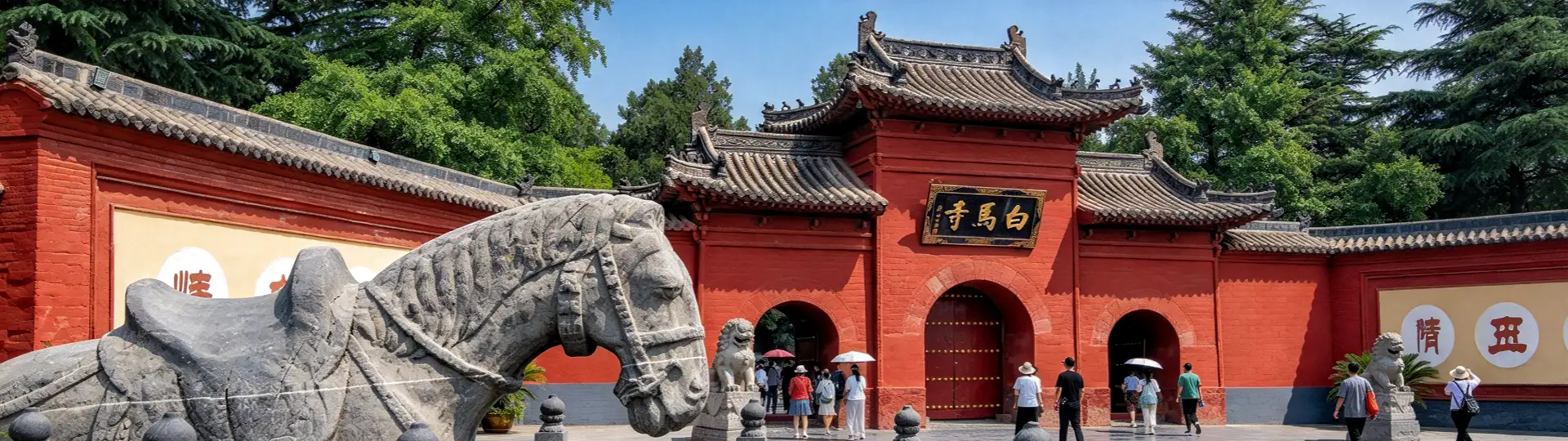
Located in Luoyang, White Horse Temple is an ancient Buddhist Temple. Its 1900-year history offers a window through which visitors can explore both Buddhism’s introduction to China and how international Buddhist cultures have converged in Luoyang.
Legend has it that Emperor Ming of the Han Dynasty sent envoys west to seek Buddhist teachings. As a result of their journey, two Indian monks were invited to Luoyang, bringing with them Buddhist scriptures loaded on a white horse – that’s how White Horse Temple got its name and why it carries such great importance in the history of Chinese Buddhism.
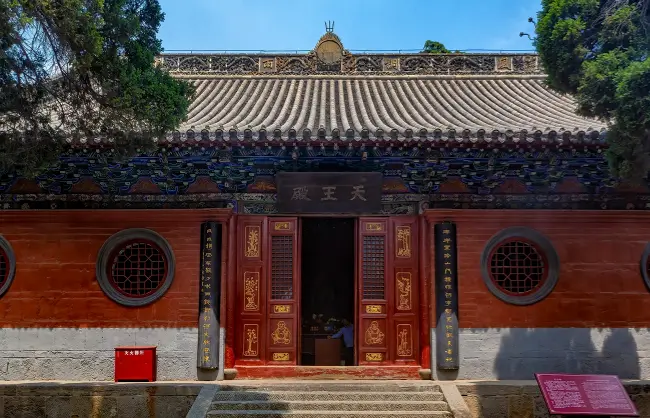
If you visit White Horse Temple today, you can experience Chinese Buddhist culture in traditional temple buildings, like the Hall of Heavenly Kings and the Mahavira Hall, while also getting to see halls designed in Indian, Burmese, and Thai styles.
Before planning a trip, however, first-time visitors to the temple should first look into how long they want to spend there, how to book tickets, what to see, and how to organize visits to other Luoyang attractions such as the Longmen Grottoes. It may sound like a lot, but don’t worry – this guide will help you plan a smooth visit to White Horse Temple.
Content Preview
- What to See and Do at White Horse Temple?
- A Practical 2–3 Hour Visit Route
- How to Get to White Horse Temple
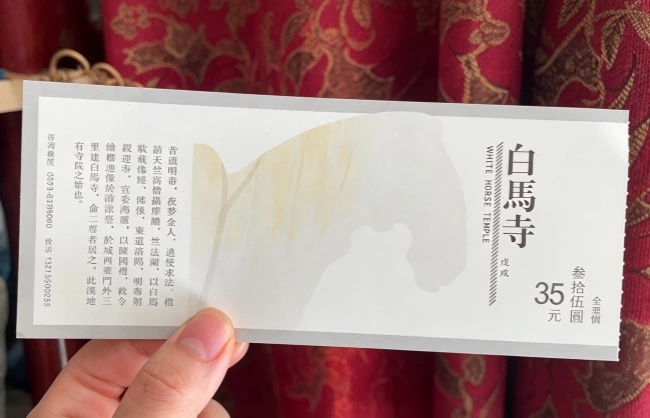
- How Much are Tickets? How do Foreign Visitors Book Tickets?
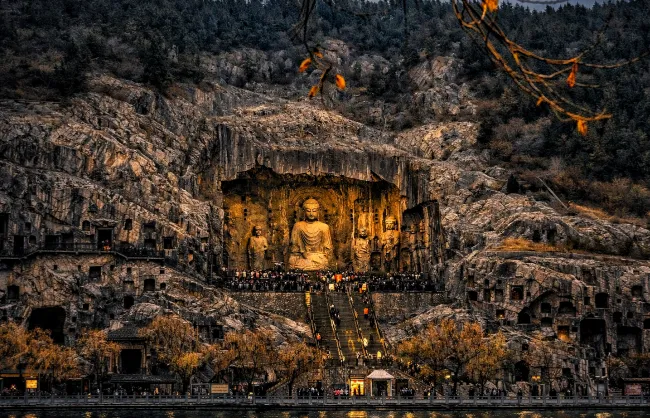
- Can You Visit White Horse Temple and the Longmen Grottoes in One Day?
- Best Time to Visit White Horse Temple & Practical Tips
White Horse Temple Quick Facts
- Chinese name: 白马寺 Bái Mǎ Sì
- Address: No.6 Luobai Rd, Baimasi Town, Luoyang City – about a 45-minute car ride from the CBD
- Opening hours: 7:40-18:00 from April 1st to October 7th; 8:00-17:30 from October 8th to March 31st of the next year
- Entry fee: CNY 35 (USD 5.23) for an adult ticket, real-name reservation is required.
- Recommended visit length: 2-3 hours
- Worth visiting for: tourists who want a slow-paced trip; travelers interested in history, culture, or Buddhism; or visitors who enjoy photography
What to See and Do at White Horse Temple?
Hall of Heavenly Kings & Mahavira Hall
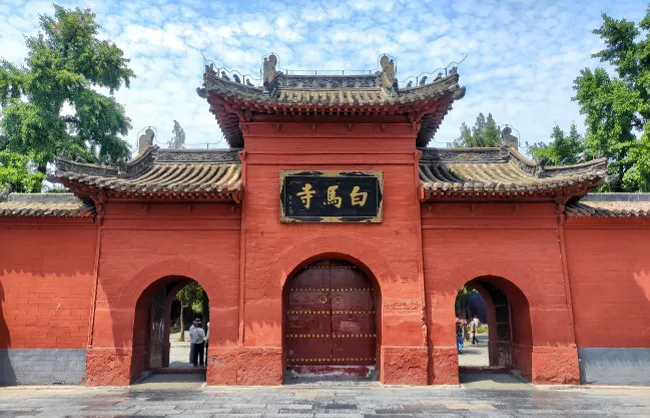
Once you enter the temple, the first hall you’ll see is the Hall of Heavenly Kings. The Maitreya Buddha is enshrined in the center of the hall, flanked by the Four Heavenly Kings.
Apart from the figures themselves, take a closer look at the Dharma instruments held by the statues of the Four Heavenly Kings. These ritual objects carry different meanings and are also some of the most recognizable visual elements in Chinese Buddhist temples.
The next hall you’ll find is the Mahavira Hall in the north, one of the most important halls in White Horse Temple. The central altar is dedicated to the Buddha Śākyamuni, with statues of Kāśyapa, Ānanda, Mañjuśrī, and Samantabhadra on the sides.
International Buddhist Halls
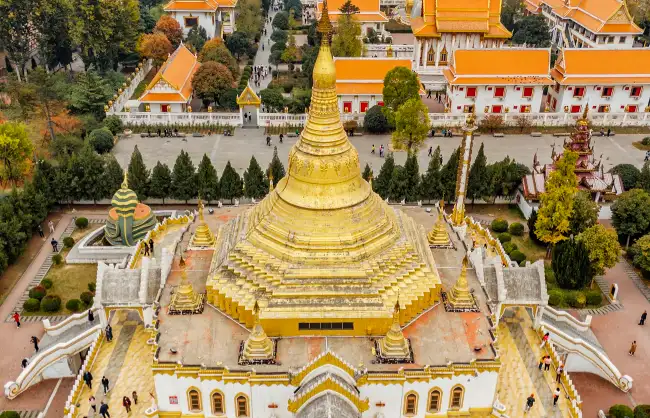
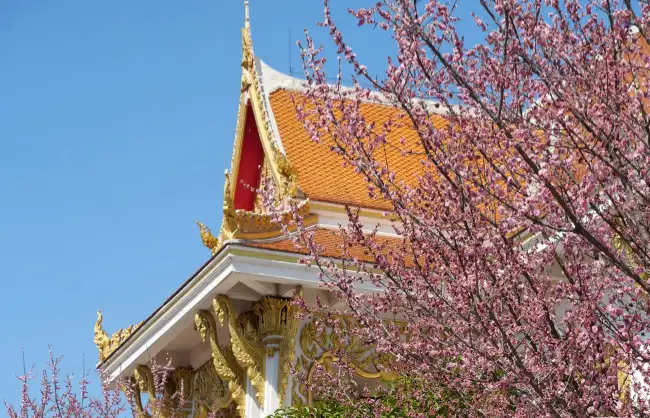
One of the most distinctive features of White Horse Temple is its Indian, Burmese, and Thai Buddhist halls.
The styles of these halls differ from traditional Chinese Buddhist temples in terms of their roofs, colors, decorations, and overall atmosphere.
The Thai Buddhist hall is resplendent in gold and follows the style of architecture of the Grand Palace in Bangkok; the Burmese Buddhist pagoda is pure and pristine, reminding visitors of the Shwedagon Pagoda in Yangon; and the Indian Buddhist hall is full of exotic charm and modeled after the Great Stupa of Sanchi.
Qiyun Pagoda
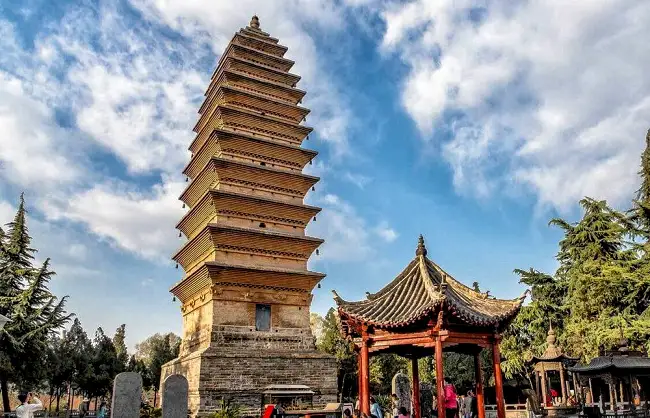
Despite being located outside the temple walls, Qiyun Pagoda is one of White Horse Temple’s key features and one of Luoyang’s most significant architectural sites from the Jin Dynasty.
Local legend holds that a bone relic of Shakyamuni Buddha was once buried beneath the pagoda, so it has become a must-visit sight for many tourists.
According to folklore, if you clap your hands while standing in a specific spot in front of the pagoda, you’ll hear an echo that sounds like frogs croaking – a simple but unique experience for your sightseeing trip.
Qingliang (Cooling) Terrace
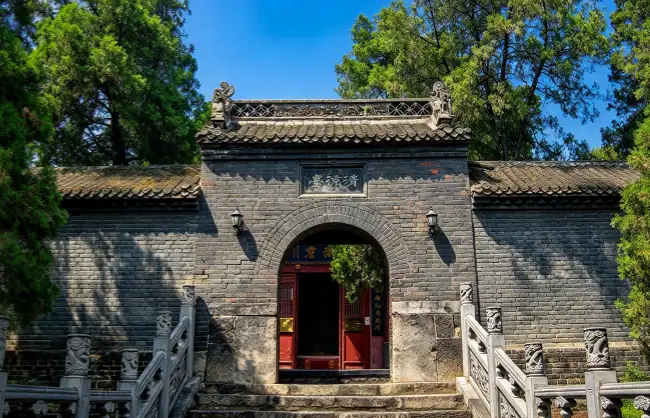
Making your way deeper into the temple, you’ll see the Qingliang, or Cooling, Terrace. It’s said to be where Liu Zhuang, the Ming Emperor of the Eastern Han Dynasty, spent his summers and studied as a young man.
Later, it became associated with the history of scripture translation and missionary work by She Moteng and Zhu Falan.
Qingliang Terrace is a brick platform raised above the surrounding ground. After climbing up, you can see the surrounding courtyards and some of the temple buildings. The Pilu Pavilion, located on the platform, is another must-see stop.
There’s also a Zhiyu, or Silent, Tea House near Qingliang Terrace. If it’s open, you can have free tea there as you take a break and soak in the temple’s atmosphere. But remember, as the tea house’s name indicates, you’ll need to remain quiet.
Where to Pray for A Blessing?
If you want to experience the local blessing culture, here are some common local beliefs for reference:
- For blessings for studies or career, go to Pilu Pavilion or Qingliang Terrace
- For blessings for success in a task, go to Jieyin Hall
- For blessings for romance and matchmaking, go to Duanwen Stele or the area around the Reverse-Sitting Guanyin
- For blessings for safety, go to Mahavira Hall

Witness an authentic Shaolin Kung Fu performance at the legendary temple, then explore Longmen Grottoes' tens of thousands of exquisite Buddha stone carvings.
A Practical 2–3 Hour Visit Route
If you don’t want to retrace your steps while visiting White Horse Temple, we recommend the route below:
Stop 1: Traditional Temple Area (60-75 mins)
Enter through the mountain gate and visit the main halls in sequence along the central axis, where you can observe different Buddha statues, roof styles, wood carvings, and temple designs.
Stop 2: Qingliang Terrace (15-20 mins)
Learn about the White Horse Temple’s connection with the early translations of the Buddhist scriptures.
Stop 3: International Buddhist Architecture Area (30-40 mins)
Visit Buddhist halls in Indian, Burmese, and Thai styles.
Stop 4: Qiyun Pagoda (15-20 mins)
See the ancient pagoda and experience the frog-croak echo.
How to Get to White Horse Temple
Bus
You can get to White Horse Temple using routes like bus #56 which has stops near Luoyang Station and in the city center. The journey takes approximately 1-1.5 hours, depending on traffic conditions.
Taxi or Rideshare
If you arrive at Luoyang Longmen Station by high-speed train, you can save time by taking a taxi or using a rideshare service, which can get you to White Horse Temple in just 45 minutes.
Private Vehicle
We recommend hiring a private car instead of taking public transport if you plan to visit White Horse Temple, the Longmen Grottoes, and other attractions all in one day. This is more time-efficient and makes it easier for you to set a pace that suits your itinerary.
Need help? Contact China Xian Tour and we’ll arrange a private vehicle and a professional one-to-one tour guide for you.
A whirlwind high-speed train trip from Beijing to Luoyang's Longmen Grottoes, White Horse Temple, and Shaolin Temple.
How Much are Tickets? How do Foreign Visitors Book Tickets?
An adult ticket for White Horse Temple costs CNY 35 (USD 5.23). Bookings can be made through the official WeChat account “Luoyang White Horse Temple”.
White Horse Temple is a popular destination during public holidays and the peony season, so if you’re planning to travel during those times, we recommend booking tickets 7 days ahead of your visit rather than trying your luck with a last-minute booking.
For foreign visitors specifically, please prepare your passport, booking confirmation, and the check-in QR code you get after successfully booking before you arrive.
Can You Visit White Horse Temple and the Longmen Grottoes in One Day?
Yes, though it’ll be a busy day.
The Longmen Grottoes and White Horse Temple represent two different aspects of the Buddhist culture in Luoyang: the Longmen Grottoes focus on large-scale cave carvings and imperial Buddhist art, while White Horse Temple offers insights into Buddhism’s introduction to China, temple culture, and the exchange between different Buddhist traditions.
If you plan to stay in Luoyang for only 1 day, we suggest planning 3-4 hours in the morning for Longmen Grottoes and 2-3 hours in the afternoon for White Horse Temple, plus travel time between the two sites. This itinerary is best for tourists who are willing to get started early or who hire a private vehicle.
If you’re leaving Luoyang by high-speed train later in the day, however, we don’t recommend visiting White Horse Temple in the late afternoon as you’ll need time to travel back to Luoyang Longmen Station.
If you have time for a 2-day trip, there’s no need to rush. You can visit White Horse Temple, Luoyang Museum, Luoyang Ancient Town, and other attractions in one day, making time for the Longmen Grottoes on your other day.
Best Time to Visit White Horse Temple & Practical Tips
What’s the best time to visit White Horse Temple?
The weather in spring and autumn is usually best for visits to the temple. April, when the peony scenery reaches its peak, is an especially good choice – but keep in mind that better weather and views mean the number of tourists increases as well. If you prefer a quiet tour, we recommend avoiding weekends and holidays or considering an autumn visit.
Additionally, White Horse Temple isn’t only for tourists, but also local worshippers who hold routine gatherings on weekends and holidays. For a better experience, consider arriving early in the morning.
Is White Horse Temple wheelchair accessible?
Getting around White Horse Temple in a wheelchair is relatively convenient. The main entrance of the scenic area has an accessible ramp path, and the main roads are relatively even, except for some of the thresholds and steps at the hall entrances.
In short, visitors in wheelchairs can access most areas, but may need assistance to enter some halls.
Is there any special temple etiquette?
Visitors should follow the temple’s dress code and avoid revealing clothing. Additionally, smoking and drone photography are strictly prohibited inside the temple. Please remain quiet when visiting the halls and avoid touching religious objects without permission.
Is there an electronic tour guide service?
The visitor center provides electronic audio guides in Chinese and English. The rental fee for each device is CNY 20 (USD 3) with an additional deposit of CNY 200 (USD 30).
Journey through China's ancient heartland visiting UNESCO sites including Yin Ruins, Shaolin Temple, and Longmen Grottoes across Zhengzhou, Kaifeng, Dengfeng and Luoyang.
Plan Your Visit to White Horse Temple with China Xian Tour
If you want to delve deeper into Luoyang’s Buddhist culture and history, you can’t miss spending at least half a day at White Horse Temple. For a smoother visit, book tickets and plan your visiting route in advance.
Not sure where to start? Just contact China Xian Tour. We’ll help you arrange private vehicles or customize an immersive itinerary that covers White Horse Temple and other Luoyang highlights so your trip to Luoyang is fun and worry-free.


