

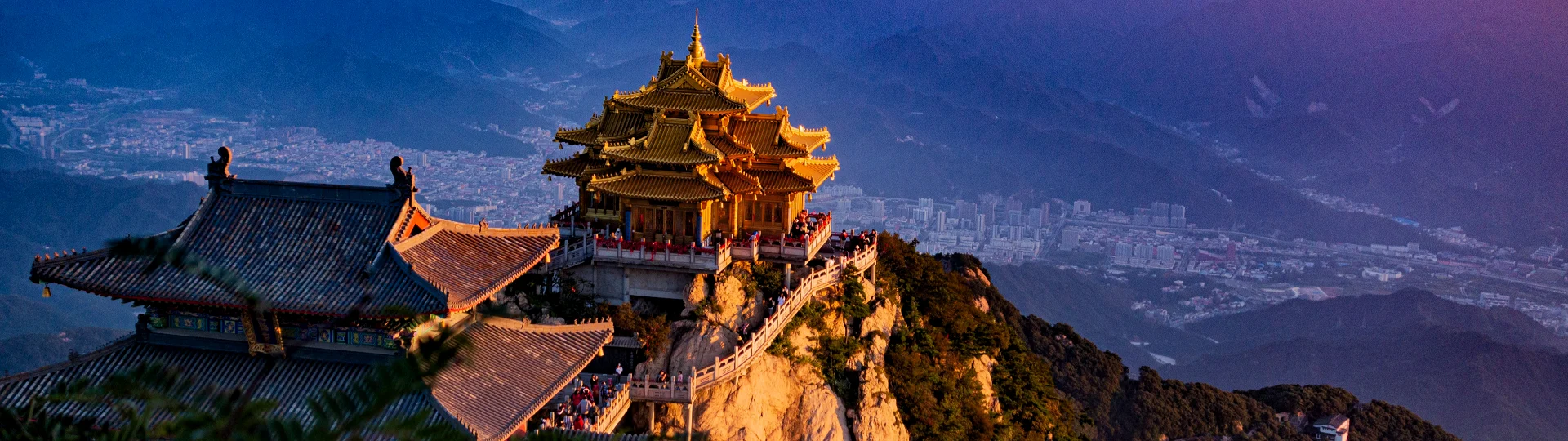
If you are interested in Buddhist culture, consider planning a trip mainly focusing on the best temples in China. While there are thousands of temples and monasteries, each reflects the country’s rich religious traditions, ancient history, and architectural achievements.
Besides, these temple all have their own unique highlights. Among them, you can see the birthplace of Chinese Buddhism, sacred mountain monasteries, and imperial temples.
To have a complete exploration of these spiritual sites, you’ll need a clear guide covering important details like time, location, history, and visiting etiquette. This guide introduces the top 10 Buddhist temples in China and helps you plan an unforgettable journey to China.
Content Preview
- 1. Shaolin Temple (Dengfeng)
- 2. Temple of Heaven (Beijing)
- 3. White Horse Temple (Luoyang)
- 4. Famen Temple (Baoji)
- 5. Jokhang Temple (Lhasa)
- 6. Lingyin Temple (Hangzhou)
- 7. Nanputuo Temple (Xiamen)
- 8. Daci’en Temple (Xi’an)
- 9. Daxiangguo Temple (Kaifeng)
- 10. Hanging Temple (Xuankong Temple)
- Other Buddhist Temples to Explore in China
- Essential Tips
- Explore Famous Buddhist Temples with China Xian Tour
1. Shaolin Temple (Dengfeng)
- Location: Dengfeng, Henan Province
- Recommended Visiting Time: 3–4 hours(half-day for a complete visit)
- Highlights: Shaolin Kung Fu, Pagoda Forest, Zen Buddhism, Kung Fu show
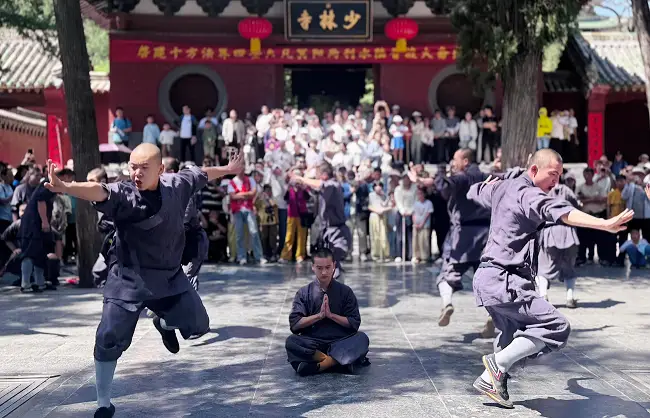
The Shaolin Temple is a place that is often mentioned in Chinese martial arts or Kung Fu movies. It’s located at the foot of Mount Song in Dengfeng and is best known as the legendary birthplace of Shaolin Kung Fu.
Warrior monks in the temple have held fast to their tradition of practicing martial arts combined with Zen meditation for more than 1,500 years. This tradition has long been a symbol of both spiritual discipline and physical strength.
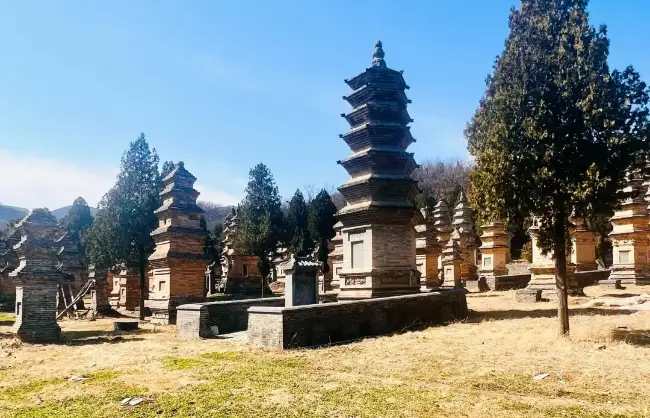
For visitors, the best experiences include watching an exciting Kung Fu performance, strolling through the ancient temple halls, and visiting the Pagoda Forest outside the temple.
The Pagoda Forest has 241 pagodas built from the Tang Dynasty to the Qing Dynasty, and it’s the largest of its kind in China.
Fans of Black Myth: Wukong may also recognize many architectural details that inspired scenes in the game.
Witness an authentic Shaolin Kung Fu performance at the legendary temple, then explore Longmen Grottoes' tens of thousands of exquisite Buddha stone carvings.
2. Temple of Heaven (Beijing)
- Location: Beijing(southern part of the city)
- Recommended Visiting Time: 2 hours for the main sites, half-day for the entire temple
- Highlights: Hall of Prayer for Good Harvests, imperial worship site, ancient cypress trees, and local morning life
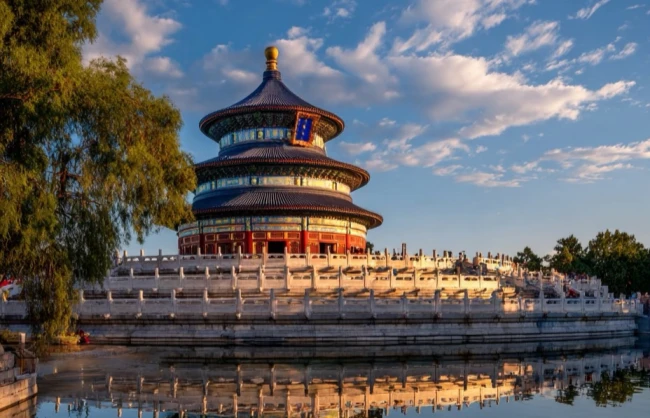
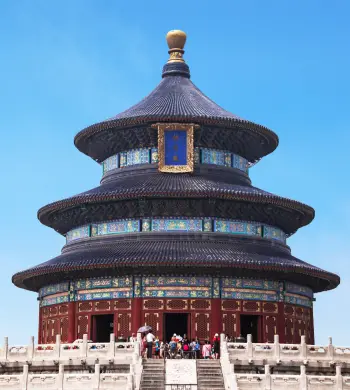
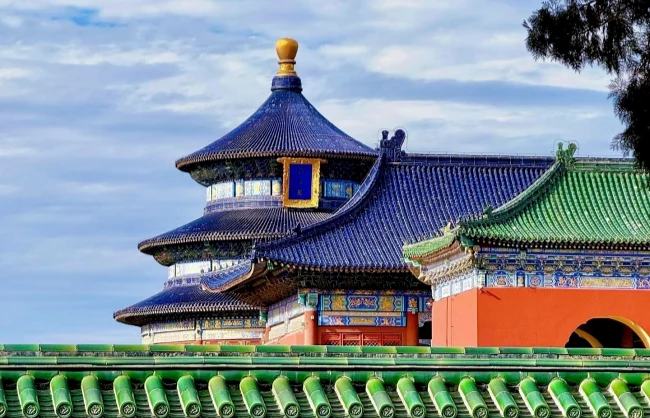
The Temple of Heaven is not a Buddhist temple. However, it’s one of the most important religious sites for anyone interested in Chinese history and culture.
It was built as the sacred place where Ming and Qing emperors prayed for good harvests and a good life for their people.
The blue-roofed Hall of Prayer for Good Harvests is the park’s best-known landmark. There are more than 3,500 ancient trees planted here, about 1,000 of them are over 300 years old.
The glamour of the royal past still lingers in the Temple of Heaven, even though the park has long become a lively public space where locals gather.
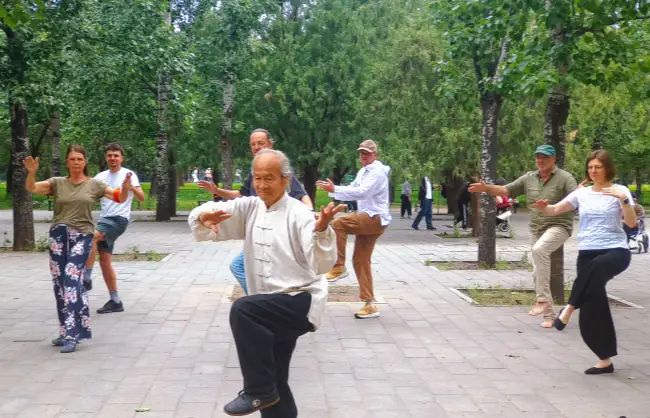
Visit in the early morning to see locals practicing tai chi, singing opera, or exercising beneath centuries-old cypress trees. It’s a great place to experience both Beijing’s royal heritage and everyday life.
Explore Beijing's Forbidden City, Temple of Heaven, Summer Palace, and hidden hutongs, then experience a rare illuminated night tour of Simatai Great Wall at Gubei Water Town.
3. White Horse Temple (Luoyang)
- Location: Luoyang, Henan Province
- Recommended visiting time: 2-3 hours
- Highlights: Ancient Buddhist culture, international Buddhist halls, Qiyun Pagoda
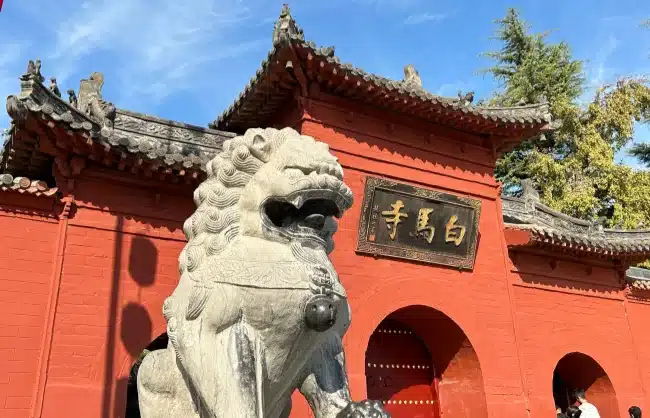
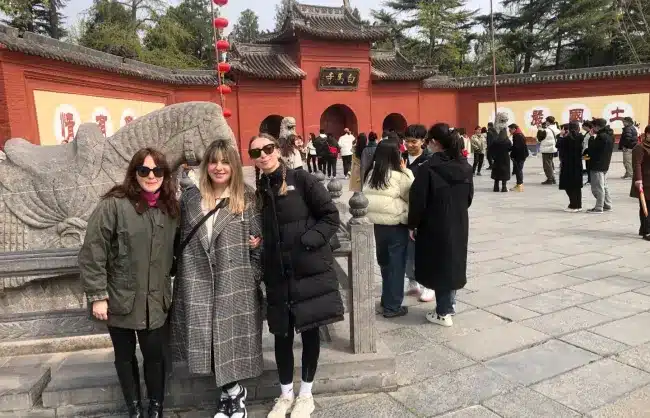
White Horse Temple is known as the “First Ancient Temple in China.” It was the first Buddhist temple built by authority after Buddhism was introduced to China. It has a history of over 1,900 years, starting from the Han Dynasty.
According to legend, two envoys returned from the West with Buddhist scriptures carried by white horses, and the temple was named after this story.
One of its most distinctive features is the collection of Buddhist halls inspired by Chinese, Indian, Myanmar, and Thai architectural styles, offering a unique journey through different Buddhist cultures.
AM: Start the tour with Longmen Grottoes which is a treasure house of ancient stone-carving art more than 100,000 stone statues here, varying from 2-centimeter to 17.14-meter high and extending for...
4. Famen Temple (Baoji)
- Location: Baoji, Shaanxi Province
- Recommended visiting time: 3–4 hours
- Highlights: Buddha Finger Relic, Underground Palace, Famen Temple Museum, Tang Dynasty Treasures
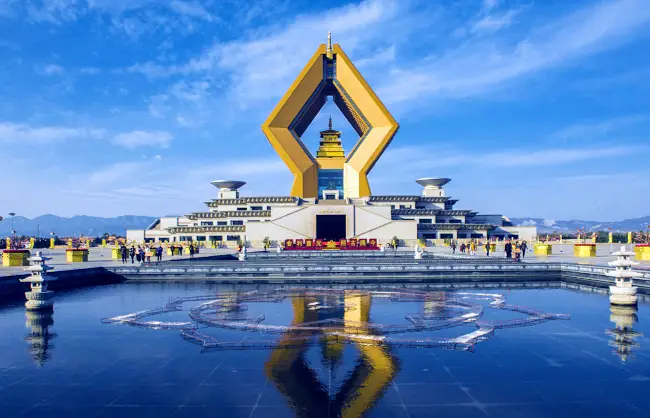
Famen Temple is a world-famous Buddhist site located about 120 km west of Xi’an. Many people know it because it houses a finger bone relic of Sakyamuni Buddha.
In 1987, the underground palace in the temple was accidentally discovered during the restoration of the ancient pagoda.
Although this small palace covers only 31.48 square meters, it preserves 2,499 precious treasures.
These treasures include four Bodhisattva statues, exquisite ceramics and silk, as well as fine gold and silver artifacts. Among them, the Double-Wheel Twelve-Ring Gold and Silver Staff is an absolute highlight. It’s the earliest, largest, and highest-ranking Buddhist ritual object of its kind ever discovered.
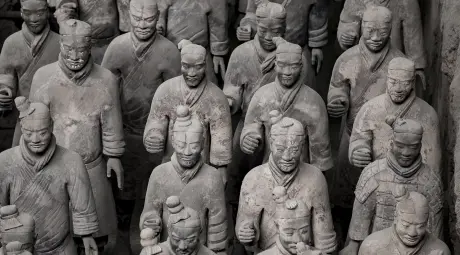
Like the Terracotta Warriors, Famen Temple is also one of the most iconic and worth-visiting attractions in Xi’an.

Combine two profound historical sites in one day — the sacred Famen Temple housing Buddha's relic and Hanyangling Mausoleum with its remarkable underground exhibition of Han Dynasty burial art.
5. Jokhang Temple (Lhasa)
- Location: Lhasa, Tibet
- Recommended visiting time: 5–2 hours (about 3 hours if including a walk around Barkhor Street to spin prayer wheels and observe pilgrims)
- Highlights: 12-year-old life-size statue of Sakyamuni, Tibetan Buddhist culture, ancient architecture, pilgrimage atmosphere
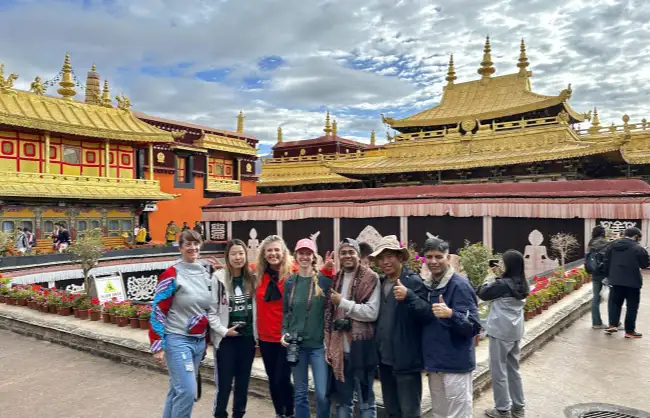
Jokhang Temple sits in the center of Lhasa’s old town. It was built by King Songtsen Gampo in the 7th century, with a history of over 1,300 years.
It is the spiritual heart of Lhasa and one of the most sacred sites in Tibetan Buddhism. A special thing about this temple is that, every year from the first to the third month of the Tibetan calendar, pilgrims from across the region gather here for worship and prayers.
When visiting Jokhang Temple, you’ll see the life-size statue of Sakyamuni Buddha at the age of 12. It was one of the most sacred Buddhist images brought from Chang’an by Princess Wencheng of the Tang Dynasty.
In addition to the statue, visitors can also admire the temple’s golden roofs, intricate murals, and the pilgrimage atmosphere around Barkhor Street.

Discover Lhasa's spiritual heart through the magnificent Potala Palace, sacred Jokhang Temple, and serene Norbulingka Park with expert guides.
6. Lingyin Temple (Hangzhou)
- Location: Hangzhou, Zhejiang Province
- Recommended visiting time: 2–3 hours
- Highlights: Feilai Peak Grottoes, 24.8-meter wooden Buddha statue, peaceful mountain scenery
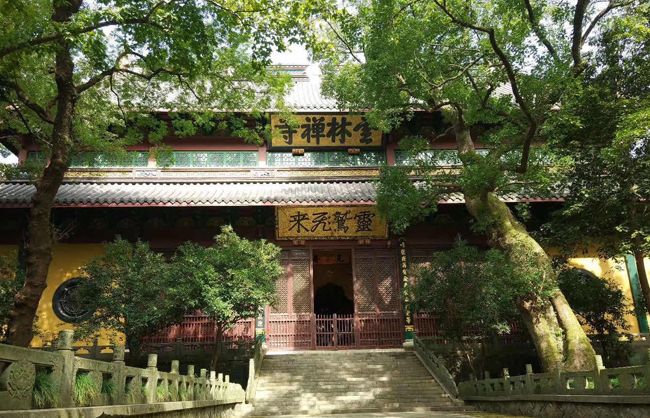
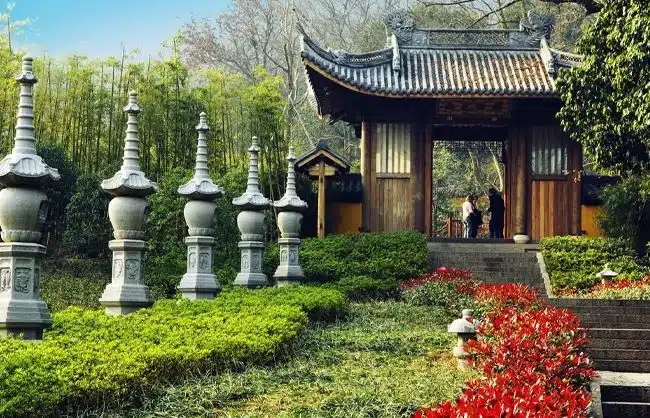
Lingyin Temple is located northwest of West Lake in Hangzhou. It has Beigao Peak behind and Feilai Peak in front.
You’ll forget about the busy city life once stepping into the temple’s peaceful atmosphere, which is created by the surrounding green mountains and quiet forests.
Inside the temple, there’s Mahavira Hall, where a magnificent 24.8-meter-tall wooden statue of Shakyamuni Buddha stands.
Outside the temple, you can visit Feilai Peak and see over 380 Buddhist carvings from the Five Dynasties to the Yuan Dynasty. Among them, the smiling Maitreya Buddha from the Song Dynasty is the most popular with visitors.
Explore Hangzhou's serene West Lake and tea villages before marveling at the granite peaks of legendary Huangshan Mountain.
7. Nanputuo Temple (Xiamen)
- Location: Xiamen, Fujian
- Recommended visiting time: 2 hours (about 3 hours with Wulao Peak hiking)
- Highlights: Guanyin worship, Minnan-style architecture, sea views from Wulao Peak
Nanputuo Temple is one of the most famous Buddhist temples in Xiamen, located at the foot of Wulao Peak. It has a beautiful view with mountains behind and faces the sea in the distance, being called Nanputuo because it is located south of Mount Putuo in Zhejiang.
The temple mainly worships Guanyin Bodhisattva and features an exquisite Dabei Hall (Great Compassion Hall). The hall has a unique octagonal three-story design and houses a 48-armed Guanyin statue.
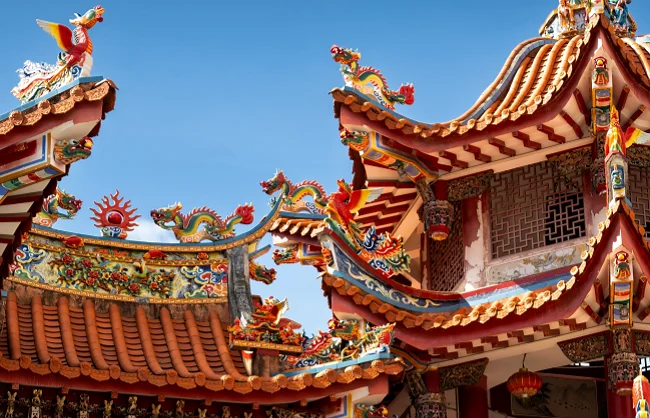
The temple is also a good place to appreciate the distinctive Southern Fujian ceramic art: Minnan ceramic cut-and-inlay art (Jian Ci Diao), a traditional ceramic craft listed as intangible cultural heritage.
Look closely at the rooftops, and you’ll see colorful porcelain shards being delicately arranged into dragons, phoenixes, flowers, birds, and other figures.
After visiting the temple, travelers can climb Wulao Peak for stunning views of Xiamen and the coastline.
8. Daci’en Temple (Xi’an)
- Location: Xi’an, Shaanxi Province
- Recommended visiting time: 2 hours (including the temple and Big Wild Goose Pagoda); 2–3 hours if visiting nearby Datang Everbright City at night.
- Highlights: Xuanzang’s Buddhist history, Big Wild Goose Pagoda, Tang Dynasty culture
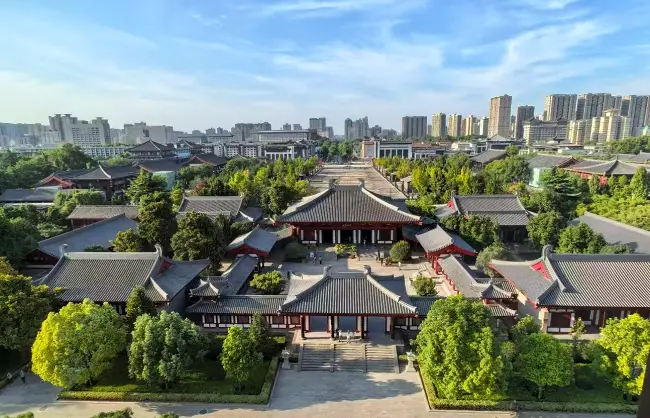
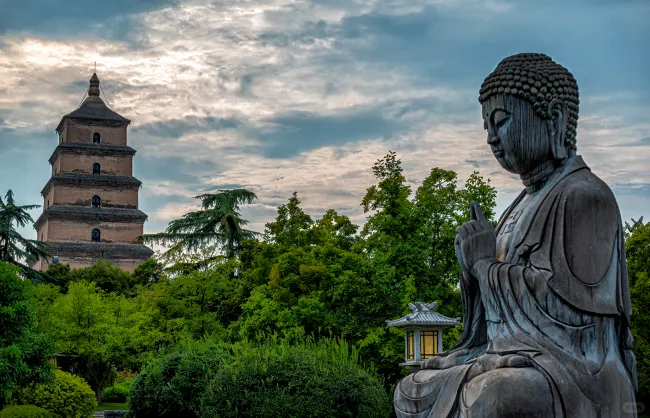
Daci’en Temple is a historic Buddhist temple in Xi’an built in the Tang Dynasty. Its history is closely connected to the renowned monk Xuanzang, the real-life inspiration for the Tang Monk character in Journey to the West.
Daci’en Temple was where this famous monk translated the Buddhist scriptures and gave lectures. The Big Wild Goose Pagoda in the temple was built under Xuanzang’s request as a place to store the Buddhist scriptures and statues he brought from India.
If time allows, climb the old brick stairs to the top of the pagoda, where you can enjoy stunning views of the temple complex and Xi’an’s cityscape.
The best time to visit is in the afternoon. After the exploration, continue to nearby Datang Everbright City at night to embark on a journey back to the Tang Dynasty.
9. Daxiangguo Temple (Kaifeng)
- Location: Kaifeng, Henan Province
- Recommended visiting time: 5–2 hours
- Highlights: Eight-sided Glazed Hall, Thousand-Hand Guanyin Statue, Northern Song Buddhist culture
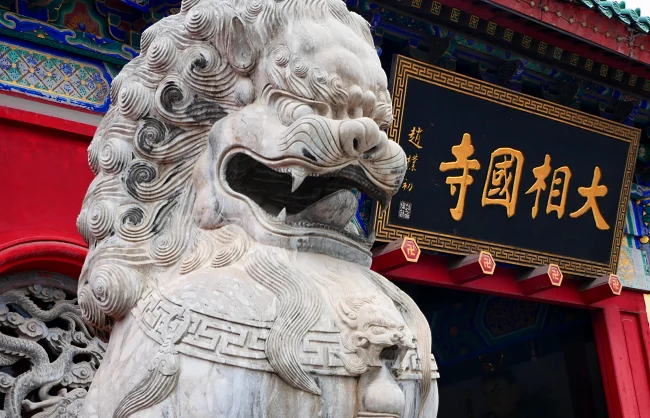
Kaifeng Daxiangguo Temple was one of the most important Buddhist centers in China during the Northern Song Dynasty. It also served as a royal temple where imperial ceremonies were held.
The highlight here is the Eight-sided Glazed Hall, which houses a nearly 7-meter-tall Thousand-Hand Thousand-Eye Guanyin Statue.
This statue was carved from a single ginkgo tree by a craftsman during the reign of Emperor Qianlong of the Qing Dynasty. The work has 1,048 hands and eyes, taking the craftsman 48 years to complete.
10. Hanging Temple (Xuankong Temple)
- Location: Datong, Shanxi Province
- Recommended visiting time: 5–2 hours (allow around 3 hours during peak seasons due to queues)
- Highlights: Cliffside architecture, three-religion fusion, stunning ancient construction
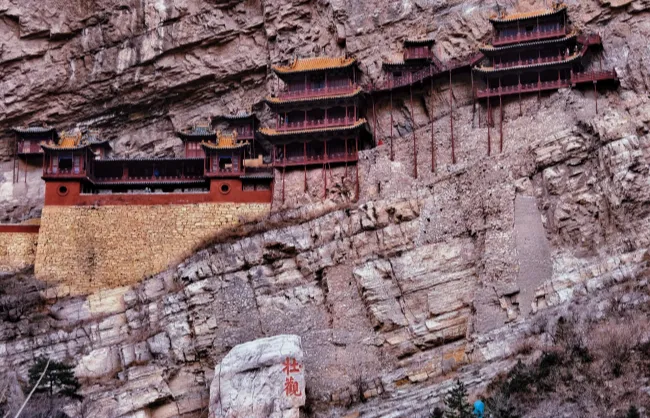
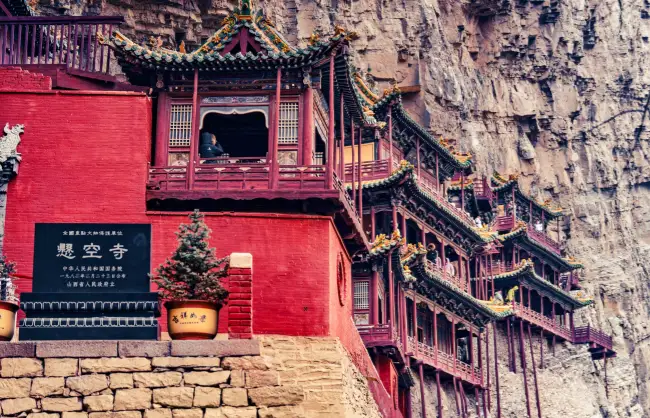
The Hanging Temple (Xuankong Temple) is one of China’s most breathtaking ancient buildings, built into the cliffs of Mount Heng. It was named one of the World’s Top 10 Most Dangerous Buildings by TIME magazine in 2010.
The temple appears to hang about 80 meters above the ground, and has remained standing for over 1,400 years. All the wooden halls “in the sky” look like a delicate and surreal sculpture hanging on the rock face.
Beyond its engineering achievement, it’s also valued as a rare temple in China that combines Buddhism, Taoism, and Confucian philosophy. So you can actually see statues from all three traditions inside the temple.
One thing particularly important for visitors is that daily entrance tickets are limited, especially for climbing into the temple. Booking ahead is highly recommended.
Marvel at the gravity-defying Hanging Temple, explore Yungang Grottoes' magnificent Buddhist carvings, and wander Pingyao's perfectly preserved Ming-Qing streets.
Other Buddhist Temples to Explore in China
Temple |
Location |
Why It Is Worth Visiting |
Guoqing Temple |
Tiantai, Zhejiang Province |
One of the birthplaces of the Tiantai school of Buddhism. Quiet mountain setting, over 1,400 years of history. |
Kumbum Monastery (Ta’er Monastery) |
Xining, Qinghai Province |
Tibetan Buddhist monastery. Butter sculptures, murals, embroidery, a unique blend of Tibetan and Han cultures. |
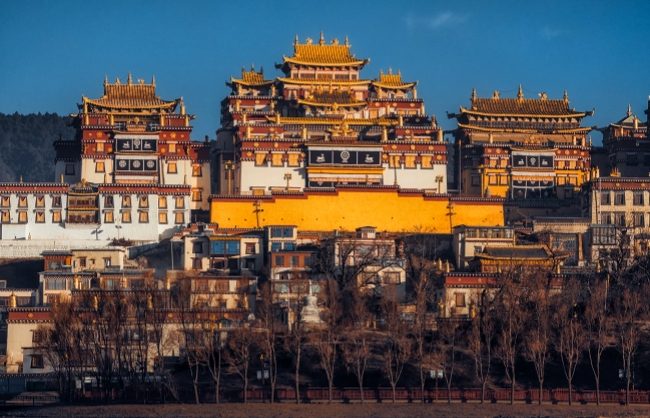
Songzanlin Monastery |
Shangri-La, Yunnan Province |
“Little Potala Palace.”
Grand Tibetan-style architecture, a peaceful plateau atmosphere. |
Palcho Monastery |
Gyantse, Tibet Autonomous Region |
Unique combination of different Tibetan Buddhist traditions, Kumbum Stupa. |
Matisi Temple |
Zhangye, Gansu Province |
A hidden Buddhist treasure along the ancient Silk Road. Cliff carvings, grottoes, mountain scenery. |
Foguang Temple |
Xinzhou, Shanxi Province |
Home to one of China’s oldest surviving wooden buildings from the Tang Dynasty. Ancient Chinese architecture. |
Essential Tips When Visiting Temples and Monasteries in China
- Keep quiet inside temples and monasteries. Avoid talking, laughing, and shouting loudly. Also, do not smoke, spit, or litter since they are all considered disrespectful.
- When visiting temples or monasteries, it’s better to wear clean and modest clothing that can cover your shoulders and knees.
- Photography is usually allowed in outdoor areas. However, many halls inside the temples and monasteries prohibit photography and also video recording. These are places where sacred statues and relics are enshrined.
- In most Chinese Buddhist and Taoist temples, you can enter with your shoes on unless there is a sign specially asking you to remove your shoes.
- Keep an open mind and respect different beliefs and traditions.
Explore Famous Buddhist Temples with China Xian Tour
While exploring these ancient and sacred temples, you can also feel connected with China’s profound Buddhist culture and living history.
To make your journey smooth and comfortable, China Xian Tour provides expertly crafted itineraries that bring these historical wonders to life.
Beyond visiting the temples themselves, our local team can also help you integrate nearby iconic scenic spots into your route, giving you a far richer and more immersive travel experience.


