


Chinese pagodas begin with the introduction of Buddhism from India. The original Indian architecture was the dome-shaped stupa. Chinese elements were gradually integrated into it when Buddhism traveled along the Silk Road.
Chinese architects merged it with the multi-storied watchtowers in China and finally an iconic, tiered tower took shape.
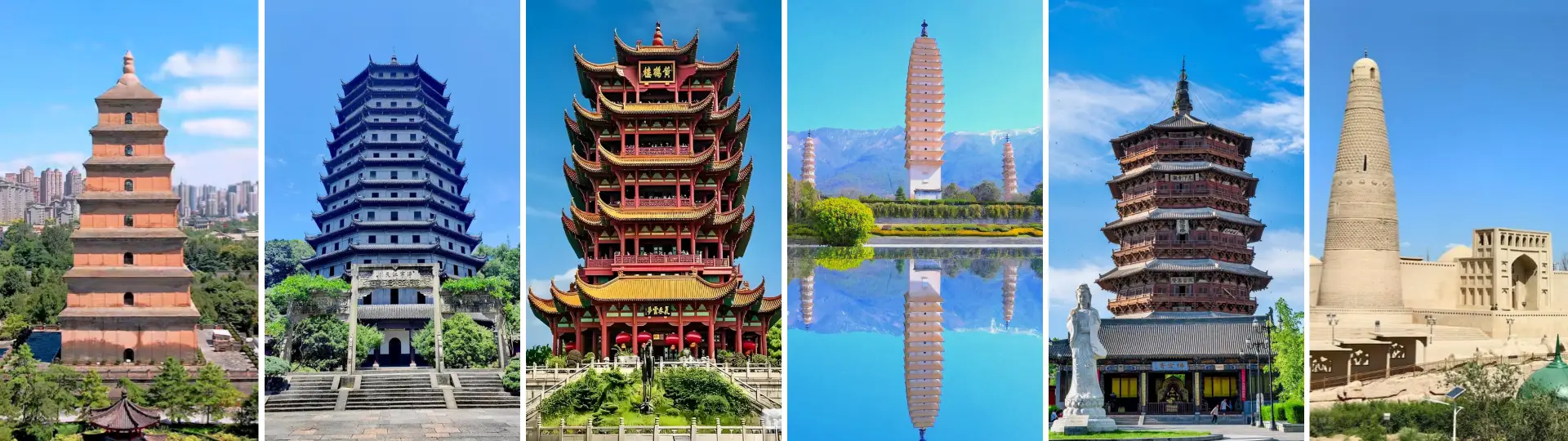
The primary purpose of pagodas in China is to hold the remains and the relics of the Buddha or revered monks. The symbolism of China pagodas showcases the spiritual pursuit of the Chinese nation. The majestic image of pagoda is a sign of power. In Chinese Taoism, pagodas also stand for the infinity of the universe. Below is a detailed description of Chinese top 11 pagodas.
Content Preview
- 1. Big Wild Goose Pagoda in Xian
- 2. Liuhe Pagoda in Hangzhou (Six Harmonies Pagoda)
- 3. Yellow Crane Tower, Wuhan
- 4. Leifeng Pagoda, Hangzhou
- 5. Yingxian Wooden Pagoda, Shanxi
- 6. White Pagoda in Miaoying Temple, Beijing
- 7. Three Pagodas, Dali
- 8. Iron Pagoda, Kaifeng
- 9. Songyue Pagoda, Dengfeng
- 10. Emin Minaret (Sugong Pagoda), Turpan
- 11. Tiger Hill Pagoda, Suzhou
- Main Types of Chinese Pagodas
- Visiting Tips for Travelers
- FAQs about Chinese Pagodas
- Discover More of China’s Architectural Treasures with China Xian Tour
1. Big Wild Goose Pagoda in Xian
- Location: Xi’an, Shaanxi Province
- Address: No. 1, Cien Road, Yanta District, Xi’an
- Opening Hours: Jan 1 – Mar 14:8:30 AM – 17:40 PM (Entry to the pagoda will be closed at 16:40.); Mar 15 – Dec 31: 8:30 AM – 18:00 PM (Entry to the pagoda will be closed at 17:00.)
- Ticket Fare: 18 CYN per person. Pay an additional 25 CNY if you want to ascend the pagoda.
Cultural Significance
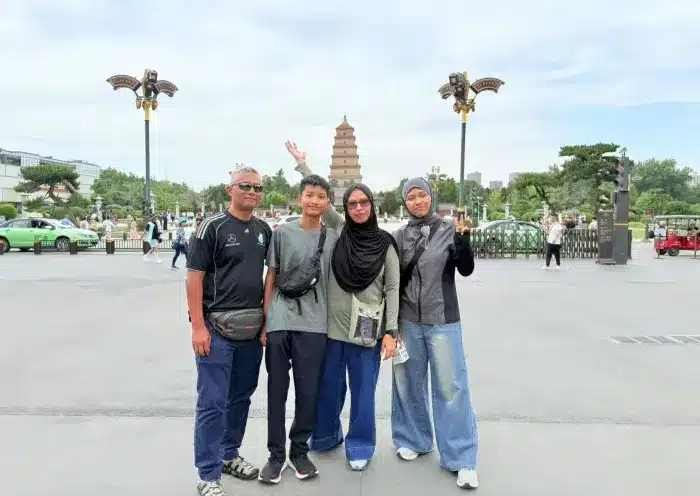
The Big Wild Goose Pagoda is one of the most sacred and renowned Buddhist structures in China, standing as a can’t-miss for Xian tours. It is also a key accountable of the cultural interactions between the East and the West during the successful times of the Silk Road.
With a height of 64.5 meters (211 feet), it was built in 652 AD during the Tang Dynasty to house the precious Buddhist sutras, statues, and relics brought back from India by the legendary monk Xuanzang, celebrated in the classic novel Journey to the West. This pagoda is also his translation library. The name, “Wild Goose”, comes from a fun legend. A wild goose fell before a starving monastery and was believed as an incarnation of a Bodhisattva.
Architecture and Design Features
The Big Wild Goose Pagoda initially had five stories though this has been extended up to the current seven stories. This figure symbolizes the enlightenment of seven degrees of the Buddhist religion. The pagoda gradually tapes as it rises.
Things to Do Around Big Goose Pagoda
- The North Square Music Fountain Show
This musical fountain stands at north of the pagoda and is one of the largest musical fountains in Asia.
- The Tang Paradise
It is located on the southeast side of the pagoda and is the first large royal garden-style cultural theme park to reflect the features of the prosperous Tang Dynasty in a comprehensive manner in China.
Suggested Xian tours with Big Wild Goose Pagoda:
2 Days Private Xian Highlights Tour
3 Days Xian Private Trip: History Exploration & Tang Costume Experience
2. Liuhe Pagoda in Hangzhou (Six Harmonies Pagoda)
- Location: Hangzhou, Zhejiang Province
- Address: No. 16, Zhijiang Road, Xihu District, Hangzhou(near the Qiantang River)
- Opening Hours: 7:00 AM – 17:30 PM (Entry to the pagoda will be closed at 16:55.)
- Ticket Fare: 20 CYN per person
Cultural Significance
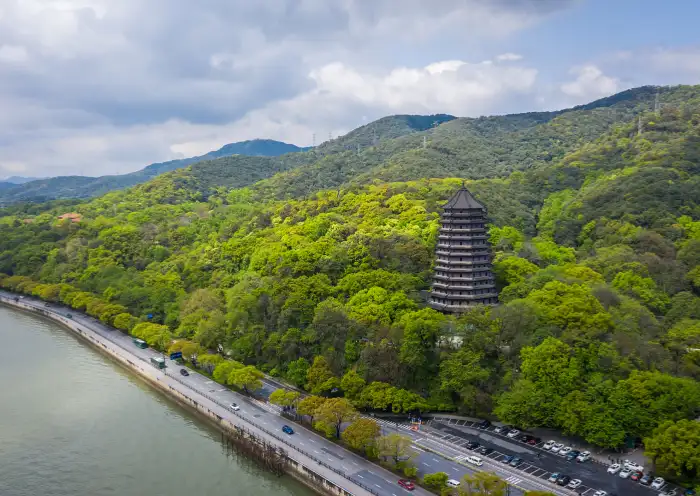
The Liuhe Pagoda (aka Six Harmonies Pagoda) takes the meaning of the Buddhist concept of “Six Harmonies” and the meaning of “Heaven, Earth and the Four Directions”. It was built in 970 AD by the King of Wuyue to suppress the tide of the Qiantang River. Lights were installed on the top of the tower as a marker for night navigation on the Qiantang River.
It is among the best-preserved pagodas in China, which is constructed of wood and brick, indicating the amazing mastery of tower building and art work of ancient masters. Lu Zhishen, who was the heroic monk of Liangshan, died here according to Water Margin. The hero by the name of Wu Song who battled tigers at Jingyanggang also died here. In fact, there are still portraits of Lu Zhishen and Wu Song in the pagoda today.
Architecture and Design Features
The Liuhe Pagoda is based on the octagonal shape and its height is 59.89 meters and the area is 888 square meters. The ingenuity between the external and internal structures is one of the most peculiar features of it. On the outside we observe a 13 story octagonal tower with upturned eaves. However, it only has seven actual stories from the interior. Each story has an internal corridor and a tower chamber.
Things to Do Around Liuhe Pagoda
- The Pagoda Top
A 360-degree panoramic view of the Qiantang River is always waiting for you at the top.
- The Liuhe Pagoda Park
You can find statues and history about the pagoda in this beautifully landscaped park.
Suggested tour: 2 Days Hangzhou Essence Tour
3. Yellow Crane Tower, Wuhan
- Location: Wuhan, Hubei Province
- Address: No. 1, Sheshan (Snake Hill), Wuchang District, Wuhan
- Opening Hours: 8:30 AM – 18:00 PM(Entry to the pagoda will be closed at 17:20.)
- Ticket Fare: 65 CYN per person
Cultural Significance
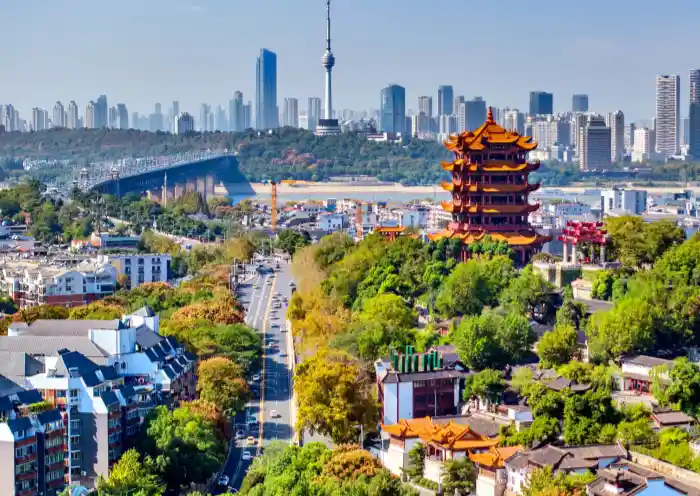
The Yellow Crane Tower is the most commonly employed in the Chinese poetry. It has more than 1800-year history. There is a tale of a fairy in old days called the Yellow Crane Fairy who was commonly changed into yellow cranes on roofs and flew around in the clouds. People called this building Yellow Crane Tower in order to memorize this fairy.
This tower has attracted numerous poets throughout history. Almost every Chinese can recite the poem Yellow Crane Tower, written by a Tang Dynasty poet Cui Hao. The tower has been rebuilt for many times for its importance as a symbol of Wuhan’s resilience and cultural identity.
Architecture and Design Features
It is at the top of Snake Mountain with a height of 61.7 meters. The train of the Beijing-Guangzhou Railway runs under the pagoda. It covers an area of 3219 square meters and is five stories high, symbolizing the five elements (wood, fire, earth, metal, water). The tower is supported by 72 cylinders.
Things to Do Around Yellow Crane Tower
- The Yangtze River
From the tower, you can admire the view of the Yangtze River, the Wuhan Yangtze River Bridge, and the cityscape of Wuhan’s three towns.
- The Park
The Yellow Crane Tower is at the center of a beautiful park. You can take time to stroll around the park and admire the statues and steles.
4. Leifeng Pagoda, Hangzhou
- Location: Hangzhou, Zhejiang Province
- Address: No. 15, Nanshan Road, Xihu District, Hangzhou
- Opening Hours: Mar 16 – Apr 30:8:00 AM – 19:00 PM (Entry to the pagoda will be closed at 18:30.); May 1 – Oct 31: 8:00 AM – 20:00 PM (Entry to the pagoda will be closed at 19:30.); Nov 1 – Mar 15: 8:00 AM – 17:30 PM (Entry to the pagoda will be closed at 19:00.)
- Ticket Fare: 65 CYN
Cultural Significance
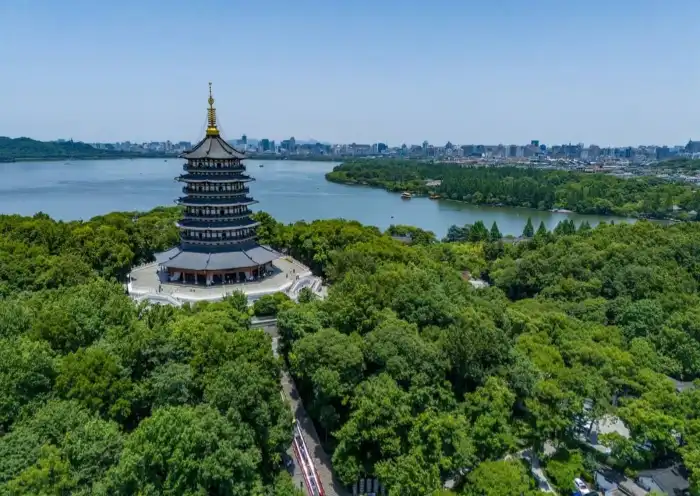
Leifeng Pagoda is famous for a Chinese folk tale, Legend of the White Snake. A white snake, Bai Suzhen, fell in love with a mortal man. Because of that, she was imprisoned by a monk Fahai beneath the pagoda. This pagoda becomes a symbol of romantic tragedy. Now it is listed as one of the ten classic views of West Lake.
Leifeng Pagoda in the evening glow attracts people from all over the world. Lin Bu, a poet of the Northern Song Dynasty portrayed this stunning view first. It is a milestone highlights the charm of cultural heritage.
Architecture and Design Features
The Leifeng Pagoda is 71.679 meters high and covers a total area of 3,133 square meters. It is the first colored copper pagoda in China. A brilliant view on the West Lake skyline, the pagoda is octagonal-shaped like the style of Tang and Song Dynasty pavilions with eaves upturned. The bottom of the pagoda is the original site of Leifeng Pagoda.
Things to Do Around Leifeng Pagoda
- The West Lake
The top of the pagoda provides the most beautiful view of the West Lake.
- The Wooden Carvings
Each floor has the dark rosewood carvings depicting the entire story of the Legend of the White Snake. It can’t be missed.
Suggested tour: Best Hangzhou Day Tour
5. Yingxian Wooden Pagoda, Shanxi
- Location: Ying County, Shuozhou City, Shanxi Province
- Address: No. 1, Yingyuan Street, Ying County, Shuozhou City
- Opening Hours: 8:00 AM – 17:30 PM (Entry to the pagoda will be closed at 19:15.)
- Ticket Fare: 48 CYN for adults, 25 CYN for students/children.
Cultural Significance
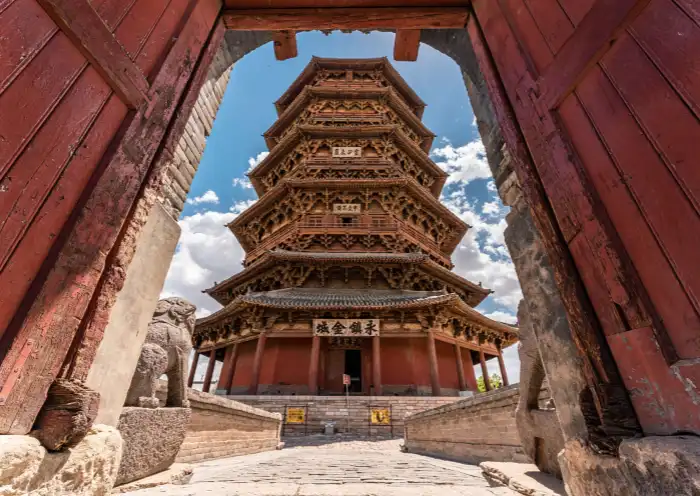
Its official name is Pagoda of Fogong Temple. It is the tallest and oldest pure wooden pavilion-style building still existing in the world, one of the three rare towers of the world. Suffering from wars and earthquakes, it is still standing. The locals attribute it to the divine protection.
The pagoda is regarded as a reference in the development of Chinese architecture and a treasure trove of knowledge in fields such as earthquake resistance and lightning protection. In September 2016, it was certified by Guinness World Records as “the world’s tallest wooden pagoda”.
Architecture and Design Features
It is 67.31 meters high, with a base diameter of 30.27 meters and a total weight of over 7,400 tons. The wood used amounts to tens of thousands of cubic meters. The main body is made of larch and the bracket used is elm. The entire building consists of three parts: the tower base, the tower body and the tower spire.
Things to Do Around the Pagoda
- The Fogong Temple Halls
You can explore the pagoda’s religious function and other ancient Buddhist statues here.
- The Architecture from the Ground
For protection, the pagoda is not allowed to be climbed. Therefore, you can stroll around the base and observe its wooden skeleton.
6. White Pagoda in Miaoying Temple, Beijing
- Location: Beijing
- Address: No. 171, Fuchengmen Inner Street, Xicheng District
- Opening Hours: Jan 1 – Jun 30:9:00 AM – 17:00 PM (Entry to the pagoda will be closed at 16:30. The pagoda is closed on Monday.);Sep 1 – Dec 31: 9:00 AM – 17:00 PM (Entry to the pagoda will be closed at 16:30.)
- Ticket Fare: 20 CYN per person
Cultural Significance
It is an important symbol remaining from the Yuan Dynasty and is the earliest and largest existing Lamaism Pagoda in China. The White Pagoda is proportionate and it is also the oldest and largest Tibetan Buddhist pagoda (dagoba) in Beijing. The pagoda assists the learning of Buddhism and architectural art of the Yuan Dynasty.
It is imported in Nepal, which symbolizes the friendship and cultural exchanges between the Chinese and Nepal people.
Architecture and Design Characteristics.
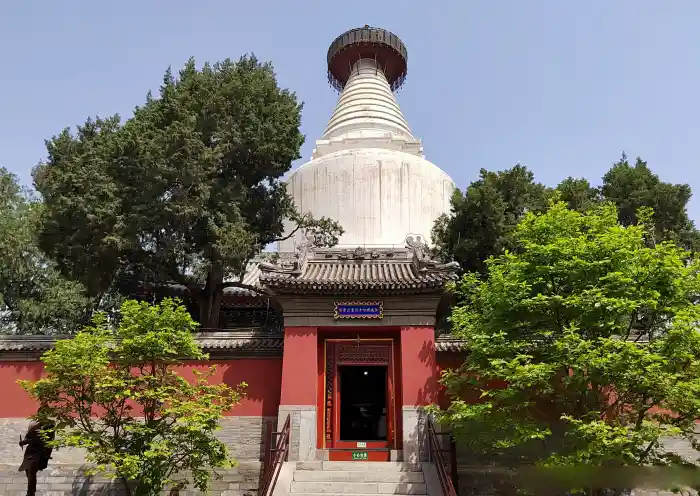
The pagoda is constructed with the form of a special Nepalese Lamaist Pagoda in a form of a covered bowl. The height of it is about 50.9 meters (167 feet) and it is constructed of brick and stone.
There are three sections: the base, the body and the spire. The square base represents the earth, the round dome represents water, and the 13-tiered spire represents the stages to enlightenment.
Things to Do Around the Pagoda
- The Miaoying Temple Halls
In this hall, you can explore the Yuan Dynasty Buddhist statues and artifacts.
- The Red Wall and White Pagoda View
The color contrast is an iconic scene of Beijing.
Suggested Beijing tours:
7. Three Pagodas, Dali
- Location: Dali, Yunnan Province
- Address: Three PagodasPark, Dali Town
- Opening Hours: 7:30 AM – 18:30 PM (Entry to the pagoda will be closed at 18:10.)
- Ticket Fare: 73 CYN.
Cultural Significance
The Three Pagodas represent a symbol of Dali, the zenith of the power and holiness of the Nanzhao and Dali Kingdoms. Frequent floods of this region occurred in the ancient times. Three Pagodas were constructed to suppress them. They survived in severe earthquakes, a symbol of divine protection.
Many cultural relics were unearthed from the Three Pagodas, including Buddhist statues from the Nanzhao and Dali periods, Buddhist texts, cinnabar and so on. Those provide valuable materials for the study of the history, religion and culture of the Nanzhao and Dali periods.
Architecture and Design Features
Three Pagodas is a combination of one tall square pagoda, and two smaller octagonal ones. The high pagoda is called Qianxun Pagoda, a tower of 16 storeys and 69.6 meters (228 ft) in height. These two small towers are separated by a distance of 97 meters and the height of both towers is 42.19 meters. The western side of the mountain is to the Yingle Peak of the Cangshan Mountain and Eastern is Erhai Lake.
All the Three Pagodas are constructed using bricks with outward projecting eaves. Their surfaces are whitewashed.
Things to Do Around the Pagoda
- The Chongsheng Temple Complex
The complex is one of the largest Buddhist temple complexes in Southeast Asia and you will feel a sense of peace there.
- The View of Erhai Lake
Erhai Lake attracts thousands of tourists and you can enjoy it at the top of the pagodas.
Suggested Dali tours including the Three Pagodas:
3 Days Dali Tour Package with Memorable Experience
4 Days Classic Kunming and Dali Tour by High-speed Train

8. Iron Pagoda, Kaifeng
- Location: Kaifeng, Henan Province
- Address: 210 Beimen Street, Shunhe Hui District, Kaifeng
- Opening Hours: Jun 23 – Jun 25:8:30 AM – 17:00 PM (Entry to the pagoda will be closed at 17:30. The pagoda is closed on Monday.); Jun 26 – Dec 31: 8:30 AM – 21:00 PM (Entry to the pagoda will be closed at 21:00.)
- Ticket Fare: 30 CYN.
Cultural Significance
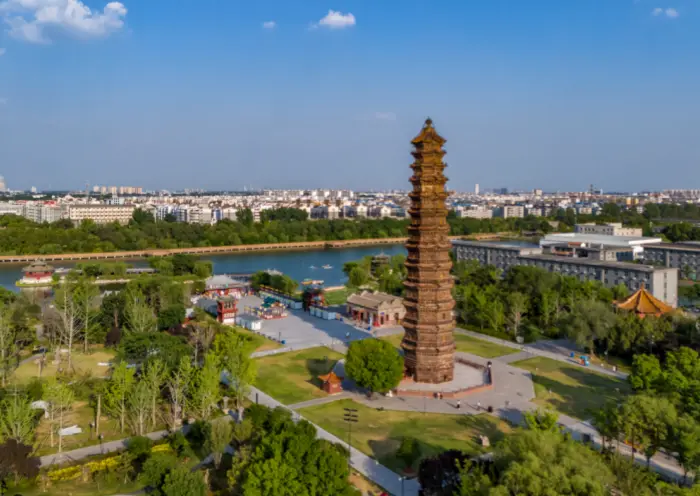
It is one of the greatest architecture in the Song Dynasty, a symbol of former glory in Kaifeng. The pagoda is not made of iron. Its name came from the brown glazed bricks, which resemble iron casting. It is the highest, oldest and most properly preserved glazed brick pagoda in China.
One would commonly refer to it as the First Pagoda of China due to its unmatched brickwork. Since it has been completed, the Iron Pagoda has survived so many tragedies like wars, floods and earthquakes. But nevertheless it is still high and straight. It has a lot of historical, architectural and artistic significance.
See more iconic attractions in Kaifeng to discover the essence of this top ancient capital in China.
Architecture and Design Features
It is 55.08 meters high and 13 stories high. Its solid brick cylinder supports the structure. The column of the pagoda has patterns of three dragons and two tigers. There is a spiral staircase for visitors to climb.
Things to Do Around the Pagoda
- The Glazed Brick Carvings
You can observe carvings on the bricks, including figures like apsaras and animals like lions.
- The Iron Pagoda Park
You can rent a paddleboat on the lake.
9. Songyue Pagoda, Dengfeng
- Location: Dengfeng, Henan Province
- Address: 146, Zhongyue Street, Songyang Road, Dengfeng
- Opening Hours: 8:00 AM – 17:00PM (Entry to the pagoda will be closed at 17:00.)
- Ticket Fare: 40 CNY (often included in a combined ticket for the Dengfeng historic sites)
Cultural Significance
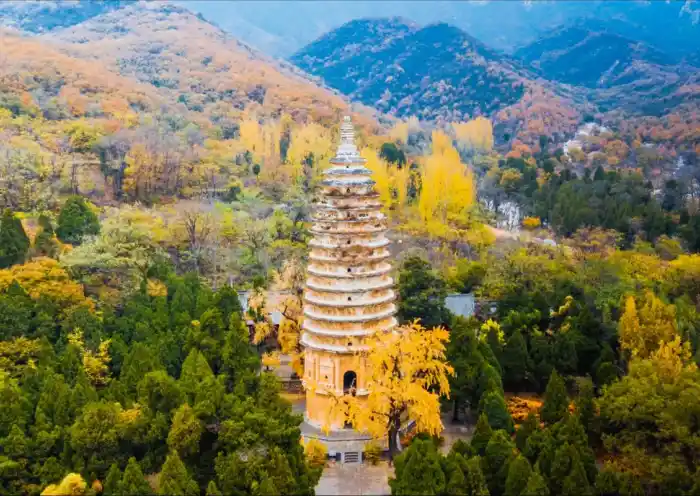
It is a pagoda from the Northern Wei Dynasty. It is the earliest existing brick pagoda in China, marking a pivotal shift in Chinese architecture from wooden structures to more durable brick and stone.
Architecture and Design Features
It is a 15-storey brick pagoda with multiple eaves. It has a dodecagonal plan and a total height of 37 meters. The body is made from yellow brick and clay mortar. There are lotus-flower brick carvings around the base.
Things to Do Around the Pagoda
- The Songyang Academy
It is one of China’s four ancient academies and is only 4 kilometers away from the pagoda.
- The Mount Song
It is one of the Five Great Mountains in China and you can enjoy natural views there.
10. Emin Minaret (Sugong Pagoda), Turpan
- Location: Turpan, Xinjiang Uygur Autonomous Region
- Address: Mu Na Ge Village
- Opening Hours: 9:00 AM – 19:30 PM (Entry to the pagoda will be closed at 19:15.)
- Ticket Fare: 45 CYN for adults, 22.5 for the elderly.
Cultural Significance
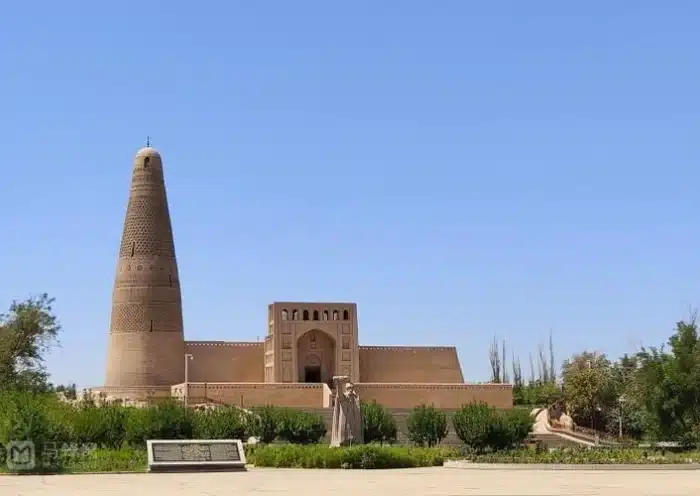
It is an Islamic heritage of the Silk Road. It was built in 1778 during the Qing Dynasty to commemorate the Qing General Su Ling. That is also the origin of its name. It stands as a symbol of the peaceful coexistence and cultural integration between the Uyghur people and the central Qing government.
Architecture and Design Features
It is a tall, conical tower made from mud bricks. The tower body gradually narrows upwards from the bottom and it is 44 meters (144 feet) high. There are no stories but a spiral staircase inside the pagoda.
Things to Do Around the Minaret
- The Adjacent Mosque
Visit the large and tranquil mosque there.
- The On-site Exhibit
There is a small exhibition hall introducing the history of the pagoda.
Suggested tours:
7 Days Classic Xinjiang Tour of Kashgar, Urumqi, Turpan
2 Days Classic Turpan Tour from Urumqi
11. Tiger Hill Pagoda, Suzhou
- Location: Suzhou, Jiangsu Province
- Address: No. 8, Huqiu Street, Gusu District
- Opening Hours: 7:30 AM – 18:00 PM
Ticket Fare: 35 CYN
Cultural Significance
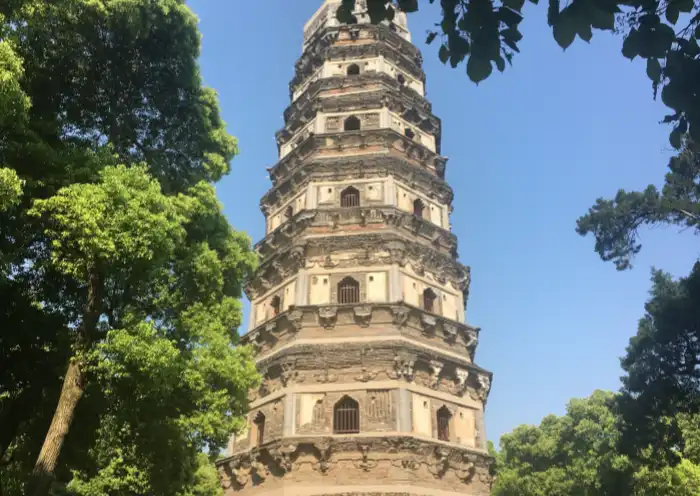
You can see the pagoda’s visible lean and it is regarded as Leaning Tower of China. Due to uneven settlement of the foundation, the top of the tower has gradually become eccentric, reaching more than 2.34 meters. In ancient times, people believed that the lean acts the role of sealing, preventing the entrance from being discovered.
Architecture and Design Features
It is seven stories high and 47.5 meters (156 feet) tall. The main body and base are all made of brick, and the outer eaves are of a mixed structure of brick and wood. It is an example of a multi-eaved pavilion-style pagoda from the early Song Dynasty transition period.
Things to Do Around the Pagoda
- The Sword Pool
It is a small water that is buried with King He Lü and the treasure reputedly.
- The Thousand Men Rock
It is said that the Thousand Men Rock was stained by the blood of the laborers who built the tomb.
Related reading: Top Things to Do in Suzhou
Main Types of Chinese Pagodas
How Were Ancient Pagodas in China Classified
The most common classification is by architectural form, including Pavilion Pagoda, Dense-Eaved Pagoda, Lamaist Pagoda, Diamond Throne Pagoda, and Mirage Pagoda.
By building materials, the main classifications are Wooden Pagodas, Brick Pagodas, Brick-Wood Hybrid Pagodas, Stone Pagodas, Glazed Pagodas, and Metal Pagodas.
The pagodas can be categorized by religious sect, like Han Buddhism and Tibetan Buddhism.
The shape of the pagodas is also an identifier, such as Square Pagodas, Octagonal Pagodas, Dodecagonal Pagodas, and Circular Pagodas.
Main Types of Pagodas – Quick Glance
Type |
Key Characteristics and Functions |
Example |
Pavilion Pagoda |
Multi-storied pavilion. Eaves, doors, and windows. Climbable Serving as reliquary and a landmark. |
Big Wild Goose Pagoda |
Dense-Eaves Pagoda |
A tall first floor followed by multiple tightly spaced, shallow eaves. Not for climbing. |
Songyue Pagoda |
Lamaist Pagoda |
A dome-shaped body. A tall, thin spire. A reliquary. |
White Pagoda |
Diamond Throne Pagoda (Jingang Baozuo Pagoda) |
Several smaller pagodas, usually five upon the throne. |
Beijing Five Pagoda Temple |
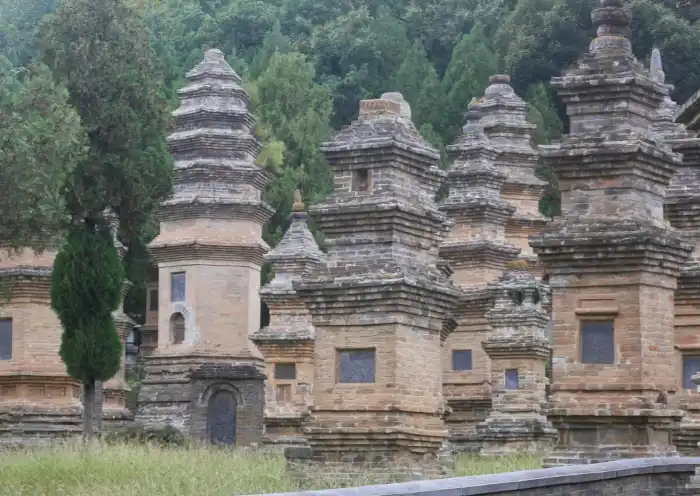
Forest of Pagoda |
Built in a monastery. To honor esteemed abbots and monks. Chronicles a temple’s history. |
Shaolin Temple Pagoda Forest |
Visiting Tips for Travelers
- Best Time to Visit: April-May/September-October
- Dress Code: Comfortable shoes, modest attire
- Local Customs: Walking around a pagoda clockwise three times.Speaking in a soft voice. Don’t touch the cultural relics at will.
- Photography Tips: Don’t use the flash inside the pagodas. Use the pagoda’s lines to frame your shot.
FAQs about Chinese Pagodas
What are pagodas used for in China?
Most serve as stupas to house sacred relics. There are also pagodas built as Buddhist monuments or military observation.
What are Chinese pagodas called?
Most commonly called塔 (Tǎ).
Do pagodas still serve their original religious function today?
Some still do.
What does the pagoda symbolize?
- Spiritual ascent
- Cosmic axis
- Buddhist doctrine
- Protection
Can I climb the ancient pagodas?
Some allow it, like the Big Wild Goose Pagoda and the Small Wild Goose Pagoda.
Why do most pagodas in China have an odd number of stories (e.g., five, seven, nine, or thirteen)?
Odd numbers are considered yang (阳), which is associated with the heavens, positivity, and life. >> See more about Lucky and Unlucky Numbers in Chinese Culture
Discover More of China’s Architectural Treasures with China Xian Tour
You can’t really feel the majesty of Chinese pagodas if you don’t explore them in person. Let China Xian Tour craft a personalized journey for you. We are a big team with expert travel consultants specializing in different destinations in China. Just share us your special travel wishes and ideas, we can make all them happen.