
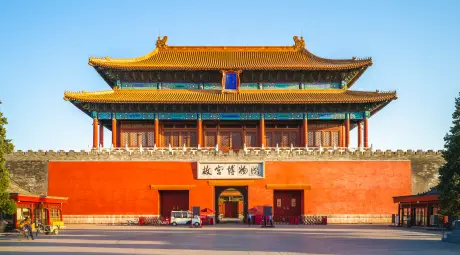
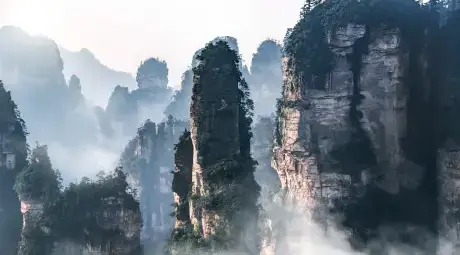
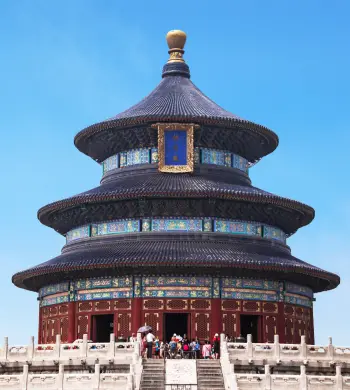
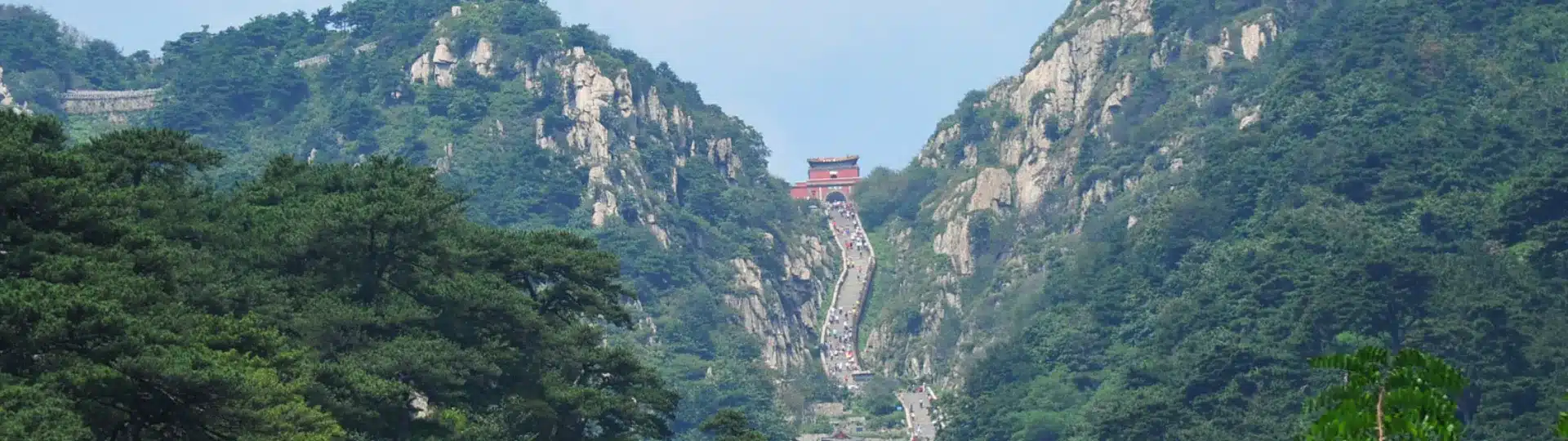
China is full of wonders both manmade and natural. From the Forbidden City to the Avatar Mountains and beyond, no matter where you go you’re sure to find something that’ll take your breath away. With so much to offer, though, it’s easy to miss some of the country’s most fascinating landmarks, which is why today, we’re sharing everything you need to know about China’s Five Great Mountains. From where they are to what they offer and more, here’s everything you need to know before you go – and believe us, they’re worth the visit.
Content Preview
- What Are the Five Great Mountains in China?
- 1. Mount Tai (Taishan, 东岳) – For a Deep Cultural Experience
- 2. Mount Hua (Huashan, 西岳) – For Daredevils
- 3. Shanxi’s Mount Heng (Hengshan, 北岳恒山) – For Reflection
- 4. Hunan’s Mount Heng (Hengshan, 南岳衡山) – For the Spiritually Curious
- 5. Mount Song (Songshan, 中岳) – For Martial Arts Lovers
- Comparison of the Five Sacred Mountains
- How were the Five Great Mountains chosen historically?
- Safety and Packing Tips for Hiking These Mountains
- FAQs about Five Great Mountains
- Discover the 5 Great Mountains with China Xian Tour
What Are the Five Great Mountains in China?
China is full of stunning landscapes, among which are countless beautilful mountains that have long since been a source of inspiration for artists local and abroad – so what makes China’s Five Great Mountains so special? Well, it all comes down to their historic spiritual and cultural importance.

Historical significance in Taoism and Confucianism
The Five Sacred Mountains in China are important Taoist spiritual sites where practitioners would go to meditate and seek harmony with the Tao. While mountains in general are seen as being close to heaven and strong sources of qi, the specific shape of the sacred mountains gave them additional spiritual importance.
Confucianism had similar beliefs about mountains, with the first Qin emperor designating the Five Great Mountains as important ritual sites. Their sturdiness and eternal nature also reflect important Confucian moral values, and many followers of the philosophy would retreat to the Five Great Mountains for reflection and study.
Symbolic of the Five Cardinal Directions
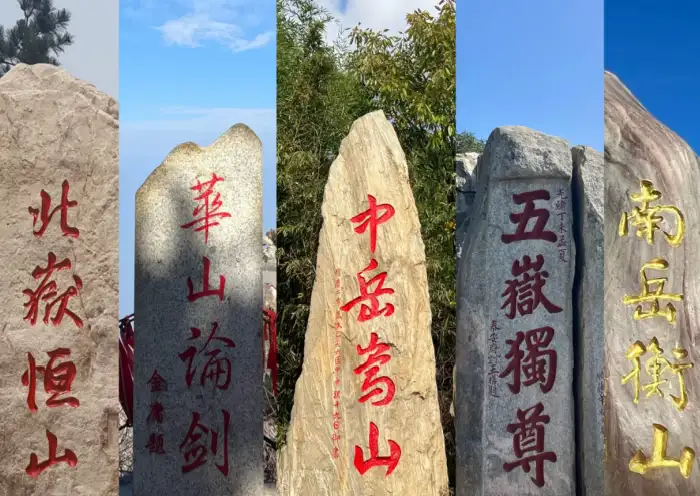
The Five Sacred Mountains each represent one of the cardinal directions in Chinese cosmology. Mount Tai is aligned with the east, Hunan’s Mount Heng is aligned with the south, Mount Hua is aligned with the west, Shanxi’s Mount Heng is aligned with the north, and Mount Song is aligned with the centre.
Geographic vs. Cultural Meaning of “Sacred Mountains”
There are two ways you can understand the idea of the Five Great Mountains. On the one hand, there’s their literal geographic existence: actual mountains that have been deemed sacred due to their cultural and spiritual significance. On the other hand, you can also understand them more through their cultural meaning as centres of spiritual power and symbols of the mandate of heaven.
1. Mount Tai (Taishan, 东岳) – For a Deep Cultural Experience
- Highlights: UNESCO World Heritage site, location of Feng and Shan sacrifices, countless relics
- Elevation: 1545 meters
- Difficulty: 4/5
- Best Time to Visit: Spring and Autumn
- Location: Tai’an, Shandong
- Ticket Price: 115CNY, CNY 100 per person for the single route cable car.
Spiritual Significance and UNESCO Status
Mount Tai is the most revered of the Five Great Mountains, having been worshipped for over 3,000 years. It took on additional importance when a Qin emperor performed the Feng and Shan sacrifices to heaven and earth to inform the gods that he had unified China, which ultimately became a tradition lasting through the Qing Dynasty.
As a result of this lasting cultural significance, Mount Taishan has been designated a UNESCO World Heritage Site.
Key Attractions
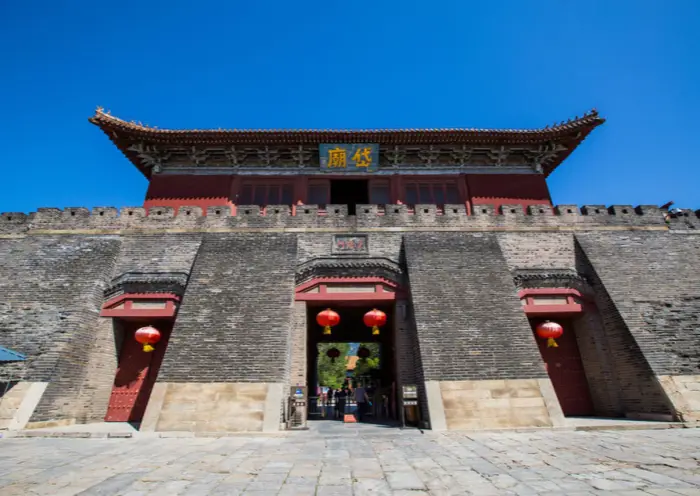
Some of the mountain’s biggest attractions are the inscriptions on the rocks; the Shibapan or 18-Level Stairs; and various temples such as Bixia Temple, Azure Cloud Temple, and Dai Temple.
How to Visit
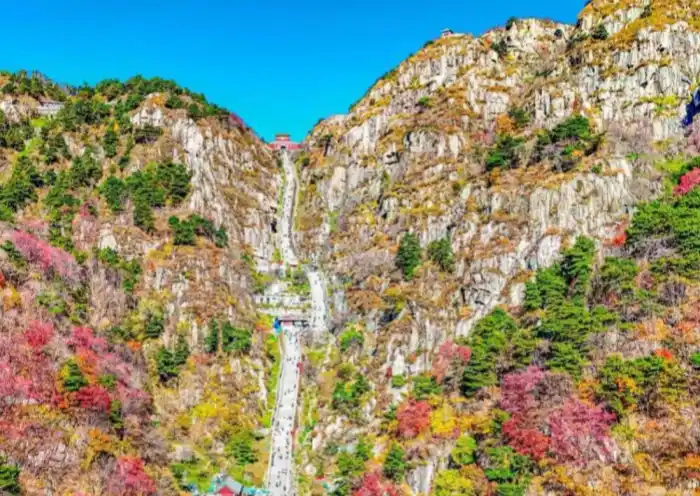
The most traditional route, the Red Gate Route, is also the hardest – less experienced climbers should consider taking the bus from Taiwancun Visitor Centre to Middle Heaven Gate and even take an additional cable car to the summit if needed. Leave early to catch the spectacular sunrise view.
Accommodation Near Mount Tai
There are a variety of budget and luxury hotels located near and on the mountain. At the base of the mountain, Four Points by Sheraton Tai’an is a good luxury option (about 2.5 km from the entrance) while Home Inn Plus is more affordable. On Mount Tai itself, Shenqi Hotel is the most comfortable option, though there are budget hotels as well.
Generally, accommodation options on the mountain top offer higher prices and relatively basic facilities, often with intermittent water supply. Staying at the mountain base and making a late night climb is a popular alternative for most people who prioritize unparalleled proximity to sunrising viewing spots.
How to Get There
Taishan Mountain is located in Taian City in Shandong Province. Visitors can reach the city by either high-speed train or flights. The high-speed trains take about 2 hours 10 minutes from Beijing, and about 4.5 hours from Shanghai.
The scenic area is about 11 km from Taian Railway Station (high-speed train) and 4.5 km from Taishan Station (regular train). You can easily reach it by either bus or taxi.
Jinan Yaoqiang International Airport (the nearest airport), is about 120 km from Taian city center, with both high-speed trains and shuttle buses to the city.
Suggested Tours:
2. Mount Hua (Huashan, 西岳) – For Daredevils
- Highlights: Stunning views, one of China’s most dangerous hikes
- Elevation: 2,154m
- Difficulty: 5/5
- Best Time to Visit: Spring or Autumn – Winter is particularly risky
- Location: Near Huayin County, Shaanxi
- Ticket Price: CNY 160, CNY 80 for the North Peak Cable Car, CNY 140 for the West Peak Cable Car
China’s Most Thrilling Hike
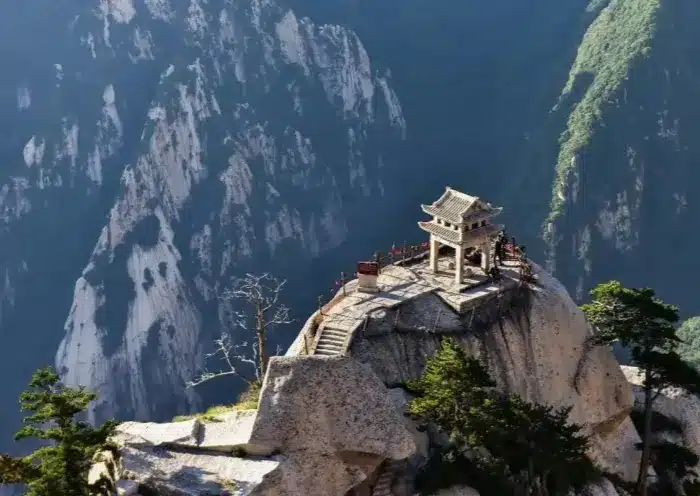
Mount Huashan is best known for its stunning cliffs and ridges – which also make it quite a difficult climb. While new, safer routes have been opened now, the infamously narrow Plank Walk is still available for adventure seekers with the right gear and no fear of heights.
Scenic Spots
The Plank walk isn’t the only location with stunning views on Mount Hua. The South Peak, too, offers panoramic views of the landscape and gives a great sense of freedom. The Chess Pavilion is also an interesting stop – it’s said to be a location where Taoist immortals played chess, though even now it offers stunning dramatic views.

How to Visit
For those up to the challenge, the classic North Peak Route offers the best views and the most traditional experience. If you’re looking for an easier approach, however, North and West Peak Cable Car routes are an appropriate choice for moderate-level hikers.
Accommodation Near Mt. Huashan
For those looking for a luxurious hotel, Huaxin International Hotel is one of the best options in the area. Otherwise, Huashan Jinsui Hotel is a more budget-friendly option with a good location. There are a variety of hotels scattered across the peaks.
How to Get There
Huashan Mountain is located in Huayin County which is about 120 kilometers from Xian. You can get to Xian conveniently from most cities in China by either plan or high-speed trains. >>Xian Transportation Guide: How to Get to and Travel Around
There are over 30 round-trip high-speed train services between Xian North Station and Huashan North Station from 7:16 AM to 11:55 PM. The journey duration is about 0.5-1 hours. Huashan North Railway Station is about 5 kilometers to Huashan Scenic Area. After arriving, you can take a local bus or taxi (about CNY 15-20) to reach.
For more flexibility and hassle-free access to the scenic area, it is highly recommended to book a Xian tour with a private vehicle and local driver included.
Suggested Tours:
- Mt. Huashan Exploration Day Tour by High-speed Train
- 2-Day Xian Mt. Huashan Trekking Tour
- 3-Day Xian City Tour with Mt. Huashan
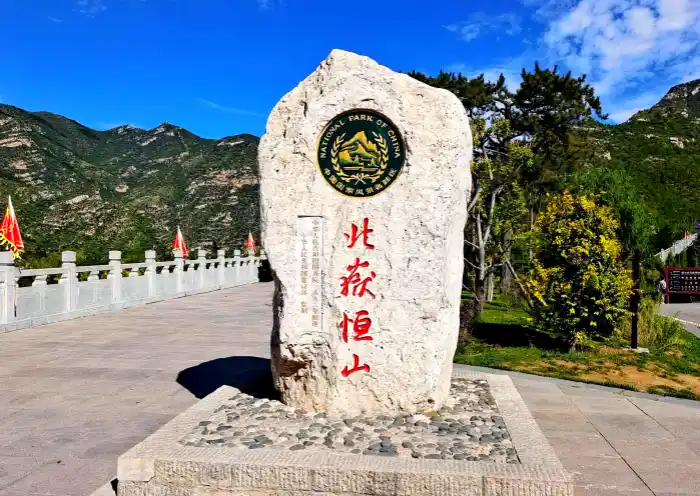
3. Shanxi’s Mount Heng (Hengshan, 北岳恒山) – For Reflection
- Highlights: Remote, offering spectacular views with a more tranquil experience
- Elevation: 2,017m
- Difficulty: 3/5
- Best Time to Visit: From May to October
- Location: Near Hunyuan County,Datong City, Shanxi Province
- Ticket Price: CNY 45 per adults, CNY 70 for cable car single route
- Hanging Temple: CNY 15 for entrance, additional CNY 100 required if you want to climb up into the temple.
The Most Remote and Least Visited
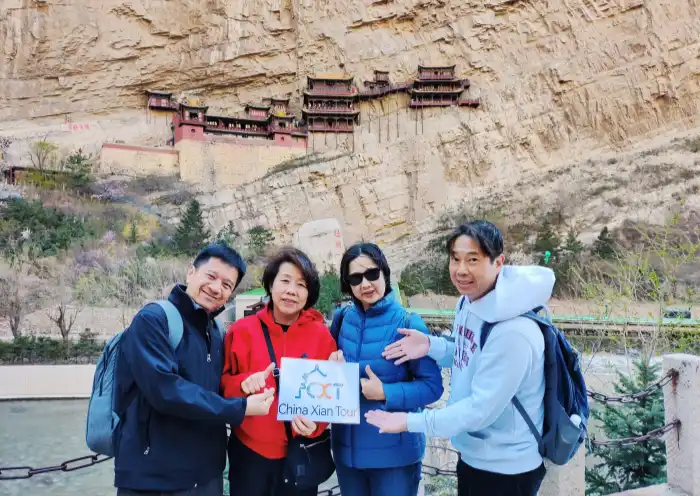
Northern Mount Heng is known for the Hanging Temple, also called the Xuankong Si. This temple is built into a cliff, which is a large part of its claim to fame, but it’s also notable for the fact that even as a Buddhist temple it contains references to Taoism and Confucianism.
Key Attractions
To really indulge in the serenity of Northern Mount Heng, you have to visit Dazhi Temple. Less visited than the Hanging Temple, its peaceful atmosphere is perfect for quiet reflection. Dragon Spring Temple, as well, is a beautiful site said to be visited by immortals.
Accommodation Near Hengshan
As the most remote and least travelled of China’s Five Great Mountains, Northern Mount Hengshan has the fewest options for accommodation. Those who want to be near the mountain can look into Hunyuan Town, with Hengshan International Hotel being one of the best options, while those who prioritise comfort should stay in Datong.
How to Get There
Northern Mount Heng is located in Hunyuan County, about 62 kilometers from Datong City. Generally, Datong is easily accessible from most major cities through high-speed train or direct flights. See train and flight durations from major cities to Datong below:
High-speed train:
- Beijing – Datong: about 2 hours (some services can be as fast as 1 hour 46 minutes)
- Xi’an – Datong: about 5.5 – 6 hours
- Zhengzhou – Datong: about 4.5 – 5 hours (often requires a transfer)
Direct flights to Datong (recommended for long-distance transfers):
- Shanghai (Pudong/Hongqiao) – Datong: nearly 3 hours
- Chengdu – Datong: about 2.5 – 3 hours
From Datong to Mt. Hengshan:
Getting to Mount Hengshan from Datong City can still be a bit tricky due to the limited public transport and absence of trains. It is thus more advised to join a Datong tour with a local guide, transportation, and other logistics arrangements included.
Suggested Tours:
4. Hunan’s Mount Heng (Hengshan, 南岳衡山) – For the Spiritually Curious
- Highlights: Mixture of Taoist and Buddhist culture, subtropical forests, important pilgrimage site
- Elevation: 1,300m
- Difficulty: 3/5
- Best Time to Visit: Spring or Autumn
- Location: Hengyang, Hunan
- Ticket Price: CNY 110. CNY 78 for sightseeing bus round route. Currently no cable car available.
Taoist and Buddhist Fusion
While Southern Mount Heng was originally an important Taoist site, Buddhism and more specifically Zen Buddhism gradually spread into the region over time. The two spiritual practices didn’t fight for dominance, however – they interwove, and by the Tang Dynasty, both Buddhist temples and Taoist shrines dotted the mountain, creating a unique culture that still draws visitors today.
Key Attractions
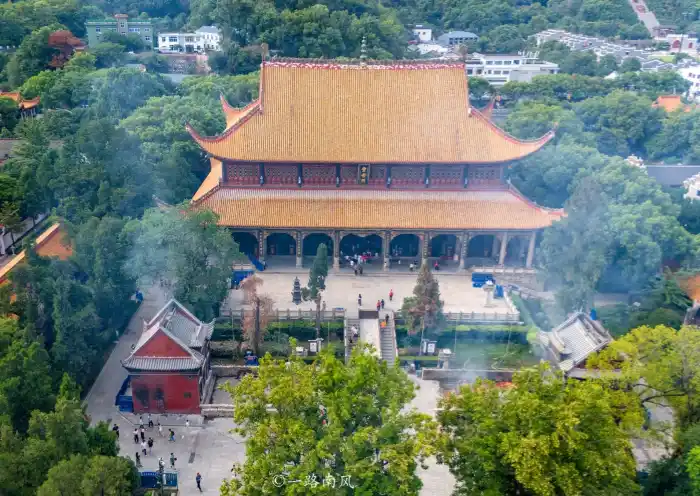
Southern Mount Heng is full of interesting attractions. Nanyue Temple, for example, was modelled after the Forbidden City in Beijing and is now the largest ancient palace-style temple complex. Zhurong Peak offers spectacular panoramic views of sunrise and sunset as well as Zhurong Shrine, making it a great stop for both photographers and spiritual seekers. There’s also Shuilian Cave, a temple built into a cliff and hidden behind a cascading stream.

How to Visit
There are three common “trails” for visitors to Southern Mount Hengshan. First there’s the traditional walking path, perfect for hikers and those looking for a spiritual experience. There’s also a sightseeing bus for those who want to see as much as they can without exerting themselves. Finally, there’s a cable car for those who want to get to the peak without the hike.
Accommodation on Southern Hengshan
For those who want a more comfortable experience near Southern Mount Heng, check out Nanyue Huatian Holiday Hotel. Otherwise, there are a variety of hotels near the mountain that are budget-friendly.
How to Get There
If you are getting there from nearby cities, like Changsha, Wuhan, Shenzhen, there are direct high-speed trains for approximately 0.5 to 3 hours to Hengshan West Railway Station. The station is about 8 kilometers from the scenic area, with both buses and taxis readily available.
From other cities with no direct high-speed trains, you can fly to either Hengyang Nanyue Airport or Changsha Huanghua Airport. Hengyang Nanyue Airport is about a 40-minute drive away. From Changsha Huanghua Airport, you need to transfer to Changsha South Railway Station for a high-speed train to Hengshan West.
Suggested Tour:
Related reading: Most Famous Taoist Mountains in China
5. Mount Song (Songshan, 中岳) – For Martial Arts Lovers
- Highlights: The birthplace of Zen Buddhism and the home of the Shaolin Temple
- Elevation: 1,512m
- Difficulty: 4/5
- Best Time to Visit: Spring and Autumn
- Location: Dengfeng City, Henan Province
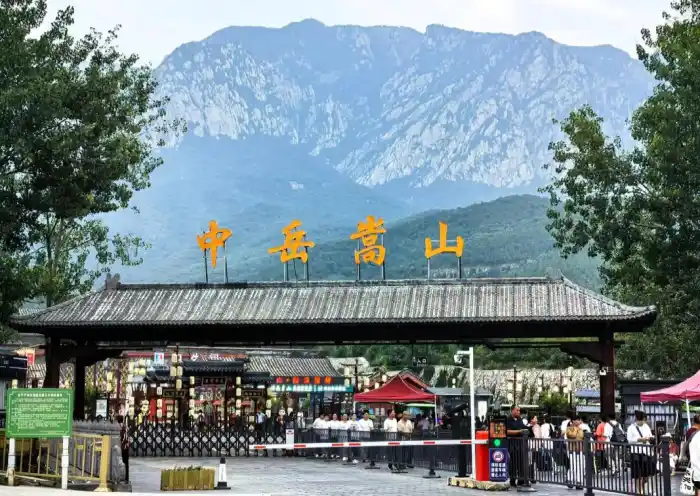
- Ticket Price:50 RMB for Taishi Mountain (Songyang Academy Entrance), 60 RMB for Shaoshi Mountain (anhuang Village Entrance), CNY 80 for Shaolin Temple, 100 RMB for a Shaolin Cable Car round trip, 60 RMB for a Songyang Cable Car round trip.
Birthplace of Zen Buddhism & Martial Arts
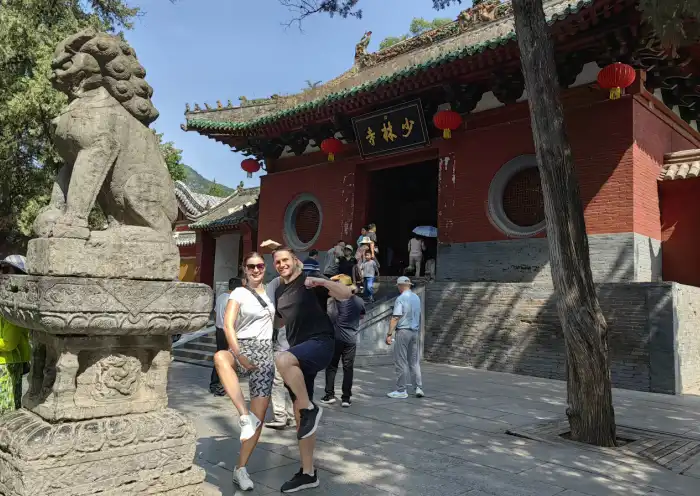
If you’re a fan of Kung Fu films, you can’t miss Mount Songshan. It’s home to the famous Shaolin Temple that’s still actively training people (even tourists!) today. Even better, the physicality is perfectly balanced with spirituality thanks to the fact that it’s also the birthplace of Zen Buddhism.
Key Attractions
Not only do you get to see the world’s most famous Buddhist monastery, Mount Song is also home to the oldest brick pagoda, built during the 4th century. Additionally, given that China’s Five Sacred Mountains are primarily important to Taoists, you can also find the Zhongyue Temple, one of the oldest and largest Taoist temples in China.
How to Visit
There are a variety of paths commonly taken on Mount Song. Two of them, the paths from the Shaolin Temple to Dharma Cave and from Zhongyue Temple to Taishi Mountain Ridge, are slightly more difficult, while the Songyue Pagoda Historical walk is somewhat easier. Of course, all of these can be combined for a more complete experience.
Accommodation on Mount Songshan
Those who want to stay near the Shaolin Temple without the full monastery experience can enjoy a little luxury in Shaolin International Hotel, though there are other Buddhist and martial art “themed” hotels that are a bit cheaper slightly further away. Those looking for a more standard hotel experience can look closer to town in Dengfeng.
How to Get There
Take a train or flight to Zhengzhou or Luoyang and then transfer to a car or bus. Both Zhengzhou and Luoyang offer frequent buses to Dengfeng, about 1.5 hours drive.
Suggested Tours:
Comparison of the Five Sacred Mountains
Taishan |
Huashan |
Northern Hengshan |
Southern Hengshan |
Songshan |
|
Location |
Shandong |
Shaanxi |
Shanxi |
Hunan |
Henan |
Height |
5,029m |
2,154m |
2,017m |
1,300m |
1,512m |
Best For |
Culture |
Adventure |
Reflection |
Spirituality |
Martial Arts |
Difficulty |
4/5 |
5/5 |
3/5 |
3/5 |
4/5 |
When to Visit |
Spring or Autumn |
Spring or Autumn — NOT Winter |
May to October |
Spring or Autumn |
Spring or Autumn |
How were the Five Great Mountains chosen historically?
Their sacred position originates from the ancient philosophical thoughts, political demands and continuous cultural accumulation.
The Five Elements (Metal, Wood, Water, Fire and Earth) is the core theory of the five mountains. The ancestors divided the world into five directions, which are east, west, south, north and center. And each mountain corresponds to one element and one direction, symbolizing the complete order of the world.
In the political aspect, the five mountains are the symbols of the emperors receiving orders from heaven. Each emperor reported his achievements to the heaven by worshiping the five mountains, which also declared that his government was legal and authoritative. And in ancient China, the Central Plain is the center of the country, so all five mountains are around this area.
As for its cultural meaning, these five mountains may not be the highest, but they all stand majestically on plains or basins. They appear to be particularly grand and perilous, just like the imagination of ancient people – “reaching the highest point of the sky”. Through thousands of years, besides the emperor’s worship, the monks and Taoists practiced here and the scholars wrote poems for them. All have accumulated profound cultural heritages for them.
Safety and Packing Tips for Hiking These Mountains
- Clothes and Shoes:A pair of hiking shoes or anti-slippery sports shoes is the most important. Quick-drying clothes will keep your body dry and prevent hypothermia. A warm coat can prevent the cold in the peak. Besides, take some sun protection products: sun hats, sunscreen, ice sleeves, sunglasses, etc.
- Supporting facilities:It is very effective to save strength and relieve pressure on knees with an alpenstock and kneelets. When climbing Mt. Hua, a pair of gloves is very useful in sections where you need to hold the iron chains and a light can free your hands and ensure safety during the night climbing.
- Food and drink:High-energy snacks, such as chocolate, beef jerky and energy bars, are convenient for replenishing energy at any time. It would be better to bring a sports beverage, because it can supplement electrolytes in time.
- Adequate preparations: Check the weather in advance, do not climb the mountains on rainy, snowy and foggy days. And search the route, time needed and opening hours, so that you can arrange the itinerary reasonably.
- Take care during hiking: The most effortless way is to walk at a constant speed. You can try it. When in the perilous sections, do not take photos when walking, and do not climb over the guardrail or go to undeveloped areas. If you feel uncomfortable or exhausted, have a rest immediately and go downhill by cable car.
FAQs about Five Great Mountains
How long does it take to hike Mount Tai?
The hardest Red Gate Route takes about 4 – 7 hours. The Tianwai Village Route combines the sightseeing car with hiking or cable car and takes a shorter time, about 2 – 3 hours.
Is the Huashan Plank Walk safe for beginners?
Theoretically speaking, it is safe, but it is not easy for beginners at all, because it is built on the cliff and only 30 cm wide. It is really a great challenge for balance, arm strength and psychological quality.
Why are these mountains considered sacred in Chinese culture?
It is because of the ancient worship of mountains and rivers and the philosophy of the Five Elements. The ancestors think the high mountains are the ladders to heaven and the origin of nature and life. And each mountain has a corresponding god, they together maintain the order of the world. So they are considered sacred.
How long would it take to visit all five mountains?
It will take about 5 – 8 days and each mountain takes about 1 – 2 days.
What is the spiritual or religious significance of each mountain?
Mount Tai is the “Supreme of the Five Great Mountains”. It governs the life, death, nobility and lowliness of all people. Mt Hua is the symbol of challenge and surpass. Hunan’s Mt Heng is rich in Buddhist and Taoist culture. Shanxi’s Mt Heng is a Taoist holy land. And Mt Song is the place where the ancestral temple of Zen Buddhism – Shaolin Temple is located.
Are the Five Great Mountains recognized by UNESCO or other heritage organizations?
Mount Tai is recognized as a World Cultural and Natural Heritage Site and Mt Song is listed as a World Cultural Heritage Site.
Discover the 5 Great Mountains with China Xian Tour
Now that you know all about China’s Five Sacred Mountains and everything they have to offer, you’re no doubt looking forward to seeing them yourself! Luckily, whether you want them to be the focus of your journey or just one stop along the way, China Xian Tour is there to make sure you get the exact experience you’re looking for. With both preset and custom tours hosted by local guides, you can be sure that you’re not just getting the most out of your trip, you’re also getting an authentic Chinese experience.
So what are you waiting for? Plan your next trip to China with us today!
Related reading: Top 10 Highest Mountains in China