
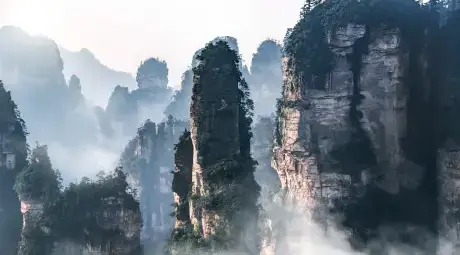

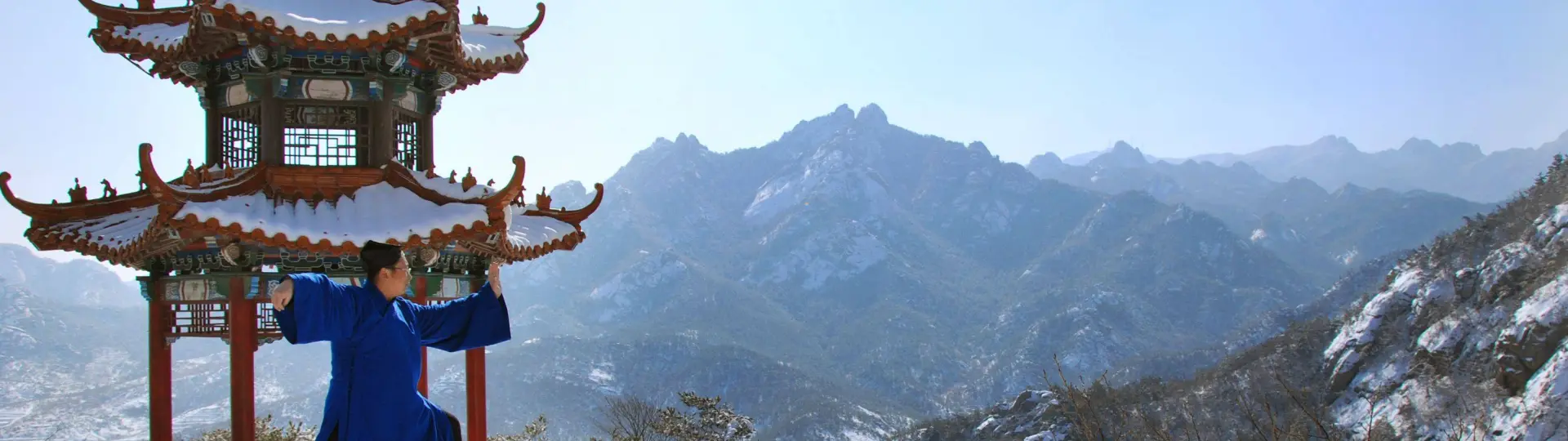
In China, there are four “Great Taoist Mountains”– Wudang Mountain, Mount Qingcheng, Longhu Mountain, and Qiyun Mountain. They are not just Taoist holy lands, their rich history, culture, and natural landscapes make them also perfect travel destinations. Their distinct vibes give them different charms to attract travelers from all over the world. To help you plan a wonderful Taoist culture tour in China, this guide provides information on the locations of the mountains, the best visit times, key attractions, ticket prices, transportation, and other helpful tips.
Content Preview
- Wudang Mountain – The Origin of Taoist Martial Arts
- Mount Qingcheng – The Cradle of Taoism
- Longhu Mountain– Taoism in Magic Landscapes
- Qiyun Mountain – Taoism in Huizhou Architecture
- Other Famous Taoist Mountains in China
- Best Taoist Mountains to Visit Based on Travel Style
- Travel Tips for Visiting Taoist Mountains
- Explore China’s Taoist Mountain with China Xian Tour
Wudang Mountain – The Origin of Taoist Martial Arts
Location: Shiyan City, Hubei Province
Elevation: 1612.1 meters
Travel Time: 1-2 days
Best Time to Visit: March-November
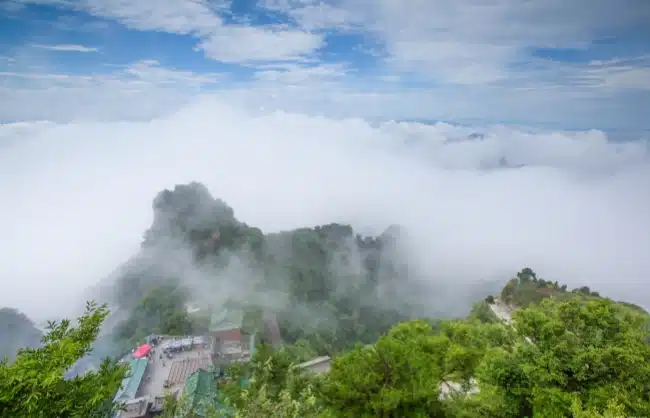
Highlights: sacred peaks; sea of clouds; Taoist holy land; Chinese martial arts (Tai Chi Chuan); ancient temples; ancient building complex
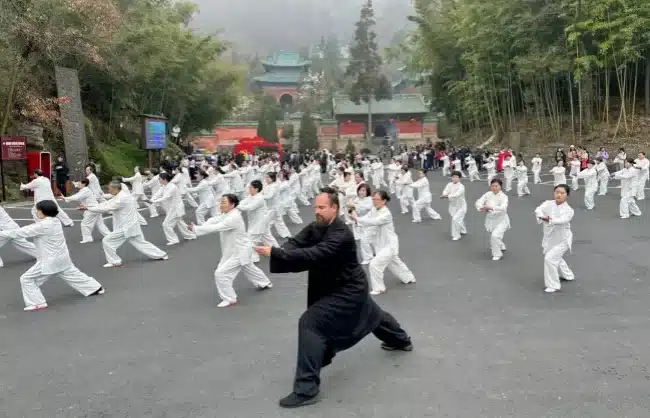
As early as the Tang dynasty, Wudang Mountain had become one of the “seventy-two blessed Taoist lands”. It was believed that it was where the god of Taoism, Emperor of Zhenwu, achieved his immortality. From 1412 AD, Emperor Chengzu of Ming’s command of “re-constructing the Forbidden City in the north and Wudang in the south” contributed to its peak time and left an unprecedented building complex. Culturally, Zhang San Feng’s establishment of Tai Chi Chuan makes Wudang a dream destination for global martial arts enthusiasts.
What to See in Wudang Mountain?
Golden Hall
This gilded bronze palace is located on the highest Tianzhu Peak. It serves as one of the symbols of Wudang Mountain.
It is the only extant double-eaved, hip-and-gable wooden palace-style from the Ming dynasty. Tourists can experience “morning bells and evening drums” and various Taoist rituals.
Prince Slope
It was on this slope that a prince was enlightened by a scene of “an iron rod being ground into a needle” and persisted in his path to seek immortality. Therefore, the slope was also called “Truth Temple”. Visitors can see the “Nine-Turn Yellow River Walls”– two winding red walls along the hills. They embody the Taoist idea, “twists lead to consummation”.
Nanyan Palace
It is famous for a dragon-shaped stone beam on a cliff. It is one of the most perilous spectacles of Wudang Mountain.
How to Get to Wudang Mountain?
By Flight
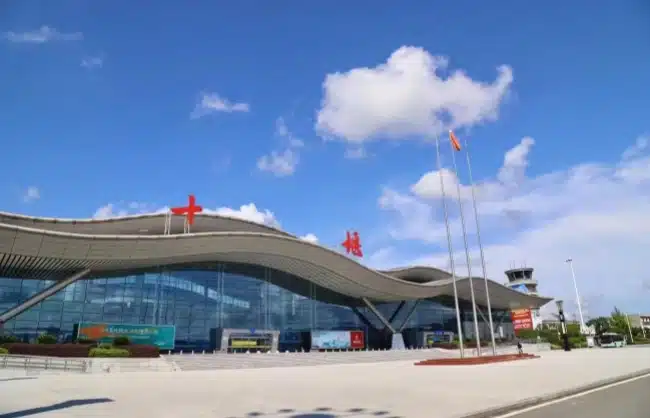
Shiyan-Wudang Mountain Airport, take Line 2 shuttle bus (1 hr)/ taxi (30mins/80-130 CNY) to Wudang Mountain
By Train
High-Speed Rail: Wudang Mountain Station (15km) or Wudang Mountain West Station (13km); shuttle bus (40 mins/10 CNY) to Wudang Mountain
Train: From Shiyan Station, by Route 202 bus to Wudang Mountain (1.5 hrs/4 CNY)
By Long-Distance Bus
If you have arrived in Shiyan city, you can choose bus Route 9/13/31/658 Route 202 to reach the mountain.
Wudang Mountain Ticket Prices
Ticket Types |
Prices |
Notes |
Ticket Package |
264 CNY/pp |
It contains entry tickets for key attractions, tour bus, cable car, and insurance.
* valid in 3 days after purchase |
Entry Tickets |
140 CNY/pp |
It allows you to get on and take the tour bus to Qiongtai. This date only! |
Tour Bus Ticket (if not in a package)
|
90 CNY/pp |
|
Cable Car Ticket |
80 CNY/PP
150 CNY/PP (round trips) |
Qiongtai – Golden Hall
The tickets can only be bought in person. *Mon-Fri: 08:00-16:00 Weekends: 07:30-17:00 |
Golden Hall |
27 CNY/PP |
Not included in the package |
Purple Cloud Temple |
15 CNY/PP |
Not included in the package |
Wudang Mountain Travel Routes
One-Day Itinerary
Prince Slope (Nine-Turn Yellow River Walls) Xiaoyao ValleyPurple Cloud Temple (Building Complex) Nanyan Palace (Dragon Beam) Qing Shendao or Ming Shendao (approx. 1.5-2 hrs)Golden Hall/Top Return
Two-Day Itinerary
Day 1: Qiongtai Palace (Stay Overnight)
Day 2: Qiongtai Golden Hall/Top (Watch Sunrise and Take a Tour) Qing Shendao or Ming Shendao Chaotian Palace Nanyan Palace Lingxiao Palace Xiaoyao Valley Prince Slope
Wudang Mountain Travel Tips
Prepare warm, wind-proof jackets, comfortable sneakers for long-distance hiking, and non-slip shoes (in snowy winter).
Please keep quiet and do not take photos in the temples if photography is prohibited.
Make sure you book a room early in the peak season, especially if you want to stay near the Nanyan Palace or Golden Hall.
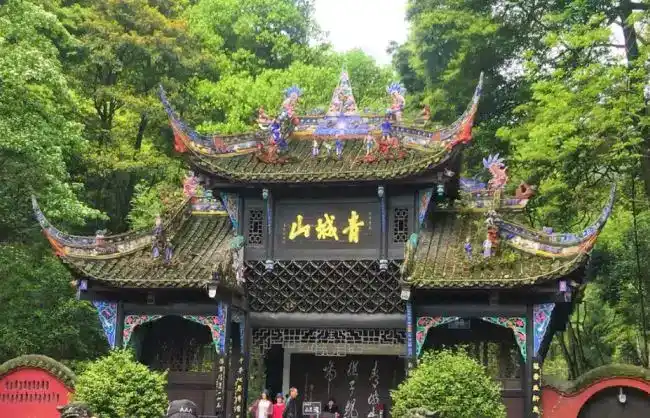
Mount Qingcheng – The Cradle of Taoism
Location: Dujiangyan City, Sichuan Province
Elevation: 1260 meters at the main peak Laojun Pavilion
Travel Time: 1-2 days
Best Time to Visit: early summer (April-June) and autumn (September-November)
Highlights: world cultural heritage; origin of Taoism; seclusion; Taoist temples in the front and natural scenery in the back
Mount Qingcheng is the fifth heavenly land among the “Ten Great Heaven Lands of Taoism”. The cluster of ancient Taoist temples renders it a profound culture, and the dense forests and gurgling streams make it a good place for hiking.
What to See in Mount Qingcheng?
Laojun Pavilion
It is a symbolic structure on the highest peak, a nice spot to have a panoramic view of the whole mountain.
Tianshi Cave
It is the key observatory of Mount Qingcheng, with a thousand-year-old ginkgo tree and other relics. It is said that the founder of Taoism (Zhang Dao Ling) used to seek immortality in the Cave.
Shangqing Palace
It is built in honor of the ancestor of Taoism (Laozi). It keeps the carving work of the Tao Te Ching.
Jianfu Palace
It is the start of the Qingcheng tour. The palace is built under a cliff in the Tang dynasty.
How to Get to Mount Qingcheng?
By High-Speed Rail
There are frequent high-speed trains from Chengdu Xipu Station (30 mins/ 10-30 CNY) to Mount Qingcheng Station.
By Car
Chengdu Chadianzi Passenger Station (10.5hrs/16 CNY) or Xinnanmen Passenger Station (21 CNY) to Mount Qingcheng Passenger Station
The front and back mountains are separate. It takes a 30-minute drive from the front to the back sections.
Mount Qingcheng Ticket Prices
Ticket Types |
Prices |
Notes |
The Front Mountain |
80 CNY/PP |
key Taoist culture section; |
The Back Mountain |
20 CNY/PP |
mainly natural landscapes; |
Cable Car |
35 CNY/PP (front)
60 CNY/PP (front round trip) 30-35 CNY/PP (back)
55-60 CNY/PP (back round trip)
|
|
Cruise Ship |
5 CNY/PP (Front)
2 CNY/PP (Back) |
Yuecheng Lake (Front)
Cuiying Lake (Back) |
Mount Qingcheng Travel Routes
Front Section
Jianfu Palace → Natural Picture Pavilion → Tianshi Cave → Zhaoyang Cave → Shangqing Palace → Laojun Pavilion
Back Section
Tai’an Ancient Town → Five Dragon Valley → Youyi Village → Cuiying Lake → Fly Spring Valley → Return
Mount Qingcheng Travel Tips
It would be wet and cold on the peak, so jackets and non-slip shoes are recommended.
Make sure you have supplies (food and water) for hiking. Tai’an Ancient Town is an important supply depot.
Recommended Specialties: preserved meat and Gingko Seed Chicken Stew
Recommended Tour including Mount Qingcheng

Around 8 am, your English-speaking tour guide will pick you up at your hotel in the center of Chengdu.
Longhu Mountain– Taoism in Magic Landscapes
Location: Guixi City, Jiangxi Province
Elevation: 1300 meters at Tianmen Peak
Travel Time: 1-2 days
Best Time to Visit: spring and autumn; Danxia snowfall in winter
Highlights: Danxia landform; geo-park; ancestral temple of Taoist Zhengyi School
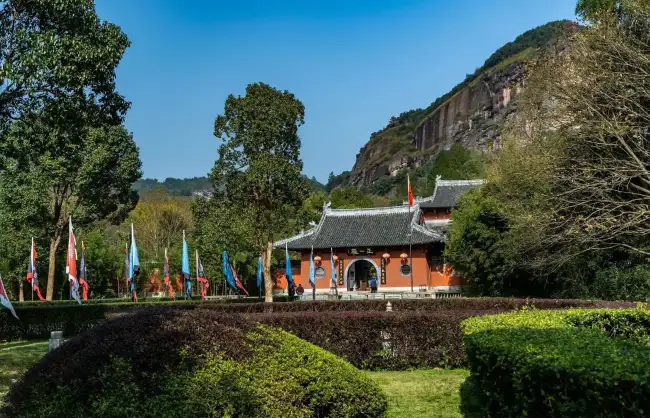
The name “Longhu” means “loong and tiger”. It is because the two peaks facing each other look like a coiled dragon and a crouching tiger. It is called “the First Mountain of Taoism”, for it is where Zhang Dao Ling initially began concocting magic pills and found Taoism. The unique red mountains of the Danxia landform and the meandering Luxi River form a grand natural picture.
What to See in Longhu Mountain?
Tianshi Mansion
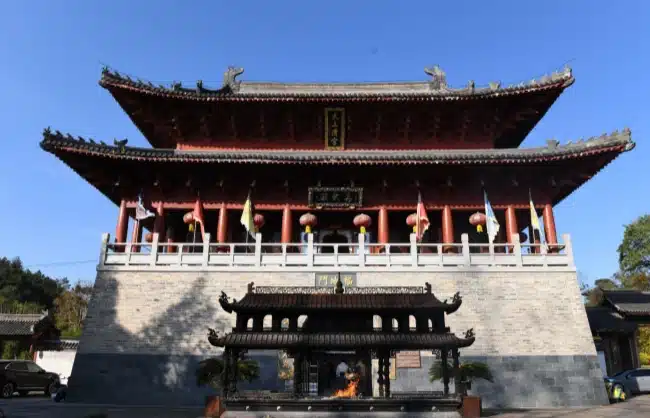
It is where Zhang Tian Shi (the hereditary leaders of the Dragon-Tiger Sect in the Zhengyi School) live. It is the best place to experience the “orthodox” Taoist culture.
Elephant Trunk Hill
The stone beam looks like an elephant using its trunk to drink. It is a classic Danxia landform attraction.
River Rafting with Views of Sacred Cliffs
Drifting down the river on a bamboo raft would be the best way to appreciate the Danxia peaks and the ancient hanging coffin.
Coffin Hanging Performance
The performance takes place at set times every day, showing how ancient people placed coffins within the caves on a steep cliff.
How to Get to Longhu Mountain?
By Train
Yingtan Station or Yingtan North Station → (Route K2 Bus-40mins) → Longhu Mountain Tourist Center
Longhu Mountain Ticket Prices
Ticket Types |
Prices |
Notes |
Ticket Package(Full) |
360 CNY/PP
Concession: 295 CNY/PP |
The package includes attraction entry (except Tianmen Peak, Shengjing Peak, Xianren City and Huayu World), tour bus, bamboo raft, and “Dream of Longhu Mountain” Performance. |
Ticket Package (No Raft) |
280 CNY/PP |
The other content is the same, except bamboo raft. |
Ticket Package (No Performance) |
230 CNY/PP |
The other content is the same, except performance. |
Entry Tickets+Tour Bus |
135 CNY/PP |
|
Bamboo Raft |
100 CNY/PP |
Longhu Mountain Travel Routes
Day 1: Shangqing Ancient Town (Lunch) → Tianshi Mansion → Taishangqing Palace → Zhengyi Observatory → River Rafting → Fairy Rock → Peach Blossom Isle (Coffin Hanging Performance) → Xiaoyao City (Dinner) → “Dream of Longhu Mountain” Performance
Day 2: Elephant Trunk Hill → Ant-less Village → Huayu World → Return
Longhu Mountain Travel Tips
The Coffin Hanging (10:00; 12:00; 14:00; 16:00) and “Dream of Longhu Mountain” (19:30; 20:30; 21:30; 22:30) Performances take place only at specific times. Make sure you arrive 15 minutes before the start time.
Recommended Specialties: Braised Chicken with Chestnut and Shangqing Tofu
Qiyun Mountain – Taoism in Huizhou Architecture
- Location: Huangshan City, Anhui Province
- Elevation: 585 meters
- Travel Time: 1-2 days
- Best Time to Visit: spring (March-April), when the rapeseed flowers and the rustic Huizhou-style architecture enhance each other’s beauty
- Highlights: National Scenic Spot; Huizhou-style architecture; Danxia landform
Qiyun Mountain used to be known as the “White Peak”. It stands facing to the Yellow Mountain. The Danxia landform creates a striking contrast with the lush greenery on the peak and the ink-washed-style Huizhou architecture below. The Taoist practices began in the Tang dynasty, leaving precious cliff carvings like the Immortal’s Cave.
What to See in Qiyun Mountain?
- Yuehua Street
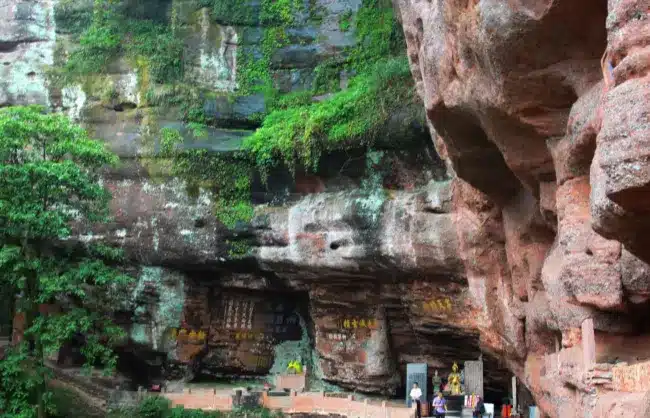
It is a Huizhou-style village on the waist of the mountain, where villagers and Taoist priests live together.
- Yuxu Palace
It is located in the stone cave beneath the Zixiao Cliff. It is the largest Taoist temple complex on the mountain.
- True Immortal’s Cave Mansion
It has the most concentrated cliff carving. A number of caves dot across the surface in which enshrine a variety of divine figures.

How to Get to Qiyun Mountain?
By High-Speed Rail
Getting off at Qiyun Mountain Station → shuttle bus (5CNY/PP; every 15 min from 7:00-19:00) → Qiyun Mountain
Getting off at Yellow Mountain Station → shuttle bus (20 CNY/PP- 50 mins) → Qiyun Mountain
Qiyun Mountain Ticket Prices
Ticket Types |
Prices |
Notes |
Ticket Package (Full) |
198 CNY/PP
Early Bird: 188 CNY/PP
|
It includes attraction entry, cable car, bamboo raft and night tour.
* half-price concessions for students/minors/elders (valid ID needed) |
Ticket Package (No Attraction Entry/Bamboo Raft) |
68 CNY/PP
Early Bird: 58 CNY/PP
|
The other content is the same, except attraction entry OR bamboo raft). |
Double Tickets (Full) |
Purchase One-Day Before Entry: 116 CNY/PP |
the same content as the package |
Qiyun Mountain Travel Routes
One-Day Itinerary
(Cable Car) → Wangxian Tower → Mengzhen Bridge → Shouzi Rock →Yitian Gate → True Immortal’s Cave Mansion →Ertian Gate → Yuehua Street → Taisu Palace → Little Pot Cave→ (Return by Cable Car)
For Immersive Experience
Stay Overnight in the Ancient Dwellings in Yuehua Street → Appreciate Sunrise and Sea of Clouds at the Highest Peak→ Hiking in the Back Section of the Mountain → Return
Qiyun Mountain Travel Tips
Qiyun is not a Towering Mountain, but the Attractions are scattered across a wide area. Make sure you wear comfortable shoes for a long-distance walk.
Several performances of Chinese Intangible heritages are available in the Qiyun Mountain Town:
Golden Dragon Dance (19:00) at Dengfeng Bridge
Fish Lantern Parade (19:40/20:40) at Dragon Boat Pier
Charcoal Flower Dance (18:50/19:35) at Bonfire Square
Fire Breathing (18:30/19:30/20:30/21:10) at Fuhai
Iron Flower (20:30) at Tourist Center
Recommended tour
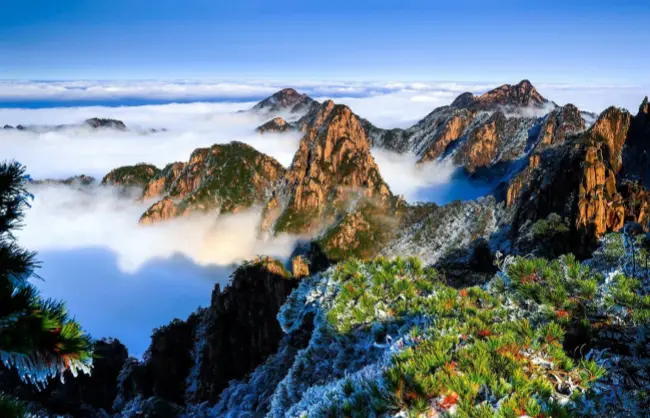
Your Huangshan tour guide and driver will pick you up at about 8:00 am from your Huangshan downtown hotel and drive about 1 hour to Qiyun Mountain, one of the Four Sacred Mountains of Taoism.
Other Famous Taoist Mountains in China
Besides the “Four Great Taoist Mountains”, in China, there are other mountains with profound Taoist culture.
Mount Mao
- Location: Jurong City, Jiangsu Province
- Elevation: 372 meters
- How to get there: by train (Jurong West Station); by car (Hu-Ning Expressway, 104 National Highway…)
- Travel time: 1day
- Best time to visit: January-August
- Highlights: It is the “First Blessed Land” and the “Eighth Heaven” of Taoism, as well as the origin of the Shangqing School. It has numerous Taoist temples, the most famous one is the “Nine Cloud Fortune Temple”.
Mount Hua
- Location: Huayin City, Shaanxi Province
- Elevation: about 2100 meters
- How to get there: from Xi’an by high-speed rail (Xi’an North-Mount Hua North Station, 54.5 CNY-30mins); by train (Xi’an Train Station-Mount Hua Station, 18.5-30 CNY-90mins); by shuttle bus (from Qinzhifeng Station, 60 CNY-2hrs)
- Travel time: 1-2 days
- Best time to visit: April-October
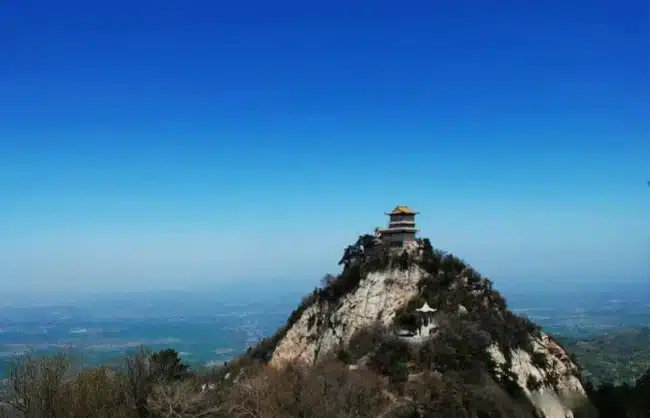
- Highlights:As one of the “Five Great Mountains”, it has the most perilous yet spectacular views. The plank roads in the air and sunrise scenes on the Eastern Peak draw many admirers.
Recommended tour

Tackle Mount Huashan, China's most thrilling mountain, where sheer granite cliffs and near-vertical plank paths challenge even the most adventurous hikers.
Mount Zhongnan
- Location: Xi’an City, Shaanxi Province
- Elevation: 2604 meters
- How to get there: from Xi’an by public transport ( Line 1 Subway-Train Station, then shuttle bus, 2 hours)
- Travel time: 1-2 days
- Best time to visit: spring and autumn
- Highlights:It is the birthplace of the Quanzhen School. It has a profound culture of hermitage. The key attractions include the Southern Five Terrace, Cuihua Peak, and Louguan Terrace.
Mount Lao
- Location: Qingdao City, Shandong Province
- Elevation: 7 meters
- How to get there: from Qingdao by public transport (Route 304 bus or Line 4 Subway, then shuttle bus)
- Travel time: 1-2 days
- Best time to visit: spring, summer, and autumn (especially after October)
- Highlights: It is a mountain by the sea. It is famous for the Giant Peak and the Taiqing Palace, an important place for Taoism.
Mount Heming
- Location: Dayi County, Sichuan Province
- Elevation: about 1000 meters
- How to get there: from Chengdu by car (Chengwenqiong Expressway-2-3hrs)
- Travel time: 1 day
- Best time to visit: any time
- Highlights:It is located near Dayi, a county renowned for its plums. Therefore, its plum blossom scenery becomes a highlight and is on many visitors’ hiking routes. The Mount Heming Observatory is also a popular heritage site worth a look.
Mount Yuntai
- Location: Jiaozuo City, Henan Province
- Elevation: 1310 meters
- How to get there: from Zhengzhou or Jiaozuo by shuttle bus or car
- Travel time: 2-3 days
- Best time to visit: spring, summer (wet season), and autumn
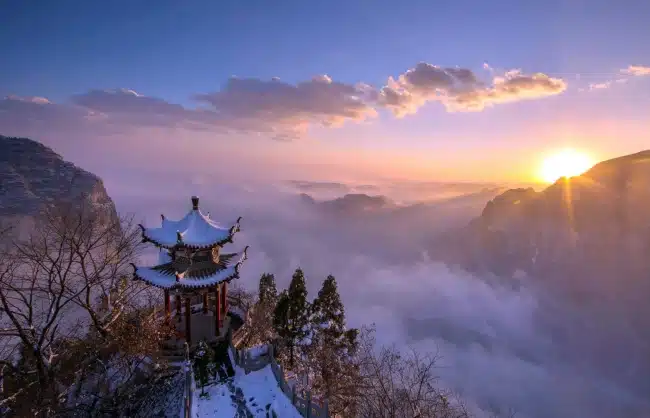
- Highlights:The mountain is part of the Taihang Mountain Range. It is famous for the South Taihang Canyon landform, such as the Red Rock Canyon and Tanpu Canyon. It is one of the seventy-two “blessed lands” of Taoism.
Best Taoist Mountains to Visit Based on Travel Style
Traveler Types |
Recommendations |
Main Reasons |
First-Time Travelers |
Mount Qingcheng |
close to Chengdu; convenient transport; blend of Taoist culture and natural seclusion; medium difficulty |
Culture Lovers |
Wudang Mountain and Longhu Mountain |
Wudang has the magnificent ancient building complex and profound Taoist Martial Arts like Tai Chi Chuan; Longhu has the ancestral temple of Taoism, which has a historical significance. |
Photography Lovers |
Longhu Mountain and Qiyun Mountain |
Longhu has splendid Danxia landform; Qiyun’s combined beauty of Danxia landform, classic Huizhou-style architecture, and sea of clouds and mist is a fantastic picture itself. |
Adventurers |
Mount Hua |
It is called “the most spectacular mountain in the world”. The skywalk and Kite Turn experiences are challenging, suitable for those who are longing for adventures. |
Travel Tips for Visiting Taoist Mountains
- What to pack: warm jackets (temperature gaps between the peak and the foot of mountains); non-slip, comfortable shoes for hiking; supplies (e.g., energy bars and water)
- Best seasons: Most mountains are accessible to visitors throughout the year, but Spring and Autumn are the most popular seasons due to the mild temperatures and rich natural resources.
- Respect Taoist etiquette: Some temples and palaces are of religious significance, so make sure you follow any rules specified and be polite to the staff and Taoist priests.
- Overnight stays: Rooms in the attractions are usually in high demand during the peak season. If you wish to stay overnight on the mountains, make sure you book rooms early.
- Get connected: If you need help, please contact the Tourist Service Center during its opening hours (check the official websites of each Mountain). If you have an emergency and need urgent help, please call “110”.
Explore China’s Taoist Mountain with China Xian Tour
Whether you are tracing the footsteps of history, seeking inner peace or simply wanting to immerse yourself in the embrace of nature, these Taoist mountains can surely be your ideal destinations. Explore these most beautiful Taoist mountains in China with China Xian Tour today! Our experienced consultation team will help you design a personalized tour route based on your preferences. And our professional guides are happy to take you to a wonderful China nature and culture tour on the Taoist holy mountains whenever you are ready!