
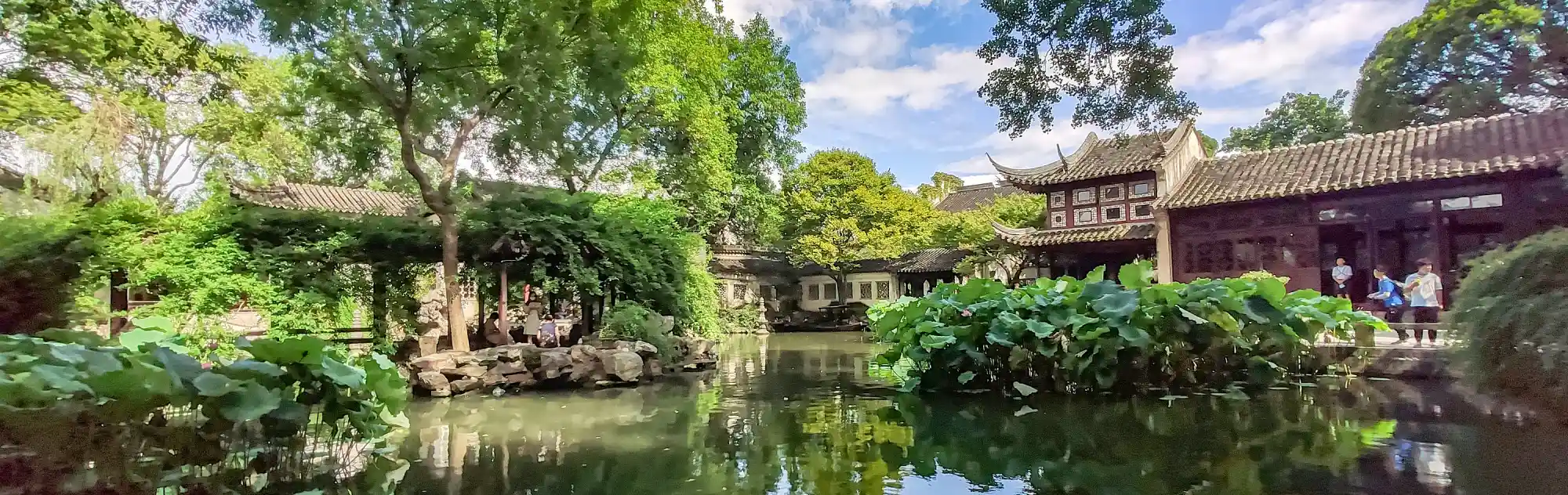
The Lingering Garden in Suzhou is known as Liuyuan (留园) in Chinese. It has been recognized as a UNESCO World Heritage Site. It is considered one of the four greatest classical gardens in China, alongside the Humble Administrator’s Garden, Summer Palace, Chengde Mountain Resort.
Xu Taishi, a former Ming Dynasty official, constructed the Lingering Garden in 1593 as an elegant haven for himself. During Qing Dynasty, Liu Rongfeng bought the garden, and because of his family name, the locals called it Liu’s Garden (刘园). And then many years later, no one took charge of the garden. Visitors loved it so much that they always lingered in it, so people started to call it Lingering Garden.
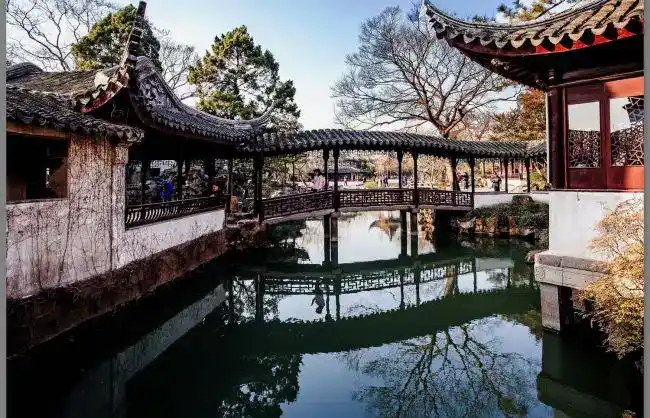
With an area of 5.7 acres (2.3 hectares), Lingering Garden has a meticulous arrangement of pavilions, corridors, rockeries, and ponds. The four parts of the garden, the central, eastern, northern, and western sections, each has their unique style. It is a prime representation of Jiangnan aesthetic.
Content Preview
- Fast Facts about the Lingering Garden
- History of Lingering Garden
- Layout of Lingering Garden
- What to See and Do in the Lingering Garden
- What Makes Lingering Garden Stand Out
- Best Time to Visit the Lingering Garden
- How to Get to the Lingering Garden
- Attractions nearby the Lingering Garden
- FAQs about Lingering Garden
- Plan Your Suzhou Tour with China Xian Tour
Fast Facts about the Lingering Garden
- Location: No. 338 Liuyuan Road, Gusu District, Suzhou City, Jiangsu Province
- Hours: 07:30-18:00
- Ticket price: CNY 55 on season (April to October), CNY 45 off-season (November to next March)
- Visit time: 2 or 3 hours
- Best time of the year: April to October
- Suited to: garden lovers, history lovers, photographers
- Highlights: Celestial Hall of Five Peaks, Cloud-Capped Peak, Small Penglai Isle, Garden Museum
History of Lingering Garden
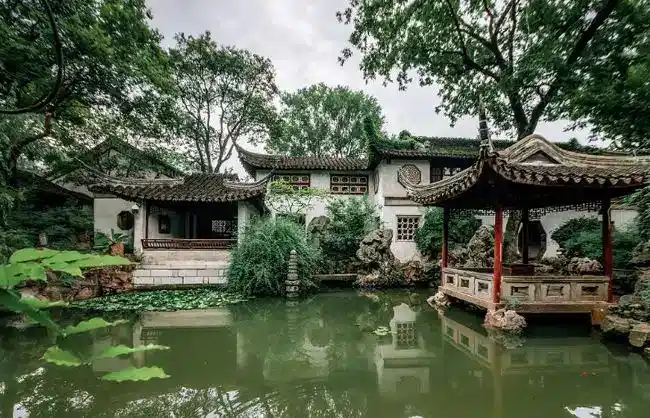
Lingering Garden (Liú Yuán, 留园) was originally constructed in 1593 (Ming Dynasty) by Xu Taishi, and he built it as a retired official. He commissioned stonemason Zhou Shicheng to design the site, which was first known as the “East Garden.”
In 1794 (Qing Dynasty), the garden was acquired by Liu Rongfeng. And after redeveloping it, Liu renamed the site as Hanbi Villa (Cold Azure Mountain Villa). Later, in 1873, Sheng Kang, a Qing official, bought the property. And again, the site got restored and expanded, and afterwards, it got its current name Lingering Garden (Liu Yuan).
And then the wars came, particularly around the Sino-Japanese War, the garden fell into neglect. After the founding of the People’s Republic of China, the Suzhou government finally rebuilt it, and reopened the garden to the public in 1954. In 1997, it was inscribed on the UNESCO World Heritage List as part of the Classical Gardens of Suzhou.
Layout of Lingering Garden
Lingering Garden covers approximately 2.331 hectares. Its layout is structured into four thematic sections, all linked by covered corridors.
- Central Section
- Features a large pond surrounded by artificial grottoes and hills.
- The design emphasizes reflections, with water playing a dominant role.
- Eastern Section
- Characterized by numerous buildings, including elegant halls like the Celestial Hall of Five Peaks.
- This area also hosts many of the garden’s finest carved windows and corridors.
- Western Section
- Dominated by rock hills and maple trees, forming a “mini mountain.”
- There is a pavilion on top of the hill, offering a panoramic view of the garden.
- Northern Section
- More secluded and pastoral: bamboo fences, bonsai gardens, and quiet courtyards.
- This area has a calm, contemplative feel, contrasting with the busier architectural east.

Discover Shanghai's dynamic Bund skyline, Suzhou's elegant classical gardens, Nanjing's imperial mausoleums, and Hangzhou's poetic West Lake on an eight-day eastern China journey.
What to See and Do in the Lingering Garden
Celestial Hall of Five Peaks
Celestial Hall of Five Peaks is in the eastern section of Linger Garden. It is the largest and most elegant hall here. It has a double-eave roof and five round windows. The hall exhibits a wonderful collection of calligraphy works and paintings.
You’ll notice many perforated windows when you visit Lingering Garden, a special highlight. Many of them have patterns including stony patterns and wooden patterns.
Cloud-Capped Peak
Also in the eastern section is the Cloud-Capped Peak. It is a 21.3-foot (6.5-meter) tall limestone rockery, the most famous shaped stone in the garden. It was relocated to the Linger Garden from Lake Taihu. The shape of it resembles a towering mountain peak, is a wonder to behold in person.
Small Penglai Isle
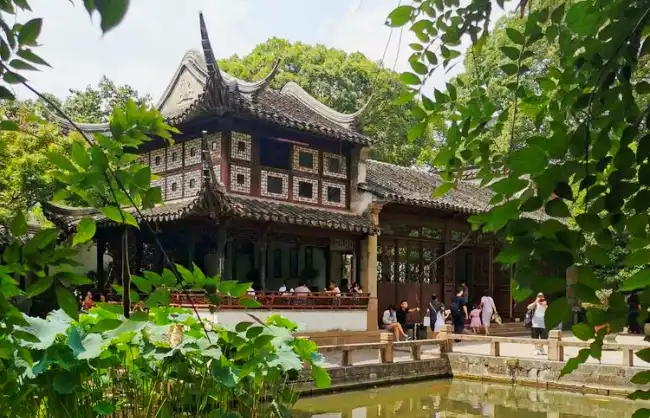
The central section is the most celebrated part of the Lingering Garden. It is built upon a lake, and the artificial island in the lake is called Small Penglai Isle. The isle is given a pavilion, a bridge, a corridor, and a piece of rockery. It’s small but very complete like its own small world. Its name draws inspiration from the legendary fairyland of Penglai in Chinese mythology.
Xiaotaowu House
Xiaotaowu House is in the northern part of the Lingering Garden. In this section, you’ll see plenty of bamboo fences and courtyard around Jiangnan folk dwelling. There are bonsais decorating the pathways and houses.
Traditional Art Performances
Every spring, there’s a 30-day long event called “seeking the dream of the Lingering Garden.” There will be ushers dressed in traditional Jiangnan outfits at the gate of the garden to greet you. There are also actors dressed up as owners, steward, and servants to interact and take photos with you. It’s like stepping into a dream across the history.
In the Exhibition Hall, there are opera performances every few hours, including Kunqu Opera, Suzhou Opera, and Wuxi Opera. Kunqu opera is recognized as Worldwide Intangible Cultural Heritage, while Suzhou Opera and Wuxi Opera are recognized nationally. These different genres featuring Wu characteristics are representative of traditional Wu art.
Small Penglai Isle in Lingering Garden
What Makes Lingering Garden Stand Out
- Abundant Architecture: Lingering Garden has a particularly high density of buildings, and most importantly, they are allexpertly and beautifully arranged in a compact space.
- Masterful Use of Rocks: There are a lot of elegantly shaped rocks in the garden, and there’sa remarkable Taihu limestone rock called the Cloud-Capped Peak, which is carefully positioned to evoke mountain landscapes.
- Calligraphy and Inscriptions: There are 373 stelae in the garden, and they are inscribed with calligraphy from more than 100 famous writers across six dynastie As a result, the gardenalso becomes a living museum of Chinese calligraphic art.
- Four Distinct Garden Sections: The gardenis divided into into central, eastern, western, and northern parts, each provides a rich variety of scenery: water and hills, dense architecture, rock hills, and tranquil courtyards.
- Cultural Heritage:Beyond beauty you can immediately catch by your eyes, Lingering Garden also preserves intangible heritage such as Pingtan (评弹) and Guqin music, which are all treasured traditional arts.
- Traditional Aesthetic Philosophy:And above all, the design actually reflects the classical Chinese garden ideology, which is creating a “microcosm of nature” in a limited space, and all the nature works and human works can be blended harmoniously in a poetic freehand style.
Best Time to Visit the Lingering Garden
The best season for your Suzhou tour to the Lingering Garden is spring. The weather is very nice with sunshine and comfortable temperature. A wide range of flowers are in bloom, including azaleas, peonies, and orchids. It’s best to plan your trip on a weekday rather than a weekend, as the Lingering Garden can get pretty crowded.
You May Like Suzhou Weather in Different Seasons
How to Get to the Lingering Garden
By Bullet Train: If you travel to Suzhou from some other city in China, taking a bullet train is the easiest way. For example, it takes only about 30 minutes to get from Shanghai to Suzhou. Then transfer to a bus, metro, or taxi to reach the Lingering Garden.
By Bus: Take tourist bus NO. 1, city bus NO. 85, or 933 to the Lingering Garden station.
By Metro: Take metro line 2 to Shilu Station, which is a 0.9-mile (1.5-kilometer) walk to the garden.
By Taxi: Take a taxi to the Lingering Garden from anywhere in Suzhou. The fares from Suzhou Railway Station and Suzhou North Railway Station are around CNY 15 and CNY 30.
You May Like How to Get to & Travel Around Suzhou
Attractions nearby the Lingering Garden
Humble Administrator’s Garden is another one of the four most celebrated gardens in Suzhou, among them, it is the largest classical Chinese garden. Humble Administrator’s Garden is praised for its landscapes and especially water features.
Master of the Nets Garden is the smallest but most exquisitely designed classical garden in Suzhou. It’s known for its meticulously planned layout and elegant structures.
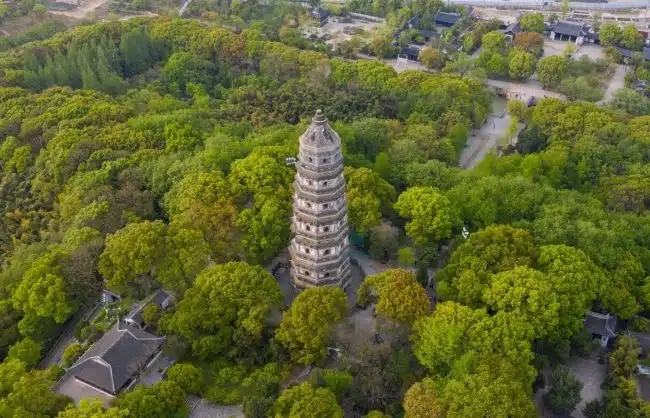
Tiger Hill is a renowned scenic spot in Suzhou, featuring the iconic leaning Yunyan Pagoda, the Sword Pool, the Tomb of King He Lu, and other historical and cultural relics.
Shantang Street is often referred to as “the First Street in Suzhou” for three reasons. It has a history of nearly 1,200 years; it is representative of local architecture; it is associated with distinguished people and events.
The Suzhou Museum is designed by the well-known Chinese American architect Mr. Ieoh Ming Pei (贝聿铭). Pei lived in Suzhou during his childhood, so you’ll find many typical elements of Suzhou gardens and Jiangnan architecture at the museum. With an area of 12,797 square yards (10,700 square meters), Suzhou Museum is home to over 40,000 historical and cultural, including jade, ceramics, bronze, stone, ivory.
Suzhou Silk Museum reveals the fascinating history and intricate craftsmanship behind Suzhou’s renowned silk industry through engaging exhibits and captivating demonstrations.
FAQs about Lingering Garden
Is the Lingering Garden considered one of the Four Famous Gardens of China?
Yes. Lingering Garden is widely recognized as one of China’s four most famous classical gardens. The other three gardens are the Humble Administrator’s Garden (also in Suzhou), Beijing’s Summer Palace, and the Chengde Mountain Resort.
What is the architectural style of the garden?
The garden exemplifies classical Jiangnan garden architecture, and the are also many Qing-style structures. The design follows a “freehand” poetic approach, the the inspiration comes from traditional Chinese landscape painting.
How long does it typically take to tour the entire garden?
A full visit usually takes around 2 to 3 hours, however, this is not a set answer for everyone. Just explore on your own pace.
What makes the Lingering Garden one of the Four Great Classical Gardens of China?
- Exceptional spatial design and craftsmanship
- Rich cultural heritage (calligraphy stelae, traditional arts)
- High density of architecturally significant structures
- Masterful use of rock and water to evoke natural scenery
- Strategic layout that combines multiple garden moods in a small footprint
Does the garden have any special events or exhibitions throughout the year?
Specifically arranged recurring large-scale festivals is uncommon, but Lingering Garden is noted for preserving intangible heritage like Pingtan (storytelling) and Guqin music. Also, it would sometimes host cultural performances or exhibitions, to show the public its strong artistic legacy.
Plan Your Suzhou Tour with China Xian Tour
Suzhou known for its beautifully and elegantly preserved traditional gardens. And expect for the Lingering Garden, one of the most famous garden, The Humble Administrator’s Garden, is also located in this tranquil city. Join a customized Suzhou tour with China Xian Tour will allow you to explore all these highlights with a smooth and relaxing pace. Our guides will be there 24/7 for you to take care of everything along the journey. Contact us now and be ready for a wonderful trip to Suzhou.