
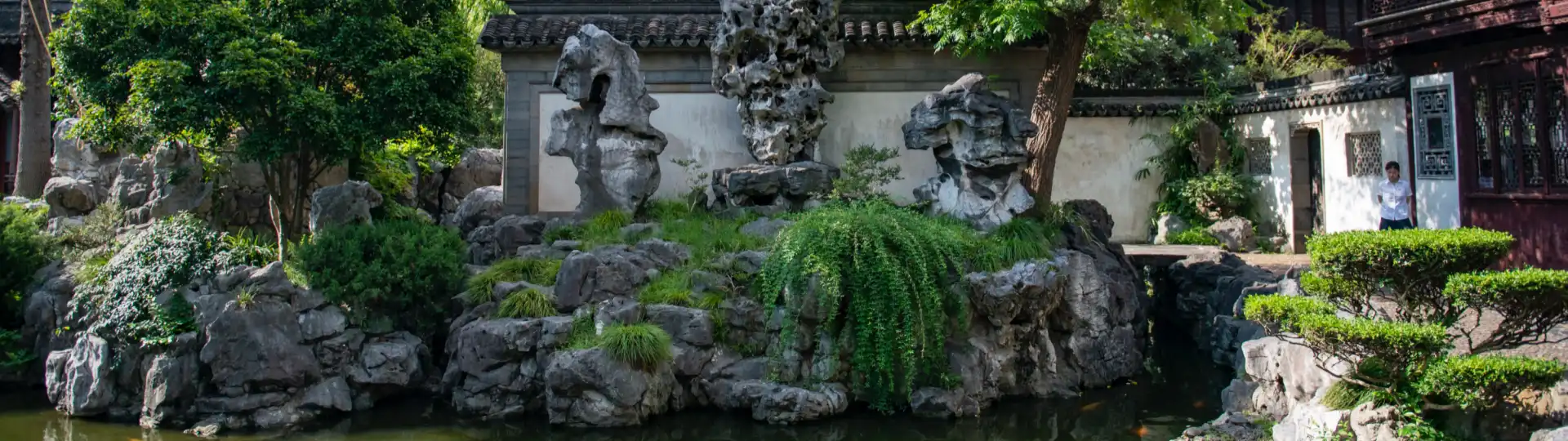
If you are bothered by the bustling urban life and want to find a peaceful retreat, why not travel to China for a poetic classic garden? It is absolutely a perfect answer to your puzzles. With unique architectural styles and exquisite layouts, classic gardens in China offer a spiritual sanctuary amid the hustle and bustle. Though most gardens are crafted meticulously by human hands, they integrate with natural landscapes very well, as if they were naturally created. This is where the charm of Chinese gardens lies.
Among the countless gardens in China, a couple stand out and are considered as the masterpieces, each bearing a supreme merit. In general, the Four Great Gardens of China include Summer Palace, the Humble Administrator’s Garden, Chengde Mountain Resort and the Lingering Garden.
As early as 1994, Chengde Mountain Resort was listed as a world heritage by the UNESCO. In 1997 and 1998, Suzhou classic gardens and Summer Palace were added onto the list successively.
Content Preview
- What Is a Chinese Garden? – Harmony Between Man and Nature
- The Eight Great Classical Gardens of China
- Other Must-Visit Classical Chinese Gardens
- Visiting Tips for Chinese Gardens
- FAQs About Classic Gardens in China
- Explore These Gardens and Other Cultural Essence of China with China Xian Tour
What Is a Chinese Garden? – Harmony Between Man and Nature
Chinese classic gardens, with a history of over 3,000 years, are a form of landscape gardens represented by the imperial gardens in the north and private gardens in the south. A Chinese garden is not a simple combination of structures and plants. It’s in fact a comprehensive spacial art blending philosophy, literature, painting, architecture, and gardening art. In other words, it is far beyond a house, and more like a miniature of the universe. The owners are always tired of secular life and turn to nature for inner peace. They are dedicated to pursuing the harmony between man and nature, what are completely reflected in the design of gardens.

Chinese Garden Architecture
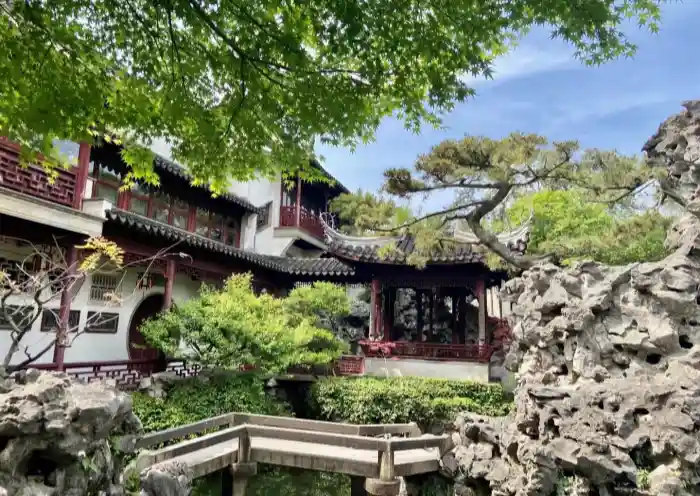
Unlike the orderly, symmetrical western gardens, classic gardens in China abide by the core principle of seeking the harmony between nature and human. Gardens are designed ingeniously to adapt to the natural landscape rather than change it. Through the elaborate layout of winding ponds, zigzag bridges, stacked rocks, exquisite halls, corridors, pavilions and pagodas, the gardens look like natural mountains and lakes. Every step forward leads you to a different view of scenery, full of the pleasure of discovery.
The poetic and pictorial splendor is the soul of classic gardens in China, differing them from any other gardens in the world. Most of the garden designers are literati and artists, so they often integrate the picture composition methods and artistic conception of poems into the creation of gardens.
See more about Chinese architecture.
Imperial gardens vs. private scholar gardens
Imperial gardens and private scholar gardens are two main types derived from a same root and divided by the positions of the owners. In ancient times, the ruling class claimed that all under heaven was the land of the emperor. Therefore, they enclosed a large area of real mountains and rivers to form a garden. The architecture inside features the grandeur presented by bright red and yellow colors and towering structures. By comparison, private gardens are usually small with man-made rockeries and ponds. White and gray are the dominant colors of the architecture. Here is a chart to explicitly showcase the differences between the two.
Dimension |
Imperial Gardens |
Private Scholar Gardens |
Core Function |
Place for political activities; the royal palace for living and relaxing |
House with a courtyard; private place for retiring from the world; place for socializing |
Owners |
The emperor and his family |
The noble, scholars, officers, rich merchants |
Architectural Style |
Large, grand, vibrant colors, highlight real mountains and rivers |
Relatively small, elegant light colors, highlight artistic conceptions |
Representatives |
Summer Palace, Chengde Mountain Resort |
The Humble Administrator’s Garden, the Lingering Garden, Ge Garden |
The Eight Great Classical Gardens of China
Humble Administrator’s Garden (Zhuozheng Yuan, Suzhou)
- First built: at the beginning of the 16th century (Ming Dynasty)
- Address: 178, Dongbei Street, Gusu District
- What you can’t miss: Yuanxiang Hall, Xiaofeihong Gallery Bridge
- Best time for visit: April – May, September – October
- Recommended visiting length:3 – 4 hours
- Entrance fee: CNY 80 (April – October); CNY 70 (November – March). Note that an appointment is required.
- How to get to: Take bus line 5, 262 or 313 and get off at Zhuozhengyuan Station; take metro line 6 to Zhuozhengyuan Subo Station and then walk for about 500 meters.
As one of the most famous classic gardens in China, the Humble Administrator’s Garden is a must-visit stop in your Suzhou tour. You may feel its name a little strange, but this is a self-mockery of the first owner, Wang Xianchen. When he encountered setbacks in his career as a government official, he determined to quit and build a garden for a cloistered life. In the later dynasties, it has changed hands a few times.
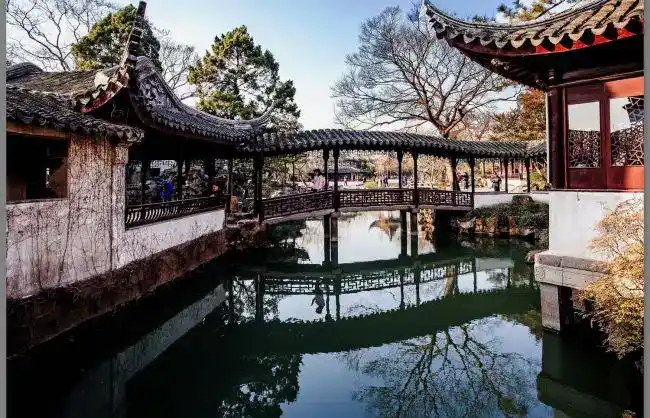
The whole Humble Administrator’s Garden, covering an area of about two acres, was built around water. It is divided into three relatively independent gardens, namely the east, middle and west gardens. Among them, the west garden enjoys the best scenery, with Yuanxiang Hall being its main structure. The lotus flowers there in the height of summer are especially gorgeous. Xiefonghong, the only gallery bridge in the garden, is not only a passage linking the river and bank, but also a “frame” for stunning pictures.
Recommended Suzhou Garden Tour: Suzhou Highlight Day Tour

Lingering Garen (Liu Yuan, Suzhou)
- First built: in 1593 (Ming Dynasty)
- Address: 338, Liuyuan Road, Gusu District
- What you can’t miss: Cloud-Capped Peak, Hanbi Mountain Villa, Celestial Hall of Five Peaks
- Best time for visit: March – May, September – November
- Recommended visiting length:2 – 3 hours
- Entrance fee: CNY 55 (April – October); CNY 45 (November – March).
- How to get to: Take bus line 317, 816 or 933 and get off at Liuyuan Station; take metro line 2 to Shilu Station and then walk for about one kilometer.
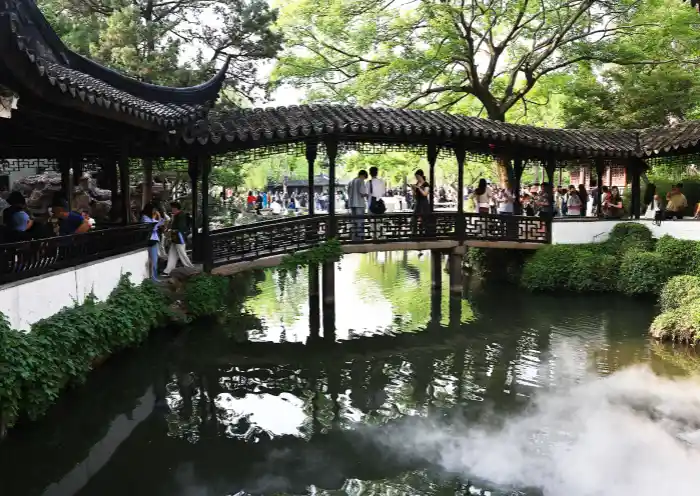
The Lingering Garden was initially built in the Ming Dynasty by the then governor Xu Taishi and known as the West Garden. In the Qing Dynasty, it was purchased by a merchant and renamed as the Lingering Garden to express the nostalgia for the past spring days. It was at that time the famous rockery Cloud-Capped Peak was transferred to this garden.
An adventure to the Lingering Garden can be compared to a magic. The entrance is narrow and unimpressive. However, after passing a twisting dim corridor, the picturesque scenery is totally before your eyes. The central part focuses on water view, with a large pond full of lotuses. In the east there is the Celestial Hall of Five Peaks built with nanmu, a kind of precious timber. The Cloud-Capped Peak, a rockery from the Taihu Lake at the height of 6.5 meters, resembles an ethereal immortal and makes a super star to photograph.
Summer Palace (Yiheyuan, Beijing)
- First built: in 1750 (Qing Dynasty)
- Address: 19, Xinjian Gongmen Rd, Haidian District
- What you can’t miss: Longevity Hill, Kunming Lake, Seventeen-Arch Bridge
- Best time for visit: All year round, especially March to October
- Recommended visiting length:Half a day
- Entrance fee: CNY 30 (April – October); CNY 20 (November – March).
- How to get to: Take metro line 4 and get off at Beigongmen Station. Take Exit D and walk to the north entrance of the Summer Palace.
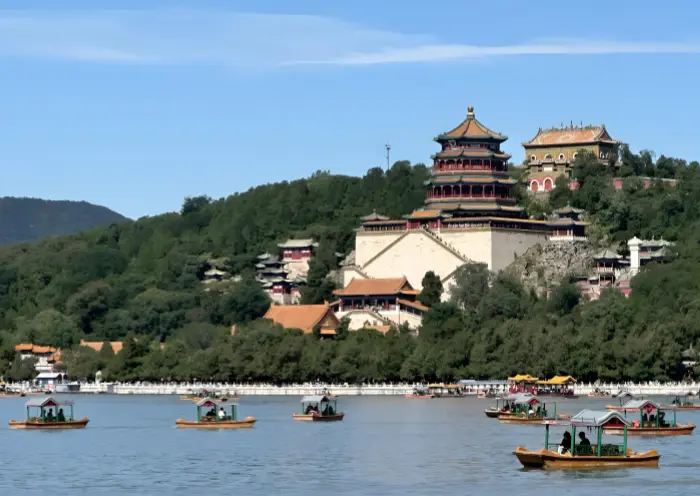
As the last royal garden in China, Summer Palace is the best-preserved of its kind in China. In 1750, the Qing Emperor Qianlong ordered the construction of Qingyi Garden to celebrate his mother’s 60th birthday. However, it was ruined in 1860 during the Second Opium War. In 1888, the Empress Dowager Cixi commanded to rebuild the garden and changed the name to Summer Palace.
The whole garden consists of three areas, correspondingly the political area surrounding the Hall of Benevolence and Longevity, the living area centering on the Hall of Happiness and Longevity, and the touring area around the Kunming Lake and Longevity Hill. Covering three quarters of the whole garden, the Kunming Lake is absolutely in the spotlight. Owing to the intelligent design, around the Winter Solstice, when the golden sunset rays shine on the arches of the Seventeen-Arch Bridge over the lake, it looks very dazzling.
Recommended Tour: Beijing City Sightseeing Day Tour
Chengde Mountain Resort (Bishu Shanzhuang, Hebei)
- First built: in 1703 (Qing Dynasty)
- Address: 20, Lizhengmen Rd, Shuangqiao District, Chengde City
- What you can’t miss: The Main Palace, Yanyu Tower, Rehe Spring
- Best time for visit: June – October
- Recommended visiting length: One Day
- Entrance fee: CNY 130 (April – October); CNY 90 (November – March)
- How to get to: Take a high-speed train from Beijing Chaoyang Railway Station to Chengde South Railway Station. Upon arrival, transfer to public bus line 69 and get off at Huoshen Temple Station. You can also take a cab there.
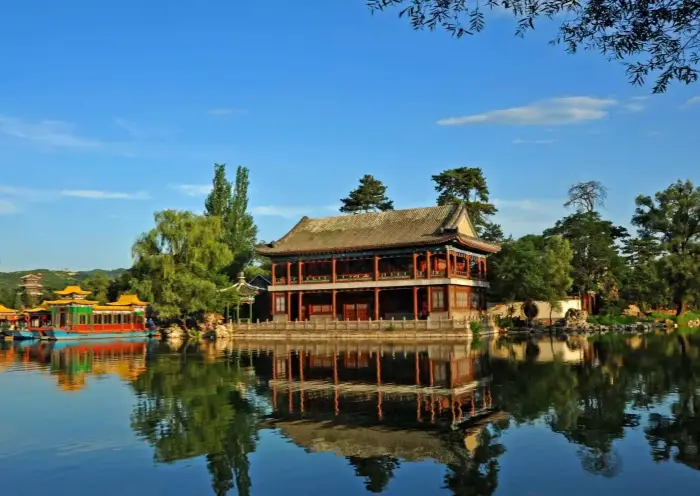
The story of Chengde Mountain Resort dates back to the year 1703, when Emperor Kangxi announced the construction of this resort as a frontier base to communicate with Mongolian tribes and demonstrate military power. In later years, the resort had been expanded and served not only as a royal summer retreat but also a place for informal diplomatic activities.
The resort is a mini replica of China’s landscapes, well integrating palaces, lakes, plains and hills. The palaces used to be where the emperors conducted state affairs and held grand ceremonies. The graceful pavilions, corridors and terraces around the lake represent the southern region of China, while the vast grasslands and rolling hills make you think of the north. The encircling Outer Eight Temples are also eye-catching, providing a quick glance of different styles of Chinese temples.
Recommended Tour: 4 Days Chengde Bashang Grassland Tour from Beijing
The Yu Garden (Shanghai)
- First built: in 1559 (Ming Dynasty)
- Address: 168, Fuyou Rd, Huangpu District
- What you can’t miss: Great Rockery, Nine-Bend Bridge, Yuyuan Bazaar
- Best time for visit: April – May, September – October, Chinese New Year
- Recommended visiting length:2 – 3 hours
- Entrance fee: CNY 40 (April – June, September – November); CNY 30 (July – August, December – March).
- How to get to: Take metro line 10 or 14 to Yuyuan Station, leave from Exit 1 and then walk for 5 to 10 minutes.
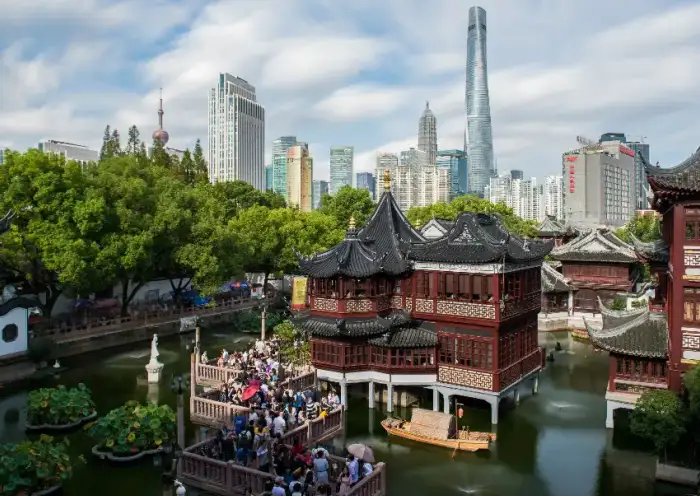
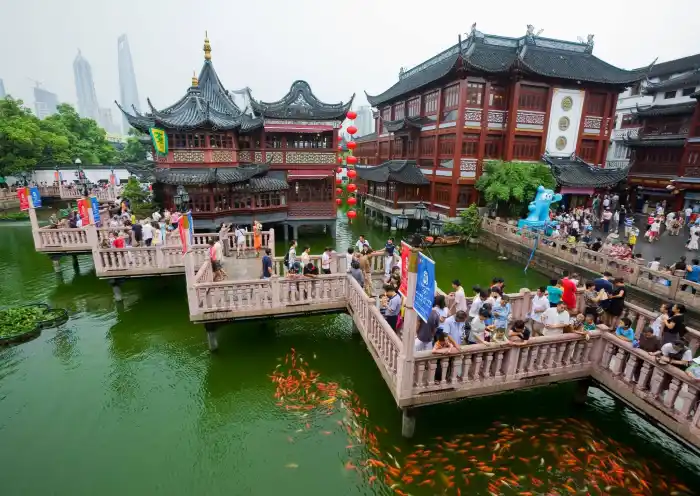
Any Shanghai tour may involve a stop in Yu Garden, a green space nestled among skyscrapers. It was originally built in the Ming Dynasty by Pan Yunduan, the then administrative commissioner of Sichuan, as a tribute to his parents, with the name Yuyuan meaning a joyful place for the elderly.
Visiting Yu Garden, you must not miss its three highlights: the Great Rockery standing as the pinnacle of Ming Dynasty rock art, the Exquisite Jade Rock (Yulinglong) hailed as the “treasure of the garden”, and the Nine-Bend Bridge linking the Lake Heart Pavilion. It is recommended to spend 1.5 hours savoring the essence of the garden, followed by 2 hours exploring the nearby Yuyuan Bazaar – tasting Nanxiang Steamed Buns, admiring traditional handicrafts, and enjoying a cup of tea in the mid-lake tea house.
Recommended Tour: Shanghai Highlight Day Tour
Prince Gong’s Mansion (Beijing)
- First built: in 1776 (Qing Dynasty)
- Address: 17, West Qianhai Street, Xicheng District
- What you can’t miss: Xijin Study, “Fu” Stele, Bat-Shaped Pond, Moon-Viewing Platform
- Best time for visit: April – May, September – October
- Recommended visiting length:2 – 3 hours
- Entrance fee: CNY 40
- How to get to: Take metro line 6 to Beihai North Station, get out from Exit B and walk northward for about 500 meters.
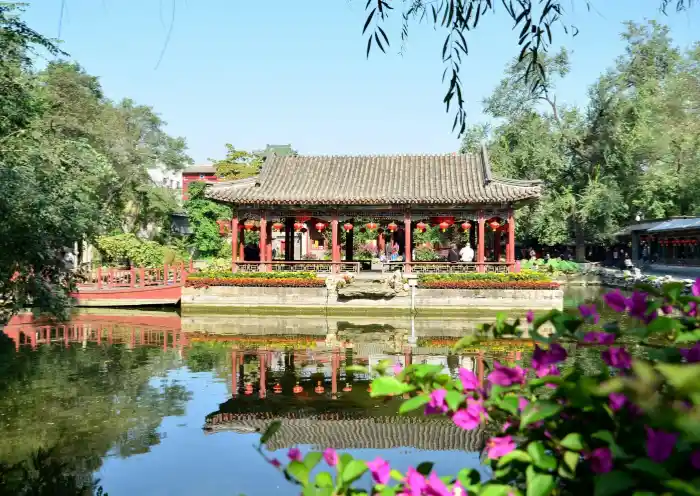
Walking into the Prince Gong’s Mansion, you will get to know more about Qing Dynasty history. This site was once the residence of the notorious venal official Heshen, and later was gifted to Prince Gong, hence the name.
This estate is divided into two parts, the residence and the garden. The Yin’an Hall showcases the solemn elegance of a princely residence, while the Xijin Study was built wholly with the precious nanmu wood. The Rear Screen Building, stretching over 160 meters, is said to be where Heshen collected his treasure. You can admire bat motifs by the Bat-Shaped Pond, touch the genuine stele bearing the Chinese “Fu” character for good luck, and ascend to the Moon-Viewing Platform for a panoramic view of the garden’s splendor.
The Master of the Nets Garden – Suzhou, Jiangsu
- First built: in 1174 (Southern Song Dynasty)
- Address: 11, Kuojiatou Lane, Gusu District
- What you can’t miss: Peony Study, Pavilion of Moonlight and Breeze, Yinjing Bridge
- Best time for visit: April – May, September – October
- Recommended visiting length:1 – 2 hours
- Entrance fee: CNY 40 (April – May, July – October); CNY 30 (June, November – March); CNY 100 for night ticket from mid-March to mid-November.
- How to get to: Take metro line 5 to North Nanyuan Road Station. Leave from Exit 4 and walk for about 10 minutes.
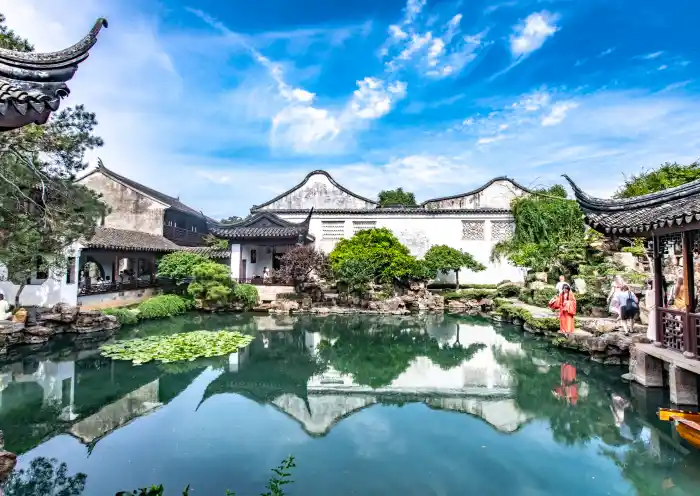
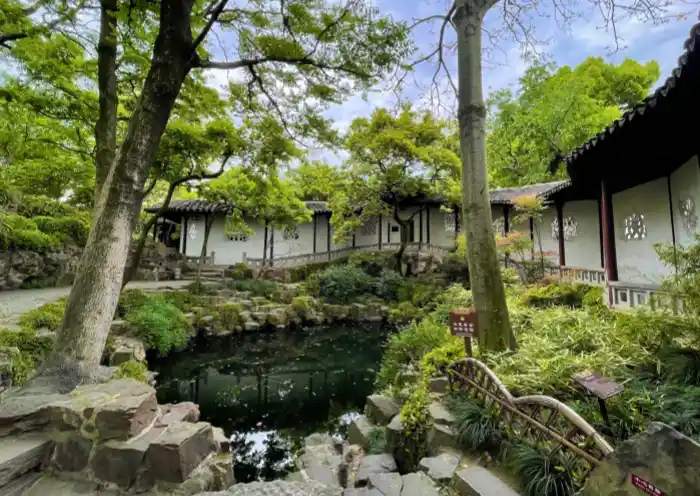
If you are enthusiastic about Chinese culture, don’t miss the Master of the Nets Garden. Though small in size, it stands as a supreme exemplar of classic gardens where simplicity triumphs over abundance. The garden was initially named Wanjuan Hall. In the Qing Dynasty, Song Zongyuan, a governor, renovated and renamed it to embody his yearning for a reclusive life as a fisherman.
The inside Peony Study is world-famous for its 1:1 replica at the Metropolitan Museum of Art in New York. The Pavilion of Moonlight and Breeze, suspended above the water, offers an ideal spot to admire reflections. A night tour is recommended as you have a chance to indulge yourself in the artistic performances, including Kun Opera, dances, storytelling and ballad singing in Suzhou dialect, and ancient music instrument playing.
The Canglang Pavilion – Suzhou, Jiangsu
- First built: in 1045 (Northern Song Dynasty)
- Address: 3, Canglangting Street, Gusu District
- What you can’t miss: Duplicate Corridor, Shrine of 500 Ancient Sages
- Best time for visit: All year round.
- Recommended visiting length: 2 hours
- Entrance fee: CNY 20 (April – May, July – October); CNY 15 (June, November – March).
- How to get to: Take metro line 4 or 5 to Nanmen Station. Leave from Exit 3 and walk for about 10 minutes.
Canglang Pavilion is the existing oldest garden in Suzhou, which can be traced back to nearly 1,000 years ago. Unlike other gardens separating themselves from the outside with high walls, Canglang Pavilion adopts a duplicate winding corridor linking the outside and interior. In the corridor, there are 108 types of latticed windows, creating different views of scenery.
The park is dominated by mountains and rocks, with buildings arranged around the mountains in a simple and sparse manner, showcasing the freehand style of Song Dynasty gardens.
Other Must-Visit Classical Chinese Gardens
Name |
Located in |
Best for |
Huanxiu Mountain Villa |
Suzhou, Jiangsu |
A kingdom of rockeries |
Jichang Garden |
Wuxi, Jiangsu |
A borrowed view of Longguang Pagoda on the outside Xi Hill |
Ge Garden |
Yangzhou, Jiangsu |
Rockeries representing the scenes of four seasons |
He Garden |
Yangzhou, Jiangsu |
A 1,500-meter-long duplicate corridor |
Qinghui Garden |
Foshan, Guangdong |
Vibrant decorative colors of glass windows |
Yuyin Garden |
Guangzhou, Guangdong |
The Shenliu Hall symbolizing the epitome of the decorative art in Guangdong |
Recommended Suzhou Tours: Private Trips to Classical Gardens
Visiting Tips for Chinese Gardens
Chinese Garden Hours & Best Time to Visit
To capture seasonal highlights, the best time to visit classic gardens in China is usually spring and autumn for blossoms and rich colors, as well as the fine climate. Generally speaking, the visiting time depends on the scale of a garden. For instances, you need to spare 2-3 hours per Suzhou Garden, half a day for Summer Palace, and a full day for Chengde Mountain Resort.
Travel Itinerary Ideas
To enrich your travel experience, you do not simply wander around the gardens, but are encouraged to combine them on a 1-2 days trip. As the tourist attractions in Suzhou are rather concentrated, you can spend one or two days there to cover the must-sees.
If travelling in Beijing, it’s advised to combine Summer Palace and Forbidden City in your itinerary. Time permitting, you can extend your Chengde travel journey to visit the mountain resort.

FAQs About Classic Gardens in China
Which classic gardens are easiest to visit from Shanghai?
Yu Garden in Shanghai is definitely the first choice. Thanks to the frequent bullet trains, it’s also very convenient to travel from Shanghai to Suzhou, home to abundant classic gardens.
What cultural elements are reflected in classical Chinese gardens?
You can find out the life philosophy of ancient Chinese, such as their understanding of the harmony between man and nature and their pursuit for noble qualities. The poetic architectural layout and numerous inscriptions, even the name of a garden, also convey their wills. There are also symbols for blessings, like bat, deer, fish, and crane patterns and sculptures.
How do rockeries and water features function in garden design?
By the means of laying rockeries and water, the designers skillfully imitate a natural mountain and river in a limited space and inject vitality to the garden.
How do classical Chinese gardens differ from Western-style gardens?
They originate from different philosophies and aesthetic views. Classic Chinese gardens place more emphasis on nature, so that the buildings are arranged to comply with natural landscape. On the contrary, Western gardens are mostly symmetrical with manicured plantations.
Explore These Gardens and Other Cultural Essence of China with China Xian Tour
Are you planning to visit Chinese classic gardens? Don’t hesitate to contact China Xian Tour’s travel consultant, because we can offer a customized itinerary for you. Our knowledgeable tour guide will tell the stories behind the gardens to make your trip more pleasant!