


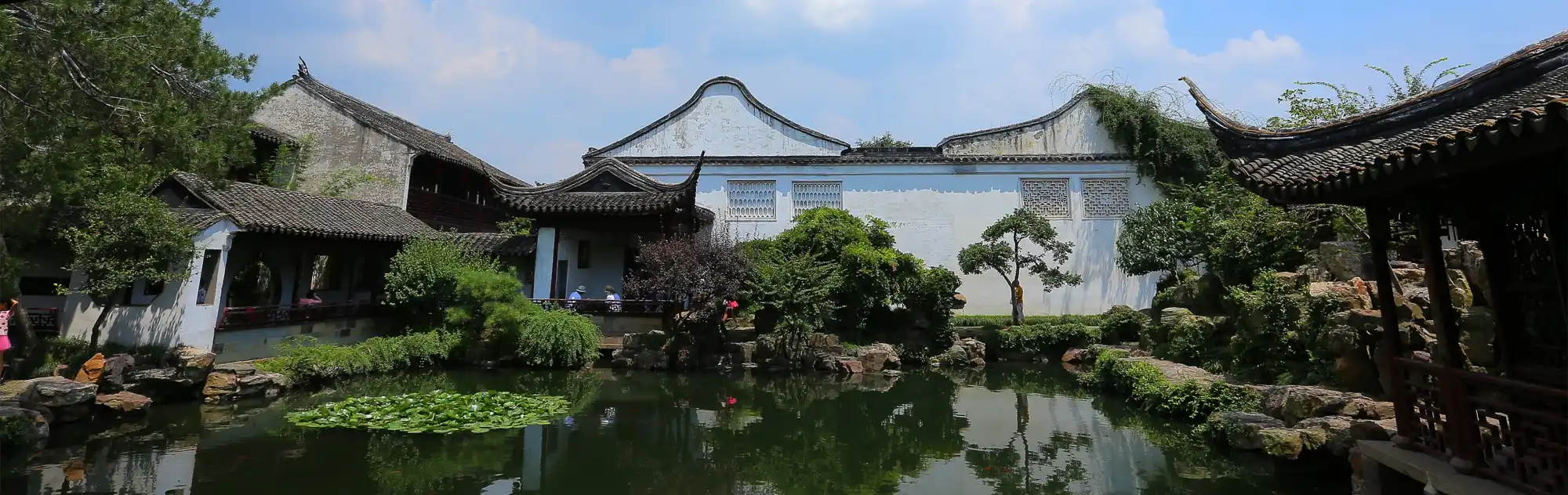
Master of the Nets Garden a classical garden in Suzhou, China. It is a residential garden with a history of over 800 years. It was constructed in the 12th century, during Southern Song Dynasty, by Shi Zhengzhi, a government official who found inspiration in the humble life of a fisherman. It was originally named the “Fisherman’s hermitage.”
In the 18th century, Qing Dynasty, another official, Song Zongyuan, withdrew from court life, bought, and restored the garden. Frustrated with the government, he also found peace of mind in the rural, fishing life. He renamed it Master of the Nets Garden.
Classical Chinese gardens usually aim to recreate natural beauty in miniature. With an area of 6,380 square yards (5,334 square meters), Garden of the Master of the Nets is small in size compared to other residential gardens in Suzhou but is certainly no less of a wonder.
Master of the Nets Garden consists of three main structures, the primary garden, residential section, and the inner garden. For its refined architecture, rockeries, and a brilliant fusion of art, nature, culture, it has been listed as a UNESCO World Heritage Site, along with other renowned classical gardens of Suzhou.
Content Preview
- Fast Facts about Master of the Nets Garden
- Why visit the Master of the Nets Garden
- Major Parts in the Garden
- Day vs. Night Tour Comparison
- History of the Master of Nets Garden & The Name’s Origin
- Best Time to Visit Master of the Nets Garden
- How to Get to Master of the Nets Garden
- Attractions nearby Master of the Nets Garden
- Practical Tips for Visitors
- FAQs about the Master of Nets garden
- Explore More of Suzhou’s Highlights with China Xian Tour
Fast Facts about Master of the Nets Garden
- Location: Kuojiatou Alley NO. 11 Daichengqiao Road, Suzhou, Jiangsu Province, China, 215006
- Hours: 07:00-17:30 on season (April-October) and 7:30-17:00 off season (November-March)
- Ticket price: CNY 40 on season and CNY 30 off season; CNY 100 for night garden
- Recommended visit time: 1-2 hours
- Best time of the year: spring and autumn
- Suited to: garden lovers, history enthusiasts, photography fans
Why visit the Master of the Nets Garden
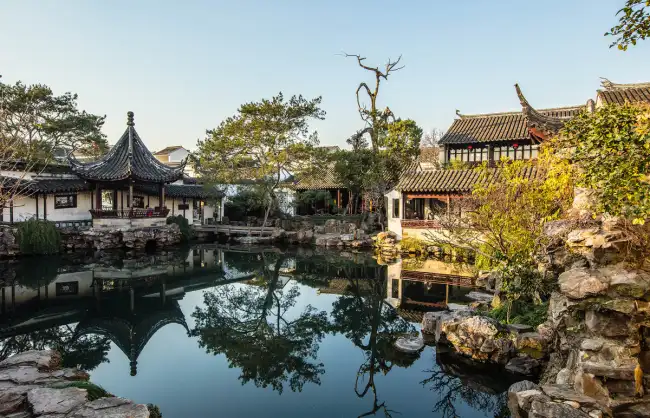
- It is the smallest of the UNESCO Suzhou Classical Gardens. It covers only 5,400 square kilometers, but contains the essence of the Jiangnan gardens.
- The garden makes a perfect use of the illusion of space. In this limited space, the scenery seems to be endless and it changes with each step, but all are as beautiful as a painting.
- Every architecture inside the garden is exquisitely designed. Here, you can meet the top one gate tower in Jiangnan and China’s smallest stone bridge.
- Thanks to the delicate design, tourists can enjoy different but beautiful scenery no matter which season they come.
- The Ming Hall Garden at the Metropolitan Museum of Art in New York is a 1:1 replica of The Meditation Study in this garden. There is no reason not to watch the original one.
Major Parts in the Garden
The Primary Garden
The primary garden lies at the heart of the Master of the Fishing Nets Garden. It’s centered around a pond, encircled by pathways and a number of structures. The various buildings are constructed so that you can access the primary garden from any room.
The Ribbon Washing Pavilion (Zhuoying Shuige) is a boat-shaped hexagonal pavilion in the pond. Its name derives from a poem by Bai Juyi, a poet, as well as the governor of Suzhou in Tang dynasty. The poem depicts a fisherman washing his ribbon-like fishing net in the water.
The Pavilion for the Advent of the Moon and Wind (Yuedao Fenglai Ting) is a square pavilion on the pond. It’s a perfect viewing deck for Garden of the Master of the Fishing Nets. Its name originates from a phrase found in the Book of Songs, an ancient collection of Chinese poems, expressing anticipation of the moon and wind.
A mirror hangs on the corridor across from the pavilion. Admire the moon emerging in the sky and reflected in the water. When you turn around to exit the pavilion, you will be pleasantly surprised by the moon reflected in the mirror.
The Peony Hall (Mudan Ting) is a three-roomed hall overlooking the pond with beautiful peony paintings and carvings. In spring, the hall is surrounded by blooming peony flowers. It serves as a venue for musical performances and tea ceremonies in Master of the Nets Garden.
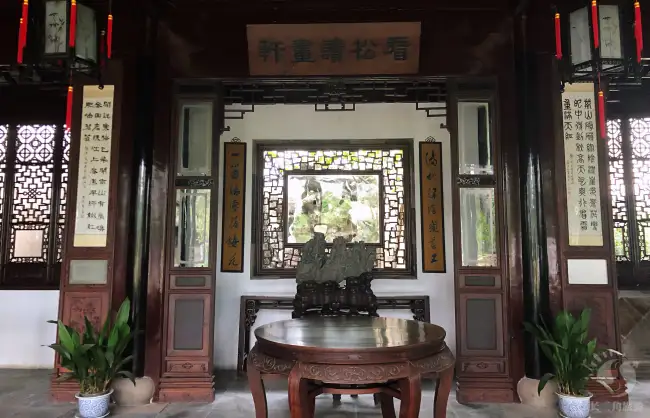
The Pine-watching and Painting Appreciation Studio (Wansong Shuhua Shi) is a space for exhibiting paintings and calligraphy with a view of the garden’s pine trees.
The Residential Section
On the east side of Master of the Nets Garden is the residential section with studies, halls, courtyards, and furniture representative of Southern Song and Qing dynasties. It gives insight into the lifestyle and preferences of the garden’s former owners.
The Sedan Chair Hall (Jiaochuang Ting) serves as the main entrance to Master of the Nets Garden. Its name refers to the sedan chair used for bringing guests to and from the garden. It showcases antique furniture and paintings.
The Meditation Study (Dianchun Yi) is replicated at the Metropolitan Museum of New York and the Pompidou Center in Paris for its representative architecture of Ming Dynasty. Its name originates from a poem by Su Shi, a poet from Song dynasty, expressing a desire for a simple and meditative life among nature. It displays calligraphy works and stone sculptures.
The Five Peaks Library (Wufeng Shuyuan) got its name from the renowned five peaks of Mount Lu, a famous scenic spot in China. The library houses rare books, scrolls, and musical instruments.
The Cloudy Stairway Room (Yunti Shi) showcases exquisite wood carvings and window frames. Its name is inspired by a poem by Li Bai, a Tang dynasty poet, about ascending a heavenly stairway through the clouds.
The Inner Garden
The western side of Master of the Nets Garden is the inner garden. It is renowned as a masterpiece of garden design which skillfully creates a sense of spaciousness and depth despite its limited size.
The Pavilion for Listening to Billows (Tingbo Ting) is a pavilion in the pond. Its name comes from a poem by Wang Wei, a Tang dynasty poet, recalling his enjoyment listening to billows in nature. It has a great view of water and rocks.
The Pavilion for Greeting Flowers (Yinghua Ting) is perched on a terrace facing a rockery. Its name is inspired in a poem by Li Shangyin, a Tang dynasty poet, expressing admiration for spring flowers. The pavilion features remarkable plants and bonsais.
The Hall for Gathering Beauty (Jimei Tang) is a three-roomed hall connected to the main garden. Its name is derived from a phrase in the Book of Rites, an ancient Confucian text, talking about finding beauty in all directions. The hall exhibits fine porcelain and jade wares.
The Pavilion for Watching Pines (Wansong Ting) draws its name from a poem by Du Fu, a Tang dynasty poet, praising the beauty and longevity of pines. It is the ideal spot for admiring the scenery of Master of the Nets Garden.
The Night Garden Experience
Every night 7:30-9:00pm from May to November, Master of the Nets Garden turns into a magical venue showcasing local art concerts. There is a series of musical and acting performances in different parts of the garden. As you walk through the entrance, two staff members dressed in traditional Jiangnan costume will guide you inside.
You’ll see traditional stringed and woodwind instrument performances, classical dance, melodious Kun Opera, traditional storytelling and ballad singing in Suzhou dialect.
Day vs. Night Tour Comparison
The scenery at daytime and night in the Master of Nets Garden is like an ink painting and a meticulous heavy color painting, respectively, offering you completely different experiences. The table below is the main characteristics of these two periods.
Aspect |
Daytime Visit |
Nighttime Visit |
Core Experience |
Enjoy the artistry of the garden itself: appreciate the layout and details of architecture, landscapes, flowers, and trees, and experience the wisdom of garden design in creating small, intricate spaces. |
Immersive cultural feast: experience intangible cultural heritage performances (such as Kunqu opera, Pingtan, etc.) in a dramatic lighting atmosphere, and feel the unique ambiance of the classical garden at night. |
Main Activities |
Free exploration, photography (architecture, flower windows, rockeries, waters), study garden layout. |
Follow the guided tour, move through various halls to enjoy the changing scenery, and watch traditional performances in fixed points. |
Atmosphere & Visuals |
Natural daylight enhances the authentic landscape, serene like an ink painting, with clear spatial layers. |
Artistic lighting creates dramatic effects, dreamlike and enchanting, emphasizing the creation of atmosphere. |
Suitable For |
First-time visitors, garden art researchers, tourists who enjoy tranquility, photography enthusiasts |
Tourists seeking a unique experience, traditional culture enthusiasts, romantic couples, night-time explorers. |
Tour Duration |
Around 1-2 hours, with flexible pacing. |
Around 1 hour, with a fixed route and scheduled performance |
Ticket Information |
Around CNY 40 |
Around CNY 100-120 |
History of the Master of Nets Garden & The Name’s Origin
The history of the Master of Nets Garden can be traced back to Southern Song Dynasty. In 1174, an officer retired to Suzhou and built a house here to store his collection of ten thousand volumes, so the main building is named “Ten Thousand Volumes Hall”. And the opposite garden is called Yuyin Garden, which means the fisherman’s detachment and seclusion. In 1765 in Qing Dynasty, another officer renamed it as the Master of Nets Garden. It has the same meaning as Yuyin and expresses the officer’s noble aspiration to retire from the world like a fisherman. In 1795, a wealthy merchant bought the garden and carried out expansions and transformations. The layout and landscapes of today’s garden are basically formed during this time. As time went by, a collector bought it in 1940. And his descendant donated it to the country in 1950. Through careful renovation and expansion, it was opened to the public in 1959.
Best Time to Visit Master of the Nets Garden
Garden of the Master of the Nets is definitely worth visiting throughout the year. Each season has its own charm. Here are some tips for choosing the best time for you Suzhou tour to the garden.
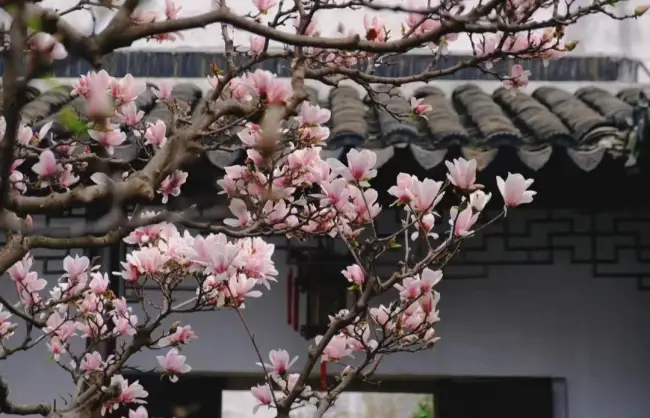
Spring (March-May) is the time to visit Master of the Nets Garden if you wish to see flowers in blossom, including peonies, plum blossoms, and magnolias. While the weather is mostly pleasant, there might be occasional showers and a certain level of humidity.
Summer (June-August) in Suzhou brings warmth and humidity, as well as a larger influx of tourists. Master of the Nets Garden sees a large number of visits per year. You’ll find comfort from the heat from the tree shadings and refreshing coolness of the pond. In the past, the garden has organized summer festivals and events.
Autumn (September-November) is also a great time to travel to Suzhou because the weather turns cool, and autumn leaves start to pile on the ground. You’ll find a number of cultural activities and performances at Master of the Nets Garden during this season.
Winter (December-February) brings low temperatures and occasional snowfall to Suzhou. The garden has a different landscape when it’s pavilions, bonsais, and rockeries are blanketed in snow. Master of the Nets Garden tends to be less crowded during winter.
You May Like Suzhou Weather in Different Seasons
How to Get to Master of the Nets Garden
Both metro lines 4, 5 and 6 can transport you to the garden with stops being Sanyuanfang Station, Nanyuanbeilu Station and Wangxianqiao Soochow University Station, respectively.
About bus, you can take bus No. 55, 202, 529, 811, or 931 to Wangshiyuan Station. Or take No. 47, 204, 501, or 511 to Wangshiyuan North Station. For tourists, there is also the option of tourist bus No. 2, which stops at Wangshiyuan West Station.
And the detailed routes from the train stations are listed below.
From Suzhou Train Station: You can take metro line 4 to Sanyuanfang Station exit 1, and then walk eastward for about 1 km to the garden.
From Suzhou North Train Station: First, take metro line 2 to Pinghelu Station and transfer to metro line 6. Get off at Wangxianqiao Soochow University Station exit 2 and walk about 1 km to the garden.
Attractions nearby Master of the Nets Garden
The Humble Administrator’s Garden is another one of the four most celebrated gardens in Suzhou, among them, it is the largest classical Chinese garden. Humble Administrator’s Garden is praised for its landscapes and especially water features.
The Lingering Garden is one of Suzhou’s four most celebrated classical gardens. It is praised for its meticulous layout, elegant architecture, and artistic rock formations.
Tiger Hill is a renowned scenic spot in Suzhou, featuring the iconic leaning Yunyan Pagoda, the Sword Pool, the Tomb of King He Lu, and other historical and cultural relics.
The Suzhou Museum is designed by the well-known Chinese American architect Mr. Ieoh Ming Pei (贝聿铭). Pei lived in Suzhou during his childhood, so you’ll find many typical elements of Suzhou gardens and Jiangnan architecture at the museum. With an area of 12,797 square yards (10,700 square meters), Suzhou Museum is home to over 40,000 historical and cultural, including jade, ceramics, bronze, stone, ivory.
Shantang Street is often referred to as “the First Street in Suzhou” for three reasons. It has a history of nearly 1,200 years; it is representative of local architecture; it is associated with distinguished people and events.
Practical Tips for Visitors
- To take the best photos at the Master of the Nets Garden, you can not miss The Pavilion for the Advent of the Moon and Wind, The Meditation Study, The Yinjing Bridge, etc.
- During 07:30 – 09:00 and 16:00 – 17:00, the lights there are best for photography and there are usually fewer tourists. If you want to avoid the crowds, do not go there during 10:00 – 15:00.
- To enjoy a leisure tour in the garden, 1.5 – 2 hours will be an ideal time.
- There are many narrow paths, steps, thresholds and areas close to the water, making it not convenient for strollers and wheelchairs. But the road is relatively flat, the elders can have a tour.
FAQs about the Master of Nets garden
What time does the Master of Nets garden open?
It is 07:00-17:30 during April-October and 7:30-17:00 during November-March.
How does the Master of the Nets Garden compare in size to other famous Suzhou gardens?
The Humble Administrator’s Garden covers 70 – 80 mu; The Lingering Garden covers 35 mu; The Lion Grove Garden covers 15 mu; while the Master of the Nets Garden covers only 8 mu.
Is the Master of the Nets Garden a UNESCO World Heritage Site?
Yes, it was listed as a UNESCO World Heritage Site in 1997.
What are the highlights or main sections to see in the garden?
The Caixia Pool, The Pavilion for the Advent of the Moon and Wind, The Meditation Study, The Yinjing Bridge, Brick-carved gate tower are the highlights of the garden.
How long should I plan to spend visiting the Master of the Nets Garden?
1.5 – 2 hours will be needed to explore the garden.
Why is it called the “Master of Nets Garden”?
“Master of Nets” means the fisherman. Its name shows the owner’s interest in leaving the officialdom, finding solace in nature and retreating to the countryside like a fisherman.
Explore More of Suzhou’s Highlights with China Xian Tour
As a popular Chinese saying goes, “There is paradise in heaven and we have Suzhou & Hangzhou on earth.” Every foreign tourist should visit Suzhou to explore this heaven on earth. China Xian Tour is good at customizing a trip to include not only the classic gardens, but also the famous historic landmarks, like Hanshan Temple, and the water towns, like Zhouzhuang. Join in our tour, you will feel the charm of the city in all aspects. So contact us right now.