
Fujian Tulou Travel Guide – Explore Secrets of Traditional Fujian Dwellings
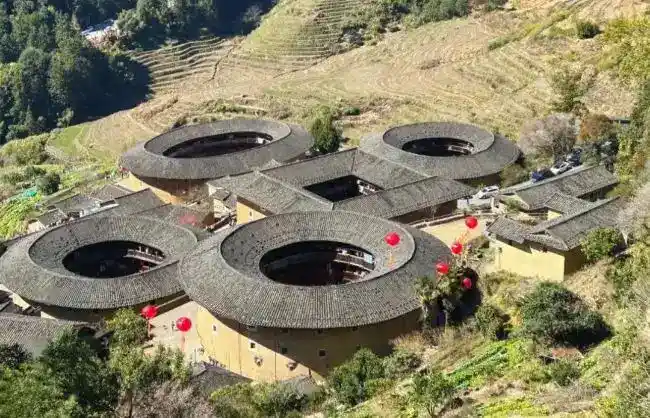
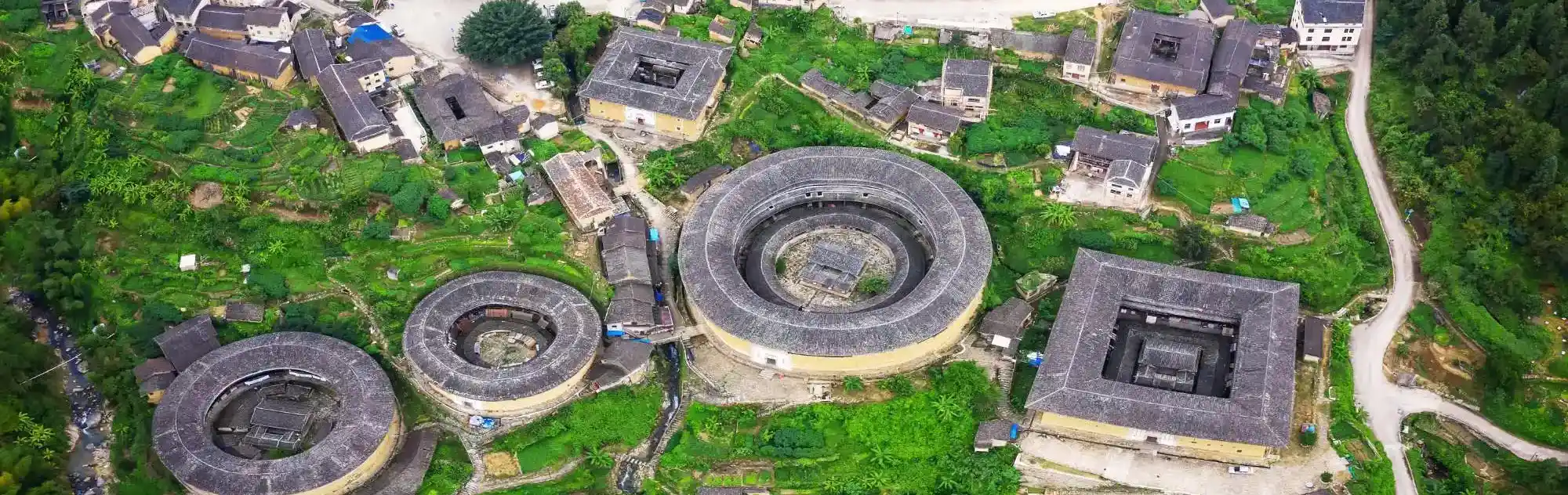
Fujian Tulou, aka Hakka Tulou or Hakka earth building, is a form of traditional residential architecture constructed by the Hakka people in Fujian. Currently, most of these Tulou houses are concentrated in Yongding County and Nanjing County. You may also encounter these Tulou houses in other regions of Fujian and parts of Guangzhou.
Thanks to its unique architectural design and profound cultural significance, Fujian tulou was included in the UNESCO World Heritage List in 2008. Now, the tulou houses have become such a popular destination that most travelers like to include a Fujian tulou tour in their Xiamen travel or Fujian travel itinerary.
The origination of the Fujian Tulou complex can be traced back to the Song and Yuan Dynasties. To adapt to mountainous environments and defensive needs, the Han Chinese migrants developed this kind of unique architecture by using basic building materials such as earth, wood, stone, and bamboo.
These buildings are for collective living, mostly rising two to three stories (some can reach four or five stories), and coming in various shapes. A smaller tulou building can house a few dozen families, while the large ones can accommodate hundreds or even thousands of residents. The square and circular tulous are the most numerous in Fujian, and other less common tulou shapes include elliptical, pentagonal, mansion-style, etc.
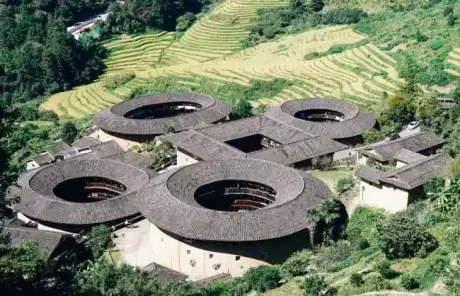
Chinese: 土楼 tǔ lóu
Distributed in: Yongding, Nanjing, Hua’an…
Content Preview
- Why Visit Fujian Tulou?
- Which Fujian Tulou Cluster to Visit?
- Fujian Tulou History
- Entrance Fees for Main Tulou Clusters
- Inside the Fujian Tulou Hakka Houses
- What to Do at Fujian Tulou
- Where to Stay When Visiting the Fujian Tulou, China
- How to Plan a Fujian Tulou Tour
- Fujian Tulou Weather and Best Time to Visit
- What Hakka Dishes to Try When Visiting the Fujian Tulou
- Transportation: How to Get to and Travel Around
- FAQs about Fujian Tulou
- Explore Xiamen and Fujian Tulou with China Xian Tour
- Best China Tours including Fujian Tulou
- Other Popular Destinations in Fujian
Why Visit Fujian Tulou?
- A UNESCO-listed Cultural Heritage: An outstanding representative of ancient architecture in China, tulou houses attract worldwide visitors with their unique architectural forms and rich history.
- Impressive Architectural Ingenuity: The buildings are eye-catching for their grand scale, intricate structures, and ingenious design blending defense and living spaces.
- Rich Hakka Culture Experiences: Beyond the impressive buildings themselves, a Fujian tulou trip will also reward you with immersive Hahha culture experiences, including learning about locals’ lives, sampling Hakka cuisine, exploring the room interiors, etc.
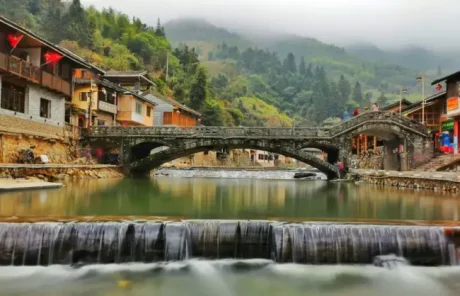
- Admire Beautiful Natural Landscapes: Many earthen buildings are nestled among mountainous areas and embraced by picturesque landscapes. With the rustic traditional buildings coexistent harmoniously with the countryside scenes, it is easy to catch many great photos here.
- Convenient Geographical Location: Most tulou complexes are scattered in Nanjing and Yongding Counties, both of which can be easily accessed within 2 hours drive, making it a hot place for extended Xiamen tours.
Which Fujian Tulou Cluster to Visit?
Tulou houses are mainly scattered in the western and southern parts of Fujian Province. Yongding County and Nanjing County are the two most concentrated regions, and Hua’an County is also a great alternative, known for its Er-yi Lou.
Yongding Tulou Area
Most Tulou clusters in Yongding County were built during the Song and Yuan Dynasties, featuring grand scale and more profound cultural significance. In Yongding County, the earthen buildings are more concentrated, mainly scattered in Hukeng, Hongkeng, and Gaotou towns. In summary, if you want to explore more large-scale and time-honored buildings, or want to see multiple houses in an easy short trip, Yongding Tulou area is your ideal choice. Below are some of the most popular tulou clusters in Yongding.Nanjing Tulou Area
Most earthen buildings in Nanjing County are built during the Ming and Qing Dynasties, featuring more diverse shapes and styles, and exquisite craftsmanship. Though scattered in different towns, each building here offers unique architectural characteristics. If you want to explore tulou houses of various shapes and an in-depth cultural exploration, Nanjing Tulou area should be on your list. See the top tulou clusters in Nanjing below:Fujian Tulou History
The earliest Fujian tulous can be traced back to the Song and Yuan Dynasties. At that time, many Han Chinese migrated south and settled in the mountainous regions of southwestern Fujian. The tulou houses at that time are small and simple.
Following a continuous development in the preceding centuries, the construction of Fujian Tulou houses reached a mature stage in the late Ming and Qing Dynasties and the Republic of China era. The Fujian tulou houses in this period feature more expanded scale, intricate structure and defensive capabilities.
The origin and development of Fujian earth building are closely linked to several significant population migrations in Chinese history. During the Western Jin Dynasty, there were large-scale migrations from the Central Plains to the South due to the frequent conflicts and natural disasters in the North. Some migrants settled in mountainous areas in Fujian and formed the Hakka ethnic group. They formed their unique Hakka dialect and built the unique tulou houses in this region for defensive purposes and to maintain family unity.
Until today, many Fujian Tulou houses are still inhabited by local elders. Its outstanding architectural features and significant cultural value led to its designation as a UNESCO World Heritage Site in 2008.
Entrance Fees for Main Tulou Clusters
- Tianluokeng Cluster: ¥90 per person. This joint ticket typically covers several nearby attractions, including Taxia Village and Yuchang Lou.
- Hongkeng Cluster (Yongding): Also ~¥90 for core buildings.
- Gaobei Cluster (including Chengqi Lou): ~¥50.
- According to some sources, there is a combo ticket (Yongding + Chengqi Lou) around ¥100.
Inside the Fujian Tulou Hakka Houses
A symbol of the Hakka people’s wisdom, the internal design of the Tulou building can cater to residential, defensive, and collective living purposes. Below are the main features of its internal structure:
Central Courtyard:
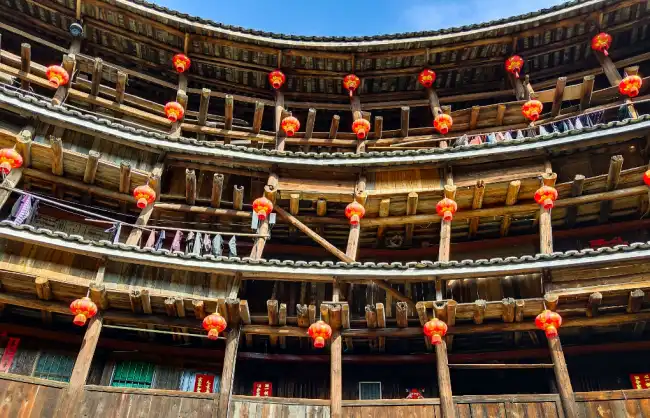
The center of most tulou houses has an open courtyard or atrium. The courtyard is left for ventilation, lighting, and drainage, and also serves as a hub for the residents’ daily activities.
Ring Layout:
To aids in defense and promotes airflow, rooms in an earthen building are arranged in a ring around the central courtyard. Rooms on different floors have different functions. Usually, kitchens, storage rooms, communal areas, and ancestral halls are on the lower floors, while bedrooms are on the upper floors to ensure more private living spaces.
Strong Defense:
All the earth buildings are constructed with thick exterior walls which can range from 1.5 to 2 meters. On the roof and upper floors, watchtowers and shooting holes are also strategically placed. The entrance to the building is narrow, allowing only one person to pass at a time.
Comprehensive Living Facilities:
The rooms in the earth buildings are rationally arranged to meet locals’ daily living needs. A Tulou building is just like a self-sufficient community, including communal kitchens, granaries, wells, bathrooms, and private living spaces.
What to Do at Fujian Tulou
Beyond admiring the architecture, there are many other interactive and immersive experiences at Fujian Tulou that travelers can enjoy:
Hiking and Walking
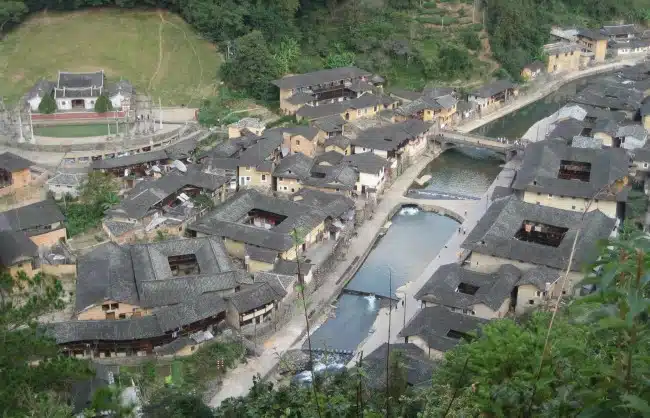
Many tulou clusters are typically surrounded by lush hills, tea fields, and ancient stone paths. If you’re interested, you can enjoy a peaceful hike through Taxia Village, climb up to observation decks at Tianluokeng, or follow village trails that lead to stunning viewpoints over the tulou settlements.
Photography
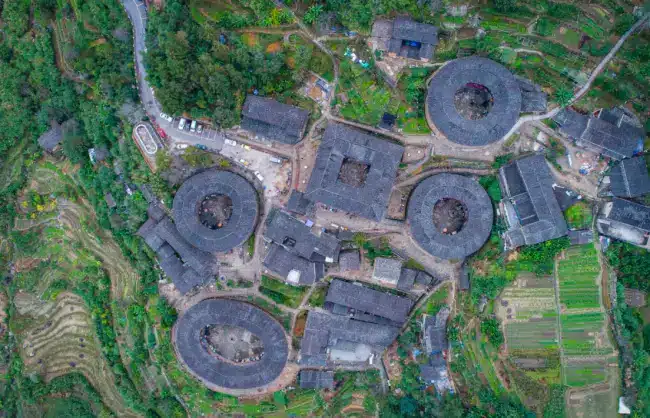
The tulou region is a paradise for photographers, as you can see some best scenes that you may not get to capture in other places, from aerial views of “four dishes and a soup” (Tianluokeng) to close-ups of carved wooden windows and red lantern-lit interiors. It would be best to visit during early morning or golden hour for the most atmospheric shots. Drone photography is permitted in most areas (check locally for restrictions).
Experience Hakka Culture
A tulou visit is also a journey into the Hakka lifestyle. You can:
- Taste authentic Hakka cuisine, such as stuffed tofu or salt-baked chicken.
- Join a local tea-tasting session, especially in Yunshuiyao.
- Learn about Hakka traditions, such as their clan system, architecture philosophy, and folk music.
Where to Stay When Visiting the Fujian Tulou, China
You can choose accommodations based on your preferences. For visitors who want an in-depth experience of rustic Hakka culture and life, the best choice is to stay inside the tulou. Yes, some of the ancient tulous offer rooms for overnight stays. This also allows you a chance to admire the night views of the ancient buildings when they are lit up by red lanterns. Just note that most rooms inside the tulou houses just offer limited facilities, with no air conditioning and private restrooms.
Or, you can choose to stay overnight in a guesthouse or hotel near the Hakka villages and Tulou clusters. This option not only offers you more modern facilities and comfortable amenities but also provides you easy access to the famous earth buildings.
Recommended Hotels and Guesthouses in the Nanjing Tulou Area:
- High-end hotels in Nanjing County: Nanjing Wanjia Hao Hot Spring Hotel, Nanjing Hotel, Wangjiang Hotel and Jinya Yu Business Hotel
- Accommodations in Taxia Village: Taxia Xiaolinglong Inn (the host is good at cooking Hakka cuisine), Yiyuan Inn (with authentic tulou atmosphere).
- Guesthouses near Tianluokeng: Tianluokeng No.1 Guesthouse (former name is Youyuan Yizhan, converted from a straight-line Tulou)
- Accommodations in Yunshuiyao Scenic Area: Gudao Inn (near Hegui Tulou and Huaiyuan Tulou)
Recommended Hotels and Guesthouses in the Yongding Tulou Area:
- Yongding Tulou Huanxing Inn: In the Hakka Tulou Folk Culture Village in Hukeng Town, adjacent to Huanxing Tulou (over 500 years old).
- Ruyi Inn: Inside the tulou culster in the Hakka Tulou Folk Culture Village.
- Qingshui Inn: In Shangpu Town of Yongding County, offering exquisite interior decoration.
- Longyan Tulou Fangyuan Resort Hotel: On Hukeng Fengqing Street, close to Hakka Tulou Natural Museum and Zhencheng Tulou.
How to Plan a Fujian Tulou Tour
A typical Fujian Tulou trip takes around one to two days, depending on how deep you want to step into the local culture. If you’re short on time, it would be better to visit the famous Tianluokeng Tulou Cluster, nearby Taxia Village, and Yuchang Building in Nanjing County. These destinations can give you a solid first impression of tulou culture in just a day.
Most travelers begin their journey from Xiamen, which offers convenient transport and a mixed experience of modern city life and traditional charm. If time allows, you can travel like many others who often choose to spend 4 to 5 days on the trip. They like to combine a Tulou visit with top Xiamen attractions like Gulangyu Island, Nanputuo Temple, and the coastal walking paths around Huandao Road.
If you’re planning a longer trip in Fujian Province, you can also explore Quanzhou for its religious heritage and maritime Silk Road history, or visit Wuyishan for its dramatic mountains and tea culture. These add-ons will make for a rich and well-rounded cultural journey.
How Long to Allocate in the Tulou Area
- Most travelers should plan 1–2 days for a tulou visit.
- 1 day — covers the highlights: Tianluokeng Cluster, Yuchang Lou, Taxia Village, and one cluster in Yongding.
- 2 days — better to have a deeper exploration: visit both Nanjing and Yongding. Stay overnight in a tulou, and take someextra hiking.
- Travel from Xiamen takes around 2.5–3 hours each way, so an overnight stay helps avoid rushing. Tours like China Xian Tour follow this pacing.
How to Spend 1–2 Days in the Tulou Area
1-Day Suggested Itinerary
- Morning: Depart from Xiamen → Drive to Tianluokeng Tulou Cluster; visit the viewing platform for the “four dishes and one soup” layout.
- Midday:Explore Yuchang Lou and Taxia Village. Enjoy a simple Hakka lunch.
- Afternoon:Drive to Hongkeng Cluster in Yongding. See Zhencheng Lou or Fuyu Lou.
- Evening: Return to Xiamen or stay overnight in a tulou.
2-Day Suggested Itinerary
Day 1:
- Follow the 1-day route; stay overnight in Taxia Village.
Day 2:
- Drive to Yongding Tulou Area.
- Visit Hongkeng Cluster and then Chuxi Tulou Cluster.
- Optional: Hike to hilltop for panoramic
- Return to Xiamen.
Fujian Tulou Weather and Best Time to Visit
Thanks to its warm and humid climate, the Fujian tulou areas in both Nanjing and Yongdian are suitable to visit all year round. The annual average temperature in this area usually ranges from 17°C to 21°C. March to May and September to November are the best months to visit these mountainous tulou areas, seeing fewer crowds and fewer rainfalls.
Summer is the hottest season in Fujian, and while also the time when a variety of fruits in this area are ready for harvest. Average temperatures in this season hover around 25°C to 30°C, with the highest may reach to 35°C or higher. Plus, July to August is the typhoon season in Fujian when the tulou areas have a higher chance of heavy rain. Make sure to check the weather forecast regularly if you plan to visit during these months.
See more detailed information about Fujian Weather and the Best Time to Visit.
What Hakka Dishes to Try When Visiting the Fujian Tulou
- Salt-Baked Chicken (盐焗鸡): A signature Hakka dish.Usually made with local free-range chicken, and it’s tender and
- Hakka Stuffed Tofu (客家酿豆腐): Soft tofu stuffed with minced pork and herbs.Simple but deeply representative.
- Pork Belly with Preserved Vegetables (梅菜扣肉): Rich, soft pork belly paired with preserved mustard greens. Perfect with rice.
- Lei Cha / Thunder Tea (擂茶): A traditional herbal tea-rice mix that tastes earthy and refreshing.Many tulou families still make this tea by themselves.
Transportation: How to Get to and Travel Around
How to Get to
Xiamen is the top one gateway city to Nanjing and Yongding, offering multiple transportation options. Thus, the most convenient way to get to the Fujian tulou area is to reach Xiamen first. From Xiamen, you can take a high-speed train from either Xiamen Railway Station or Xiamen North Railway Station to Longyan Railway Station or Nanjing Railway Station. Or, take a long-distance bus to get to Nanjing or Yongding for 2-3 hours.
If you arrive by rail, you can reach the tulou areas from Longyan or Nanjing train stations easily.
- From Longyan Railway Station → Yongding Tulou area
Longyan city is about 80km far from the Yongding tulou zone, and it takes 1.5 hours to travel by car.
Once you arrive at Longyan (usually by bus), you can then take a shuttle or local bus from to the tulou scenic area.
Many visitors would also choose to take a taxi or private car to travel between the places, and this is definitely more comfortable and convenient
- From Nanjing Railway Station → Tulou in Nanjing County (e.g. Tianluokeng Tulou Cluster or nearby villages)
You’d travel around 58km from Nanjing Railway Station to tulou scenic area. By car or taxi it takes about 1 hour; by coach/bus about 1.5 hours.
How to Travel Around
After arriving at Nanjing or Longyan Railway Stations, visitors still need to transfer to local buses or tourist shuttles to reach Tulou scenic areas in Nanjing and Yongding separately.
The public transportation options between major Tulou clusters are limited and not so convenient, either. Usually, you’ll need to get back to the county or town area to get to the next scenic area.
Given these conditions, we highly recommend you hire a private car with a local driver offering door-to-door service. Or, book a Fujian tulou tour with us to ensure your hassle-free enjoyment.

FAQs about Fujian Tulou
Why were Fujian Tulou built?
Fujian Tulou were built primarily for defense and communal living. When Hakka migrants first settled in the mountainous areas of Fujian, they often faced threats from bandits. So that sturdy and safe dwellings became an urgent need. Then, these massive, fortified earth structures were built, offering people exactly what they wanted the most: security and a sense of unity for large clan-based families.
What makes Fujian Tulou unique in terms of architecture?
Tulou houses are special, and can be easily recognized for their massive scale, thick rammed earth walls, symmetrical circular or square shapes, and self-sufficient interior design. These structures combine defensive function with communal living, making them one of the most remarkable examples of rural ingenuity in China.
Are Fujian Tulou a UNESCO World Heritage Site?
Yes. In 2008, 46 Tulou sites, primarily in Yongding and Nanjing Counties, were inscribed as UNESCO World Heritage Sites for their outstanding value in architecture, cultural heritage, and social organization.
Do people still live in the Tulou buildings?
Yes, though the population has declined due to urban migration, many tulou are still inhabited, especially by elderly Hakka people. Some tulous also serve as guesthouses or cultural experience centers, offering visitors a chance to see real-life tulou living up close.
Explore Xiamen and Fujian Tulou with China Xian Tour
Fujian Tulou is one of the most interesting places to go to explore China’s diverse and unique cultures. Consider joining a guided tour offered by China Xian Tour, and we can customize an itinerary for you to fulfill all your expectations about Fujian and Xian. With our professional guide being there for you 24/7 to take care everything, all you need to do along the way can be immersing yourself in a rewarding and unforgettable trip.