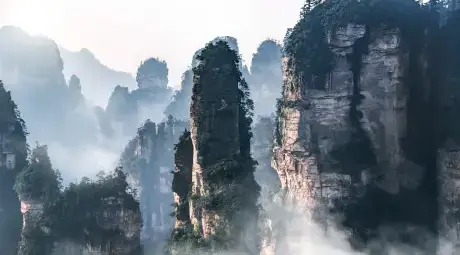


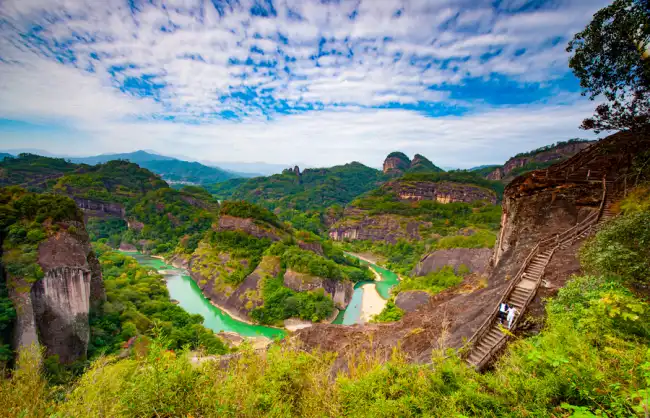
Located at the junction of Jiangxi and Fujian provinces in China, Wuyi Mountains is known for its typical Danxia landform and rich biodiversity, and is one of the best-protected and most species-rich ecosystems in its latitude on Earth. The main peak height of Wuyi Mountain is 2,158 meters, making it the highest peak in the southeastern continent.
It is also the holy land of Confucianism, Taoism and Buddhism, leaving a number of palace temples, monastery and ruins of nunnery. In 2017, Wuyi Mountains was listed as a World Cultural and Natural Heritage Site.
The suitable season for Wuyi Mountains is from June to August, and it is recommended to visit for 2-3 days. Wuyi Mountains is a good place to experience traditional Chinese culture and natural scenery.
Content Preview
- Wuyi Mountain National Park Facts
- The Must-See Attractions of Wuyi Mountains
- Top Experiences in Wuyi Mountain
- Attractions Around Wuyi Mountain
- How to Get to and around Wuyi Mountains
- Recommended Routes to Visit Wuyi Mountain
- Best Time to Visit Wuyishan Mountain
- Plan a Wuyishan Tour with China Xian Tour
Wuyi Mountain National Park Facts
- Location: The junction of Jiangxi and Fujian provinces
- Height: The highest point is 2,160.8 m above sea level
- Opening Time: 6:30-18:00 (from March 1 to October 31); 7:00-17:00 (from November 1 to February 28)
- Ticket Price: 140 yuan/person (March to November); 120 yuan/person (December to February)
- Sightseeing Bus: 70 yuan/person (One-day Pass); 85 yuan/person (Two-day Pass); 95 yuan/person (Three-day Pass)
- Best for: Plant and hiking enthusiast
- Highlights: nine-bends creek, hanging coffins, danxia landform, bamboo rafting, tea culture, Impression Da Hong Pao Show
The Must-See Attractions of Wuyi Mountains
As the highest geographical point in southeast China, Wuyi Mountain National Park is not only a treasure house of biodiversity, but also an important area for the study of earth history and geological evolution. It is one of the most famous Danxia mountains in the world, known as “the paradise of birds, the kingdom of snakes and the world of insects”.
Wuyishan National Park has an average annual temperature of 17℃- 19℃, with four distinct seasons and abundant rainfall. The park preserves the most complete, the most typical, and the largest primary forest ecosystem in the subtropical region at the same latitude.
Recommended Wuyishan Mountain tours
1. Tianyou Peak
Opening Time: 8:00 – 17:00
Ticket Price: free of charge
The name of Tianyou Peak comes from its unique natural scene: when it is clear or foggy after raining, the vast white clouds will fill the valley like the endless white sea waves. Tianyou Peak is located in the center of Wuyi Mountain Scenic Area, with an altitude of 408 meters. From its summit, you can overlook the stunning panoramic view of Wuyishan mountain, including clouds sea, Jiuqu Xi and so on.
The best season to visit Tianyou Peak is in summer and autumn, and 2 to 3 hours is recommended. Whether exploring on foot or enjoying the natural scenery, Tianyou Peak is a great attraction worth seeing.
In addition to natural attractions, Tianyou Peak is also rich in cultural relics. There are nearly 100 carving remains on the cliff of the peak, recording the doctrines of neo-Confucianism of the Song (960-1279) and Ming dynasties (1368-1644)and the poems of literati and writers.
2. Tiger Roaring Rock (Huxiao Yan)
Opening Time: Mar – Oct: 6:30 – 18:00; Nov – Feb: 6:30 – 17:30
Ticket Price: free of charge
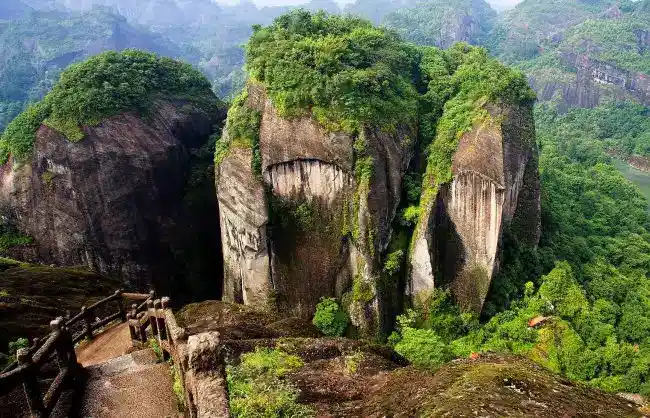
There is a huge cave in Huxiao Yan. When mountain wind passes through the cave, it makes a sound similar to tiger roaring, hence the name Tiger Roaring Rock. Other attractions such as Tiancheng Buddhist Temple are also worth visiting. The temple is built under the cliff of Huxiao Yan and showcases the superb architectural skills of ancient Chinese craftsmen.
3. Dahongpao Scenic Area
Opening Time: Mar – Oct: 6:30 – 18:00; Nov – Feb: 6:30 – 17:30
Ticket Price: free of charge
The history of Dahongpao tea plant can be traced back to the Ming Dynasty(1368-1644). The Dahongpao tree grows on a steep rock wall with spring water dripping from the top of the rock all year round. The Dahongpao tea leaves grown in this environment have special medicinal effects. The tea is picked and processed by the best tea masters and preserved in special utensils.
Visitors can visit to learn about the history of Wuyi Mountain tea and to taste authentic Dahongpao tea in the Tea Culture Museum. Professional tea artists will show visitors tea art performances, so that visitors can enjoy tea while immerse in the excellent tea culture.
After visiting Dahongpao Tea Garden, you can go to nearby shops for dinner, and try local specialties, such as Dahongpao tea eggs. Add Dahongpao tea leaves and eggs into boiling water and cook them together. This will give the eggs a light tea fragrance and make them very delicious.
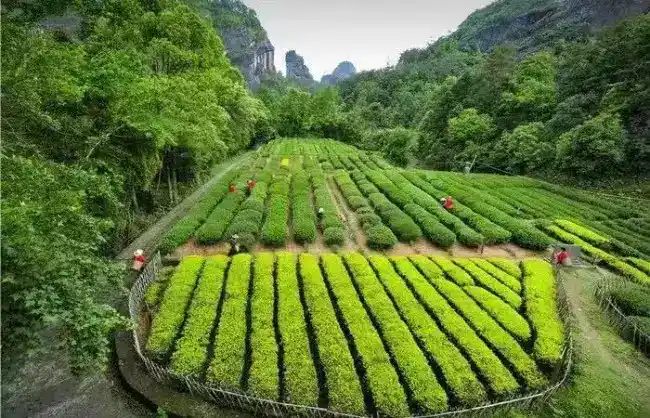
Other Famous Wuyi Mountain Tea
Wuyi Mountain Rock Tea grows under the natural conditions of rock weathering and has a unique rock aroma. The leaves of rock tea are twisted in shape and dark in color. They are hand-picked and carefully made. Rock tea has a mellow taste and a long aftertaste, making it an ideal choice for people who like heavy-flavored tea.
Wuyi Mountain Oolong Tea has a strong floral and fruity aroma. After drinking it, you will feel the smoothness and rich taste of the tea liquid, which makes people smell it endlessly. The tea leaves have a beautiful shape, and each leaf is very evenly long, ensuring the quality of the tea. It has a good conditioning effect on hyperlipidemia, insomnia, etc.
4. Wuyi Palace (武夷宫)
- Location: Wuyi Mountain National Park
- Tickets: Included in main park ticket
- Opening Time: Mar – Oct: 6:30 – 18:00; Nov – Feb: 7:00 – 17:0
- Time Needed:2-3 hours
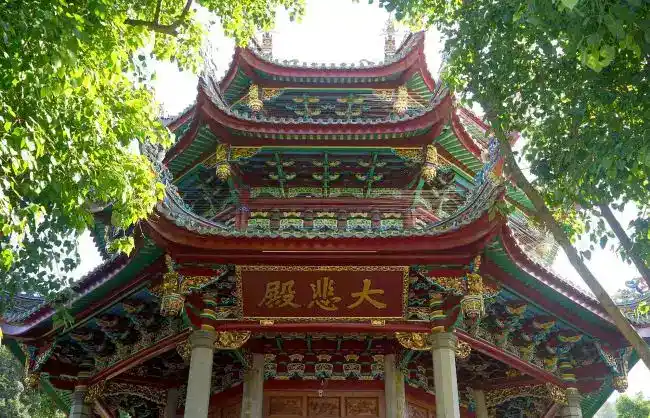
As the oldest Taoist temple in Wuyi Mountain, Wuyi Palace’s history started from the Tang Dynasty (742–755 AD). Once a royal site for emperors to worship Wuyijun (the mountain deity), it served as one of the Six Great Taoist Temples of the Song Dynasty. Though ravaged by wars and fires, the palace retains 900-year-old Song Dynasty cypress trees and a reconstructed Song Street—a lively promenade lined with traditional tea houses, calligraphy shops, and artisan stalls. Spend some time in the palace, wander through this immersive space to admire Song-era architecture, watch craftsmen demonstrate ancient woodcarving techniques, or sip tea in a courtyard shaded by millennium-old trees. The adjacent Chongyang Cave houses Taoist statues and cliff carvings, offering a glimpse into the spiritual legacy of Wuyi Mountain.
5. Han Dynasty Ancient City Ruins (汉代闽越王城遗址)
- Location: Xingtian Town, Wuyishan City
- Tickets: free of charge
- Opening Hours: 8:30 – 18:00, closed on Mondays
- Time Needed: 2–3 hours
Explore the 2,200-year-old ruins of the Minyue Kingdom, the best-preserved Han Dynasty city south of the Yangtze. Begin your visit at the Minyue King City Museum (free entry), where pottery, bronze artifacts, and detailed models bring ancient stories to life. From there, head to the Palace Ruins—stroll among weathered foundations of royal halls and marvel at the advanced water systems that sustained the city.
Just a short walk away, the Ancient Yue Folk Village is a place where you can see traditional homes and ancestral shrines, offering people with insights into daily life during the Han era. If time allows, don’t miss the Eternal Well—locals still draw water from this ancient stone well, linking past and present in a quiet, timeless moment.
Top Experiences in Wuyi Mountain
Take a Bamboo Rafting along Nine-Bend Creek (Jiuqu Xi)
Opening Time: Mar – Oct: 6:30 – 17:00; Nov – Feb: 7:00 – 17:00
Bamboo Rafting Price: 130 yuan/person
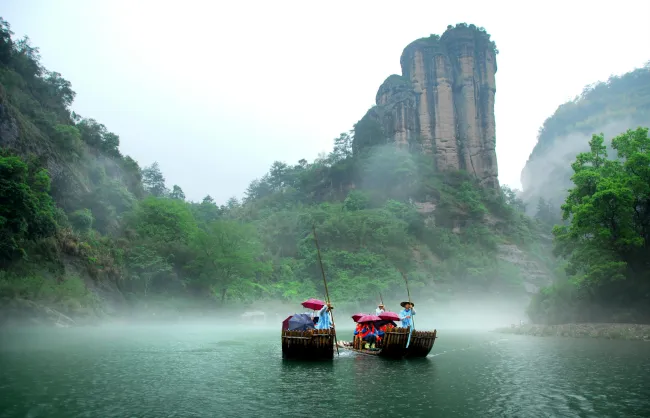
Jiuqu Xi rafting is a major feature of Wuyi Mountain Scenic Area. It is about 9.5 kilometers long and offers different views at every turn. It is famous for its clear water quality and winding river channel, forming a unique natural landscape combining waterscape and mountain scenery. Tourists can immerse themselves in the beautiful scenery of mountains and rivers in all directions by rafting on bamboo rafts, and enjoy a pleasant environment without noise and pollution.
In addition, there are remains of hanging coffins on the cliffs on both sides of Jiuqu Xi, which is an important part of Wuyi Mountain culture and adds a profound historical and cultural heritage to this stream. These boat-shaped coffins have clung to the cliffs for over 3,750 years, and they are regarded as a testament to the Minyue people’s mysterious burial rituals. Archaeologists still puzzle over how these 1-ton cedar coffins were lifted to such dizzying heights. The boatman usually points out the position and gives explanations.
Experience Tea Culture
Wuyi Mountain Rock Tea (Dahongpao) is a very famous Chinese tea in China. In Wuyi Mountain, a variety of tea culture related activities can be experienced.
In Yanzike Ecological Tea Garden, stroll around the large tea garden and learn about the ecological plantation mode of the tea. From April to May, tourists can also learn and experience tea picking under the guidance of tea planter. Want to savor a cup of tea? In the nearby Fulian Tea Estate, Xi Gu Liuxiang Tea Estate, Ruiquan Tea Museum, the tea master will teach you to appreciate the aroma and discern the flavour. Besides, in the local restaurants, there are also many creative tea dishes and drinks, such as tea-scented pork ribs, fried tofu in tea oil, Dahongpao milk tea. You can have a taste after the tour.
Watch Impression Da Hong Pao Show (印象大红袍)
- Location: 16, South Huandao Road, Sangu Holiday Resort
- Tickets: 218–688 RMB (varies by seat)
- Show Times: Nightly at 19:30
- Performance duration: about 70 minutes
Directed by Zhang Yimou (mastermind behind the Beijing Olympics ceremonies), this 70-minute outdoor spectacle transforms Wuyi Mountain’s natural landscape into a mesmerizing stage. Over 300 performers use dance, music, and cutting-edge lighting to narrate the legacy of Dahongpao tea—from its mythical origins to its role in imperial tributes. The story’s highlight is the romantic tale of Dawang and Yunv. During the show, the audience’s 360° rotating seats will amplify the sense of immersion, offering people with panoramic views of cliffs, rivers, and starry skies.
Attractions Around Wuyi Mountain
1. Xiamei Ancient Village (下梅村)
Location: 8 km east of Wuyishan
Tickets: 60 RMB
Opening Hours: 8:00 AM – 5:30 PM
Time Needed:2–3 hours
Once a thriving tea-trading center during the Ming and Qing dynasties, Xiamei still charms visitors with its 300-meter canal, where merchants once shipped Wuyi’s prized rock tea. Visitors come to here would normally take some time to stroll cobblestone lanes which flanked by ancestral halls adorned with intricate wood carvings—many influenced by scholar Zhu Xi’s teachings during his lectures here. Peek into courtyards with original stone wells and weathered shop signs, where locals still trade goods much like their ancestors did. Don’t miss the Zou Family Mansion, a grand example of Qing-era architecture, or chat with villagers for tales of the village’s tea legacy.
2. Longchuan Grand Canyon & Qinglong Waterfall (青龙大瀑布)
Location: 1 km upstream of Longchuan rafting area
Tickets:80 RMB
Opening Hours: 7:30 AM – 5:00 PM
Time Needed: 2–3 hours
Follow a shaded forest trail to get to the Qinglong Waterfall, where three cascading tiers drop 120 meters into a sparkling pool. The misty air here are extremely refreshing, and locals even call this place a “natural oxygen bar” for its crisp, clean atmosphere. During a short walk, you’ll see volcanic rock formations surround the falls, creating dramatic backdrops for photos. After the hike, explore the canyon’s quieter corners via wooden walkways that wind past emerald-green ponds. For adventure seekers, combine this visit with a rafting trip downstream to experience the river’s rapids and serene stretches.
3. Baiyun Temple (白云禅寺)
Location: 30-minute drive north of Nine-Bend River
Tickets: Free (donations welcome)
Opening Hours: 9:00-5:00
Time Needed: 1–2 hours
Nestled into cliffs, Baiyun Temple (White Cloud Temple) is a hidden gem covered by the picturesque surroundings. Look at it from afar, it would seem like it’s floating among misty peaks. A 30-minute uphill hike leads you to breathtaking sunrise views and a sea of clouds that blankets the valley below. And the narrow, winding trail enhances its secluded charm, it will present you ancient stone carvings and small shrines. Walking inside the temple, incense-filled halls and quiet courtyards also provide you with serene spaces for reflection. For the best experience, arrive at dawn to witness the sunrise and avoid midday crowds.
How to Get to and around Wuyi Mountains
How to Get to
If you are planning a Fujian Wuyishan tours, here are some common ways of transportation for your reference:
By Air: You can fly to Fuzhou or Xiamen from major cities across the country or overseas countries, and then transfer to flights to Wuyi Mountain. Fuzhou Changle International Airport and Xiamen Gaoqi International Airport are more convenient entry airport, and there are more international flights.
By Car/Bus: You can drive the car along the highway from Xiamen or Fuzhou to Wuyishan mountain, which will about 3-4 hours. Apart from that, Fuzhou, Xiamen, Quanzhou and other cities also offer many direct long-distance buses to Wuyi Mountain.
By bullet train: You can take the high-speed train from Fuzhou or Xiamen to Wuyi Mountain, which takes about 2-3 hours. In addition, from Nanping City Nanping railway station to Wuyishan North station by high-speed train or ordinary train is also very convenient.
If you are interested in Jingdezhen, you can choose to enjoy a road trip or take the train from Wuyi mountains. The train will pass through Yingtan station and then transfer to Jingdezhen, so you’d better plan your journey time in advance.
How to Travel Around Wuyi Mountain
The scenic area cover a large area, so the sightseeing bus is a must for all tourists and has been the major way to get around. It has four routes, which have covered all the major scenic spots. After buying the ticket, you can enjoy unlimited rides.
Between the scenic spots that are not far from each other, there are also walkways for tourists to hiking, such as the Rock Bone and Flower Fragrance Walkway between Dahongpao Scenic Area and Water Curtain Cave and the Wizard of Oz Walkway: Connecting the One-Line Sky and the Tiger Roaring Rock. The bamboo rafting along Nine-Bend Creek is also a highly recommended experience.
Recommended Routes to Visit Wuyi Mountain
1-Day Wuyishan Highlights Tour (For Tight Schedules)
Itinerary: Tianyou Peak → take the sightseeing bus to Nine Bend Stream (boat coffins) →take a bamboo rafting to Wuyi Palace → walk to Song Street
2-Day Classic Wuyishan Tour (Most Popular Option)
Day 1: Tianyou Peak → take the sightseeing bus to Nine Bend Stream → take a bamboo rafting to watch Boat Coffins and get off at Wuyi Palace → walk to Song Street → take a bus or taxi to watch Impression Da Hong Pao Show
Day 2: Dahongpao Scenic Area → hike along the walkway to Water Curtain Cave → take the sightseeing bus to One Line Sky → hike along the walkway to Tiger Roaring Rock
3-Day In-Depth Wuyishan Exploration (For Nature and Culture Lovers)
Day 1: Nine Bend Stream → take a bamboo rafting to watch Boat Coffins and get off at Wuyi Palace → walk to Song Street → take a bus or taxi to watch Impression Da Hong Pao Show
Day 2: Tianyou Peak → take the sightseeing bus to Dahongpao Scenic Area → hike along the walkway to Water Curtain Cave → take the sightseeing bus to One Line Sky → hike along the walkway to Tiger Roaring Rock
Day 3 (Choose One):
Cultural Route:
Xiamei Ancient Village → take a bus to Ancestral Halls → take a bus to Tea Culture Museum → Departure
Nature Route:
Longchuan Grand Canyon → take a taxi to Qinglong Waterfall → take a taxi to Baiyun Temple (optional)
Best Time to Visit Wuyishan Mountain
Spring and autumn are the best time for comfortable weather and the most beautiful scenery. In spring, the mountain flowers are in full bloom and the tea garden turns green. It is also the best time for tea picking and tea culture experience. Autumn is the season for photography. The Danxia landform appears even more crimson against the blue sky. The red leaves and ginkgo trees dot the mountains and forests. It is also suitable for hiking and tea savoring.
Plan a Wuyishan Tour with China Xian Tour
When planning the tour, you may have found that the scenic spots are actually scattered in the scenic area and it takes much time and energy to plan the itinerary. Transferring between the scenic spots is challenging. China Xian Tour can tailor a reasonable itinerary and arrange a guide for you. Under the lead of our local guide, you only need to listen to the vivid explanation and immerse yourself in the scenery. The guide will tell you when to get on and get off the bus. Besides, we can reserve the bamboo rafting for you. Travelling with us, you will experience the full charm of the mountain.