


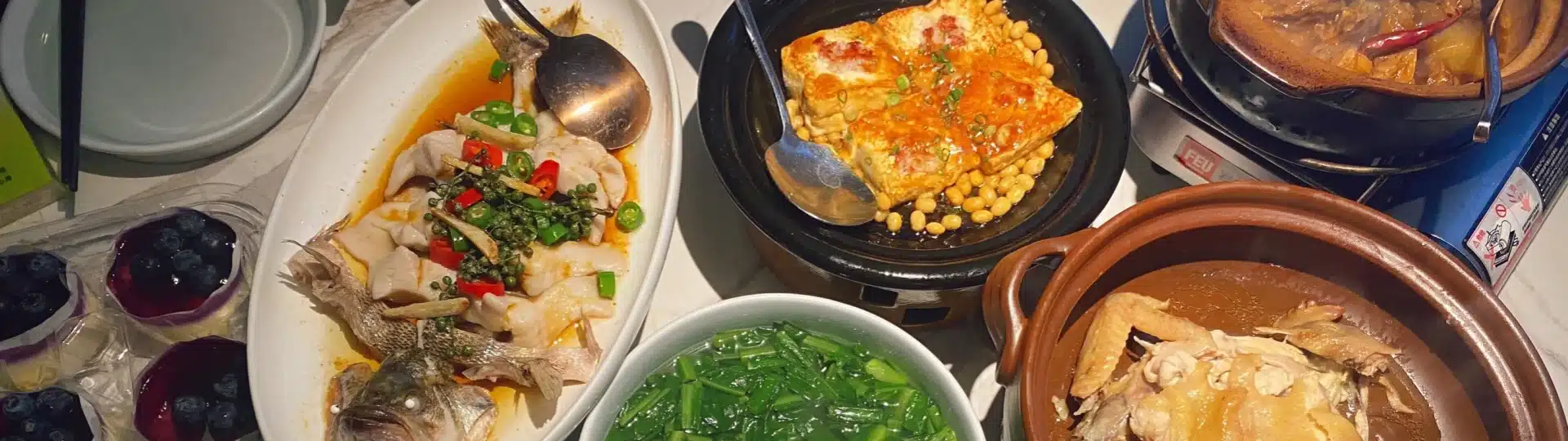
Hakka cuisine, referring to the traditional food of the Hakka People, is one of the most sough-after cuisines in China and overseas. The Hakkas are masters in transforming simple raw materials into umami delicacies by the methods of preserving, stewing, braising, and roasting. It typically tastes savory, robust, rich and long-lasting. If you don’t get used to hot and spicy food, Hakka cuisine would be an ideal choice during your Xiamen travel.
While Hakka cuisine does not pursue elaborate arrangements, it brims with the wisdom of survival and warmth of home – every dish is a testament to this point. Discovering its root is like a culinary journey into the Hakka culture, which has deposited in the long migratory history of the Hakkas.
In this article, we’ll uncover the evolution history of Hakka cuisine, discuss the symbolic meanings of some traditional dishes, and explore the best cities to taste them.
What Is Hakka Food?
Hakka food is characterized by a balance of mixed flavors that represent local culinary traditions, climate and agricultural produce. The word Hakka is literally interpreted as guest families. They are a migratory subgroup of Han Chinese, often regarded as the oriental gypsies. During the migrations over centuries, the distinctive Hakka cuisine gradually formed.
Many deem that Hakka food should be incorporated in Cantonese cuisine, as a branch based in Meizhou and Huizhou. However, it in fact has a place also in other regions including Fujian, Jiangxi, Guangxi, Sichuan, Hong Kong, Taiwan and even abroad.
The essential nature of Hakka cuisine lies in the art of infusing survival wisdom into ordinary dishes. The layered braised pork belly with pickled mustard greens is not greasy at all after special curing, despite the high content of fat. The salt baked chicken retains the umami of raw materials to the largest degree. And the stuffed tofu, similar to dumplings, indicates the Hakkas’ homesickness for the Central Plains – their initial homeland.
Origins of Hakka Cuisine
You may wonder where Hakka food is from. The fact is that it has evolved from the Hakkas’ migrations.
Since the Western Jin Dynasty, their ancestors began to migrant southward from the Central Plains due to wars, turmoils, disasters, and poverty. They primarily settled down in the mountainous regions that were less fertile (today’s Guangdong, Guangxi, Jiangxi, and Fujian provinces). Later they spread across China and even Southeast Asia.
To adapt to the new environment, Hakkas innovated their dietary customs. The mountainous farm work was physically demanding, requiring abundant supplementation of salt and fat, and the food thus becoming salty and fatty. With limited rice production, coarse crops such as taros and sweet potatoes as well as mountain produce became dominant ingredients.
Gradually, Hakka cuisine is getting more and more unpretentious – with simple arrangements and bold flavors. They are the symbol of the hardworking and united ethics of the Hakka people.
Best Hakka Food You Must Try
If you wish to savor a simple yet flavorful dish during your China trip, Hakka cuisine is absolutely worth trying. It features many classic dishes that have been passed down for generations.
Hakka Stuffed Tofu (Yong Tau Foo)
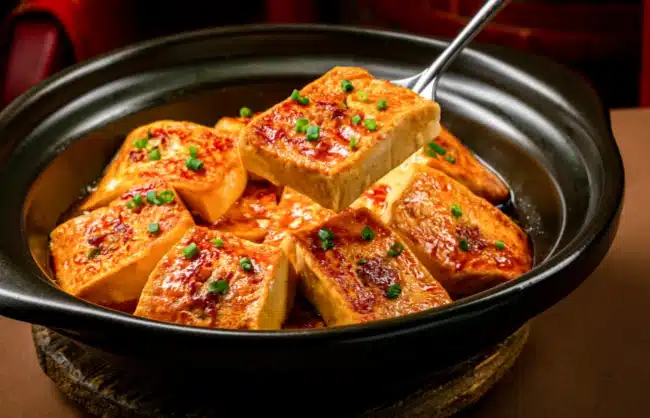
As one of the most authentic Hakka dishes, it typically involves filling tofu blocks with seasoned pork paste (fish paste and shrimp paste also work), then cooking it by frying, steaming, braising, or stewing. Sometimes, minced mushrooms, water chestnuts, glutinous rice and other ingredients are added to enhance the texture. The finished product is flavorful, tender, and juicy. It’s an epitome of Hakkas’ ingenuity in using the simplest ingredients to stimulate the richest flavors.
An interesting fact is that the Stuffed Tofu is said to be a modified version of dumplings. After the Hakka people migrated south, they were unable to make dumplings because of a shortage in wheat flour. Therefore, they cleverly replaced the dough with tofu and filled it with meat fillings to express their nosalgia for the north.
Salt Baked Chicken (Yan Ju Ji)
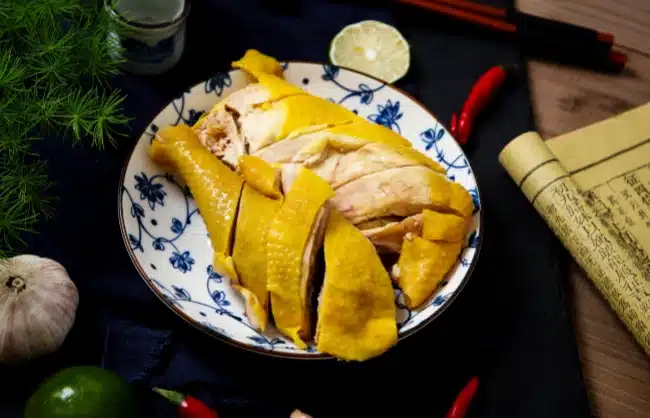
The salt baked chicken is a savory delight that can instantly awaken your palate. Its soul lies in the ancient wisdom of “salt baking”. A whole marinated chicken is wrapped with parchment, and then buried in coarse salt for slow baking. The heated salt perfectly locks in the juice of the chicken, resulting in a golden crispy skin and incredibly tender and juicy meat. The dish has a unique burnt aroma, with a salty and sweet aftertaste.
Steamed Pork Belly with Preserved Greens (Mei Cai Kou Rou)
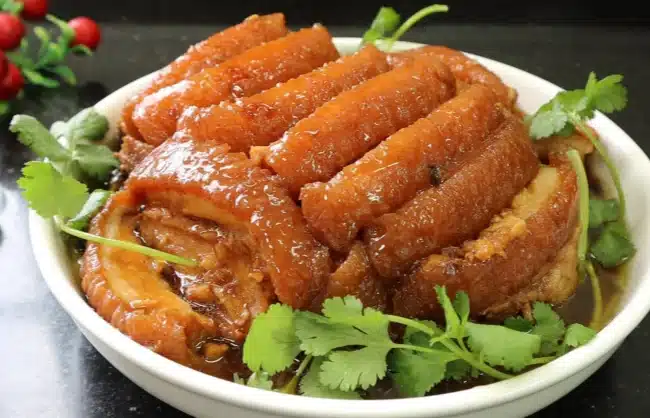
It’s the soul food in Hakka cuisine, and mostly widely spread. The Hakkas are very frugal, and good at preserving seasonal vegetables and coping with tough cuts. The seemingly fatty cuts of pork becomes meltingly tender after deep-frying and prolonged steaming. As the preserved mustard greens absorb the fat from the layered slices of pork belly, the dish tastes not greasy any more, but gives out a mellow smell that perfectly blends with the savory aroma of the preserved vegetables.
Poon Choi (Big Bowl Feast)
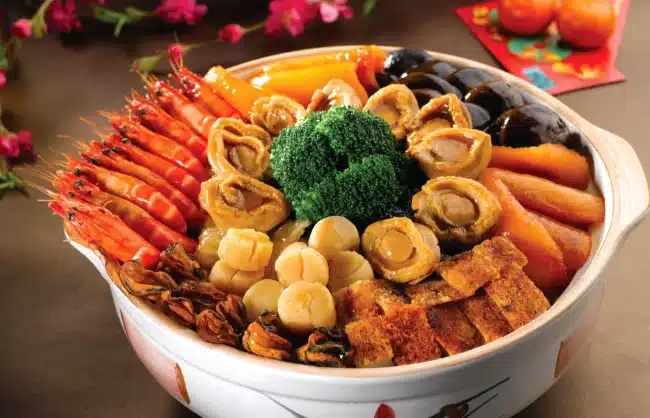
Poon Choi is a festival food for celebrations and gatherings. It’s not merely a hearty feast, but represents the collective dinning culture and the spirit of shared prosperity of the Hakkas. The dish is usually served in a big bowl or basin. Inside it, the ingredients are not randomly mixed but layered in a certain sequence, symbolizing clan unity and order. The bottom layer is made of bean products and vegetables that can easily absorb broth,for example, dried radish, bamboo shoots, and taros. In the middle layer, you can find sliced streaky pork, braised duck, dried ell, and mushrooms. Carefully arranged on the top is a selection of refined ingredients: white-cut chicken, roast duck, fresh shrimp, abalone, and sea cucumber, creating a vibrant display.
Abacus Seeds (Suan Pan Zi)
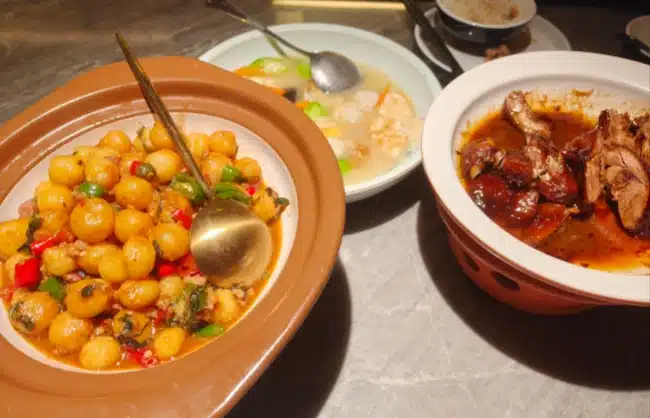
The Hakka traditional food “Abacus Seeds” is a uniquely delightful dish, named for its shape resembling ancient abacus beads. The main ingredients are tapioca and taro paste. Sometimes sweet potato flour is also added. After mixing and kneading them into dough, make small balls out of it and press gently in the center to form a hole. Then boil the balls and stir-fry them together with minced pork, mushrooms, dried shrimps and garlic. This is a beloved treat for the Hakka People to share together during festivals, symbolizing prosperity and talent in calculation.
Pork Stomach Stewed Chicken (Zhu Du Ji)
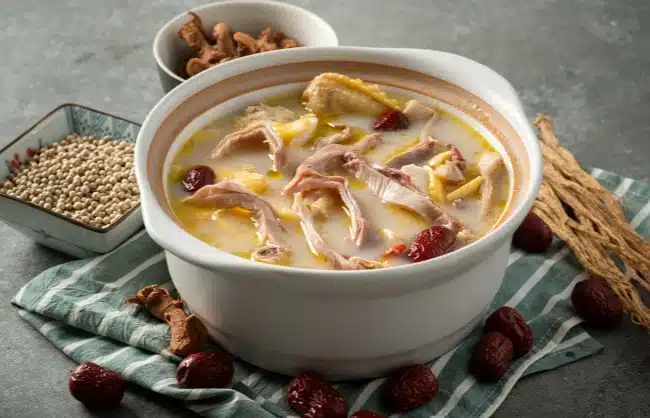
This is a medical cuisine also known as “The Phoenix’s Rebirth”. It perfectly combines exquisite taste and nourishing effects. A whole, thoroughly cleaned chicken is stuffed into a pig’s stomach and slow-cooked for hours to allow the flavors and nutrients to fully blend with an assortment of medical herbs such as white peppercorns, ginseng, and wolfberries. The rich, milky-white broth features pepper’s pungent aroma. The pig’s stomach absorbs the umami of the chicken, becoming rich and crisp; while the chicken, braised in the pig’s stomach, retains all its juice, resulting in an exceptionally tender and smooth texture.
Hakka Snacks, Tea & Special Dishes
Lei Cha (Thunder Tea Rice)
Hakka Lei Cha is a good combination of tea and rice. The core tool to be used are a pottery mortar and a pestle. Of course, you can use a food processor instead. Tea, sesame, peanuts, mint leaves, and basil are placed into the mortar for thorough grinding until they become a delicate paste. Then pour the paste onto a bowl of steamed or fried rice topped with beans, dried turnips, shrimps, mushrooms, and peanuts. Before enjoying it, you need to stir well the mixtures, so that every grain of rice is coated with the savory tea soup.
Hakka Moonlight Biscuit (Yueguangbing)
It’s a regional type of mooncakes that is used to worship the moon at night on the Mid-Autumn Festival. Different from common mooncakes you may have seen before, the Moonlight Biscuit is known for its simplicity and elegance. It is usually a white circular pancake with a diameter of about 15-20 centimeters. On the surface, it bears auspicious patterns or words such as “福” (means blessing) and “寿” (means longevity), symbolizing reunion and happiness. Made of simple raw materials such as glutinous rice flour and white sugar, Hakka Moonlight Biscuits taste slightly sweet, dry and crisp.
Hakka Food Cooking Techniques and Ingredients
Main Cooking Methods
The Hakka People are good at employing various cooking techniques to bring out the best balance between flavors and textures. The main cooking methods include:
- Stuffing (Niang):It’s the most iconic cooking style of Hakka food. The word Niang involves placing prepared meat fillings into tofu blocks, bitter gourds, eggplants, or green peppers. Before served onto dining table, the ingredients need to undergo quick pan-frying and slow simmering.
- Drying:On the way of migration, the Hakkas had to find ways to store vegetables and meat properly. They soon found that drying food materials in strong sunlight and ventilated condition was very efficient. What’s more, the ingredients was gifted with a unique aged aroma after being dehydrated.
- Braising / Stewing:This is the core skill to guarantee the tender and plump texture of meat. A clay pot or pottery casserole will be used to stew ingredients over low heat for hours.
- Salt-baking: Utilize salt to conduct heat and lock in the original juice of raw materials.
Essential Ingredients for Hakka Food
The essential ingredients for authentic Hakka dishes include:
- Livestock& Poultry Meat: Chicken, duck, pork, pork offal…
- Dried & Preserved Foods:Preserved greens, dried turnips, bamboo shoots, and bean curd…
- Bean Products & Coarse Grains:Oily tofu, dried tofu, dried bean curd sticks, sweet potatoes, taros…
- Rice Products – Ban:Cakes made of rice paste or rice flour.
- Signature Seasonings:Red yeast, wild kumquat sauce, fermented glutinous rice wine….
Best Hakka Restaurants in China
Tao Ji Hakka Kitchen
- Chinese Name: 涛记客家厨房
- Location: Shenzhen (it has many branches there), Guangdong
- Cost Per Person: CNY 60-80
- Signature Dishes: Stuffed Tofu, Steamed Pork Belly with Preserved Greens, Salt Baked Chicken
Yan Nan Fei Hakka Restaurant
- Chinese Name: 燕南飞客家菜
- Location: Guangzhou (it has many branches there), Guangdong
- Cost Per Person: CNY 55-75
- Signature Dishes: Stuffed Tofu, Salty Fragrant Chicken, Braised Pork Belly
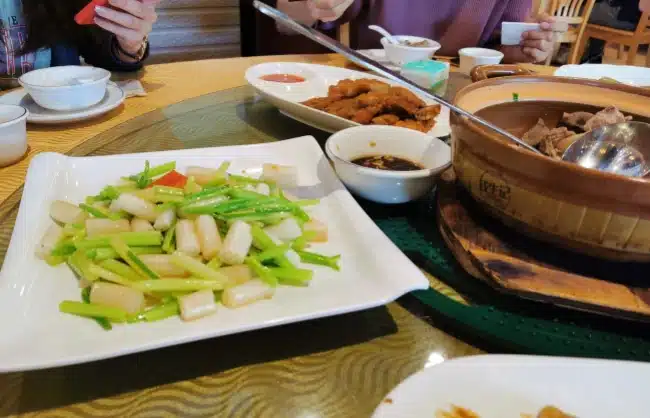
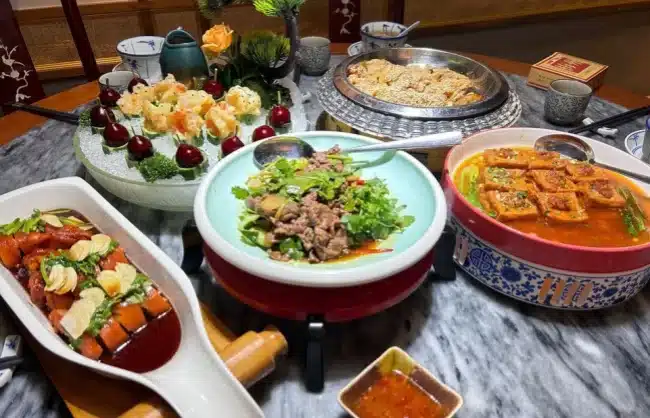
Weilongwu Xingyuan Restaurant
- Chinese Name: 围龙屋星园酒家
- Location: Sanjiao Township, Meijiang District, Meizhou City, Guangdong
- Cost Per Person: CNY 55-75
- Signature Dishes: Stuffed Tofu, Steamed Pork Belly with Preserved Greens, Salt Baked Chicken
Tsui King Lau Restaurant
- Chinese Name: 醉琼楼
- Location: Tianhe District, Guangzhou City, Guangdong
- Cost Per Person: CNY 100-150
- Signature Dishes: Salt Baked Chicken, Sweet and Sour Spare Ribs
Hakka Cuisine in Festivals
The Hakka communities are so close-knit that one can trace it in the Hakka culinary culture. The preparation of many festive foods is the most important moment for family reunion and passing down of cooking skills. The Hakkas like to share foods with others. They usually exchange foods with neighbors and relatives, and the community bonds are strengthened in turn.
Festive Foods:
- Lunar New Year: Sweet rice cakes, symbolizing sweet life; cured meat symbolizing prosperity.
- Lantern Festival / Winter Solstice: sweet dumplings, symbolizing reunion.
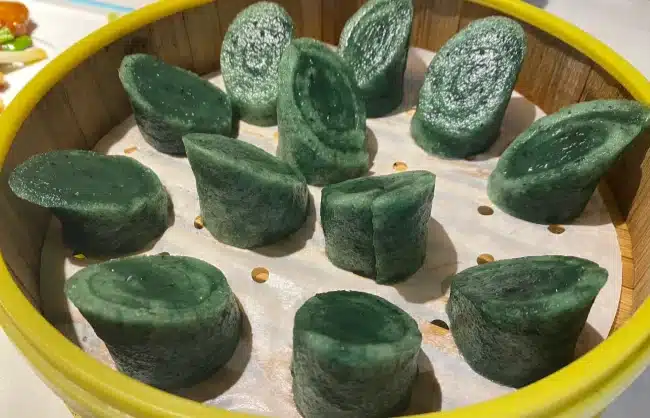
- Qingming Festival: Mugwort cakes
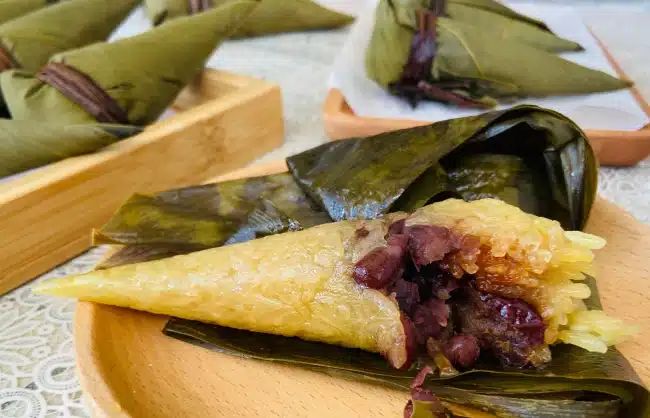
- Dragon Boat Festival: Alkaline Zongzi
- Mid-Autumn Festival: Moonlight Biscuit
- Ancestral Worship: Chicken, pork, and fish
- Clan Gathering: Poon Choi
Hakka Food Beyond China
Wherever the Hakkas settle down, they integrate their cooking style with local ingredients and flavors while retaining the core characteristics. You can not only find Hakka restaurants in mainland China, but also in Hong Kong, Taiwan, and Southeast Asian countries like Singapore, Malaysia, Thailand and Vietnam. It’s also available in the Chinatown of the USA, Canada and Australia.
Actually you may find that the oversea Hakka foods are not quite the same with those in China. These changes are made to adapt to local tastes. For example, in European and American countries, they become sweeter and sourer. In Malaysia, the classic Stuffed Tofu is usually seasoned by curry or satay sauce.
Food Guide for Hakka Cuisine Trip
- Best cities to try Hakka cuisine: Meizhou, Guangzhou, Longyan, and Ganzhou
- Local etiquette:Take your seat as arranged by the host; you can take food only after the elder or the host start eating; do not insert chopsticks into rice bowls; avoid using chopsticks to knock on plates and bowls; do not stir the dishes carelessly.
- How to order like a pro: First-timers try the three most treasured dishes: Stuffed Tofu, Steamed Pork Belly with Preserved Greens and Salt Baked Chicken; the classic meat dishes are kind of fatty and greasy, so it’s necessary to order a plate of green vegetables or a bowl of soup to balance; many dishes are salty, if it’s not to your taste, politely request “less salt” or “less oil” when ordering; learn some basic Chinese phrases for ordering a meal, including: “Dian Cai (I’d like to order), “You Shen Me Zhao Pai Cai Tui Jian Ma (What are your signature dishes)”, Jiu Zhe Xie, Xie Xie (That’s all, thank you)…
- Best time to visit Hakka regions:It’s best to visit in autumn from September to November when many seasonal vegetables and fruits are freshly on sale. Days around Chinese New Year are also recommended because you will enjoy different festival foods.
Recommended Hakka Food Tour
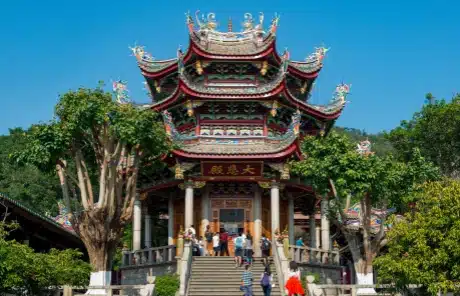
Discover Fujian's coastal charms and mountain heritage — Gulangyu Island architecture, Quanzhou Maritime Silk Road history, Wuyi Mountain bamboo rafting, and Fuzhou's Three Lanes and Seven Alleys.
Simple Recipes to Try at Home
How to cook Lei Cha Rice?
- Step 1: Prepare 2 spoons of sesame, 1 spoon of peanuts, a handful of fresh mint leaves, an appropriate amount of salt, and 2 spoons of green tea. Pour them into a mortar or food processor, grind until you get an oily, smooth paste.
- Step 2: Pour the paste into a large teapot. Add 500-600ml of boiling water and stir evenly to create a savory tea soup base.
- Step 3: Prepare some steamed rice and a variety of cooked vegetables like corn kennels, beans, peanuts, preserved pickle dices, and dried meat floss.
- Step 4: Get a bowl filled with rice and topped with the vegetables. Pour in hot tea soup and stir evenly.
How to make quick Hakka Stuffed Tofu?
- Step 1: Mix minced pork with diced mushrooms and shrimps, season with salt, soy sauce, pepper, and a little starch, and stir vigorously in one direction.
- Step 2: Cut the firm tofu into cubes and use a small spoon to dig a groove in the middle (be careful not to dig through).
- Step 3: Stuff the meat filling solidly into the groove, and smooth the surface.
- Step 4: Pan-fry the tofu cubes over medium heat until they become golden brown.
- Step 5: Add some water or broth to the pot (about half the height of the tofu cubes). Shower some soy sauce and a little sugar. Cover the pot and simmer for 5-8 minutes. Finally, sprinkle with chopped scallions until the sauce gets sticky.
Try Delicious Hakka Cuisine with China Xian Tour
Hakka cuisine is not just about savoring the gifts of nature, but also showcases the optimism and resilience of the Hakka people over centuries of migration. If you wish to gain more insights into the Hakkas and their food culture, it’s right time to embark on a culinary journey following China Xian Tour to cities like Guangzhou, Shenzhen, Meizhou, Longyan, and Ganzhou. I’m sure you will enjoy an unforgettable “tasty” trip!