

As the old Chinese saying goes: Bread is the staff of life. Diet is one of the most important pleasures in Chinese life. Chinese food culture is renowned worldwide for its long historical origins, wide geographical spread, large population of consumers, outstanding cooking techniques, and profound cultural connotations. As an important part of Chinese civilization, it not only carries the life wisdom and aesthetic pursuit of the Chinese nation for thousands of years, but also deeply integrates folk customs, regional features, and philosophical ideas, forming a unique and charming Eastern culinary system.
This article will comprehensively introduce Chinese culinary culture, including its importance, historical origins, key characteristics, cooking traditions, regional varieties, dining etiquette, seasonal/festive foods, and magnificent banquets, leading you to a deeper understanding of the cultural codes in Chinese food.
Content Preview
- Introduction to Chinese Food Culture
- Origins and History of Chinese Food Culture
- Key Characteristics of Chinese Culinary Traditions
- Symbolism of Food in Chinese Culture
- Core Principles of Chinese Cooking
- Type of Courses in Traditional Chinese Banquet
- Regional Varieties in Chinese Cuisine
- Dining Etiquette and Cultural Traditions
- Plan a China Food Tour with Us
Introduction to Chinese Food Culture
Importance of Food in Chinese Culture
Some people say that Chinese culture is all about “food culture”. This is true. Food in Chinese culture is not only the foundation of survival but also a mirror of civilization. Chinese culture is fully displayed in “eating”: from the initial pursuit of adequate food to the exploration of delicious cuisine, from social etiquette to emotional expression and historical witness, eating goes far beyond filling the stomach and has become a cultural symbol and crystallization of wisdom.
From wheat in the Yellow River Basin to rice by the Yangtze River, from steaming noodles in the North to exquisite pastries in the South, every dish on the dining table embodies great wisdom. As revealed in “A Bit of China”, Chinese people taste not only food materials, but also life philosophy and cultural identity accumulated for thousands of years.


Culinary Traditions by Region
Chinese food culture is rich and profound. Due to the differences in local produce, climate and historical traditions, various regional differences have emerged.
Regional Differences on Gourmet |
Southern China |
Northern China |
Staple Food |
Preferring rice |
Preferring wheaten food |
Festive Food |
Rice cakes |
Dumplings |
Flavor |
Sweetness prevails, pastries are common. |
Saltiness prevails, pancakes are common. |
Gastronomy |
Emphasizing fine processing, having a light and fresh flavor, and pursuing the original taste. |
Rough and bold, with a focus on the cooking temperature, and heavy salty flavors. |
Eating Habit |
Savoring wine or tea slowly to appreciate the flavors, eating smaller meals and enjoying snacks and late-night treats. |
Eating in large portions, drinking in large quantities, having tea in a simple way, and enjoying barbecuing. |
*Note: There are sweet and salty disputes for traditional Chinese foods like Rice Dumplings (zongzi) and Jellied Bean Curd (doufunao).
Related reading: Top 12 Chinese Breakfast Foods
Global Influence of Chinese Culinary Culture
Chinese food culture, with “harmony (和)” as its core concept, has become one of the most globally recognized symbols of Chinese culture through the three-dimensional expression of colors, aromas, tastes, shapes, and utensils. Currently, there are nearly 700,000 Chinese restaurants overseas, distributed in over 180 countries and regions. And countless foreign friends travel to China mainly to taste authentic Chinese food.
So what exactly is the unique charm and broad appeal of Chinese cuisine? Behind this, there are three essential elements: unpredictable changes in taste, stunning ingredient choices, and a unique dining atmosphere. Due to these reasons, Chinese culinary culture can be said to sweep around the world.
Origins and History of Chinese Food Culture
Chinese food culture has a long history of inheritance. Food is civilization!
Historical Archaeology
- The history of Chinese cuisine can be traced back to the Neolithic Age. Chinese people first used fire to bake food, which is the origin of cooking and the beginning of food culture.
- During the Xia, Shang, and Zhou dynasties, food has gradually become an important medium for communicating with gods and displaying identity and status through ritual feasts.
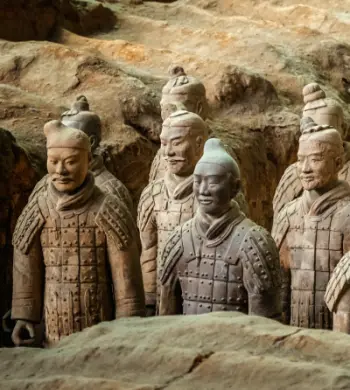
- During the Spring and Autumn Period and the Warring States Period, due to regional differences, the unique cuisine of each region gradually emerged. In 2010, the Xi’an archaeological team discovered well preserved animal bone soup and alcoholic beverages from 2400 years ago in the Qin tombs of the late Warring States period.
- During the Qin and Han dynasties, China achieved unity and promoted the trade development. The opening of the Silk Road led to the influence of foreign cultures on Chinese culinary culture.
- During the Tang and Song dynasties, Chinese food market was rich and diverse, and street food culture reached its peak. Tea culture also experienced unprecedented development.
- During the Ming and Qing dynasties, local specialty cuisines emerged, various seasonings appeared, and dietary etiquette tended to perfection.


Philosophical Influence
- The Taoist concept of “unity of heaven and man” and the theory of yin-yang balance permeate diet, such as the Huangdi Neijing proposes “five grains for nourishment and five fruits for assistance”, emphasizing the dynamic balance between ingredients, seasons, and physical constitution.
- Confucius advocated that “food is not tired of fineness”. The Book of Rites standardized the seating arrangement and toasting order in banquets, forming the tradition of “integrating etiquette into food”. The influence of Confucian dining etiquette still exists today.
- Chinese food culture has medicinal food traditions, which summarizes various medicinal ingredients and Medicated Diet formulas, reflecting the Chinese ideology of “food as medicine”.
Since modern times, Chinese cuisine has gone global. The culinary tour of China has gradually become a unique way to explore Chinese culture.
Recommended China Shanghai Food Tours
- Half Day Shanghai Tour for Local Food and Zhujiajiao Water Town
- Shanghai Night Food Tour with Huangpu River Cruise
Key Characteristics of Chinese Culinary Traditions
1. Regional Diversity and Influence
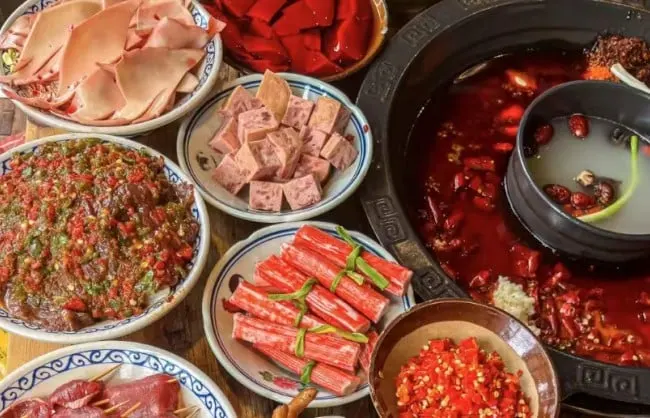
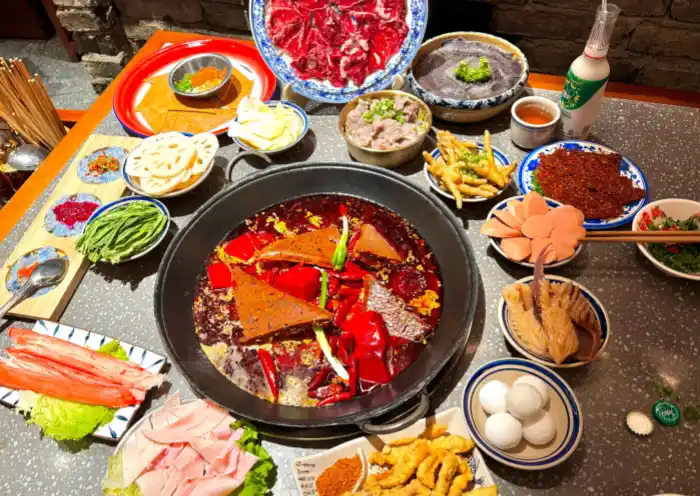
China has a vast territory, and there are great differences in climate, customs, and products among different regions. For a long time, there have been various flavors in regional food. The special food of popular food cities in China represents their regional cultural characteristics, such as Yangrou Paomo in Xi’an, roast duck in Beijing, hot pot in Chengdu, and morning tea in Guangzhou.

2. Nutritional Balance
In the culture of Chinese food, soup is not only an important component of daily meals, but also a health supplement that balances yin and yang and nourishes the five organs, such as Cantonese slow-cooked soup which is both delicious and nutritious. Herbal broth further combines ingredients with medicinal herbs, highlighting the dual role of food as medicine and making the dining table an important occasion for regulating health, such as “Five Red Soup” to enrich the blood.
3. Seasonal Eating
China has always seasoned and prepared dishes according to seasonal changes, forming the eating habits of “eating sprouts in spring, melons in summer, fruits in autumn, and roots in winter”.
- In spring, eating spring cakes, bamboo shoots, green rice balls and other light and fresh foods;
- In summer, mung bean soup, bitter gourd, and cold noodles become excellent summer remedies;
- In autumn, moisturizing ingredients such as lotus root, autumn pear paste, and pumpkin cakes are popular;
- In winter, lamb hotpot, Laba Congee, dumpling and other warm foods become mainstream.
Summer diet should be light and cool, with plenty of cold dishes, and drinking green tea. Winter diet should be rich and mellow, with more stewing, and drinking black tea.
4. Balancing Culinary Skills and Aesthetics
Chinese cuisine is not only technically exquisite, but also has a tradition of emphasizing the aesthetics, forming a unique system that combines practicality and artistry. In terms of cooking techniques, it emphasizes “unique heat” and “harmony of five flavors” to accurately control the texture and flavor of ingredients. Besides, there are strict requirements not only on the color, aroma and taste of food, but also on the naming of dishes and the rhythm of eating, etc.
Popular China Xi’an Food Tours
Symbolism of Food in Chinese Culture
In Chinese culture, food during festivals and special occasions is not only a pleasure for the taste buds, but also carries profound cultural meanings and people’s aspirations for a better life, through food’s homophony, shape, historical legends, or natural attributes.
Traditional Chinese festival foods and their meanings:
- Chinese New Year food – dumplings, like ingots, symbolize wealth and prosperity, as well as the transition between old and new; Nian Gao symbolizes annual promotion; The homophone between “fish” and “surplus” implies having surplus every year; The homophone between “chicken” and “good luck” implies auspiciousness and good fortune;
- Lantern Festival food – rice dumplings (Yuanxiao) represent reunion and sweetness;
- Dragon Boat Festival food – Zongzi originates from the commemoration of Qu Yuan and means the inheritance of patriotism.
- Mid-Autumn Festival food – round mooncakes symbolize reunion and perfection.


Core Principles of Chinese Cooking
Chinese cooking has formed its own distinct characteristics in the long process of development, with six core principles of excellent material selection, delicate knife craftsmanship, unique heat control, diverse cooking techniques, harmonious flavors, and elegant atmosphere. The highest level of Chinese cuisine lies in “using taste as the core and technique as the medium”.
Varied Cooking Techniques
The authentic Chinese cooking techniques include frying, stir-frying, deep-frying, braising, simmering, steaming, boiling, stewing, grilling, marinating, etc. Each technique has several or even dozens of famous Chinese dishes, as well as specific operating procedures and precautions.
The quick-fire cooking technique is represented by “stir-frying, frying, and deep-frying”, emphasizing the rapid heating and high temperature to lock in the freshness of ingredients. The slow-fire cooking techniques, such as “simmering, stewing, and braising”, require attention to the heat and time, emphasizing the “natural beauty of optimal fire”. Shandong cuisine and Fujian cuisine also have some unique compound techniques.
Top Spices and Seasonings in Chinese Food
Chinese cuisine also emphasizes the use of spices and seasonings, based on “salty, sweet, sour, spicy, and fresh”, forming a diverse array of flavors.
- Salt is the “number one flavor” and the basic seasoning for almost all dishes. Fermented soy sauce is salty and fresh, used for added seasoning and color enhancement.
- White sugar is commonly used in braised dishes and Jiangsu-Zhejiang cuisines, which can make the taste softer and enhance the color.
- Vinegar is a liquid sour seasoning, most commonly found in cold dishes.
- Chili is one of the top Chinese seasonings. It originated overseas but is very popular with Chinese people. There are more than a dozen kinds of chili in China. Sichuan cuisine has its unique “compound spiciness” approach.
- Monosodium glutamate has a strong fresh taste, especially suitable for adding to soups. Oyster sauce has a unique salty taste and delicious seafood aroma. Cumin powder is suitable for barbecue food.
- In terms of spicy seasonings, scallions, ginger, and garlic are all basic seasonings in cooking. Sichuan peppercorns, peppers, star anise, etc. can further enhance spiciness and aroma.
Recommended China Chengdu Food Tours
- 3 Days Chengdu Food Tour with Cooking Class Experience
- 3 Days Chengdu Family Tour with Panda Volunteering & Cooking Class
Type of Courses in Traditional Chinese Banquet
Banquets are the culmination of ancient Chinese food culture, with a rich and diverse variety of dishes that emphasize the combination of meat and vegetables, alternating between hot and cold, and suitable pairing of main and auxiliary dishes. They not only reflect etiquette norms, but also imply health wisdom.
Cold Dishes
Cold dishes are the prelude to a banquet, featuring refreshing and appetizing dishes with exquisite designs, such as braised platters, cucumber patties, and cold jellyfish salad. Cold dishes are often served in pairs, symbolizing “good things come in pair”.


Hot Dishes
Hot dishes are the core of a banquet, the most splendid, divided into meat dishes, vegetarian dishes, seafood, etc. The fish must be served whole, symbolizing “abundant wealth every year”.
Staple Food
The staple food and dim sums are both bellyful and auspicious, such as steamed buns (mantou), cereals and rice, noodles, steamed sponge cakes, shrimp dumplings, etc.
Soups
Soup has both nourishing and taste-regulating effects. Banquets usually end with a sweet soup, symbolizing “sweetness and honey”.
Regional Varieties in Chinese Cuisine
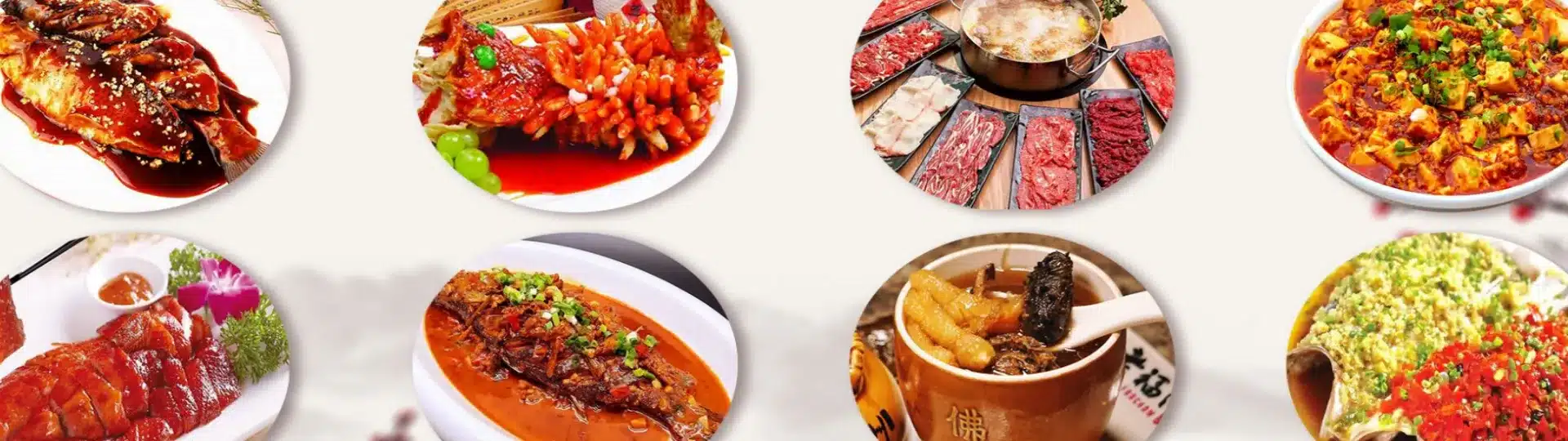
The representatives of Chinese food culture are the eight major cuisines, each with its unique cooking methods and flavor characteristics:
Sichuan Cuisine (川菜)
- Features: “Spicy and delicious” flavor, making good use of Sichuan peppercorns and chili peppers, with up to 24 types of flavors, emphasizing the principle of “one dish, one flavor”
- Famous Dishes: Hot Pot, Mapo Tofu, Twice-Cooked Pork, Kung Pao Chicken
Cantonese Cuisine (粤菜)
- Features: Pursuing “freshness, tenderness, and smoothness”, emphasizing original flavor, diverse ingredients, seasonality and heat, compatible with Western cuisine techniques
- Cantonese Famous Dishes: White Cut Chicken, Honey-Stewed BBQ Pork, Roast Goose
Shandong Cuisine (鲁菜)
- Features: With the longest history, exquisite cooking techniques, emphasis on heating and soup blending, and a salty, fresh, and mellow taste, it is the most influential court cuisine in China
- Shandong Famous Dishes: Braised Intestines in Brown Sauce, Braised Sea Cucumber with Scallion, Sweet and Sour Carp
Jiangsu Cuisine (苏菜)
- Features: Elegant and fresh, with delicate knife techniques, emphasizing on shape and heat, skilled in stewing, braising, and steaming, reflecting the Jiangnan aesthetics, it is the second largest court cuisine in China
- Famous Dishes: Squirrel-shaped Mandarin Fish, Nanjing Salted Duck, Stewed Lion’s Head in Clear Broth


Fujian Cuisine (闽菜)
- Features: Focusing on soup for freshness, exquisite knife skills, light and slightly sweet and sour flavor, well seasoned with red lees, blending Central Plains and marine culture
- Fujian Famous Dishes: Fotiaoqiang, Lychee Pork
Zhejiang Cuisine (浙菜)
- Features: Fresh and tender, emphasizing on the original flavor and knife art aesthetics, integrating Hangzhou-style cuisine, Ningbo seafood, etc
- Famous Dishes: West Lake Fish in Vinegar Gravy, Sautéed Shrimp with Longjing Tea, Dongpo Pork
Hunan Cuisine (湘菜)
- Features: Strong sour and spicy flavor, making good use of smoked salted meat and chopped chili peppers to embody the bold and unrestrained personality of Hunan people
- Hunan Famous Dishes: Steamed Fish Head with Chopped Chili, Changsha Snacks
Anhui Cuisine (徽菜)
- Features: Heavy oil and color, skilled in heating techniques, skilled in stewing, steaming, and baking
- Anhui Famous Dishes: Hui-style Fermented Mandarin Fish, Braised Turtle with Ham
Dining Etiquette and Cultural Traditions
Chinese food culture is also a form of social interaction, from festive family dining to weddings, funerals, and birthdays, from business negotiations to political banquets. Southern China is represented by the Jiangnan Tea Party, where tea is served with dim sums and the environment is elegant; in Northern China, wine drinking culture is prevalent, expressing enthusiasm through lavish drinking and communal eating.
Chinese people pay attention to table manners, such as seating arrangement, use of tableware, serving order, toasting, and persuading food, etc. There are also some chopsticks etiquette, such as avoiding using your chopsticks to pass food (using public chopsticks). Do not use chopsticks to point at people or insert chopsticks vertically into a bowl while dining.
Plan a China Food Tour with Us
Chinese cuisine has a history of thousands of years and diverse flavors. Welcome to join our tour group and embark on an authentic Chinese food journey! Not only will you satisfy your stomach, but you can also experience the unique charm of Chinese food culture.