



Fujian is a coastal province in Southeast China. The beautiful local culture is a major reason why many travelers fall in love with it, particularly Fujian food culture. Fujian cuisine or otherwise known as Min cuisine is among China’s eight major cuisines. It is unique for its coastal characteristics and soup-based dishes.
Fujian Chinese food is in fact one of the most widespread styles of Chinese cuisine overseas, arguably only second to Cantonese cuisine. You can find its influences in many southeastern Asian culinary traditions like in Singapore, and Malaysia. If you’re into seafoods or broth-centric dishes, traveling to Fujian will be a rewarding experience for you.

Content Preview
- Hallmarks of Fujian Cuisine: Fresh, Balanced, & Umami
- Must-Try Famous Fujian Dishes
- Regional Flavors Within Fujian
- Fujian Cuisine vs. Cantonese Cuisine
- Fujian (Hokkien) Cuisine Overseas
- Go a Fujian Food Adventure with China Xian Tour
Hallmarks of Fujian Cuisine: Fresh, Balanced, & Umami
Flavors – Fujian food is famous for fresh and balanced flavors. The umami taste in dishes is an important part of the palate, which is a savory, meaty taste well-loved in Chinese cuisine.
Fujian chefs also aim to enhance the natural flavors of the ingredients through delicate handling and layering the complex flavors of every ingredient. Especially for soup dishes, balancing the different tastes of foods is very important. To further complement them, chefs cook with light condiments and special sauces such as Sha Cha sauce.
Ingredients – The most prominent use of ingredients in Fujian food is seafood. Thanks to Fujian’s location by the sea, it has access to all kinds of fresh seafoods which locals have made into delicious dishes including fish, oysters, prawns, shrimps, squid, and sea cucumbers. The key to a good seafood dish is that it has to come fresh on the day of serving.
Preparation – The preparation process for Fujian food is precise and delicate. There’s a variety of soup dishes that became representative. A local saying goes “One soup has ten variations.” It goes to show locals’ love for broth-based dishes. Braising and steaming are thus common methods. But before that, fresh ingredients must be carefully handled, cleaned, and expertly cut. Every step of the process goes to show how Fujian food is a refined cuisine.
Must-Try Famous Fujian Dishes
Buddha Jumps Over the Wall (佛跳墙): The World-Famous Classic
- Ingredients: shark fin, chicken, duck, tripe, tendons, ham, gizzards, abalone, sea cucumber, dried scallops, pigeon eggs, mushrooms, scallops, bamboo shoots, etc.
- Flavor Profile: umami, mild, thick

Buddha Jumps Over the Wall is the most famous Fijian cuisine and also infamously luxurious in all of Chinese foods. It was first invented in the Qing Dynasty to serve the royal family. With a total of 30 ingredients, it takes about three days to prepare it. The raw ingredients are first cooked separately to bring out their own flavors. They are then layered into a clay jar, seasoned with Shaoxing wine, soy sauce, ginger, and scallion.
This dish is listed in the Guinness Records for being the most expensive soup in the world. Depending on where you go, they vary quite a lot in prices, which is determined by the quality of the ingredients. When Queen Elizabeth II and Bill Gates visited China, it was an important course served to them.
Lychee Pork (荔枝肉)
Ingredients: pork tenderloin, condiments for sweet and sour sauce
Flavor Profile: sweet and sour

Lychee Pork is a typical Fujian dish of the sweet-and-sour style. It is often associated with the culinary tradition of Fuzhou city. It got its name from its appearance, not that it traditionally contains the fruit itself. The small pieces of pork look like lychees in shape and color. It is a very appetizing dish being sweet and sour. The tangy red sauce will also make you hungry. It’s a common dish seen at family dinners and everyday settings.
It is made first by cutting tenderloin into small chunks. They are marinated, coated in starch, deep-fried, and finally stir-fried in a sweet and sour sauce made of sugar, vinegar, ketchup, plum sauce, and light soy sauce. Sometimes red yeast rice is added for coloring. The pork comes out crispy and appetizing in a glossy red sauce. Unlike other sweet and sour dishes in Chinese food culture, it is more balanced in flavors with a fruitier undertone.
Red Glutinous Rice Wine Chicken (红糟鸡)
Ingredients: chicken, red rice wine, red yeast rice, ginger, soy sauce
Flavor Profile: savory, umami

Red Glutinous Rice Wine Chicken or Hongzao Ji is a popular homemade dish in Fuzhou. Its use of red yeast rice (Hongzao) is a traditional practice in Fujian. It is fermented from rice wine and is believed to have various health benefits. For this dish, chicken is cut into pieces, marinated in red rice wine and red yeast rice for a few hours. Afterwards, they are braised with other condiments over low heat. It is a local flavor you must try on your Fujian tour.
Fish Ball Soup (鱼丸汤)
Ingredients: fish fillets, minced pork, ginger, garlic, green onions
Flavor Profile: savory, light, umami

Fish Ball Soup is a classic street food and comfort food for people of Fujian. It is a nationally famous snack. You can make the fish balls at home from fish fillets. Blend it with egg white, cornstarch, and salt to form a paste. Fill it with seasoned minced pork. Then, simply boil the fish balls till they are cooked, usually when they float to the surface in the pot. The fish paste is chewy with the fillings inside being juicy and delicious.
Oyster Omelet (蚵仔煎)
Ingredients: small oysters, eggs, starch batter
Flavor Profile: savory, slightly spicy
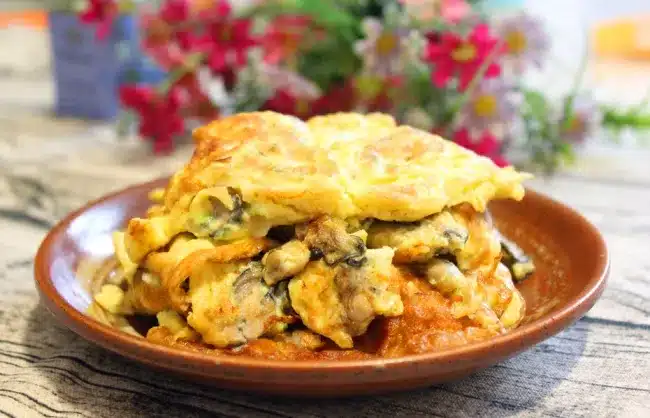
Oyster Omelet caught its popularity when it spread from Fujian, particularly Xiamen, Chaoshan region, to Southeast Asia, including places like Malaysia, Singapore, and the Philippines. It is now a staple of Fujian street food. Small, fresh oysters are mixed with eggs and a starch batter. The mix is then stir-fried into an omelet. It is served with herbs on top and a tangy, slightly spicy dipping sauce. It’s an excellent choice for first-time visitors to Fujian.
Recommended Xiamen Tour:
A 4-day Xiamen journey through South Putuo Temple, charming Gulangyu Island, the Tianluokeng Tulou Complex, and an overnight stay in the Hakka village of Taxiacun.
Braised Sea Cucumbers (红烧海参)
Ingredients: sea cucumbers, mushrooms
Flavor Profile: savory, umami, rich
Braised Sea Cucumbers is a fancy dish served at formal occasions like weddings or Chinese New Year dinner in Fujian. Sea cucumbers have great health benefits. They are quite tender in texture. Mushrooms are a fine complement. Chicken, abalone, and tofu can be good substitutes. Braising takes hours till the sauce is thick and rich with flavors. It’s a great example of the seafood-focused Fujian cuisine.
Ginger Duck (姜母鸭)
Ingredients: ginger, duck
Flavor Profile: rich, savory, slightly spicy

Ginger Duck is a local favorite winter dish. Stir-fried with a large amount of ginger, the duck is scented with an appetizing smell and flavored with a bit of spiciness. The spice makes it a warming dish in the winter cold. The secret condiments to this delicious dish are sesame oil and rice wine. They balance out the overly strong taste of ginger. If you’re a fan of ginger, this would be the best Fujian food for you.
Sha Cha Noodle (沙茶面)
Ingredients: wheat noodles, seafood, meat of choice
Flavor Profile: savory, umami

Sha Cha is a specialty sauce of Fujian, made of dried seafood, spices, peanuts, and aromatics. It is a result of the oversea trades in the history of this particular coastal region. Associated with the city of Xiamen, Sha Cha Noodle is made of a clear pork bone broth seasoned with Sha Cha sauce. It is topped with seafoods or meat of your choice. The broth is layered with flavors. It’s a deeply satisfying breakfast or lunch food.
Drunken Pork Ribs (醉排骨)
Ingredients: pork ribs, Shaoxing wine
Flavor Profile: sweet and sour, savory, wine-scented

Drunken Pork Ribs is a simple recipe for cooking at home. Its flavor profile will surprise you. Ribs are cut small and marinated in Shaoxing wine, the star ingredient, soy sauce, and other condiments. They are then coated in starch, so when they are deep fried, they’ll be crispy. Afterwards, toss them in a flavorful and tangy sauce made of vinegar, sugar, soy sauce. You’ll taste the subtle scent of wine, savory, sweet, and sour all in this one dish.
Regional Flavors Within Fujian
Within Fujian Province, there’s an array of culinary traditions across different parts. An expert on Fujian food would be able to tell the subtle differences in the use of ingredients, cooking methods, and preference for certain flavors. Generally, Fujian food can be divided into categories based on location. Fujian Province is referred to as Min. There are four regional styles of Fujian cuisine, northern (Minbei), southern (Minnan), eastern (Mindong), and western (Minxi).
Eastern Fujian (Mindong) Cuisine: Fuzhou
Mindong cuisine is probably the most famous branch of Fujian food. It refers to the culinary tradition of the capital city region, Fuzhou city. Fuzhou food puts great emphasis on knife skills, delicate flavors and presentation. Thick broth is a distinct characteristic. The most famous dish is Buddha Jumps Over the Wall. The umami Fish Ball Soup is also local to Fuzhou.
Apart from the broth, Fuzhou food leans towards sweet and sour flavors. Lychee Pork is a great example. Using red yeast rice is also a traditional of the capital city. It is used to cook chicken, eels, and other ingredients.
Recommended Classic Fuzhou Tour:
Travel through Fuzhou, Quanzhou, Xiamen, and Mount Wuyi to explore UNESCO Tulou complexes, enjoy Minnan cuisine, and drift on bamboo rafts along Jiuqu Creek.
Southern Fujian (Minnan) Cuisine: Xiamen & Quanzhou
Southern Fujian refers to the region along the coast with Xiamen, Quanzhou, and Zhangzhou being the culture centers. They have access to fresh, abundant seafoods which they take advantage of in their cooking. Flavor profiles tend to be mild, refreshing, and umami.
Sha Cha Noodle, Oyster Omelet, and Ginger Duck are the most representative dishes of Minnan cuisine. Another famous dish if you are up for a challenge is called Tu Sun Dong, a savory jelly made from boiling sandworms (Sipunculid). Served with a dipping sauce, it is a traditional street snack of Xiamen. Diverse use of ingredients and unique innovations like this make Fujian an excellent destination for China food tours.
Recommended Classic Xiamen & Quanzhou Tour:
Explore Fujian's essence from Gulangyu Island's colonial architecture to UNESCO-listed Tianluokeng Tulou cluster and historic Quanzhou on the Maritime Silk Road route.
Northern Fujian (Minbei) Cuisine: Wuyi Mountains
Minbei usually refers to the city of Nanping and Wuyi Mountains area. The beautiful national park is one of the top places to visit in Fujian, and the local culinary traditions have much to do with the landscapes. Ingredients tend to be from the mountains and rivers, smoked and roasted. Minbei cuisine will be stronger in its flavor profile than foods from other parts of Fujian.
Wuyi Smoked Goose is a delicious specialty. Farm raised geese are smoked with tea and glutinous rice. It is aromatic, crispy, juicy, and smoky. Wuyi Mountains have a long history of tea production. Locally produced Da Hong Pao is one of the most famous Chinese teas. Using tea in their cooking is therefore a common practice to enhance flavor and smell.
Recommended Wuyi Mountains Tour:

Bamboo raft the winding Nine-Bend River, hike Tianyou Peak for panoramic Danxia views, and discover the birthplace of legendary Da Hong Pao oolong tea.
Western Fujian (Minxi) Cuisine: Hakka Regions
Minxi is the western inland region of Fujian. Culinary tradition there has characteristics of Hakka cuisine of the local ethnic group. Flavor profiles are stronger and richer. Common ingredients are found inland with lots of meat dishes. Yong Tau Foo (Hakka Niang Tofu) is tofu stuffed with meat or fish paste. It is umami and delicious.
Recommended Fujian Hakka Culture Tour:
Trace Chaoshan lineage through clan ancestral halls, experience intangible heritage from Kung Fu tea to porcelain inlay, explore Nan'ao Island's Maritime Silk Road legacy, and dive into Hakka culture in Meizhou.
Fujian Cuisine vs. Cantonese Cuisine
Fujian Province is located right next to Guangdong Province, which is the home of Cantonese Cuisine. You might be familiar with Cantonese food as it is the most widespread and popular style of Chinese cuisine overseas. There are some similarities between Fujian food and Cantonese food. Both of them heavily use fresh seafoods as main ingredients. You might also come across some differences when you try them on your China tour. Here’s a brief rundown.
Fujian Cuisine |
Cantonese Cuisine |
|
Core Characteristics |
a liking for soup and broth; use of special ingredients like red yeast rice and Sha Cha sauce |
emphasis on the original flavors of the ingredients |
Flavor Profile |
rich, layered, balanced |
light and clean |
Preparation Methods |
marinating, stewing, braising, drunkening |
steaming, boiling, roasting, stir-frying, simmering |
Use of Condiments |
red yeast rice, Sha Cha sauce for cooking and flavoring |
soy sauce, oyster sauce, XO sauce for dipping |
Culinary Culture |
snacks are prominent like Fish Ball Soup, Sha Cha Noodles; soup being part of a meal; common incorporation of tea into a meal |
yum cha tradition, dim sum for brunch; dessert tradition |
Representative Dishes |
Buddha Jumps Over the Wall, Sha Cha Noodles |
Dim Sum, Roast Goose, Beef Chow Fun, Steamed Fish |


Fujian (Hokkien) Cuisine Overseas
You might see Fujian food referred to as Hokkien cuisine overseas. It became very popular across the world especially in Southeast Asia and Chinatowns across North America and Europe, brought over with the migration of Hokkien-speaking communities from places like Xiamen and Quanzhou.
In each region, Hokkien food becomes part of the local culinary tradition, blending different styles of cooking. In Malaysia, Singapore, and the Philippines, Hokkien noodle dishes are seasoned with Malay flavors. There’s also a lot of use of Sha Cha sauce. In Taiwan, Oyster Vermicelli and Taiwanese Beef Noodle Soup became widely popular. Overseas, Hokkien foods are great comfort foods and are becoming more and more dynamic.
Go a Fujian Food Adventure with China Xian Tour
If you’re fan of Chinese foods or the food culture, Fujian should be on the top of your travel list. Go on a Fujian culinary adventure with China Xian Tour. We can take you on a journey to find the most authentic Fujian flavors and traditional culture. Consult our travel experts to customize your ideal itinerary. Here are some of our most popular Fujian itineraries for your reference.