

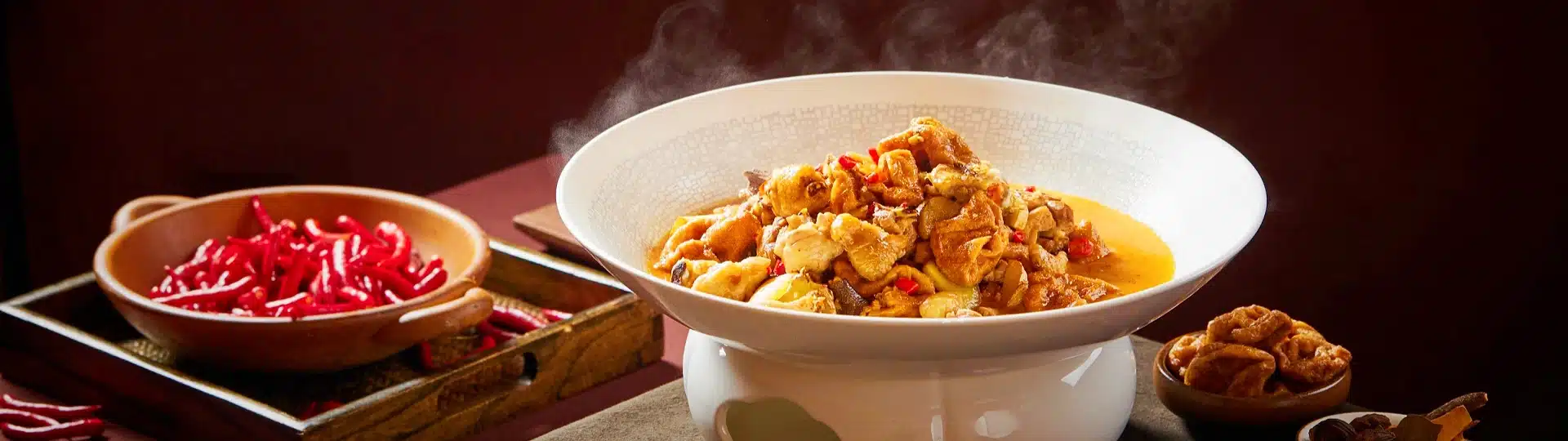
Hunan Cuisine, also called Xiang Cuisine, is famous as one of the eight major cuisine in China with a history over 2,000 years. So remember to include Hunan cuisine when planing a China food tour. It is mainly composed of three local flavors from the Xiangjiang River Region, the Dongting Lake area and the mountainous region of western Hunan. And each area boasts different local characteristics. But in general, spicy is the soul of Hunan dishes, and there are more than 200 kinds of pepper in Hunan Province.
Content Preview
- What is Hunan Cuisine?
- History of Hunan Cuisine
- Key Features of Hunan Cuisine
- Classic Hunan Meat Dishes
- Signature Hunan Street Foods
- Xiang Cuisine Menu with Popular Dishes
- Regional Varieties of Hunan Cuisine
- Where to Experience Authentic Hunan Cuisine
- Cooking Hunan-Style at Home – Recommended Recipes
- Hunan Cuisine vs Sichuan Cuisine
- FAQs About Hunan Cuisine
- Plan Your China Food Tour with Us
What is Hunan Cuisine?
Hunan Cuisine is originated in Hunan Province in south-central China. It is featured by exquisite knife skills with over 16 types of techniques, combination of flavor and shape, strong and clear flavors and diverse cooking techniques. The key characteristic flavors include spicy, salty and smoky. Due to the influence of subtropical monsoon humid climate, residents here like peppers which can clear dampness and stimulate the appetite. Besides, the abundant rain, sunlight and heat support the rich natural resources of this “land of fish and rice”, providing sufficient raw materials for Hunan cuisine.
History of Hunan Cuisine
In ancient China, Hunan Province belongs to Chu State in Spring and Autumn Period and Warriors Period, so Hunan traditional cuisine are great influenced by the Chu culture. From the ancient book, it is discovered that there are already abundant cuisine in sacrificial activities at that time. Qin and Han Dynasties are important development phases for Xiang cuisine. 103 kinds of dishes and several cooking methods are recorded in the unearthed bamboo slip menu of that period, which proves that the cooking skills of Xiang cuisine are quite mature 2,100 years ago.
While from Tang and Song to Ming and Qing Dynasties, the system of three local flavors of Xiang cuisine has formed. Especially at the end of Ming Dynasty, pepper is introduced and becomes the main ingredients. Since then, spicy has been the most characteristic feature of Hunan cuisine. In the Republic of China era, Xiang cuisine has spread all over China.


Key Features of Hunan Cuisine
Flavor Profile – Hot, Sour, and Smoky
Hot, sour and smoky are the three main flavors of Hunan cuisine, but it does not focus on just one flavor, while pursuits the harmonious blend of the three flavors. In Hunan cuisine, the spiciness emphasizes the freshness and fragrance of the pepper itself instead of the tongue-numbing of Sichuan Peppercorn. And it can be categorized into three kinds by spiciness level and form: fresh spicy, fermented sour and spicy, and dry spicy. It is also characterized by fusion of oil and spicy, because lots of oil can lock in the flavor of pepper.
Sourness in Xiang cuisine is mainly naturally fermented sourness, which comes from the fermented foods like pickles and sour soups. Different from the sharpness of vinegar, its taste is smooth, rich and mild, so it can balance the spiciness very well.
To preserve the food for a long duration, smoking has been the most common way for a long time in Hunan Province, making smoky a main flavor in Xiang cuisine. Usually, fruitwood is used to produce a unique woody charred aroma in cured meats. During the process, salt and Sichuan pepper seep into the meat. The longer it is cured, the stronger the flavor is.
Essential Ingredients in Hunan Cooking

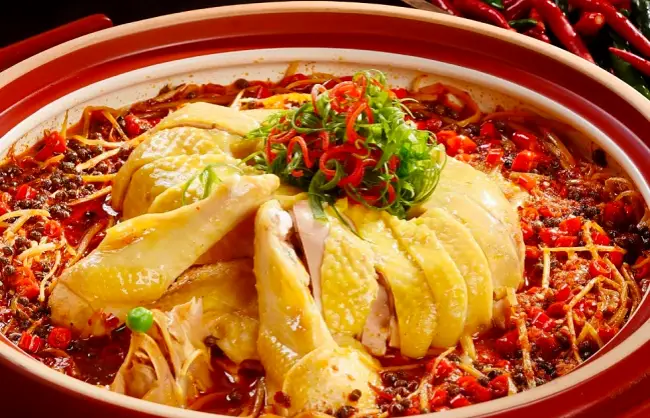
The ingredients in Hunan dishes are quite abundant. Preserved meats are most representative meats in Hunan, including cured meat, fish, chicken, sausage, and smoky beacon, etc. While fresh meats are characteristic local meat, such as Dong’an Chicken, Linwu Duck, Wugang Goose, and Yellow Cattle beef. Besides, there are freshwater fish and special aquatic products, like Silver Carp, Grass Carp, Bighead Carp, Silver Fish, White Eel, River Clams, Field Snails. The special ingredients include fermented chili and pickled vegetables. Also, basic ingredients garlic, ginger and shallots are needed.
Signature Seasonings and Sauces in Hunan Cuisine
In Xiang cuisine, basic seasonings include liuyang fermented soybeans, yongfeng chili sauce, yuhe vinegar, chaling purple skin garlic, laba beans. As for specialty sauces, hunan-style green pepper sauce, beef fresh chili sauce, tea oil and wild chili bean paste are commonly used. Hunan-style braising sauce, homemade chopped chili sauce, sour water with two peppers are some compound seasonings.
Cooking Techniques in Hunan Cuisine
Because of the several cooking techniques, the menu of Hunan food is various. Four main techniques are stir-frying, braising, steaming and smoking. The feature of stir-frying is to cook the ingredients at high heat with quick stir-frying, through which, its freshness can be maintained and a smoky aroma is created. About braising, the ingredients are usually pan-fried or stir-fired first, then simmer in the broth until tender and flavorful, the sauce also become thickening over time.
The purpose of steaming is to preserves the original flavor of the ingredients with chopped chili and fermented soybeans added to enhance taste. As for smoking, ingredients are salt-cured first and then smoked with pine wood or tea leaves, imparting a salty aroma and woody smoky flavor.
Classic Hunan Meat Dishes
Hot and Spicy Chicken
Hot and spicy chicken is cooked with half-year-old chicken with extremely tender meat. To achieve a golden, crispy exterior and tender, juicy meat interior, the chicken is double fried. And tea oil and pork lard are used during stir-frying to enhance the aroma and ensure the freshness. You can request a mild flavor or pair with a bowl of soup noodles or dessert to neutralize the spiciness.
Chopped Chili Chicken
Key seasoning of chopped chili chicken is the lacto-fermented chopped chili, which balances the flavors of salty, sour and spicy. After steaming, the flavor of the chopped chili penetrates chicken, ensuring tender and juicy meat. It is a chicken dish popular among both locals and tourists.

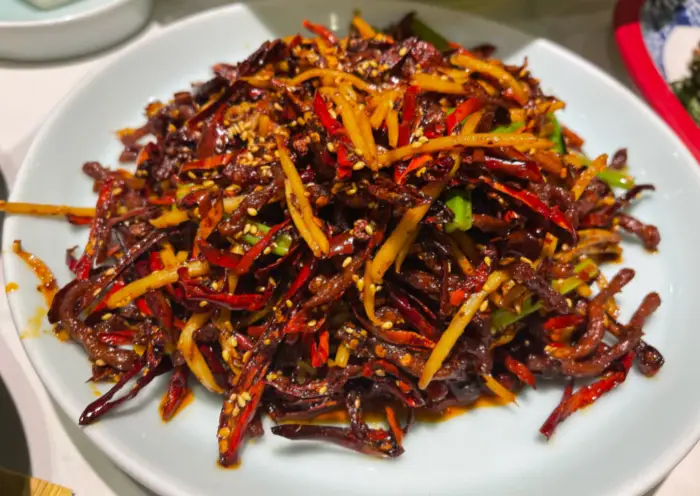
Dry Pot Beef
If you want to try a beef dish, dry hot beef will not let you down. Its meat is crispy on the outside and tender on the inside and the vegetables remain crunchy. Beef tenderloin or sirloin is used and marinated with egg whites and cornstarch to ensure juicy meat. After it is about 70% cooked through stir-frying, add bean paste and vegetables to stir fry, then put into dry pot. After the soup is reduced, the flavors become more concentrated with complex scents of salty, spicy, cumin and Sichuan peppercorn.
Stir-Fried Beef with Chili
Liuyang chopped chill is the most important ingredient for stir-fried beef with chili, which balances the flavor of spicy and sour. After stir-frying on high heat for 30 second, the beef is tender and juicy. The chilies are pan-fried until the skin is blistered to guarantee its freshness and spiciness. With strong garlic aroma, it is best to eat with rice.
Mao’s Braised Pork
This pork dish is famous all over China because it was beloved by Mao Zedong, the founder of PRC, during the period of study in Hunan. Mao’s braised pork uses pork jelly and is cooked with sugar and cooking wine. It gets golden color with caramelized sugar instead of soy sauce. Fatty meat melts in your mouth and lean meat is tender but not dry, so the pork is not greasy oil at all. To balance the sweetness, it is recommended to eat with rice or stir-fried seasonal vegetable.
Double-Cooked Pork
Through both boiling and stir-frying, double-cooked pork is healthier with less fat. The fatty meat of pork jelly is transparent like crystal and the lean meat is chewy. Addition of Hunan fermented soybeans and green pepper make it more salty and spicy. The most delicious tasting method is to mix the pork’s sauce with rice.
Steamed Fish Head with Chili
The essential ingredient of steamed fish head with chili is the fish head of bighead carp from Dongting Lake, which is soft and melts in your mouth after steaming. The sourness of red chopped chili peppers covered on the fish head balance the spiciness and add a fresh flavor to the broth. Do not miss this fish dish during your Hunan travel.
Blood Cake Duck
Blood cake duck is a signature duck dish in western Hunan. It is made from duck blood and sticky rice which are steamed together so that the rice can absorb duck fat and spices, creating a blend flavor. Then fry the meat, making it crispy outside and soft, chewy inside. The duck is the wild duck from Western Hunan. To taste a unique flavor, it is recommended to taste the dish in Fenghuang Ancient Town.
Recommended China Food Tours:
13 Days China Food Tour: Beijing Xian Chengdu Guilin Hong Kong
Best Chengdu Food Tours, Chengdu Restaurant Tours
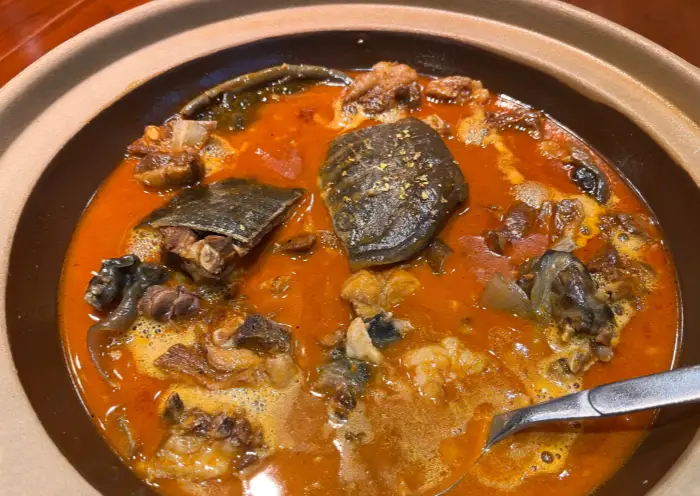
Stewed lamb with soft-shelled turtle
Fresh and live soft-shelled turtle and lamb with bones are used in the dish. Through simmering, the flavors of both ingredients blend together perfectly. The soft-shelled turtle meat is as soft and tender as tofu and rich in collagen. The lamb broth is flavorful and thick without fishy smell.

Steamed Multiple Preserved Hams)
Steamed Multiple Preserved Hams is the classic Hunan dish composed of three kinds of cured meats: cured pork, cured chicken, and cured fish. In general, the fish, chicken and pork are put on the bottom, middle and top of the bowl in the order during steaming, allowing the fats to drip down. After cooked, invert the bowl to form a beautiful shape.
Signature Hunan Street Foods


Pickled vegetables
The variety of pickled vegetables in Hunan province is quite abundant. The most common 10 kinds include pickles, sour beans, chili sauce, sour chili peppers, pickled garlic, pickled cucumbers, pickled eggplants, pickled ginger, pickled Chinese cabbage, and pickled chive flowers. And each has unique characteristics and flavors, ranging from sour and refreshing to sour and spicy. Pickled vegetables are usually served with meals in daily life.
Stinky tofu
Stinky tofu is a must-try representative snack among Hunan food. The tofu is fermented in black brine first, so it smells stinky. Then deep-fry the tofu to achieve a crispy exterior and soft interior. Finally, add garlic chili sauce and sour diced radish on the top. Though stinky, its taste is very delicious.
Smoked bean curd
When smoking the dried bean curd, fruit wood is usually used so that the tofu has a light fruity aroma. During the process, tofu turns golden outside and gives fragrant smoky scent. Its outside is firm while inside is soft and fresh. It can be eaten directly, stir-fired with meats or added into soup.
Rice noodles
Rice noodles are the main breakfast of Hunan food. The soup of the noodles varies in different regions, including clear soup, thick soup and spicy soup. The toppings are also various with stir-fried, stewed, braised meat and vegetables, you can choose the one you like. Lard and local soy sauce are the standard ingredients. There are also some local ingredients like sour beans, chopped chili, and crushed peanuts added in the noodles as garnishes.
Sugar Oil Cake
Sugar oil cake is beloved by common people in Hunan province. It is made from glutinous rice flour and sugar. Fry the rice balls in tea oil until crispy and then coat with red sugar syrup. Its taste is crunchy and sweet outside and soft inside.
Spicy Salted Duck
The most famous Spicy Salted Duck is from Changde City. It use the ducks from Dongting Lake. Marinated with 30 different Chinese herbs and more than 10 kinds of spices, the duck meat is firm and spicy with unique flavor of fragrant, spicy, fresh, and rich. Locals prefer to shred the duck and eat it with beer.
Xiang Cuisine Menu with Popular Dishes
English Name |
Chinese Name |
Pinyin |
Feature |
Steamed Fish Head with Chili |
剁椒鱼头 |
Duò jiāo yú tóu |
Fresh and tender fish head, a balanced taste of sourness and spiciness, |
Mao’s Braised Pork |
毛氏红烧肉 |
Máo shì hóng shāo ròu |
Cooked with sugar, taste sweet, no soy sauce, melting but not greasy meat |
Hot and Spicy Chicken |
辣子鸡 |
là zǐ jī |
Half-year-old chicken with extremely tender meat is used. It has golden, crispy exterior and tender, juicy meat interior |
Blood Cake Duck |
血粑鸭 |
xuè bā yā |
A blend flavor of duck blood and sticky rice, crispy outside and chewy inside |
Steamed Multiple Preserved Hams |
腊味合蒸 |
Là wèi hé zhēng |
It is made by steaming multiple cured meats together, taste savory and rich |
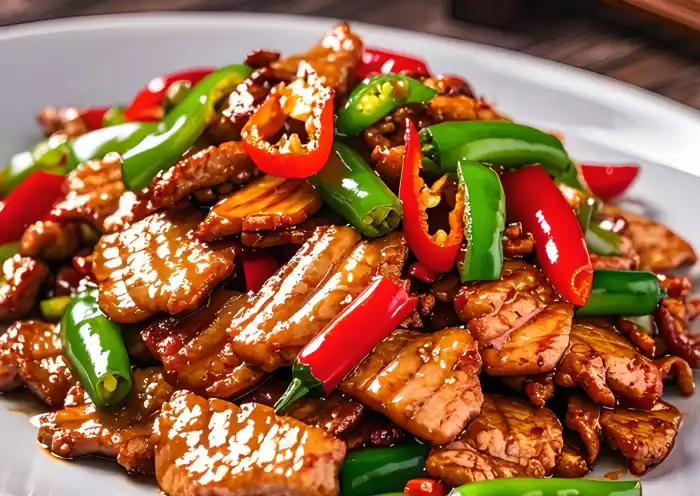
Stir-fried Pork with Pepper |
辣椒炒肉 |
Là jiāo chǎo ròu |
A popular homemade dish with crisp peppers and tender pork slices. |
Xiangxi Grandmother’s Vegetables |
湘西外婆菜 |
Xiāng xī wài pó cài |
Stir-fried preserved vegetables, savory, a little spicy, a perfect rice companion |
Quick-fried Julienne Ox Tripe |
发丝牛百叶 |
Fà sī niú bǎi yè |
Hair-thin beef tripe with a spicy and sour taste, can whet the appetite |
Zuyan Shark Fin |
组庵鱼翅 |
Zǔ ān yú chì |
Official Hunan cuisine, braised in rich broth, tender and glutinous, intricate process |
Changsha Stinky Tofu |
长沙臭豆腐 |
Cháng shā chòu dòu fu |
A signature snack with a distinctive pungent aroma, black outside and tender within |
Regional Varieties of Hunan Cuisine
Xiangjiang River Cuisine
Xiangjiang River cuisine is the representative of Hunan cuisine. The core areas include Changsha, Xiangtan and Hengyang, where you can taste both elegant royal dishes and bold and flavorful folk dishes. Its main features are exquisite cooking methods, diverse ingredients and rich flavors, focusing on sour, spicy, aromatic, and fresh flavors. Common techniques include braising, stewing, smoking, steaming, and stir-frying. The representative dishes include Spicy Young Chickens, Chopped Chili Fish Head, etc.
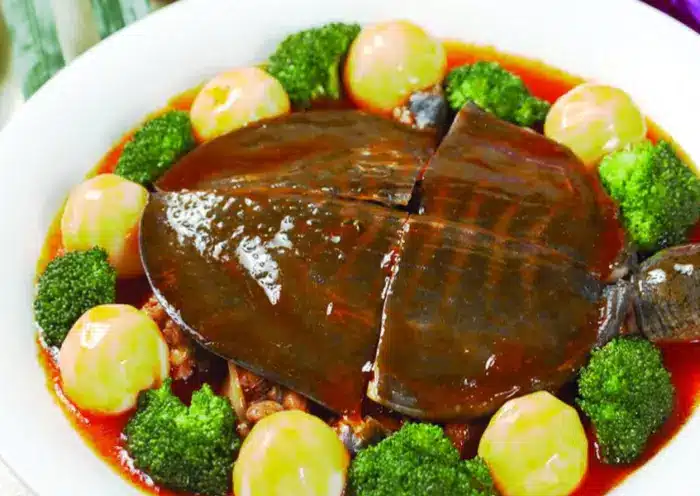

Dongting Lake Cuisine
Located by the side of Dongting Lake, Yueyang and Changde are the main cities of Dongting Lake cuisine. Cuisine here are famous for freshwater fish and crabs directly sourced from the lake and poultry, and are characterized by thick sauces, oily and a balance of salty, spicy, and aromatic flavors. The most common cooking techniques are stewing, braising, and smoking. Dongting Golden Turtle and Iced Sugar Lotus Root are two classic dishes.
Western Hunan Cuisine
Zhangjiajie, Jishou and Huaihua are the core cities for Western Hunan cuisine. The highlights of Western Hunan cuisine include mountain delicacies, smoked cured meats and wild truffles, reflecting the rustic and countryside tastes of the region. Salty, spicy, sour and smoky are the main flavors of the dishes here. Smoking and fermentation are the main treatment methods for ingredients. The recommended dishes here are Blood Pudding Duck, Xiangxi Sour Pork, etc.
Recommended Zhangjiajie Tours:
6 Days Best Zhangjiajie-Fenghuang-Changsha Experience Tour
Zhangjiajie Tours with Glass Bridge: 3-4 Days
Where to Experience Authentic Hunan Cuisine
Where to Experience
In Changsha
- Benluobo Restaurant (笨罗卜浏阳菜馆)
- Address: several subbranches, the two in downtown area are located at No. 14, Yuying Street and the west archway of Taiping Old Street.
- Cost: CNY 50 – 60 per person
- Signature Dishes: Stir-fried sheet jelly with Chinese sauerkraut, vinegar-steamed chicken, pan-fried eggs
- Chuiyan Xiaochao Huangniurou (炊烟小炒黄牛肉)
- Address: several subbranches, there are also two in city center, whose locations are at the entrance of Huangxing Pedestrian Street and No. 58, Dongpailou Street,
- Cost: CNY 70 – 80 per person
- Signature Dishes: stir-friedyellow beef, steamed spare ribs with pumpkin and taro
See more iconic dishes in Changsha


In Zhangjiajie
- Master Tang Xiangxi Famous Cuisine Restaurant (唐师傅湘西名菜馆)
- Address: Opposite the Genli Hotel on Wuling Avenue, Wulingyuan District
- Cost: CNY 60 – 90 per person
- Signature Dishes: blood cake duck, chicken soup, charcoal-grilled bamboo shoots with cured meat
- Lekoufu Home-Style Restaurant (口福家常菜馆)
- Address: Opposite the Municipal People’s Hospital on Guyong Road, Yongding District
- Cost: CNY 60 – 70per person
- Signature Dishes: steamed spare ribs with pumpkin and taro, sauce and pepper fish head
Other Cities of China
In Beijing: Xiangbinxuan Restaurant (湘彬萱)
- Address: two stores, one is at 2 Huayuan Road, Haidian District; the other is at Dazhongsi Square, North Third Ring West Road, Haidian District
- Cost: CNY 60 – 70 per person
- Signature Dishes:steamed fish head with chopped chili, Yongzhou stir-fried duck with duck blood, stinky tofu
In Shanghai: Xuxiangji Restaurant (巡湘记)
- Address: several subbranches, basically inside the large shopping malls
- Cost: CNY 100 – 110per person
- Signature Dishes: steamed fish head with chili, stir-fried pork with peppers, stir-fried yellow beef
In Guangzhou: Laoxianglou Restaurant (佬湘楼)
- Address:5 subbranches; the one near downtown is at No. 28, Zhongshan 1st Road, Yuexiu District
- Cost: CNY 60 – 70per person
- Signature Dishes: steamed fish head with chili, griddled pork intestines, spicy shrimp
Recommended Changsha tour with food
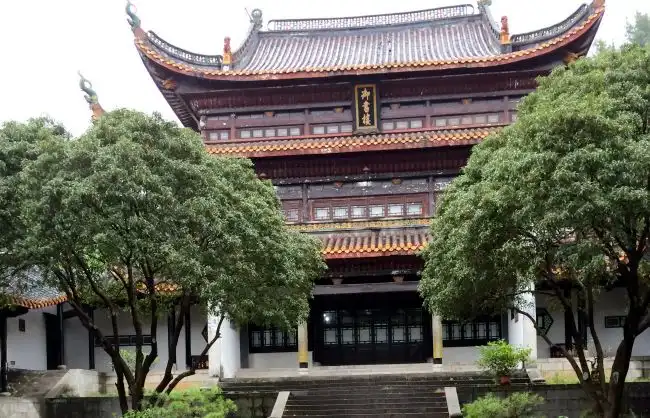
Explore Changsha's Hunan Museum with its 2,000-year-old Mawangdui tomb relics, then ride a high-speed train to Zhangjiajie for mist-cloaked Avatar-inspired sandstone pillars.
Outside China
If you are living overseas, the best place to taste Xiang cuisine are the China towns in all cities. The famous Hunan cuisine restaurants outside China are Xiangyuan Grand Hotel in Germany and Pengyuan Restaurant in New York.
Cooking Hunan-Style at Home – Recommended Recipes
Hunan Stir-Fried Pork
- Ingredients: pork jelly, green pepper, garlic, fermented soybeans, light soy sauce, dark soy sauce, salt, cooking oil
- Recipe:
Step 1: Add a little more oil and heat the pan. Fry the fatty pork slices on medium heat until oil is released and slightly crispy.
Step 2: Add the garlic and fermented soybeans, stir-fry until fragrant. Then, add the lean pork slices and stir-fry until color is changed.
Step 3: Add green pepper and stir-fry on high heat for about 1 minute.
Step 4: Add light soy sauce, dark soy sauce and salt and stir everything well.
Steamed Fish Head with Chopped Chili:
- Ingredients: fish head, ginger, scallions, cooking wine, hot oil
- Chopped chili sauce: mix 3 tablespoon of red chopped chili, 1 teaspoon of minced garlic, 1 teaspoon of fermented bean paste, half a teaspoon of sugar, 1 teaspoon of light soy sauce together
- Recipe:
Step 1: Wash the fish head and make a few cuts on it. Marinate with cooking wine and ginger slices for 10 minutes.
Step 2: Place the marinated fish head on a plate, spread chopped chili sauce over it evenly, after the water is boiled, steam over high heat for 12 minutes.
Step 3: sprinkle with scallion segments, drizzle with hot oil to enhance the aroma.

Hunan Cuisine vs Sichuan Cuisine
Both Hunan cuisine and Sichuan cuisine are spicy. While the most crucial difference between them is the flavor type: Sichuan cuisine is tongue-numbing and spicy while Hunan cuisine is sour and spicy. Usually, peppercorn and processed peppers are used in Sichuan food, and fresh pepper, fermented chopped chili peppers and fermented soya beans are used in Hunan food. Sichuan food emphasizes abundant flavor types while Hunan food highlights the original flavors of the ingredients. Besides, smoky scent is another main feature in Hunan. During your China tour, both cuisines are highly recommended to have a taste.
Cuisine |
Flavor |
Ingredients |
Feature |
Hunan Cuisine |
Sour, spicy, smoky |
fresh pepper, fermented chopped chili peppers, fermented soya beans, tea oil |
Highlight original flavors of the ingredient |
Sichuan Cuisine |
Tongue-numbing and spicy |
Peppercorn, processed peppers |
Abundant flavor types |
FAQs About Hunan Cuisine
Is Hunan food healthy?
Traditional Hunan food is of heavy oil and salt which poses risk to health, but now, the low-sodium seasonings are promoted and cooking techniques are optimized for improvement. Some cuisines integrate the medicinal materials with dishes which balance flavor and health benefits.
Is Hunan food always spicy?
Although most Hunan dishes are spicy, there are also non-spicy food, such as the steamed aquatic products. And to meet the needs of diverse customers, there are options of mild spicy and no spicy in almost all restaurants.
Is Hunan cuisine halal-friendly?
Actually, most cuisine are not halal, but you can try Muslim Rice Noodles with beef soup base and beef noodles. The halal market in Changsha also caters to Muslim dietary needs.
Plan Your China Food Tour with China Xian Tour
The abundant cuisines of Hunan food with various flavors are definitely worth to taste. If you want to try authentic Xiang cuisine, China Xian Tour can integrate the Hunan tour itinerary with food so that you can not only appreciate the scenic areas, but also enjoy the delicious dishes of the province. We can also arrange the guide and driver based on your needs. So feel free to contact us at any time.