

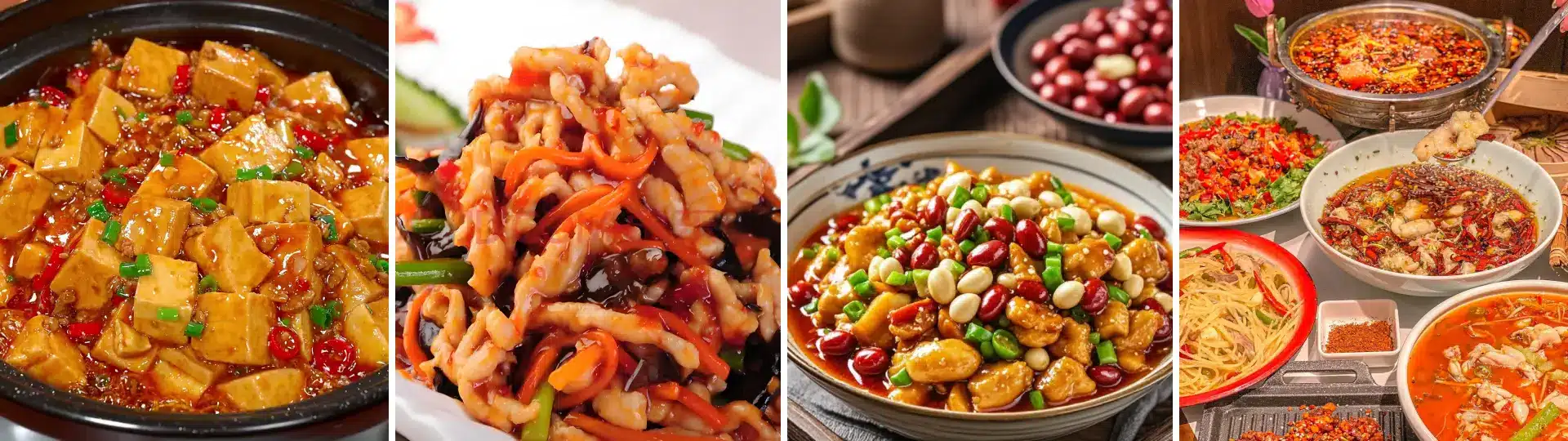
Whenever you plan a trip to China, it is a pity if you don’t add Sichuan on your destination list. It’s not merely a picturesque tourist destination, but also a vibrant city noted for its cuisine.
For most people, hot and spicy flavor is always the first impression of Sichuan Cuisine. Nevertheless, forget this, because it’s sort of misunderstanding! In fact, the magic of Sichuan Cuisine lies in its rich and complex tastes brought by the bold use of various seasonings.
In this article, we are going to explore the origin of Sichuan Cuisine, its key ingredients, features and flavors, cooking techniques, and the most famous dishes worth tasting. Come on, let’s embark on this food adventure together!
Content Preview
- What is Sichuan Cuisine?
- History of Sichuan Cuisine
- Features, Flavors, and Key Ingredients of Sichuan Cuisine
- Cooking Techniques in Sichuan Cuisine
- Famous Sichuan Food and Dishes You Must Try
- Sichuan Food Regional Difference
- Where to Eat Authentic Sichuan Food
- Fun Facts & Cultural Influence
- Cooking Sichuan Dishes at Home – Recommended Recipes
- Sichuan Cuisine vs Hunan Cuisine
- FAQs about Sichuan Cuisine
- Enjoy a Sichuan Food Adventure with China Xian Tour
What is Sichuan Cuisine?
Sichuan Cuisine, also known as Chuan Cuisine or Szechuan Cuisine, is ranked among the eight major Chinese cuisines. It mainly refers to the food in Sichuan Province, but in a broad sense, the food in Chongqing is also incorporated.
Sichuan Cuisine distinguishes itself from others by the pursuit of richness and innovation of flavors. An experienced Chuan Cuisine chef must be adept at modulating complex compound flavors. In contrast, other cuisines, especially Cantonese Cuisine, focus more on the plain umami produced by food materials. To some degree, Sichuan Cuisine is a little bit similar to Hunan Cuisine, but not as aggressive as the latter. Sichuan food tastes spicy and numbing, while Hunan food is purely spicy, stimulating taste buds more directly.
History of Sichuan Cuisine
The history of Sichuan Cuisine is long and complex. It can be dated back to 4,000 years ago when Sichuan was reigned over by the ancient Shu State. During the Qin and Han dynasties, Chengdu became a southwestern metropolis. The introduction of ingredients like beans from western regions further enriched the local culinary foundation.
The Tang and Song dynasties witnessed the heyday of Sichuan Cuisine, when Chengdu experienced economic prosperity. Most important of all, Sichuan peppercorn began to dominate the cuisine and the tingling sensation became a unique symbol of Sichuan Cuisine. The great immigration to Sichuan during the late Ming and early Qing dynasties was a key turning point. Immigrants not only brought seasonings such as chili peppers and bean paste, but also introduced Baoning vinegar and Yongchuan fermented black beans, which gave rise to richer flavors.
By the late Qing Dynasty, the cooking methods of Sichuan cuisine had basically been in line with modern times. Some classic dishes like Mapo Tofu, Kung Pao Chicken, and Twice-Cooked Pork came into being. Later on, Sichuan food spread throughout the country and even overseas.
Features, Flavors, and Key Ingredients of Sichuan Cuisine
Mala Magic: The Numbing-Spicy Sensation Explained
The word “Mala” means the numbing and spicy sensation. It is the best-known tag of Sichuan Cuisine and accurately summarizes the core characteristic. The numbing sensation from Sichuan peppercorn, is a distinctive feature that sets Sichuan Cuisine apart from other spicy cuisines. The spicy flavor comes from chili peppers and their products.
However, numbness and spiciness are only the first sensation upon a bite of food, followed by an endless flow of complex flavors. That is the real charm of Sichuan dishes.
Beyond Mala: 24 Complex Flavors (Yuxiang, Guaiwei etc.)
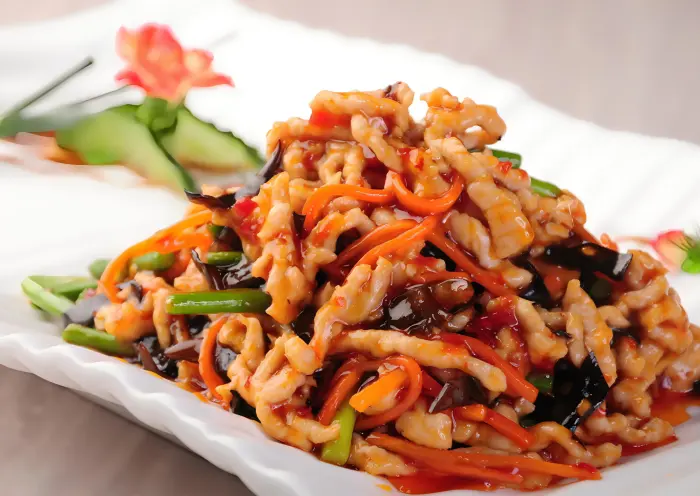
Sichuan Cuisine is far more than hot and spicy. As an old saying goes, one hundred dishes, one hundred flavors. It is indeed a true summarization of Sichuan Cuisine. There are as many as 24 officially recognized flavor types and the commonest representatives include Yuxiang (fish flavored), Guaiwei (odd flavored), Hongyou (red oil), Suanni (mashed garlic), and Suanla (sour and spicy). Therefore, don’t say no easily to Sichuan food just because you never eat pepper. Try some other flavors that does not contain a drop of pepper to start this culinary journey.
Signature Seasonings and Sauces in Sichuan Cuisine
Though a wide range of seasonings are adopted, four stand out as the soul of Sichuan Cuisine. They are the Sichuan peppercorn, chili, Doubanjiang (broad-bean paste from Pi County), and pickles. Sichuan peppercorn is the fundamental reason for the unique numbing sensation. Chili pepper lays the basic flavor of spiciness and the brightly red tone. The broad-bean paste is the key for the formation of complex flavors. Pickles mainly refer to the preserved pepper and ginger. They are mostly used to cook fish flavored and pickled pepper flavored dishes.
Core Ingredients: Meats, Veggies, Tofu & Preserves
The charm of Sichuan Cuisine lies not only in its everchanging seasonings, but also in its wide and distinctive selection of ingredients. The chefs are good at using ordinary ingredients and transforming them into delicacies through exceptional seasoning and cooking techniques.
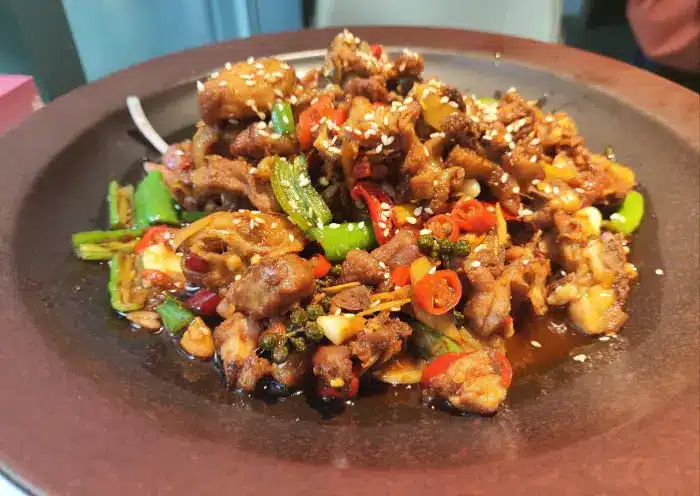
Pork, together with poultry, beef, fish, and frogs, plays the leading role in making Sichuan dishes. Bean products including tofu, bean curd sheets, and dried tofu are also commonly used. Plus, various kinds of seasonal vegetables like potatoes, garlic sprouts, celery, green peppers…are the indispensable part of Sichuan foods. The wide use of preserved sausages, pork, cabbages, and tender mustard also contributes to the uniqueness of Sichuan Cuisine.
Cooking Techniques in Sichuan Cuisine
Sichuan Cuisine also boasts the protean cooking techniques. Stir-frying is the most basic cooking method, requiring high heat and quick moves. The traditional dishes such as Kung pao chicken and fish flavored pork slices are all stir-fried. Dry-frying is a unique cooking technique used only in Sichuan Cuisine. The chef uses little oil and fry the shredded food materials over moderate heat until the water goes away, so that the ingredients become crisp. Water-boiling is another common technique. Don’t be misled by the name. Actually, it is not water, instead, food materials are boiled in the thick soup seasoned by broad-bean paste, chili, and Sichuan peppercorn. The typical dishes are poached spicy pork slices and spicy boiled fish.
Famous Sichuan Food and Dishes You Must Try
Tasting is believing. Only if you taste the food in Sichuan, can you really understand the essence of it. Below we list some of the best dishes as well as the snack food sold on street stalls that are top recommended during your Chengdu tour.
Classic Sichuan Dishes
Mapo Tofu
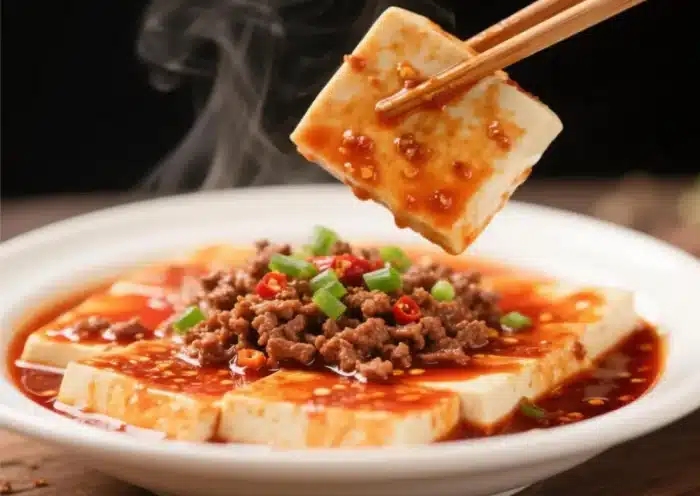
Though the ingredients are very ordinary and simple, the Sichuan dish Mapo Tofu is masterpiece of many Chuan Cuisine restaurants. The main ingredients are tofu and minced beef, seasoned by fermented black beans, broad-bean paste, peppercorn powder and garlic sprouts. A successful Sichuan dish tofu must be numbing, spicy, hot, fragrant, crispy, and tender. What’s interesting is that this dish got its name after the creator, a lady named Chen Mapo. The best place to savor is the headquarters of Chen Mapo Tofu Restaurants in Qingyang District of Chengdu.
Kung Pao Chicken
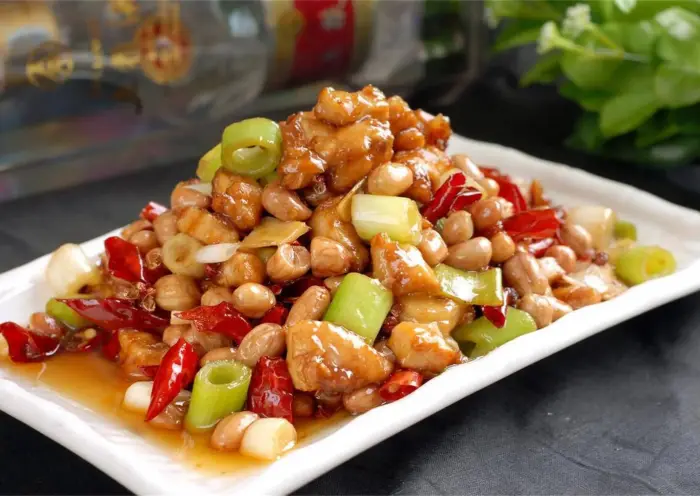
Kung Pao Chicken helped Sichuan Cuisine to be internationally recognized. Unlike others, it’s not hot and spicy, but has the flavor of toasted chili and peppercorn. And the aftertaste is a mixture of sourness and sweetness.
Marinate chicken dices with cooking wine, light soy sauce and starch. Then prepare chopped dry chili, scallions and deep-fried peanuts. Stir-fry the ingredients quickly and pour the prepared juice made of water, vinegar, soy sauce, starch and water. When the juice becomes sticky and enfold all the food materials, add the deep-fried peanuts and stir well. Turn off the heat and your dish is ready. This dish is always on the menus of Chuan Cuisine restaurants, so you can just choose the nearest one.
Twice-Cooked Pork
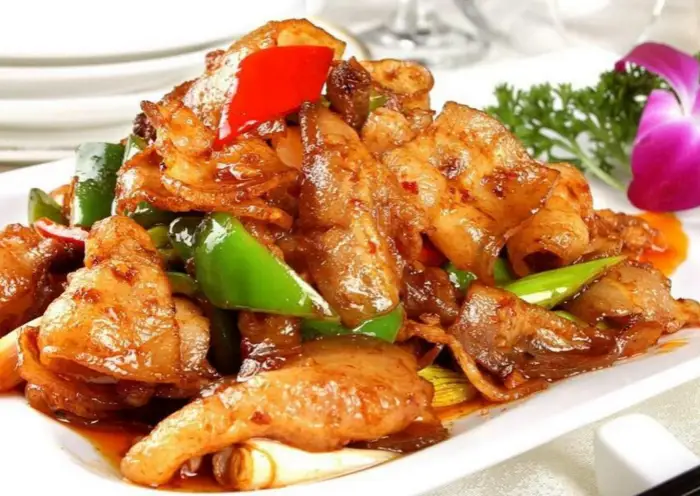
It is regarded as the No. 1 dish of Sichuan food. Almost every household in Sichuan can cook this delicacy. The cooking method lies in its name, that is, we need to cook pork twice. First, boil a whole piece of pork, usually the butt or belly, until it is thoroughly done. Then drain the pork and slice it. Finally, pour the slices back to the pot and stir-fry with seasonings. If you want to experience the most authentic Twice-Cooked Pork, I advise you to go to the time-honored small restaurants hidden in local communities of Chengdu and Chongqing.
Sichuan Hot Pot
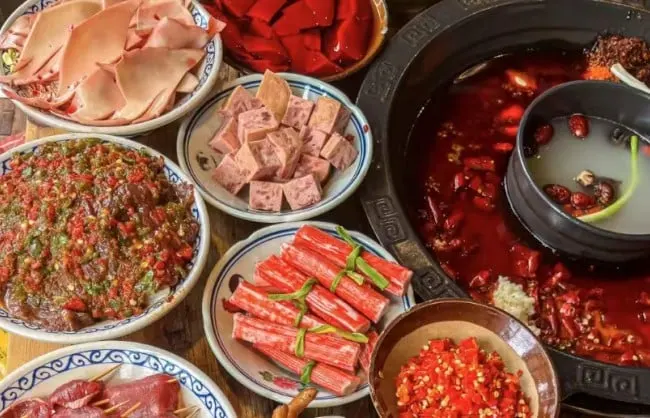
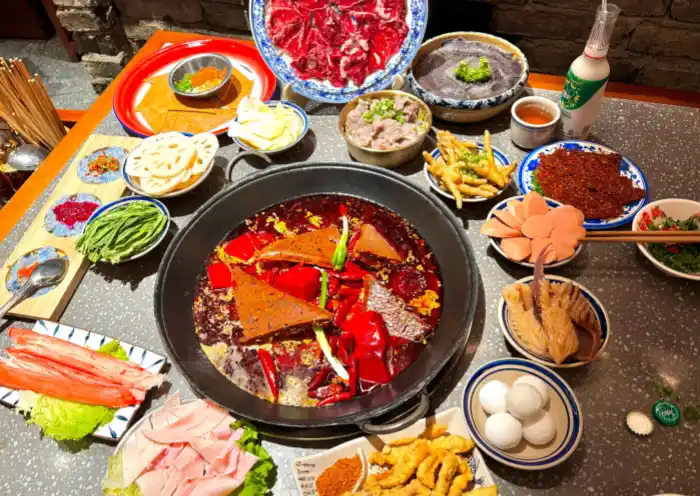
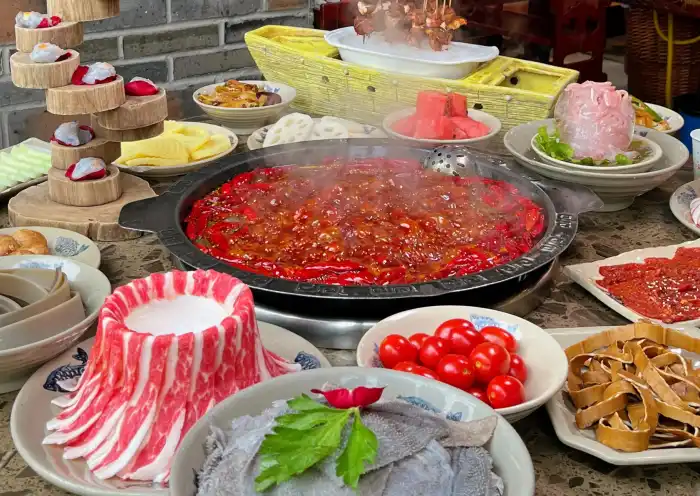
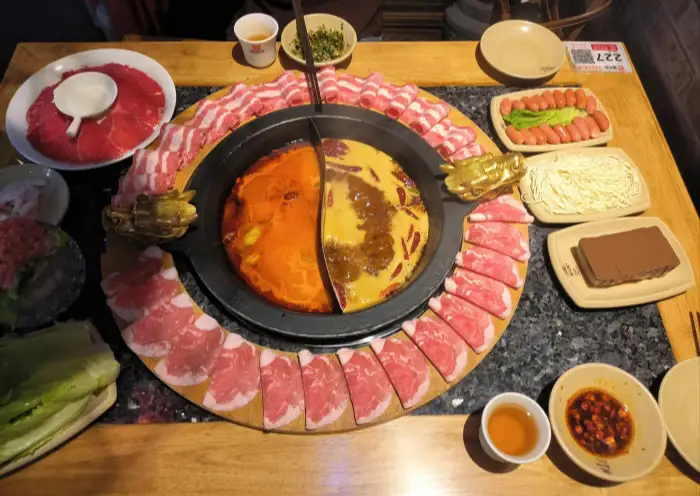
Nowadays, Sichuan hot pot is more a way of socializing than a simple meal. Everyone sits around a stove, with vegetables and meat rolling up and down in the piping-hot soup. The most critical thing is the hot pot soup base. Spice lovers often select red soup that emphasizing on the hot and spicy flavor. If you are not, the clear soup cooked with chicken, duck, pork bones, and ham is recommended. Nevertheless, you can ask for a two-flavor soup base served in a special pot. Almost all kinds of meat and vegetables can be cooked in a hot pot. From chain stores like Xiaolongkan and Shudaxia in shopping malls to small roadside restaurants, even outside of Chengdu and Chongqing, you can taste the most authentic Sichuan hot pot.
Related reading: Chinese Hot Pot Guide
Popular Sichuan Street Food
Dan Dan Noodles
Initially, some vendors shouldered a pole and sold Dan Dan Noodles on the street. Now, it has spread to many restaurants nationwide, as a symbol of the snack food in Sichuan. The alkaline noodles are accompanied by minced pork, pickled mustard, red oil, peppercorn powder, sesame paste, soy bean, vinegar, mashed garlic, peanuts and spring onions. The mixture of various seasonings creates a marvelous compounded taste containing spicy, hot, umami, sweet, sour, and aromatic.
Bobo Chicken
It can be called the cold version of hot pot. All food materials, such as mushrooms, chicken wings, and feet, duck intestines, tripe, quail eggs, lotus root slices, celtuce slices, and potato slices are skewered firstly on bamboo sticks. Boil them for a short time in pure water and then immerse in the seasoned soup base. The tastes depend on the soup base, which can be green pepper flavored or red oil flavored. The former emphasizes on the numbing sensation while the latter more focuses on spiciness and the aroma of sesames.
Spicy Rabbit Head
Though it sounds like dark cooking, the Spicy Rabbit Head is absolutely a bright star on the night markets of Chengdu. After a long time of stewing and soaking in gravy, the rabbit heads completely absorb the flavors of the seasonings, which include over ten kinds of Chinese medical herbs and spices. After draining, the rabbit heads will be coated with chili oil, peppercorn powder, mashed peanuts and sesames, giving out an attractive fragrance.
Fuqi Feipian
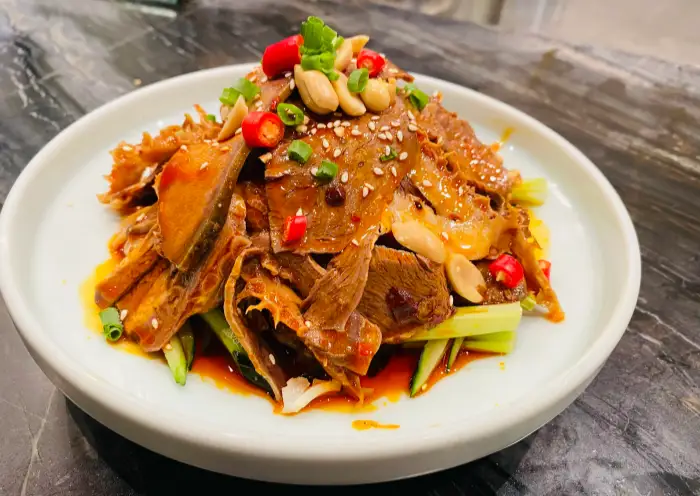
It is a cold dish, also known as the Sliced Beef and Ox Tongue in Chili Sauce. Feipian means sliced pig lungs, the previous main ingredient. To improve texture, pig lungs are not used nowadays and replaced by beef and tripe, tongues, hearts of oxen. All the ingredients have to be cut into extremely thin slices to allow the full absorption of seasonings. Red oil is the key for the hot and spicy taste and brilliant red color.
Join a Chengdu Food Tour with us: 3 Days Chengdu Food Tour with Cooking Class Experience

Sichuan Food Regional Difference
Shàng Hé Bāng – Upper River School
It is also known as the Rongpai Cuisine centered on Chengdu and its neighboring Leshan and Meishan cities. Compared with other divisions, the Upper River School is relatively light in taste and features fine and accurate use of ingredients in accordance with traditional recipes. The taste is mild and long-lasting and the appearance is exquisite and delicate. Therefore, it has always been the official selection of Sichuan governors in the past. Famous dishes include boiled cabbage, Mapo tofu, Kung Pao chicken, and Fuqi Feipian.
Xiǎo Hé Bāng – Small River School / Yán Bāng Cài – Salt Merchant Cuisine
The Small River School, aka the salt merchant cuisine, is popular in south Sichuan, which radiates from Zigong to surrounding Neijiang, Yibin and Luzhou cities. As Zigong has been the city of salt since ancient times, the catering service flourished there. The fierce competition between chefs led to bold innovations. The cuisine taste strongly weird and spicy, with a wide use of ginger and pepper. The best representatives are boiled beef, spicy diced rabbit, fresh rabbit pot, and Fushun tofu pudding.
Xià Hé Bāng – Lower River School / Chongqing Jianghu Cuisine
The Lower River School mainly refers to the Choingqing Jianghu Cuisine or Yupai Cuisine. With Chongqing being the core, it spreads over Wanzhou, Dazhou, Nanchong, Fuling, etc. Chongqing used to be a shipping hub and is wet all the year round. The dockmen and boat trackers had to dispel cold and dampness with salty, oily and spicy food. This lays the fundamental of Chongqing Cuisine. Chongqing Hot Pot, boiled fish, boiled duck blood curd in chili sauce, and Wanzhou roast fish are the typical dishes.
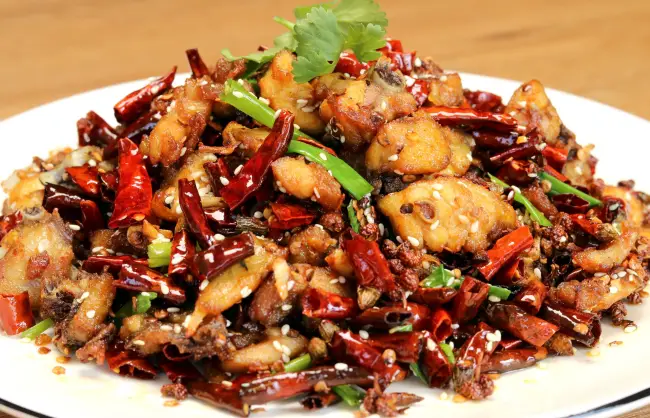
Taste bold numbing-spicy Chongqing Jianghu dishes on a guided food walk, then explore the city's iconic night views from Kuixing Tower's glass walkway to the illuminated stilted complex of Hongya Cave.
Where to Eat Authentic Sichuan Food
Chengdu: A UNESCO City of Gastronomy
As home to the best Sichuan food, Chengdu has been granted with the title of City of Gastronomy by the UNESCO in 2010. It’s the first Asian city that owns this honor. There are hundreds of thousands of restaurants in Chengdu, from the Michelin-starred brands to the small shacks hidden in lanes and alleys.
- Recommended Chuan Cuisine restaurant in Chengdu:the headquarters of Chen Mapo Tofu; Longchaoshou (wontons) Restaurant at No. 63, Chengshou Street, Jincheng District
Chongqing: The Birthplace of Modern Hot Pot
Sichuan Cuisine in Chongqing is bold in its taste, due to the heavy oil and seasonings. Compared with the cuisine in Chengdu, it’s hotter and spicier, strongly exciting the foodies’ taste buds. Besides, Chongqing is undisputedly the birth place of modern hot pot, particularly the spicy and tingling soup base made of red beef tallow. The nine-grid hot pot is another feature of Chongqing hot pot.
- Where to eat authentic Sichuan food in Chongqing:Yangji Longfu Restaurant; Xudingsheng Folk Dish Restaurant; Yuwei Xiaoyu Hot Pot; Zhu Guangyu Hot Pot
Outside China
No matter where you are, you can try to find a Sichuan Cuisine restaurant in the Chinatowns of big cities, or the concentrated area of Asian restaurants. Usually, you can judge from the name. If the name contains Sichuan, Chongqing, or Hunan, it might be a Sichuan Cuisine restaurant.
Fun Facts & Cultural Influence
The Spiciest Cuisine? Hunan vs. Sichuan
In terms of spiciness, Sichuan Cuisine is not the champion. Actually, Hunan Cuisine, Yunnan and Guizhou Cuisine are spicier.
It is popular across the country
The influence of Sichuan Cuisine is obvious. Through a few times of immigration, Sichuan Cuisine has spread all over the country and abroad. From first-tier cities to small counties, we can easily find Chuan Cuisine or hot pot restaurant. The numbing and spicy taste has conquered many Chinese, especially the younger generation. It also becomes a name card of Chinese food globally, and an important part for a China food tour.
Sichuan Peppercorn isn’t spicy
It’s totally different from peppers. Regular peppers are spicy, but Sichuan peppercorn brings a sense of numbness on your tongue. This exactly explains why Sichuan Cuisine is unique.
Sweets are another feature
Sichuan sweets can be divided into two types, traditional dishes and street food. The steamed pork slices with red bean paste and pork joint stewed with rock sugar are often served on banquets. On snack stalls, Tangyou Guozi (deep-fried glutinous rice balls), Ye’erba (leaf-wrapped sticky rice cake), Hongtang Ciba (brown sugar glutinous rice cake), etc., will feast your stomach.
Cooking Sichuan Dishes at Home – Recommended Recipes
How to Cook Mapo Tofu?
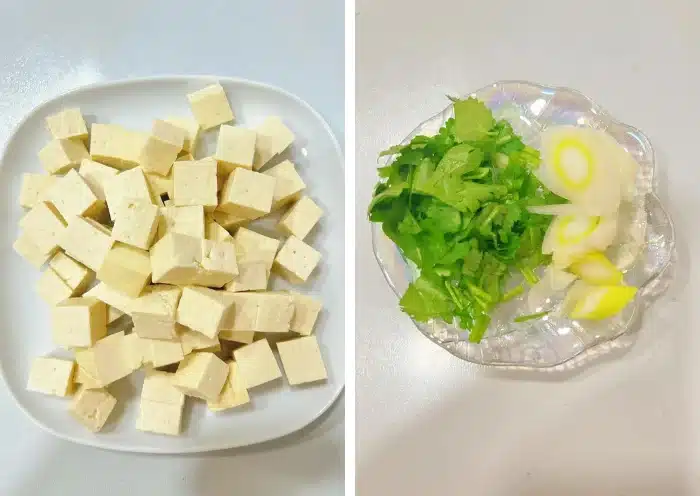
- Step 1: Cut the tofu into small dices, blanch with salt in boiling water for a minute, and then remove
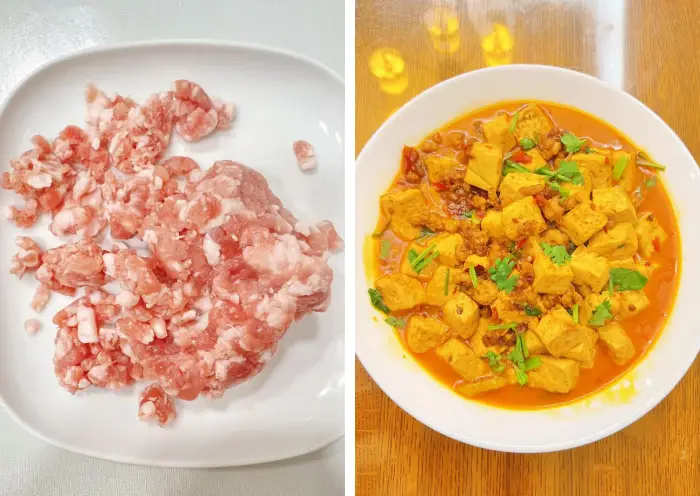
- Step 2: Add oil to the pan, stir-fry minced meat until fragrant. Add 1 spoon of broad-bean paste, fermented black beans, minced ginger and garlic. Pour in half a bowl of water, add 1 spoon of soy sauce and 1 tablespoon of sugar.
- Step 3: Add tofu, gently mix, and cook for 3 minutes. Pour in water starch and cook until it becomes thick. Turn off the heat, sprinkle peppercorn powder and chopped scallions.
How to Suanni Bairou (pork belly with garlic sauce)?
- Step1: Put a piece of pork belly with skin in cold water, add ginger slices, scallions, and cooking wine. Turn on the heat until it is done. Then soak it in ice water.
- Step 2: Cut thepork into thin slices and put them on a plate.
- Step 3: Add minced garlic, 3 spoons of soy sauce, 1 spoon of oyster sauce, half a spoon of sugar, 2-3 spoons of chili oil, a little Sichuan peppercorn powder, and a few drops of vinegar to an empty bowl. Stir well and pour over the meat, then sprinkle with chopped green onions.
Sichuan Cuisine vs Hunan Cuisine
People always compare Sichuan Cuisine and Hunan Cuisine as they have a similar origin. Though both spicy, they are not the same at all.
Aspects |
Sichuan Cuisine |
Hunan Cuisine |
Core Flavor |
Mala (numbing and spicy) |
Spicy, sour, smoky |
Characteristic Seasonings |
Sichuan peppercorn, broad-bean paste of Pi County, pickled pepper |
Fresh chopped chili, small chili pepper, fermented soy beans |
Oil |
Red oil, beef tallow |
Lard, tea-seed oil |
Texture |
Varied (tender, slippery, crisp, hot) |
Fresh and tender |
FAQs about Sichuan Cuisine
Is it true that chili peppers were only introduced to Sichuan a few hundred years ago?
Right! In fact, the history of chili peppers in Sichuan is much shorter than we imagine. They were introduced to Sichuan approximately from the second half of the 17th century to the 18th century.
Is Sichuan hot pot different from other types of Chinese hot pot?
Yes. Sichuan hot pot more focuses on the excitement brought by the hot and spicy flavor. By comparison, the hot pot in northern China is saltier and highlights the tenderness of lamb. Cantonese hot pot pursues the original flavor of food materials. Yunnan and Guizhou hot pot is noted for the natural sourness.
Can I find non-spicy dishes in Sichuan cuisine?
Of course! Common non-spicy Sichuan dishes include Minced Chicken Soup, Steamed Pork Slices with Red Bean Paste, and Pork Belly with Garlic Sauce.
I see ‘Fish-Fragrant’ on menus – does it contain fish?
I’m afraid not. Actually, if the restaurant is authentic, its Fish-Fragrant dishes should not contain fish at all. Fish-Fragrant just means the flavor of fish, and it is created by the blending of compounded seasonings, not fish itself.
Enjoy a Sichuan Food Adventure with China Xian Tour
Many authentic Sichuan Cuisine restaurants are actually only known to locals. If you are first-time visitors, it may be hard for you find them. Contact China Xian Tour and we will design the best itinerary for you to cover all the classic dishes you may not want to miss!