





Forget fancy restaurants when you think of Chinese hotpot. Think of a simple neighborhood place with steamy windows and the sound of people chatting around a boiling pot. This is where Chinese food feels most authentic – not in complicated dishes, but in a shared pot that brings people together.
This guide explains everything you need to know about the Chinese hot pot. You’ll be introduced to where it came from, the many different regional types, what hotpot ingredients Chinese families choose, and how you can try an authentic Chinese hotpot at home.
Content Preview
- What is Chinese hotpot?
- The History of Hotpot in China
- Different Hotpot Styles Across China
- New Hotpot Variations
- Essential Hotpot Ingredients
- How to Eat Hotpot: A Step-by-Step Guide
- Tips for First-Time Hotpot Eaters
- Making Hotpot at Home – Easy Recipe
- FAQs about Chinese Hotpot FAQ
- Join China Xian Tour for an Authentic Hotpot Experience
What is Chinese hotpot?
At its core, it’s simple — a pot of bubbling broth in the middle of the table where everyone cooks their own food. The joy of it comes from doing it together, watching thin slices of meat curl in the heat or vegetables soften in the soup.
Hotpot in this form is unmistakably Chinese. Other cultures have meals cooked at the table, but China gave this idea structure — the rich broths, the dipping sauces, the art of slicing meat just thin enough to cook in seconds. Today, it’s everywhere: from big, bright chains to small neighborhood shops where the recipe hasn’t changed in decades.
What keeps people coming back isn’t only the flavor. It’s the feeling — the pace slows, the table fills with conversation, and the meal becomes a small celebration. Few things capture the Chinese way of eating and being together quite like hotpot.
The History of Hotpot in China
Hotpot’s origin story reads like a legend. Some say Mongolian horsemen started it, cooking meat in their helmets over campfires. Others point to Zhou Dynasty feasts where communal cooking became ceremony. Wherever it began, by the 19th century, hotpot had spread across China.
Its survival stems from pure adaptability. Northern China embraced lamb and clear broths. Sichuan and Chongqing added chilies until their versions made diners sweat with pleasure. Coastal regions chose seafood simplicity. Each area made hotpot its own, proving that the best traditions aren’t preserved in amber – they evolve with the people who love them.
Different Hotpot Styles Across China
China’s size means there’s no single “best” hotpot – only perfect versions for different places and moods.
Sichuan Hotpot — Spicy and Numbing
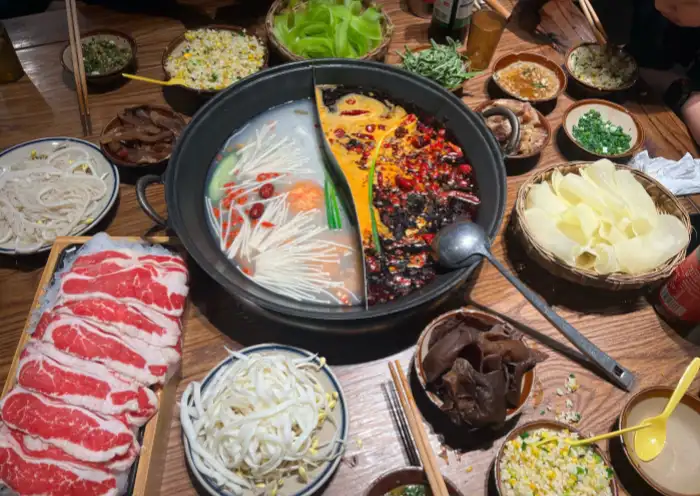
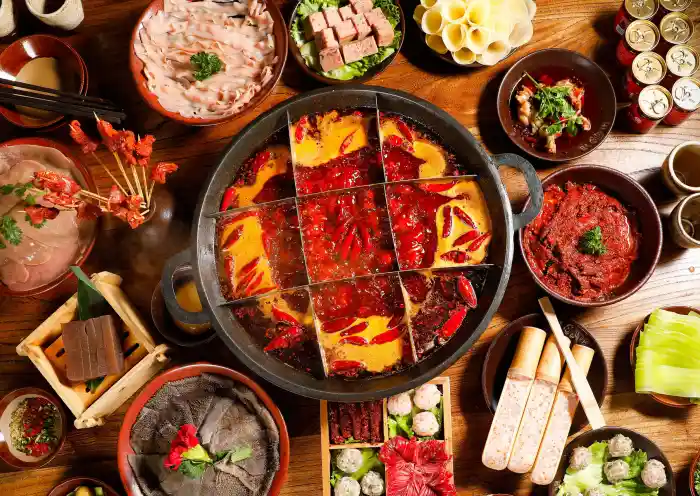
Sichuan hotpot started in Chengdu about 100 years back. What makes it special is the “mala” taste – chili heat mixed with the tingling feeling from Sichuan peppercorns.
Here’s what you need to know:
- The broth uses beef fat with dried chilies and Sichuan peppercorns
- People eat thin beef slices, beef tripe, duck intestine, and sometimes brain
- Meat cooks fast – just 15 seconds in the boiling broth
- For dipping, mix sesame oil with chopped garlic
- Try adding some broth to your dipping sauce for better flavor
The beef fat broth cooks food quickly and makes everything taste rich. Tripe and other innards work well because they soak up the spicy broth. Locals usually start with beef before trying the more unusual items. The peppercorns make your mouth tingle, which helps you handle the spiciness.
Related reading: How to Eat Hot Pot in Chengdu Like a Local
Chongqing Hotpot — Extra Spicy
Chongqing’s hotpot version takes the heat up a notch. They use more beef fat in the broth, making it heavier. What’s interesting is how they reuse the oil – restaurants once clean and sterilize it after each use, then add fresh spices. Regulars say this makes the flavor deeper. Don’t worry, the practice of repeatedly using the oil has been strictly avoided now.
The places are always busy and loud. You’ll see groups spending hours eating and drinking local beer. Many spots stay open late. The menu has unusual items like duck intestines and pig brains that absorb the spicy broth well.
Related reading: Top Food to Eat in Chongqing
Beijing Hotpot — Clean and Simple
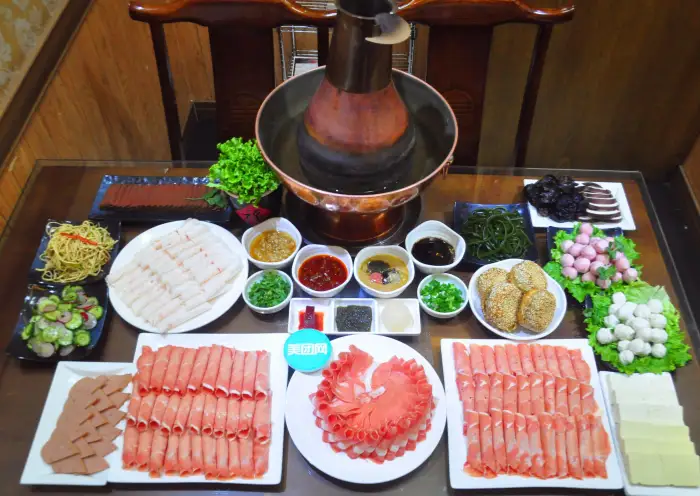
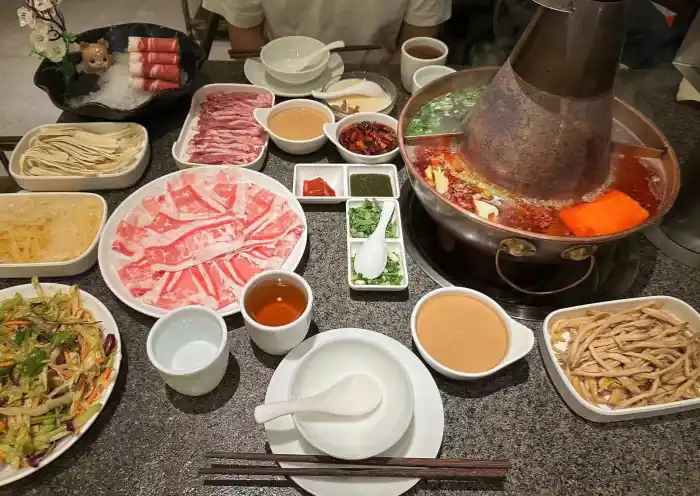
Beijing does hotpot differently. They use copper pots with chimneys that spread heat evenly from charcoal. This works well during cold winters. The broth is basic – just water with ginger, spring onions, and sometimes goji berries. Some places use light chicken stock, but it’s always mild.
The main highlight is lamb from Inner Mongolia, cut so thin you can see through it. You just swish it in the broth a few times until it changes color. People dip it in sesame sauce with fermented bean curd and herbs. Crispy sesame cakes are popular sides for soaking up the sauce.
Suggested tour:
4 Days Beijing Food Tour with Best Highlights
Cantonese Hotpot — Fresh Seafood
In Guangdong, hotpot is all about seafood. The broths are light – chicken stock, pork bone soup, or thin rice porridge. Some newer places offer tomato or herbal versions. The key is freshness, with live seafood kept in tanks.
Shrimp cook in about 30 seconds, until they curl and turn pink. Fish slices need even less time. The light cooking keeps the natural sweetness. For dipping, people use simple soy sauce with sesame oil and fresh chili. The idea is to let the ingredients’ natural flavors come through.
Suggested tour:
3 Days Best Guangzhou Food Tour with Cultural Highlights
New Hotpot Variations
China’s hotpot scene continues to evolve with distinctive regional styles gaining national attention.
Chaoshan Beef Hotpot
Chaoshan beef hotpot keeps things simple. The clear broth, made with white radish and ginger, serves as a blank canvas for quality beef. Butchers separate the meat into ten or more cuts, each requiring precise cooking times. Beef shank needs just eight seconds, while brisket takes two minutes. Regular diners often time each piece with their phones. The meat pairs with a signature dipping sauce combining shacha sauce and peanut oil.
Yunnan Mushroom Hotpot
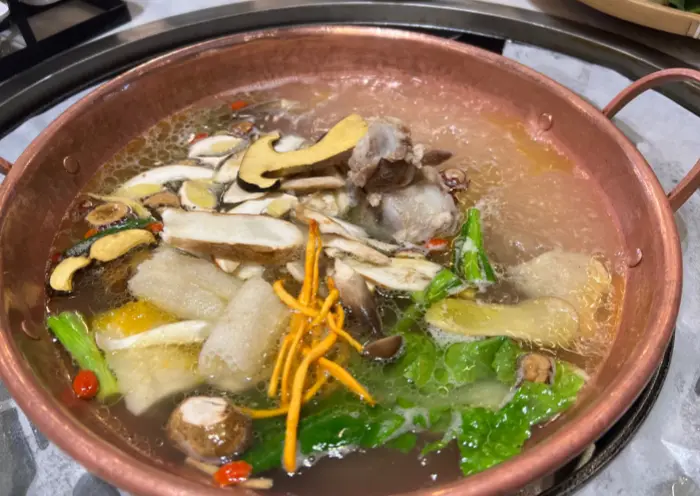
Yunnan mushroom hotpot celebrates local fungi. The broth simmers for hours with wild mushrooms – some earthy, some fragrant, some surprisingly meaty. Many kitchens add Yunnan ham for salty depth. During rainy season, restaurants might feature twenty mushroom varieties. Servers provide timers to ensure proper cooking of each type.
Hainan’s Coconut Chicken Hotpot
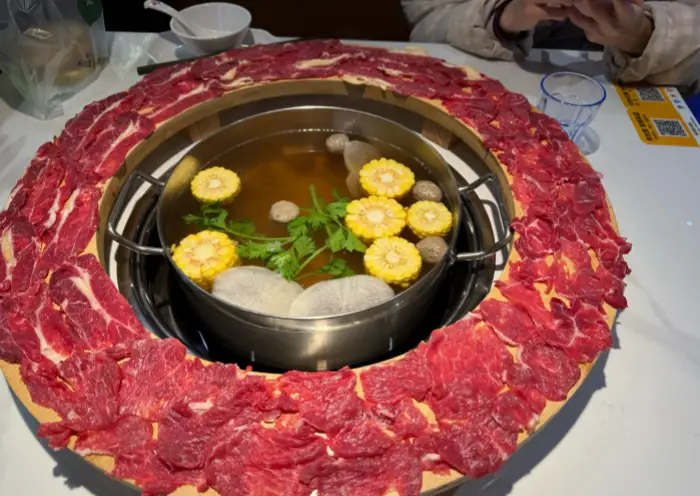
Hainan’s coconut chicken hotpot offers tropical flavors. Cooks open young coconuts at your table, using the fresh water as broth. They add coconut meat and young chicken, simmering until just tender. The light, sweet broth often gets consumed first before adding other ingredients. A simple dip of ginger paste and sesame oil complements the delicate chicken.
These newer styles show how regional ingredients and traditions continue to shape China’s hotpot culture, keeping the ancient cooking method fresh and relevant.
Essential Hotpot Ingredients
Getting hotpot right comes down to three simple elements: what’s in the pot, what dips in it, and what soaks it up.
The Meat Selection
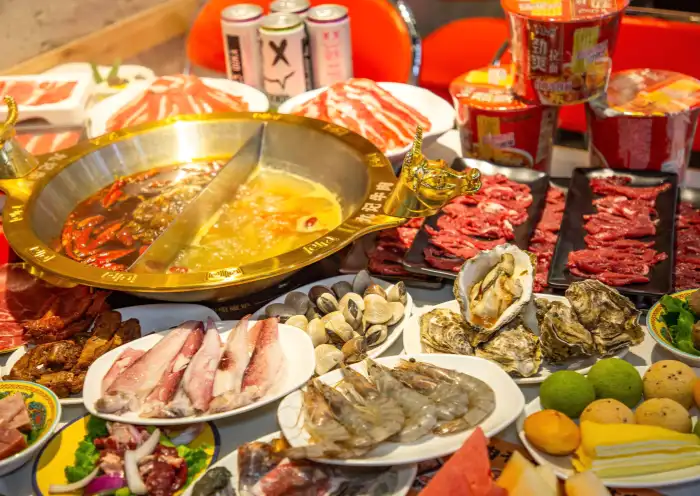
Quality matters. Look for marbled beef sliced thin enough to read through. Northerners prefer lamb, while southerners might choose chicken or seafood. Adventurous eaters explore offal – tripe, aorta, even brain – which Sichuan locals treasure for texture.
The Vegetable Balance
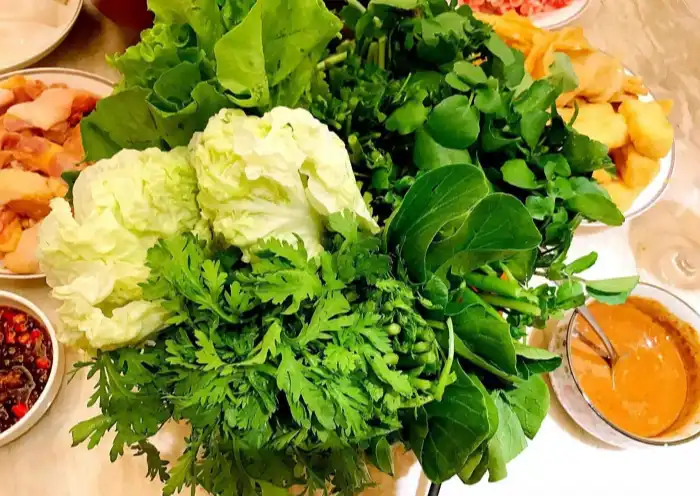
Counter richness with freshness. Napa cabbage, spinach, and chrysanthemum leaves bring crispness. Mushrooms add substance without meat. Don’t overlook lotus root’s crunch or tofu’s amazing broth-soaking ability.
The Finishing Touch
Save noodles for last, when the broth has absorbed all the meal’s flavors. Glass noodles turn slippery and glorious; wheat noodles swell with goodness. Rice cakes offer chewiness, while plain steamed rice provides comfort.
Your Sauce, Your Rules
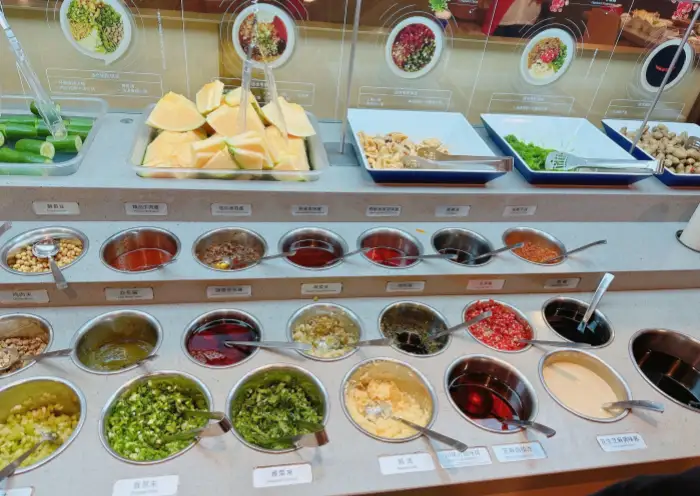
This is where personality shines. Most places set up sauce stations with endless combinations. Northerners lean toward sesame paste with fermented tofu. Sichuan locals might choose sesame oil with garlic. Southerners often prefer sha cha sauce with soy and chili. Mix, taste, adjust – it’s your culinary signature.
How to Eat Hotpot: A Step-by-Step Guide
Step 1: Choose Your Broth
Your first choice shapes the whole meal. Do you want spicy Sichuan, mild Beijing, or a split yin-yang pot? This foundation determines everything that follows in your authentic Chinese hotpot experience.
Step 2: Pick What Goes in the Pot
Start with the things that take patience—potatoes, lotus root, fish balls. They need time, and they help the broth find its rhythm. Once they’re nearly ready, drop in the meat. Thin beef or lamb cooks in seconds; blink and it’s done. Seafood, too—shrimp, fish, squid—doesn’t need much convincing to turn tender. Greens come last. They wilt fast and taste best when fresh. Don’t crowd the pot. Cook a little at a time. The soup stays clear, and the table feels calmer for it.
Step 3: Build Your Sauce
This is where you get to improvise. Most people start with sesame paste or soy sauce, then go from there. Garlic for bite, scallions for freshness, chili oil if you like heat, a splash of vinegar if you don’t. Some make theirs strong and thick, others light and clean. It’s less a recipe than a mood. The best sauce is the one that makes you keep dipping.
Tips for First-Time Hotpot Eaters
- How to order: Ordering isn’t hard. You’ll get a checklist; tick what looks good. Staff are used to first-timers—ask if you’re unsure.
- Hotpot buffet vs traditional restaurant: Buffet-style spots are fun if you want variety and noise. Traditional restaurants tend to be quieter, the meat better, the pace slower. Both have their charm.
- Must-try items for beginners: If it’s your first time, keep it simple. Sliced beef, tofu, napa cabbage, mushrooms—hard to go wrong with those. Let the pot do the work. Hotpot isn’t about showing skill; it’s about the warmth of the table, the steady chatter, and food that somehow tastes better because you cooked it together.
Making Hotpot at Home – Easy Recipe
You don’t need to go to a restaurant to enjoy hotpot. The setup is surprisingly simple.
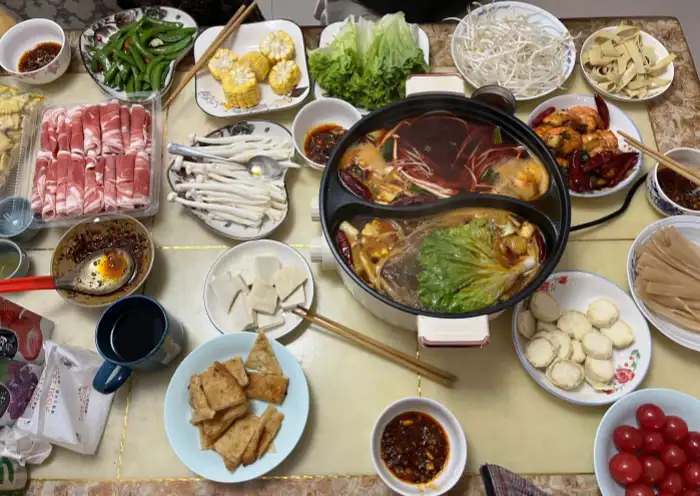
The basics: a portable burner, a wide pot, and friends around your table. Buy broth bases from brands like Little Sheep. Gather pre-sliced meat, assorted veggies, tofu, and noodles. Bring the broth to a boil and let the cooking – and connecting – begin.
For an easy hotpot recipe, start with a quality store-bought base and customize with your favorite fresh ingredients. The key to successful homemade hotpot is preparation—having everything sliced and ready before everyone sits down to eat.
FAQs about Chinese Hotpot FAQ
Is hotpot genuinely Chinese?
Yes. While communal cooking exists elsewhere, China defined the modern hotpot. Its complex broths—from Sichuan’s fiery ma la to Beijing’s clear broth—and the shared dining ritual have been refined here over generations. This is where eating from a simmering pot became both a meal and a social tradition.
Can it be a healthy choice?
Easily. The format encourages balance: load up on greens, mushrooms, and lean proteins. Go light on oily broths and heavy sauces. You decide what goes into your bowl—making it as light or as hearty as you wish. Many start by sipping the plain broth, enjoying its clean taste before the cooking begins.
How long should ingredients cook?
Keep it simple. Thin meats need just 15-30 seconds. Leafy greens wilt in under a minute. Root vegetables like radish or potato require 2-5 minutes. Servers are used to guiding newcomers—don’t hesitate to ask.
What’s the ideal cooking order?
Begin with root vegetables to build a flavorful base. Follow with meats and seafood to enrich the broth. End with leafy greens and noodles, which absorb the now-rich soup. This sequence ensures each ingredient shines and the broth deepens throughout the meal.
Is it a single dish or a style of dining?
It’s a style—an interactive experience. The pot and broth set the stage, but the meal is shaped by your choices. That’s why each hotpot gathering feels personal and unique.
Any tips for first-timers?
Start with a yin-yang pot to sample multiple broths. Stick to basics like sliced beef, tofu, napa cabbage, and mushrooms—all forgiving and delicious. Experiment with sauces until you find your mix. There’s no single “right” way—exploration is part of the fun.
Join China Xian Tour for an Authentic Hotpot Experience
Reading about hotpot is one thing; experiencing it in China changes your perspective. China Xian Tour doesn’t just show you sights – we bring you into kitchens where generations have perfected their recipes. Joining a cooking class, learning a family’s hotpot secrets, visiting a local cuisine museum…, our China food tours offer not only tasty and authentic food but also exclusive food cultural activities. Follow our guides to back-alley spots where locals queue for hours.
Whether you prefer fiery Chongqing cauldrons or elegant Beijing copper pots, you’re not just eating – you’re participating in a living tradition. So pull up a stool, grab your chopsticks, and join the circle. The pot’s waiting, and the best stories emerge when everyone cooks together.