
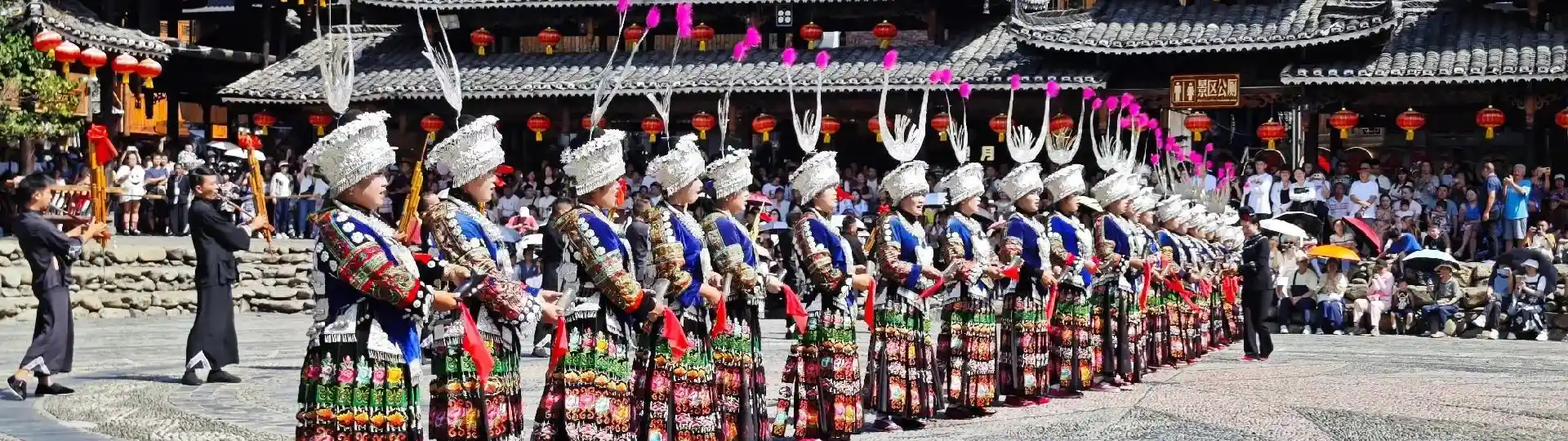
The Miao people are one of 56 officially recognized ethnic groups in China. It is also one of the largest ethnic groups in China. With a thousand years of history, the Miao ethnic group is famous for its vibrant culture, exquisite crafts, and deep connection with its ancestors.
The Miao ethnic group is primarily distributed in the South and Southwest China. There are about 11 million Miao people in China, according to the 7th national population census. Eighty percent of their population is concentrated in Guizhou (4.51 million), Hunan (2.03 million), and Yunnan (1.25 million). Other areas of their residence include Sichuan, Guangxi, Hubei, and Chongqing.
Consider planning a China tour to one of these destinations if you want to experience the culture and life of the Miao ethnic group. Before the tour, you can follow this guide to get an insight into their traditional life, festivals, customs, arts, architecture, etc.
Content Preview
- Basic Facts about Miao People in China
- Miao History and Origins
- Miao Language
- Traditional Miao Clothing
- Miao Festivals
- Miao Architecture
- Miao Art and Craftsmanship
- Miao Food – Sour, Spicy, and Smoky Flavors
- Miao Religion and Beliefs
- Miao Ethnic Minority Population Distribution
- Where to Experience Miao People’s Culture and Life
- Travel Tips for Visiting Miao Communities
- FAQs about Miao Ethnic Group
- Contact China Xian Tour to Plan Your Guizhou Ethnic Culture Tour
Basic Facts about Miao People in China
- Miao people population in China: Over 11 million (according to the 7th national population census and one of the largest ethnic groups in China)
- Primary distribution areas in China: Southern and Southwestern areas of China, such as Guizhou, Hunanm and Yunnan.
- Language: Xiangxi, Qiandong, and Chuanqiandian.
- Religious beliefs: Primarily animism and ancestor worship.
- Main festivals: Miao New Year, Lusheng Festival, and Sisters’ Meal Festival.
- Historical name: San Miao (三苗), Jing Chu (荆楚), Jing Man (荆蛮), Nan Man (南蛮)
Miao History and Origins
The origin of the Miao people dates back to the Neolithic era in the Yellow and Yangtze River regions when they were called San Miao (三苗). Shih Chi (Records of the Grand Historian) mentions that they inhabited the middle and lower Yangtze River over 4,000 years ago. The Miao ethnic group considers Chiyou as their heroic ancestor, a leader with wisdom and power as well as a symbol of strength and resistance.
Then the Miao people began their long and arduous southward migration. It was forced by the conflicts with Chinese dynasties starting from the Qin and Han dynasties. What’s worse, the expansion of the dynasties and the increase of the Han population squeezed them out of the fertile lowlands. Therefore, they gradually settled down in remote and southwestern highlands.
Now the Miao people not only preserve their culture but become worldwide for their cultural identity. They don’t have a universally used writing system, so the history, laws,and cosmology are passed down with oral epics, ancient songs (hxak), and legends from generation to generation.
Their clothing is a language worn on the body, the specific patterns, colors, and styles being their ID card. The Miao ethnic group still maintains a strong social structure based on clans and village elders. They offer social support within their community and also learn from neighboring groups such as the Han and Dong.
Miao Language
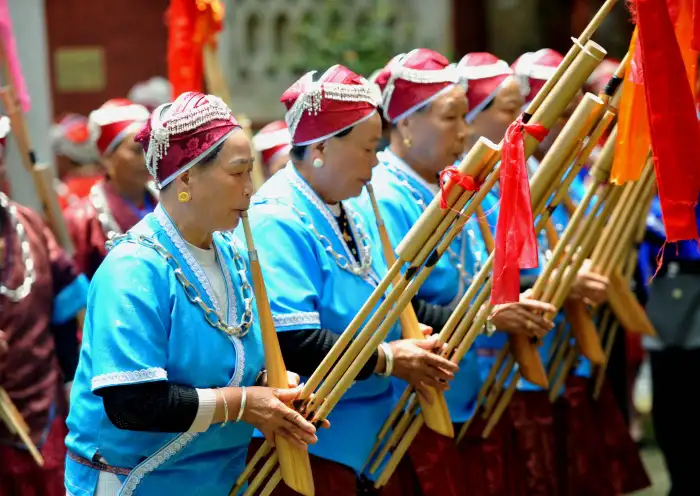
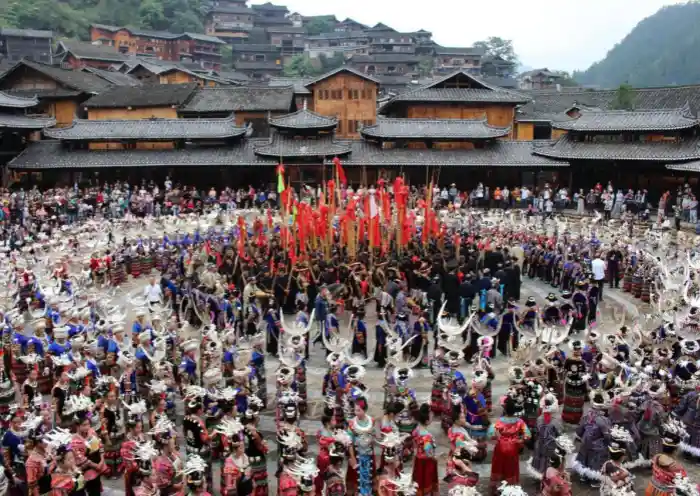
The Miao language belongs to the Hmong-Mien branch of the Sino-Tibetan language family. There are three major dialects, Xiangxi, Qiandong, and Chuanqiandian.
Xiangxi (Eastern Dialect)
Population: Approximately 1 million people.
Area: Xiangxi Tujia and Miao Autonomous Prefecture, Hunan Province and its surrounding areas.
Characters: A simpler tonal system.
Qiandong (Middle Dialect)
Population: Over 2 million people.
Area: Southeastern Guizhou and some areas of Guangxi.
Characters: Complex phonology.
Chuanqiandian (Western Dialect)
Population: Over 3 million people.
Area: Sichuan, Guizhou, and Yunnan provinces.
Characters: Tone sandhi. This dialect is also spoken by the Hmong diaspora in Vietnam, Laos, Thailand, the United States, and France. It has several sub-dialects, such as Hmong Daw (White Hmong) and Hmong Njua (Green Hmong).
Traditional Miao Clothing
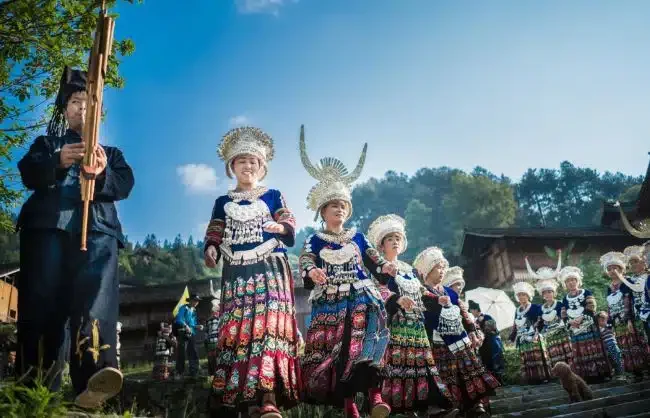
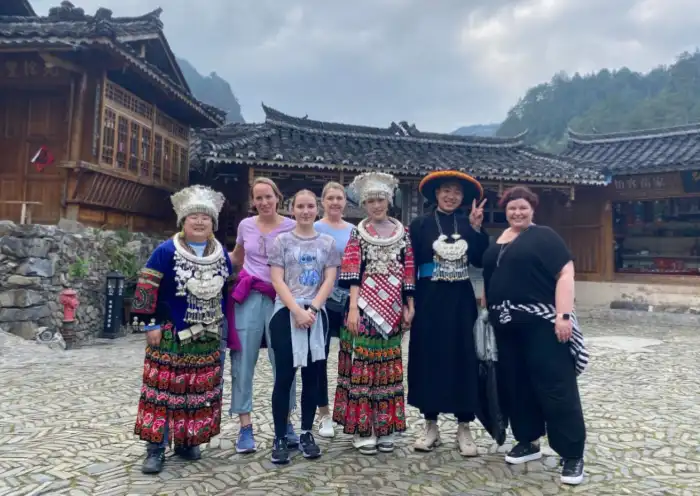
The Miao clothing is a symbol of the Miao people and tourists are full of admiration for the exquisite workmanship. The attire contains two main parts, the textile base and the silver ornaments.
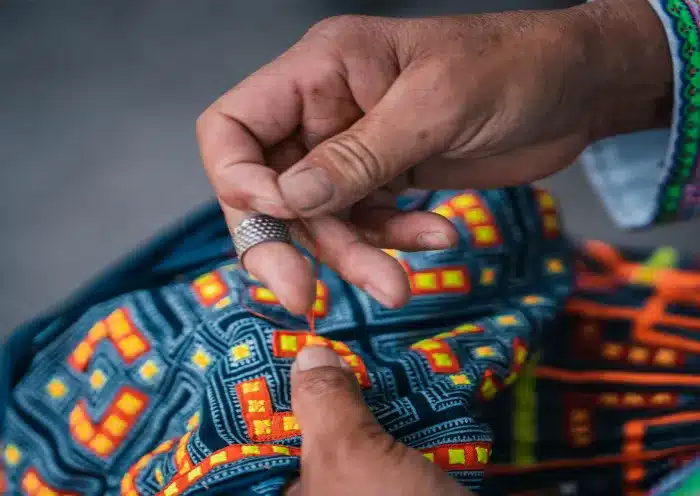
The traditional embroidery is used to make the attire. It is full of complicated stitches, including cross-stitch, appliqué, and chain stitch, which is often passed down from mother to daughter. The patterns on the attire are different, like butterflies, dragons, oxen, and geometric patterns.
The Miao people use batik to dye the clothing. They draw the patterns on white clothes with hot wax and dye in indigo vats. The waxed parts can resist the dye, forming a beautiful blue-and-white shape. Finally, the wax is boiled off and the pattern is revealed.
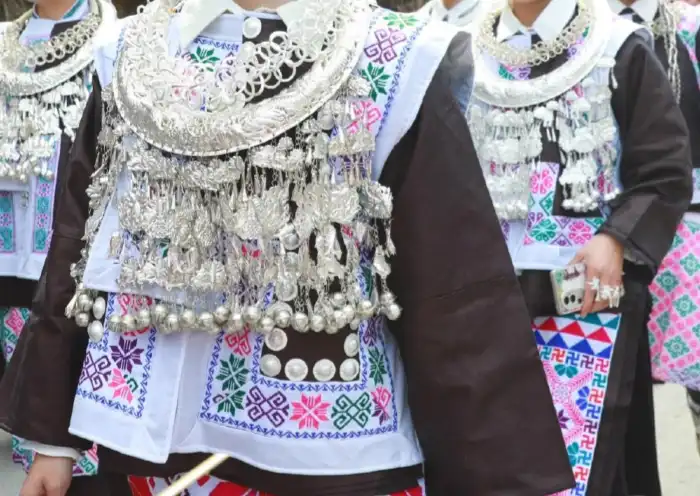
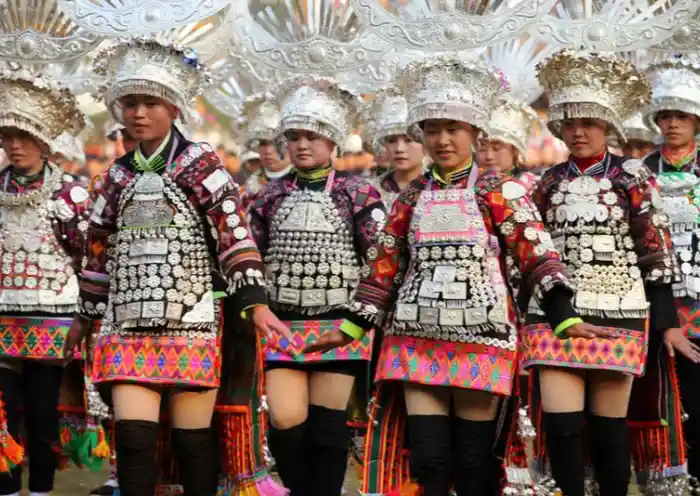
With a silver ornament, the attire can weigh over 10 kilograms. The headdress is often shaped like horns, phoenixes, and floral motifs. The neck is surrounded by large and layered silver rings. A wide silver piece covers the chest and back. Other silver ornaments include hairpins, earrings, bracelets, and belts.
The silver, for Miao people, is a symbol of wealth and status. They believe that silver can ward off evil spirits and diseases. Miao people often wear the attire in big events like weddings, festivals, and rituals and funerals.
Recommend tour: 5 Days Guizhou Miao and Dong Minority Tour
Miao Festivals
The New Year of the Miao
It is the most important and famous festival, equivalent to the Spring Festival (Chinese New Year) for the Han Chinese. It is held after the autumn harvest and the annual farm work is finished. The festival is celebrated to honor their ancestor Chiyou, to rejoice the harvest after one year’s hard work, and to pay tribute to the ancestors and nature. It is also a festival for family reunions and neighbor visits.
There is no fixed date. It falls in the ninth, tenth, or eleventh lunar month every year and lasts three days. The activities include the Lusheng dance, bullfighting, horse racing, and treading on the flower mountain.
Lusheng Festival
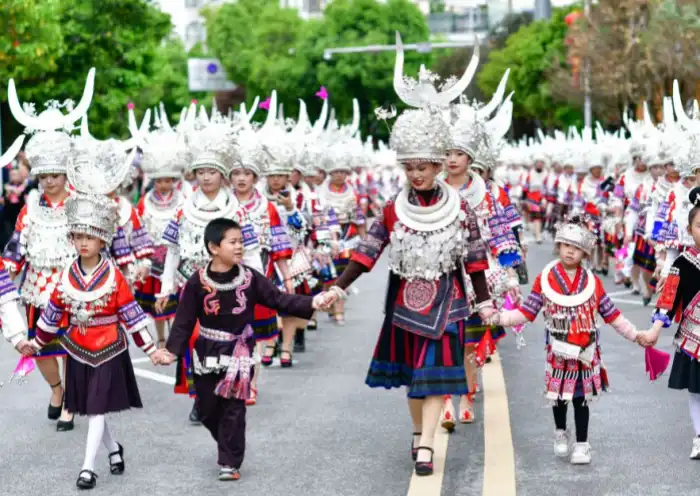
While the Miao people play the Lusheng in every festival, the Lusheng festival is the center for Lusheng performance. The date varies in different locations. Some hold it on the 27th day of the 9th lunar month and some on the 15th day of the 8th lunar month.
There is a grand Lusheng parade with the Miao people dressed in their traditional attires. The villages compete with each other in forms of horse racing and Lusheng Poles climbing. People dance and sing together and the unmarried young value this festival as an opportunity for courtship.
Sisters’ Meal Festival
This festival is held between the 15th and the 17th of the third lunar month and it is to celebrate the emotional exchange and social activities between the young men and women. It is popular in Taijiang County, Guizhou Province.
The unmarried young women gather together to prepare colorful glutinous rice with natural pigments from plants. They put the colorful rice in bamboo baskets and offer it to young men they are interested in.
The women, dressed up elaborately, gather at the drum court to play the drums. It is a way for the Miao people to showcase their dress culture. The young men and women sing romantic songs in a form of Duige and go to the fields to catch fish and shrimp.
Related reading: Top Guizhou Ethnic Festivals
Miao Architecture
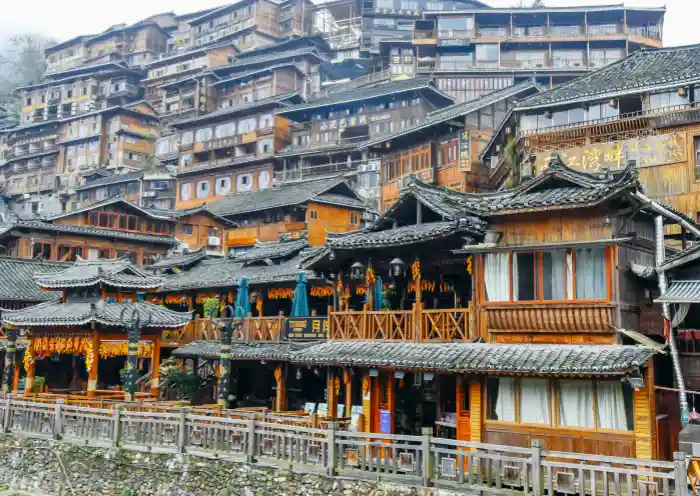
The Miao architecture is featured with a wood structure and its good adaptation to mountainous terrain. The most famous structures are the stilted wooden houses (Diaojiaolou) and the drum towers.
The Stilted Wooden House (Diaojiaolou)
The stilted wooden houses (Diaojiaolou) are made from a complicated mortise-and-tenon joint structure without the use of nails. They are often built on steep slopes. Taking advantage of the natural slope, the front part of the house is suspended on the wooden stakes and the rear is on the ground. This structure can avoid the flood and provide stability.
Normally, there are two or three stories. The ground floor is for storing stocks and for storing firewood. The second floor is the main living area. A hearth is put in the center of the floor for cooking. The loft covered with grey tiles is used for storing grain and food.
The Drum Tower
The drum towers are often used for the elders to discuss village affairs, solve conflicts, and make important decisions. Festivals, rituals, and welcoming ceremonies are held there. Each family in the village makes a contribution to the building and maintenance of the tower. Therefore, the drum towers are symbols of village unity.
It features a pavilion-style. The floor number is always an odd number, which is considered auspicious. Like the stilted wooden houses, drum towers use a complicated system of interlocking beams and pillars without nails. The upward-sweeping roof symbolizes the connection with heaven.
Architecture in Ancient Villages
Due to the history of migration, the ancient villages were made to protect the villagers and get resources, like a fortress. The villages of the Miao now sit against the mountains and face the water. A bridge or a simple door stands at the entrance of the village. There are narrow and complex valleys. The houses are interconnected closely.
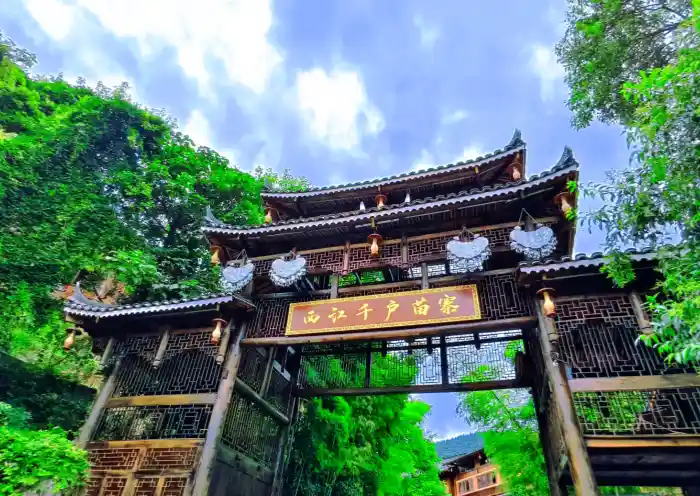
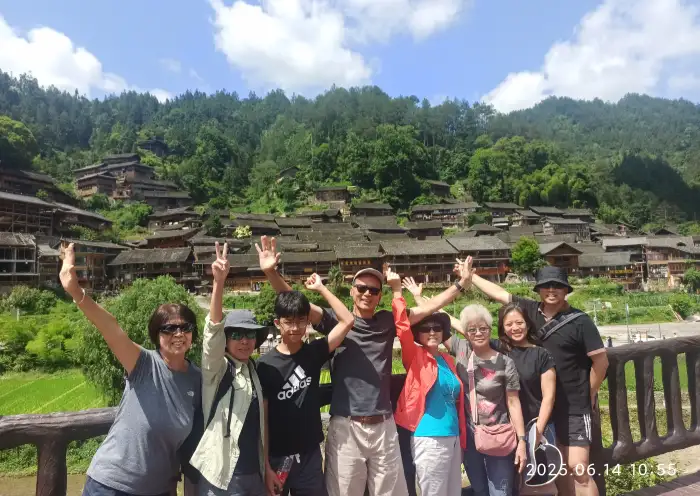
One of the most famous and largest Miao villages is the Xijiang Qianhu Miao Village, located in Guizhou Province. Like its name, there are over a thousand stilted wooden houses in this village. They are built on two steep mountains, divided by a river.
This breathtaking village is a living museum of Miao culture. Tourists can enjoy traditional songs, dances, and Lusheng performances there. Embroidery, silverwork, and batik can also be experienced.
Suggested tour: 6 Days Guizhou Tour with Qianhu Miao Village
Miao Art and Craftsmanship
Miao Textile
The textile is often made with indigo dye. The Miao people grow their indigo plants and ferment them with ash, lime, and rice wine in a vat. The textile is dipped in the ferments dozens of times and pounded with wooden mallets to maintain the color.
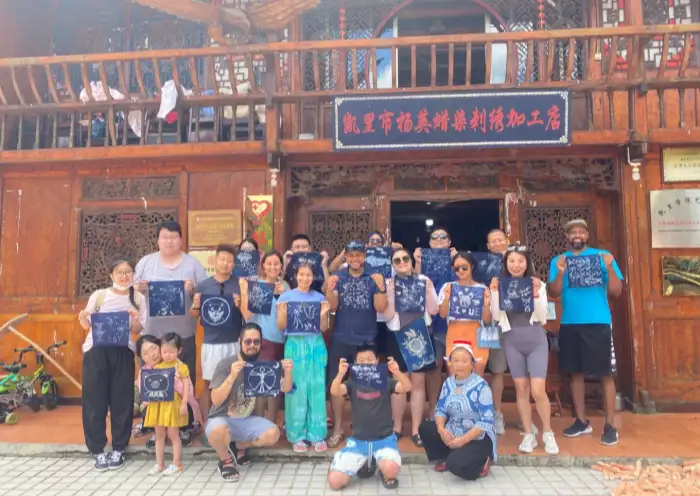
Batik is another method to make textiles with a copper-tipped pen. People draw patterns with wax on white clothing and dye the clothing in the indigo vat. The wax can resist the dye. So when the wax is boiled off, the white part can still be preserved.
Embroidery
Miao embroidery is a complicated handicraft. The embroidery in Xiangxi features bold animal and plant patterns and uses bright and contrasting colors. The one in Qiandong uses dense stitching and is marked with dragons, phoenixes, and butterflies. The type of Chuanqiandian is often simple with geometric cross-stitch patterns.
Silverwork
The techniques of silverwork are different. Figures on a headdress are often cast for solid purpose while the chest and collar pieces are hammered. Filigree is the most exquisite technique for intricate lace-like patterns. The silver is believed to ward off evil spirits and the brilliant flash symbolizes the moon and stars.
Miao Food – Sour, Spicy, and Smoky Flavors
Miao food is full of sour, spicy, and smoky flavors mainly because of the humid and mountainous environment. The Miao people often maintain their food with the methods of fermentation, strong spices and smoke. The food becomes sour in a brine-filled pottery jar and the pickles in this method are the most delicious cuisine.
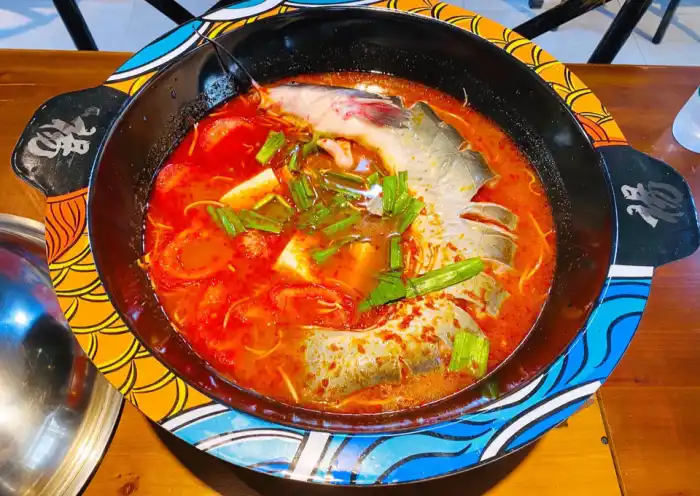
- Sour Fish Soup: The fresh fish is cooked in the bubbling soup made from fermented rice or tomatoes with wild cherry tomatoes, chili, and various herbs.
- La Rou (Smoked Meat): The pork is cured with heavy salt and Sichuan pepper. Then it was smoked for weeks or even months with pine and cypress wood. The hard and dark red pork is often fried with vegetables.
- Sticky Rice Cakes (Ciba): The glutinous rice is steamed and pounded in a large mortar until it becomes a smooth and elastic dough. Ciba can be grilled, fried, boiled, and eaten fresh.
- Blood Pudding: It is a unique sausage made with pig or duck blood, sticky rice and seasonings. The Miao people often fry it to crispy on a pan. You may be inadaptable to it at the initial attempt.
Miao Religion and Beliefs
Animism
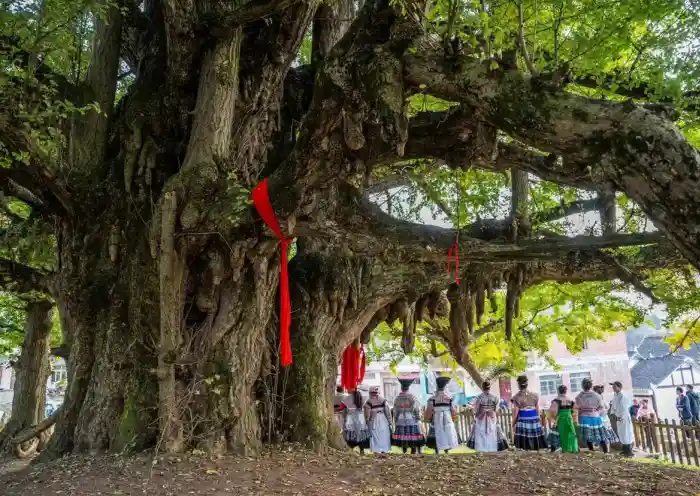
The Miao people believe that spirits live in all things. The natural landscape is considered as home to powerful spirits, like ancient trees, rivers, rocks, and mountains. They build a kinship with the natural world.
Ancestor Worship
The Miao people believe that the deceased family members live in a spirit world and they can protect and guide the living. So the Miao often sets altars in their homes and make offerings to their ancestors in big festivals.
Shamanism
The Miao people believe a shaman can heal diseases, which is attributed to the soul loss. The shaman can travel to the spirit world and guide the lost soul back. A shaman is also believed to predict the future and ward off calamity.
Miao Ethnic Minority Population Distribution
The following table lists 10 provinces with the largest distribution of the Miao ethnic group, from the most to the least.
Province |
Population |
Guizhou |
4,507,000 |
Hunan |
2,027,000 |
Yunnan |
1,253,000 |
Guangdong |
613,000 |
Guangxi Zhuang Autonomous Region |
578,000 |
Zhejiang |
569,000 |
Chongqing |
513,000 |
Hubei |
214,000 |
Sichuan |
183,000 |
Fujian |
169,000 |
Where to Experience Miao People’s Culture and Life
A Guizhou tour should be the ideal choice to experience the authentic life and culture of the Miao people as it is the home to most Miao villages in China.
Xijiang Qianhu Miao Village
- Location: Leishan County, Qiandongnan Miao and Dong Autonomous Prefecture of Guizhou Province
- Best time to go: March – May/ September – November
- Time needed: 2 to 3 days
- Top things to do: natural view/ traditional songs and dances/ beautiful Xijiang Performance
- Ticket: 110 CNY
The village itself offers a beautiful natural landscape. At the top of the village, you can enjoy the panoramic view. You can also try the Miao attire and take photos. Traditional silver making can be experienced there.
Langde Miao Village
- Location: Leishan County, Qiandongnan Miao and Dong Autonomous Prefecture of Guizhou Province
- Best time to go: March – May/ September – November
- Time needed: 4 to 5 days
- Top things to do: Block-the-Way Ceremony/ Lusheng performance
- Ticket: 60 CNY
This village is more rustic and you can experience the hospitality of the Miao people. It is divided into the lower and upper parts. You can buy tickets at the lower and take a tourist bus directly to the Upper Langde Village because most cultural buildings are at the upper.
Basha Miao Village
- Location: Congjiang County, Qiandongnan Miao and Dong Autonomous Prefecture of Guizhou Province
- Best time to go: March – May/ September – November
- Time needed: 1 to 2 days
- Top things to do: welcome ceremony/ unique hairstyle of Basha men
- Ticket: 62 CNY
Basha village has a profound reverence for nature. You can appreciate ancient trees there. The Basha men shave the hair around the top of the head and leave the middle hair. It is a good opportunity to observe it at close range.
Shiqiao Miao Village
- Location: Danzhai County, Qiandongnan Miao and Dong Autonomous Prefecture of Guizhou Province
- Best time to go: April – June/ September – November
- Time needed: 1 to 2 days
- Top things to do: ancient papermaking/ limestone bridge
- Ticket: Free
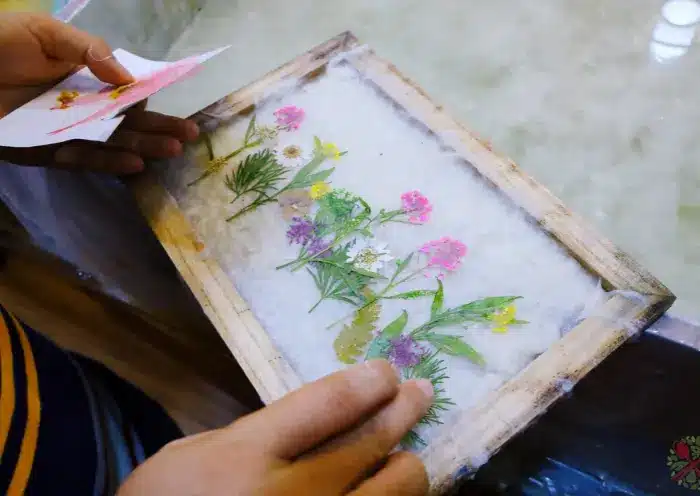
It is a place where the white paper is made and it is the hometown of ancient papermaking in China. You can experience papermaking by yourself and buy local handiwork made from paper.
Popular tours including these Miao villages:
9 Days Guangzhou, Guilin & Guizhou Nature and Culture Tour
9 Day Guizhou and Guilin In-depth Tour with Ethnic Villages
Kong Shen Miao Village
- Location: Rongjiang County, Qiandongnan Miao and Dong Autonomous Prefecture of Guizhou Province
- Best time to go: the third lunar month
- Time needed: 1 to 2 days
- Top things to do: the Short Skirt Miao
- Ticket: Free
This village is famous for the traditional short skirt costume, which is the shortest traditional attire in China. You can experience the traditional weaving techniques there.
Jiuji Miao Village
- Location: Jianhe County, Qiandongnan Miao and Dong Autonomous Prefecture of Guizhou Province
- Best time to go: April – May
- Time needed: 1 to 2 days
- Top things to do: traditional buildings/ ancient terraced fields
- Ticket: Free
It is a place for you to experience the agricultural development of the Miao ethnic group. You can enjoy the beautiful landscape and the terraced fields.
Travel Tips for Visiting Miao Communities
- Respect Local Traditions and Customs: Most villages have the Block-the-Way Wine Ceremony. You don’t have to finish it but it is advisable to take a little sip. You should ask for permission before taking photos.
- Visit During Festivals for a Unique Experience: Festivals can offer the most enjoyable experience.
- Support Local Crafts and Products: Miao crafts are exquisite and unique. You can consider buying some from local people.
- Travel with a Local Guide: Local guides are often familiar with the Miao culture. This can maximize your experience.
FAQs about Miao Ethnic Group
Where do the Miao people live?
They live in the southern and southwestern areas of China.
Are Miao people Chinese?
Yes, the Miao people are officially recognized as one of the 56 ethnic groups in China. Most of the aMiao people reside within China.
What is the religion of the Miao people?
Animism and ancestor worship.
What is Miao culture known for?
They are known for exquisite craftsmanship, vibrant festivals, and unique architecture.
Are all Miao people Hmong?
All Hmong are Miao, not all Miao are Hmong.
Contact China Xian Tour to Plan Your Guizhou Ethnic Culture Tour
Ready to experience the culture of the Miao people? Don’t hesitate to contact China Xian Tour to plan your immersive and in-depth tour. Our professional travel consultants are more than happy to introduce you more detailed information about the Miao people and insider tips for Guizhou travel. Our local guides are all local residents who know the Miao villages and customs inside out. They are always ready to help you create memorable experiences in the Miao villages and guide you to explore more natural and cultural treasures in your destinations. All the logistics, such as land transport, accommodation booking, attractions reservation, are all taken care of to ensure you a hassle-free experience.