
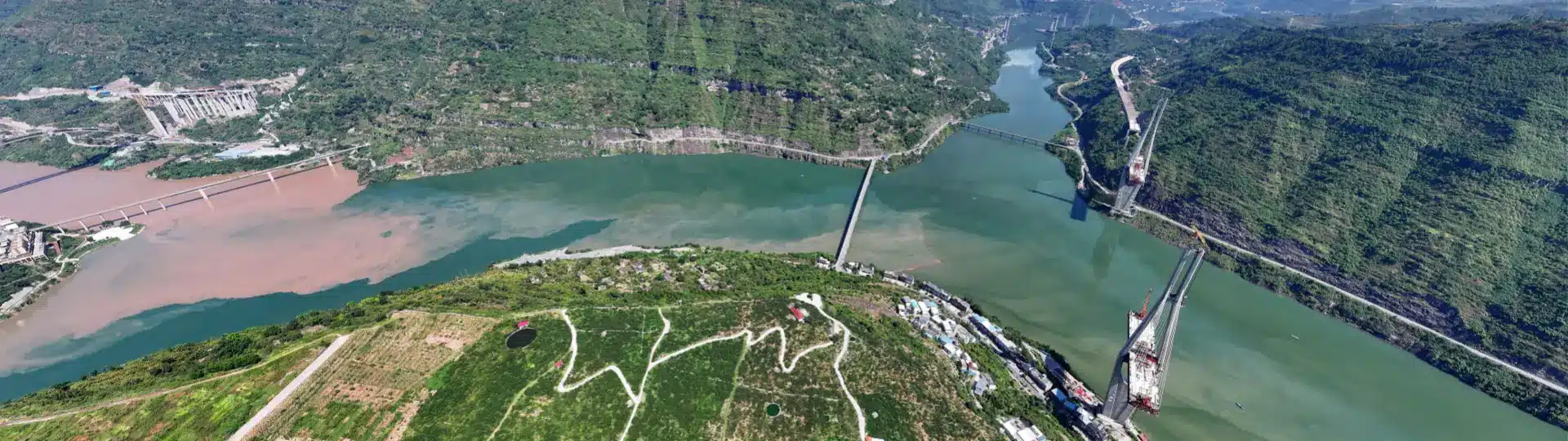
Anybody who’s thought of visiting China has probably considered taking a Yangtze River cruise… But what makes the river famous and so worth visiting? Well, as it turns out, a lot. First of all, it’s length. It’s the longest river in Asia. Secondly, it’s cradle of Chinese civilization. You can still see how its grand power constantly brought influence on the nation. And later, the construction of Three Gorges Dam has made its name even familiar with people around the world.
Therefore, the river is hugely important, both locally and globally, with incredible nature, huge cultural and historic significance, and more.
Still not convinced? Here are 20 Yangtze River facts that’ll make you understand why the river is so popular among locals and tourists alike.
Content Preview
- 1. It’s One of the World’s Longest Rivers
- 2. The River is the Cradle of Chinese Civilization
- 3. Overfishing and Ecological Efforts in the Yangtze River
- 4. The Yangtze is Home to Critically Endangered Dolphins
- 5. It Has Over 700 Tributaries…
- 6. …And Crosses 11 Provinces
- 7. Its Source is in the Qinghai-Tibet Plateau
- 8. A River of Many Names
- 9. It’s Sacred in Chinese Mythology and History
- 10. It’s Elevation Drops Dramatically
- 11. The Yangtze River Boasts the World’s Largest Hydropower Station
- 12. It’s Served as Major Transportation Route for Thousands of Years
- 13. Over 50% of China’s Ethnic Groups Call it Home
- 14. The River is Home to Diverse Natural and Cultural Wonders
- 15. The Chongqing–Yichang Route is the Most Popular for Yangtze Cruises
- 16. The River’s Delta is an Economic Powerhouse in China
- 17. The River is Host to Incredible Cultural Heritage
- 18. There’s a ‘Ghost City’ Along Its Banks
- 19. The Yangtze River is China’s Granary
- 20. Its Valleys are Susceptible to Summer Floods
- Enjoy Your Yangtze River Cruise Voyage with China Xian Tour!
1. It’s One of the World’s Longest Rivers
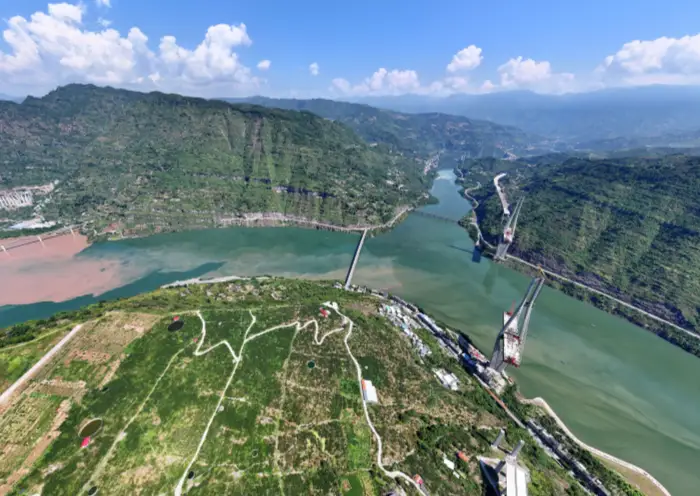
One of the most interesting facts about the Yangtze River is that it isn’t just the longest river in China, it’s also the longest river in Asia and the third longest river in the world just behind the Nile and the Amazon. At 6,300 km long, it’s no wonder so many tourists choose to take a cruise down it – it’s a great way to see a lot of China in a short amount of time!
So, how much water does the Yangtze River discharge each year? Every year it will release 960 billion m³ of water to the East China Sea. And a lot of regions’ agriculture or economy have been benefited from the river’s large flow.
Also curious about what the average depth and width of the Yangtze River are? On average, it’s about 30 meters in depth. But it’s hard to give an accurate number about it’s width as it never stops changing along the journey. Sometimes the riverway can be as narrow as a few hundred meters, and sometimes it would be several kilometers.

Suggested Tours:
- 4-Day Chongqing Tour with Yangtze River Cruise
- 6-Day Xian and Yangtze River Cruise Tour
- 12-Day Beijing Chengdu Yangtze River Shanghai Tour
2. The River is the Cradle of Chinese Civilization
Another fun fact about the Yangtze River is that it’s the birthplace of Chinese civilization. It was home to a variety of thriving peoples even 5,000 years ago, including the Liangzhu, Shijiahe, and Sanxingdui cultures. Additionally, rice has been cultivated in the region as far back as 10,000 years ago, setting the foundation for the China we know today.
3. Overfishing and Ecological Efforts in the Yangtze River
Did you know that fishing is banned in the Yangtze river and its major tributaries? In 2021, Chinese officials responded to the loss of biodiversity in the area by setting a 10-year fishing ban – and so far, it seems to be working! Native fish are already returning to their native waters.
4. The Yangtze is Home to Critically Endangered Dolphins
A more sad fact about the Yangtze River is that the Baiji dolphin, also known as the Yangtze River dolphin, was declared functionally extinct in 2006 after no dolphins were found during a 6-week survey of the river. Due to their dwindling numbers, the dolphins are likely unable to naturally sustain their population… But there’s still hope, as efforts to revive the population continue and sporadic sightings still occur.
5. It Has Over 700 Tributaries…
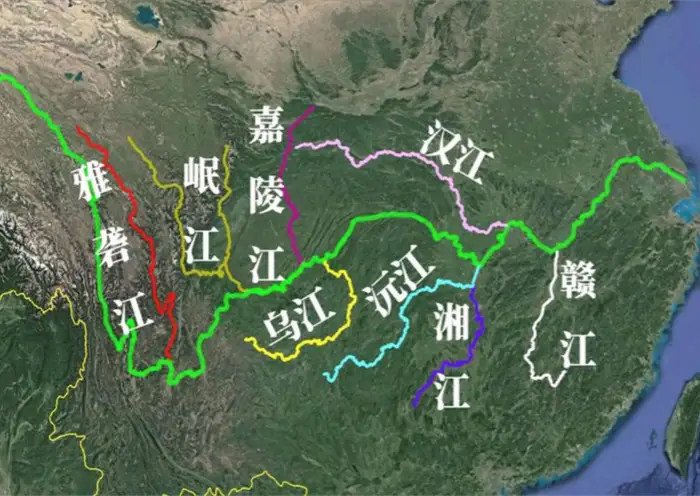
If you’re interested in geography, this fact about the Yangtze River will no doubt catch your eye – it has over 700 tributaries! While the river’s major tributaries are the Han, Jialing, and Min rivers, the entire network that feeds the river is massive, rivaling even that of the Amazon.
6. …And Crosses 11 Provinces
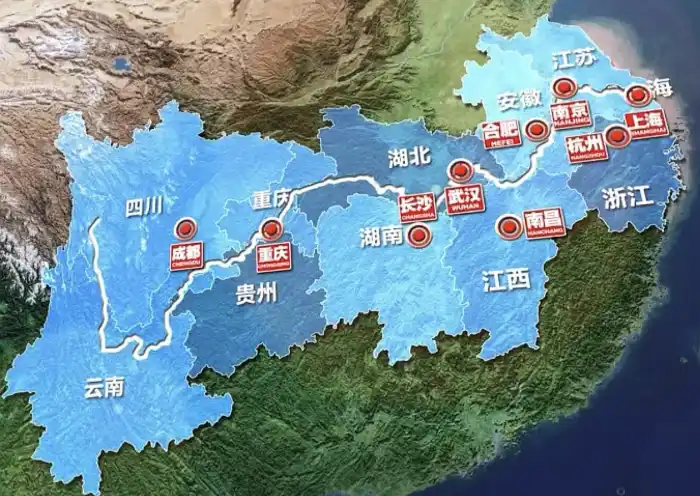
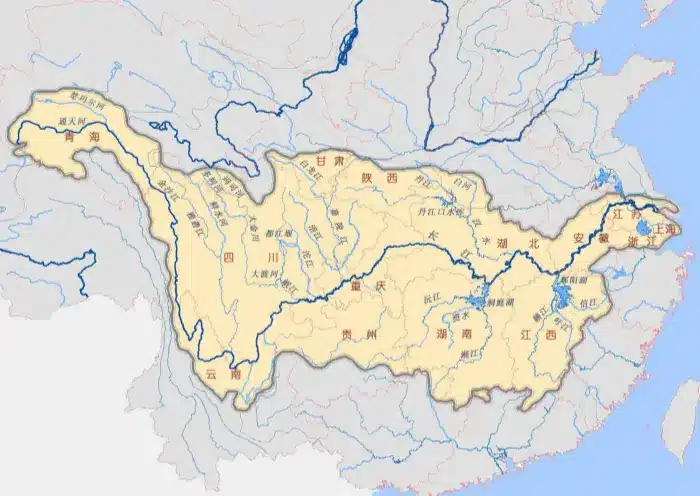
The most fun fact about the Yangtze River for tourists is just how much of China it covers. With sections of the river passing through Tibet, Chongqing, Nanjing, and more before finally ending in Shanghai, Yangtze River cruises from Chongqing to Yichang or Shanghai are the best way to travel if you want to see a good portion of the natural and cultural diversity that China has to offer. >> See the Major Cities and Provinces along Yangtze River
7. Its Source is in the Qinghai-Tibet Plateau
Can you believe this fact about the Yangtze River was only confirmed in the 1970s? Despite the river’s central role in Chinese history and culture, it was only then that they knew for certain that the river originates from a glacier in the Tanggula Mountains. To think that a trickle of melting ice and snow could grow to be something so important!
8. A River of Many Names
While we often call it the “Yangtze River” today, that’s not the river’s only name – in fact, that name originally only referred to a specific ferry crossing in the river. Other names include 长江 (chángjiāng, or “long river), 大江 (dàjiāng, or “big river”), and even sometimes just 江 (jiāng, “river”).
A fun fact about the Yangtze River is, combined with the Yellow River, it’s seen as the cradle of Chinese civilization, though a different word for river is used for each: (江) jiāng for the Yangtze River and 河 (hé) for the Yellow River.
Here’s a list of other regional names for the river and their origins:
Names |
Start and End Points |
Length (km) |
Geographical/Historical Features |
Tuotuo River (沱沱河) |
Southwest side of Geladandong Peak → Nangjibalung (confluence with Dangqu River) |
358 |
Main headstream of the Yangtze River, originates from glaciers in the Tanggula Mountains. |
Tongtian River (通天河) |
Nangjibalung → Yushu Batang River Estuary |
813 |
Tibetan for “River leading to heaven”; flows through the hinterland of the Qinghai-Tibet Plateau. |
Jinsha River (金沙江) |
Yushu Batang River Estuary → Yibin Minjiang River Estuary |
2,308 |
Named for gold sands in its sediment; flows through the Hengduan Mountains with deep gorges and rich hydropower resources. |
Chuanjiang River (川江) |
Yibin → Yichang, Hubei |
1,040 |
Flows through the Sichuan Basin; the section from Fengjie, Chongqing to Yichang |
Jingjiang River (荆江) |
Zhicheng, Hubei → Chenglingji, Hunan (Dongting Lake Estuary) |
337 |
Known as “Nine-Bend Intestines” due to its winding course. |
Chujiang/Wanjiang River (楚江/皖江) |
Chenglingji → Nanjing, Jiangsu |
~700 |
The Anhui section is called Wanjiang. |
Yangtze River (扬子江) |
Nanjing → Estuary (east of Chongming Island, Shanghai) |
~300 |
Used in the West to refer to the entire Yangtze River; named after “Yangzijin,” an ancient ferry crossing in Yangzhou |
Three Gorges Section (长江三峡段) |
Baidicheng, Fengjie, Chongqing → Nanjinguang, Yichang |
193 |
Features Qutang Gorge (majestic), Wu Gorge (elegant), and Xiling Gorge (perilous). |
Yangtze Estuary (长江口段) |
Shanghai → East China Sea |
~120 |
Alluvial deposits formed Chongming Island; confluence of fresh and saltwater. |
Related reading: Yangtze River vs Yellow River
9. It’s Sacred in Chinese Mythology and History
One interesting fact you might not know about the Yangtze River is the prominent place it holds in Chinese mythology. It’s said that the legendary figure Yu the Great’s ability to control the floods of both the Yangtze and the Yellow River allowed him to establish the first Chinese dynasty, while another myth says that the Yangtze River is actually the Long Dragon, trapped under a mountain.
Additionally, the river has been key to Chinese agriculture, military, trade, and more for millennia.
10. It’s Elevation Drops Dramatically
Starting in the freezing Geladandong Mountain in Qinghai at 5,170 meters, the Yangtze River falls all the way to sea level by the time it reaches Shanghai. The over 5,000-meter elevation drop grants it massive water energy potential. Many dams and hydropower stations were thus built at key points along the river to harness this energy.
Thank goodness it’s so long – otherwise, the river cruise might look more like an amusement park ride than a relaxing journey!
11. The Yangtze River Boasts the World’s Largest Hydropower Station
One fun fact about the Yangtze River is that it produces 54 terawatt-hours of electricity per day – that’s enough to power 5.4 million homes for one month, every day! Its amazing generative power is thanks to the famous Three Gorges Dam in Hubei, the largest hydropower station in the world.
12. It’s Served as Major Transportation Route for Thousands of Years
Did you know that the Yangtze River has been hugely important to transportation in China for over 2,000 years? By the time of the Tang Dynasty, it was already carrying over 480,000 tons of grain annually, supporting the entirety of Chinese civilization. As of today, that number has grown to over 4 billion tons of cargo transported every year, making the Yangtze River the busiest inland waterway in the world.
13. Over 50% of China’s Ethnic Groups Call it Home
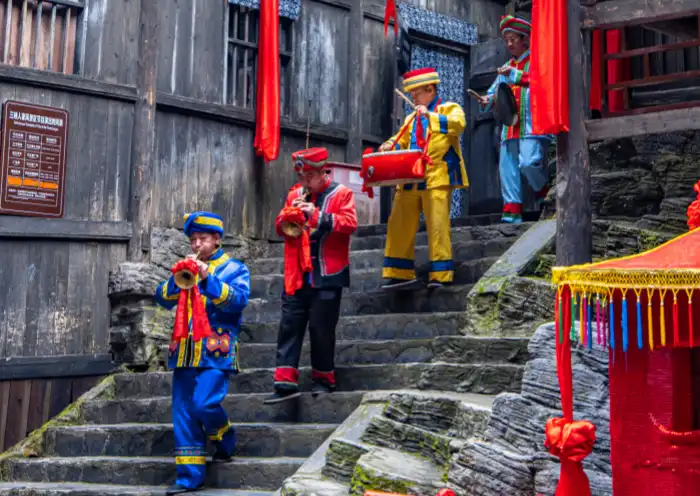
One of the most fascinating facts about the Yangtze River Basin is just how many call it home. From the Naxi of Yunnan to the Tujia of Sichuan and from the Tibetans to the Wuyue people near Shanghai, the Yangtze River is the best place to travel if you want to learn about the diverse ethnic groups in China.
14. The River is Home to Diverse Natural and Cultural Wonders
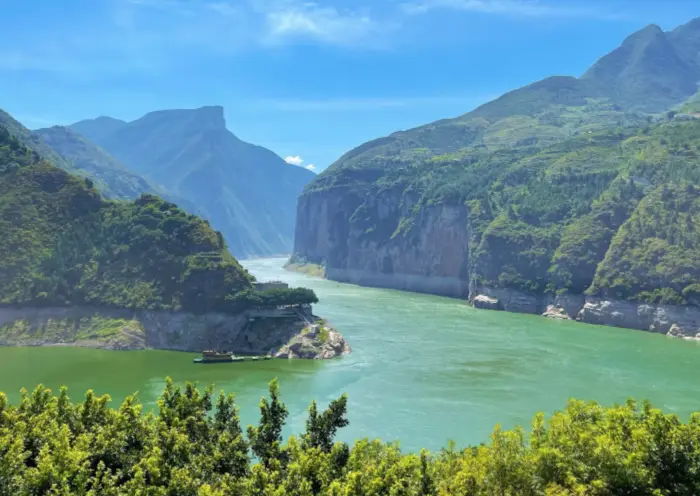
What kinds of landscapes does the Yangtze River pass along the way?
1)The snow-covered plateau.
2)Then gorges and valleys and wide plains.
3)Finally the coastal delta. Along its journey, its water will pass through scenery like rugged mountains or fertile lowlands and wetlands.
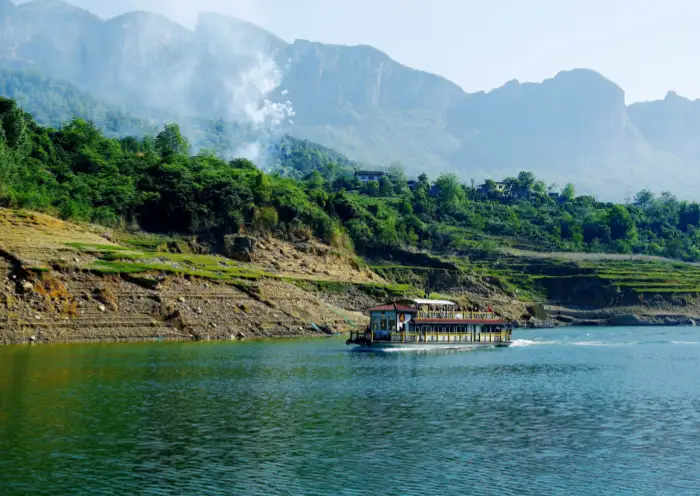
One of the most iconic views of the Yangtze River is the Kui Gate, the “door” to the Three Gorges section which appears on the 10 Yuan note. The whole area of the Three Gorges, which spans 193 kilometers, is also well known for its breathtaking natural landscapes, with steep cliffs and deep gorges. It even shows up in a poem by the famous poet Li Bai, who wrote “a light boat has already passed ten thousand mountains” in reference to the region.
15. The Chongqing–Yichang Route is the Most Popular for Yangtze Cruises
Crossing the Three Gorges Dam region, this cruise offers spectacular views of nature and a variety of fascinating cultural experiences, both on board and at its various stops along the way – the Fengdu Ghost City can’t be missed. While this cruise normally takes 4-5 days between Chongqing and Yichang, extended versions can continue the journey all the way to Wuhan or Shanghai, letting you take in even more of China’s natural beauty.
Keen to know what the main ports are for Yangtze River cruises?
- Chongqing – the main upstream departure city. Especially for luxury 4-5 day cruises.
- l Yichang – the downstream gateway, nearest to the Three Gorges Dam.
- l Wuhan – a central hub for extended Yangtze journeys.
- l Shanghai – where to see the river’s lower reaches and delta.
Suggested Tours:
- 5-Day Yangtze River Cruise Tour from Yichang to Chongqing
- 7-Day Guilin and Yangtze River Cruise Tour
- 13-Day Essence China Tour with Yangtze River Cruise
16. The River’s Delta is an Economic Powerhouse in China
Ever wonder why Shanghai is such an important city in China? Well here’s another fact about the Yangtze River for you: it’s all thanks to its delta! Centered on Shanghai and including parts of Jiangsu and Zhejiang, the delta’s huge importance for trade naturally led to the area’s flourishing economy, leading it to develop into the hugely important economic hub we know it as today.
Any major city located on the Yangtze River except for Shanghai and Chongqing?
- Wuhan – the “Heart of China.”
- Nanjing – an ancient capital.
- Yichang – the gateway to the Three Gorges Dam.
- Jiujiang – the gateway to Mount Lushan and Poyang Lake.
17. The River is Host to Incredible Cultural Heritage
As a main cradle of Chinese civilization, the Yangtze River is home to an exceptionally rich cultural heritage. Human activities along its banks can be traced back to millions of years ago, shaping its cultural history and civilization. According to archaeological discoveries, there are 1,872 national key cultural heritage sites, 52 national historical and cultural cities, and 852 national intangible cultural heritage items found along this mighty river. Major historical sites located or fostered by the river include the world’s earliest rice cultivation sites, Shibaozhai, Fengdu Ghost City, White Emperor City, Yellow Crane Tower, Yueyang Tower, Sanxingdui, and Liangzhu Ancient City.


18. There’s a ‘Ghost City’ Along Its Banks
We teased this earlier in #15, but Fengdu Ghost City deserves a section of its own. Almost 2,000 years old, Fengdu Ghost City was influenced by Buddhist, Taoist, and folk beliefs about death. As a result, the landmark is full of temples and sculptures depicting the traditional Chinese understanding of the afterlife. As fascinating as it is eerie, it’s an unmissable stop on any Yangtze River trip – just don’t let yourself get too scared!
19. The Yangtze River is China’s Granary
How large is the Yangtze River’s drainage basin? The basin is around 1.8 million square kilometers large (nearly one-fifth of the nation’s total land area). And, how many people live in the Yangtze River Basin? Over 400 million people are living here. To understand this number more directly, you can remember it as one-third of China’s vast population.
Winding over 6,300 kilometers, the Yangtze River has many plains along its course, such as the Chengdu Plain, Jianghan Plain, Dongting Lake Plain, and Poyang Lake Plain. All of them are blessed with a warm and humid subtropical monsoon climate, dense networks of waterways, and fertile soil, making them the most productive agricultural areas in China.
According to data, the rice output of Yangtze River’s basins accounts for 70% of the national total. It not only feeds over 400 million local people but also supports food supply of the entire country. Beyond rice, the region is also rich in cotton, rapeseed, and freshwater fisheries.
20. Its Valleys are Susceptible to Summer Floods
As a result of the monsoons common during Chinese summer, the Yangtze River is no stranger to flooding. Historically, the yearly flooding often devastated local populations, destroying crops and taking lives at the same time. Luckily, the Three Gorges Dam now manages the worst of the flooding – while there still are occasional floods, they aren’t nearly as bad as they used to be, and the area is safe to travel in.
Enjoy Your Yangtze River Cruise Voyage with China Xian Tour!
Now that you’ve learned all these interesting Yangtze River facts, why not explore it for yourself with China Xian Tour? Whether you’re looking to float down the Yangtze or hike the Great Wall and whether you want to go to Beijing or Yunnan, our local guides make sure you get the most authentic experience possible. Better yet, if none of our preset tours quite suit your needs, we’re more than happy to customize a tour that gives you everything you’re looking for. So what are you waiting for? Plan your next trip to China with China Xian Tour!