
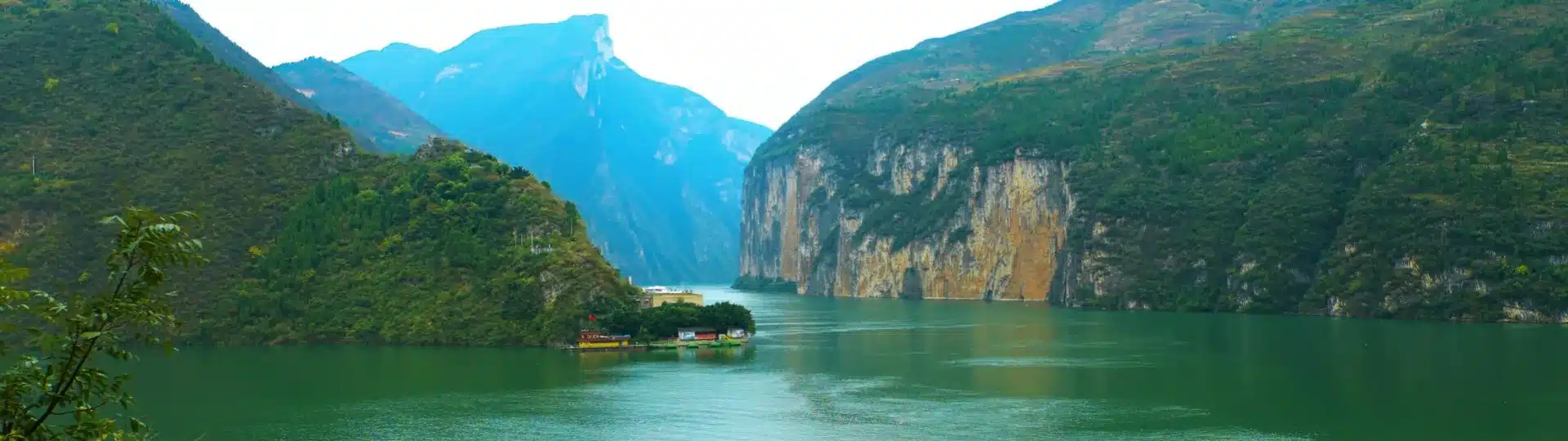
On the vast land of China, time has left its untraceable traces in the stretching ground and roaring rivers. And the Yangtze River, also known in China as the Chang Jiang (长江 / “Long River”), has probably taken the most diverse and heaviest natural, cultural and historical importance. Indeed, it’s far more than just a river, it’s the lifeline of this country. Its passage runs roughly 6,300 km, making it not only the longest river in China but also the longest in Asia and one of the greatest waterways in the world. And its everlasting water has nurtured ancient civilizations in the past and powered modern industry in the present, and with its major effort in shaping both landscapes and cultures, the Yangtze River is certainly a good starting point to understand a huge part of China’s geography, development, and identity. And this article is designed to tell you everything that you may want to know about this great river.
Content Preview
- Yangtze River Location and Basic Facts
- How Was the Yangtze River Formed?
- Yangtze River vs Yellow River Comparison
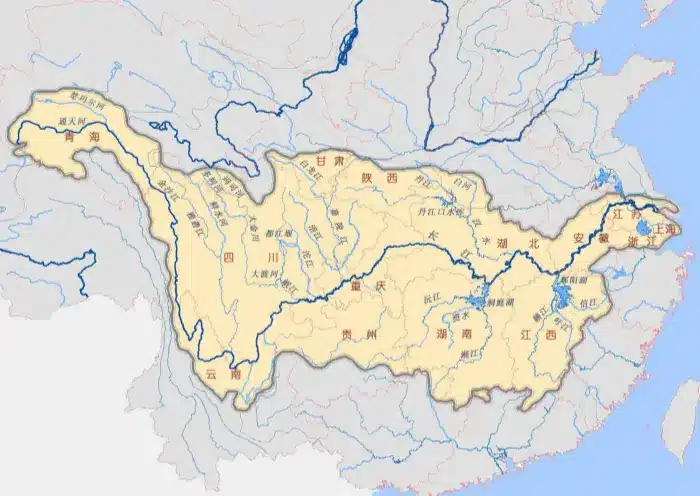
- Three Reaches of the Yangtze
- Major Tributaries and Cities Along the Yangtze River
- Major Cities Along The Yangtze River
- Why Is the Yangtze River Important?
- Traveling the Yangtze River: Cruises and Travel Experiences
- FAQs About the Yangtze River
- Your Unforgettable Yangtze River Cruise With China Xian Tour
Yangtze River Location and Basic Facts
The Yangtze River flows entirely within China. It originates in the Tanggula Mountains on the Qinghai–Tibet Plateau, then winds its way southeastward, passing through a diverse range of landscapes and finally goes into the East China Sea near Shanghai. In China, people would more often call it its standard name 长江 (Changjiang, “长” means long, “江” means river).
By contrast, its English name “Yangtze” actually derives from Yangzi Jiang (扬子江), which is historically an old name that some local people used to refer to a portion of the lower river. Early Western missionaries and traders first arrived in this section of the river and they heard that name, so that they naturally applied it to call the whole river, and gradually, the name stuck.
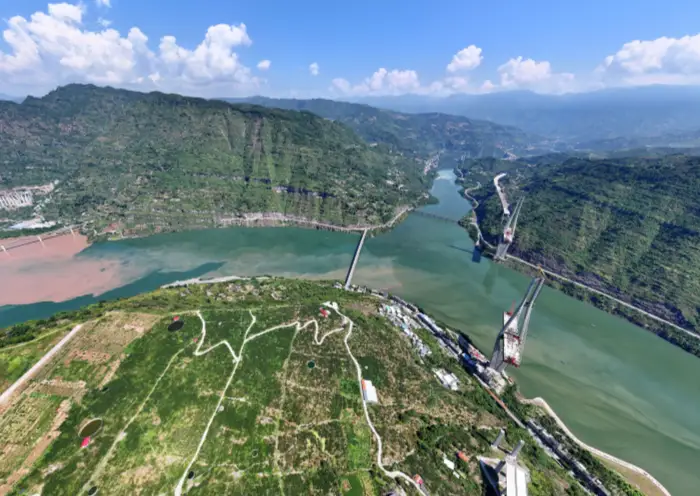

Key Facts & Statistics
- Length: ~ 6,300 km (3,915 miles)
- Drainage Basin: ~ 1,808,500 km²
- Provinces/Regions Crossed: Approximately 10–11
- Ranking: Longest river in China. Longest in Asia. Third longest river in the world (after the Nile and the Amazon).
- Country: China
How Was the Yangtze River Formed?
The Yangtze River originates from the Qinghai–Tibet Plateau. Its historically recognized source is the Tuotuo River, which begins from glacier melt in the Tanggula Mountains. However, nowadays the hydrological study shows that the furthest and longest source of the Yangtze river should be Jari Hill, on the Dam Qu tributary in Qinghai.
Over geological time, tectonic uplift driven by the collision of the Indian and Eurasian plates raised the Tibetan Plateau. This uplift altered topography, creating steep gradients. At the same time, glacial meltwater, erosion, and repeated tectonic motion reshaped scattered highland streams into a single, unified river system.
Research suggests that the modern Yangtze started to form in the Miocene roughly over 16 million years ago, just at the time when the plateau gradually rose. The incision of what has now presented as the Three Gorges began to shape around 2.1 million years ago under the influence of uplift and erosion.
In the upper reaches, dramatic gorges were created by the work of strong uplift and erosion. And when it came into the downstream, the river slowed down its pace, and thus sediments got deposited and gradually they formed the wide floodplains which have long been fertile and rich.
Yangtze River vs Yellow River Comparison
Yangtze River and Yellow River are the two most important rivers in China, both of which play important roles in forming Chinese civilization. The following table is a simple comparison of Yangtze River and Yellow River for your reference.
Aspect |
Yangtze River (Chang Jiang) |
Yellow River (Huang He) |
Location |
Originates from the Qinghai–Tibet Plateau, flows southeast through provinces and empties into the East China Sea. |
Originates from the Bayan Har Mountains, flows through the Loess Plateau and northern provinces, and empties into the Bohai Sea. |
Color / Sediment |
Clearer water with less suspended sediment. |
Yellow-brown water with heavy loess sediment; prone to flooding. |
Cultural Role |
Center of rice-based culture; supports dense population and southern traditions. |
“Cradle of Chinese Civilization”; known as China’s “Mother River” but historically caused floods (“China’s Sorrow”). |

Three Reaches of the Yangtze
The Upper Reaches: Wild and Rugged
The Qinghai–Tibet Plateau is the starting place of the upper reaches. And here, Tuotuo River and many other tributaries have come together to form the river’s source. This region has a dramatic and thrilling landscape, which is characterized by high mountains and deep gorges. As a result, it has never become a livable place for people. The rugged terrain forces the river to flow swiftly, cutting various narrow channels through the plateau. This section is quite crucial as it’s the beginning of everything. Here, the river gathers its early tributaries and gains volume before embarking on its journey to the east.
The magnificent canyon scenery of Tiger Leaping Gorge, Sanxingdui and Jinsha Ruins are some of the most popular natural and cultural highlights of this section.
Suggested tours:
6 Days Lijiang Tour with Tiger Leaping Gorge Hiking
6 Days Xi’an and Chengdu Tour by Flight
The Middle Reaches: The Heart of the Three Gorges
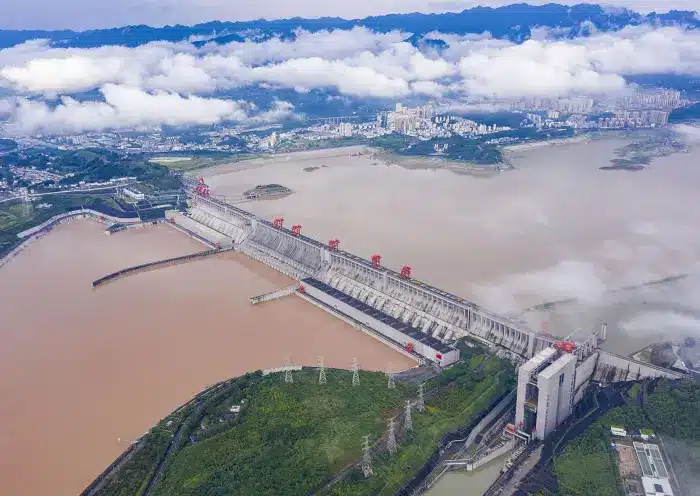
The middle reaches specially refer to the section that stretches between Yichang in Hubei Province and Hukou in Jiangxi. And here, you’ll get to encounter one of the most famous sites in China, the Three Gorges, where nature’s beauty is so sharply and magnificently presented. And another key feature here is the Three Gorges Dam, and it’s near Yichang city. This is one of the greatest dams in the world, and it has so many important functions such as providing hydropower and controlling flood.
The middle reaches, indeed, leave a great impression on a lot of people as this is a place that combines natural beauty with strategic importance. Taking a Yangtze River cruise is the top popular option to marvel at the natural wonders and discover cultural heritage of this section.
Recommended China tour including Yangtze River cruise
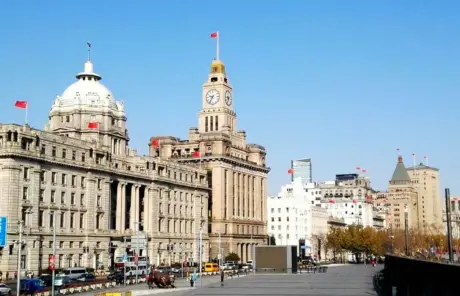
Embark on a 14-day scenic China journey from Shanghai's Bund through the Yangtze Three Gorges, Guilin's Li River, and Beijing's Forbidden City and Great Wall.
The Lower Reaches: Bustling and Commercial
The lower reaches of the Yangtze River flow from Hukou and finally mark the end of the river’s long journey at the East China Sea near Shanghai. This section is wider and water also runs slower, as a result, the river takes on another important role in fertilizing plains that support agriculture and dense urban centers.
Major cities along this part include Nanjing, Wuhan, and Shanghai, and they all together construct a major hub of commerce, shipping, and industry. The lower reaches are critical for improving China’s economy, and they have seen numerous ports and navigable waterways rising up from past to present, which impressively support domestic and international trade.
Recommended tour
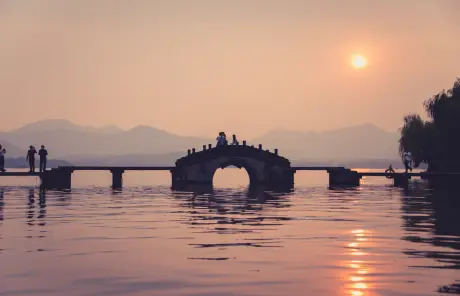
Travel by high-speed train through Nanjing, Suzhou, Hangzhou and Shanghai — exploring imperial tombs, classical gardens, tea villages, and cosmopolitan skylines.
Major Tributaries and Cities Along the Yangtze River
Major Tributaries of the Yangtze River
Tributary |
Flow / Description |
Length |
Min River (Min Jiang) |
Originates in Sichuan Province, joins the Yangtze near Yibin.
Supports local agriculture and hydropower. |
~735 km |
Jialing River |
Flows through Sichuan and Chongqing, joins the Yangtze at Chongqing.
Important for regional transport. |
~1,119 km |
Han River (Han Jiang) |
Originates in Shaanxi, meets the Yangtze at Wuhan.
Historically a vital trade route. |
~1,532 km |
Gan River |
Flows through Jiangxi Province, joins the Yangtze at Jiujiang.
Supports agriculture and river transport. |
~599 km |
Wu River |
Originates in Guizhou, merges with Yangtze near Fuling, Chongqing.
Hydropower and navigation are key. |
~1,150 km |
Yalong River |
Flows through Sichuan, joins near Yibin.
Important for hydropower and sediment transport. |
~1,571 km |
Major Cities Along The Yangtze River
The Yangtze River flows through 11 provinces in China, below are some of the most important cities.
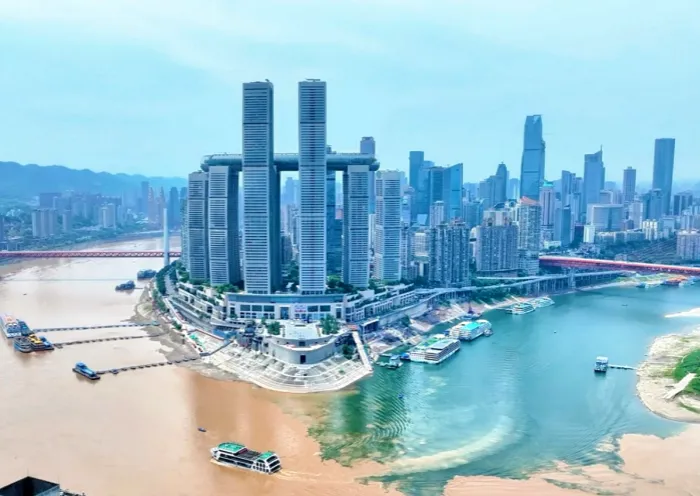
Chongqing
Chongqing sits at the confluence of the Jialing River and the Yangtze. And because of its crucial position, over the years, it has developed as an important inland river port and industrial powerhouse. Accordingly, major ports also gradually rise up, such as the Guoyuan heavy-cargo wharf, which is the largest of its kind in the upper reaches of the Yangtze. With its ability to handle extremely large equipment, the city’s manufacturing exports have also been boosted.
Chongqing is also now growing to attain a new role of a logistics hub for the New Western Land-Sea Trade Corridor, which means it’ll get the strength to link river transport with rail and road to Southeast Asia, Europe, and Central Asia.
Feel free to contact us to tailor-make a Chongqing tour to dive deep into the city’s life and culture which were greatly influenced by the Yangtze River.
Wuhan
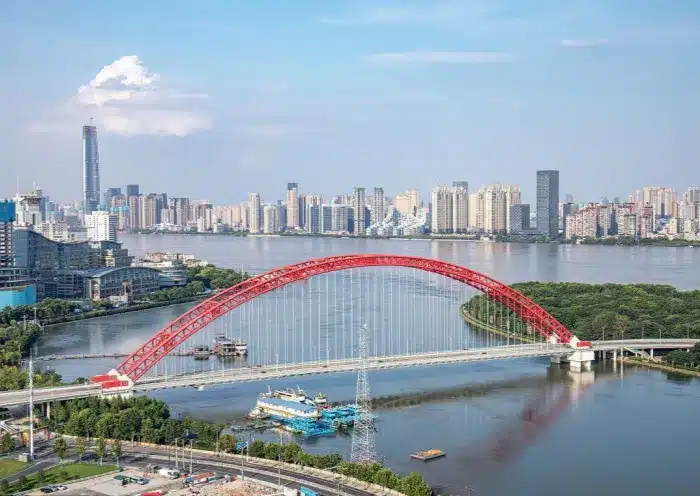
At the point where the Han River meets the Yangtze, and you’d see Wuhan, a major transport node in central China, and a logistic engine for the upper and middle Yangtze. The city’s river ports are also designed to be capable of serving both bulk and container cargo. In 2024, Wuhan Port handled 1.876 million TEUs.
Nanjing
Nanjing is situated on the lower stretches of the Yangtze, and it’s also a historical capital of six dynasties. And with the abundant heritage and memories saved from the past, it now acts as both a cultural center and a commercial port. Its location allows it to have port that can handle deep-draft vessels navigating the Yangtze and link upstream industrial cities like Chongqing and Wuhan with the coast.
Shanghai
Shanghai lies at the mouth of the Yangtze, and this global trade hub can be said to be familiar to the entire world. And here, the river provides a natural inland “highway,” enabling goods from deep inland to reach this major port constantly.
Thanks to the Yangtze, Shanghai has become not just a coastal gateway. It is tightly integrated into China’s interior manufacturing regions, which can help distribute imports to upstream cities and also export manufactured goods.
Recommended tour

How to spend 3 days in Shanghai? This 3-day guided Shanghai tour shows you the exact way to catch the essence of this fascinating city.
Why Is the Yangtze River Important?
Economic Significance
The Yangtze River’s everlasting river is the cornerstone of China’s economy. The major trade and shipping networks are all based on its long waterway, which links inland provinces with China’s eastern coast. And among all the constructions along the river, the key driver of its economic power is the Three Gorges Dam, which has an installed capacity of 22.5 GW (22,500 MW). Over its operation, the dam has generated more than 1,600 TWh of clean electricity for different regions. This achievement has greatly reduced the country’s reliance on coal and also contributed significantly to flood control.
Cultural Importance
For millennia, the Yangtze is always one of the greatest supporters of agricultural societies, especially those living in its fertile middle and lower reaches. And that’s one of the biggest reasons for important Chinese cities and historically rich regions to rise along its banks. Its water nurtures not only the crop but also the rice-based culture, historic capitals, and many traditions in art, literature, and daily life. Indeed, you can find the river’s trace in China’s cultural identity and social development.
Environmental Role
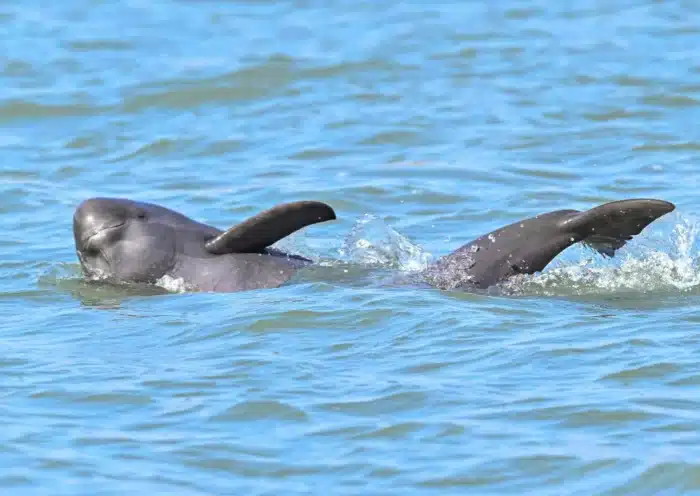
The Yangtze Basin is one of the most biologically diverse regions in China. Hundreds of species have built their homes along the river, including the critically endangered Yangtze finless porpoise, which is endemic to this river system.
Modern Relevance
Nowadays, there’s a Yangtze River Economic Belt created as a major national development strategy. It spans over 2 million square kilometers and accounts for more than 40% of China’s GDP.
Historical and Cultural Significance
For thousands of years, the Yangtze River has always been at the center of Chinese civilization. Its fertile valleys constructed the base for early rice-based societies, and distinct regional cultures such as Ba–Shu accordingly rose up. Over time, the Yangtze enabled the movement of goods, culture, and ideas between northern and southern China, its passage has carried art, literature, and social development to a new level.
Traveling the Yangtze River: Cruises and Travel Experiences
Why Take a Yangtze River Cruise
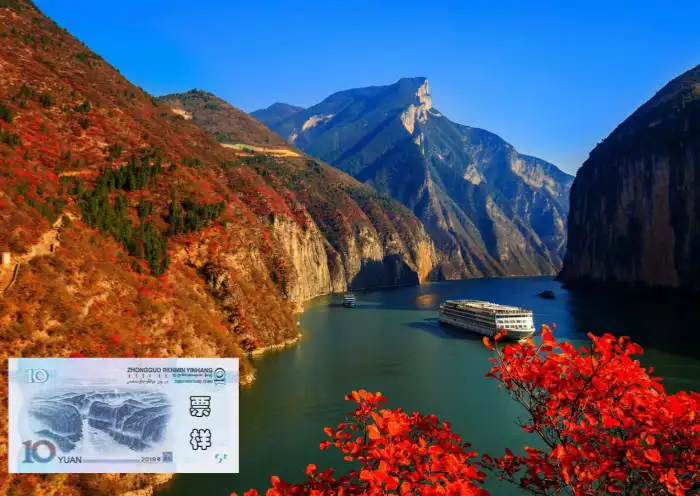
A Yangtze River cruise is often said to be one of the most special and rewarding ways to appreciate the Yangtze’s infinite power and charm. Floating through the dramatic Three Gorges, you’ll get close-up views of the landscapes and engineering marvels. And while you can take excursions to the banks, you’ll feel like stepping into a mysterious world that is built on various cultural and natural gems.
Popular Itineraries
Chongqing → Yichang (4 days / 3 nights) Cruise: This is the downstream trip, and it’s more widely chosen. It has excursions to Fengdu Ghost City, Shibaozhai, the Three Gorges Dam and more.
Yichang → Chongqing (5 days / 4 nights) Cruise: This is the upstream journey. It includes excursions to the Three Gorges Dam, Shennong Stream, Qutang Gorge, and some cultural stops.
Longer cruises: There are also some longer itineraries that run from Chongqing all the way to Shanghai or Wuhan. And this kind of cruises can combine river views with city visits (though less common, and often more expensive).
Recommended Tours:
5 Days Yangtze River Cruise Tour from Yichang to Chongqing
4-Day Yangtze River Cruise from Chongqing to Yichang


How Many Days Needed?
Usually, the 4-day / 3-night downstream cruise from Chongqing to Yichang is more popular, and some visitors would also add another day trip in Chongqing before going onboard. And along the way, you’ll have enough time to see the major gorges and visit the dam. If you take the upstream route (Yichang → Chongqing), it usually takes 5 days / 4 nights. These longer stays allow you to travel with a slower pace to explore additional shore excursions. So in general, 4-5 days would be the best.
Popular Activities During the Cruise
There are a lot of activities you can take part in, such as practicing Tai Chi on deck, having excursions to places like Fengdu Ghost City, White Emperor City or Shibaozhai. And one of the most expected highlights is touring the Three Gorges Dam. You can explore the dam’s massive scale and history.
Essential Embarkation Ports (Chongqing ↔ Yichang)
- Chongqing (Chaotianmen Port): Most downstream cruises, such as Century Cruises, Victoria Cruises, Changjiang Cruises, and President Cruises, usually depart here in the evening.
- Yichang (Maoping Port): Most upstream cruises, except Changjiang 1 Cruise, from Yichang depart from here. Free shuttle buses from Yichang’s Three Gorges Cruise Terminal to Maoping Port are usually included.
Practical Tips
- Best Time to Go: Spring (March–April) and autumn (September–November). During these seasons, the weather and scenery can both be amazing.
- Booking: It’s better to book through reliable travel agencies like China Xian Tour, as they can take care of everything for you while also providing some discounts. Remember to confirm all the details (boarding port, time, schedule, etc.)
- Travel to Ports: It takes about 20–40 minutes to get to the port from Chongqing North Railway Station (car-ride or subway).

FAQs About the Yangtze River
Q: Where does the Yangtze River start and end?
Starts on the Tibetan Plateau and ends in the East China Sea.
Q: Can tourists visit the Three Gorges Dam?
Yes. The dam is open to visitors everyday.
Q: What is the Yangtze River famous for?
- Longest river in China and Asia. A major lifeline for trade and agriculture in China.
- The Three Gorges, an incredibly scenic and dramatic stretch.
- The Three Gorges Dam, one of the world’s largest hydroelectric dams.
Q: Why is Chang Jiang called “Yangtze”?
Chinese people mostly call it Chang Jiang (长江), meaning “Long River.” The name “Yangtze” comes from a western transliteration of Yangzi, which is an old name referring to the lower part of the river.
Q: How much does it cost to go on a Yangtze River cruise?
Cruise prices vary. A standard 3–5 day Yangtze cruise between Chongqing and Yichang typically costs from US$383 to US$770. Luxury cruises can cost US$1,041–1,716, depending on route and cabin.
Your Unforgettable Yangtze River Cruise With China Xian Tour
The Yangtze River is definitely a good starting point for you to explore China. It has been always carrying the profound cultural and historical stories to travel from the past to the future. To better explore this legendary site, we strongly recommend you take a Yangtze River Cruise with China Xian Tour. Our travel experts will create customized itineraries just based on your preference, and also take you to appreciate Yangtze’s ultimate charm on a cruise. While we taking care of everything for you along the journey, you can just relax and prepare for incredible moments during this trip.