

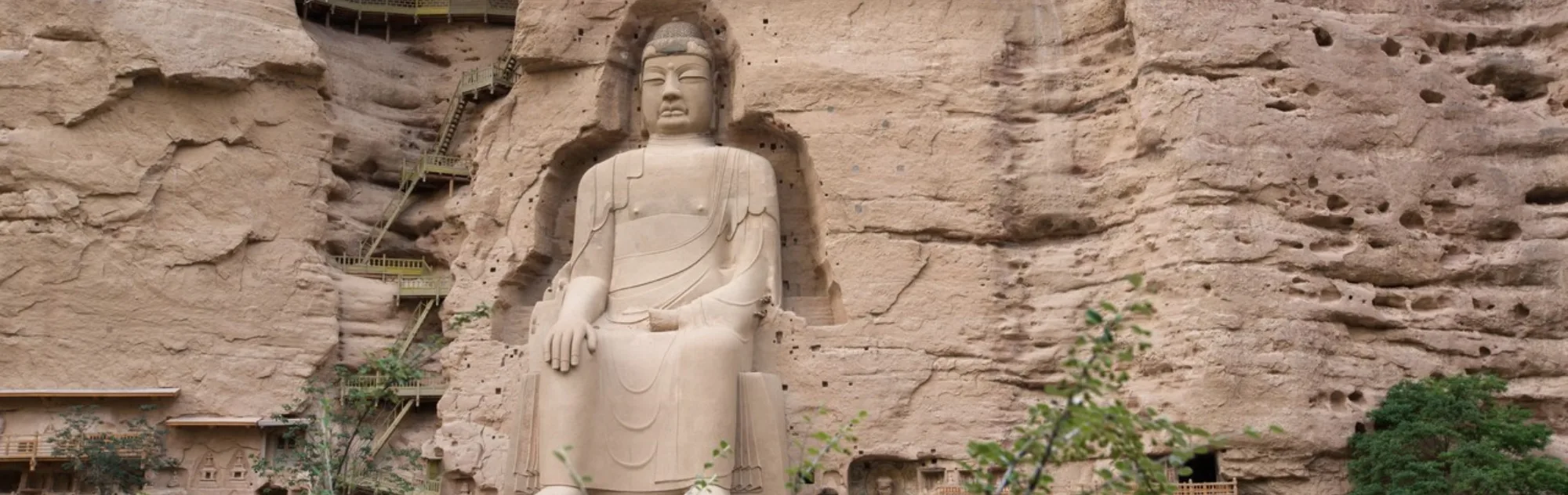
Bingling Temple Grottoes, aka Bingling Thousand Buddha Caves, is located in the Xiaojishi Hill about 35 km (21.7 miles) southwest of Yongjing County, Gansu Province. Built in 420 during the Western Qin Dynasty (385-431), Bingling Temple has a history of more than 1,600 years. Being reconstructed and extended in subsequent dynasties including the Northern Wei (386-534), Northern Zhou (557-581), Sui (581-618), Tang (618-907), Song (960-1279), Yuan (1271-1368), Ming (1368-1644), and Qing Dynasties (1636-1912), Bingling Temple now holds 183 niches, 694 stone sculptures, 82 clay sculptures, and murals of 900 square meters (1,076 square yards). As one of the must-see spots on the Silk Road, it is a famous grotto temple with both Tibetan and Han styles, which is the second only to Dunhuang Mogao Grottoes in terms of artistic merit.
- Recommended visiting time: 2-3 hours
- Opening hours: 08:30-16:00
- Tickets: CNY 50 (7.8 USD) per person for regular caves;
- Extra fee for special caves: extra CNY 300 (47 USD) for Caves No.169 and No.172.
The Artistic Style of Bingling Temple
The stone sculptures in Bingling Temple built in different periods have their unique artistic styles. There are the four most prosperous stages of Buddhism in the history of Bingling Temple – the Western Qin Dynasty, the Northern Wei Dynasty, the Tang Dynasty and the Ming Dynasty. The vigorous style of Western Region Buddhism is clearly reflected in the grottoes of the Western Qin Dynasty, which can be seen in Caves No.169, 192 and 195. Grottoes of the Northern Wei Dynasty, mainly represented by Caves No.126, 128 and 132, shows the elegant and genteel art style of Central Plains Buddhism. With the resurgence of sculptures in the Tang Dynasty, the excavation of Bingling Temple entered its heyday. The statues in this period emphasized the beauty of health and plumpness in order to show their inner vitality. This artistic style of sculptures can be seen in Niche No.171. During the Ming Dynasty, Tibetan Buddhism was introduced into Bingling Temple, and the original grottoes were rebuilt and painted in large numbers. Thus the two Buddhism arts of Han and Tibetan Buddhisms can be seen today in the same caves.
What to See in Bingling Temple?
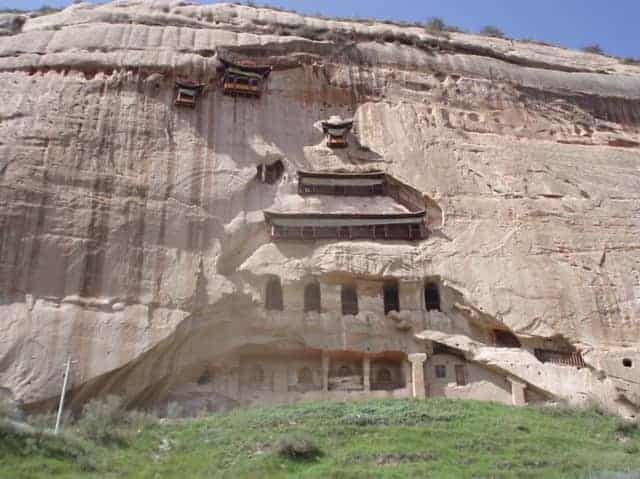
Composed of three parts (the Upper, Donggou and Lower Temples), Bingling Temple sit on the cliff with a length of 200 meters (656 feet) and a height of 60 meters (197 feet). Among them, the lower one is the most spectacular, with its relief stupas and esoteric murals as well-known as that of the Mogao Grottoes and Maijishan Grottoes.
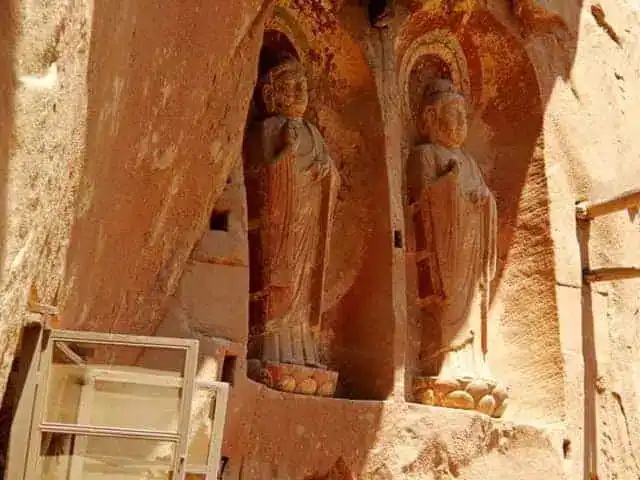
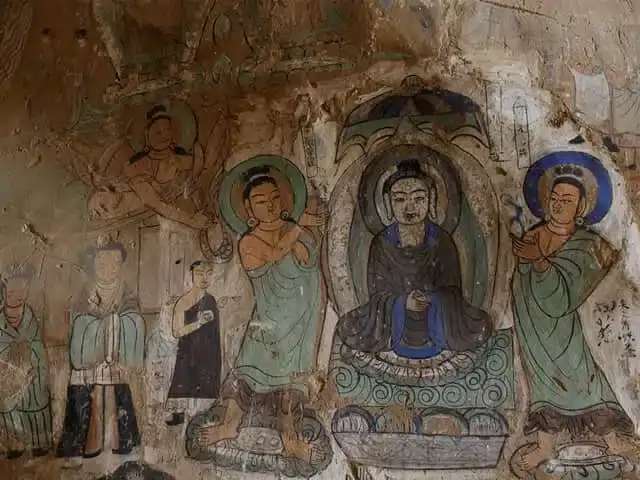
Cave No.169, a natural cave, is the most important existing cave in Bingling Temple Grottoes, containing sculptures and murals from the Western Qin Dynasty. Called “Tangshu Cave” in ancient times, Cave No.169, 15 meters high (49 feet), 19 meters deep (62 feet) and 26.75 meters wide (87.5 feet), is known as the earliest and best preserved cave in China. In this cave, visitors can find three types of sculptures including Buddhist niches, stone sculptures, and stone fetus clay sculptures. There are 24 Buddhist niches in Cave No.169, of which the most representative one is Niche No.6. It is situated on the north wall of Cave No.169, home to a Buddha statue sitting with legs crossed and with solemn expressions; and two Bodhisattva statues with vivid shapes. The face and limbs of Buddhas and Bodhisattvas are vividly painted, and their dresses are painted with various colors, looking lifelike. Besides, the murals with rich themes in Cave No.169 are also a highlight, such as the Vimalakirti, Amitabha Buddha, Maitreya Bodhisattva, and Buddhas of the Ten Directions, all of which have a plain and rough style of Western Region Buddhism.
Entering Cave No.172, you will first be welcomed by the smiles from sculptures built in the Northern Wei Dynasty. On the north wall of the cave, there are two layers of cliff sculptures. The upper Buddha statues were carved in the early Period of the Northern Wei Dynasty. They all have big eyes and thin lips, wearing round necked cassocks; while the statues on lower layer were carved in the Northern Zhou Dynasty, with slightly round face, thick cassocks. In the same cave, you can deeply feel the change of art style of sculptures – from thin to full.
Cave No.3 is a large grotto excavated in the Tang Dynasty and was repainted in the Ming Dynasty. The important value of the cave lies in the tower in the middle, on the top of which there are four slopes. The tower is a wood-like structure that composed of three parts: tower base, tower body, and tower top, with a total height of 2.23 m (7.3 feet) and a base width of 1.4 m (4.6 feet). There are reliefs on four sides and thousands of Buddhas carved in the middle, which shows the perfect combination of architectural art and carving art. Due to the special construction style, the tower is unique in China, and even incomparable in the world.
Cave No.6, founded in the Northern Zhou Dynasty, is the representative cave of Bingling Temple Grottoes in this period. The north and south walls of the cave are carved with Bodhisattva statues, each wearing a treasure crown and holding a bottle and rosary beads. Visitor can see the mural painting on the south wall that describes a group of monkeys are hunted for foraging in the King’s garden and finally escape. Such a complete fresco is rare in other grottoes of the same period in China, so they are quite precious.
In addition, tourists can see the 27-meter-high (88.5 feet) Maitreya Buddha clay sculpture of the Tang Dynasty in Niche No.171 and the 8.6-meter-long reclining Buddha (China’s only existing reclining Buddha in the Northern Wei Dynasty) in the Sleeping Buddha Hall opposite the Bingling Temple Grottoes.
How to Reach?
You can take a bus from Lanzhou West Bus Station to Liujiaxia, which takes 2 hours and costs CNY 20 (about 3 USD) per person. Upon arrival, you need to transfer to a 50-minute speedboat to Bingling Temple, costing CNY 150 (23.5 USD) for a round trip. Or you can choose to take the normal boat for 2-3h to Bingling Temple. Along the way, you can enjoy the beautiful scenery of the plateau lake, as well as the magnificent Yellow River stone forest. It costs CNY 120 (18.8 USD) for a round trip. Pay attention that the last returning bus to West Bus Station leaves Liujiaxia at 18:30 in the evening.


