

Nestled in the heart of Hangzhou, West Lake is a UNESCO World Heritage Site. Renowned as one of China’s most worthy places of visiting, the lake is famous for its “Ten Scenes”, a collection of scenes in classical poetry and art. If you happen to be a fan of Chinese culture, Hangzhou tour offers a glimpse into China’s nature and history. Below, we will unveil the ten views of West Lake. Start your journey to West Lake right now!
Content Preview
- 1. Spring Dawn at Su Causeway
- 2. Autumn Moon over the Calm Lake
- 3. Leifeng Pagoda in the Sunset
- 4. Lingering Snow on the Broken Bridge
- 5. Three Pools Mirroring the Moon
- 6. Orioles Singing in the Willows
- 7. Twin Peaks Piercing the Clouds
- 8. Viewing Fish at Flower Pond
- 9. Evening Bell Ringing at Nanping Hill
- 10. Lotus in the Breeze at Crooked Courtyard
- Ten Scenes of West Lake Tour Route Recommendation?
- New Ten Scenes of West Lake
1. Spring Dawn at Su Causeway
- Chinese Name: Su Di Chun Xiao (苏堤春晓)
- Best time to see: March–April (cherry blossoms)
- How toget o: Take Bus 52 or 194 to Su Causeway station.
Stretching 2.8 kilometers of willow and peach blossoms, Su Causeway boasts one of the most beautiful pathways in China. During the Song Dynasty, the poet-governor Su Shi built it, and that’s why Su Causeway got its name from then on. Here, you can enjoy the panoramic views of the lake, especially at sunrise. What’s more, the rustling leaves and its reflections on the water match so well that the willow becomes a necessity stop for Hangzhou travel. Locals often say, “To miss Su Causeway is to miss West Lake itself.”
2. Autumn Moon over the Calm Lake
- Chinese Name: Ping Hu Qiu Yue (平湖秋月)
- Best time to see: Mid-September–October (Mid-Autumn Festival)
- How toget to: Walk from Bai Causeway or take a boat to Gu Shan Island.
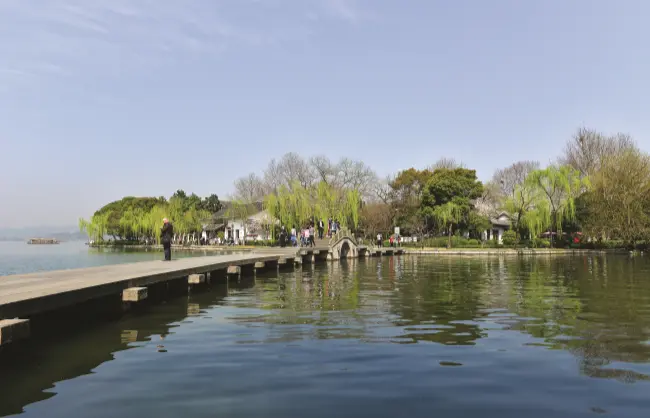
Where can you see the best moonlit scene? Another view for West Lake is Autumn Moon over the Calm Lake, the white moon lying on the mirror-like lake. The pavilion here, dating back to the Tang Dynasty, adds a poetic setting to the original beauty, as if travelers were back to thousands of years ago. No wonder travelers will list this scene as one answer to the question.
3. Leifeng Pagoda in the Sunset
- Chinese Name: Lei Feng Xi Zhao (雷峰夕照)
- Best Time to Visit: Sunset hours, year-round
- How to Get There: Bus Y2 to Leifeng Pagoda station.
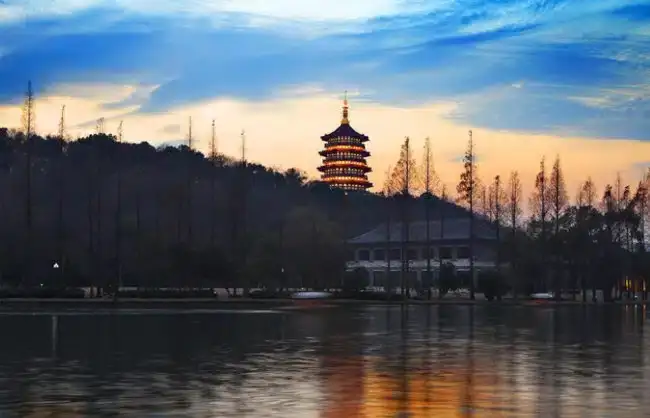
As a symbol of Hangzhou, Leifeng Pagoda stands in West Lake like a guard watching over its people. Climb to the top, you can have golden-hour views of the lake and its surrounding hills. The pagoda is tied to the Legend of the White Snake, which adds several tints of mystical charm to any Hangzhou trip.
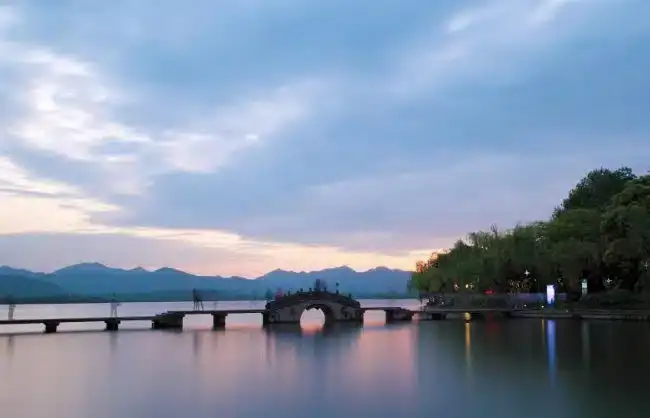
4. Lingering Snow on the Broken Bridge
- Chinese Name: Duan Qiao Can Xue (断桥残雪)
- Best Time to Visit: Winter (after snowfall)
- How to Get There: Accessible via Bai Causeway.
The Broken Bridge, or Duan Qiao, is one of the most iconic landmarks among the Ten Scenes of West Lake. Despite its name, the “Broken Bridge” is structurally intact. So what’s “broken” for? Its name originates from the visual illusion created – when snow partially melts on its arched surface, the bridge appears “broken” between the white-covered sections and the exposed stones. Come and see the unique effect in Broken Bridge. Before that, don’t forget to add it to your Hangzhou tour.
5. Three Pools Mirroring the Moon
- Chinese Name: San Tan Yin Yue (三潭印月)
- Best Time to Visit: Evening boat tours during Mid-Autumn Festival
- How to Get There: Take a ferry from Hubin Pier.
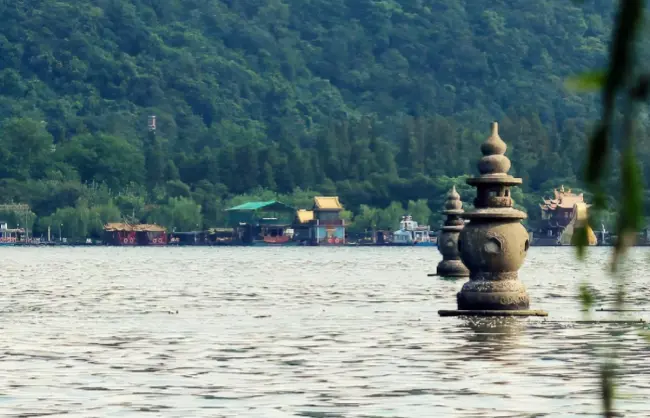
Imagin three stone pagodas rise from the lake, and moonlight goes through small openings of them into lake, creating the illusion of multiple moons dancing on the water. This creation from the Song Dynasty is a perfect combination of engineering and aesthetics. Include this in your travel to Hangzhou for an unforgettable experience.
6. Orioles Singing in the Willows
- Chinese Name: Liu Lang Wen Ying (柳浪闻莺)
- Best Time to Visit: Spring (April–May)
- How to Get There: Subway Line 1 to Ding’an Road Station, thena 10-minute walk, or Bus 12/42 to Qingbo Gate.
Spanning along the southeastern shore of West Lake, Orioles Singing in the Willows is a park kilometer-long willow-lined promenade. Historically, it served as a private imperial garden during the Southern Song Dynasty. The singing of birds and the whisper of willow branches still enchant visitors today, just as it did for the ancient people.
7. Twin Peaks Piercing the Clouds
- Chinese Name: Shuang Feng Cha Yun (双峰插云)
- Best Time to Visit: Rainy or misty days
- How to Get There: Hike from Lingyin Temple or take a taxi.
With the North Peak Mountains (Beigao Feng) and South Peak Mountains (Nangao Feng) circling the lake, their summits often shrouds in mist, creating an illusion of peaks “piercing” the sky—a sight celebrated in classical Chinese poetry and paintings. Whether you’re a hiker, history lover, or simply seeking a quiet stay, this scene offers a profound connection to Hangzhou’s natural and cultural legacy.
8. Viewing Fish at Flower Pond
- Chinese Name: Huang Gang Guan Yu (花港观鱼)
- Best Time to Visit: April–June (peony blooms)
- How to Get There: Walk from Su Causeway or take Bus 4.
Viewing Fish at Flower Pond is a combo of floral displays, tranquil ponds, and classical garden. Used to be a private retreat for Southern Song Dynasty officials, this site became a public park in the Qing Dynasty and remains a beloved stop for Hangzhou tours. If you are wondering what things to do in Hangzhou, come and enjoy the peaceful retreat.
9. Evening Bell Ringing at Nanping Hill
- Chinese Name: Nan Ping Wan Zhong (南屏晚钟)
- Best Time to Visit: Evening (bell-ringing ceremonies)
- How to Get There: Bus 315 or 4 to Jingci Temple Station, or a 15-minute walk from Leifeng Pagoda.
Amid the ten sceneries West Lake, Evening Bell Ringing at Nanping Hill offers not only a spiritual baptism, but also an auditory journey into Hangzhou’s Buddhist heritage. Centered around Jingci Temple, one of the city’s oldest Buddhist sanctuaries, this scene can recall you of the purity and tranquility from the deep soul, which resonated with ancient people for centuries across the lake.
10. Lotus in the Breeze at Crooked Courtyard
- Chinese Name: Qu Yuan Feng He (曲院风荷)
- Best Time to Visit: July–August (lotus blooms)
- How to Get There: Take Bus 7 to Yuehu Station, bike from Yue Fei’s Temple, or walk from Su Causeway (15 minutes).
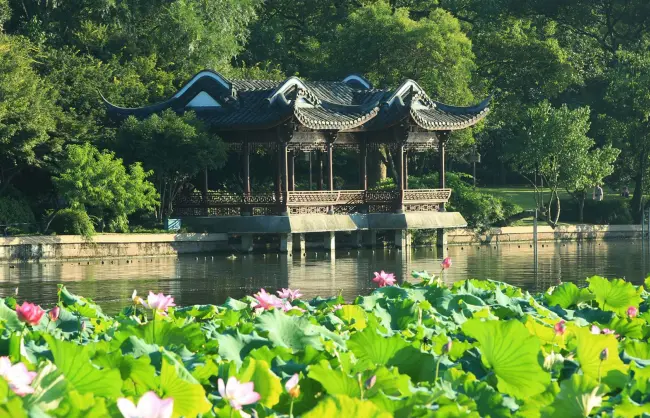
With sensory feast of vibrant lotus blossoms, tranquil waterways, and classical pavilions, Lotus in the Breeze at Crooked Courtyard is a crown jewel of the Ten Sceneries of West Lake. To have a better experience, you’d better visit at dawn to avoid crowds. Besides, you can hear lotus leaves softly rustling in the breeze—a moment of pure tranquility that defines Hangzhou travel.
Ten Scenes of West Lake Tour Route Recommendation
Start from “the Lingering Snow on the Broken Bridge” (if it is wintertime), experiencing the winter charm of the West Lake. Then head to the Yuewang Temple to appreciate the historical grandeur. Walk to the Lotus in the “Breeze at Crooked Courtyard” to admire the blooming lotus flowers (if it is summer time).
Next, visit the Hangzhou Flower Garden and Guozhuang, where you can savor the tranquility of nature. Don’t forget to go to “Viewing Fish at Flower Pond” to watch the colorful fish playing in the water. Continue on, visiting Su Causeway, Leifeng Pagoda, “Orioles Singing in the Willows,” and Jixian Pavilion – each place has its own unique stories to tell.
Recommended tour
A 2-day Hangzhou essence tour covering the poetic West Lake, Lingyin Temple, the China National Tea Museum at Meijiawu, Leifeng Pagoda, and the scenic Bamboo-lined Path at Yunqi.
New Ten Scenes of West Lake
The classic “Ten Scenic Scenes of West Lake” originated in the Song Dynasty (13th century), was revived during the Yuan and Ming Dynasties (14th – 16th centuries), and flourished in the Qing Dynasty (17th – 19th centuries). It represents the organic integration of poetry, painting, and scenery in terms of aesthetics and philosophy within ancient Chinese culture and art.
In 1985, Hangzhou selected the new ten scenic spots of West Lake: Bamboo-lined Path at Yunqi, Sweet osmanthus rain at Manjuelong Village, Dreaming of Tiger Spring at Hupao Valley, Inquiring about Tea at Dragon Well, Nine-creeks Meandering through a Misty Forest, Heavenly Wind over Wu Hill, Ruangong Islet Submerged in Green, Yellow Dragon Cave Pressed in Green, Clouds Scurrying over Yuhuang Hill, and Precious Stone Hill Floating in Rosy Cloud.
The No.1 to No.5 new Scenes of West Lake are the Longjing tea plantations in Hangzhou.