
Hangzhou is best known for being a beautiful cultural hub of eastern China, a metropolis that has retained much of its local traditions. It is an important city for Chinese tea culture because it is the origin place of the world-famous Longjing tea. Whether you’re familiar with Chinese tea or not, you can definitely learn a lot about it when you travel to Hangzhou.
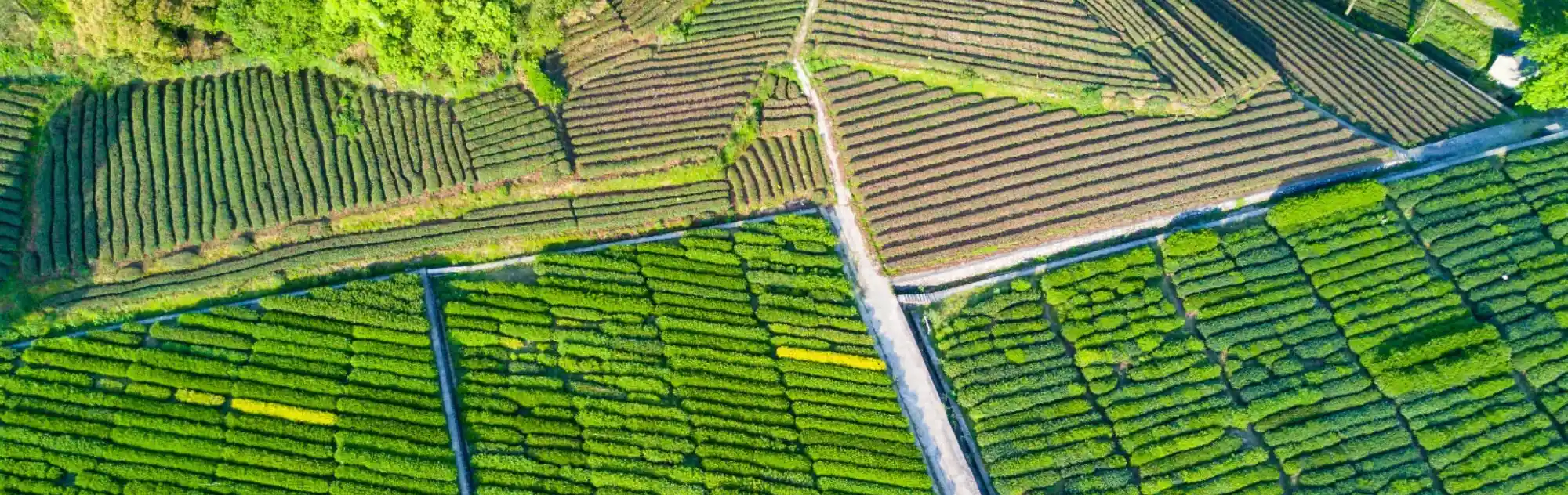
And the best place to do so is the Longjing Tea Plantations in the southwestern region of West Lake. It is a production site of Longjing tea covering 240 hectares. The plantations span eight villages, including Longjing, Manjuelong, and Jiuxi. Visiting Longjing Tea Plantations is one of the best things to do in Hangzhou because of their beautiful views, interesting activities, and cultural values.
Content Preview
- Fast Facts about Longjing Tea Plantations
- Overview of Longjing Tea
- Top Longjing Tea Plantations in Hangzhou
- Essential Travel Tips
- How to Plan a Hangzhou Tea Tour
- Attractions nearby Longjing Tea Plantations
Fast Facts about Longjing Tea Plantations
- Location: Southwest of West Lake, Hangzhou, Zhejiang, China
- Opening time: All day
- Ticket price: Villages are free to enter but certain attractions may require a fee
- Recommendedvisit time: 2-5 hours
- Best time to visit: March and April for tea-picking
- Suited to: Anyone interested in Chinese tea cultureand natural scenery
Overview of Longjing Tea
Longjing, or Dragon Well Tea, is one of the most famous and popular teas in China. It is a variety of pan-roasted green tea cultivated in Hangzhou. It is best known for its vibrant green color, refreshing fragrance, and mild taste. Longjing is rich in health benefits and is well-loved by elders. Legend goes that the name of the tea comes from a local well that is said to be connected to the sea and inhabited by a dragon.
Longjing green tea has a history of over 1,200 years. It is said that on one of Emperor Qianlong’s trips to Hangzhou, he was visiting Shifeng Village, one of the Longjing Tea Plantations, when he learned that his queen mother was ill. He quickly returned to Beijing. After his mother smelt and tasted Longjing tea, she immediately felt better. The emperor was very pleased and ordered for the best Longjing tea every year.
The harvesting of Longjing tea typically takes place before or around Qingming Festival in early April. The leaves are then hand-fried in a wok to remove moisture. For making it at home, it is best to steep the tea in water at about 80°C (176°F) for 3 minutes.
Top Longjing Tea Plantations in Hangzhou
Meijiawu Tea Village
Meijiawu Tea Village in western region of West Lake is one of Hangzhou’s most renowned and expansive Longjing Tea Plantations. With a history of more than 600 years, it has showcased its traditional Hangzhou Longjing tea culture to many internationally famous figures. The vast green fields spread across the mountains with water flowing below. The entire setting is serene with fresh fragrance of tea.
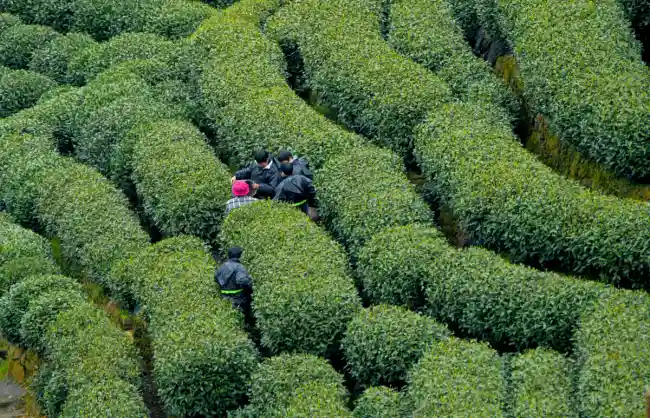
You can participate in a variety of activities at the Longjing Tea Plantation. For the best experience and views, visit early in the morning. You can take a bamboo basket and pick tea with local tea pickers. After that, return with them to their homes and watch how they hand-fry the leaves. They’ll treat you to a tea tasting showing you the traditional tea ceremony. You can also buy Longjing tea from these villagers.
Longjing Village
In southwestern area of West Lake, Longjing Village is named the “No. 1 Village of Tea” as the birthplace of Longjing tea. The tea of Longjing Village is considered the best among all Longjing Tea Plantations. Generations of local tea farmers here have built the fields up against the green hills. Here, you can truly immerse yourself in the Hangzhou Longjing tea culture.
The vast and beautiful Longjing Tea Plantations also make a popular hiking destination. You can take a hike through the green fields through a few trekking routes or even hike from Meijiawu Tea Village to Longjing Village. You can participate in tea-related activities here as well. To learn more about Chinese tea culture, visit the nearby China National Tea Museum.
Shifeng Mountain
Shifeng Mountain is located to the south of West Lake. It is also ranked among Hangzhou’s oldest and most esteemed Longjing Tea Plantations. The tea cultivated here is called Shifeng Longjing. It’s usually less crowded than Meijiawu Tea Village and Longjing Village if you’re seeking a more tranquil environment.
Wengjiashan
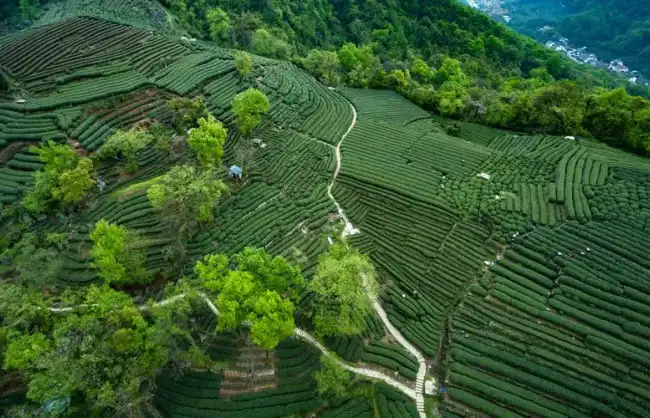
It is located on the southwest side of the West Lake. Wengjiashan Village is the center of the West Lake Longjing tea production area and one of the main production sites. The Longjing tea plantation in Wengjiashan Village is flanked by Tiantuzi Mountain and Beiping Peak to the north. It can not only block the cold northwest wind but also absorb the moist air from the south, making the valley of Wengjiashan often shrouded in mist. The history of tea planting and tea production in this area can be traced back to the Ming Dynasty during the Zhengde period.
Wengjiashan not only has 1,040 acres of Longjing tea plantations, with green areas accounting for 81.3% of the total area, but is also a truly “natural oxygen bar”.
Manjuelong Village
In Hangzhou, when people talk about genuine West Lake Longjing tea, they always think of Manjuelong. Located at the southern foot of Nanfeng Peak, it was originally a secluded valley. More than 2,000 years ago, during the Wu-Yue period, this place was covered with small Buddhist temples.
One of the new West Lake’s ten scenic spots, “Manjuelong Osmanthus Rain”, is situated here.
People living in the upper and lower Manjuelong villages, respectively located at the foot of Nanfeng Peak and Baihe Peak, made a living by growing tea. The Manjulong Tea Garden on Baihe Peak covers an area of 663 acres and mainly grows the precious Longjing 43 variety.
Interestingly, only the tea produced in the West Lake District can be called West Lake Longjing; elsewhere (such as the Qiantang production area and the Yuezhou production area), they produce only the Longjing tea.
West Lake Longjing is divided into two main production areas. The first-level area consists of five core production areas: “Shisheng, Longjing, Yunqi, Hupao, and Meijiaowu”. The second-level area includes all the Longjing tea produced in the West Lake District other than those from the first-level area, such as Longwu, Zhuantang, Liuyi, and Shuangpu, etc.
Essential Travel Tips
Best Time to Visit Longjing Tea Plantations
The best time for a Hangzhou tour to Longjing Tea Plantations is early spring, March and April. It’s the tea-picking season when you can join the local tea pickers and taste new Longjing tea of the year. The landscapes are equally impressive during other seasons, but the tea production scene wouldn’t be as busy.
How to Get to Longjing Tea Plantations
From Hangzhou
Hangzhou is easily accessible thanks to its convenient transportation system. You can get to the city through its international airport, Hangzhou Xiaoshan International Airport, which is about 35 km (22 miles) from the Longjing Tea Plantations. If you’re traveling from other popular tourist destinations in China, you can reach Hangzhou by train at Hangzhou Railway Station or Hangzhou East Railway Station.
The Longjing Tea Plantations are about 15 km (9miles) from downtown Hangzhou. You can get there by taxi in about 30 minutes. Or you can take buses 27, 87, or Y3 directly to Longjing Village or Meijiawu Village.
From Shanghai
If you’d like to visit the Longjing Tea Plantations on a Shanghai tour, the easiest way to get there is by high-speed rail from Shanghai Hongqiao Railway Station. The direct drive from Shanghai will be about 2.5 hours.
How to Plan a Hangzhou Tea Tour
In 2022, the “Traditional Chinese Tea-making Techniques and Their Associated Customs” project was included in the UNESCO Intangible Cultural Heritage. The production techniques of Hangzhou green tea (West Lake Longjing) and the Jingshan Tea Feast are part of the project. Hangzhou, therefore, released 10 tea and culture heritage routes.
Here, we list one that is most suitable for international tea lovers:
Start with the China Tea Museum, then visit Double Peak Area and Longjing Eight Scenery Ancient Road, later Guoxi Pavilion, Longjing Village, and finish at Longjing Area of China Tea Museum.
Attractions nearby Longjing Tea Plantations
China National Tea Museum showcases the 4,700 years of history of tea culture in China. There’re exhibitions on tea types, tea production, and the rich tea history and culture. You’ll have the chance to sample different types of tea, observe tea ceremonies, join tea art lessons, and walk around the tea plantations.
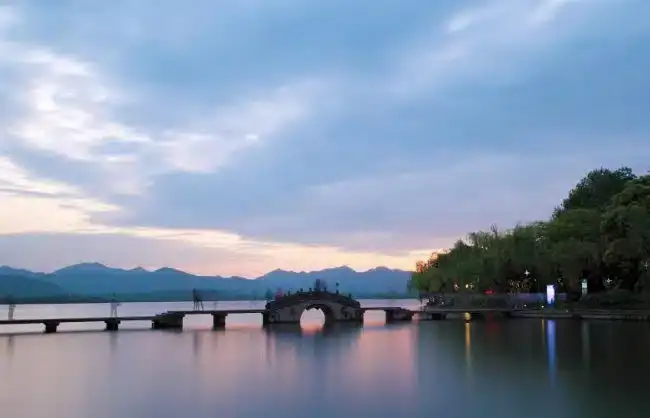
West Lake is the most famous landmark of Hangzhou. It is about 10-15 minutes by car from the Longjing Tea Plantations. You can stroll around the lake, rent a bike, or take a boat ride to see the various views of the nationally famous lake.
Lingyin Temple is one of China’s oldest and largest Buddhist temples. Aside from its cultural significance, it is renowned for its magnificent architecture, Buddhist statues, paintings, and ancient relics.