

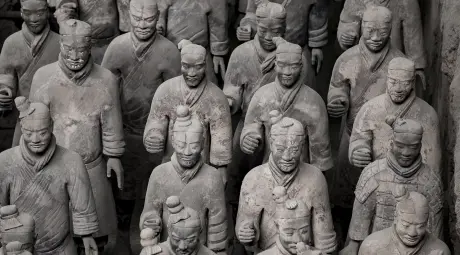

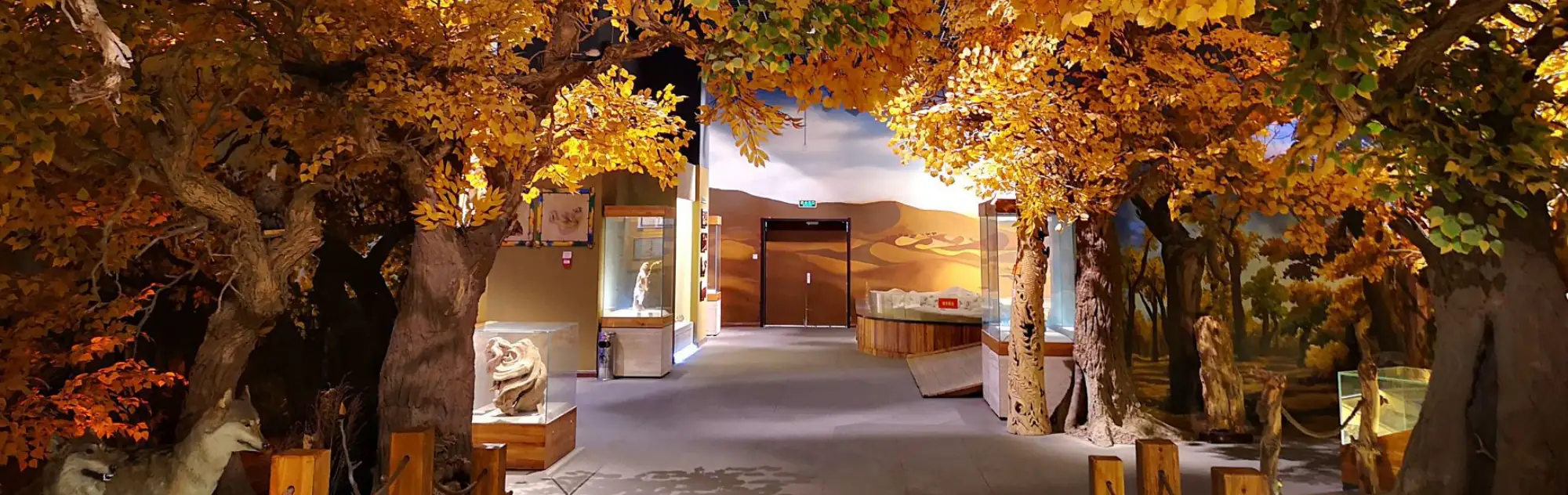
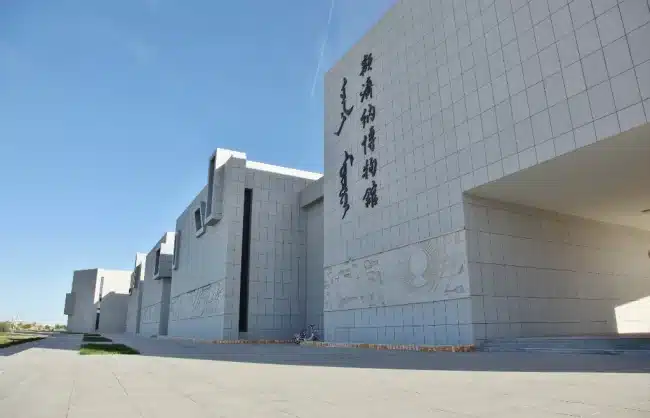
Ejina Museum (also named Ejinaqi Museum) covers an area of 11,000 square meters, with an exhibition hall area of 3,535 square meters. Home to a collection of more than 2,000 cultural relics, Ejina Museum is a multifunctional modern museum that truthfully records and displays the natural environment, social and cultural historical changes of the Ejina region through physical display, scene simulation, sound, light, and other means. In August 2024, Ejina Museum was rated as a national third-level museum.
Facts About Ejina Museum
- Location: Juyan Street, Dalaihubu Town, Alxa League, Inner Mongolia (opposite Ejin Banner Public Security Bureau)
- Opening time: 09:00-12:00, 15:00-18:00 (No entrance after11:30, 17:00)
- Time Needed: about 2-3hours
- Ticket price: Free, but ID registration required
- Suited to: history and culture lovers, nature lovers, and photographers
Six Exhibition Halls of Ejina Museum
Despite its small size, Ejinaqi Museum offers you an opportunity to understand every aspect of this region through the following six exhibition halls:
- Secret Wonders, showcasingthe magical geological landscapes and species in 114,600 square kilometers of Ejina Banner;
- Juyan History, presenting Ejina’s historical changes fromNeolithic period to the Han Dynasty, to the Southern and Northern Dynasties;
- Heicheng Ruins,telling the cultural history of the Sui, Tang, Western Xia, and Yuan dynasties in the Ejina region, revealing the mysterious glory of Heishui City in the past;
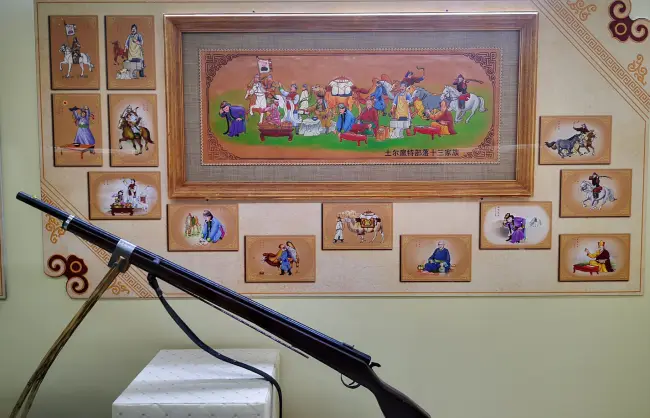
- Ethnic Customs, exhibitingthe rich culture and lifestyle of the Torghut tribe (a Mongolian ethnic group in Ejina);
- Desert Sunrise, paying tribute to those who bravely fought for the liberation cause;
- Fly Into Space, displayingthe development history of Dongfeng Aerospace City and the Air Force’s First Test and Training Base in Ejina Banner.
Classical Collection of Ejina Museum
The exhibits at Ejinaqi Museum are rich and diverse, including stone, jade, iron, book slips, animal and plant specimens, and ethnic costumes. And the two cultural relics with highest historical value are:
- Juyan Han bamboo slips:They are so precious because they record a large amount of military, political, and daily life in the Juyan area during the Han Dynasty. As the most intuitive and authentic information about frontier life in the Han Dynasty, Juyan Han Bamboo Slips can be called “national treasures”.
- Western Xia Documents: Collected in 1987 from the ruins of a temple in Eriguhara, this book is made of hemp vine paperand contains folded pages. Woodblock printing, in Western Xia script, the content is unknown. It’s identified as a national first-class cultural relic.
Other valuable cultural relics includes the remaining treasures from the Heicheng Ruins, the “Neifu” White Plum Vase, the Warrior Statue, and Zhiyuan Tongbao from the Yuan Dynasty.
You can watch a documentary film about the natural and cultural heritage of Ejina. And buying unique souvenirs, handicrafts, or books at Ejina Museum shop is also great during your Inner Mongolia tours.
Recommended Inner Mongolia Tours
Best Time to Visit Ejina Museum
From late September to mid-October is the best time to visit Ejina Museum, when the nearby Ejina Populus Euphratica Forest turns a stunning golden color, providing you with a breathtaking view. This period is also the tourist rush season to travel to Ejin Banner Inner Mongolia, and you can enjoy various cultural activities and festive atmosphere here.
Tips: Because some exhibition halls may have dim lighting, be careful not to use flash when taking photos to avoid damage to cultural relics.
How to Get to Ejina Museum
After arriving at Ejin Banner, you can take a taxi or a private car to get to Ejina Museum from Dalaihubu town center, which only needs less than 10 minutes.
Attractions Nearby Ejina Museum
- Ejina Populus Euphratica Forest: Located about 4km away, it turns golden in autumn, and creates a stunning scenery.
- Strange Forestis located about 16 km away, and features numerous dead poplar trees that have different shapes and postures.
- Heicheng Ruins: the remains of an ancient city that was once a trade hub on the Silk Road, about 17km away from the museum.
- Juyan Lake: a saline lake that is part of the terminal lakes of the Heihe River, about 50 km away from the museum.


