

Mount Siguniang Travel Guide: Witness the “Oriental Alps”
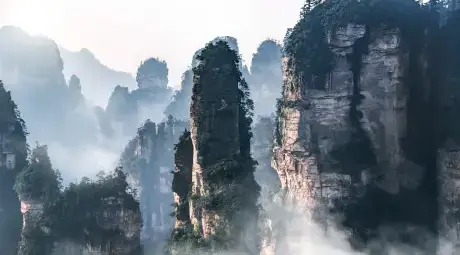
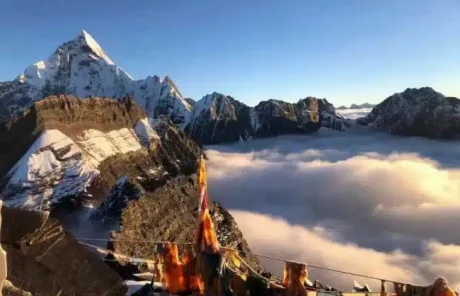
Mount Siguniang is named the “Queen of Mountains” in Sichuan Province, China. “Siguniang” means four sisters, representing the four peaks of the mountain range. Among them, Yaomeifeng, meaning the youngest sister of the four peaks, is the highest at 6,232 meters (20,446 feet). This beautiful national park also consists of three valleys with forests, lakes, waterfalls, glaciers, and meadows. The gorgeous scenery has also earned Mount Siguniang the title of “Oriental Alps.” It is well loved among hikers and photographers. There’re activities like hiking, horse riding, and camping. It’s part of the UNESCO World Heritage Site of Sichuan Giant Panda Sanctuaries and home to wildlife including golden monkeys and red pandas. This Mount Siguniang travel guide will help you plan the best Sichuan tour.
Chinese: 四姑娘山 sì gū niáng shān
Location: Southwest Sichuan Province
Content Preview
- Why Travel to Mount Siguniang?
- Essential Travel Information about Mount Siguniang
- Top Attractions at Mount Siguniang
- Three Valleys in Mt. Siguniang
- Altitude Profile for Key Locations
- Top Things to Do at Mount Siguniang
- Recommended Tours including Mt. Siguniang
- How to Visit Siguniang Mountain – Recommended Routes
- Accommodation: Where to Stay During a Mount Siguniang Hiking
- Mount Siguniang Weather & Best Time to Visit
- Explore Local Culture and Cuisine
- How to Get to Mount Siguniang from Chengdu
- Essential Travel Tips
- FAQs on Mount Siguniang Hiking Adventure
Why Travel to Mount Siguniang?
- Scenic Beauty: The natural scenery at Mount Siguniang is among the best of Sichuan. With different sceneries and color schemes in different seasons, it’s a paradise for photographers.
- Hiking and Trekking: There are trekking routes of different difficulties for hikers of different levels. Your passion for hiking might start here, or you might find your next challenge at Mount Siguniang.
- Rich Biodiversity: The region surrounding Mount Siguniang is home to a diverse range of flora and fauna. Encounter alpine plant species during your hike and make a trip to the nearby panda conservation base.
- Cultural Heritage: The Qiang ethnic group resides nearby Mount Siguniang. As you explore the valleys, you’ll encounter temples and other structures where you can learn about their religion and customs.
Essential Travel Information about Mount Siguniang
- Location: Aba Tibetan and Qiang Autonomous Prefecture, Western Sichuan province
- Altitude: Peaks range from 5,025m to 6,250m (4 peaks)
- Time Needed: 2–5 days (depending on which sightseeing route you choose)
Valley | Admission Ticket (Full Price) | Admission Ticket (Discounted Price) | Sightseeing Bus Ticket |
Shuangqiao | 80 RMB/person | 40 RMB/person | 70 RMB/person |
Changping | 70 RMB/person | 35 RMB/person | 20 RMB/person |
Haizi | 60 RMB/person | 30 RMB/person | Not available |
- Best Time to Visit:
As one of the most famous mountains in Sichuan, you can see visitors travel (especially from Chengdu) all year round. But still, it is most recommended to come during:
Autumn (Sept–Nov): everywhere is covered by colorful foliage and clear skies
Late Spring–Early Summer: time to see blooming wildflowers
Winter–Spring: visit snowscapes and try ice climbing
Highlights: Hiking, snow mountain trekking, ice climbing, Tibetan culture
Top Attractions at Mount Siguniang
Three Valleys in Mt. Siguniang
Mount Siguniang is famous for its three distinct valleys, each offering a unique travel experience. Shuangqiao Valley is the most is the most tourist-friendly, accessible, and well-equipped; it’s ideal for most travelers to go sightseeing. Changping Valley blends scenic hiking with cultural immersion, while Haizi Valley remains the most pristine and challenging; it provides more rugged terrain for experienced hikers and adventurers.
Valley | Highlights | Best For | Ticket & Transport | Opening Hours |
Shuangqiao | Redwood forests, alpine meadows, glaciers, scenic road views, sightseeing shuttle to all attractions | Casual tourists, families | 80 RMB + 70 RMB busDiscount: 40 RMB | 08:00–17:30 |
Changping | Lama Temple, ancient forests, streams, Tibetan villages, meadow camping | Cultural explorers, light hikers | 70 RMB + 20 RMB busDiscount: 35 RMB | 08:00–17:30 |
Haizi | Glacial lakes, alpine flowers, high-altitude camping, trek to Dafeng/Erfeng base camps | Adventurers, experienced hikers | 60 RMB entry onlyDiscount: 30 RMB | 08:00–17:30 |
Altitude Profile for Key Locations
- Siguniangshan Town: ~3,200m
- Shuangqiao Valley entrance: ~2,900m
- Red Cedar Forest (end point): ~3,840m
- Changping Valley entrance: ~3,100m
- Muluosi Pasture: ~3,760 m
- Haizi Valley entrance: ~3,200m
- Huahaizi Lake: ~3,800 m
- Maobiliang Viewing Platform: ~3,500 m
- Dafeng (First Peak): 5,038m
- Erfeng (Second Peak): 5,454m
- Sanfeng (Third Peak): 5,664m
- Yaomeifeng: 6,250 m
Top Things to Do at Mount Siguniang
Explore the Three Valleys
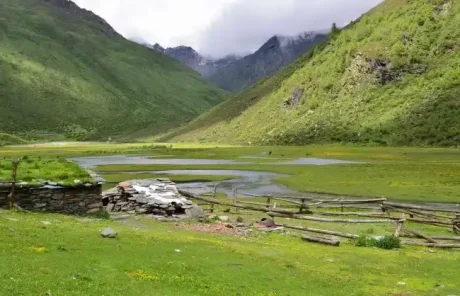
Your trip to Mount Siguniang would not be complete without one of the three valleys. They each have different views with forests, alpine lakes, waterfalls, glaciers, and meadows.
As mentioned before, the three valleys are of varied difficulty, and you should choose one that suits you best. Easier parts of the hikes have trails, and boardwalks. Other times there are options for horseback riding. If you want to spend a night here close to the stars, you can camp at designated sites or stay at the guesthouses.
Conquer the Four Peaks
Mount Siguniang is one of the best destinations for trekking tours near Chengdu. Like the valleys, the four peaks are also of varied difficulties, though they are all recommended for experienced hikers, as all of them have heights above 5,000 meters (16,404 feet).
Usually, the first and second peaks, Dafeng and Erfeng, are more popular among those who are new to trekking in snow mountains. They are both about 35 km (22 miles) long and take around 30 hours, with Erfeng being more challenging. They don’t require a professional hiking certificate, but both pass through Haizi Valley, so you will need a trekking guide.
The third and fourth peaks, Sanfeng and Yaomeifeng, are known for their difficulty, and demand a lot of technical expertise and specialized equipment. Make sure you consult a local guide if you want to embark on these hikes.
In general, when you travel to Mount Siguniang, be mindful of the high altitude and symptoms of altitude sickness. Bring medication or oxygen if needed.
Encounter Giant Pandas
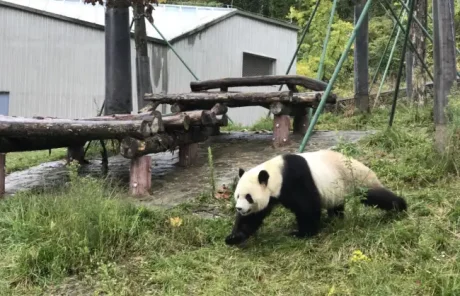
Mount Siguniang National Park is a natural habitat for giant pandas. Embark on a panda tour from here to Wolong National Nature Reserve, which is only about 70 km (43 miles) away. You’ll see pandas up close, and the conservation efforts made to protect them. You can even volunteer for the research base.
Immerse in Tibetan Culture
Mount Siguniang is located in Aba Tibetan Autonomous Prefecture where you’ll find Tibetan villages and monasteries. Learn about Tibetan culture and lifestyle during your visit. Try traditional Tibetan foods like yak butter tea, yak meat, and cheese.
Recommended Tours including Mt. Siguniang
How to Visit Siguniang Mountain – Recommended Routes
Hiking Routes:
1. Shuangqiao Valley Deep Hike (Half-Day to Full-Day)
- Route:Shuangqiao Valley Entrance → Ice Climbing Area → Red Cedar Forest → Potala Peak Viewpoint → Return to Entrance
- Length:~8 km (loop)
- Difficulty:from Easy to Moderate (hike with flat boardwalks and minimal elevation gain)
- Highlights:
With chances to have close-up views of Siguniang’s iconic glaciers and snow-capped peaks.
Get to see the “Red Cedar Forest,” a serene grove of 500-year-old cedar trees.
The “Potala Peak Viewpoint,” where you can photograph the “Four Sisters” peaks reflected in alpine lakes.
- Best For: Beginners, families, or those seeking a relaxed stroll with scenic photo ops..
2. The “Longchuanbi” Crossing (3-Day Alpine Trek)
- Route: Siguniang Town → Longping Valley → Kazi Valley → Bupeng Valley (Shifang Reception Station)
- Length:~35.7 km (total, split over 3 days)
- Difficulty: Moderate to Strenuous (varies by day; requires participants’ fitness and acclimatization)
- Highlights:
Ancient forests, alpine meadows, and golden-red autumn foliage (Oct).
Remote glacial lakes (e.g., Bajiaopeng Lake) and snow-capped peaks.
Panoramic views of Siguniang’s “Four Sisters” mountains from highland passes.
Cultural touches: Also see tibetan prayer flags and stone cairns that made historic trails.
- Best For:Experienced hikers with a taste for remote wilderness; requires a certified local guide.
3. Haizi Valley High-Altitude Challenge (Full-Day)
- Route: Haizi Valley Entrance → Dahuangzi Campsite → Laoye Pond → Return to Entrance
- Length: ~15 km (round trip)
- Difficulty:Strenuous (visitors’ll encounter steep ascents, high elevation, and exposed trails)
- Highlights:
Get to see the “Laoye Pond” (Old Ox Pond), which is a glacial lake surrounded by snow-capped peaks.
Breathtaking vistas of the “Eight-Angle Tent Lake” (Bajiaopeng Lake).
A sense of isolation and untouched wilderness.
- Best For: Fit hikers with high-altitude hiking experience before.
Other Featured Experiences
1. Shuangqiao Valley: Scenic Drive & Alpine Lakes
- Highlights:
Family-friendly scenic shuttle ride to Red Cedar Forest (3,840m), best for families with young kids and elders
Visitors can capture the mirror-like reflections of snow-capped peaks in glacial lakes like Tibetan Plateau Lake and Songge La Lake.
See spring snow meadows at Renshen Guoping (Ginseng Meadow).
- Itinerary:
5-hour round trip. Start early to avoid crowds.
- Tickets:
Adult combo ticket: ¥150 (¥80 entrance + ¥70 shuttle).
2. Changping Valley: Trekking & Horseback Riding
- Highlights:
Ladder Section (Lama Temple to Withered Tree Beach): Visitors’ll travel through flat boardwalks through forests and past waterfalls.
Forest Meadow Section (Mupizi Campsite): Panoramic views of the “Four Sisters” peaks.
- Itinerary:
Trekking: 7–12 km (3–6 hours).
Horseback riding: Options for 1.5–13 km (negotiable prices).
- Tickets:
Adult combo ticket: ¥90 (¥70 entrance + ¥20 shuttle).
Camping permits must be arranged at the outdoor center.
3. Haizi Valley: Wild Alpine Lakes & Stargazing
- Highlights:
See untouched alpine lakes like Guodong Pond and Huahai Pond.
Enjoy sunrise/sunset views of the “Four Sisters” from Huodong Terrace.
- Itinerary:
Horseback riding to Dahai Pond (12 km), and then camping overnight for stargazing.
- Tickets:
Entrance fee: ¥60. Horseback riding: ¥100–¥660 (distance-dependent).
Camping permits must be arranged at the outdoor center.
Recommended acclimatization itinerary from Chengdu
A reasonable itinerary is crucial to a joyous travel and adaptation to the high altitude. Below is a brief itinerary for your reference.
Day 1: Travel from Chengdu to Siguniangshan Town (~3,200m) by bus, hotel check-in and rest, have a walk and enjoy a dinner in the town
Day 2: Spend the whole day exploring Shuangqiao Valley. First, take the sightseeing bus to the end point – Red Cedar Forest (~3,840m), then tour outward one by one. You will pass Potala Peak, Sigunacuo Lake, Nianyuba Marsh and Renshenguoping Meadow. Finally, return to Siguniangshan Town.
Day 3: Hike in the Changping Valley in the morning. Take the sightseeing bus to Lama Temple and start hiking from the temple to Withered Tree Beach or Muluosi Pasture. Return to Chengdu in the afternoon.
Accommodation: Where to Stay During a Mount Siguniang Hiking
Before your hiking tour, there are two places for you to choose, the first is the Siguniangshan Town. Living here will be very convenient because it is the transportation hub and living district of the region. There are boutique guesthouses and chain hotels with the most complete facilities. You can also easily find the supermarket and drug store to supplement the items you lack.
The second place is near the entrance of the Changping Valley and Shuangqiao Valley. Some hotels here offer the ultimate experience of “lying in bed to view snow mountains”. And most hotels focus on design and are equipped with new facilities. Besides, if living here, you can be the first batch of tourists entering the scenic area and you will have more time to go hiking.
During the hiking, the alpine bases will be the only places you can live. Due to its location, only the most basic accommodation and simple foods are provided. Usually, you may need to live in a tent or sleep on a wide bed with other people. It is suitable for tourists who plan to hike for a few days or climb the snow mountain.
Mount Siguniang Weather & Best Time to Visit
Mount Siguniang weather is very unpredictable. The summits are usually covered in snow. Valleys are warmer but still relatively cold. Summer is the warmest season with an average temperature of 19°C (66.2°F) in the day. Winter can be below 2°C (35.6°F). It’s hard to name a best time to travel to Mount Siguniang, because each season brings out a different side of it.
Autumn (Late September to November): Autumn is the prime season for trekking. Under the clear blue sky, there’re beautiful colors in the mountains. Golden leaves, red rhododendrons, and snow-capped peaks together form a surreal painting.
Late Spring to Early Summer (May to July): These months have mild temperatures and moderate rainfall. Along the trails and lakes, you’ll see blooming flowers such as azaleas, gentians, and primroses.
Spring and Winter for Snow Scenery: If you have your mind set on seeing the best snowscapes, travel to Mount Siguniang in spring or winter. But prepare yourself for cold weather and potential road closures. Temperatures at night can drop below freezing, and the snow may be thick and slippery for hiking. You’ll see amazing glaciers and icefalls. Plus, there’re winter activities like ice climbing or skiing.
Explore Local Culture and Cuisine
- Festival:The grandest festival must be the Mountain Pilgrimage Festival held on May 4th – 6th in the lunar calendar. It is held to worship the four girls who transformed into the four peaks and pray for good weather and national peace and prosperity.
- Food:The cuisine here makes full use of local specialties. Yak beef hot pot is one of the most representative Tibetan dishes. The yak butter tea and foods made of highland barley (such as tsampa)are also must-try snacks. Besides, you can not miss the various drinks made of sea-buckthorn, a local plant. These drinks are rich in Vitamin C, making them the best choices to quench thirst and supplement vitamins during hiking.
- Architecture: The local architecture is characteristic of the Jiarong Tibetan ethnic group. Most residences are in watchtower style with a stone-wood structure. The outer walls are usually decorated with white and red colors. Generally, the house is divided into 3 – 4 floors. The lowest floor is for livestock, the middle floor is used to live, and the top floor is a prayer hall.
How to Get to Mount Siguniang from Chengdu
There are no direct trains from Chengdu to Mount Siguniang. The easiest way to get there is by car. And you can take a bus for a cheaper option.
Mount Siguniang is about 205 km (127 miles) from Chengdu, about 4 or 5 hours away by car, making it a popular destination for Chengdu side trips. Hire a private car and driver to go from Chengdu to Mount Siguniang. Buses are cheaper and also easy. Take a bus at Chengdu Chadianzi Bus Station to Siguniangshan Town (formerly Rilong Town), which usually takes 4-5 hours.
Essential Travel Tips
- Food & Supplies: Food will be limited and expensive inside the scenic area. So it’s highly recommended and necessary to bring your own snacks, dry food, and bottled water.
- Where to Stay: The best place to stay during the journey is Siguniangshan Town (altitude ~3,200m), which offers Tibetan-style guesthouses with equipped floor heating. Avoid staying at high altitudes on your first night to minimize the risk of altitude sickness (this kind of sickness could be extremely dangerous).
- Camping Advice: For those planning to camp inside the park, top recommended sites include Muluozi Camp in Changping Valley and Dahuizi Camp in Haizi Valley. You’ll need to bring your own tent and cold-weather gear, as night temperatures can drop below -5°C (23°F).
- Altitude Adjustment: Avoid strenuous activity at high altitude area, especially on the first day. Prepare glucose oral solution or oxygen supplements to help cope with the potential symptoms cause by high altitude.
- Best Viewpoint – Maobiliang: This platform offers the most iconic panoramic view of all four Siguniang peaks. On a clear day, especially at sunset, you may witness the spectacular “Golden Mountain” effect as the snow-covered summits glow in warm light.
FAQs on Mount Siguniang Hiking Adventure
Is it required to hire a guide for trekking in Changping Valley or Haizi Valley?
A hiking along the regular plank road in Changping Valley does not require a guide. But if you plan to have an in-depth exploration in Changping Valley and Haizi Valley or climb the mountain, hiring a guide is a must.
Why is it called “Four Girls Mountain”?
One important reason is that Siguniang sounds similar to its original name “Sigula” in the Jiarong Tibetan language. Another reason is a prevailing legend. It is said that to protect the villagers, four girls fought against the devils and finally transformed into the four peaks.
How many peaks does Mount Siguniang have?
It has four peaks, which are Dafeng, Erfeng, Sanfeng and Yaomeifeng.
Is Mount Siguniang suitable for first-time visitors to Sichuan?
Yes, it is. For first comers, you can take the sightseeing bus to visit the entire Shuangqiao Valley or go hiking on the plank road in Changping Valley. If want to have a challenging tour, try to conquer the Dafeng peak.
Do I need a permit to enter the park or hike the trails?
Foreign tourists can visit Shuangqiao Valley, Haizi Valley and the regular plank road in Changping Valley. However, if you have the plan to climb any peak or have a long-distance hiking, such as from Changping Valley to Bibeng Valley, you have to apply to the management department for a permission through a licensed travel agency. Moreover, you must be led by a certified guide during the whole process.
Adventure to Mount Siguniang with China Xian Tour
Considering the high altitude and policy, it would be better for foreign tourists to travel with a reliable travel agency. China Xian Tour will not let you down. We are experienced in tailoring a trip based on tourist’s needs. If travelling with us, we can also help you to apply for the permission if you want to have an in-depth hiking experience. Our local guide will try his best to help you deal with altitude sickness and ensure your safety. So contact us right now.


