
Water Curtain Cave in Tianshui City, were built in the late Qin period of Sixteen States, with a history of more than 1,400 years. Today, there are more than 100 Buddha statues, over 3,000 square meters of murals, and more than 20 ancient buildings and stupas in Water Curtain Cave. As the second largest grottoes group after Maijishan Grottoes, Water Curtain Cave is also a Buddhist resort on the south road of the Silk Road.
Water Curtain Cave Facts
Location: Zhonglou Mountain Gorge, Wushan County, Tianshui City, Gansu Province
Opening Time: 7:30-17:30
Ticket Price: 40 yuan/person
Suited to: History lovers and Buddhist
What to See in Water Curtain Cave
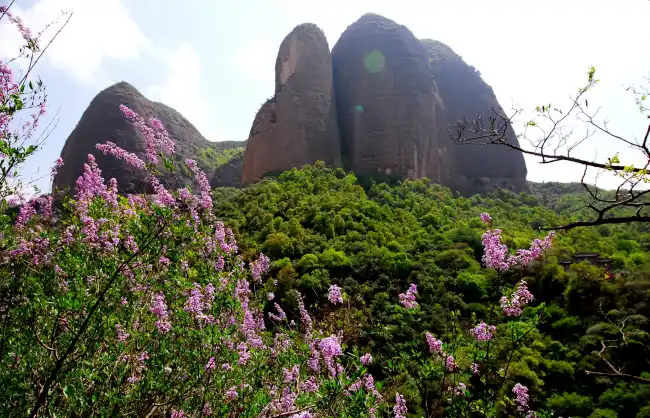
Water Curtain Cave area now includes four parts: Lashao Temple, Thousand-Buddha Cave, Xiansheng Pond and Water Curtain Cave.
Lashao Temple
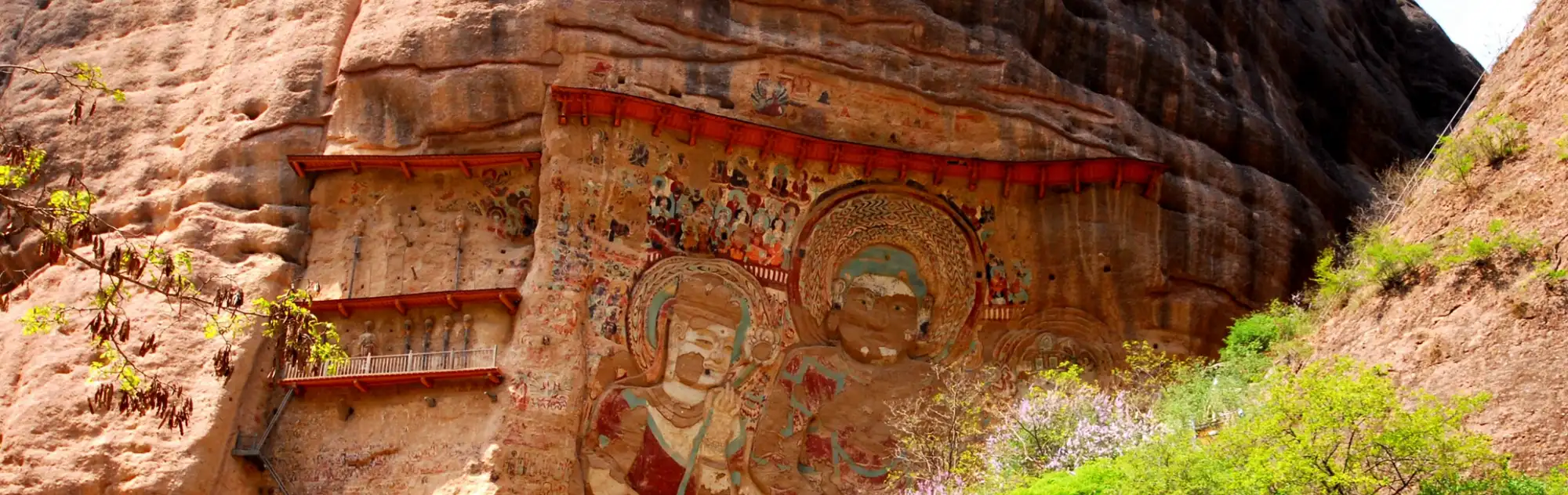
In contrast to the Water Curtain Cave, Lashao Temple preserves a large number of grottoes from the Northern Zhou Dynasty to the Yuan Dynasty. It is famous for having the world’s highest cliff relief Buddha statue, which was built by General Yuchi for the blessing of the country and the people in Northern Zhou Dynasty.
There are three reliefs carved on the steep cliff. The middle of the biggest Buddha is 42 meters high, and on both sides are Bodhisattvas holding lotus flowers and bowing to stand in awe. There are also small statues of the Song Dynasty on the surrounding shrines. These Buddha statues have the style of Theravada Buddhism, which is rare in China’s grottoes.
Thousand-Buddha Cave
There are more than 30 niches in Thousand-Buddha Cave, with nearly 1,000 Buddha statues and hundreds of square meters of murals. Thousand-Buddha Cave is divided into two parts by the wooden trestle bridge. There are fewer Buddhist niches in the upper part, and most of them are high sculptures and bisu.
The lower part of the cliff can be divided into reliefs and clay sculptures in niches, and the sculpture style is very different from the upper part. Among the hundreds of square murals, one piece in the Middle Tang Dynasty is the best. This is a beautiful pattern composed of giant Buddhas, Bodhisattvas, avatars, donors and other group images.
Xiansheng Pond
Xiansheng Pond is a natural grotto located on the southeast side of Water Curtain Cave, and there is a pool in it that drips all the time. Most of the Buddha statues in the cave were made during the Tang Dynasty (618-907), but only a few remnants remain today. You can see the murals of the Northern Zhou Dynasty, the Sages Wall and other interesting attractions.
Water Curtain Cave
It is opposite the Lashao Temple. The inner wall of Water Curtain Cave is painted with murals from the Northern Zhou Dynasty and Song and Yuan Dynasties, among which there is a painted mural of a wagon pulled by an ox. The oxcart features a typical style of Wei and Jin dynasties (220-420), with tall wheels and rectangular body. The ox was painted in deep red, with strong muscles and bodies. This mural is an exquisite work of art in Water Curtain Cave.
In addition, you can also watch the spectacular waterfalls of different heights.
How to Get to Water Curtain Cave
By bus: Starting from Wushan County, you can take the direct bus from Wushan Cultural and Sports Center to the Water Curtain Cave scenic area, with the ticket of 5 yuan/person. Also, Tianshui South Railway Station has opened a direct tourist line to Water Curtain Cave scenic area.
By self-driving: If you drive from Wushan County, it takes about 2.5 hours to Water Curtain Cave.

Attractions nearby Water Curtain Cave
- Maijishan Grottoes: Known as the Oriental Sculpture Museum, it is also the ancestor of the Chinese Buddhist royal grottoes.Maijishan Grottoes is famous for magnificent Buddha statues and exquisite murals.
- Maiji Mountain Scenic Area: Itattracts many people for its rich variety of plant and animal species, unique geological features and climate.


