




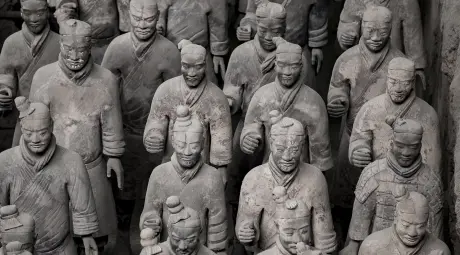


For international travelers planning a trip including several countries, China’s latest 240-hour (10-day) visa-free transit policy definitely offers you great convenience.
This policy applies to 55 countries. Tourists from these countries can stay in China without a visa for 10 days for travel, business affairs, visiting friends or family and other activities, as long as they hold a valid international travel document and a connecting ticket departing for a third country or region within 240 hours. This article will be a detailed interpretation and a practical guide of the latest policies in 2026.

Content Preview
What is China’s 240-Hour Visa-Free Transit Policy? What Requirements Need to be Met?
It is a major upgrade on the former 72-hour and 144-hour visa-free transit policies. In essence, this is not standard visa-free entry, but rather a transit facilitation measure. According to the policy, eligible travelers holding a connecting ticket to a third country or region with a confirmed date and seat can enjoy visa-free travel within the designated provinces, regions or cities up to 240 hours (10 days) when they transit through China.
Note: The stay period does not begin the moment you land, instead, it is calculated from 00:00 (Chinese Standard Time) on the next day of your arrival. So, it means you will enjoy a little bit more time than 240 hours actually.
Core Requirements:
- Travelers must hold a regular passport from one of the 55 eligible countries.
- The validity period of the international travel document should be more than 3 months.
- A confirmed connecting ticket to a third country or region is a must, which means your country of departure and your next destination must be different.
Definition of a third country or region: It refers to any country or region outside of the Chinese Mainland, including Hong Kong, Macao and Taiwan.
- You are only allowed to travel in the 24 provinces, regions or cities included in the policy. Till now, Xizang, Xinjiang, Gansu, Qinghai, Ningxia, Inner Mongolia and Jilin are not covered.
Examples of Feasible and Infeasible Travel Routes Based on the Policy
- Feasible travel routes:
Los Angeles → Beijing → Xi’an → Shanghai → Hong Kong
Tokyo → Shanghai → Bangkok
London → Hong Kong → Guilin → Chengdu → Singapore
Singapore → Chengdu → Chongqing → Guilin → Hong Kong
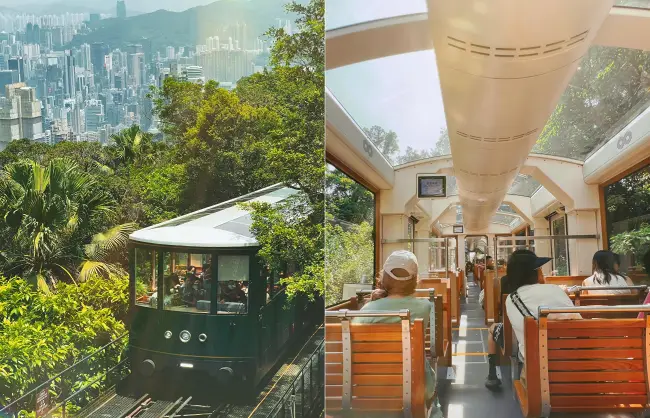
Explore four powerhouse cities of the Greater Bay Area visa-free, from Hong Kong's iconic skyline to Macau's Portuguese heritage and Guangzhou and Shenzhen's dynamic fusion of old and new.
- Infeasible travel routes:
Sydney → Guangzhou → Shenzhen → Hong Kong → Sydney
London → Beijing → Urumqi (Xinjiang) → Chengdu → Singapore
New Delhi → Shanghai → Suzhou → Hangzhou → Tokyo
Tokyo → Shanghai → Hangzhou → Suzhou → Shanghai → Tokyo

Combine Yunnan's Lijiang and Shangri-La highlights with Zhangjiajie's surreal sandstone pillars and glass bridge walk.
Who is Eligible for the 240-Hour Visa-Free Transit Policy?
As of May 2026, foreign nationals from the following 55 countries are eligible for China’s 240-hour visa-free policy.
- Europe (40 countries): Austria, Belgium, Czech Republic, Denmark, Estonia, Finland, France, Germany, Greece, Hungary, Iceland, Italy, Latvia, Lithuania, Luxembourg, Malta, Netherlands, Poland, Portugal, Slovakia, Slovenia, Spain, Sweden, Switzerland, Monaco, Russia, United Kingdom, Ireland, Cyprus, Bulgaria, Romania, Ukraine, Serbia, Croatia, Bosnia and Herzegovina, Montenegro, North Macedonia, Albania, Belarus, Norway.
- America (6 countries): US, Canada, Brazil, Mexico, Argentina, Chile.
- Oceania (2 countries): Australia, New Zealand.
- Asia (7 countries): South Korea, Japan, Singapore, Brunei, United Arab Emirates, Qatar, Indonesia.
Visa-Free Travel Itineraries & Popular China Tours within 10 Days
Taking advantage of the 240-hour visa-free policy, you can craft a highly flexible tour with multiple destinations. A 10-day tour allows you to complete the classic travel routes in China. The most popular and efficient itineraries are listed below.
1. Classic 8-day Golden Triangle Tour (Beijing, Xian & Shanghai)
This route includes the two most representative ancient capitals and one modern metropolis and offers a perfect blend of history, culture and modern charm.

Recommended Itinerary:
It is recommended to spend the first 3 days in Beijing, the next 2 days in Xian and the rest of the days in Shanghai. Frequent flights and high-speed trains between these cities allow you to plan a seamless travel. What’s more, each city features a distinctive culture, so you will enjoy a truly diverse experience. This is the most classic route for eligible travelers.

Visit China's golden triangle of Beijing, Xi'an and Shanghai, covering imperial palaces, ancient terracotta warriors, and futuristic skylines in just eight unforgettable days.
2. 10-day Cultural and Natural Tour (Beijing, Xian, Guilin, Shanghai)
Besides the historic sites, the itinerary also includes the world-famous karst landscape, allowing you to experience the breathtaking natural wonders in China.

Recommended Itinerary:
We recommend you to spend 3 days in Beijing, 2 days in Xian, 3 days in Guilin, and the remainder of your trip in Shanghai. Following this route, you will delve into history first and then immerse yourself in the natural landscapes and urban exploration. Since it includes several cities, it is better to book the flights or high-speed trains between the cities in advance.
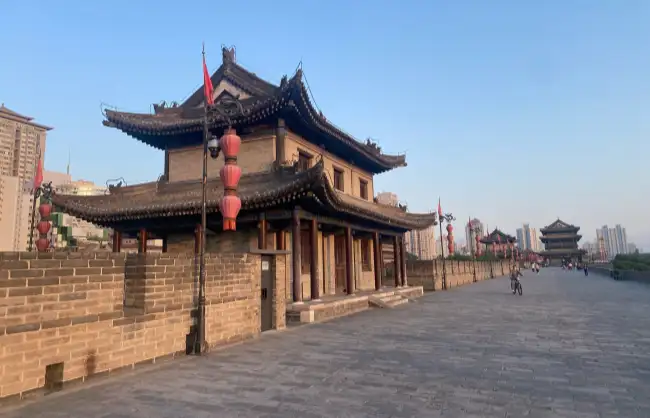
Discover Beijing, Xian, Shanghai, and Guilin on a 10-day private tour covering iconic landmarks and stunning karst landscapes from the Li River.
Our travel agency has been dedicated to tailor-made trips for over a decade. If needed, we are glad to customize a China tour based on your preferences.
What are the Entry and Exit Ports for 240-Hour Visa-Free Transit Policy?
Till 2026, the number of eligible entry ports has increased from 60 to 65. You can enter and leave through any of the following ports.
Province, Region or Cities |
Applicable Ports |
Permitted Stay Area |
Beijing |
Beijing Capital International Airport (PEK)
Beijing Daxing International Airport (PKX) |
Beijing |
Tianjin |
Tianjin Binhai International Airport (TSN)
Tianjin Seaport (Passenger) |
Tianjin |
Hebei |
Shijiazhuang Zhengding International Airport (SJW)
Qinhuangdao Seaport (Passenger) |
Hebei Province |
Liaoning) |
Shenyang Taoxian International Airport (SHE)
Dalian Zhohuizi International Airport (DLC) Dalian Seaport (Passenger) |
Liaoning Province |
Shanghai |
Shanghai Hongqiao International Airport (SHA)
Shanghai Pudong International Airport (PVG) Shanghai Seaport (Passenger) |
Shanghai |
Jiangsu |
Nanjing Lukou International Airport (NKG)
Sunan Shuofang International Airport (WUX) Yangzhou Taizhou International Airport (YTY) Lianyungang Seaport (Passenger) |
Jiangsu Province |
Zhejiang |
Hangzhou Xiaoshan International Airport (HGH)
Ningbo Lishe International Airport (NGB) Wenzhou Longwan International Airport (WNZ) Yiwu International Airport (YIW) Wenzhou Seaport (Passenger) Zhohan Seaport (Passenger) |
Zhejiang Province |
Anhui |
Hefei Xinqiao International Airport (HFE)
Huangshan Tunxi International Airport (TXN) |
Anhui Province |
Fujian |
Fuzhou Changle International Airport (FOC
Xiamen Gaoqi International Airport (XMN) Quanzhou Jinjiang International Airport (JJN) Wuyishan International Airport (W) Xiamen Seaport (Passenger) |
Fujian Province |
Shandong |
Jinan Yaoqiang International Airport (TNA)
Qingdao Jiaodong International Airport (TAO) Yantai Penglai International Airport (YNT) Weihai Dashuipo International Airport (WEH) Qingdao Seaport (Passenger) |
Shandong Province |
Henan |
Zhengzhou Xinzheng International Airport (CGO) |
Henan Province |
Hubei |
Wuhan Tianhe International Airport (WUH) |
Hubei Province |
Hunan |
Changsha Huanghua International Airport (CSX)
Zhangjiajie Hehua International Airport (DYG) |
Hunan Province |
Guangdong |
Guangzhou Baiyun International Airport (CAN)
Shenzhen Baoan International Airport (SZX) Jieyang Chaoshan International Airport (SWA) Nansha Seaport (Passenger) Shekou Seaport (Passenger) Pazhou Ferry Terminal Hengqin Port Hong Kong-Zhuhai-Macao Bridge Port Zhongshan Seaport West Kowloon Station of the Guangzhou-Shenzhen-Hong Kong High-Speed Railway |
Guangdong Province |
Hainan |
Haikou Meilan International Airport (HAK)
Sanya Phoenix International Airport (SYX) |
Hainan Province |
Chongqing |
Chongqing Jiangbei International Airport (CKG) |
Chongqing |
Guizhou |
Guiyang Longdongbao International Airport (KWE) |
Guizhou Province |
Shaanxi |
Xi’an Xianyang International Airport (XIY) |
Shaanxi Province |
Shanxi |
Taiyuan Wu International Airport (TYN) |
Taiyuan and Datong |
Heilongjiang |
Harbin Taiping International Airport (HRB) |
Harbin |
Jiangxi |
Nanchang Changbei International Airport (KHN) |
Nanchang and Jingdezhen |
Guangxi |
Nanning Wuxu International Airport (NNG)
Guilin Liangjiang International Airport (KWL) Beihai Fucheng Airport (BHY) Beihai Seaport (Passenger) |
Nanning, Liuzhou, Guilin, Wuzhou, Beihai, Fangchenggang, Qinzhou, Guigang, Yulin, Hezhou, Hechi, Laibin |
Sichuan |
Chengdu Shuangliu International Airport (CTU)
Chengdu Tianfu International Airport (TFU) |
Chengdu, Zigong, Luzhou, Deyang, Suining, Neijiang, Leshan, Yibin, Ya’an, Meishan, Ziyang |
Yunnan |
Kunming Changshui International Airport (KMG)
Lijiang Sanyi International Airport (LJG) Mohan Railway Port |
Yunnan Province |
Note: The inclusion of West Kowloon Station of the Guangzhou-Shenzhen-Hong Kong High-Speed Railway means that this policy is also applicable when traveling to and from the Chinese Mainland by high-speed train via West Kowloon Station in Hong Kong.
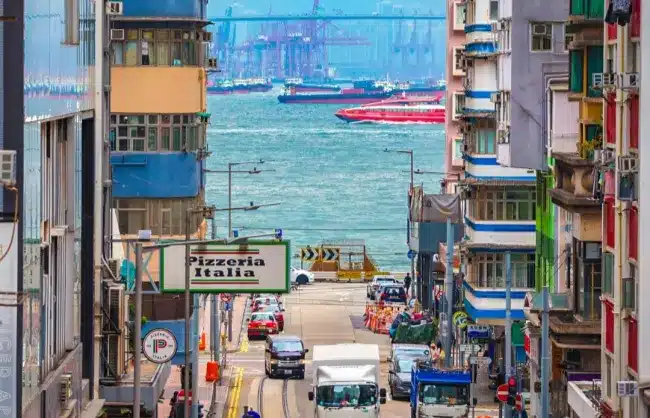
Documents Required for Applying for a 240-Hour Visa-free Transit
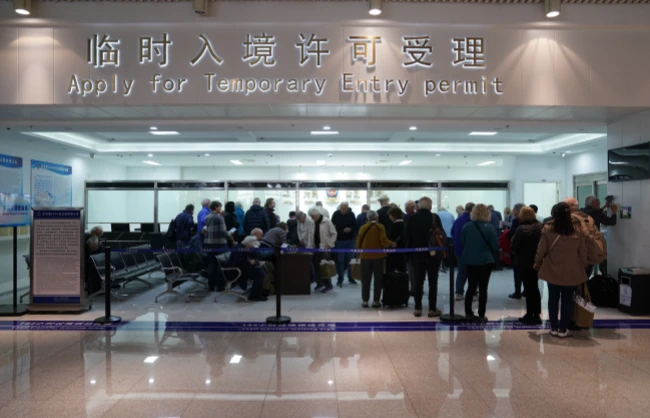
When arriving at the entry port, you must present several essential documents to the border inspection officer to apply for visa-free transit. The paperwork is straightforward, but each one is crucial!
- A valid international travel document, specifically, an ordinary passport issued by any of the 55 countries listed above with a validity period of at least 3 months.
- A connecting flight ticket, steamer ticket or train ticket to a third country or region that has a confirmed date and seat and departs within 240 hours of your arrival.
- A completed arrival card. You can fill it in online via the official website of the National Immigration Administration or the government service platform before departure. Also, you can complete a physical card on the plane or collect and fill it out at the port on site upon arrival.

Explore Beijing's Forbidden City and Great Wall, Xi'an's Terracotta Warriors, and Shanghai's skyline with Zhangjiajie's surreal sandstone peaks.
240-Hour Visa-Free Transit Policy vs. 30-Day Visa-Free Entry Policy
Besides the 240-hour visa-free transit policy, China has also implemented a 30-day visa-free entry policy for a broader range of countries. These two policies are often confused, but they are actually completely different. The major differences are as follows.
240-Hour Visa-Free Transit Policy |
30-Day Visa-Free Entry Policy
|
|
Duration of Stay |
Maximum of 10 days (240 hours) |
Maximum of 30 days (15, 60 or 90 days for some countries) |
Essential Requirements |
A connecting ticket to a third country or region |
No connecting ticket is needed (you are not required to transfer to a third country), allows for direct entry. |
Applicable Countries |
55 countries (refer to the above content) |
Over 70 countries, such as Thailand, Malaysia, Kazakhstan, etc. (Whether extensions apply to certain countries is subject to the latest announcement.) |
Permitted Areas |
Restricted to 24 provinces/regions/municipalities; excludes 7 provinces/regions including Xizang and Xinjiang |
Generally allows travel nationwide (Note: A separate Tibet Travel Permit is still strictly required for a tour to Xizang) |
Best For |
Multi-country travelers planning a short layover or sightseeing stop in China. |
Travelers heading specifically to China for tourism, business visits, visiting friends or family, etc. |
FAQs about 240-Hour Visa-Free Transit Policy
- How is the 240hours calculated for the 240-hour visa-free transit policy?
The 240 hours is calculated from 00:00 the day after your arrival. To make it easier for you to understand, here is the example. If you enter China on May 1, 2026, your 240-hour period begins at 00:00 on May 2. And you must leave China before 23:59 on May 11.
- Can I enter the Chinese mainland by train via Hong Kong with this policy?
Yes. Travelers can fly into Hong Kong from any oversea departure point and then enter the Chinese mainland by high-speed train at West Kowloon Station.
- Can I follow the itinerary of US– Hong Kong – Beijing – Shanghai – Hong Kong – US with this policy?
No, because Hong Kong is regarded a third region according to the policy, which means your point of departure and your next destination is the same in this itinerary.
Here are the examples:
× Invalid Route: US – Hong Kong – Beijing – Shanghai – Hong Kong – US
√ Valid Route: US – Hong Kong – Beijing – Shanghai – Macau – US
- Can I travel across provinces with this policy?
Yes. In the 10-day duration of stay, you can travel freely in the 24 provinces, such as:
Beijing – Xi’an – Zhangjiajie – Shanghai
Shanghai – Chengdu – Xi’an – Beijing
Enjoy a Worry-free China Tour with China Xian Tour
In summary, as long as you hold a passport from any of the 55 countries and an onward ticket to a third destination, and enter through one of the 65 entry ports, the 240-hour visa-free transit policy is an incredible tool for planning a brief but in-depth China tour. Just remember to check the latest information from the English official website of National Immigration Administration.
If interested, China Xian Tour is pleased to tailor a trip based on your interests and length of stay. Our travel bring over a decade of expertise in inbound tourism and are experienced in customizing high-end China tours. And we can guarantee the best possible value based on comparable service quality from any other China travel agency. So do not hesitate to contact us.


