



The Splendid History of Juyong Pass
Written by Clementine |
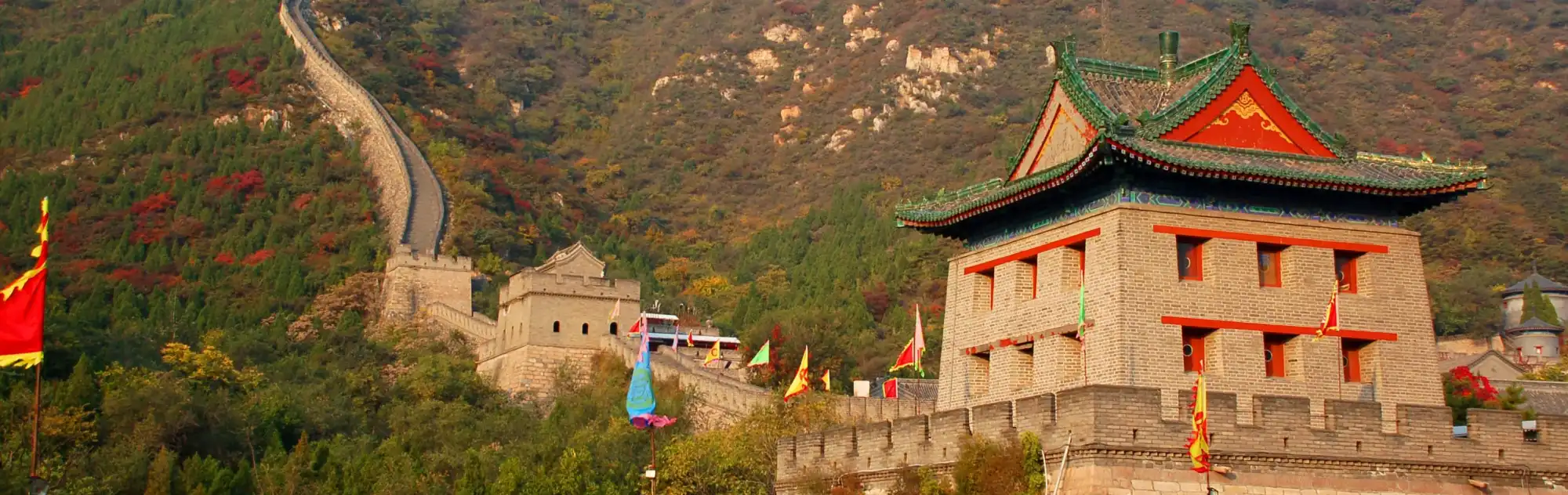
Juyong Pass is a great site to visit in Beijing-Xian tours. It is about 50 km to Beijing, built in the Guangou which is 15 km long from the Datong and Xuanhua to Beijing. Mountain Taihang from Shanxi Province to Hebei has several hundred miles long, from and it very steep. The eight roads were called Taihang eight roads.
In the 30-meter-long pass valley, there were rivers surrounded the ragged mountains on which there are deeply green grass and woods in which birds fly and sing. Juyong Pass is one grandiose spectacle in the northwest of Beijing.
Origin of the Name “Juyong Pass”
It was recorded that the name Juyong Pass is known for the living of immigrates of laborers during the Qin Dynasty. At that time, the Great Wall was not passing through here, but spreading to Liaodong from the further place in the North. When building the Great Wall, Qin Shihuang (whose tomb can be seen if you travel Xian) once set up 12 counties along it in order to develop the places along the Great Wall and ensure the supply.
Among of the 12 counties, Shanggu County was located in Yanqing, Changpin, Huailai, Xuanhua, Baoan near nowadays the Juyong Pass. It is possible for some civilians and prisoners to be immigrated here, later; there are also some records that some people immigrated into Juyong Pass.
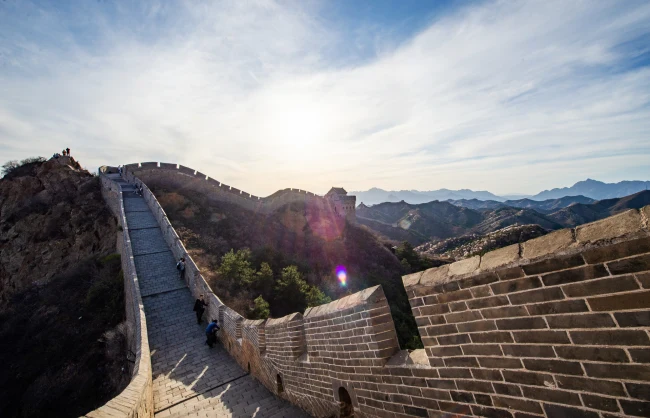
The Development of Juyong Pass History
Juyong Pass has been a militarily important pass since the Yan Dynasty. By the Han Dynasty, it had already taken shape. Throughout the Tang, Liao, Jin and Yuan dynasties, Juyong Canyon has always been fortified and witnessed countless historical moments. Genghis Khan passed through this pass when he conquered the Jin Dynasty. The pass we see today was built during the Hongwu period of the Ming Dynasty, and is steeped in history.
Spring and Autumn and Warring States Periods
As early as the Spring and Autumn and Warring States Periods, the state of Yan was controlling this mouth. Juyong Pass was the eighth of them. Huainanzi said: “There are nine barriers of the world, Juyong was one of them.” Jin history said: “Zhongdu (Jin’s capital) has Juyong, just like Qin has Yaohan (a country), Shu has Jianmen( a barrier too).” The stratagem status is just like the gate of the capital. The barrier should be guarded against carefully.
√Related reading: Mutianyu Great Wall
Jin Dynasty
It was considered as one of the eight most grandiose spectacles for its “greenness of Juyong Pass” in the Jin Dynasty eight hundred years ago. There were many places of interests and history sites, called seventy two sights altogether, such as Stone forward the capital, the Green Hazard, Heads of Five Ghosts, the Sculpture of Yang Wulang, Piano Vally, Joss Bridge, the Platform of appointing generals, the hitching post.
Northern Wei Dynasty
Juyong Pass was not originally a pass on the Great Wall line. The construction of the Juyong Pass Great Wall began during the Northern Wei Dynasty, and then during the Northern Qi Dynasty, the Great Wall was built from the northern Xiakou of Youzhou to Hengzhou. Later, the Juyong Pass Great Wall was built eastward to Shanhaiguan. From then on, Juyong Pass was combined with the Great Wall and became an important gate on the Great Wall.
The Juyong Pass Great Wall surrounds the north and south towers. On the east side is the gently sloping Dongshan Great Wall, while on the west side is the steep Xishan Great Wall, with enemy towers on each side. The East Mountain Great Wall also contains a section of the Water Great Wall. The West Mountain Great Wall, with the 12th enemy tower as the high point, has a steep slope.
√Related reading: Why was the Great Wall of China Built
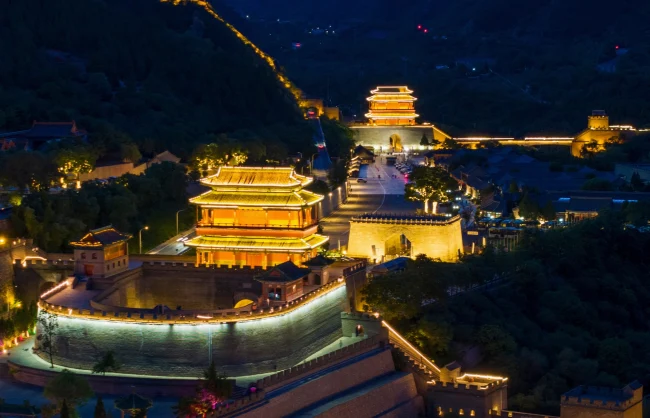
Ming Dynasty
By the Ming Dynasty, the military status of Juyongguan was further emphasized. After usurping the throne, Zhu Di (朱棣) moved the capital to Beijing in order to stabilize the territory and deal with the threat of nomadic regimes in the north. To protect the capital, Zhu Di built two Great Walls in the north: the Outer Great Wall and the Inner Great Wall.
During the Ming Dynasty, Juyong Pass was known as one of the four most famous passes in western Beijing, along with Zijing Pass, Pouring Horse Pass and Guguan Pass. The Juyong Pass, Zijing Pass and Pouring Horse Pass were also known as the Inner Three Passes, highlighting their importance during the Ming Dynasty.
In the early years of Hongwu, the imperial court sent generals to preside over the construction of Juyongguan City, which made Juyongguan’s architectural facilities reach the most complete degree. Since then, Juyong Pass consists of several parts such as the Juyong Pass Great Wall, enemy towers, archery towers, and the Guan Cheng, forming a closed-loop circular defense system.


