

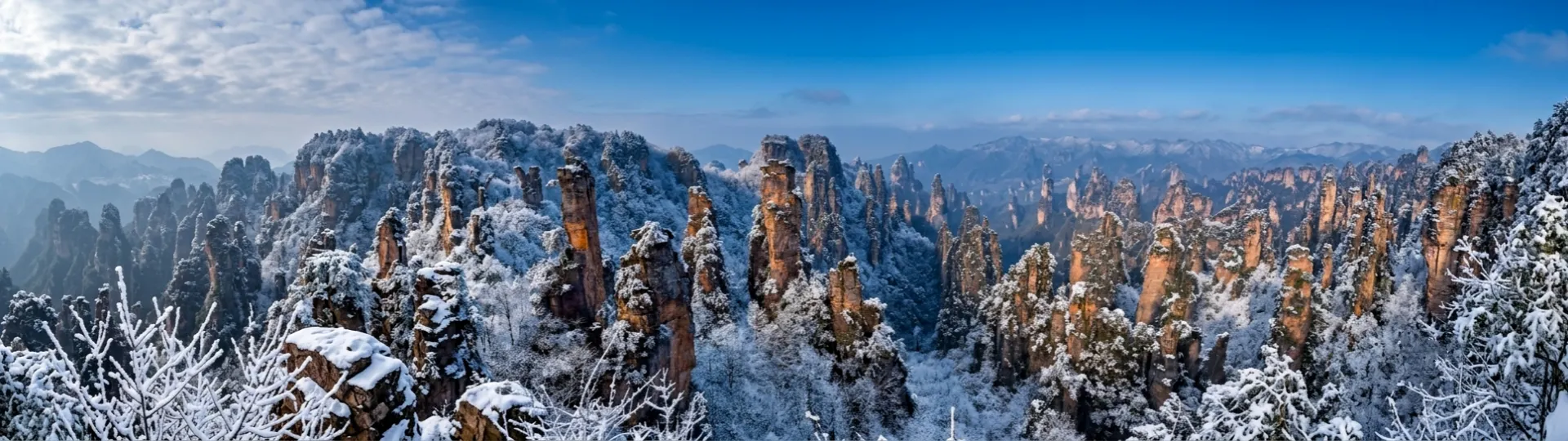
Many people know Zhangjiajie as an emerald wonderland in summer, but few realize Zhangjiajie winter scenery is just as breathtaking. Winter is actually a perfect season for admiring snow and taking excellent photos in Zhangjiajie.
From December to February, when the first snow arrives, Zhangjiajie turns into a silver fairyland. The usually lush green peaks are blanketed in pure white snow. Clouds drift over the summits. Crystal rimes hang on pine trees. All these make Zhangjiajie a real paradise for shutterbugs. Besides, there are fewer tourists, so you can enjoy favorable hotel prices and expect short queues for the cable car.
However, the ever-changing weather, frozen steps, and low temperature may pose challenges to you if you are not well prepared. Here is a detailed guide to the pros of Zhangjiajie winter travel and all the things you need to know.
Content Preview
- Why Is Zhangjiajie Worth Visiting in Winter?
- Zhangjiajie Winter Weather & Temperature
- What Are the Best Things to Do in Zhangjiajie in Winter?
- How to Plan Your Winter Trip to Zhangjiajie?
- What to Wear in Zhangjiajie Winter & Packing List
- Other Things You May Want to Know & Faqs
- Summary
Why Is Zhangjiajie Worth Visiting in Winter?
Common sense tells us that spring and autumn are the best time to travel to Zhangjiajie, but in reality, winter owns advantages not found in other seasons. For photography enthusiasts, seasoned travelers, and budget-conscious travelers, winter may bring an even better travel experience than the peak season as long as they are willing to brave the cold.
1. You can enjoy the most stunning snow landscape in Zhangjiajie throughout the year.
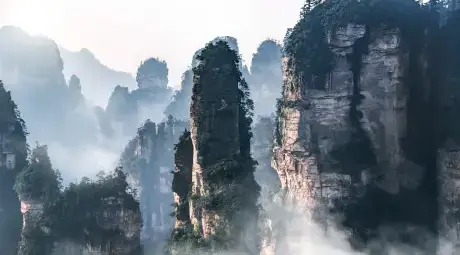
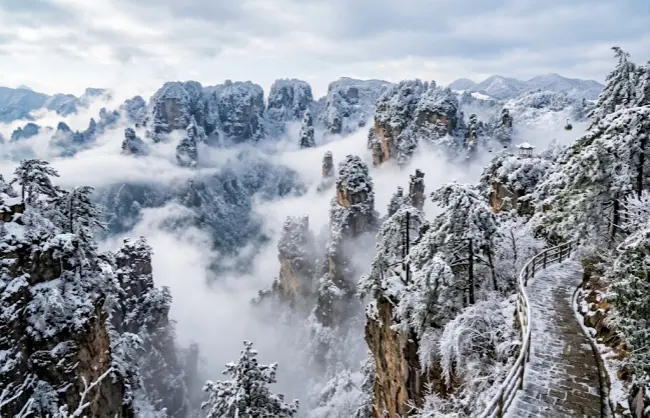
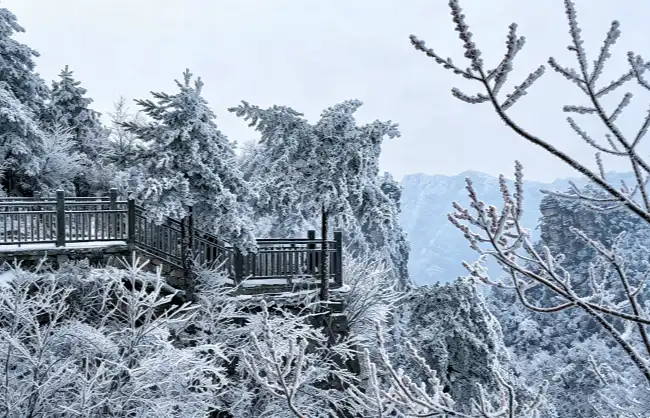
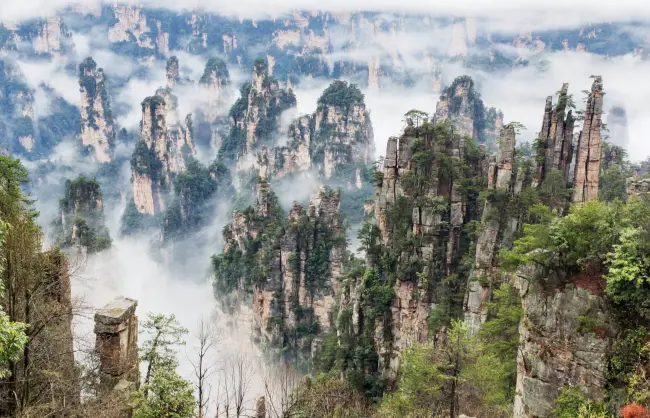
What makes Zhangjiajie National Forest Park a fascinating winter destination is the peak forests in the snow. Thousands of towering sandstone peaks are cloaked in white, as if they were floating in the sea of clouds. The rimes flicker in the sunlight, making the peaks a crystal palace. It’s exactly a real-life Chinese ink-wash painting. This also resembles to the background setting of the film Avatar.
2. It’s crowd-free in winter.
Winter is the off-season in Zhangjiajie. This means:
- You won’t face long queues for the Bailong Sky Elevator.
- The number of tourists at the viewing platforms in Yuanjiajie and Tianzi Mountain significantly decreases.
- Compared with that during the peak travel seasons of spring and autumn, the waiting time for Tianmen Mountain Cableway is much shorter.
Taking these factors into account, you will get a more relaxed travel experience.
3. Lower travel costs.
Hotel prices typically drop by 20% to 50% in winter compared with those during the Golden Week (Oct. 1 – 7 & Spring Festival Holiday) and summer vacation. Many homestays offer even more discounts. In addition, some scenic spots may issue low-price off-season tickets, which is very friendly to budget travelers.
4. A high chance to see the sea of clouds.
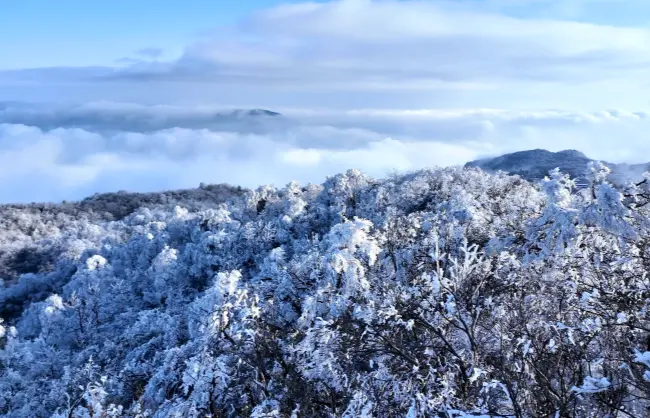
There is a high chance of forming a sea of clouds when the cold and warm air converge in winter. Many experienced photographers will seize the right day for capturing the snow scenery. Usually, if it snows one day and clears up the next day, it will be a perfect time to take photos on the next day.
Zhangjiajie Winter Weather & Temperature
Many tourists have this concern, “Is Zhangjiajie extremely cold in winter?”
Actually, the urban area of Zhangjiajie is not classified as an extremely cold region in winter. However, due to the high altitudes of the popular attractions like Zhangjiajie National Forest Park and Tianmen Mountain, the actual perceived temperature is generally 4-8℃ lower than the city area. Plus, as the mountainous area is more humid, you may feel colder than what is reported in the weather forecast. To sum up, as long as you dress warmly, it’s fine to visit Zhangjiajie in winter.
December |
January |
February |
|
Daytime Temperature (Ave.) |
11°C |
9°C |
10°C |
Night Temperature (Ave.) |
3°C |
1°C |
3°C |
Chance of Snow |
★★ |
★★★★ |
★★★★★ |
Weather Features |
Early winter, relatively dry with occasional snowfall |
The coldest month of the year, marking the beginning of the best season to see snow |
It’s most probable to see snow scenery during this period. The number of tourists may increase during the Spring Festival Holiday. |
Note: In high-altitude areas like Tianmen Mountain and Tianzi Mountain it will be very windy, please prepare warm clothes for temperatures around 0°C.
Zhangjiajie Weather in December
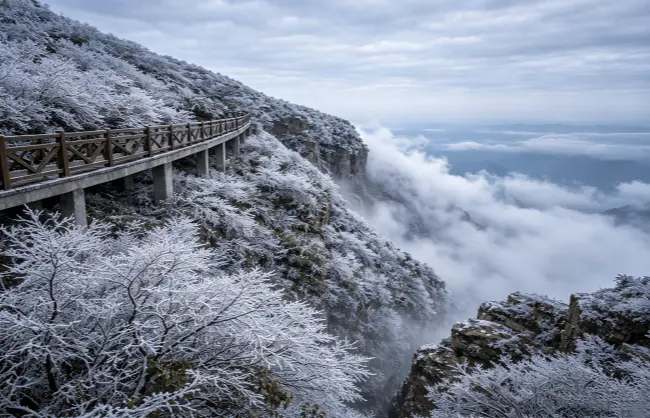
December officially marks the beginning of Zhangjiajie’s winter. It’s also the most pleasant month in winter for the mild temperature. During daytime, the temperature hovers around 10°C, while at night it drops to approximately 3°C. With little rainfall, the air is relatively dry. In this month, the first snow and rime may occur on the mountaintop.
For those who dislike the severe cold and wish to avoid the peak season, December is a wonderful option. Considering the shorter daylight hours (the sun typically sets around 5:40pm), it’s recommended to finish your mountain tour before dusk.
Zhangjiajie Weather in January
In Zhangjiajie, January is the coldest month of the year. During this period, it may frequently snow in the mountainous area. Rimes, icicles, and cloud sea are easy to form.
Starting from late January, the probability of snowfall increases dramatically. The best snow scenery usually appears at this time. If you plan to photograph snow, be sure to keep an eye on the weather forecast. Experienced photographers usually enter the scenic area on the first sunny day after snowfall to capture the best images.
Zhangjiajie Weather in February
It gradually warms up from February, but still belongs to winter. Compared with January, the daytime temperature slightly increases. Nevertheless, there is a high chance of snow in mountainous areas. The temperature difference between day and night is still noticeable. The number of tourists will soar around the Spring Festival Holiday, which usually falls in February.
If you seek both the best snow scenery and relatively comfortable climate, February is a good time to go. Please note that if you travel during the Spring Festival, make a reservation for hotels and scenic area tickets in advance to avoid price increases or room shortage.
What Are the Best Things to Do in Zhangjiajie in Winter?
Zhangjiajie winter travel is not just about admiring snow. It can be very diverse. Apart from the classic snow-covered peak forest, you can explore the Tianmen Mountain to appreciate rimes and cloud sea, venture into the warm Huanglong Cave, take a hot spring bath, and watch the grand folk performances. We recommend you to include indoor and outdoor attractions in your travel itinerary and flexibly adjust them according to the weather condition. In this way, your travel experience won’t be affected even if it snows or gets foggy.
1. Marvel at the Snow-covered Peak Forest in Zhangjiajie National Forest Park (★★★★★)
If your time only allows for visiting one attraction, it must be Zhangjiajie National Forest Park. The key sites you should not miss include Yuanjiajie (the prototype of the floating mountains in Avatar), Tianzi Mountain, Ten Mile Gallery, and the Golden Whip Stream.
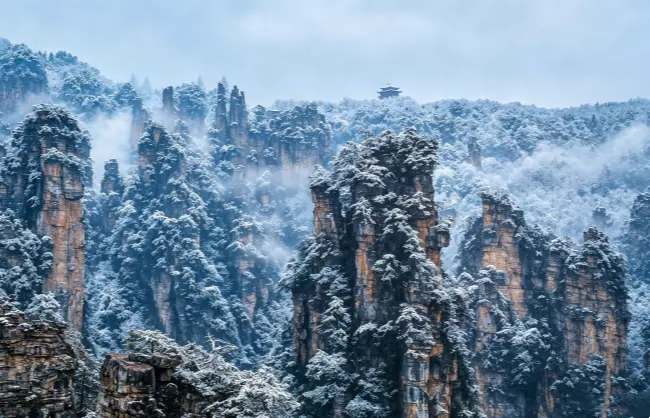
After it snows, thousands of quartz sandstone pillar-shaped peaks are cloaked in a pure whiteness. They form a fabulous winter wonderland together with the sea of clouds and crystal rimes. Unlike the peak travel season, few tourists can be seen on the observation deck, so that you can take photos without being disturbed by the crowds.
Note: If the weather forecast shows that it will snow at night, consider entering the scenic area in the next morning for the unspoiled snow scenery and soft lighting.
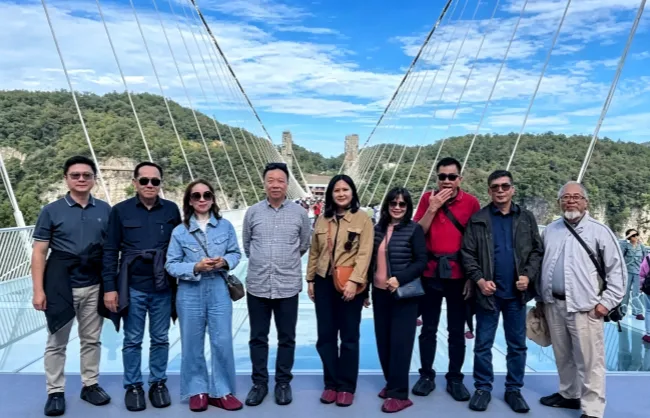
Discover Zhangjiajie's breathtaking natural beauty including the National Forest Park, Glass Bridge, Tianzi Mountain, Tianmen Cave, and a cruise on Baofeng Lake.
2. Immerse Yourself in the Rimes and Cloud Sea at Tianmen Mountain
Tianmen Mountain is a winter destination that any shutterbugs do not want to miss. The main highlights are the snow scenery in Tianmen Cave, rimes on the mountaintop, sea of clouds, icicles, and the snow landscape along the world’s longest alpine cableway.
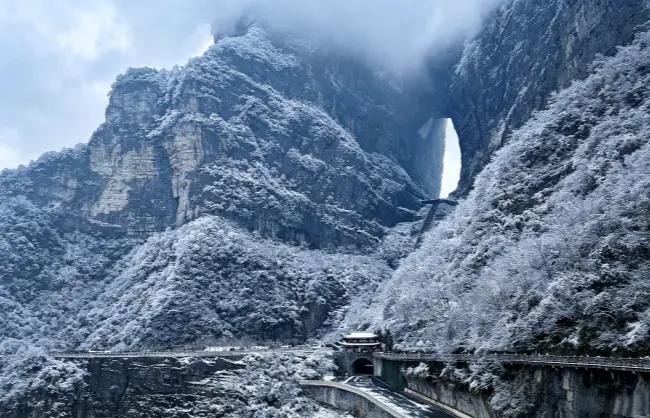
On sunny days, taking a cable car slowly through the snow-covered valley is one of the most breathtaking experiences in Zhangjiajie.
It’s worth mentioning that in case of heavy snow, icy road or strong wind, some footpaths, glass walkways and Tianmen Cave may be closed temporarily. The operation hours of the cable car may also be adjusted according to the weather conditions. Please pay attention to the official announcement of the scenic area on the day you visit.
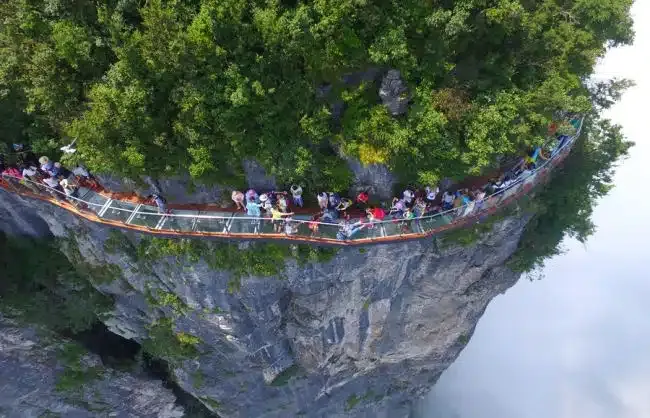
Tianmen Mountain is an incredible place in Zhangjiajie, with the scenery literally out of the world.
3. Visit Huanglong Cave to Escape the Harsh Winter Cold
If it happens to snow continuously, or persistent heavy fog causes low visibility on the mountaintop, you can go to Huanglong Cave instead.
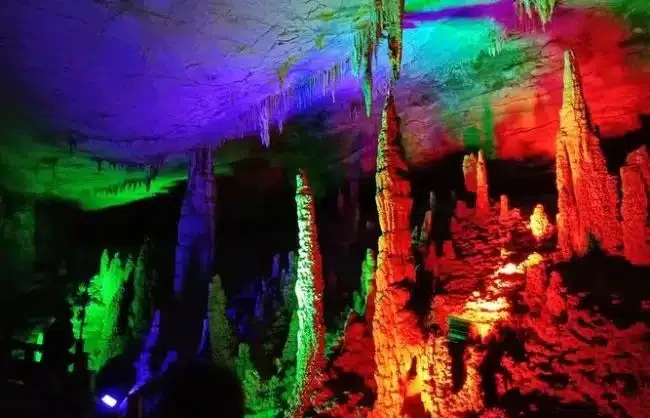
It has some unique advantages. As a sheltered attraction, the cave maintains a constant temperature of about 16℃ throughout the year. You will feel warm even in winter and your visit won’t be affected by rain and snow. It’s an easy trip not involving long walks, ideal for those travelling with the elderly and children. The mysterious underground river, stalactites, and the cave itself are exactly what make this a true adventure tour.
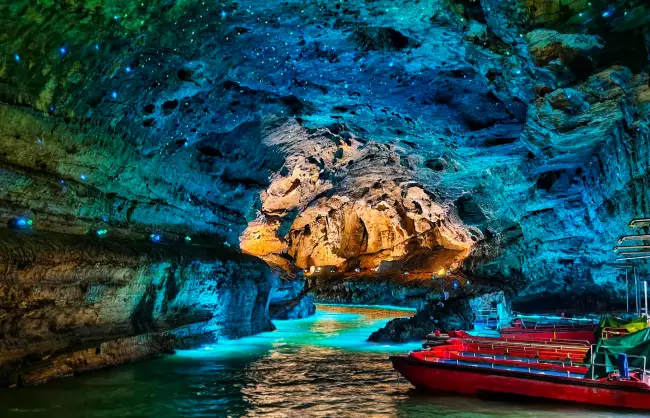
4. Take a Hot Spring Bath
In winter, nothing is more relaxing than soothing yourself in a hot spring bath after a day of hiking. The most popular hot spring resorts around Zhangjiajie include:
- Zhangjiajie Wanfu Hot Spring International Resort: Best for natural radon hot springs (53℃). It’s a national AAAA level forest wellness center boasting 99 characteristic pools and high-altitude glass pools. The scale is quite large and facilities are relatively new. There is also a children’s wading pool, suitable for parent-child families.
- Jiangya Hot Spring Resort: Best for high-temperature bicarbonate springs (54℃). It’s the first resort in western Hunan focusing on antique semi-outdoor hot springs. There are 20 types of pools built along the mountain, nestled between classical pavilions and towers, giving a sense of mountain gardens. It’s a perfect choice for guests who enjoy quietness.
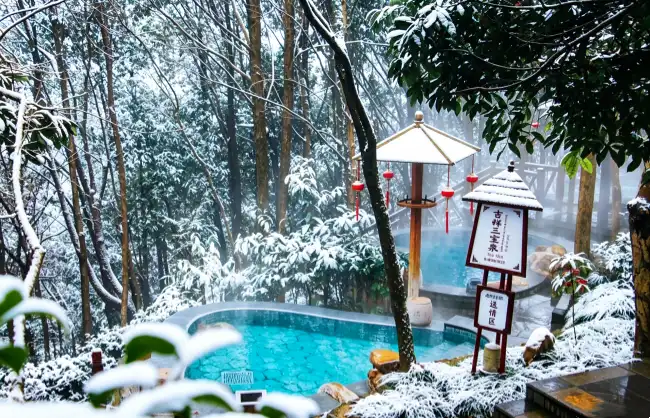
It’s recommended to schedule your hot spring bath in the afternoon or evening to help you relieve fatigue soon after the long walk during the daytime.
5. Watch an Amazing Show at Night
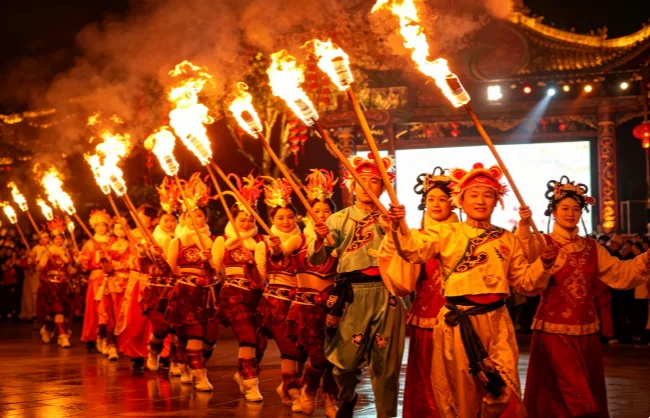
As winter days are short, why not make the best use of long nights? Consider watching a top-ranked local show like Charming Xiangxi and Eternal Love of Zhangjiajie. They both interpret the culture of local ethnic minorities through a perfect blend of singing, dancing, acrobatics and modern stage techniques. In this way, you can enjoy a rich nightlife.
How to Plan Your Winter Trip to Zhangjiajie?
We recommend that you schedule at least 3 days for a winter trip to Zhangjiajie. If you wish a more relaxed itinerary that covers the Glass Bridge, Huanglong Cave and hot springs, set aside 4 days.
3 Days Zhangjiajie Winter Tour Plan
Day 1: Tianmen Mountain: Tianmen Mountain Cableway – Mountaintop Plank Roads – Glass Walkway (when open) – Tianmen Cave
Day 2: Zhangjiajie National Forest Park: Bailong Sky Elevator – Yuanjiajie – Tianzi Mountain – Helong Park
Day 3: Morning: Ten Mile Gallery + Golden Whip Stream; Afternoon: Huanglong Cave.
Explore Zhangjiajie's natural and man-made wonders including Tianzi Mountain, Yuanjiajie, Tianmen Mountain, Bailong Elevator, and the Glass Bridge on a private adventure.
4 Days Zhangjiajie Winter Travel Itinerary
Day 1: Tianmen Mountain
Day 2: Yuanjiajie + Yangjiajie
Day 3: Tianzi Mountain + Ten Mile Gallery + Golden Whip Stream
Day 4: Zhangjiajie Glass Bridge + Grand Canyon + Hot Springs
Note: In winter, the Glass Bridge looks better on clear days. In case of fog and snow, the scenic area may temporarily adjust the area to open for safety’s sake. Please confirm with the scenic area in advance.
A 4-day in-depth Zhangjiajie exploration tackling Tianmen Cave's 999 steps, the world's tallest outdoor elevator, the longest glass bridge, and the serene Golden Whip Stream hiking trail.
We’re glad to tailor-make a Zhangjiajie winter travel itinerary based on your personal preferences.
What to Wear in Zhangjiajie Winter & Packing List
Compared with the temperature, what you really need to cope with are the damp cold and strong winds in Zhangjiajie. In the high-altitude areas like Tianmen Mountain and Tianzi Mountain, you may feel much colder than in the urban area.
Therefore, it’s necessary to adopt the layered dressing and focus on anti-slip equipment.
Inner layer (moisture-wicking layer): thermal underwear, quick-dry clothes
Middle layer (thermal layer): fleece jacket, wool sweater, lightweight down jacket
Outer layer (windproof layer): thick down jacket, windproof and waterproof jacket
If you plan to take in the snow views or stay on the sightseeing decks for a long time, please prepare a jacket with rather good waterproof performance in case your clothes get wet from the snow.
Zhangjiajie Winter Packing List
Please prepare the following items in advance:
- Anti-slip hiking shoes (the most important)
- Ice Cleats (for snowy days)
- Thick wool socks
- Gloves
- Scarf
- Warm hat
- Vacuum bottle
- Heating pads
- Raincoat or folding umbrella
- Sunglasses (to cope with the strong sunlight after snow)
- Power bank and backup batteries for camera (power runs out soon in low temperature)
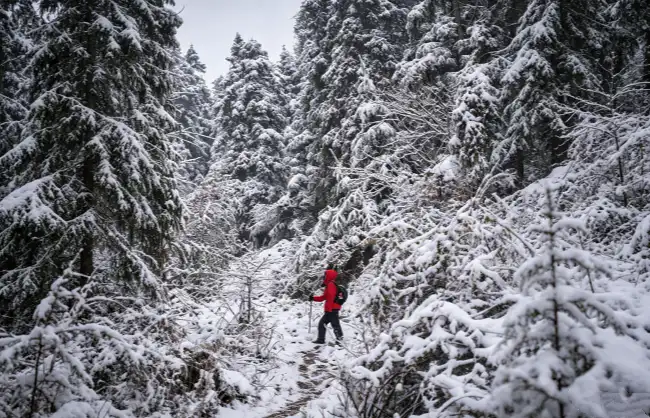
Zhangjiajie Winter Hiking Tips
- Wear professional hiking shoes if visiting after snowfall. Regular sport shoes are not recommended.
- Slow your pace and avoid running on icy mountain roads.
- Take the cableway down the mountain to avoid the risk of slipping on wet steps.
- Start to go down the mountain around 4pm to avoid limited visibility on the mountain roads after the night falls.
Other Things You May Want to Know & Faqs
Learning about these details in advance can effectively prevent travel disruptions due to weather changes. It’s also more likely for travelers to capture the most iconic snow scenery in Zhangjiajie.
When Does it Usually Snow in Zhangjiajie?
Generally speaking, the first snow of Zhangjiajie falls in mid to late December. From late January to mid February, frequent snow may occur. This is the golden window to enjoy the snow scenery in Zhangjiajie. The second day after the snow clears up is usually the best time for sightseeing and photographing.
Are Cable Cars Open in Winter in Zhangjiajie?
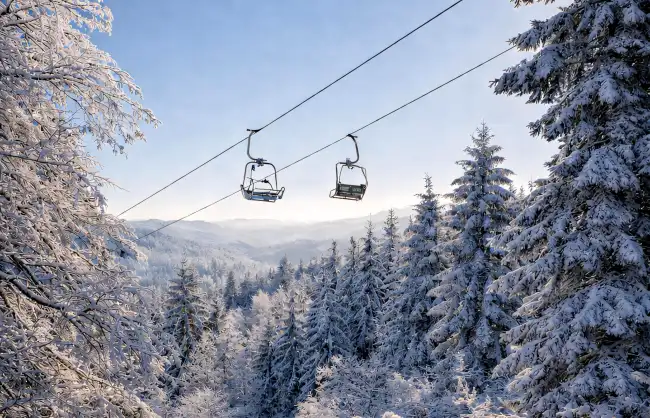
In most cases, Tianmen Mountain Cableway, Bailong Sky Elevator, Tianzi Mountain Cableway and Huangshizhai Cableway will operate normally.
However, in case of heavy snow, strong wind or icy roads, some cableways, glass walkways, and footpaths may be closed for safety reasons. Please check the official announcement or confirm this with the authority before setting off.
How Much Does it Cost to Travel to Zhangjiajie in Winter?
Winter is the off-season in Zhangjiajie, which means fewer crowds and more affordable prices. The overall budget is usually about 20% to 50% lower than in the peak seasons of spring and autumn. Many hotels and guesthouses offer favorable discounts. Some scenic areas issue cheaper off-season tickets. Even the prices for chartering a car and hiring a tour guide may decrease.
If you avoid travelling during the Spring Festival Holiday (usually falling in February, lasting 8-10 days), you may enjoy a more cost-effective trip.
Zhangjiajie Snow Photography Guide
To capture an ideal winter blockbuster, you can refer to the following suggestions:
- Enter the scenic area on the second morning after the snow clears up.
- Yuanjiajie and Tianzi Mountain are best for capturing panoramic views of peak forests.
- Tianmen Mountain is a wonderful spot for shooting rimes, sea of clouds, and cable cars.
- Wide angle lenses are suitable for portraying the grandeur of snow landscapes, while telephoto lenses are more used for highlighting the layers of peak forests.
- Prepare two or more backup batteries for the low-temperature environment. Keep them close to your body to avoid rapid battery depletion.
Summary
Definitely, winter is a recommended season to travel to Zhangjiajie for those who wish to avoid crowds, appreciate the snow scenery, and enjoy great discounts. Though it’s cold and some facilities may occasionally stop operation due to ice and snow, you will be rewarded with a unique experience as long as you stay updated on the weather forecast, dress warmly, prepare anti-slip equipment, and arrange your travel itinerary in a reasonable manner.


