


For many years, Hong Kong has always been one of the most dynamic metropolises in this world and it is particularly known for how it embraces and blends Eastern and Western cultures. Indeed, this characteristic has defined Hong Kong’s uniqueness, and hopefully this characteristic can help you understand why Hong Kong is also called a Special Administrative Region (SAR) of China (so is Macau), which means it enjoys a quite unique political and cultural status that you may not be able to see in places outside China.
Even though just with a compact size, planning a trip to Hong Kong can still be overwhelming. As a result, in this article we’ll cover some of the most essential facts about Hong Kong. From its geography and history to climate, with this information, your Hong Kong travel will be even smoother and more rewarding.
Content Preview
- Hong Kong Overview — Quick Facts
- Hong Kong Geography Facts — More Than a Concrete Jungle
- Hong Kong History Facts: From Fishing Village to Global Hub
- Hong Kong Culture, Heritage, and Food Facts
- Hong Kong Climate: Seasons and Typhoons
- Hong Kong Boasts the World’s Most Efficient Transportation System
- Hong Kong Administrative Distribution and Financial Importance
- Quick & Fun Facts About Hong Kong
- FAQs about Hong Kong’s Facts
- Plan Your Trip to Hong Kong with Us
Hong Kong Overview — Quick Facts
Item |
Detail |
Location |
Southeastern coast of China |
Official Name |
Hong Kong Special Administrative Region (HKSAR) |
Population |
Around 7.52 million |
Area |
About 1,114.6 km² |
Official Languages |
Chinese (mainly Cantonese) and English |
Hong Kong Dollar (HK$) |
|
Climate |
Subtropical. With hot humid summers, mild winters, and a rainy season with tropical cyclones. |
Airport / Connectivity |
As a major global hub with deep-water harbour and developed transport infrastructure |
Hong Kong Geography Facts — More Than a Concrete Jungle
1. A Region of Islands and Peninsulas
Many people would mistakenly think Hong Kong is a single landmass, in fact, it’s a complex region that includes Hong Kong Island, the Kowloon Peninsula, the New Territories, and numerous outlying islands. And a surprising figure is the territory comprises over 260 islands (in some references, 263 islands above a minimal size threshold). This geography has already set a tone of diversity for this city, allowing Hong Kong to blend urban zones, mountainous terrain, coastal areas and islands all together. So that here you can see a unique archipelago where city, sea and nature coexist.
2. Much More Green Than Concrete
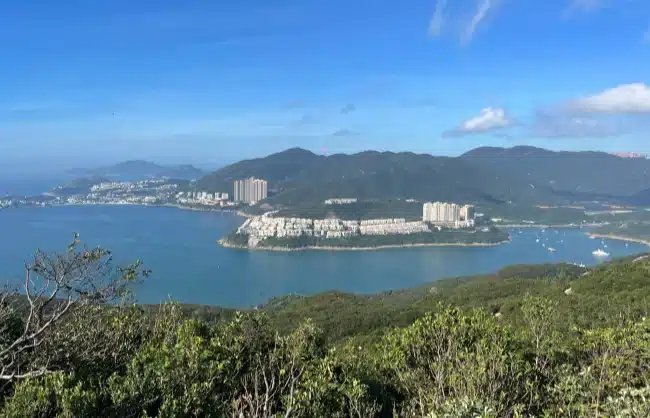
Hong Kong has long lived with the reputation for dense urban development, but in fact, a large portion of Hong Kong still remains undeveloped and green. About 40% of the land area is designated as country parks and nature reserves, so that even though Hong Kong is never a large place, people living here can still spend their time in woodland, hills, coastal areas and natural terrain.
However, it is also because of the steep, hilly terrain and natural landscape that very little flat land is available for building. And that’s why the city eventually becomes so compact and densely constructed. The green foundation contrasts sharply with the cityscape. Except for showing an incredible picture, this design also offers residents and visitors easy access to nature just minutes away from urban centers.
3. Land Reclamation: Building the Metropolis
Given the limited flat and usable land, Hong Kong has also used land reclamation to expand its developable area. Over the years, reclamation project has successfully created new land used for major urban districts. It surprisingly includes parts of the central business district on Hong Kong Island and Kowloon, as well as infrastructure such as the current international airport.
Hong Kong History Facts: From Fishing Village to Global Hub
4. A Brief Timeline: From a Quiet Backwater to a Major Port City
How old is Hong Kong? Its human history can be dated back thousands of years. Modern Hong Kong began as a British colony in 1841 (age ~184 years in 2025).
Before the mid-19th century, Hong Kong was a modest coastal region where you could only see small fishing villages and scattered rural settlements. And people wouldn’t believe that this little town can someday become a global metropolis. Later when the British took control of Hong Kong Island in 1842 after the First Opium War, the transformation also began. For some considerations, the British started to build some deep-water harbour in this town.
Then its strategic location and openness to international trade gradually turned it into a significant port and gateway between East and West. Over the following decades the territory expanded, first getting the Kowloon Peninsula included, then the New Territories. And these changes had set the foundation for Hong Kong’s journey of transforming from rural backwater to a thriving city.
5. 156 Years Under British Rule: The Colonial Period
After the 1842 cession of Hong Kong Island, additional territories were gradually incorporated. And gradually it had become one of the busiest in the world, which also brought some opportunity for trades and infrastructure construction. While the Japanese occupation during World War II (1941–1945) gravely damaged the entire place, Hong Kong had made an evolution to become a cosmopolitan global hub during this period.
6. The 1997 Handover: “One Country, Two Systems” and the End of British Rule
At midnight on 1 July 1997, sovereignty over Hong Kong was formally given back to the People’s Republic of China from the United Kingdom. At this moment, 156 years of British colonial rule finally ended. Under the agreement reached earlier (the 1984 Sino-British Joint Declaration), Hong Kong became a Special Administrative Region (SAR).
It is allowed to retain a high degree of autonomy, and to be more specific, it can have its own legal, economic and social systems for at least 50 years after the handover. This transition ushered in a new chapter for the city: while Hong Kong still remains deeply rooted in its colonial-era infrastructure and global connections, it will embrace its brighter future as a cherished part of China.
7. Hong Kong Once Had a Lawless “Walled City”
One of Hong Kong’s most extraordinary historical episodes was the existence of Kowloon Walled City. It is a densely populated, largely unregulated enclave located within Kowloon. Originally established as a Chinese military fort, the Walled City became a legal anomaly after the 1898 lease of the New Territories: it remained under Chinese jurisdiction while surrounded by British-controlled territory. Over decades especially after World War II, it evolved into an informal settlement attracting refugees, squatters, and people seeking shelter or anonymity. By the late 1980s the enclave housed around 35,000 people in just 2.6 hectares, making it one of the most densely inhabited places on earth.
Because of lack of formal governance, its labyrinthine alleys, stacked buildings, and unregulated economy earned it a reputation as a “city within a city,” notorious for crime and poor living conditions. In 1993–1994, the authorities demolished the Walled City and the site was later redeveloped into a public park.

Hong Kong Culture, Heritage, and Food Facts
8. East Meets West in Everyday Life
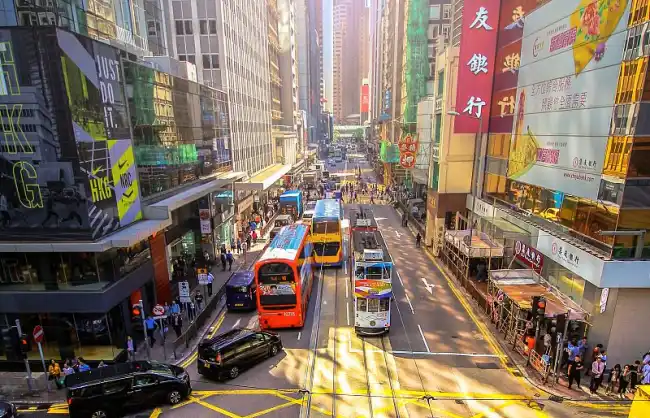
In Hong Kong, traditional Cantonese culture is deeply intertwined with Western influences. One of the most distinct reflection is Hong Kong’s language policy. While Chinese (Cantonese and Mandarin) and English share the same status, Cantonese constructs people’s everyday life, and English remains common in business, education and public signage. Such a bilingual setup, indeed, greatly helps Hong Kong shape a unique cultural identity.
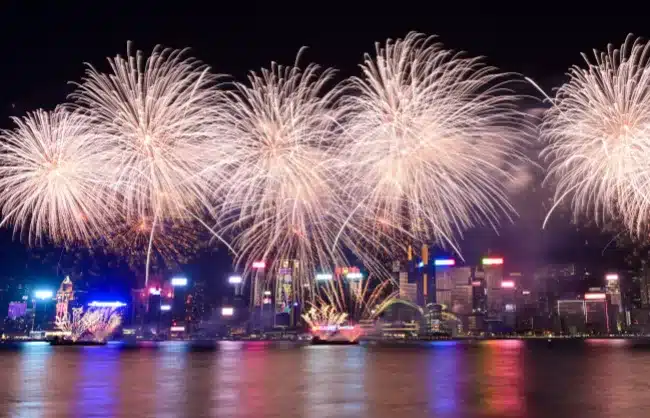
Besides, festivals and holidays also reflect the blend. Traditional Chinese celebrations like Chinese New Year or the Cheung Chau Bun Festival will be celebrated alongside Western-style holidays (like Christmas). This fusion of East and West allows Hong Kong’s modernity to grow up in its traditions and heritage.
9. Culinary Delights: The Dim Sum and Dining Culture
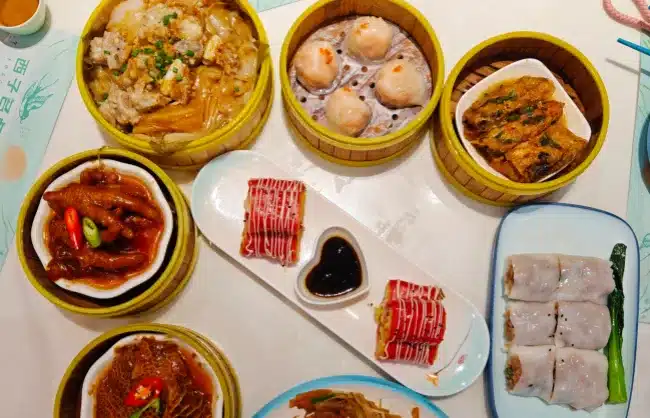
Just like many other cities in China, food also plays a central role in Hong Kong’s social and cultural life. And if you want to meet the city’s soul through food, then nothing reflects that better than “yum cha”: the ritual of tea drinking and dim sum sharing. Particularly on weekends and holidays, families and friends will get the chance to all gather to enjoy baskets of freshly steamed dumplings, buns, rice-rolls and other Cantonese specialties, and a perfect meal is not completed without a cup of jasmine or pu-erh tea. However, over time Hong Kong’s food culture has also absorbed international influences too. You can find fusion dishes and Western-style cafés alongside traditional dai pai dong stalls and classic Cantonese restaurants.
Suggested tour

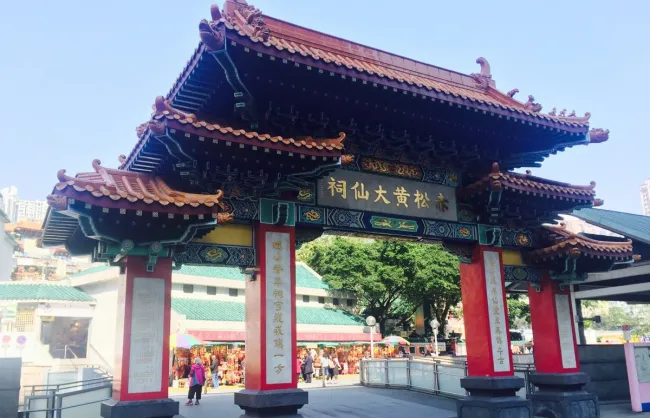
A 2-day Hong Kong food tour combining Cantonese dim sum, street snacks, Victoria Peak views, and cultural landmarks like Wong Tai Sin Temple.
10. Tipping and Etiquette: Understanding Social Norms
Although there are a lot of things that have been affected by Western culture, local etiquette, like tipping customs, tends to differ from what you’ll often see in Western cities. Many restaurants, especially Chinese or dim sum places, already include a 10% service charge in the bill, so additional tipping is not expected. At the table, be aware of some customary practices: for instance, don’t stick chopsticks upright in rice (this behavior resembles a funeral ritual). Also, when entering homes or temples, or when invited to someone’s home, people would normally bring a small gift as a polite way to show respect.
Related reading: Tipping in the Mainland of China, Hong Kong & Macau
11. Hong Kong’s Pace: Work Culture and Lifestyle
As a major global business hub and financial centre, Hong Kong is not expected to be a slow-paced city. Whether its life or work, everything is going on at a fast pace. Many people spend long hours in working, and there’s a strong emphasis on efficiency, professionalism and career ambition. While nightlife or socializing opportunities can be abundant, all those high-standard pursuits have also shaped a competitive environment. For many locals, balancing work with family, friends and personal life becomes part of navigating Hong Kong’s energetic urban rhythm.
12. Superstitions and Traditions: Cultural Quirks
Beliefs and traditional superstitions remain deeply woven into Hong Kong’s daily life. One of the most famous is the avoidance of the number four — in Cantonese “four” sounds similar to the word for “death,” so many buildings skip floors numbered 4, 14, 24 and so on. In addition, traditional beliefs such as Feng Shui can influence everything in people’s life: architecture, interior design and even business decisions, this phenomenon reflects how heritage and belief continue to shape modern life in Hong Kong.
Hong Kong Climate: Seasons and Typhoons
13. A Humid Subtropical Climate
Hong Kong experiences a typical subtropical monsoon climate, which means winters will come with mild weather and lower humidity level, but its summers are always hot, humid, and often rainy. May and September are the wet months which see most of the rainfalls, excessive heat, humidity, thunderstorms and occasional heavy downpours.
Related reading: Hong Kong Weather and Best Time to Visit
14. Understanding the Typhoon Signal System in Hong Kong
- Signal No. 1 – “Standby”: issued when a tropical cyclone is within about 800 km of Hong Kong and might affect the territory. Daily life stays normaland public transport and services remain running. However, advisories recommend being alert if planning outings, especially offshore or by sea.
- Signal No. 3 – “Strong Wind”: raised if sustained winds of 41–62 km/h (with possible gusts over 110 km/h) are expected. Some services — such as special-needs schools and ferry routes — may be suspended. People are advised to secure loose items and avoid shoreline or water-related activities.
- Signal No. 8 – “Gale/Storm”: issued when gale- or storm-force winds (63–117 km/h sustained, gusts possibly above 180 km/h) are expected. This generally triggers closure of schools and many businesses, suspension or reduction of public transport (especially ferries, buses), and a strong public warning to stay indoors, board up windows and avoid low-lying or coastal zones.
- Signal No. 9 / No. 10 – “Increasing Gale / Hurricane-Force Winds”: this is the most severe alerts. Signal No. 10 is used only when hurricane-force winds (sustained 118 km/h or more, gusts possibly exceeding 220 km/h) are expected or already affecting Hong Kong. Under this signal, all non-essential outdoor movement, transport, and many services should be and will be halted, people are urged to take full shelter and avoid exposed windows or coastal areas.
Hong Kong Boasts the World’s Most Efficient Transportation System
15. Efficient Urban Rail: Hong Kong’s Backbone Transit System
Hong Kong’s rail network, led by the Mass Transit Railway, is incredibly important to the city and also everyone lives in this city, as there would be millions travel happen daily. It connects major districts across the city, providing frequent, punctual and reliable service that locals and visitors can rely on. The rail system also links with light rail and other modes to make most destinations easily reachable without a car.
16. Buses, Trams and Iconic Ferries
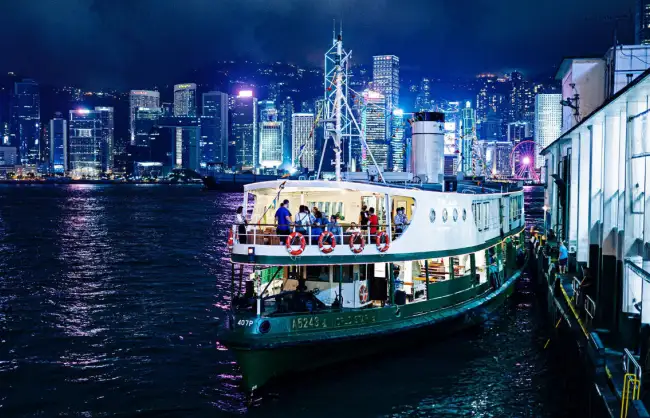
Beyond trains, Hong Kong’s highly-developed transportation system also includes a dense web of buses, minibuses, and even the charming double-deck trams on Hong Kong Island. Ferries are one of the most popular option, especially the historic Star Ferry across Victoria Harbour (a must-try experience). Such trips offer scenic and practical alternatives for crossing water or reaching outlying islands. All these options together make getting around the city flexible and user-friendly.
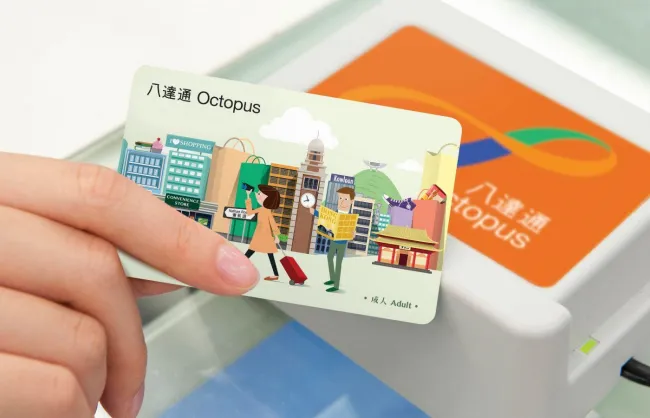
17. Octopus Smart Card: One Card for Transport and More
The Octopus card is a contactless smart payment card used for almost all public transport in Hong Kong (trains, buses, ferries, trams and minibuses). Besides, it is accepted at many shops, convenience stores, vending machines and more. It speeds up boarding and payments in a lot of occasions, and visitors are also recommended to get one when traveling around here. Nevertheless, cash or tokens may also be used on some services.
18. Getting to and From the Airport
Hong Kong International Airport is well connected to the city. The dedicated express rail service shuttles passengers between the airport and central urban stations in about 20–25 minutes, with Octopus card payment accepted. There are also regular airport buses and taxis for different budgets and group sizes, giving travelers multiple convenient options to reach their destination.

Hong Kong Administrative Distribution and Financial Importance
19. Three Major Regions and 18 Districts
For some administrative purposes, Hong Kong’s territory is divided into three geographic regions: Hong Kong Island, Kowloon, and the New Territories. And these three are further subdivided into 18 distinct districts, each with its own District Council that advises on local issues and community needs. Four districts sit on Hong Kong Island, five make up Kowloon, and nine cover the New Territories including the outlying islands. This structure helps the government manage public services and engage with residents across different urban, suburban and rural areas.
20. A Leading Global Financial Hub
Hong Kong is recognised as one of the world’s foremost financial centres, consistently ranking among the top cities globally for banking, asset management and trade. Its economy features a simple and low-tax system that encourages free and open business activity, supported by robust infrastructure and legal protections. The city’s stock exchange is one of the largest in the world, and financial services contribute a significant share of GDP. These strengths attract multinational firms and investors, reinforcing Hong Kong’s role as a critical link between international markets and the Asia-Pacific region.
Quick & Fun Facts About Hong Kong
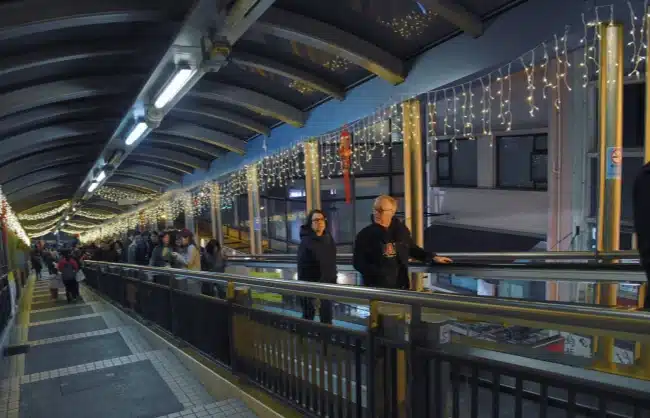
- Hong Kong has the world’s longest covered outdoor escalator system:You may have once seen the Central–Mid-Levels Escalator in many films shot in Hong Kong. It is an iconic site which is linked by a series of outdoor escalators and walkways, extending over 800 m through the city’s steep terrain. Except for adding a unique sense to the city, it serves as both daily transport and a unique way to explore neighbourhoods.
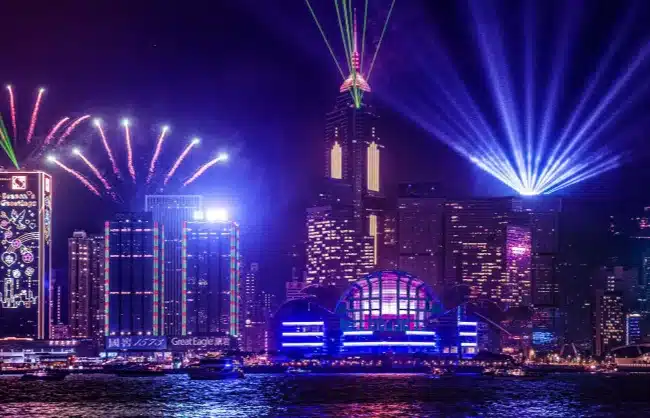
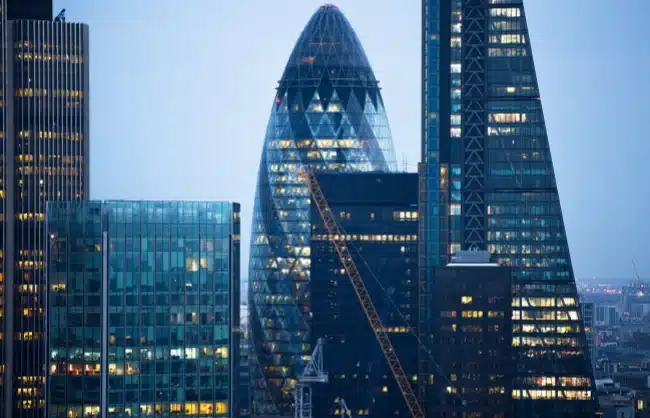
- Hong Kong is one of the most skyscraper-filled cities:Hong Kong has more skyscrapers (buildings above ~150 m) than any other city worldwide. As a result, the city’s skyline is said to be more than extraordinary and dramatic, especially with a natural harbour backdrop.
- Many buildings use seawater in their flushing systems: Hong Kong has the need toconserve fresh water. To save more water, many of Hong Kong’s older public housing estates and commercial buildings use treated seawater for toilet flushing.
- A pirate cave and roaming buffalo exist on outlying islands:Cheung Po Tsai Cave on Cheung Chau Island is associated with a notorious 19th-century pirate of that name. And wild water buffalo sometimes show up in Lantau Island.
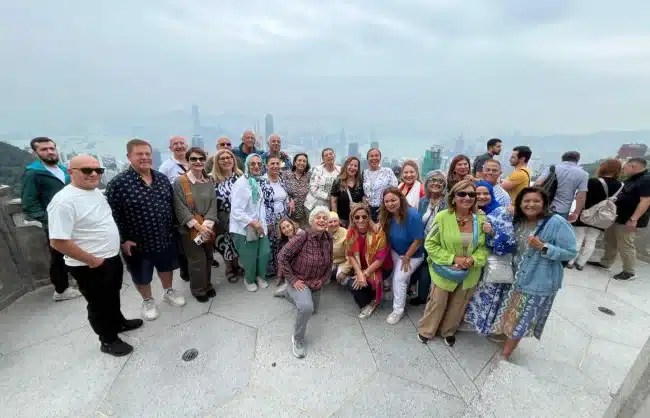
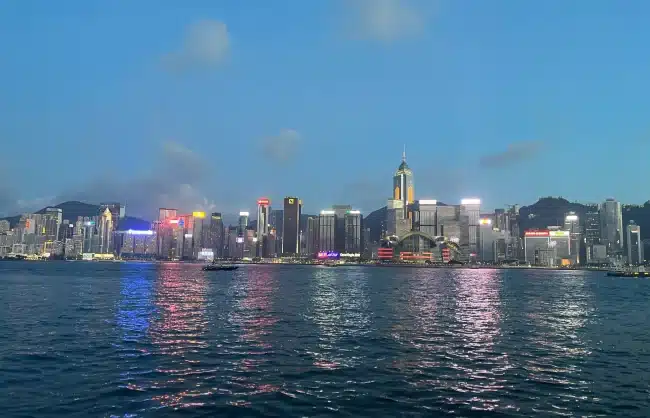
- Victoria Peak offers amazing views: Mount Austin on Victoria Peakis the highest point on Hong Kong Island. It provides panoramic views of the city.
- The city offers some of the world’s cheapest Michelin-starred meals:Hong Kong’s food scene includes street stalls and casual eateries that provide world-class food with a rather friendly price
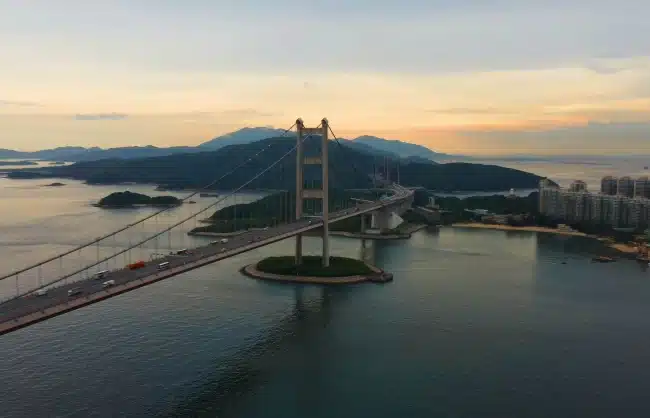
- The Tsing Ma Bridge is an engineering marvel:This suspension bridge, one of the longest of its kind in the world, connects parts of the territory and carries both road and rail traffic.
- There’s a “Venice of Hong Kong”: Tai O Fishing Village on Lantau Island is known for its traditional stilt houses built over water. Here you can still seehow the Tanka people used to live in fishing communities.
- The Hong Kong flag is rich with symbolism: The regional flag features a stylised five-petal Bauhinia flower in white against red.It represents the harmony between different cultures and Hong Kong’s identity.
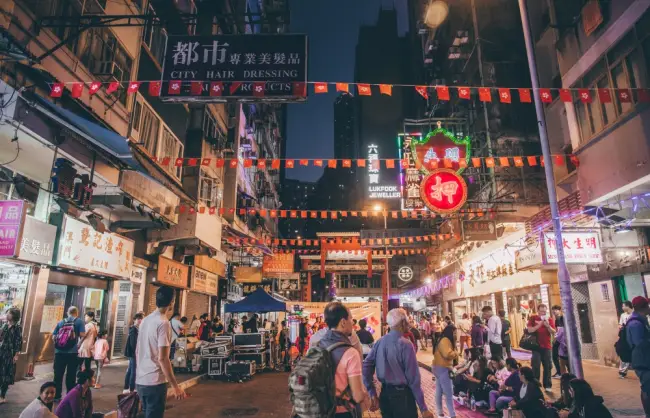
- Hong Kong is famously known as a shopping paradise:The city offers everything from electronics and fashion to jewellery and souvenirs in various markets and high-end shopping centers.
5 Facts Visitors Should Know When Planning A trip to Hong Kong
31. Hong Kong is One of the World’s Top Tourist Destinations
Like London, Dubai, Bangkok, and Istanbul, Hong Kong consistently ranks among the world’s most popular tourist cities. What is Hong Kong famous for? It is widely known as a global financial hub. For tourists, people love to venture into its perfect blend of East and West, a dense urban skyline, Victoria Harbour, luxury shopping experience, and Cantonese culture and cuisine in films and other resources.
32. Great News! You Might be Able to Travel to Hong Kong Visa-free
Hong Kong’s easy visa policies welcome world travelers to come. It offers visa-free access to passport holders from 170 countries and regions. Are you a British, an American, or a citizen of an EU member state? You don’t need a visa to enter HK. And stay from 7 to 180 days depending on your country.
33. HK’s Top attractions Blend Cityscape & Landscapes
What are top things to do when visiting Hong Kong? For most first-time visitos, without, their itinerary will include the night views of Victoria Harbour, the Hong Kong panoramic from the Victoria Peak, and the historic Star Ferry.
34. Hong Kong is Very Expensive
The cost of traveling in China is generally lower, but unfortunately, not in Hong Kong. The prices of economy hotels are approximately 500 HKD or more, and they are in high demand. Fortunately, there are many dining options, ranging from Michelin-starred restaurants costing hundreds of Hong Kong dollars to street food restaurants costing only a few dozen Hong Kong dollars per person. If you can use the subway, you can save a lot of money.
35. A Gateway City for a Panoramic China Trip
Hong Kong boasts one of the world’s best airports, connecting cities worldwide. No wonder, it is one of the entry cities for travelers to China. From Hong Kong, you can take a ferry to Macau. High-speed rail provides easy access to southern cities like Shenzhen, Guangzhou, and Guilin. Flights from Hong Kong connect you to major cities on a China map such as Beijing, Xi’an, Chengdu, Chongqing, and Zhangjiajie. Contact Chinaxiantour’s travel experts anytime to start planning your China tour from Hong Kong.
FAQs about Hong Kong’s Facts
What is Hong Kong famous for?
Hong Kong is widely known as a global financial hub. People can often see its dense urban skyline, Victoria Harbour, shopping, dim sum, and Cantonese culture in films and other resources.
How old is Hong Kong?
Its human history can be dated back thousands of years. Modern Hong Kong began as a British colony in 1841 (age ~184 years in 2025).
How to pay for public transport in Hong Kong?
The Octopus card is the most received payment method. Cash or tokens may also be used on some services.
What makes the Hong Kong skyline unique compared to other cities?
The number of Hong Kong’s skyscrapers is among the top of the world. And what makes them even more stunning is their natural harbour backdrop.
What are some natural wonders or geological features unique to Hong Kong?
You may be interested in Hong Kong UNESCO Global Geopark. This park typically features volcanic rock and sedimentary formations of international geological significance.
How many islands make up Hong Kong?
There are about 263 islands included, however, many of them are still uninhabited.
What was the worst typhoon in Hong Kong history?
The 1874 Hong Kong Typhoon. It killed at least 17,000 people, which makes it is one of the worst recorded.
Plan Your Trip to Hong Kong with Us
Hong Kong’s unique charm and character definitely worth people’s deep explorations. And indeed, not many places can blend Eastern and Western cultures in sch a harmonious and meaningful way. To better understand its beauty, we’d like to invite you to join China Xian Tour on a Hong Kong tour. With our private guide services and customized itineraries, you’ll get to explore this town smoothly. While we can arrange everything for you along the way, you can just relax and enjoy yourself while also make unforgettable memories in this flourishing land.