

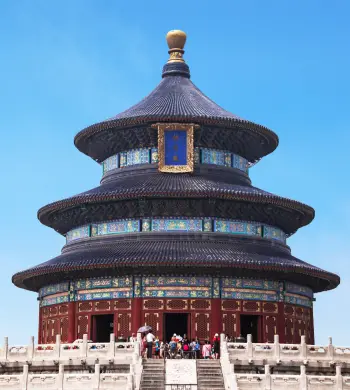

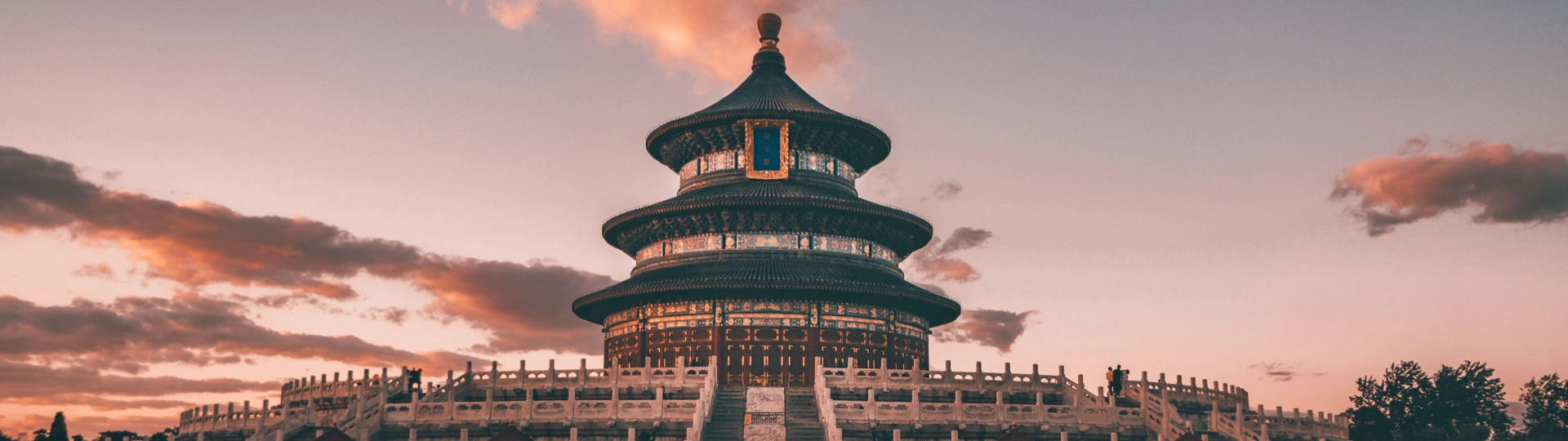
The Temple of Heaven was built in 1420 during the Ming Dynasty. Emperors used to come here to perform sacred ceremonies and pray for good harvests. And today, for international travelers, it has become one of the most iconic UNESCO World Heritage Sites to visit in China.
However, since it covers a large area, a well-planned route is needed to make the most of your visit to the Temple of Heaven without missing any highlights.
To help with it, this guide covers everything you need to know, including the best visiting routes, must-see buildings, ticket prices, photo spots, transportation, and insider tips.
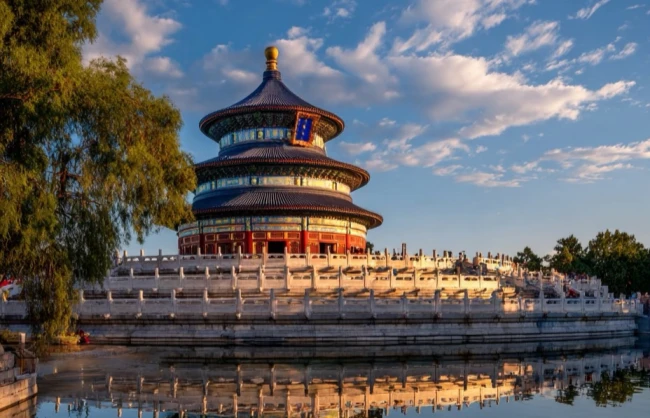
Temple of Heaven at a Glance:
- Location: 1 Tiantan East Inner Street, Dongcheng District, Beijing (about 5 km south of the Forbidden City)
- Reservation: Tickets can be purchased on-site or booked in advance through the official WeChat mini-program “天坛官方服务平台”. You can use your passport information to make a reservation.
- Recommended Visiting Time: 1.5–2.5 hours
- Opening Hours for the Park: April 1 – October 31: 6:00 am – 10:00 pm; November 1 – March 31: 6:30 am – 10:00 pm. Last entry at 9:00 pm throughout the year.
- Opening Hours for the Attractions: April 1 – October 31: 8:00 am–6:00 pm; November 1 – March 31: 8:00 am–5:00 pm
- Ticket Price:
Ticket Type |
Peak Season (Apr. 1–Oct. 31) |
Low Season (Nov. 1–Mar. 31) |
Park Entrance Ticket |
15 RMB (about USD 2) |
10 RMB (about USD 1.5) |
Combo Ticket (including Hall of Prayer for Good Harvests, Imperial Vault of Heaven & Circular Mound Altar) |
34 RMB (about USD 5) |
28 RMB (about USD 4) |
Special notice: The main attractions inside the park are usually closed on Mondays, except on public holidays. But from July 3 to August 31, 2026, these attractions will remain open on Mondays.
Content Preview
- Top Things to See at Temple of Heaven
- Recommended Temple of Heaven Walking Routes
- Experience Local Beijing Life at the Temple of Heaven
- How to Get to the Temple of Heaven
- Temple of Heaven Visiting Tips
- Explore the Temple of Heaven with China Xian Tour
Top Things to See at Temple of Heaven
The Temple of Heaven is not a single building, but a magnificent architectural complex, serving as a solemn place for ancient emperors to hold ceremonies of worshiping Heaven.
The park consists of the Inner Altar and Outer Altar. If this is your first visit, it’s not advised to spend equal time at every site; instead, you may focus on the key sites along the central axis first.
Explore the optional areas, such as the Palace of Abstinence, if you have extra time.
1. Hall of Prayer for Good Harvests
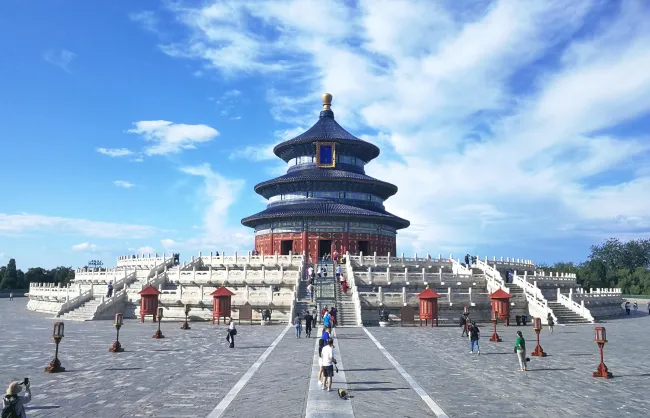
· We recommend spending about 20–30 minutes here to fully explore the site and take photos. It makes a perfect start for your visit to the Temple of Heaven.
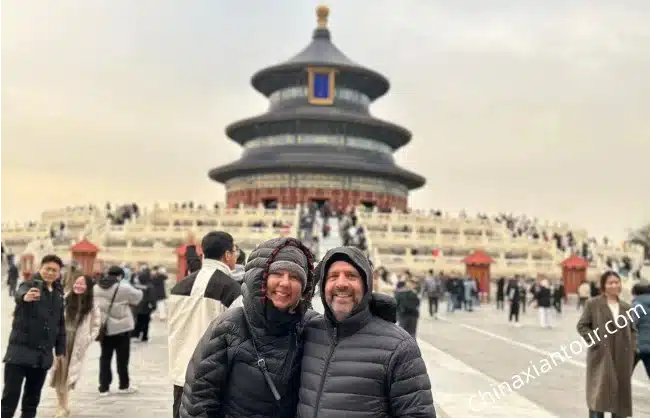
This is the most iconic building in the Temple of Heaven, and it’s also one of the most recognizable landmarks in Beijing.
The circular hall stands on a square base, which reflects the ancient Chinese concept of “Round Heaven and Square Earth”.
When entering the grand inner space, you’ll see 28 Golden-threaded nanmu pillars, each of which has a great value and deep symbolic meaning.
The morning light comes beautifully from the front, making it the best time to photograph the façade of the building.
Our guide and driver will pick you up from your hotel at the appointed time. The first stop on today's Beijing tour is Tian'anmen Square, which is the heart and symbol of Beijing and is the largest...
2. Circular Mound Altar
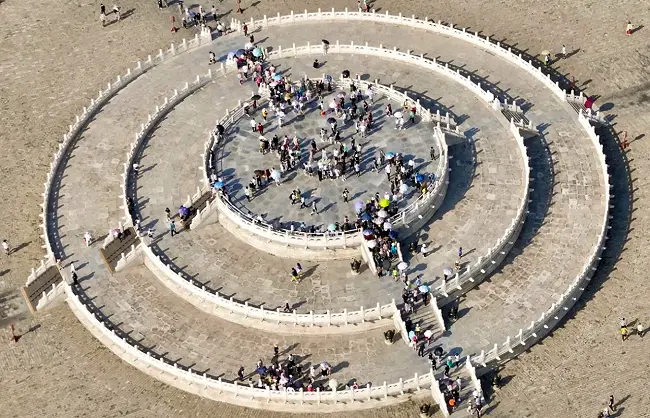
· It is recommended to stay here for 20 minutes. It’s a place where you can feel the echo of both sounds and history.
In the center of it lies the Heavenly Heart Stone. You can stand there and talk, and that’ll create a unique echo effect as your voice seems to resonate and rise clearly upwards.
You can also observe the nine-level stairs and nine-layer circular platform and understand the significant meaning of the number “9” in ancient Chinese imperial rituals (the highest power and the longest life).
3. Imperial Vault of Heaven and Echo Wall
· Recommended visiting time is 15-20 minutes.
This is one of the most interactive areas in the Temple of Heaven.
The Imperial Vault of Heaven stores the spirit tablets of Heaven and other deities worshipped during imperial ceremonies. It has a blue-glazed roof and white walls, sharing a similar architectural style with the Hall of Prayer for Good Harvests.
The Echo Wall is built around the Imperial Vault of Heaven. The circular wall is known for its unique acoustic design. When two people stand at opposite ends of the circular wall — about 100 meters apart, and speak softly, they can hear each other’s voices clearly along the curved surface.

4. Danbi Bridge (Red Stairway Bridge)
· Spending around 20 minutes here would be great.
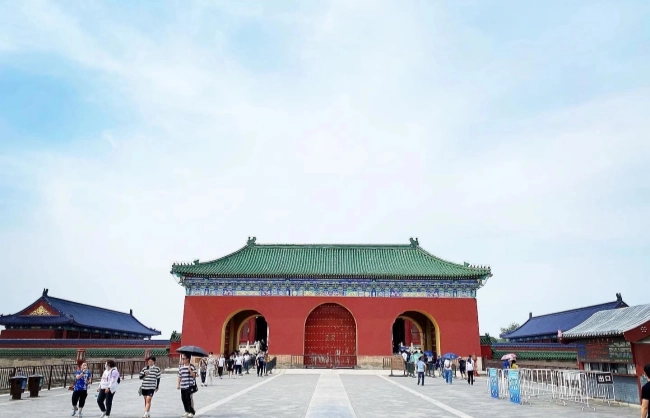
Many visitors would go straight past Danbi Bridge without stopping for a view. In fact, a slow walk along this meaningful part of the Temple of Heaven is truly worthwhile.
Danbi Bridge stretches about 365 meters. It connects the Circular Mound Altar, the Imperial Vault of Heaven, and the Hall of Prayer for Good Harvests.
The walkway gradually rises from south to north, and the central part was known as the “Sacred Path,” specifically designed for heavenly deities.
The side paths were reserved by the emperor and royal officials according to their ranks. When walking along the bridge, you may also feel like walking through history in a solemn atmosphere of ancient imperial ceremonies.
Don’t forget to take amazing pictures in the middle of Danbi Bridge. Here, you can get the best viewpoints for photographing the Temple of Heaven’s central axis.
5. Palace of Abstinence
· 20-30 minutes are enough to stroll around the site.
If you have extra time, visiting this palace will make your day in the Temple of Heaven even more rewarding. Emperors stayed here, fasted and meditated in solemn solitude for three days to purify themselves before performing Heaven-worship ceremonies.
It receives far fewer visitors compared with more popular attractions in the Temple of Heaven, so it’s quieter and has a more peaceful atmosphere. Take your time to explore the highlights, including the traditional imperial courtyard architecture, ancient trees and gardens, and historical exhibitions.
For first-time visitors with limited time, the Palace of Abstinence can be an optional destination. However, if you have already explored other parts of the temple and the Forbidden City, we especially recommend this area, where you can gain a deeper understanding of imperial rituals.
Recommended Temple of Heaven Walking Routes
Route 1: South Gate to North Gate (Best Route for First-Time Visitors)
- Duration: About 1.5–2 hours
- Best for: First-time visitors and travelers with limited time
- Route: South Gate → Circular Mound Altar → Imperial Vault of Heaven (Echo Wall) → Danbi Bridge → Hall of Prayer for Good Harvests → Exit from North Gate
This route follows the traditional imperial worship route without retracing your steps. You’ll see the buildings gradually rise from south to north along the way. It’s an overall complete and immersive experience.

Discover Beijing's imperial heritage visiting Tiananmen Square, Forbidden City, Summer Palace, Temple of Heaven, and Mutianyu Great Wall on a comprehensive private tour.
Route 2: East Gate → West Gate (For a Deeper Exploration)
- Duration: About 2.5–3 hours
- Best for: Travelers who want a deeper cultural experience, photography enthusiasts, and visitors who prefer a more relaxed visit
- Route: East Gate → 72-Section Long Corridor → Hall of Prayer for Good Harvests → Danbi Bridge → Imperial Vault of Heaven → Circular Mound Altar → Palace of Abstinence → Exit from West Gate
This route allows for exploring more of the Temple of Heaven, including some quieter buildings. There will be many amazing photography opportunities.

Visit China's golden triangle of Beijing, Xi'an and Shanghai, covering imperial palaces, ancient terracotta warriors, and futuristic skylines in just eight unforgettable days.
Best Temple of Heaven Photo Spots & Photography Tips
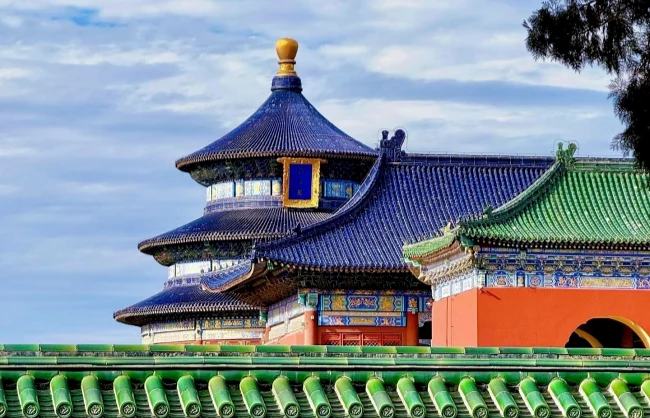
The Temple of Heaven is a great photography destination throughout the year. However, clean and beautiful photos still largely depend on choosing the right time and the best viewpoints.
Best Time for Photography
· Within the first hour after opening, the park is usually less crowded. So it’ll be easier to take clear photos of the buildings in these few hours.
Photo Spot |
Photography Tips |
Red Wall of the Hall of Prayer for Good Harvests |
Use the red wall as the foreground with the blue glazed roof in the background for a classic Beijing-style photo. |
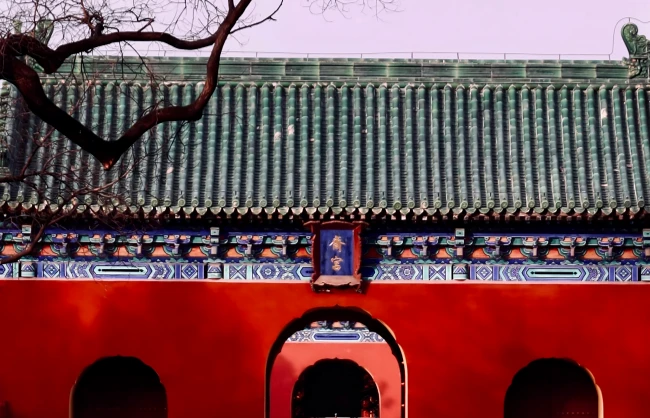
Qinian Gate |
Shoot the Hall of Prayer for Good Harvests through the doorway to create a natural frame, ideal for portraits. |
Danbi Bridge |
Capture the central axis of the Temple of Heaven. A telephoto lens works best for a stronger sense of depth. |
Top of the Circular Mound Altar |
Photograph the circular stone altar against the sky. A wide-angle lens is recommended. |
· After rainfall on a sunny day, the blue glazed tiles and red walls appear especially vivid under sunlight. The striking colors can add a great highlight to your photos.
Tip: During peak travel periods, such as the summer vacation (July–August) and China’s National Day holiday (October 1–7), it is recommended to arrive as early as possible to avoid large crowds.
Night Photography and Lighting
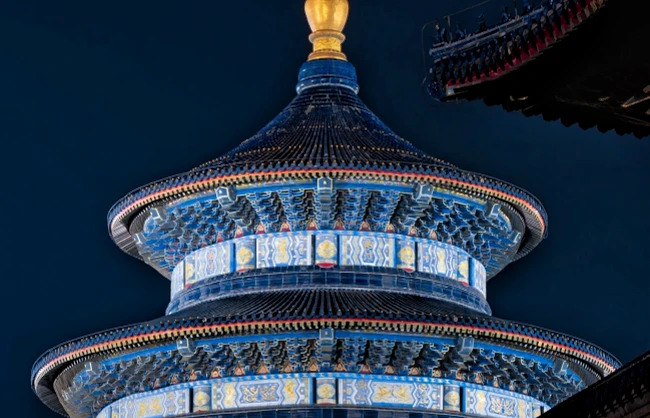
The Temple of Heaven Park remains open in the evening. However, the night lighting for major buildings such as the Hall of Prayer for Good Harvests is usually only available on Friday evenings, Saturday evenings, and public holidays.
The blue glazed tiles are extremely stunning under the light. If you decide to take photos of the night view, it is better to confirm whether the buildings will be illuminated on your visiting day in advance.
Experience Local Beijing Life at the Temple of Heaven
Watch the Morning Activities of Local Residents
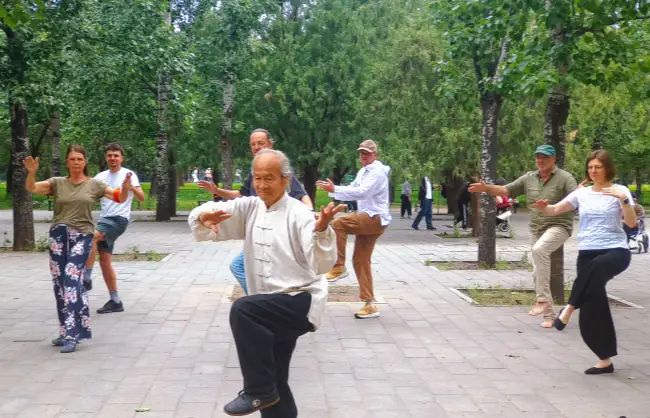
If you come here between 7:00 am and 10:00 am, you may see locals enjoying various morning activities, such as:
- Tai Chi sword practice
- Fan dancing
- Chinese diabolo (yoyo) performances
- Group singing
- Water calligraphy (writing Chinese characters with water on the ground)
- Chess and other traditional games
It’s a perfect place and a perfect time to dive into the authentic old Beijing atmosphere.
Join a Tai Chi Experience Class
In recent years, Chinese Tai Chi has been loved by more and more people around the world. In the Temple of Heaven, visitors can even join a Tai Chi experience class, which usually lasts 45 minutes to 1 hour, and you’ll be guided by a professional instructor.
Through simple movements and breathing exercises, you’ll naturally develop a sense of the philosophy of balance and harmony behind this traditional Chinese practice.
How to Get to the Temple of Heaven
The Temple of Heaven is located in the Dongcheng District, Beijing, and is easily accessible by public transportation.
By Subway (Recommended)
The subway is the most convenient way to reach the Temple of Heaven.
- Subway Line 5 → Tiantan Dongmen Station (Temple of Heaven East Gate Station)
Use Exit A and walk about 5 minutes to reach the East Gate. This is the most convenient subway option for most visitors.
- Subway Line 8 → Tianqiao Station
Exit from Exit C and walk for about 10 minutes, and you’ll get to the West Gate.
By Taxi
If you’re traveling with elderly people or young children, especially when carrying luggage, traveling by taxi is the most convenient option.
Approximate travel times for reference (be mindful that Beijing’s roads experience extremely heavy traffic in peak hours):
- From Wangfujing: about 15 minutes, CNY15 (~ 2 USD)
- From Tiananmen Square: about 15 minutes, CNY15 (~ 2 USD)
- From Qianmen Street: about 10 minutes, CNY13 (~ 1.9 USD)
- From CBD/Guomao area: about 20 minutes (depending on traffic conditions), 20 RMB (~3 USD)

Marvel at Zhangjiajie's towering sandstone pillars that inspired Avatar and Guilin's iconic karst peaks along the Li River on this two-week scenic adventure.
Temple of Heaven Visiting Tips
There is some information you can take a look at before your journey, which can help a lot from the preparation stage to the final visit.
Luggage Storage
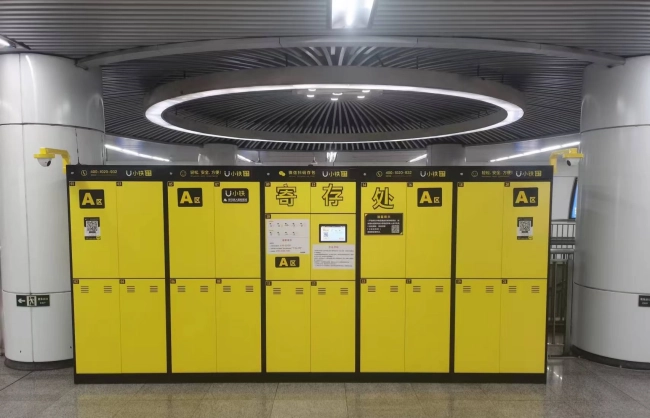
If you are carrying large luggage, you can store your bags in the self-service lockers at Tiantan Dongmen Subway Station and Tianqiao Subway Station.
Approximate prices: Small locker: 3 RMB (0.40 USD)/hour; Medium locker: 5 RMB (0.70 USD)/hour; Large locker: 6 RMB (0.85 USD)/hour
Rent an Audio Guide or Hire a Guide
If you are not familiar with ancient Chinese sacrificial rituals and want to know more about the cultural meanings behind them, renting an English audio guide or booking a private guide can help a lot.
- English audio guide rental: 40 RMB (about 6 USD), with a 100 RMB (about 14 USD) refundable deposit required.
- English-speaking tour guide: 150 RMB (about 21 USD) per tourist.
Nearby Food Recommendations
After visiting the Temple of Heaven, don’t rush to the next scenic spot. Take some time to explore nearby areas such as Qianmen Street, Xianyukou Food Street, and Tianqiao to try classic Beijing dishes.
Recommended dishes include:
- Beijing roast duck
- Copper hot pot
- Zhajiang noodles (noodles with soybean paste)
- Douzhi (fermented mung bean drink)
- Luzhu (traditional pork stew)

Avoid Peak Crowds
The Temple of Heaven is especially crowded during:
- Summer vacation (July–August)
- Labor Day holiday (May 1–5)
- National Day holiday (October 1–7)
If you visit during these periods, we recommend:
- Arriving before 8:00 am
- Visiting on weekdays if possible
- Avoiding the busiest hours between 10:00 am and 2:00 pm
Other Practical Tips
- Wear comfortable walking shoes, as the park is large and a visit can easily cover 4–6 km walking distance.
- In summer, Beijing can be extremely hot. Bring water and prepare for sun exposure and heat.
- Allow at least 2 hours for a basic visit. If you want to enjoy local activities, take photos, or explore the Palace of Abstinence, spending half a day will be more comfortable.
Explore the Temple of Heaven with China Xian Tour
The Temple of Heaven embodies a great part of China’s imperial culture, and visiting it is definitely one of the best things to do in a Beijing tour. However, the hidden stories and profound knowledge can be hard to understand without a professional guide.
Travelling with China Xian Tour can perfectly solve this problem. Our English-speaking guide can fully explain the fascinating history and cultural meanings behind all the buildings. We can also customize a Beijing trip for you, ensuring you enjoy every moment in this fascinating city.


