
Beijing has long been one of the most famous cities in the world. Its imperial history and modern creativity make this cosmopolitan so unique from others. And all of its grandeur and charm are now lying in people’s lives and the attractions you’re about to see in this treasured land.
Indeed, Beijing has various attractions, there are ancient palaces, sacred temples, classical gardens, and world-class entertainment and more. You’ll find everything you want to see about China here. This guide gives an overview of Beijing’s top landmarks with practical tips on transport or booking. You can also find some ideas to make flexible itineraries. So now, get ready to immerse yourself in Beijing’s ultimate beauty.
Content Preview
- Beijing’s 8 Essential Historical Landmarks
- Parks, Temples, and Cultural Hotspots
- Sample Beijing Itineraries
- Essential Beijing Travel Tips
- Plan Your Beijing Tour with China Xian Tour
Beijing’s 8 Essential Historical Landmarks
The Forbidden City (故宫)
- Location: Tiananmen Square area, central Beijing.
- Ticket: CNY 60 (Apr–Oct) / CNY 40 (Nov–Mar). Advance online booking recommended.
- Opening Hours: 8:30–16:00 (Apr–Oct) / 8:30–15:30 (Nov–Mar). Closed on Mondays.
- Time Needed: 3–5 hours
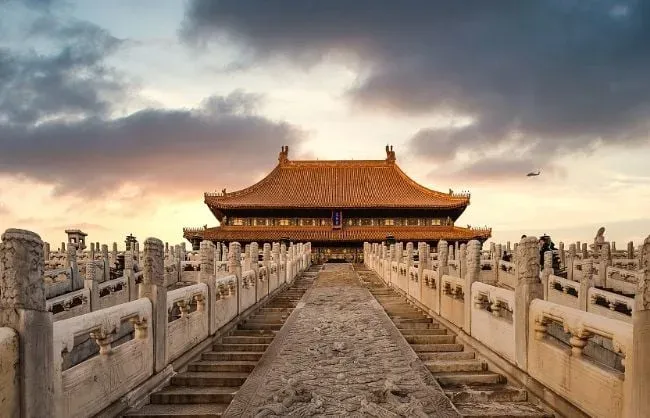
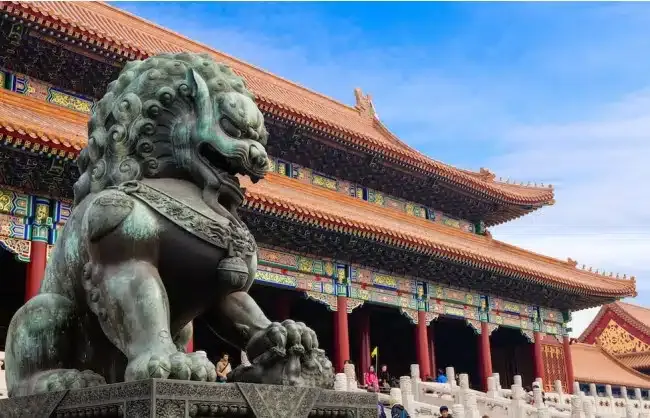
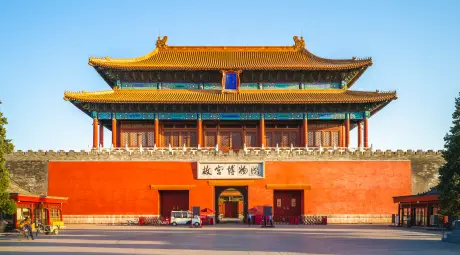
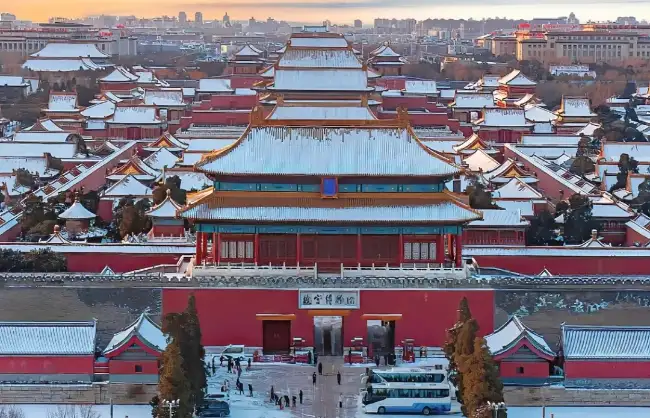
The Forbidden City (also called Palace Museum) was once the imperial palace during Ming and Qing dynasties. And it had served as China’s political center for nearly 500 years. Its design is unique and contains a variety of wisdom. And the halls are all typically designed to have red walls and golden roofs. Many of the visitors would dress the Qing dynasty-style dress to take pictures, by doing this, your visit to the Forbidden City can be even more impressive.
If you follow its strict north–south axis, you’ll encounter the Three Great Halls as the ceremonial core, with the Inner Court behind, including the Palace of Heavenly Purity and Palace of Earthly Tranquility. So it is recommended for visitors to enter via Meridian Gate, follow the central axis then exit at the Gate of Divine Might.
This site is really popular, so you may see large crowds whenever you go. Just try to arrive early (book the morning slots for entry) and be ready for queues. >> See our detailed tips to visit the Forbidden City in Beijing

The Great Wall (长城)
- Location: 70 km north of Beijing
- Ticket: CNY 40 (adults), cable car:CNY 100–140
- Opening Hours: 7:30–17:00
- Time Needed: 2–3 hours
- Location: 73 km northeast of Beijing
- Ticket: CNY 40; cable car CNY 100, toboggan down CNY 100–140
- Opening Hours: 8:00–17:00
- Time Needed: 3–5 hours
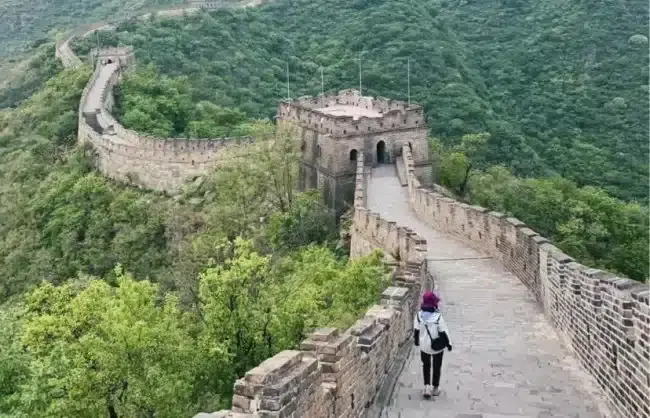
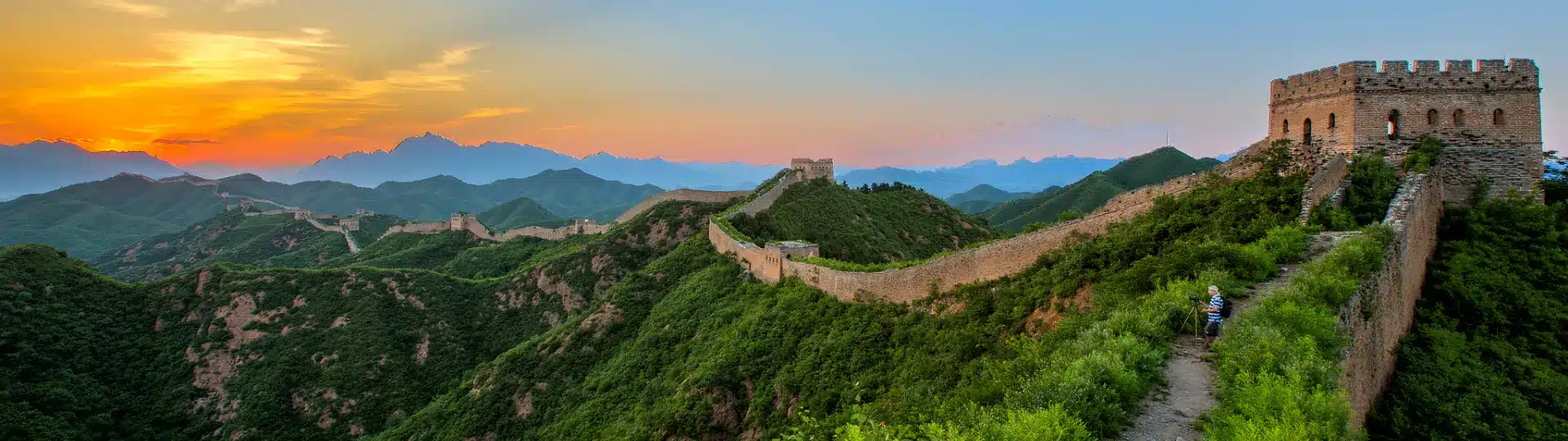
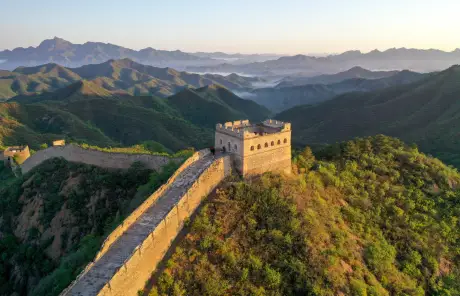
Badaling and Mutianyu are the most popular Great Wall sections in Beijing. At Badaling, visitors usually take the cable car to North Seven Tower and hike the steep “Hero’s Slope” to North Eight Tower for panoramic views. And if you feel capable of walking back along the steep paths, then try it. You’ll get a rewarding perspective of the Wall winding through the mountains.
Mutianyu is less crowded. Most visitors take the East Line cable car to Tower 6, then walk toward Tower 14 or 20. One of the most interesting experiences here is descending via the toboggan.
Both sections require a relatively excessive walk, so bring sturdy shoes, water, and wind protection.
Other sections near Beijing offer unique experiences:
- Jinshanling: Partially restored, ideal for photography and longer hikes.
- Simatai: Preserves original Ming features,organized night tours available.
- Huanghuacheng: Water Wall section, with lakes and fewer visitors.
Summer Palace (颐和园)
- Location: Northwest Beijing, near Haidian District
- Ticket: CNY 20–30.Combined tickets 50–60 (includes key sites).
- Opening Hours: 6:00–19:00 (seasonal)
- Time Needed: 3–4 hours
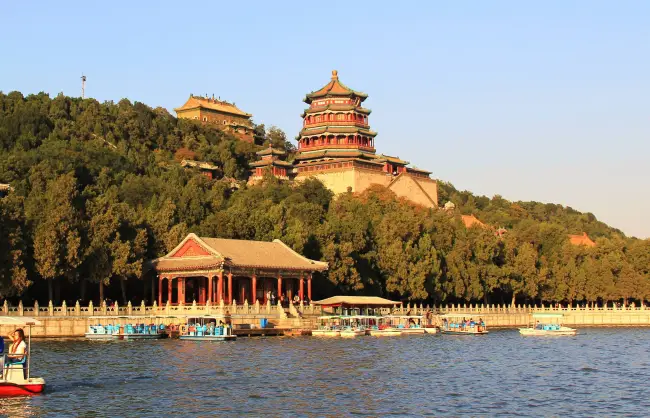
The Summer Palace is Beijing’s most renowned imperial garden. It was originally built in the Qing dynasty, serving as a royal retreat. With wide lakeside paths, shaded walkways, and open views, the Summer Palace feels spacious and calm, especially compared with the city center. Visitors can see how natural beauty was blended with artistry in ancient China.
Key attractions include:
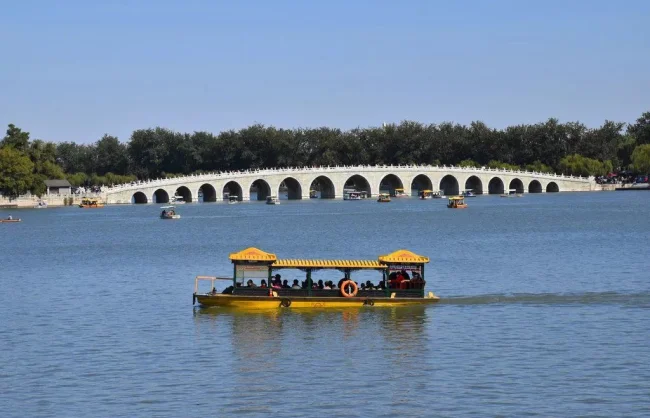
- Kunming Lake, the 17-Arch Bridge adorned with 544 stone lions
- the Long Corridor with painted panels
- the hilltop Buddhist Pavilion (佛香阁)which offers a panoramic view.
It’s a quite large place, so having a complete exploration in hours is basically impossible, but 3–4 hours would be enough for a rather rewarding visit.
You can take Metro Line 4 to Beigongmen Station and walk to the site. It is ideal for both daytime sightseeing and sunset views. And if you’re traveling in winter, prepare non-slip shoes, as the ground can be quite slippery after snowy days.
Temple of Heaven (天坛)
- Location: Dongcheng District, central Beijing
- Ticket: CNY 15 (park); CNY 28 combined ticket for main halls
- Opening Hours: Park 6:00–21:00 (seasonal).Main halls 8:00–17:30 (shorter in winter). Main halls close on Mondays, except for
- Time Needed: 2–3 hours
- A recommended route: first enteringvia East Gate (easily reached from Metro Line 5). Then walk along the main axis. In the end, exit at South Gate.
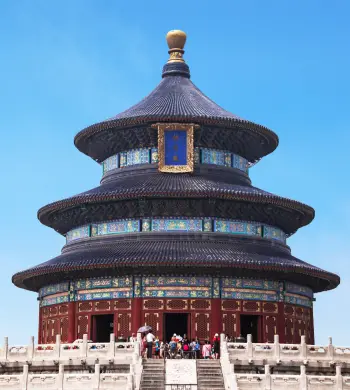
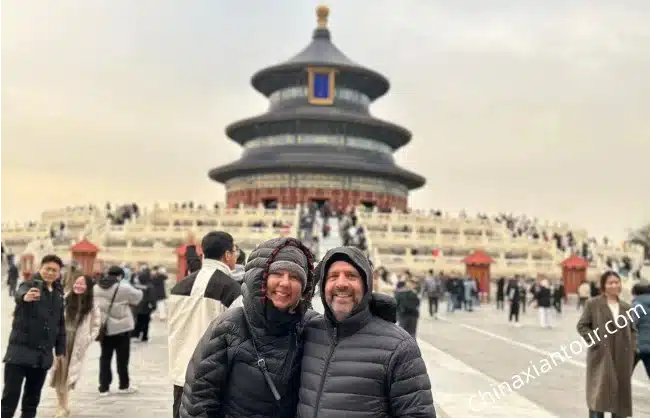
The Temple of Heaven is also a significant site for visitors to go deeper into the history of Ming and Qing dynasties, and see Beijing’s imperial past. It’s originally a place for emperors to pray for good harvests and cosmic harmony for the nation. Its design reflects the ancient Chinese belief of “round heaven and square earth”, with circular altars and halls symbolizing heaven and square bases representing earth.
And now, you can also get a glimpse of people’s everyday life here, as many of them would come to practice tai chi or sing opera. Key highlights include:
- the Hall of Prayer for Good Harvests(triple-tiered blue roof)
- the Danbi Bridge(linking heaven and earth),
- the Echo Wall and Imperial Vault
- the Circular Mound Altar(winter solstice ceremonies).
Tiananmen Square (天安门广场)
- Location: Central Beijing, Dongcheng District
- Ticket: Free (reservation required for security)
- Opening Hours: 5:00–22:00 (cleared after 22:00)
- Time Needed: 1–2 hours
Tiananmen Square is a symbol of China and one of the world’s largest city squares. There are many landmarks nearby, such as Tiananmen Gate, the Great Hall of the People, National Museum, and Mao Memorial Hall. The Monument to the People’s Heroes is a must-see and the daily sunrise flag-raising ceremony also attracts so many people. It’s a quite popular and meaningful event, however, you may also get to arrive 40–60 minutes earlier for the best view. It connects easily to the Forbidden City or Qianmen Street, so it’s also an ideal starting point for a full day of Beijing sightseeing.
Beijing Hutongs (北京胡同)
- Location: Central Beijing, mainly in Dongcheng and Xicheng Districts (Nanluoguxiang, Shichahai area).
- Ticket: Free (rickshaw tours cost extra)
- Opening Hours: Open all day.Best visited 8:00–18:00
- Time Needed: 1.5–3 hours
Beijing Hutongs are really iconic and unique places. They are narrow alleys around traditional courtyard houses, people like them as they offer a glimpse of everyday life beyond imperial sites. You can walk to explore at your own pace, and life is going on in the most ordinary but colorful way in these hutongs. Rickshaw rides allow you to know more stories and access quieter lanes.
Nanluoguxiang is lively, with various shops and cafés, ideal for first-time visitors. Shichahai’s hutongs feel more residential, especially if you wander the area near lakes and historic mansions. These places can really help you to “slow down,” and it can be quite enjoyable to pair them with nearby parks or lakeside breaks. Hutongs capture authentic Beijing life, especially those less famous or that completely exist as living areas.
Recommended Beijing tours including the above mentioned attractions
Discover Beijing's imperial heritage visiting Tiananmen Square, Forbidden City, Summer Palace, Temple of Heaven, and Mutianyu Great Wall on a comprehensive private tour.
Ming Tombs (明十三陵)
- Location: Changping District, about 50 km north of central Beijing.
- Ticket: CNY 30–60 per site.Combo ticket around CNY 130 recommended.
- Opening Hours: 8:30–17:30 (Apr–Oct); 8:30–17:00 (Nov–Mar)
- Time Needed: 4–6 hours
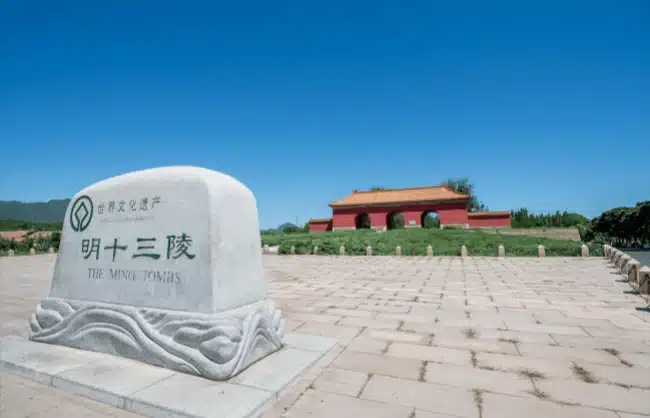
The Ming Tombs are a UNESCO World Heritage Site. 13 Ming emperors were buried here between the 15th and 17th centuries. And serving as tombs, this site was chosen for its ideal feng shui.
Most visitors would focus on Changling, the best-preserved tomb with a grand hall supported by massive nanmu wood pillars. Dingling is also fine, and it’s the only tomb with an underground palace open to the public, reached 27 meters below ground. Also take a walk along the Sacred Way (Shendao), there are some stone guardian animals and officials on both sides of the line. This attraction is calm, spacious, and far less crowded.
Lama Temple (雍和宫)
- Location: 12 Yonghegong Street, Dongcheng.
- Ticket: CNY 25 per person (free incense).
- Opening Hours: 09:00–17:00 (Apr–Oct), 09:00–16:30 (Nov–Mar)
- Time Needed: 2–3 hours
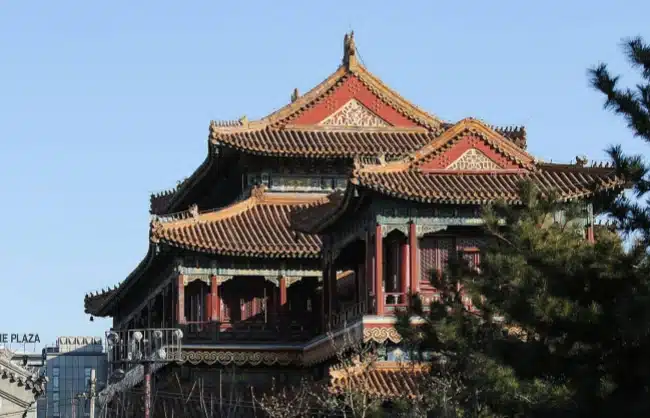
Lama Temple was originally a former Qing imperial residence. And it was later transformed into a Tibetan Buddhist monastery. You can see Han, Manchu, and Tibetan architecture all standing harmoniously in this place. Walking through the incense-filled courtyards feels solemn yet lively, as locals come to pray throughout the day. It’s a perfect place to explore for those who are interested in traditional Chinese architecture, religion and craftsmanship.
There are several courtyards and halls here, but the most famous highlight would be the 26-meter-high Maitreya Buddha in the Hall of Ten Thousand Blessings. To better explore this place, you can follow the ritual path:
- light free incense
- explore main halls
- see sacred statues and thangkas.
Subway lines 2 or 5 (Yonghegong Station) can easily reach here.
Parks, Temples, and Cultural Hotspots
Beihai Park (北海公园)
- Location: Northwest of the Forbidden City, near Shichahai
- Ticket: ~CNY 5 (off-season)-10 (peak-season). Boat extra.
- Opening hours: ~6:30–18:00 (seasonal)
- Time needed: 2–3 hours
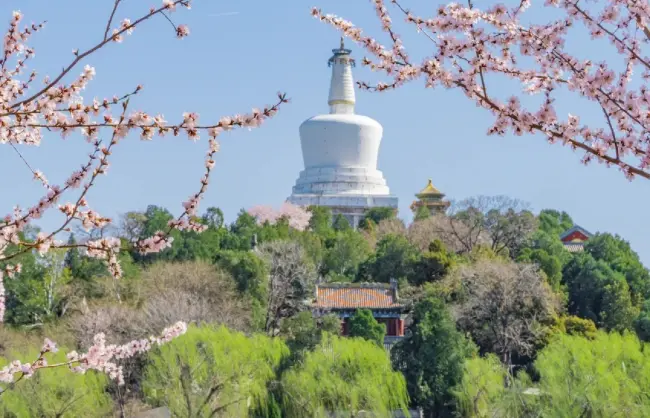
Beihai Park is one of Beijing’s oldest imperial gardens. It lies in the center on a large lake, with the striking White Dagoba perched on Qionghua Island. The incredible views of shaded paths and the lake can be even more amazing to see from a paddleboat. The Nine-Dragon Wall is a highlight. It’s a rare Ming dynasty glazed brick sculpture with vivid dragons flying on it. If you arrive in the early morning, you may also see locals practicing tai chi by the water. And there will be some ice-skaters in winter if the lake freezes.
Jingshan Park (景山公园)
- Location: Directly north of the Forbidden City
- Ticket: ~CNY 2
- Opening hours: ~6:30–18:00 (seasonal)
- Time needed: 1–2 hours
Jingshan Park sits on an artificial hill built from the excavation soil of the Forbidden City. Its central pavilion provides the best panoramic views of the Forbidden City. This place also saw the end of Emperor Zhu Youjian’s reign (the last Ming emperor), so that people often feel a poignant cultural resonance here. There are many pathways and gardens around the summit, all beautiful and suitable for rest. If you are visiting the Forbidden City, make a stop here.
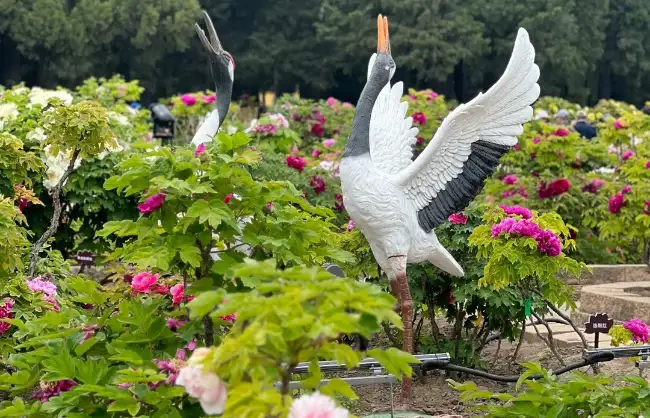
Confucius Temple (孔庙)
- Location: Dongcheng District, near Guozijian
- Ticket: ~CNY 30(seasonal). Book it ahead online.
- Opening hours: ~8:00–17:00
- Time needed: 1–1.5 hours
Beijing’s Confucius Temple is the largest shrine to Confucius in northern China. It’s paired with the adjacent Imperial College (Guozijian), the country’s highest educational institution during the Yuan–Qing dynasties. And when you buy a ticket to the temple you’ll see it actually includes entrance to both sites. You can start from either Confucius Temple or Guozijian, must-see highlights include the ancient stone steles (198 pieces) and some halls, where scholars once gathered to honor learning and ritual. It’s a peaceful cultural stop that gives insight into China’s long tradition of scholarship.
National Museum of China (中国国家博物馆)
- Location: East side of Tiananmen Square
- Ticket: Free (reservation needed.Special exhibits costs CNY120). Make reservations at least a week ahead.
- Opening hours: ~09:00–17:00 (closed Monday)
- Time needed: 2–3 hours
The National Museum of China is one of the world’s largest museums. It has a huge collection of over 1.4 million artifacts, telling China’s history from prehistoric times through imperial dynasties and into the modern era. There are special exhibits and permanent exhibits like “Ancient China” and “The Road of Rejuvenation”. They offer a deep, immersive overview of Chinese civilization and culture.
798 Art District (798艺术区)
- Location: Dashanzi, Chaoyang District
- Ticket: Free to explore. Galleries often ~CNY 10–80
- Opening hours: Gallery hours ~10:00–18:00 (many closed Mon)
- Time needed: 2–4 hours
798 Art District is now Beijing’s most famous contemporary art and culture zone and in the past it was a cluster of Soviet-built electronics factories. This vast repurposed factory space shows the modern side of Beijing. There are various street art, galleries, design shops, and cafés, where local creatives and international exhibitions come together. The UCCA Center for Contemporary Art is a standout venue with rotating shows.
Beijing Zoo (北京动物园)
- Location: Xicheng District, near Beijing Aquarium
- Ticket: ~CNY 15– If you want to visit the Panda House, then buy the CNY 19 option.
- Opening hours: ~07:30–17:00/18:00 (peak season)
- Time needed: 2–3 hours
Beijing Zoo is a classic family-friendly attraction. It has hundreds of species coming from around the world. Its most famous residents are the giant pandas, so Panda House is often busy throughout the year. Go early before crowds peak. Other highlights include: Asian elephants, Siberian tigers, and a range of primates.
Paths in the zoo can be long and crowded on weekends, so it’s recommended to pick a few key enclosures beforehand to make the visit more enjoyable.
Recommended tour
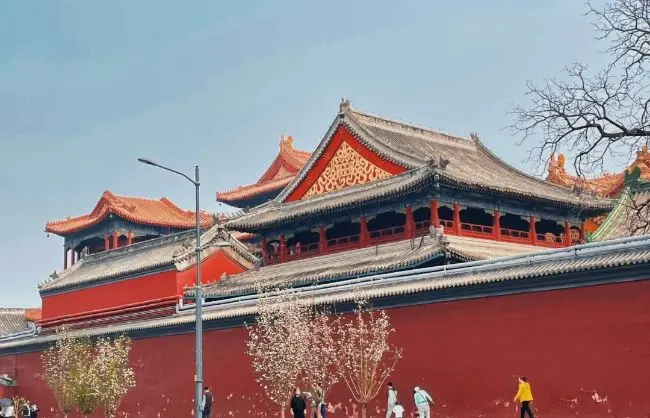
Design your perfect Beijing day from the Forbidden City and Temple of Heaven to giant pandas at Beijing Zoo, capped with a panoramic sunset view over the imperial palace from Jingshan Park.
Universal Studios Beijing (北京环球影城)
- Location: Tongzhou District, Beijing
- Ticket: CNY ~355-815
- Opening Hours: ~09:30–19:30 (seasonal)
- Time needed: Full day (6–8 hours)
Universal Studios Beijing is one of Asia’s newest major theme parks. There are many immersive worlds based on Harry Potter, Transformers, Minions, and other global IPs. Some of the most discussed experience include:
- The Wizarding World of Harry Potter(castle rides and butterbeer)
- Transformers Metrobase (high-speed motion experiences).
Arrive at opening time to minimize time for queues. Express Passes allow shorter waits. One tip is don’t rush to take photos when you just enter the park, first enjoy the rides or other activities that may have long queues and then use the rest of the time for pictures. Dining and themed snacks (butterbeer, Minion popcorn buckets) are highlights. Evenings often feature light shows and parades. Plan at least a full day and use the park app to manage wait times efficiently.
Gubei Water Town (古北水镇)
- Location: Simatai area, Miyun District, Beijing
- Ticket: CNY ~180–220 (entry; cable car extra)
- Opening Hours: ~08:30–21:00
- Time needed: Overnight recommended (6–12 hours)
Gubei Water Town is a beautifully reconstructed ancient town next to the Simatai Great Wall. It’s a quite traditional place, and its architecture, such as canals and stone bridges, all tell the town’s past stories to travelers. Visiting during the day allows lakeside strolls and exploration of local craft shops. For a richer experience, stay overnight in the town’s guesthouses. And nearby, the Simatai Great Wall cable car provides fast access to high vantage points, where you can have a panoramic view of the land. >> See our step-by-step guide about visiting Gubei Water Town from Beijing
Drum and Bell Tower (鼓楼和钟楼)
- Location: North of the Hutongs, central Beijing
- Ticket: CNY10 for Bell Tower, 20 for Drum Tower.
- Opening Hours: ~09:00–17:00
- Time needed: 1–1.5 hours
The Drum and Bell Towers were Beijing’s ancient timekeeping center. The Bell Tower signaled dawn while the Drum Tower marked dusk and hours. Today they offer one of the best viewpoints over old Beijing’s hutong neighborhoods and narrow lanes. Both towers can be climbed, however, the stairs can be a bit steep. There are also live drum performances (6-7 schedules a day) at the second floor of the Drum Tower.
Water Cube & Bird’s Nest (水立方 & 鸟巢)
- Location: Olympic Green, Chaoyang District
- Ticket: Water Cube water CNY 30/Bird’s Nest CNY 50-110
- Opening Hours: 10:00–18:00(Water Cube) 10:00-20:00 (Bird’s Nest)
- Time needed: 1–3 hours total
The Bird’s Nest (National Stadium) and Water Cube (National Aquatics Center) are icons of the 2008 Beijing Olympics. Bird’s Nest offers stadium tours and occasional events. Water Cube now houses a popular indoor water park with all kinds of facilities. However, even if you don’t want to go inside, it is okay. The exterior lighting at night makes both venues excellent photo stops. Combine a morning or evening visit with nearby parks.

Panjiayuan Antique Market (潘家园旧货市场)
- Location: Southeast Beijing (Panjiayuan)
- Ticket: Free entry; purchases vary
- Opening Hours: 9:00–21:00 (Mon/Tue/Thu summer)
9:00-20:00 (Mon/Tue/Thu winter)
9:00-23:00 (Wed/Fri all year)
6:00-23:00 (Sat summer)
7:00-23:00 (Sat Winter)
7:00-21:00 (Sun Summer)
7:00-20:00 (Sun Summer)
- Time needed: 1–2 hours
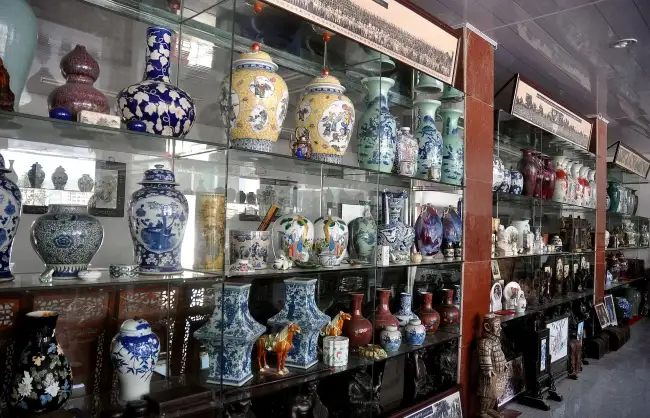
Panjiayuan Antique Market is one of Asia’s largest open-air flea and antique markets. People come here to buy things like: Chinese antiques, cultural curios, calligraphy, old coins, jade, and decorative art. Early mornings (especially weekends) are busiest with collectors and sellers. Haggling is expected, or to say, definitely needed. Don’t go with the price that the seller tells you in the beginning. Smaller vendors also sell snacks and tea, making it easy to spend an hour or two browsing the place. Wednesday and Friday are the most recommended times for a visit, and you can stay up to 1:00 for the “ghost market”.
Silk Street (秀水街)
- Location: Chaoyang District, near Dawang Road
- Ticket: Free to enter; purchases vary
- Opening Hours: ~9:00–18:30
- Time needed: 1–2 hours
Silk Street is a famous Beijing shopping destination, and you can find many local products like silk products, clothing, accessories, and souvenirs here. Prices are negotiable, friendly haggling are encouraged. Expect multiple floors of stalls, international brands, and tailor services here. Many visitors combine Silk Street shopping with an exploration of nearby restaurants or cafés.
Sample Beijing Itineraries
1-Day Highlights (Beijing Day Trip)
Start at Tiananmen Square early.
Then walk to the Forbidden City.
After lunch, stroll through Wangfujing Street for snacks or shops.
End the day with a Hutong walk.
- Transport: Metro Line 1/2/8 connects most stops.
- Tips: Skip distant sites (like the Great Wall),as they require half a day or more. Booking entry times early to avoid long queues.
Recommended tour
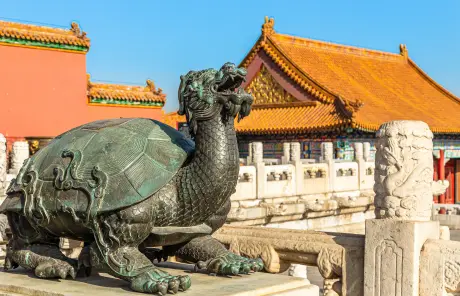
Our guide and driver will pick you up from your hotel at the appointed time. The first stop on today's Beijing tour is Tian'anmen Square, which is the heart and symbol of Beijing and is the largest...
2-Day Classic Beijing
Day 1:
Morning at the Forbidden City, exit via Jingshan Park.
Then subway to Wangfujing or nearby dining.
Afternoon at Beihai Park or Confucius Temple + Guozijian for quieter cultural depth.
Day 2:
Early trip to the Great Wall.
Afternoon at Summer Palace.
- Transport: Round-trip shuttle or private car to Wall.Subway (Line 4, Line 2) within the city.
Recommended tour

Visit Beijing's essential highlights including Mutianyu Great Wall, Forbidden City, Summer Palace and Panda House on this efficient two-day private tour.
3–4 Day Family / Leisure Itinerary
Day 1: Forbidden City. Jingshan Park. Wangfujing
Day 2: Universal Studios Beijing (plan full day).
Day 3: Beihai Park and 798 Art District. Evening Hutong walk.
Day 4: 1) National Museum of China + Tiananmen
- An overnight escape at Gubei Water Town + Simatai Great Wall.
- Transport: Subway for city stops. Shuttle or taxi for Universal and Gubei.
- Tips: It’s better for families to mix indoor and outdoo
5-Day Deep Dive Beijing
Day 1: Tiananmen Square. Forbidden City. Wangfujing.
Day 2: Great Wall (Mutianyu) and Summer Palace.
Day 3: 798 Art District. Confucius Temple. National Museum of China.
Day 4: Hutong exploration. Beihai Park. Drum & Bell Tower views.
Day 5: Day trip to Ming Tombs and optional Gubei Water Town/Village stay.
Transport: Subway (Lines 1, 2, 4, 8) for city. Public bus/872 for Ming Tombs. Tour shuttle to Gubei if staying overnight.
Tips: Ming Tombs are very spread out. Arrive early and consider shuttle between tomb sites. Weather can change quickly at Wall and Gubei. Dress in layers and bring water/snacks.
Recommended tour
Essential Beijing Travel Tips
How to Travel Around: Beijing Public Transportation
Beijing’s subway and bus network is extensive and efficient. You can go everywhere with these two options (even the Great Wall). Traveling by car is convenient but sometimes it can take even longer given the traffic.
Best Time to Visit & Seasonal Tips
If you’re thinking about the most comfortable days, then spring (April–May) and autumn (September–October) can be your answer. Summers can be hot and winters are cold. Both of them have long public holidays coming with large crowds. However, summer and winter also provide unique experiences. >> Read on to see more detailed information on Best Time to Visit Beijing.
Where to Stay
Dongcheng or Xicheng districts for easy access to Tiananmen, Forbidden City, and Hutongs. Wangfujing, Sanlitun, or near Subway Lines 1/2/4 are also convenient.
How to Avoid Crowds at Major Beijing Attractions
Weekdays see the smallest crowds. Public holidays are undoubtedly the busiest periods. However, if you want to travel during these days, consider less popular entrances or off-peak hours.
Plan Your Beijing Tour with China Xian Tour
Beijing’s grand history and culture have long been integrated with people’s everyday life. Exploring this city can be so rewarding and impressive. To better enjoy the city’s charm without getting overwhelmed by making the plan, we recommend you to have a Beijing Tour with China Xian Tour. We offer customized itineraries and private-guide services, which can make your whole journey worry-free. We’ll be be there for you 24/7 to take care of everything along the way, so that all you need to do along the way will just be enjoy your best time.