


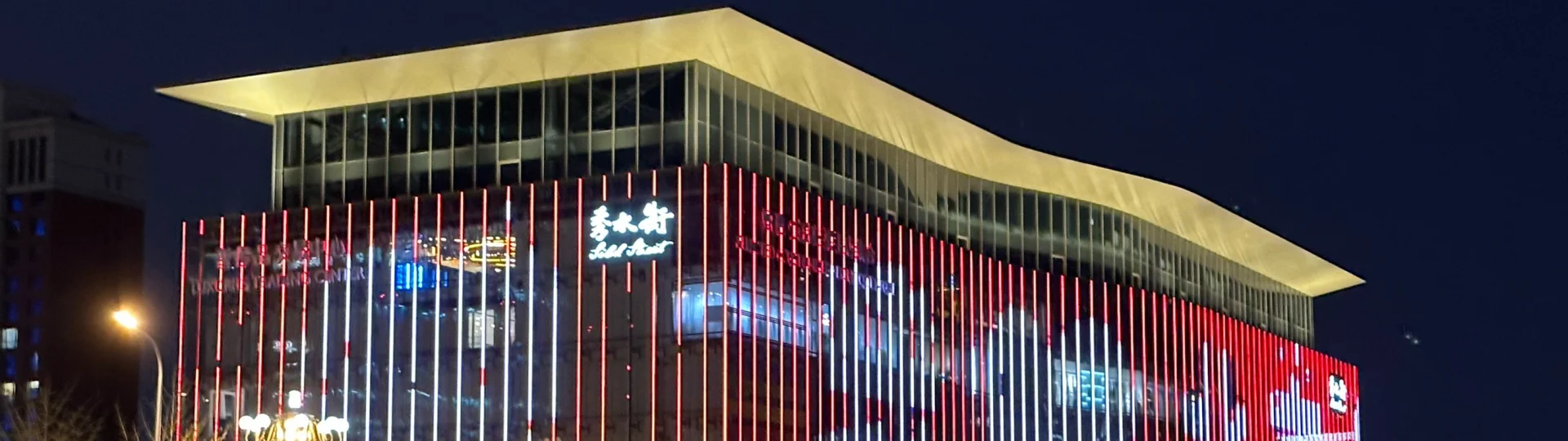
In Beijing, the popularity of Silk Street (Xiushui Market) is no less than any famous scenic spot. Its fame comes from the fact that Silk Street was once the busiest clothing market in Beijing, a small vendor gathering area, and the location of the US Consulate. It has now moved into the Xiushui Street building that is presented today.
For foreign friends, Beijing Silk Street (Xiushui Market) is a novel, exciting, magical shopping landmark that can help you complete self challenges. Climbing the Great Wall, visiting the Forbidden City, eating roast duck, and shopping at Silk Street are the four items not to be missed during the Beijing tours.
At Xiushui Street, you can buy silk, ceramics, jade, and antiques with the most distinctive Chinese cultural features, and experience the profoundness of Chinese culture. At Xiushui Street, from luxury brands to trendy brands, from clothing to bags, watches, and electronic products, there are all kinds of products available. At Xiushui Street, you can also experience unprecedented bargaining, pulling sky-high prices to the ground.
Content Preview
- Basic Facts About Silk Street:
- History of Silk Street
- What to Do at Silk Street?
- Silk Street (Xiushui Market) — Floor-by-Floor Guide & What to Buy
- How to Get To Silk Street?
- Attractions Nearby Silk Street in Beijing
- FAQs about Silk Street (Xiushui Market)
- Explore Beijing with China Xian Tour
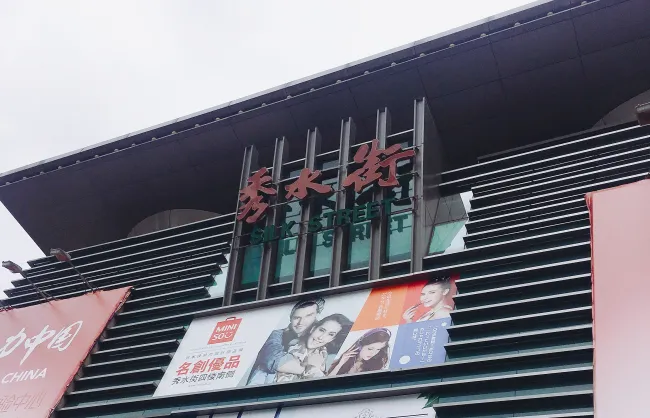
Basic Facts About Silk Street:
- Location: No. 8 Xiushui East Street, Chaoyang District, Beijing
- Opening hours: 09:30-21:00
- Time needed: 2-3 hours
Silk Street is located in the extended line of Chang’an Street, Chaoyang District, and close to the international Central Business District of Beijing which dominates a prominent location with convenient traffic. Nowadays, it is the most influential international shopping market in China.
History of Silk Street
Founded in 1978, the Silk Street was an outdoor market with a small number of shops at that time. The government had approved its establishment by the end of 1985. At the same time, some merchants began to sell silk clothes and handicrafts with Chinese characteristics, and it became popular as “China’s silk street” very soon.
In 2005, in order to change its appearance before the Beijing Olympics, Old Xiushui Street was demolished and merchants were required to move into the newly built Xiushui Street Building nearby. It has 5 floors above ground and 3 floors below ground, each with different main business content, supporting restaurants and cafes, which are very high-end and international.
In 2020, Xiushui Street announced the launch of a commercial transformation project, collaborating with professional strategic consulting firms and design agencies to reposition the business and plan the interior and exterior spaces, creating Xiushui Street V3.0. Xiushui Street V3.0 is committed to showcasing Chinese characteristics, Chinese brands, and Chinese culture, providing tourists with local top-notch products, fashionable buyers, international selections, and customized goods of the same quality as international first-line brands.
Nowadays, the Silk Street is a modern shopping mall with eight floors, which is a must-visit spot for many foreign tourists’ Beijing travel.
Celebrities Once Visiting Silk Street
As the designated reception unit for various foreign affairs activities and the featured commercial street in Beijing, Silk Street has received many national leaders and celebrities all over the world, such as the former U. S. president George Herbert Walker Bush, former Afghan President Hamid Karzai, famous swimmer Michael Phelps, football coach José Mourinho. It is also the main shopping center for foreign guests of Forum on China-Africa Cooperation in 2006, 2008 Beijing Olympics, Belt and Road Forum in 2017, 2022 Beijing Winter Olympics.

What to Do at Silk Street?
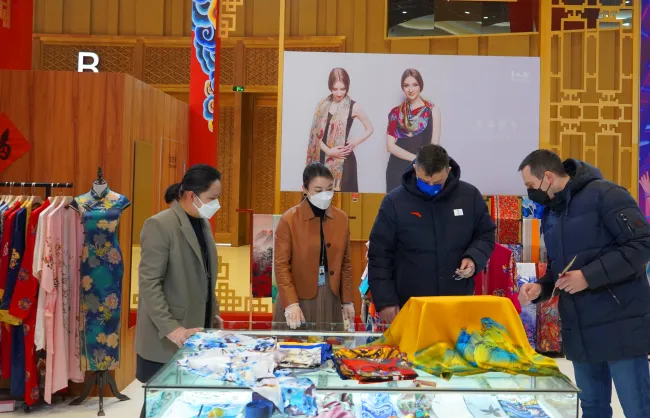
There are nearly 500 retailers and more than 20 kinds of commodities such as clothing, shoes & bags, silk, jewelry, handicrafts, boutiques, gifts, electronics at Silk Street. The most distinctive goods are silk, porcelain and handicrafts with unique charm of Chinese traditional culture. With the settlement of many time-honored brands such as Wu yutai, Tongren Tang, various kinds of cost-effective products constantly emerge.
Beijing Silk Street not only includes a wide variety of traditional Chinese products, but also equipped with tea houses, coffee shops and restaurants on the fifth and sixth floors for tourists to have a rest. Silk Street is a gathering place for global cuisines, as it is adjacent to embassy area and many restaurants at Silk Street are known as “diplomatic canteens”.
Some shops at Xiushui Silk Market also launch a variety of cultural experience activities based on their own characteristics, such as enjoying tea, playing guqin, practicing calligraphy, painting traditional Chinese paintings, etc., hoping that foreign friends can fall in love with Chinese culture.
The services at Silk Street are also commendable: fashion consultants accompany you throughout the entire process, silk products 24-hour customization, suits 18-hour customization, global shipping services, as well as barrier-free communication and barrier-free payment. There are countless reasons why foreign tourists love shopping here during their China tours.
Silk Street (Xiushui Market) — Floor-by-Floor Guide & What to Buy
Floor |
Major Goods / Sections |
Basement (B1) |
Luggage, handbags, shoes, belts. |
1st Floor |
Clothing boutiques, general apparel, information desk, cafés. |
2nd Floor |
More clothes, children’s clothing, toys, beauty parlour, currency exchange. |
3rd Floor |
Silk products: scarves, ties, traditional silk clothing, tailor-made suits, a small Silk Culture Museum. |
4th Floor |
Chinese arts and crafts: jade, calligraphy, paintings, tea, porcelain, folk handicrafts; also electronics and watches. |
5th Floor |
International jewelry, watches, bags, suitcases; also restaurants and cafés. |
6th Floor |
Shoes, leather goods, supermarket, possibly a CD/DVD shop per some guides. |
Tips for shopping at Silk Street:
What is the most important and useful skill for visitors who want to buy something at Silk Street is bargaining. Visitors can usually buy what they want at 20% or 30% price off or even cheaper through bargaining with the retailers. What’s more, many salespeople here are good at speaking English, so please don’t be shy or embarrassed about bargaining as it is a common phenomenon at Beijing Silk Street.
If you want to buy something, it is necessary for you to shop around and compare different prices and qualities of the same item to get the most cost-effective price.
Tip: Some items with international brands sold here may be fake, be careful to distinguish the fakes.
How to Get To Silk Street?
- Bus
Take Bus No.28, No.43, No.120, No.126, No.403, No.639 and No.673 and get off at the Yonganli Lukou Bei Station, and then walk southward to get to the Silk Street.
Alternatively, Take Bus No.1, No.9, No.619 and No.688 and Night Bus 1 and get off at the Yonganli Lukou Xi Station, then walk eastward to get to the Silk Street.
- Subway
Take Subway Line 1 and get off at the Yonganli Station (Exit A).
Attractions Nearby Silk Street in Beijing
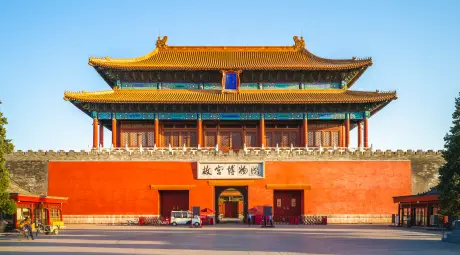
- Forbidden City (Palace Museum)– Best of the World’s Five Imperial Palaces
- Tiananmen Square– Right in the Middle of Beijing City
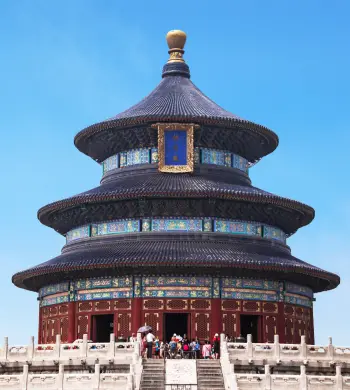
- Temple of Heaven– the Largest Surviving Ancient Sacrificial Building in China
Customize your Beijing tours to Silk Street >
FAQs about Silk Street (Xiushui Market)
Q: What are the time-honored brands at Silk Street?
A: Some well-known traditional Chinese brands you can find include Wuyutai (tea), Tongrentang (traditional Chinese medicine), and other silk brands.
Q: What is the “absolute best” thing to buy at Silk Street?
A: Many visitors consider silk products (scarves, clothing, ties) the highlight, especially on the 3rd floor.
You can also look for traditional options like Chinese crafts, jade, calligraphy, and art upstairs.
Q: Is bargaining mandatory, or are prices fixed?
A: Bargaining is strongly encouraged when shopping here. And you’ll find out that many vendors often quote very high opening prices. You can probably first cut to 10–30 % of their opening offer.
Q: What is a good starting price when negotiating?
A: A common tactic is to start low. Maybe 10%–30% of their first quote, then walk away if needed. This is a way to show you still have other choices and you’re not going to buy the thing in such a high price. Show them you’re serious about it.
Q: Which subway station should I use to get to Silk Street?
A: Take Subway Line 1 and get off at Yonganli Station. Exit A (or A1).
Q: Do the vendors speak English or other languages?
A: Yes. Many vendors are used to foreign tourists and can speak basic English. Also, bargaining in Mandarin (or even just using simple words) is common and effective.
Explore Beijing with China Xian Tour
Beijing is one of the most iconic and famous China tour destinations. This city, with its profound culture and history, has attracted countless visitors from all over the world. To better explore its imperial grandeur and modern charm, we recommend you to have a Beijing tour with China Xian Tour. With over ten years of experiences in providing people with the best trips to China, our travel experts are confident in creating customized itineraries to fulfill every traveler’s expectations, and along the way, we’ll be there 24/7 for you to take care of all the details. As a result, contact us now and then all you need to do will be getting ready for an unforgettable Beijing tour.