





Written by Veronica |
To ensure you enjoy a smooth and frustration-free China tour, one of the most important things is to learn about the plugs, sockets, adaptors & voltage in China. Because the mainland of China operates on a standard voltage of 220 Volts (V) at a frequency of 50 Hertz (Hz), which may be different from the standard in your country.
Besides, the plug and socket types are also different between China and some foreign countries. In this case, you need to prepare an adapter and a converter in advance to avoid frying your phone. This guide will give you clear, practical information on China’s electrical system, helping you cut through such confusion.
Content Preview
- Plug and Sockets
- Converters and Adapters
- Global Electricity and Plug Type Comparison
- Travel with China Xian Tour
- FAQs
Plug and Sockets in China
China’s Plug Types
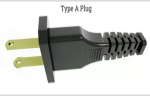
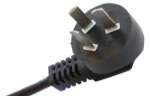
There are primarily two plug types in China, type A and type I. There is also the type G plug, but they are rarely used in daily life. These are basically different from those used in foreign countries, making it essential for most international travelers to prepare an adaptor before traveling. Get to know these electric plugs and sockets in the table below.
Plug Type |
Picture |
Shape / Pins |
Typical Use |
Place of use |
Type A
|
|
Two flat parallel pins |
Small electronics |
Widely applied in all buildings, flats, houses and hotels in |
Type I |
|
Two flat pins angled in a V-shape (or sometimes straight) and a third flat pin below for grounding |
Official modern standard in China, used in most household appliances and varieties of electronic equipment that require grounding |
Most buildings, hotels (especially higher-end), and appliances requiring grounding |
Type G (rare) |
|
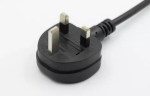
Three large rectangular UK-Style pins in a triangular pattern, the standard UK, Irish, and Malaysian plug. |
Mainly used for imported equipment or industrial electrical equipment |
Tourists can find it only in some very high-end international hotels or specific locations catering heavily to UK travelers |
Sockets in China
In the Mainland of China
Like the picture above, the most common type in China is the five-hole socket, which consists of a two-hole socket and a three-hole socket. This design has Type A and Type I plugs in just one outlet.
- Two-hole socket: Two side holes of the three flat holes in one row
These holes accept mainly Type A plugs. And such a type is designed for low-power devices such as phone or laptop chargers.
- Three-hole socket: Two flat pins angled in a V-shape and the middle hole of the three flat holes in one row
It fits Type I plugs. The third hole is the grounding (earth) connection. This one is often used for devices needing more power or safer grounding. It reduces the risk of shocks or electrical problems.
Special Cases: Hong Kong & Macau Plug Type
- Common Plug Types in Hong Kong
- Type G (UK Standard, three rectangular pins)
- Some hotels may also provide Type A or USB outlets
- Common Plug Types in Macau
- Type G (most widespread)
- Type D and Type M in certain older buildings
- Type A and C may also be accepted in some sockets
Type G Plug is commonly used in Hong Kong and Macau, which is different from the Mainland of China. So if your China tour includes Hong Kong or Macau, your universal travel adaptor must include Type G compatibility. The good thing is that the voltage compatibility is the same as that of the Mainland of China, 220V at 50Hz.

Converters and Adapters
Before confirming whether you need a converter or an adapter or not, it is necessary to make clear their function.
- Converter: Change the input voltage to avoid burning out your device, such as converting 220V in China to 110V.
- Adapter: Change the physical shape of your device’s plug so that it can fit into the Chinese power socket.
Do I Need a Voltage Converter for Visiting China?
In brief, it depends on the standard of your device. If it is dual-voltage, then you do not need it, but if it is single-voltage, the converter is a must.
Dual-Voltage Devices
- How to check: Look for writing on your device’s charger, power adapter, or instruction book. If it lists a range that includes 220V (like 100-240V or 110V-240V), it’s dual-voltage.
- Common devices: Almost all modern phone chargers, laptop chargers, tablet chargers, camera battery chargers, and USB power banks
For tourists using dual-voltage devices, you do not need a voltage converter. Just take a plug adapter to fit the socket and it is safe to plug them directly into 220V via an adaptor.
Single-Voltage Devices
- How to check:If only “INPUT: 110V” or “INPUT: 120V” (common in North America/Japan) is found on the device, then it is a single-voltage one.
- Common devices: Some older hair dryers, hair straighteners, curling irons, electric shavers, clothes steamers, high-powered electric kettles, and certain kitchen appliances
Plugging a 110V single-voltage device directly into a 220V outlet plug may damage or destroy the device immediately. Sometimes, it may cause even cause fire hazard. So, for single-voltage devices, it is a must to use a voltage converter rated for the device’s wattage (W).
Special Case: High-Wattage Appliances: Caution!
Even with a converter, high-wattage appliances (like hair dryers often 1500W+) can still overload converters, cause problems like overheating, or simply not work well. For heavy-duty items, consider buying a dual-voltage travel version locally in China or using one provided by your hotel.

Do I Need a Plug Adaptor for Visiting China?
The short answer is: Yes, almost certainly.
How to choose?
- Option 1: The simplest way is to buy a universal travel adaptor. It includes multiple plug configurations, ensuring you can connect to Type A and I electric sockets in China.
- Option 2: This is the most reliable way is to purchase a specific Chinese standard adaptor. It is also most suitable for tourists who only need to adapt to sockets of China’s standard.
Tips: For USB devices such as mobile phones, tablets and cameras, the most worry-free way is to carry a multi-port USB charger, and then just equip this charger with a Type I adapter. The USB ports are usually equipped in hotels, airports, trains, and cafes in China. What’s more, pack a USB cable (USB-A to Lightning/USB-C/Micro-USB) so that you can often charge directly without any adaptor.
Where to Buy?
Before departure, you can buy it online or in travel stores. Don’t worry if you really forget or don’t have time to buy one in advance, you can find it in airports, train stations, most shopping centers, or electronics stores in China. Some hotels also provide a renting service. Another choice is the online delivery apps, like Taobao, JD.com, or Meituan. They can deliver within hours if you have a local address (a hotel address is also fine).
Global Electricity and Plug Type Comparison
Country/Region |
Voltage (V) |
Frequency (Hz) |
Plug Type(s) |
Compatible with China |
What Needed |
China |
220V |
50Hz |
Type A, I |
Yes |
Standard for domestic electronics and appliances. |
United States |
120V |
60Hz |
Type A, B |
No |
Both a converter and an adapter. |
Canada |
120V |
60Hz |
Type A, B |
No |
Both a converter and an adapter. |
United Kingdom |
230V |
50Hz |
Type G |
Voltage only |
A plug adapter |
Australia |
230V |
50Hz |
Type I |
Yes |
Same voltage and plug type as China, can use directly. |
Japan |
100V |
50/60Hz |
Type A, B |
No |
Both a converter and an adapter. |
Germany |
230V |
50Hz |
Type C, F |
Voltage only |
A plug adapter |
France |
230V |
50Hz |
Type C, E |
Voltage only |
A plug adapter |
South Korea |
220V |
60Hz |
Type C, F |
Voltage only |
A plug adapter |
Singapore |
230V |
50Hz |
Type G |
Voltage only |
A plug adapter |
Malaysia |
240V |
50Hz |
Type G |
Voltage only |
A plug adapter |
Thailand |
220V |
50Hz |
Type A, B, C |
Partial |
Same voltage. Type A plug can be used, while others require an adapter. |
India |
230V |
50Hz |
Type C, D, M |
Voltage only |
Universal adapter recommended due to plug variety. |
Indonesia |
230V |
50Hz |
Type C, F |
Voltage only |
A plug adapter |
Vietnam |
220V |
50Hz |
Type A, C |
Mostly |
Type A plugs may be used directly. Type C plugs require an adapter. |
Brazil |
127V / 220V |
60Hz |
Type C, N |
No |
Dual voltage depending on region; confirm before use. Plug adapter required. |
South Africa |
230V |
50Hz |
Type M |
Voltage only |
A plug adapter |
Russia |
220V |
50Hz |
Type C, F |
Voltage only |
A plug adapter |
Philippines |
220V |
60Hz |
Type A, B, C |
Partial |
Same voltage, type B and C plugs need an adaptor. |
Mexico |
127V |
60Hz |
Type A, B |
No |
Both a converter and an adapter. |
Enjoy a Relaxing China Trip with China Xian Tour
After knowing China’s plug type, traveling to China has now become easier than ever, and bringing the right devices can always make your journey smooth and pleasant. Indeed, it could sometimes be a little confusing to check what to pack for a China trip, and that’s why we’d recommend you to travel with China Xian Tour, and let us make everything clear for you.
With the help of our local travel experts, you’ll get a perfect journey which is made completely based on your own preference, and we’ll also provide you with private transfers and professional guides. From start to finish, we’ll take care of all the preparation for you so that in the end, all you need to do is enjoy your perfect time in China.

FAQs about Plug Types, Sockets, Adaptors & Voltage in China
Q1: Is it safe to use a multi-plug adapter or power strip to fit the plug in China?
Yes, as long as it’s good quality and certified. Avoid overloading it with high-wattage appliances.
Q2: I’m coming from the US. Can I just plug my phone in or will it fry my charger?
Most modern U.S. phone chargers are dual-voltage. You’ll just need a plug adaptor to fit the sockets in China.
Q3: I’m coming from Europe. Will my two-round-pin plug fit, or do I need a specific adapter?
Type C (two-round-pin) does not fit Chinese plug sockets, so it is necessary to carry a universal adaptor.
Q4: Do most hotels provide adapters for guests?
Many mid-range and high-end hotels do, but not always. It’s best to bring your own or buy one when you arrive in China.
Recommended China tours:
10 Days Immersive China Tour of Beijing-Xian-Guilin-Shanghai
11 Days China Golden Triangle (Beijing-Xian-Shanghai) With Zhangjiajie
13 Days China Tour of Beijing – Xian – Hangzhou – Huangshan – Shanghai